Is Daphne the most fragrant flower? Cultivation methods and precautions
Daphne (Daphne odora), this is a plant that blooms, and its floral fragrance is anything but ordinary. Is Daphne the most fragrant flower? What are the cultivation methods and precautions for Daphne:
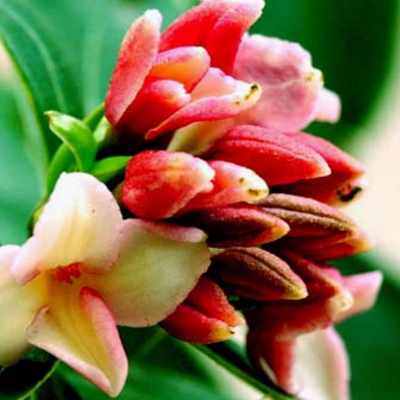
Is Daphne the most fragrant flower:
Some people think so, but there is no data to support it.
It is called "thousand-mile fragrance," said to have an intense scent that drifts far. Such a fragrant flower, yet it has a very crude alias, "flower thief," saying it steals the fragrance of a hundred flowers and gathers it all in itself - otherwise how could it be so fragrant and carry its scent a thousand miles? "The world calls it the flower thief; other flowers wither and die upon smelling its scent." Not just a "flower thief" - it is simply a killer of a hundred flowers!
Cultivation methods and precautions for Daphne:
Cultivation methods for Daphne:
1. Soil requirements
Potted golden-edged Daphne (Daphne odora 'Aureomarginata') is fairly flexible about potting soil. Choose fertile, humus-rich acidic soil, and mix in a small amount of river sand and decomposed cake fertilizer.
Of course, for soil dug directly from outdoors, you can add a small amount of river sand or large-grained gravel.
2. Water and fertilizer requirements
The roots of golden-edged Daphne are fleshy roots, so pay attention to controlling watering during routine care. If watered too much and the potting soil stays wet for a long time, the roots rot easily. Generally, the watering cycle is 10~15 days; adjust the cycle shorter or longer appropriately according to weather conditions.
Golden-edged Daphne is quite fond of fertilizer. During the growing period, apply a thin liquid fertilizer about once every 10 days. Apply topdressing once each before and after flowering, choosing thin cake fertilizer water.
3. Light and temperature requirements
Golden-edged Daphne prefers a semi-shaded environment. In winter and spring, just care for it normally in sunlight and give it plenty of light. In summer, place golden-edged Daphne in a well-ventilated shady spot, and spray water promptly when it is hot.
Golden-edged Daphne is not cold-tolerant, so move it indoors to overwinter in winter. After Frost's Descent, move it to a sunny spot indoors, keep the temperature above 5°C, and keep the potting soil dry so it can overwinter safely.
4. Pruning methods
Golden-edged Daphne has strong sprouting ability and tolerates pruning well. To control the plant shape, promptly pinch off the growing tips and remove the top buds to promote branching. After the flowers fade, prune according to the plant shape, cut off dead leaves, and remove diseased and weak branches to improve the plant's light penetration.
Precautions for cultivating golden-edged Daphne:
Golden-edged Daphne is generally repotted once every two years, before the flower buds sprout in early spring. When repotting, remove the outer layer of soil from the roots, add new culture soil, plant it, water it thoroughly, place it in a shady spot to dry for 10~15 days, then carry out normal care.
Common pests of golden-edged Daphne include aphids and scale insects. Once pests are found, they must be controlled promptly.
Daphne may be the most fragrant flower in the world; pay attention to Daphne's cultivation methods.
Cultivation methods and precautions for golden-edged Daphne
Potted plant management
Daphne, also called Penglai flower and thousand-mile fragrance, belongs to the Thymelaeaceae family as an evergreen shrub, native to our country, and is famous for its fragrance. Its variety, golden-edged Daphne, is an excellent choice among Daphnes. Hence the saying, "The peony is the nation's beauty and heavenly fragrance, but among Daphne flowers, the golden-edged is the best." Golden-edged Daphne has green leaves
with golden-yellow edges, light purple flowers, petals split into 5 lobes at the tip, white, with a purple-red base, and an intense fragrance. It likes semi-shade or sunny spots, and dislikes harsh sun exposure and heavy rain. It has poor cold tolerance and does not tolerate waterlogging. It is suitable for fertile, loose, well-drained, slightly acidic soil, and is usually fairly easy to manage.
Golden-edged Daphne is the top choice among potted flowers for its pure flowers and rich fragrance. The propagation method for golden-edged Daphne mainly uses cuttings from old branches and young branches; this method has a high survival rate, is simple and easy to learn, and saves labor and effort. For potted golden-edged Daphne, the potting soil should be loose, humus-rich, slightly acidic leaf mold or mountain soil (or freeze-crumbled pond soil), mixed with an appropriate amount of river sand and decomposed cake fertilizer.
To know how to grow golden-edged Daphne, we first need to understand its growth habits. This plant likes semi-shade, but in spring and winter it should still be placed in an environment with sunlight. In addition, when cultivating it, watering, fertilizing and other aspects also require careful attention. The details are below; let's take a look.
2. Cultivation methods and precautions for golden-edged Daphne
1. Soil: drainage should be good
When cultivating golden-edged Daphne, we first need to choose the soil; this is the foundational step. Generally, it is best to choose fertile, loose, humus-rich, acidic leaf mold soil. This kind of soil has good drainage and air permeability, which is more conducive to its growth, and soil with good drainage is also less likely to cause water accumulation.
2. Fertilizing: fertilize once every 10 days during the growing period
Fertilizer is one of the main nutrients in the growth process of golden-edged Daphne, especially after it enters the growing period, when its demand for fertilizer is very high - basically fertilizing once every 10 days. However, when fertilizing, there is one thing to remember: the fertilizer must be diluted before application so the plant can absorb it. If the fertilizer concentration is too high, it can easily burn the plant.
3. Watering: control the amount of water / avoid water accumulation
The root system of golden-edged Daphne is fleshy, so when watering it normally, we must control the amount of water. Remember not to water too much; otherwise, if water accumulates, it can easily cause root rot. If too much water is accidentally applied, be sure to promptly remove the excess standing water.
4. Light: grow in a spot with scattered sunlight / avoid strong light
Among the cultivation methods and precautions for golden-edged Daphne, light is also a point that needs attention. It prefers semi-shade, but it cannot lack light during growth either. So in spring and autumn, when the light is more suitable, we can place it outdoors in a spot with scattered sunlight. When the light becomes stronger in summer, we need to shade it to avoid sunburning the plant.
5. Pruning: promptly pinch the growing tips and remove the top buds
Golden-edged Daphne has strong sprouting ability and is relatively tolerant of pruning. So to maintain its plant shape, we need to promptly pinch the growing tips and remove the top buds. Also, after its flowering period, we should prune off spent flowers, dead leaves and some dead branches to enhance the plant's light penetration.
6. Pests and diseases: control promptly
During the cultivation of golden-edged Daphne, if we are not careful, pests and diseases can easily take advantage of the situation. Such problems are extremely harmful to the plant, so we must deal with them promptly, because the longer it drags on, the harder they are to control and the greater the harm to the plant. The specific control methods are described in detail in the article on pest and disease control for golden-edged Daphne; you can take a look.