Can inch plant be grown in water? Care for it this way and it will bloom more
Inch plant (Tradescantia zebrina) is a plant that is super beautiful, and many people like it. Can this inch plant be grown in water? How do you care for inch plant so it blooms more:
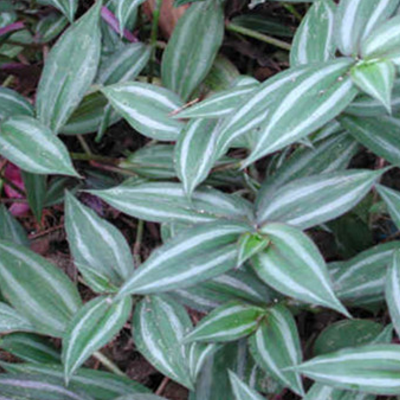
Can inch plant be grown in water:
Inch plant, like calla lily, can also be grown in water. If small inch plant plants are grown in water, the rooting time can be shortened, and the rooting rate of inch plant grown in water from seed can reach almost 100 percent. If you are converting soil-grown inch plant to water culture, first you need to dig the mature inch plant out of the soil, wash the soil off the roots, cut away the aged roots or rotted parts, and remove the yellowed diseased leaves, keeping the healthy parts ready for cuttings.
Then insert the already prepared inch plant stems into a bottle prepared in advance, and fix them upright to make sure they will not lean or fall over. Then place the whole bottle in a fairly shady spot, avoiding direct sunlight, with the best temperature being 21°C to 28°C.
After seven days, change the water once to ensure the water is clean, and at the same time pay attention to cleaning the stems and roots to prevent rot or pest problems caused by pathogen infection. When changing the water, add nutrient solution to ensure the supply of energy.
How do you care for inch plant so it blooms more:
First, ensure suitable light for inch plant
Inch plant is a warmth-loving plant. During the growing period, inch plant must have sufficient light to ensure the plant grows dense and full leaves. If it grows in a place with insufficient light and fairly dark conditions, the stems and leaves will become thin, long, scattered and irregular, and the leaves will be thin and unhealthy. Note that although inch plant needs bright light, it must not be exposed to direct blazing sun, as it easily loses water and wilts.
Second, the suitable temperature for inch plant growth
Inch plant is suitable for growing in a warm environment. Spring, summer and autumn are all its growing seasons. In winter, when temperatures are low, it grows slowly or directly enters dormancy, so when the winter temperature is below ten degrees, you need to pay attention to good insulation work.
Third, the watering situation for inch plant
During the growing period of inch plant, it should not be watered too frequently. Keeping the potting soil slightly moist is enough, and this will make the inch plant leaves more vivid in color. During the winter dormant period, watering once every half month is basically enough to ensure its water absorption. Too much watering will cause root rot and plant death.
Inch plant can be grown in water; pay attention to the cultivation methods for making inch plant bloom more.
Inch plant Zebrina pendula inch plant illustrated guide: how to grow inch plant / how to propagate inch plant
Inch plant profileInch plant Zebrina pendula
Inch plant cultivation methods and precautions inch plant introduction
Inch plant stems are weak and brittle, creeping along the ground in a trailing growth habit. Because its leaf shape resembles bamboo and the leaves are beautiful, it is often grown as a potted plant hung indoors to admire its stems and leaves spreading and hanging softly, hence the name inch plant.
According to records, plants of the genus Zebrina are native to Mexico in tropical Central and South America. After spreading to Japan, inch plant was introduced from Japan to China in 1909. Because the climate conditions of South China are similar to those of its tropical place of origin, it propagated very quickly when planted in South China, and can be seen everywhere not only in gardens, campuses, institutional green spaces and around residential houses; some have spread and grown into a wild or semi-wild state. Because it likes warmth, as long as this condition is met, it has strong adaptability to other conditions. It is a herbaceous foliage plant very suitable for use where investment is not much but the effect of fast and good ground cover greening is desired.
Inch plant likes a warm and humid climate, is fairly shade-tolerant, not cold-tolerant, tolerant of water and moisture, suitable for fertile, loose humus soil, and also fairly tolerant of poor soil; it is not drought-tolerant, and has no strict requirements for soil pH. The overwintering temperature must not be lower than 10°C, but staying in too shady a place for a long time often causes the stems and leaves to grow leggy and the leaf color to fade.
Inch plant flowering period: July-August.
Morphological characteristics of inch plant
Inch plant is a perennial herb. The stems are somewhat weak, green, drooping, semi-succulent, branched, and root at the nodes; oblong, spreading or hanging, about 1 m long, smooth or sparsely hairy.
Inch plant stems are slender, soft and slanting, initially growing upward at an angle, later falling over in steps and becoming creeping; the creeping stem nodes that touch the growing medium can root. Leaves are narrowly ovate, 7 cm long and 4 cm wide, acute or acuminate, with short petioles. The leaf surface is silvery white.
The stems are much branched, creeping, and root at the nodes. The stems have coarse hairs, and the stems and leaves are slightly succulent. Leaves are alternate, with a sheath-like base, pointed tips, entire margins, silvery white on the surface, purple in the middle and at the margins, and purple on the underside. Flowers are small, purplish red; the bracts are leaf-like and purplish red; several small flowers gather inside the bracts.
The base of inch plant is sheath-like, ovate or long elliptic, with entire margins. The leaf surface is green with 2 silvery white longitudinal stripes, and the leaf underside is purplish red. Flowers are purplish red, mostly blooming in summer. Common inch plant has two silvery green shiny stripes on the leaf surface, flanking the green central part. Another example is two-colored inch plant, with a bronze center on the leaf surface and narrower silvery stripes on both sides; another is four-colored inch plant, whose leaf surface has irregular pink, green, creamy white and silvery white stripes, the most beautiful of all.
Leaves
Inch plant leaves are sessile; elliptic-ovate to oblong, 3-7 cm long, 1.5-3 cm wide, with short pointed tips, purplish green above and mixed with silvery white, with purple stripes in the middle and at the margins, purplish red beneath; the top and base of the sheath, or the whole sheath, are sparsely covered with long hairs.
Flowers
Inch plant small flowers are white and axillary; the flowers gather within a pair of large and small terminal bract-like leaves; sepals 3, fused into a cylindrical tube about 6 mm long; the corolla tube is white and slender, about 1 cm long, with 3 lobes, rose-colored, about 3 mm long; stamens 6; ovary 3-locular. The fruit is a capsule, and the flowering period is irregular, generally July-August.
Ecological habits of inch plant
Inch plant likes a warm and humid climate, is fairly shade-tolerant, not cold-tolerant, tolerant of water and moisture, suitable for fertile, loose humus soil, and also fairly tolerant of poor soil; it is not drought-tolerant, and has no strict requirements for soil pH. The overwintering temperature must not be lower than 10°C, but staying in too shady a place for a long time often causes the stems and leaves to grow leggy and the leaf color to fade.
It likes a warm and humid climate, is not cold-tolerant, and the overwintering temperature must not be lower than 10. It likes sufficient light, but is also fairly shade-tolerant, and in summer avoids direct strong light. Grown in a place with fairly sufficient sunlight, it grows vigorously. Inch plant likes a warm and humid environment, is shade-tolerant, fears direct blazing sun, and is suitable for loose, fertile, sandy, loose soil.
Inch plant cultivation techniques cultivation points
Light
Inch plant fears direct strong light and needs to be kept in a semi-shady place for care, or given 70% shading. If kept indoors for care, place it in as bright a place as possible, and every one or two months move it outdoors to a semi-shady place or under shade for one month, so it can accumulate nutrients and restore its growth vigor.
Inch plant needs bright light no matter the season, to encourage the plant to grow dense and vivid leaves. If the light is too dark, the stems will grow thin, long and messy, and the leaves will fade. But it must not be exposed to direct blazing sun.
Temperature
Inch plant likes a warm environment. The temperatures of spring, summer and autumn are all suitable for growth, and it grows very slowly at lower temperatures. When the winter temperature is about 10°C, you need to pay attention to insulation.
The most suitable growth temperature for inch plant is 18°C-30°C. It dislikes cold and frost, and the overwintering temperature needs to be kept above 10°C. In winter, when the temperature drops below 4°C, it enters dormancy, and if the ambient temperature approaches 0°C, it will die from frost damage.
Watering
During the growing season, inch plant should be watered only when the topsoil is dry about 2.5 cm deep.
Potting soil
Inch plant has strong adaptability and does not have high soil requirements, but it grows better in fertile, loose soil.
When the potting soil is slightly dry, the leaf color will be more vivid. During the winter dormant period, water appropriately only when half the potting soil is dry.
Fertilizing
Inch plant has high requirements for fertilizer and water, but it most fears random fertilizing, concentrated fertilizer, and one-sided application of nitrogen, phosphorus and potassium fertilizers. It requires following the fertilizing (and watering) principle of "light fertilizer applied frequently, small amounts and many times, complete nutrition."
During the active growth period, inch plant can be given a nitrogen-based compound fertilizer once every half month.
Propagation
The old leaves of inch plant fall off easily, making the lower part look bare, so when growing inch plant it is best to frequently cultivate new plants for renewal. Inch plant roots easily from stem cuttings, and can even be propagated by water cuttings. When potting, plant 5 or 6 plants together.
Pruning
For inch plant plants cultivated for too long, the basal leaves often fall off, affecting the ornamental value. At this time, cut away the overly long branches and leaves to encourage new buds at the stem base to sprout and grow new branches and leaves.
Pillar cultivation
Making holes
Make several small holes around a PVC pipe with a diameter of 100 cm (other plastic pipes also work, but the material must not be too soft). The diameter of the small holes should preferably be 2 cm (if the holes are too large, soil and water easily flow out from them; if the holes are too small, the roots and stems are easily damaged when inserting seedlings). The hole spacing is determined according to the size of the plants being grown, and it is best if the drooping stems and leaves can just cover the small holes below; generally the hole spacing is 12 cm to 15 cm. Then cut the plastic pipe with the holes into several sections, each about 1 m to 2 m long. If too long, watering is inconvenient; if too short, the three-dimensional effect is poor.
Inserting seedlings
Take one of the cut plastic pipes and fix it in a plastic pot with soil, then you can insert seedlings while filling in soil. Before inserting seedlings each time, the soil must be filled to 2/3 of the height of the holes, because after watering the soil will sink somewhat, so that after the roots and stems are inserted they will be exactly perpendicular to the plastic pipe, avoiding damage from being pressed down. The insertion depth of the roots and stems is about 8 cm to 9 cm, so they make full contact with the soil. Then add soil again to 2/3 of the upper small holes, insert seedlings again, and fill soil again, until everything is complete.
Watering
The first watering should be done with special care, because the plants have just been inserted and the soil is fairly loose, so avoid watering too forcefully. It is best to cut a piece of sponge, cover the pipe opening, and water slowly and evenly inward. The first time should follow the principle of small amounts and many times, that is, water a little each time, then water again after two minutes, repeating this many times, so that both the upper and lower plants can absorb water. In hot, high-temperature weather, place it in a shady, cool place, and spray water on the leaves with a spray bottle at the right time. After the roots are established, it can enter routine management.
Water culture growing
Inch plant is extremely easy to grow in water. You can cut several nutritious stems and insert them together into one bottle, and new roots will grow after a few days in water. When it is first put in water, be careful to remove all the rotted leaves, otherwise the water is easily contaminated and it will not root easily. In addition, when inserting stems into water-cultured inch plant, the leaves should not be immersed in the water, as they easily rot; only the lower part of the stems needs to be in the water.
Changing water
In the early stage of water culture, change the water once every 2-3 days for inch plant. Inch plant stems break very easily, so special care is needed when changing the water. There is no need to pull the stems out of the bottle; when changing the water, simply invert the whole bottle together (using your hand to hold back the inverted stems), then pour in clean water. After rooting, changing the water once every 7-10 days is enough.
Light
Water-cultured inch plant is best placed in an environment with diffused light, and avoids direct sun exposure or an overly shady environment.
Humidity
Inch plant can endure a dry environment, but during the growing period, when the weather is dry, spray water on the leaves frequently to keep them moist, to prevent the leaves from losing water and scorching.
Inch plant cultivation methods growth and care
Inch plant likes a warm and humid environment, is shade-tolerant, fears direct blazing sun, and is suitable for loose, fertile sandy loam. To make inch plant branches and leaves full, the following points should be followed:
① For the growing soil, preferably use a mix of 40% leaf mold, 40% garden soil and 20% river sand. During the growing period, keep the potting soil moist, and apply a dilute liquid fertilizer or compound chemical fertilizer once about every 15-20 days.
② In spring and autumn, it is best to place it indoors near a south window for cultivation. In summer, it is best to place it indoors in a well-ventilated place with bright diffused light. If light is insufficient for a long time, the stems and leaves easily grow leggy, the internodes become longer, and it blooms little or not at all.
③ Inch plant requires fairly high air humidity. If the air is dry, the leaves often dry out easily and the leaf tips scorch. Therefore, during the growing season, pay attention to frequently spraying water on the stems and leaves to maintain air humidity.
④ To keep its branches and leaves full, when the stems grow to about 20-30 cm, pinch off the growing tips to encourage branching; otherwise the branches grow thin and long, affecting the ornamental effect.
⑤ In winter, keeping the room temperature above 5°C is enough for it to overwinter safely. During overwintering, the plant is in a dormant state and needs little water. If watered too much at this time and the potting soil stays wet for a long time, it very easily causes root rot and yellow leaves. In winter, place it on a south-facing windowsill so it gets more sunlight.
Potted care
When potting, fertile garden soil with good drainage can be used. Normally, watering should keep the soil moist and not let it become too dry, otherwise the lower old leaves easily turn yellow and wither. In addition, it has fairly high humidity requirements, so spray water around its environment frequently to maintain fairly high air humidity. It does not have high fertilizer requirements, and fertilizer can be applied as appropriate according to growth vigor. Generally, chemical fertilizer or manure is fine. Throughout the entire growth process, it is best to give diffused light; it should not be exposed to direct blazing sun, nor should it be too shady for too long, otherwise it easily grows leggy, the internodes become longer, and the markings on the leaves may also fade or decrease.
When growing in pots, prune and adjust the vines appropriately according to ornamental needs, so their distribution is more reasonable and the shape is better. In winter, generally keeping the room above 0°C is enough for overwintering. The soil should not be too dry. Keep it moist at all times. In early spring, old branches and branches that disrupt the plant shape should be cut off promptly.
The propagation of this flower can be done during the growing season. Simply take new shoots and insert them into a pot, keep a certain humidity, and they root very easily. Afterward, strengthen fertilizer and water, pinch appropriately, and it will soon grow into a full, lush pot.
Shaping and pruning
To make the plant shape full, when the stems of newly planted seedlings grow to about 20 cm, pinch off the growing tips to encourage branching; otherwise the branches grow thin and long, affecting the ornamental effect. For plants cultivated for too long, the basal leaves often easily turn yellow or fall off, affecting the ornamental value. At this time, cut away the overly long branches and leaves to encourage new buds at the base to sprout and grow new branches. The cut parts can be used for cutting propagation.
Cultivation points
Water: Likes water and moisture. During the growing period, water once a day to keep the soil moist, and spray water on the leaf surface. Reduce the amount of water in winter.
Fertilizer: During the growing period, applying liquid fertilizer once a month is enough.
Soil: Not choosy about soil.
Temperature: Suitable growth temperature 10-25°C, overwintering temperature about 5°C.
Light: Likes semi-shade, avoids direct blazing sun.
Propagation: Cutting propagation. Pick several nodes of strong stems and insert them into moist sand; they survive easily. It is suitable to prune appropriately once a year to maintain a graceful plant shape.
Inch plant propagation methods
Inch plant is mostly propagated by cuttings and division, and can be done all year round. Cuttings can be combined with pinching, cutting healthy branch tips as cuttings, inserting them into plain sand, placing them in semi-shade, and keeping them moist; they root very easily. Inch plant stems creep along the ground, and after rooting at the nodes they can be separated and planted to form new plants.
During the growing period, inch plant needs sufficient watering. In a place with fairly sufficient sunlight, the leaf color stripes are vivid. It dislikes exposure to blazing sun, needs moderate shading in summer, and must overwinter in an environment above 10°C.
Cutting propagation
Cutting propagation is the most commonly used propagation method for inch plant. It can be done all year round, but spring and autumn are better. Cut the main stem or side stems as cuttings, 8-10 cm long, with 2-3 internodes, and insert them into a sand bed or directly into potting soil. They root 7-10 days after insertion. Plant 3-4 rooted cuttings per pot. The potting soil should not be too wet. Place it in a shady place for care. After new buds grow, place it in sunlight for cultivation, and apply a dilute liquid fertilizer once a month to encourage vine growth. When the new stems have grown to a certain extent, pinch them promptly as needed to encourage branching and form a full plant shape.
Cutting medium
This refers to materials such as nutrient soil, river sand, or peat soil used for cuttings. For home cuttings, it is difficult to obtain an ideal cutting medium due to limited conditions, so it is recommended to use the already prepared and sterilized cutting medium provided by this site; medium-coarse river sand can also be used, but it should be rinsed several times with clean water before use. Do not use sea sand or river sand from saline-alkali areas; they are not suitable for the growth of flowers and plants.
Selection of cutting branches
The branches used for cuttings are called cuttings. Cut the stems into sections 5-8 cm long, each with more than three leaf nodes; the top shoot can also be used as a cutting.
Management after cutting
Temperature
The most suitable temperature for cutting rooting is 18°C-25°C. Below 18°C, the cuttings root with difficulty and slowly; above 25°C, the cut surface of the cuttings is easily infected by pathogens and rots, and
the higher the temperature, the greater the proportion of rot. When low temperatures are encountered after cutting, the main insulation measure is to wrap the flower pot or container used for cuttings with plastic film; when the temperature is too high after cutting, the main cooling measure is to shade the cuttings, blocking 50-80% of sunlight, and at the same time mist the cuttings 3-5 times a day; on sunny days with higher temperatures, mist more often, and on cloudy and rainy days with lower temperatures and higher humidity, mist less often or not at all. Humidity: After cutting, the relative air humidity must be kept at 75-85%. Humidity can be increased by misting the cuttings, 1-3 times a day; on sunny days, the higher the temperature, the more often you mist, and on cloudy and rainy days, the lower the temperature, the less often you mist or you do not mist. But excessive misting makes the cuttings easily infected by pathogens and rot, because many kinds of pathogens exist in water.
Light
Cutting propagation cannot do without sunlight, but the stronger the light, the higher the temperature inside the cuttings, the more vigorous the transpiration of the cuttings, and the more water consumed, which is not conducive to the survival of the cuttings. Therefore, after cutting, 50-80% of sunlight must be blocked.
Potting
When potting seedlings, first put a 2-2 cm thick layer of coarse-grained medium or expanded clay at the bottom of the pot as a drainage layer, sprinkle a layer of fully decomposed organic fertilizer on top as base fertilizer, about 1-2 cm thick, then cover with a layer of medium about 1-2 cm thick, and then place the plant in, so as to separate the fertilizer from the roots and avoid burning the roots.
For the medium used for potting, one of the following can be chosen. Vegetable garden soil: cinder = 3:1; or garden soil: medium-coarse river sand: sawdust (mushroom residue) = 4:1:2; or one of paddy soil, pond mud, or leaf mold. Or peat + perlite + expanded clay = 2 parts + 2 parts + 1 part; vegetable garden soil + cinder = 3 parts + 1 part; peat + cinder + expanded clay = 2 parts + 2 parts + 1 part; sawdust + vermiculite + medium-coarse river sand = 2 parts + 2 parts + 1 part. After potting, water thoroughly once, and place it in a shaded environment for care.
Humidity
It likes a humid climate environment, and requires the relative air temperature of the growing environment to be 60-75%.
Temperature
The most suitable growth temperature is 18°C-30°C. It dislikes cold and frost, and the overwintering temperature needs to be kept above 10°C. In winter, when the temperature drops below 4°C, it enters dormancy, and if the ambient temperature approaches 0°C, it will die from frost damage.
In summer
1. Strengthen air convection so that the heat inside the plant can be released
2. Place it in semi-shade, or give it 50% shading
3. Mist it appropriately, 2-3 times a day.
In winter
1. Move it indoors to a bright place for care
2. Outdoors, it can be wrapped with plastic film to overwinter, but every two days at noon when the temperature is higher, uncover the film to let it breathe
Light
It fears direct strong light and needs to be kept in a semi-shady place for care, or given 70% shading. If kept indoors for care, place it in as bright a place as possible, and every one or two months move it outdoors to a semi-shady place or under shade for one month, so it can accumulate nutrients and restore its growth vigor.
Fertilizer and Water
It has high demands for fertilizer and water, but it is most afraid of careless fertilizing, concentrated fertilizer, and one-sided application of nitrogen, phosphorus, and potassium fertilizers. It requires following the fertilizing (water) principle of "light fertilizer applied frequently, small amounts but many times, complete nutrition":
Spring, Summer, and Autumn
These two seasons are its peak growing periods. Fertilizer and water management follows the cycle of "Huabao" - "Huabao" - clear water - "Huabao" - "Huabao" - clear water (at the very least, ensure two applications of "Huabao" per week). The interval period is approximately: 1-4 days for outdoor care, shorter intervals during sunny days or high temperatures, longer intervals or no watering during rainy days or low temperatures; 2-6 days for indoor care. Watering should be done as much as possible in the morning when the temperature is lower. In summer, water in the morning or evening when temperatures are low, and also frequently mist the plant.
Winter
During the winter dormant period, the main task is to control fertilizer and water. Fertilizer and water management follows the cycle of "Huabao" - clear water - clear water - "Huabao" - clear water - clear water. The interval period is approximately 7-10 days; shorter intervals during sunny days or high temperatures, longer intervals or no watering during rainy days or low temperatures. Watering should be done as much as possible at noon on sunny days when the temperature is higher.
Division Propagation
Tradescantia zebrina can also be propagated by division. For household potted Tradescantia zebrina, for plants that have filled the pot, division propagation can be done in conjunction with spring repotting. Take the mother plant out of the pot, cut off the rooted suckers beside the mother plant, and plant them separately in pots. Alternatively, place the mother plant's pot on the ground, wait for the stem nodes to root after touching the ground, then cut them off, dig them out, and plant them in pots for growing.
Disease Control of Tradescantia zebrina
The main disease and pest of Tradescantia zebrina is gray mold.
Symptoms
It damages leaves and stems. Leaves develop water-soaked brown spots, and most of the affected area turns brown and soft-rotted. In humid conditions, a gray mold layer grows on the diseased parts, sometimes also causing bud blight.
Disease Conditions
A low-temperature, high-humidity disease. In winter and spring, greenhouse insulation and moisture retention, aging tissues, and wounded areas often lead to parasitism by gray mold fungus.
Control Methods
At this time, use 50% iprodione diluted at 1000-1500 times for spraying, applying once every 5 days; after 2 consecutive applications, the disease can be effectively controlled and symptoms eliminated (diseased parts dry up, no mold layer). Generally, no harmful symptoms will appear for 7-10 days. After 7 days, external infection sources and residual pathogens may still reproduce when conditions are suitable, causing a second outbreak. At this point, use a preventive treatment plan, specifically using 41% polyalthia·pyrimethanil diluted at 1000 times for spraying, applying once every 5-7 days. The interval days and number of applications depend on the plant's growth condition and expected disease development.
Variety Classification of Tradescantia zebrina
Tradescantia zebrina var. quadricolor: Leaf surface dark green, with red, pink, and white stripes; leaf undersides purple.
Tradescantia zebrina var. discolor: Leaf surface green, with two distinct silvery-white stripes. Leaf surface green, with two distinct silvery-white stripes. Tradescantia zebrina var. minima: Leaves small and slender, plant shorter than the original species. Purple Tradescantia (Z. purpusii): Leaf shape and flowers basically the same as Tradescantia zebrina. The purple Tradescantia has a plant form slightly larger than quadricolor, with more hairs at the leaf base. Leaf surface is dark green and red wine colored, without white stripes.
Tradescantia zebrina var. minima: Leaves small and slender, plant shorter than the original species.
Purple Tradescantia (Z. purpusii): Leaf shape and flowers basically the same as Tradescantia zebrina. The purple Tradescantia has a plant form slightly larger than Tradescantia zebrina var. quadricolor, with more hairs at the leaf base. Leaf surface is dark green and red wine colored, without white stripes.
Tradescantia zebrina (Z. pendula): Also known as variegated inch plant, water bamboo grass. Stems much branched, creeping, rooting at nodes. Stems have coarse hairs, stems and leaves slightly succulent. Leaves alternate, base sheath-like, apex pointed, entire margin, leaf surface silvery-white, center and margins purple, leaf undersides purple. Flowers small, purplish-red, bracts leaf-like, purplish-red, several small flowers clustered within the bracts.
Distribution Area of Tradescantia zebrina
Tradescantia zebrina is native to Mexico in tropical Central and South America. After spreading to Japan, Tradescantia zebrina was introduced to China from Japan in 1909.
Medicinal or Dietary Value of Tradescantia zebrina
The medical information and health dietary information on Huhuawang are for reference only and cannot be used as a basis for diagnosis or medical treatment. For any health issues, consult professional medical staff. For the treatment of any disease, please follow medical advice.
Ultimate flower-protecting mission: Love yourself, start from reality, and strictly follow medical advice. For illness, do not be careless, do not delay, do not give up hope, face it bravely, warm the silent world with love, and care for the flower field in your heart with your heart.
Medicinal Value
Tradescantia zebrina is a perennial herb of the Commelinaceae family. It has the functions of clearing heat and detoxifying, cooling blood and stopping bleeding, and promoting diuresis. Its main effects include clearing heat and draining dampness, cooling blood and detoxifying, treating edema, difficult urination, strangury, dysentery, leukorrhea, coughing blood, red swollen painful eyes, sore swollen throat, sores and abscesses, burns and scalds, and venomous snake bites.
Chemical Composition
Stems and leaves contain calcium oxalate and gum.
Pharmacological Effects
The decoction and water extract of leaves and stems (with precipitate removed by adding alcohol) have an excitatory effect on isolated guinea pig ileum, but no obvious effect on isolated rat uterus, isolated rabbit heart, and duodenum. Intravenous injection of 0.1
g (crude drug)/kg in anesthetized dogs also does not affect blood pressure. The water extract has a vasodilatory effect in rat hindlimb perfusion experiments.
Intraperitoneal injection of 1 g (crude drug) decoction per mouse resulted in all 2 mice dying within 24 hours, while the water extract showed no obvious toxicity.
Nature and Flavor
"Fujian Folk Herbal Medicine": "Sweet, cold, toxic."
Functions and Indications
Treats coughing with blood, gonorrhea, leukorrhea, dysentery, and sores.
① "Fujian Folk Herbal Medicine": "Clears heat, nourishes yin, stops bleeding, treats leukorrhea."
② "Nanning City Drug Records": "External application to disinfect sores."
③ "Guangxi Chinese Herbal Medicine": "Clears heat and detoxifies. Treats coughing blood, leukorrhea, and chronic dysentery."
Usage and Dosage
Internal use: decocted in water, 25-50 g (100-150 g if fresh); or pounded for juice. External use: pounded and applied.
Cautions
"Nanning City Drug Records": "Contraindicated for pregnant women."
Selected Formulas
① For coughing blood: Fresh Tradescantia zebrina 100-150 g, pig lungs 200 g. Add an appropriate amount of water and decoct into one bowl. Take after meals, twice daily.
② For gonorrhea: Fresh Tradescantia zebrina 100-150 g. Add an appropriate amount of water and decoct into one bowl. Take before meals, twice daily.
③ For leukorrhea: Fresh Tradescantia zebrina 100-150 g, rock sugar 50 g, dried mussel meat 50 g. Add an appropriate amount of water and decoct into half a bowl. Take before meals, twice daily.
④ For chronic dysentery: Variegated bamboo dish 250 g, white rice 50 g. Stir-fry together until half charred, then decoct in water, and take in three divided doses.
⑤ For acute conjunctivitis: Variegated bamboo dish 100 g, wild kale 50 g. Pound together into a paste and apply externally to the affected eye.
Uses and Purposes of Tradescantia zebrina: Home Decoration
Tradescantia zebrina has lush branches and leaves with a graceful posture. It is often potted for display and arrangement in homes, or grown in hanging baskets for hanging ornamental viewing.
Tradescantia zebrina grows rapidly, with branches and leaves creeping and hanging down. The leaf colors of purple, green, and silver alternate, dazzling to the eye. Grown in pots and placed on high stands or cabinet tops to let them hang down naturally, forming a green curtain, the ornamental effect is quite good, with a unique artistic charm. It is often used for overall arrangement in homes, courtyards, and other places.
Fresh Air
Plants more or less have the effect of freshening the air, and Tradescantia zebrina is no exception. Moreover, Tradescantia zebrina grows vigorously and is a very suitable herbaceous foliage plant for ground cover greening with quick and good coverage at low investment. In places covered with large patches of Tradescantia zebrina, the air is relatively fresher.
Ornamental Value
A small potted plant that grows rapidly, capable of covering the entire pot within 1 year, with branches and leaves creeping and hanging down. The leaf colors of purple, green, and silver alternate, dazzling to the eye. Place it on high stands or cabinet tops to let it hang down naturally, or use hanging pots for viewing. Or arrange it above windowsills to let it hang down, forming a green curtain. Courtyard cultivation often uses it for overall arrangement. The plant's variegated leaves may sometimes turn green; at this time, they should be promptly removed to prevent all leaves of the entire plant from turning green.
Landscape Uses of Tradescantia zebrina
There are many horticultural varieties of Tradescantia zebrina, mainly including Tradescantia zebrina var. discolor, Tradescantia zebrina var. quadricolor, Tradescantia zebrina var. minima, etc. Tradescantia zebrina not only has high ornamental value but is also easy to manage.
Tradescantia zebrina has a full plant form, creeping and hanging down, and is commonly used as an indoor hanging decoration. Its greatest feature is that it can be grown as a hanging plant, which better showcases the plant's natural beauty.
Cultural Background of Tradescantia zebrina: Origin of the Name
Because Tradescantia zebrina has leaves shaped like bamboo and beautiful foliage, it is often grown in pots and hung indoors to admire its spreading, soft, drooping stems and leaves, hence the name Tradescantia zebrina.
Cultivation History
According to records, Tradescantia zebrina plants are native to Mexico in tropical Central and South America. After spreading to Japan, Tradescantia zebrina was introduced to China from Japan in 1909. Because the climate conditions of South China are similar to its native tropical climate, it propagated very quickly in South China. It can be seen everywhere in gardens, campuses, institutional green spaces, and around residential buildings, and some have spread and grown into wild or semi-wild states. Because it likes warmth, as long as this condition is met, it has strong adaptability to other conditions. It is a very suitable herbaceous foliage plant for ground cover greening with quick and good coverage at low investment.
Flower Language of Tradescantia zebrina
Flower language of Tradescantia zebrina: simple, pure, elegant.
Tradescantia zebrina has leaves shaped like bamboo and beautiful foliage. The leaf colors of purple, green, and silver alternate, dazzling to the eye, and its spreading, soft, drooping stems and leaves are admired. Place Tradescantia zebrina above the windowsill to let it hang down, forming a green curtain.
Tradescantia zebrina Pictures
How to grow Tradescantia zebrina? A brief discussion of hydroponics and management techniques for Tradescantia zebrina
Tradescantia zebrina is a type of household flower. Its leaves do not wither or change color all year round, remaining evergreen through the four seasons. When it blooms, the flower shape resembles a butterfly. Today, the editor will talk about hydroponics and maintenance management techniques for Tradescantia zebrina.
Tradescantia zebrina is one of the hanging foliage and flowering herbaceous flowers. It has high ornamental value and is very popular. Its cultivation method is simple and it is easy to keep alive, so it is worth growing for friends who like flowers and plants.
1. Hydroponics Method
(1) Any container without a drainage hole can be used; a glass bottle with a diameter of 8-20 cm is best.
(2) Because it often grows roots at stem nodes, rooted stem branches can be cut off for propagation. First, insert the cut branches into nutrient solution, wait for the root tips to extend into main roots, then cut cuttings from the ends and soak them in nutrient solution for hydroponics.
(3) You can use 1/4 of the standard concentration of Garden Test nutrient solution. Replace the nutrient solution once a month. The nutrient solution height should submerge the root system.
2. Care Guide
(1) Temperature and Light: The most suitable growing temperature for Tradescantia zebrina is 15-25°C. As long as the temperature is not below 5°C, it can overwinter safely. Tradescantia zebrina likes sufficient diffused light, but it should not be too shady, otherwise the branches will become leggy. Avoid direct strong light in summer.
(2) Changing Water: Hydroponic Tradescantia zebrina needs regular water changes. In the early growth stage, it is best to change the water every 2-3 days. After water roots grow, change the water once every 10-15 days.
(3) Fertilizing: Adding nutrient solution when changing the water can help it grow vigorously, and the plant grows rapidly. However, be careful to avoid excessively fast growth affecting the plant shape.
(4) Pest and Disease Control: Leaf blight, gray mold, and scale insects are common diseases and pests of Tradescantia zebrina. Among them, when plants are dense, moist air is most likely to cause leaf blight. Therefore, it is necessary to frequently prune the plant and repot regularly every year to prevent leaf blight. Gray mold: if this disease occurs, the infected branches should be promptly removed. If the entire plant is infected, remove the entire plant. After new shoots sprout in spring, they can become new plants. Scale insects are suitable for manual capture, and diseased branches and leaves should be removed to prevent further spread.
During the cultivation of Tradescantia zebrina, the main thing is to pay attention to maintenance techniques such as temperature and light. In the editor's opinion, it is not only easy to grow but also beautiful, making it a very good greening flower. Interested friends can learn from the hydroponic techniques shared by the editor for cultivation.