What to Do When Osmanthus Leaves Turn Yellow and Dry Up? Causes and Solutions
Osmanthus tree: Many people grow osmanthus trees themselves, but during this process they find that the leaves turn dry and yellow. What to do when osmanthus leaves dry up? What to do when the leaves turn yellow?
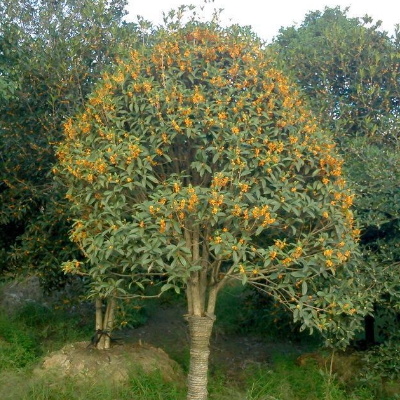
What to do when osmanthus leaves dry up:
Dry osmanthus leaves are mostly caused by disease. When the disease is discovered, the first things to note are: apply more humus fertilizer and potassium fertilizer to improve disease resistance; promptly remove diseased leaves from affected plants (or cut off the yellow leaf tips), and also promptly clear away fallen leaves to avoid secondary infection.
1. Osmanthus leaf blight: it is most likely to occur in environments with high temperature, high humidity and poor ventilation.
Chemical control:
During the disease period, at the early stage you can spray 1:2:100 lime double-strength Bordeaux mixture, and afterward spray 50% benomyl wettable powder at 1000-1500 times dilution, or 50% carbendazim at 800-1000 times dilution for control.
2. Osmanthus brown spot: it is a common disease of osmanthus, caused by infection with fungi of the subphylum Deuteromycotina. It mostly occurs on leaves, and mostly spreads from the leaf tip and leaf margin toward the entire leaf. In mild cases it affects the ornamental effect; in severe cases it causes the plant to die.
Control methods:
1. Spray potassium permanganate at 1000 times dilution to disinfect.
2. At the early stage of the disease, spray the whole tree for protection, such as 70% copper hydroxide at 300-500 times dilution, azoxystrobin at 1000-1500 times dilution, or 50% carbendazim at 500-600 times dilution.
What to do when osmanthus leaves turn yellow:
1. Watering issues: The soil for osmanthus must have good air permeability, and it fears waterlogging. It is best not to water until dry, and to water thoroughly each time. It fears flooding and standing water. If harmed by waterlogging, the root system turns black and rots, the leaves first have scorched leaf tips, then the whole leaf turns yellow and falls off, ultimately causing the whole plant to die.
2. Light issues: properly arrange the degree and duration of light exposure for osmanthus.
3. Humidity issues: when the temperature rises or in a dry environment, try to use shading and misting to improve environmental humidity. Generally, if the tips of old leaves are dry, increasing humidity to above 60% is enough for improvement.
4. Temperature issues: the most suitable growth temperature is 15-28°C. Temperatures that are too low or too high may both cause problems.
5. Ventilation issues: ventilation needs to be increased in a timely manner. It is suitable for planting in ventilated and well-lit places; it likes a clean and ventilated environment and cannot tolerate smoke and dust damage.
6. Fertilization issues: usually increase potassium fertilizer and humus fertilizer to improve its own disease resistance.
7. Pathogen issues: brown spot. At the early stage of the disease, small chlorotic yellow spots appear on the leaves and gradually expand into nearly round lesions. Brown spot generally occurs from April to October, and old leaves are more susceptible than young leaves.
Alright, that is the end of the introduction on solutions for osmanthus leaves turning yellow and drying up. I hope everyone understands now.
What to do when osmanthus leaves dry up?
Osmanthus is one of China's ten traditional flowers and is also a common flower in landscaping. It originated in China, is evergreen all year round, and has a light, elegant fragrance. Since ancient times it has been an important spice, and it has also been a frequent subject for writers and scholars. During the cultivation of osmanthus trees, leaf drying often occurs due to care issues. Let us take a look below at what to do when osmanthus leaves dry up!
Overwatering
[Cause] When osmanthus is overwatered, the potting soil accumulates water and stays wet for a long time, causing a lack of oxygen in the soil. This leads to rot of some fibrous roots, thereby weakening the ability to absorb water and fertilizer, causing young leaves to turn pale yellow, and flower leaves also gradually turn dark yellow and scorched.
[Solution] Immediately control watering, stop fertilizing, and frequently loosen the soil so that the potting soil is well aerated. In severe cases, the whole root ball needs to be taken out of the pot and placed in a pile of dry soil so that moisture can quickly seep out. After the drooping branches and leaves recover, replant it in the pot.
Underwatering
[Cause] When osmanthus is watered too little, or is given half-watering or missed watering for a long time, the water evaporation from the leaves exceeds absorption, causing water supply to fall short of demand. This can also cause leaves to turn yellow and leaf tips to scorch, and in severe cases the petioles droop and appear wilted.
[Solution] Immediately move the flower pot to a cool place, spray some water on the leaf surface and water a small amount. Later, as the stems and leaves gradually recover their uprightness, gradually increase the amount of watering. If too much water is suddenly given at this time, it may cause plasmolysis, damage the protoplasm, and cause the flower to die.
Overfertilization
[Cause] When osmanthus is overfertilized, especially when too much nitrogen fertilizer is applied while phosphorus and potassium fertilizer are lacking, leaves are prone to turning yellow. This appears as new leaves being thick and mostly uneven on the surface, while old leaves gradually turn yellow and fall off. In severe cases, leaf tips dry up, and even the entire leaf becomes scorched yellow.
[Solution] Stop fertilizing, increase watering so that fertilizer flows out from the drainage holes, or immediately repot, remove part of the old soil, wash and rinse the root ball with water, replace part of it with new growing medium, and replant the plant into the pot.
Insufficient fertilization
[Cause] When osmanthus is underfertilized, especially when nitrogen fertilizer has not been applied for a long time or the potting soil has not been changed, the soil lacks nitrogen nutrition, causing branches and leaves to become thin and weak, leaves to be thin and yellow, and leaf tips to scorch.
[Solution] Repot in a timely manner, take the plant out, switch to a pot one size larger, fill it with new loose and fertile growing medium, and replant it properly. After watering thoroughly, place it in a semi-bright place to recover. After it resumes growth, apply dilute liquid fertilizer or compound chemical fertilizer.
Soil too alkaline
[Cause] Osmanthus likes acidic soil. However, because the soil in most areas of the north contains more salt and alkali, after being cultivated for a period of time it will gradually lose green and turn yellow due to a lack of soluble iron that the flower can absorb.
[Solution] Apply 0.2% ferrous sulfate solution at intervals, and at the same time alternately apply 0.1% potassium dihydrogen phosphate solution, so that "alkaline yellowing" is cured. At the same time, potassium dihydrogen phosphate also contains phosphorus and potassium, which is beneficial for flower bud differentiation and improving flower quality.
One of the feng shui plants: what to do when the leaves of the money tree turn yellow
In feng shui, the money tree symbolizes wealth, so many merchants and families use it as a wealth-attracting feng shui plant. However, if the money tree is not cultivated properly during the process, it very easily develops yellow leaves, which may lead to changes in feng shui. So what should be done when the money tree leaves turn yellow? This issue of plant feng shui will help you understand.
When money tree leaves turn yellow, first look at the cause of the yellowing and treat it according to the cause:
1. Overwatering: the potting soil stays too wet for a long time, causing a lack of oxygen in the soil, rotting some fibrous roots, hindering normal respiration and the absorption of water and nutrients, and causing leaves to turn yellow and fall off. After being affected, young leaves first turn pale yellow, then old leaves gradually turn yellow as well. Watering should be controlled immediately, fertilizing paused, and the soil frequently loosened so that the soil is well aerated.
2. Drought and dehydration. Missing watering when growing flowers or giving half-watering for a long time (that is, wet on top and dry below) affects nutrient absorption and also easily causes leaf color to become dull and lusterless, with leaves wilting and drooping. First the lower old leaves age, and gradually wither, yellow and fall from bottom to top. At this time, water a small amount and spray water, so that it gradually recovers, and then return to normal watering.
3. Long-term lack of fertilizer. If nitrogen fertilizer has not been applied for a long time or the pot and soil have not been changed, the soil lacks nitrogen and other nutrient elements, causing branches and leaves to become thin and weak, and leaves to be thin and yellow. Repot in a timely manner, change to new loose and fertile growing medium, and gradually increase application of dilute decomposed liquid fertilizer or compound flower fertilizer.
4. Excessive fertilization. If too much fertilizer is applied, new leaves will be thick and mostly uneven, and old leaves will have dry tips, scorch yellow and fall off. Immediately stop fertilizing, increase watering so that fertilizer flows out from the drainage holes at the bottom of the pot, or immediately repot, rinse the root ball with water, and then replant it into the pot.
5. Hot high temperatures. In summer, if flowers that prefer coolness (such as cyclamen, fuchsia, and begonia) are placed in a high-temperature spot and exposed to direct strong sunlight, it is very easy to cause the tips and margins of young leaves to scorch, or leaves to turn yellow and fall off. They need to be moved promptly to a well-ventilated, cool place.
6. Excessive shading. If sun-loving flowers are kept for a long time in a shaded place or a place with insufficient light, branches and leaves will turn yellow.
7. Soil and water tending to be alkaline. The soil and water in most areas of the north contain more salt and alkali. When planting acid-loving flowers, such as rhododendron, camellia, banana shrub, gardenia, orchid, white michelia, and osmanthus, the leaves will gradually turn yellow because the soil lacks soluble iron and other elements that they can absorb. When planting, choose acidic soil, and frequently water with alum fertilizer water during the growth period.
There are 2 pieces of information in total 1/2 1 2 Next page Last page