Why Bamboo Dies After Flowering and What It Foretells
Bamboo is something many people have seen; in rural areas it is extremely common. Why does bamboo die after flowering? Does bamboo flowering foretell anything?
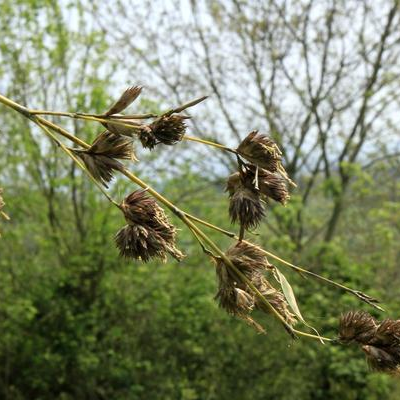
Why bamboo dies after flowering:
This is a question that has puzzled people for a long time, and scientists also hold differing views on it. Some scientists believe that when bamboo grows to a certain age, it inevitably begins to age, and in order to reproduce, it flowers and sets seed before its life ends. They explain it as follows: the roots, stems and leaves of a plant are called vegetative organs, and their growth is called vegetative growth; the flowers, fruits and seeds of a plant are called reproductive organs, and their growth is called reproductive growth.
Because bamboo species differ, the length of the flowering cycle also varies; this is influenced by heredity and is also related to the natural environment. Some bamboos flower only after ten or several tens of years. For example, Dendrocalamus strictus and Dendrocalamus hamiltonii need about 30 years to flower, Bambusa sinospinosa and Bambusa tulda need 32 years to flower, and some species of the genus Bambusa need more than 80 years to flower; some even take as long as a hundred years to flower, such as Phyllostachys bambusoides, which needs 120 years to flower. Of course, there are a few exceptions, such as Thyrsostachys siamensis and Bambusa lineata, which flower about once a year; while Sinobambusa tootsik and Bambusa multiplex flower irregularly.
When Melocanna baccifera flowers, the filaments are flat, separate from one another or irregularly joined at the base, and the anthers are yellow with a notched tip; the ovary is ovoid, hairless, and narrows at the upper end to form a very long style, which bears 2-4 feathery, outwardly curved stigmas, slowly growing into a round little bean that, once mature, becomes much like a pear. It is said that when opened it surprisingly has no seed pit, only thick juice, and some food lovers use this fruit for skewers, saying it tastes pretty good, though the details are unknown.
Does bamboo flowering foretell anything?
The saying often repeated by some elderly people that “when bamboo flowers, great disaster will follow” is not merely superstition or rumor; scientists have found that before some catastrophic droughts, bamboo would flower on a large scale and wither. It is said this is because bamboo can sense certain changes in the soil, and so it spreads seeds to migrate to suitable new land, or waits in the original place for a suitable time (such as after the drought). There is also the phrase “the sago palm flowers.”
That is all for the causes of death after bamboo flowering; it is said that bamboo flowering is an ill omen.
What Bamboo Flowering Means and Why It Dies After Flowering
Bamboo stays green through all four seasons, is upright and elegant, colorful and endlessly varied, with a great many varieties. Planting some bamboo in front of and behind the house not only beautifies the environment but also makes it very shady in summer. But have you ever seen bamboo flower? What does bamboo flowering mean? Why is it said that bamboo dies after flowering?
Does bamboo flower?
Because bamboo species differ, the length of the flowering cycle also varies; this is influenced by heredity and is also related to the natural environment. Some bamboos flower only after ten or several tens of years. For example, Dendrocalamus strictus and Dendrocalamus hamiltonii need about 30 years to flower, Bambusa sinospinosa and Bambusa tulda need 32 years to flower, and some species of the genus Bambusa need more than 80 years to flower; some even take as long as a hundred years to flower, such as Phyllostachys bambusoides, which needs 120 years to flower. Of course, there are a few exceptions, such as Thyrsostachys siamensis and Bambusa lineata, which flower about once a year; while Sinobambusa tootsik and Bambusa multiplex flower irregularly.
What bamboo flowering means:
It is precisely because bamboo flowering is relatively rare, and because after flowering the green leaves wither, the branches and stems dry up, and they die in batches, that some superstitious people mistakenly believe bamboo flowering is an “ill omen,” giving this natural phenomenon an air of mystery and raising all kinds of questions.
In fact, bamboo flowering is a physiological phenomenon, generally occurring in bamboo groves where the weather has been dry for a long time, the soil is compacted, weeds are overgrown, and old rhizomes crisscross. This is because the bamboo is severely short of water, lacks nutrients, has weakened photosynthesis, reduced nitrogen metabolism, and correspondingly increased sugar concentration, resulting in a relatively high sugar-to-nitrogen ratio, which creates the conditions for flower bud formation and flowering. It can be seen that bamboo flowering is caused by a harsh growing environment. Therefore, according to the characteristics of the bamboo species, taking appropriate management measures can control bamboo flowering. For example, for moso bamboo groves, measures such as loosening the soil, fertilizing, covering the soil, watering, digging out bamboo stumps, and controlling pests and diseases can create a suitable growing environment for the bamboo and avoid flowering in the grove.
Why bamboo dies once it flowers:
Why does bamboo wither and die in patches after flowering? This is a question that has puzzled people for a long time, and scientists also hold differing views on it. Some scientists believe that when bamboo grows to a certain age, it inevitably begins to age, and in order to reproduce, it flowers and sets seed before its life ends. They explain it as follows: the roots, stems and leaves of a plant are called vegetative organs, and their growth is called vegetative growth; the flowers, fruits and seeds of a plant are called reproductive organs, and their growth is called reproductive growth.
The flowering habits of plants can be divided into two major categories: one is monocarpic plants, such as rice, wheat and bamboo; the other is polycarpic plants, such as apples and pears. A monocarpic plant flowers only once in its life, and its characteristic is that vegetative growth dominates in the early stage; once vegetative growth reaches a certain stage, reproductive growth gradually takes precedence, and finally it flowers and sets seed. Because flowering and seed-setting consume a large amount of organic nutrients, and these nutrients come from the roots, stems and leaves, most of the nutrients stored in the vegetative organs are used up after flowering and seed-setting, so the plant can no longer live on and gradually withers and dies. This is true of the monocarpic plants wheat and rice, and of course bamboo is no exception.
When bamboo flowers, the nutrients stored in the rhizomes and culms are used up, and in most species, such as moso bamboo and Melocanna baccifera, both the aboveground and underground parts die after flowering. However, in a few bamboo species such as Phyllostachys bambusoides f. lacrima-deae, Phyllostachys bambusoides and Phyllostachys vivax, the aboveground parts die after flowering while the buds of the underground parts can still rejuvenate and regenerate; there are also individual bamboo species such as Phyllostachys heteroclada and Bambusa multiplex var. riviereorum whose leaves remain green after flowering and whose underground parts do not die either. Nevertheless, the flowering branches should be cut off as soon as possible to reduce nutrient consumption and thus ensure the normal growth of the bamboo grove.
Preventing bamboo flowering:
Bamboo flowering can occur in all four seasons, but it also varies with bamboo species; the flowering period is generally around April to May, when the leaves are replaced. Before flowering, individual bamboo plants or clumps often show some abnormal signs, such as weakened growth, a marked drop in shoot output, very few or even no shoots, leaves turning withered yellow or all falling off, short deformed metamorphosed leaves growing on the branchlets, and the plant becoming short and yellowing, with difficulty putting out branches and leaves; all these are signs that the bamboo is about to flower. Once signs of flowering appear, preventive work must begin:
1. Strengthen tending and management, take measures such as loosening the soil, fertilizing, covering the soil and watering to improve water and nutrient conditions, control pests and diseases, create a suitable growing environment for the bamboo, promote vegetative growth, and keep it producing rhizomes and shoots, which may delay the aging and maturity of the grove or clump and inhibit flowering and seed-setting.
2. Continuously dig out bamboo stumps and older rhizomes, cut out older culms in time, and keep the individual culms youthful. When individual culms flower in the grove, dig out the flowering culms promptly, dig out the old rhizomes, and loosen the soil thoroughly; applying 10 kg of urea per mu can delay and inhibit flowering.
What Is the Significance of Bamboo Flowering_Does Bamboo Die Once It Flowers?
Summary: Bamboo is an important branch of the grass family, mainly distributed in tropical and subtropical regions. Because bamboo stays green through all four seasons and carries an auspicious meaning, it is often cultivated as an ornamental garden plant. As an ornamental variety, bamboo naturally has its own unique flowering period, but as everyone knows, bamboo flowering is rarely seen. What this article will share with you today is what bamboo flowering means, and whether bamboo dies once it flowers.
[What is the significance of bamboo flowering]
▎Flowering cycle
Bamboo flowering time is not fixed, and the flowering period is short, so it is easily overlooked. The specific flowering cycle of bamboo differs according to the bamboo species.
Most bamboo varieties need more than ten years to flower, and there are also bamboo varieties that flower after several tens of years, such as the relatively rare Dendrocalamus hamiltonii and Dendrocalamus strictus, which belong to varieties that flower once every 30 years. Bambusa, for instance, belongs to varieties that flower after 80 years; next, there are also those that flower after a hundred years, such as Phyllostachys bambusoides, which needs about 120 years to flower.
▎Symbolic meaning
After bamboo flowers, it has many effects on the growth of the bamboo, so in people's impressions bamboo flowering is an ill omen, mostly symbolizing disaster. Thus there is a folk saying, “when bamboo flowers, great disaster will follow.”
In modern times scientists have also studied this, and they found that whenever drought or famine occurs, a large amount of bamboo flowering occurs locally. It is precisely for this reason that the saying that bamboo flowering represents disaster has become even more firmly established.
Of course, there are also legends that bamboo has a sensing ability, and that bamboo flowering may mainly serve to warn people, hinting that disaster is coming. Some people have also found that after bamboo flowers, rats crawl about, all of which become omens before disaster.
[Does bamboo die once it flowers]
Answer: After bamboo flowers, it dies within a week, and bamboo varieties that flower in patches will cause large-scale damage.
▎Cause of death
All flowering plants in the plant kingdom can be divided into varieties that flower once in their lifetime and varieties that flower cyclically. Bamboo belongs to the once-in-a-lifetime type; during its growth period it has an advantage over other plants, with stronger vitality and a long lifespan. However, during its growth period bamboo accumulates nutrients, and when the vegetative growth inside the bamboo reaches saturation, it flowers.
During the bamboo's flowering period, a large amount of nutrients is consumed, drawn directly from the nutrients in the bamboo's rhizomes and leaves, so when the entire flowering period ends, the bamboo gradually withers and dies.
Conclusion: The saying that bamboo flowering represents disaster is not accurate, but it is an indisputable fact that bamboo dies after flowering. Therefore it is recommended that when bamboo flowers, the flowering branches be cut down as much as possible, which can effectively prevent the bamboo from dying; doing a good job of preventing bamboo flowering in advance can also effectively extend the bamboo's lifespan. I hope the above introduction has been helpful to you.