How to grow Cymbidium sinense well, and can it purify the air?
Cymbidium sinense is a plant that can be grown at home, generally as a potted plant. How do you grow Cymbidium sinense so it thrives? Can Cymbidium sinense purify the air?
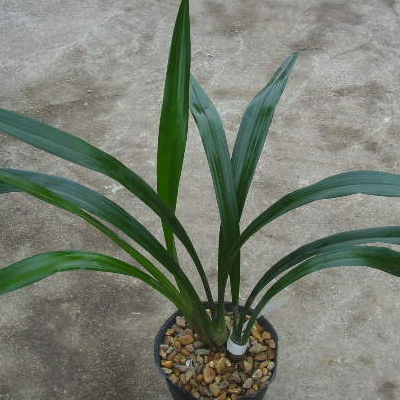
How to grow Cymbidium sinense well:
(1) Propagation.
① Division method: during the dormant period of Cymbidium sinense, from the roots, divide the pseudobulbs into groups of 3 to 5 for planting; soak the divided orchid plants' roots in a 70% thiophanate-methyl 800 to 1000 times solution for 10 min, then air-dry before planting.
② Tissue culture: under sterile conditions, place well-growing orchid tissue or cells into a culture medium and keep them in a suitable environment for continuous culture to obtain new plants.
(2) Container selection.
Commonly used pots for Cymbidium sinense include clay pots, ceramic pots, glazed pots, plastic pots, etc. Clay pots have good air permeability and are most favorable for orchid growth; household flower pots are mainly for ornamental purposes, so it is best to use purple clay pots or plastic pots; therefore, when growing Cymbidium sinense you can use the double-pot method, with the inner pot being a clay pot and the outer pot being a purple clay pot or plastic pot.
(3) Potting.
Cymbidium sinense likes slightly acidic soil rich in humus. Potting soil mix: 3 parts leaf mold, 3 parts sandy soil, 3 parts ground fine coal cinder, 3 parts bark and fallen leaves; each component of the potting soil must be sterilized before use. When potting, mix the coal cinder with the dead leaves and place at the bottom of the pot, put the leaf mold in the middle, and use the sandy soil for the upper part; when potting, be sure to place a suitable piece of tile upside down over the drainage hole at the bottom of the pot, and the clay pot used must be soaked thoroughly with water 1 day in advance.
Can Cymbidium sinense purify the air?
Cymbidium sinense can purify the air.
Cymbidium sinense can absorb carbon dioxide while releasing oxygen, and can increase the concentration of negative ions in indoor air. It also has a relatively good ability to absorb harmful gases in the air such as carbon monoxide and formaldehyde.
That is all for the methods of growing Cymbidium sinense well. Cymbidium sinense can purify the air.
Feng Shui for a Prosperous Home: The "Ever-Changing Forms" of Indoor Greenery - Plants, Flowers and Grasses........
Plants, flowers and grasses have four major functions: "storing water, sheltering from wind, nurturing the earth's veins, dissolving sha qi, and increasing prosperity and good fortune." For example, The Ten Books on Yang Dwellings holds that "people should not live where no grass or trees grow," while Xiang Zhai Quan Zhe concludes: a dwelling place should have lush vegetation, green pines and bamboo, and forests surrounding the house. In particular, Yang Zhai Hui Xin Ji even includes a special chapter discussing "On Planting Trees." As for modern times, placing some suitable plants at home can not only purify the indoor air and decorate the indoor environment, but also help improve the home's feng shui. Next I will talk with you about the role of green plants in home feng shui.Plants, like us humans, are alive and have individual differences. If you want to arrange a good feng shui layout at home, you must understand the feng shui attributes of plants.
In terms of feng shui effects, indoor green plants are mainly divided into "activating prosperity" and "dissolving sha." The placement of household plants should also pay attention to the wealth position and the sha position, and the same kind of plant should not be placed in both.
1. Placing some thick-leaved or large-leaved evergreen plants in the prosperous direction can achieve the effect of "generating prosperity," such as the money tree, lucky bamboo, Alocasia macrorrhizos, and Anthurium.
Recommendations for several indoor green plants commonly used to activate prosperity:
Money tree: The money tree is a perennial evergreen shrub that likes warm, humid environments and sunny or slightly shaded conditions. The name "money tree" is very popular among merchants and ordinary citizens; in addition, its upright shape is beautiful, its leaves are bright green, and its trunk is hammer-shaped, making it suitable for indoor arrangement and beautification after potting.
Lucky bamboo: originally called Dracaena sanderiana, also known as bamboo dracaena, thousand-year bamboo, and fortune bamboo; when placed in the Wenchang position it is also called Wenchang bamboo (usually 4 stalks are placed). It mainly grows in the southwestern region of China and is a perennial evergreen small tree foliage plant. The plant height is over 1 m, the plant is slender, and the upright upper part has branches.
Alocasia macrorrhizos: Angiosperms, Alismatales, Araceae, Alocasia. Its scientific name is Alocasia macrorrhizos, and in ancient times it was called "Guanyin lotus" and "shy sky grass." It is a perennial evergreen herbaceous plant with medicinal value. The plant can reach up to 2 m tall, with a fleshy rhizome underground, long petioles, broad leaf sheaths, and large shield-shaped broadly sagittate leaves clustered at the top of the stem, with pointed tips and slightly wavy edges, and obvious main veins. The spathe is yellow-green, with a spadix.
Anthurium: that is, bromeliads, an indoor ornamental flower for winter and spring, evergreen in all four seasons, with beautiful and varied inflorescences and rich colors; commonly cultivated varieties include bright red, pink, golden yellow, rose red, etc.
Golden pothos: Golden pothos generally refers to Epipremnum aureum, which has strong twining ability, well-developed aerial roots, variegated leaves, is evergreen in all four seasons, and has long drooping branches. It is an excellent foliage plant. It can be allowed to climb on a column made of palm fiber or on tree trunks for greening, and placed in entrance halls and hotels; it can also be trained into a hanging form and placed in studies, on windowsills, walls, and fences, and can also be used as ground cover under tree shade. In addition, pothos has a particularly good effect on purifying indoor air and absorbing formaldehyde. It is a flower that is relatively suitable for indoor placement.
Money tree: (also known as Zamioculcas zamiifolia, money banyan, a perennial herbaceous plant. Araceae, Zamioculcas, with elliptical leaflets; there is also the money banyan, of Moraceae, Ficus, with nearly round leaves) It is a perennial herbaceous flower introduced from abroad in recent years. The plant height is 50 cm to 80 cm. On the underground corm grow pinnate compound leaves resembling those of Zamia cycads or ferns, with fleshy petioles and 7 to 10 pairs of leaflets; the leaflets are elliptical, like pairs of neatly arranged copper coins. The spathe bud is reddish-brown.
The money tree is a treasure tree in Han Chinese folklore; shake it and money will fall down. In old Beijing customs, there was the custom of making a "money tree" at the end of the year to pray for the new year. In old customs in the Jiangnan region, on the first day of the Lunar New Year, every household hung a "money tree" in front of the door, symbolizing that wealth would roll in in the new year. It was also a kind of funerary object used in Han dynasty tombs. It is also used as a metaphor for a person or thing by which one makes money.
Anthurium: also known as red anthurium, flamingo flower, and Anthurium andraeanum. It is a perennial herb of Araceae, Anthurium. It has a spadix inflorescence and leaf-shaped bracts; common bract colors include red, pink, white, etc., and its leaves can also be appreciated when the flowers fall. It can be propagated by sowing, division, and other methods. Pink anthurium is harder to cultivate than red anthurium.
Orchid: several species of terrestrial orchids distributed among Chinese Cymbidium plants, such as Cymbidium goeringii, Cymbidium faberi, Cymbidium ensifolium, Cymbidium sinense, and Cymbidium kanran, that is, what is usually referred to as "Chinese orchids." This type of orchid is very different from tropical orchids with large, brightly colored flowers. It has no eye-catching gaudy appearance and no huge flowers or leaves, yet it has a plain, quiet, elegant, and noble temperament, which fits well with Eastern aesthetic standards. It has a cultivation history of more than one thousand years in China. Chinese people have always regarded the orchid as a symbol of nobility and elegance, and it is listed alongside "plum, bamboo, and chrysanthemum," collectively known as the "Four Gentlemen." "Orchid writing" is usually used to describe the beauty of poetry and prose, and "orchid friendship" to describe the truth of friendship. Orchids are also used to express pure love: "Its breath is like an orchid, never changing; its heart is like an orchid, never moving," and "Having found a secluded orchid to repay a confidant, a single sprig is given in a dream of Xiaoxiang." In feng shui, it takes the meaning of "purple qi coming from the east."
Zamioculcas zamiifolia: scientific name Zamioculcas zamiifolia, with round, thick, and full leaves, easy to grow, with strong vitality, absorbing external metal qi, and extremely beneficial for bringing wealth to the home.
Sago palm: also known as dragon's blood tree; the most popular on the market is the mud-grown Cycas revoluta. The leaves of the sago palm are long and narrow, with yellow spots in the center. The sago palm symbolizes strength and supplements the residence's qi and blood, and is one of the important prosperity-generating plants.
Bamboo palm: its stems are relatively thin, while its leaves are narrow and long: it gets its name because its trunk resembles a palm and its leaves resemble bamboo. Planting a bamboo palm on the balcony can keep the residence safe.
2. In "declining positions," it is suitable to place thorny plants, such as "aloe," "dragon bone," and "jade qilin." Placed in a "declining position" or "inauspicious position," they have the effect of "dissolving sha" in feng shui.
Recommendations for several indoor plants commonly used to dissolve sha:
Aloe: a perennial evergreen herbaceous plant of Liliaceae, with clustered, large, and thick leaves, growing in a rosette or at the top of the stem; the leaves are often lanceolate or short and broad, with sharp tooth-like spines along the edges. The inflorescence is umbel-like, raceme-like, spike-like, panicle-like, etc., colored red, yellow, or with red spots, with six petals and six pistils. In Chinese folk tradition, aloe has been used as a natural medicine for beauty care, hair care, and treating skin diseases.
Dragon bone: commonly known as dragon green, also known as triangular overlord whip and colorful cloud pavilion, a succulent plant of Euphorbiaceae, Euphorbia. The form of dragon bone resembles a columnar cactus, can reach 2 m to 3 m tall, with an upright stem, 3 to 4 ridges, and beautiful markings. It has thorns and several branches, also upright and growing upward. The branches are blue-green, and the leaves resemble fish scales; under sunlight they sparkle, with many bodies standing like a forest and peaks like sharp swords, very spectacular, making it an excellent potted flower.
Jade qilin: it has the function of absorbing formaldehyde and benzene-based substances. It has beautiful emerald green leaves, and both stems and leaves are fleshy, with an elegant plant shape, resembling the qilin of ancient Chinese legend, hence the name jade qilin. Jade qilin likes sufficient sunlight but is also tolerant of semi-shade, and will not die from drying out slightly, so it is suitable for household potted appreciation.
Rose: belongs to Rosales. A deciduous shrub of Rosaceae, with many prickles on the branches, odd-pinnate compound leaves, 5 to 9 leaflets, elliptical, with marginal prickles. Petals are obovate, double to semi-double, flowers include purplish red, white, etc., fruiting period August-September, oblate. The rose originated in China, and in Korea it is called crabapple flower.