What to Do When Spores Grow on the Underside of Maidenhair Fern Leaves? A Detailed Guide to Propagation Methods
The maidenhair fern is very well suited as an indoor ornamental plant and is a favorite of many, so what should you do when spores grow on the underside of maidenhair fern leaves? What propagation methods are there for maidenhair fern?
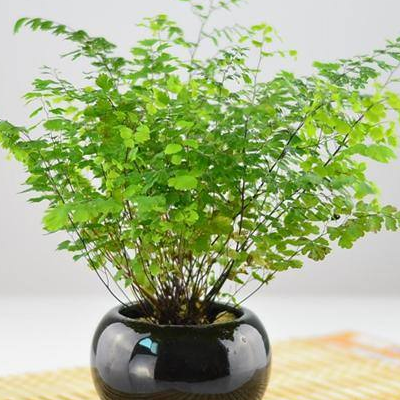
What to do when spores grow on the underside of maidenhair fern leaves:
1. The spores won't grow very large, and they will fall off on their own when they are nearly mature.
2. Once the spores mature, they will drift everywhere with the wind, because spores are very small.
3. You'd better just leave it alone; the spores are too small, and temperature, humidity and so on all have to be controlled. It's very troublesome. Your current method is not bad either, but be careful to place it in a windless, humid spot. Then just let the spores fend for themselves.
4. Coral is an aggregate of small animals, not a plant. The coral polyps on coral picked up from the beach are pretty much dead, and on top of that, after being out of seawater for a while, it has long been a dead object. It cannot be cultivated.
5. Ferns are generally propagated by division of the roots; spores are of little use. One more reminder: it's best to move this plant out of the bedroom, as spores drifting in the air may cause respiratory problems. Move it somewhere else, and once the spores have finished falling, move it back to the bedroom.
What propagation methods are there for maidenhair fern:
1. Division propagation: Maidenhair fern can be propagated by division indoors in any season, but it is generally done in early spring together with repotting. Take the mother plant out of the pot, cut its rhizome so that each piece has some rhizome and leaves, then plant them separately in small pots, cover the area around the rhizome with mixed soil, water them, and place them in a shady, humid environment to grow, and new plants can be obtained.
2. Spore propagation: Maidenhair fern can also be propagated by spores. Place peat and fine sand used as the substrate in an oven for high-temperature sterilization to kill pathogens and weed seeds. Then put the sterilized soil into a shallow sowing tray, cut off leaves that have mature spores, collect the spores and evenly scatter them over the shallow sowing tray without covering with soil. Cover it with a glass pane, soak water up from the bottom of the tray, keep the soil in the tray moist, and place it in a semi-shady environment at 20-25°C. After about one month, the spores can germinate into prothallia, and once they have filled the tray they can be divided and planted.
Alright, friends, now you all know what the propagation methods are.
What to Do When Maidenhair Fern Leaves Wither: How to Handle Spores on the Underside of Maidenhair Fern Leaves Turning Black
The maidenhair fern is a plant that likes warmth and cannot tolerate strong light, and it is distributed in many places in China. It is now a fairly popular houseplant, but if improper management occurs during cultivation, it can cause the leaves to wither or turn black.
What to do when maidenhair fern leaves wither
1. When growing maidenhair fern, it is generally best to place it in a spot indoors with relatively weak light. However, during the season of vigorous growth, it is still better to give it plenty of diffused light.
2. Note that during daily care, the soil must be kept moist, so watering must be sufficient. In relatively dry weather, you should also sprinkle water on the maidenhair fern's leaves to raise the air humidity.
3. If withering occurs, you can first reduce watering, or switch to water culture. In ordinary care, you should still control the amount of watering, and you can spray water more often to maintain air humidity. For leaves that have already dried out, it is best to cut them off.
How to handle spores on the underside of maidenhair fern leaves turning black
1. Causes of blackening: Low temperatures and freezing damage. In winter the plant grows slowly, and the leaves' nutrients are already insufficient; if the temperature is relatively low and the leaves are frostbitten, the leaves will gradually turn black. A shaded, unventilated environment: Maidenhair fern likes shade, and many households keep it in the living room or bedroom, where poor ventilation is unavoidable; if light is insufficient for a long time and the air does not circulate, the leaves will turn black. Insufficient fertilizer and water: Maidenhair fern likes fertilizer; if it is not fertilized for a long time, the moist potting soil will make the plant's leaves wilt and gradually turn black.
2. Prevention and control methods: Winter temperatures are low, so it is very easy for the plant to suffer freezing damage. In addition, winter light is relatively weak, and many households move the maidenhair fern to a sunny balcony, but opening the windows in the morning and evening makes it very easy to freeze. So the indoor temperature must be well controlled, especially in the morning and evening; do not place it by the window. Maidenhair fern does not like a stuffy, hot environment, especially in summer, and needs frequent ventilation to increase air humidity while appropriately supplementing light. Maidenhair fern likes sandy loam rich in humus and needs sufficient fertility. Before planting, you can add an appropriate amount of brick crumbs or lime granules to the soil to enhance calcium content and improve the soil's water permeability. In addition, during ordinary care, fertilize once a month, focusing on supplementing calcium.
Causes of maidenhair fern leaves withering
1. Strong light. The maidenhair fern itself is a plant that likes a semi-shady growing environment and is relatively afraid of direct strong sunlight. If the light is too strong, it will cause the water in the leaves to evaporate quickly, causing the leaves to wither.
2. Insufficient water. Maidenhair fern likes a relatively humid growing environment. When growing maidenhair fern, the soil must be kept moist, and air humidity must also be kept at a relatively high level. If watering is insufficient, water will be lacking, and this often causes the maidenhair fern's leaves to wither.
3. Waterlogging. Maidenhair fern leaves can also dry out, and waterlogging is an important factor. This is because most plants dislike waterlogging, and waterlogging causes far too many problems, such as root rot, yellowing leaves, and so on. Although maidenhair fern is a plant that likes a humid environment, too much watering will lead to waterlogging and cause the leaves to wither.
What to do when maidenhair fern leaves have scorched edges
1. Brown scorched edges appearing on maidenhair fern leaves is a common problem encountered in cultivation. It is mainly caused by an improper care environment, such as sunlight that is too strong or insufficient water; when the leaves lack water, some cells shrivel and dehydrate, the green color gradually fades, and scorched edges then appear.
2. Immediately move the maidenhair fern to a semi-shady spot for care. If the maidenhair fern is kept on a balcony, it is recommended to move the pot to a bright spot indoors, and it will gradually recover after a few days. In the following days, care for it attentively and try to avoid exposing it to strong light again. Promptly cut off the scorched leaves and spray water on the leaves and around them to increase air humidity.
Maidenhair fern leaves withering or turning black are generally caused by fertilizer, water or temperature problems. You can observe carefully to find the cause, then solve the problem at its root. Some specific solutions are explained above, and I hope they will be of help to everyone.
How maidenhair fern spores are propagated
The maidenhair fern can be propagated by division or by spores. In this article, let's look at how a gardening enthusiast propagated maidenhair fern spores. The accompanying photo below shows what a maidenhair fern leaf with mature spores looks like; this is the underside of the leaf, with a ring of small dark brown dots along the leaf margin.
In fact, whether you use the spores directly or plant them along with the leaf, it is all the same. The gardening enthusiast in this article planted them directly with the leaf attached. The leaf in the photo above is ready: you can cut off a leaf and place it directly on the soil surface to plant.
The key to propagating maidenhair fern by spores is humidity and temperature; it is easier to succeed in a high-temperature, high-humidity environment. Spore propagation requires first growing something like moss, and then the maidenhair fern's first leaf grows out from within the moss.
The spores can be covered with a little bit of soil, then covered with plastic wrap to achieve the purpose of retaining moisture and warmth. If nothing goes wrong, moss will grow within 1-3 weeks, and then the small leaves will come out.
Growing the moss and the first few leaves is very slow, but once it starts growing, it fills the pot very quickly; in 3 or 4 months, the maidenhair fern can grow into a large pot.