Can Maidenhair Fern Be Grown in Water? Solutions for Wilting Leaves
Maidenhair fern is an excellent houseplant and highly ornamental, so can maidenhair fern be grown in water? What should you do if its leaves wilt?
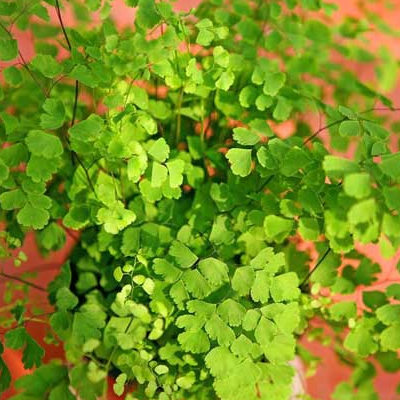
Can maidenhair fern be grown in water:
Maidenhair fern can be grown in water. Maidenhair fern loves a humid environment, with an ideal growing temperature of 21-25°C during the day and 12-15°C at night. Above 5°C the leaves can still stay fresh and green, but below 5°C the leaves will suffer cold damage. It likes bright, indirect light and is afraid of direct sunlight. It is one of the common water-grown plants.
First wash the roots of the maidenhair fern clean, disinfect them with potassium permanganate, then find a container, add clean water, and mix in a suitable ratio of nutrient solution (nutrient solution can be bought on the market), or fix it in place at the mouth of the container or on the water surface. Maidenhair fern is best planted on coral stone; just stick it on, then place the coral stone in the water, and once it takes root it grows very well. When growing it in water, note that the coral stone must be soaked in water to remove the salt, the water must not cover the crown of the maidenhair fern, and to let the stone grow moss, it cannot be kept indoors for a long time.
What to do if maidenhair fern leaves wilt:
Because it likes to grow in a warm, humid environment and cannot go without water for long periods, the potting soil must be kept fairly moist; there is no shortcut. You must observe and care for it often.
Maidenhair fern likes shade and fears light; it cannot grow well under strong light. As a potted plant it should be placed in half-day shade or under indirect light in a shed, and direct sun exposure must be avoided in summer. During the growing season, water it thoroughly.
Normally you can water once a day; in summer you can water twice a day and maintain fairly high air humidity. In the hot summer season you should also spray the leaves 2-3 times a day to keep the foliage emerald green, and you can also soak the pot in water once a week. After late autumn, gradually reduce the frequency of watering; just keep the potting soil moist to strengthen its cold resistance.
When water is insufficient, the leaves easily turn yellow. But if the soil is overly saturated with water, or if the roots are too dry and you immediately water heavily, the plant will wilt or even die. It does not need much fertilizer; during the growing season, applying liquid fertilizer once every 15-30 days is enough, and at the seedling stage you can apply a nitrogen top dressing. When fertilizing, do not let fertilizer stain the leaves, otherwise the leaves easily turn dry and yellow, reducing their ornamental value.
Maidenhair fern is highly adaptable and grows fast. If the clump of leaves is too dense, growth will weaken and the leaves will turn yellow, so it should be divided and propagated or repotted in time. Maidenhair fern likes calcium fertilizer; when dividing or repotting, you can add a small amount of lime and crushed eggshells to the pot to supplement some calcium fertilizer. An overly dense clump of leaves is also unfavorable for new leaves to sprout, so in autumn you can prune it appropriately, removing some old and yellow leaves to help keep the plant fresh and graceful. The ideal growing temperature is 18-25°C, and the overwintering temperature should not be lower than 10°C.
Alright, everyone, remember that it can indeed be grown in water.
What to do if maidenhair fern leaves wilt: How to handle blackened spores growing on the underside of maidenhair fern leaves
Maidenhair fern is a plant that likes warmth and cannot tolerate strong light, and it is distributed in many places in our country. It is now a fairly popular houseplant, but during cultivation, improper management can cause the leaves to wilt or turn black.
What to do if maidenhair fern leaves wilt
1. When growing maidenhair fern, it is generally best to place it in a spot indoors with relatively weak light. However, during the vigorous growing season, it is still better to provide plenty of indirect light.
2. Note that in daily care, the soil must be kept moist, so watering must be sufficient. In fairly dry weather, you should also sprinkle water on the leaves of the maidenhair fern to raise the air humidity.
3. If wilting occurs, you can first reduce watering, or switch to water culture. In ordinary care, you should still control the amount of watering; you can spray water more often to maintain air humidity. For leaves that have already dried up, it is best to cut them off.
How to handle blackened spores growing on the underside of maidenhair fern leaves
1. Causes of blackening: low-temperature cold damage. In winter the plant grows slowly, and the leaves' nutrients are already insufficient; if the temperature is relatively low, the leaves get frozen and gradually turn black. A shaded, unventilated environment: maidenhair fern likes shade, and many households put it in the living room or bedroom for care, which inevitably has somewhat poor ventilation; if light is insufficient for a long time and the air does not circulate, the leaves will turn black. Insufficient fertilizer and water: maidenhair fern likes fertilizer; if it is not fertilized for a long time, the moist potting soil will make the plant's leaves wilt and gradually turn black.
2. Prevention and control methods: In winter the temperature is low, and it is very easy for the plant to suffer cold damage. In addition, winter light is relatively weak, and many households move the maidenhair fern to a sunny balcony, but opening the windows in the morning and evening makes it very easy to freeze. So the indoor temperature must be well controlled; especially in the morning and evening, do not place it by the window. Maidenhair fern does not like a stuffy, hot environment, especially in summer; it needs frequent ventilation, increased air humidity, and at the same time an appropriate supplement of light. Maidenhair fern likes sandy loam rich in humus and needs sufficient fertility. Before planting, you can add an appropriate amount of brick crumbs or lime granules to the soil to boost calcium and improve the soil's water permeability. In addition, during ordinary care, fertilize once a month, with emphasis on supplementing calcium.
Causes of maidenhair fern leaves wilting
1. Strong light. Maidenhair fern itself is a plant that likes a semi-shaded growing environment and is rather afraid of direct strong sunlight. If the light is too strong, the water in the leaves evaporates quickly, causing the leaves to wilt.
2. Insufficient water. Maidenhair fern likes a relatively humid growing environment. When growing maidenhair fern, the soil must be kept moist, and the air humidity must also be kept at a relatively high level. If watering is insufficient, there will not be enough water, which often causes maidenhair fern leaves to wilt.
3. Waterlogging. Maidenhair fern leaves can also dry out, and waterlogging is an important factor too. This is because most plants do not like waterlogging, and waterlogging causes far too many problems, such as root rot, yellowing leaves, and so on. And although maidenhair fern is a plant that likes a humid environment, too much watering will also cause problems, leading to wilted leaves.
What to do if maidenhair fern leaves have scorched edges
1. Brown scorched edges on maidenhair fern leaves are a common problem encountered in cultivation. It is mainly because the care environment is unsuitable, the sunlight is too strong, and water is insufficient; when the leaves lack water, some cells shrink and dehydrate, the green gradually fades, and scorched edges soon appear.
2. Immediately move the maidenhair fern to a semi-shaded spot for care. If the maidenhair fern is kept on a balcony, it is recommended to move the pot to a bright spot indoors, and it will gradually recover over a few days. In the following days, care for it carefully and try to avoid another bout of strong light stimulation. Promptly cut off the scorched leaves and spray water on the leaves and around them to increase air humidity.
When maidenhair fern leaves wilt or turn black, it is generally caused by fertilizer, water, or temperature problems. You can observe carefully to find the cause and then solve the problem at its root. Some specific solutions are explained above, and I hope they are helpful to everyone.
What to do if maidenhair fern leaves wilt or droop
Maidenhair fern is a very common houseplant. Because of its graceful form and elegant charm, people like it. But anyone who has grown it knows that maidenhair fern sometimes shows symptoms of dry leaves, making the foliage look listless and as if it has lost its vitality. Maidenhair fern can be grown indoors in pots, but after all, indoors there is no environment like the mountainside beside flowing streams on limestone, or the bottom of limestone caves and dripping rock walls. Keeping maidenhair fern indoors is not easy, and yellow leaves, wilted leaves, and drooping are common problems. When we encounter such problems, what should we do? Below is a detailed introduction to the causes of maidenhair fern leaves wilting and how to solve it.
Causes of maidenhair fern leaves wilting and what to do 1. Excessive sunlight causes maidenhair fern leaves to wiltCause: Maidenhair fern by nature likes a semi-shaded environment and avoids direct sunlight. Too much and too strong light will cause the water in maidenhair fern leaves to evaporate quickly, making the leaves dry out.
Solution: It is generally suitable to place the maidenhair fern in a spot indoors that sunlight cannot reach, but during the growing season it still needs some sunlight for growth; ample indirect light is most suitable.
Cause: Maidenhair fern likes warm, humid environments the most, which includes keeping both the soil where it is planted and the surrounding air at relatively high humidity. The main reason maidenhair fern leaves dry out is often insufficient humidity.
Solution: Be careful to water the maidenhair fern to keep the soil moist, and also spray water on the leaves frequently to increase air humidity.
Cause: Maidenhair fern very much likes a high-humidity environment, but if watered too much, it will also cause waterlogging, making maidenhair fern leaves dry out and droop.
Solution: First, you must reduce watering, then check whether the pot and soil can breathe and drain water. If they cannot, it is recommended to consider changing the soil, or switch to water culture. In ordinary care, maidenhair fern should follow the principle of watering less and spraying more. In the dry-air regions of the north, you can consider placing a saucer with water under the pot to increase air humidity.
Some flower lovers carry out care in a relatively closed environment, where the air does not circulate, causing the plant to become unhealthy. In the course of daily care, you must consider the issue of ventilation. Sometimes maidenhair fern leaves drying out is not a problem in just one respect, but a combination of problems.
Solution: According to the experience of flower lovers, maidenhair fern grows best in a ventilated, shaded, and humid environment. For leaves that have already dried, you can just cut them off with scissors, because dried-out leaves cannot turn green again.