Can Dracaena fragrans be grown hydroponically, and how do you prune it when it has grown too tall?
Dracaena fragrans grows tall very easily, and at a certain point it needs pruning. Can Dracaena fragrans be grown hydroponically? How do you prune it when it is too tall?
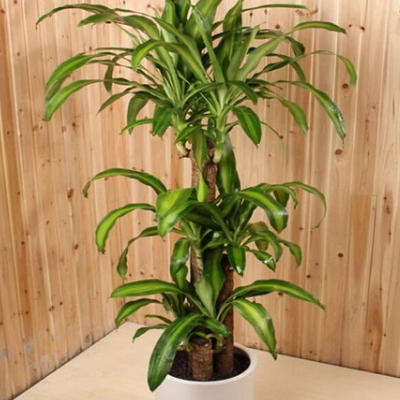
Can Dracaena fragrans be grown hydroponically:
Many gardening enthusiasts are already growing Dracaena fragrans hydroponically, which proves that it can be grown this way. Dracaena fragrans has upright, vigorous stems, a rugged, aged look, and emerald-green leaves that are soft and graceful. It is a very popular indoor foliage plant in recent years. Potted specimens decorating halls, living rooms, and the two sides of building entrances give people a warm, comfortable feeling with a distinctive charm. When growing Dracaena fragrans hydroponically, pay attention to the nutrient solution; in normal care, just pay attention to light and water.
How to prune Dracaena fragrans when it is too tall:
1. First, before pruning, carefully observe the shape of the tree to see whether the shape is suitable.
2. Next, decide which section you want to prune and mark it. Before starting, it is recommended to disinfect the pruning tools first to ensure the plant's safety.
3. When pruning Dracaena fragrans, note that for this variety, pruning generally means a whole branch must be cut off from the entire root node section.
4. When cutting, note that you should cut from top to bottom first, then from bottom to top, and keep the cut surface flat, preferably close against the main trunk. In addition, the cut-off branches, after treatment, can also be used for cuttings to grow into new plants.
I believe many gardening enthusiasts are quite familiar with information about Dracaena fragrans. Dracaena fragrans is an evergreen tree in the Liliaceae family. It can reach a height of more than six meters. After being potted, it is actually recommended to fertilize sparingly; if fertilized excessively, it is very likely to cause Dracaena fragrans to grow too tall, which is unfavorable for indoor potting and unsuitable for ornamental display and care.
Well, that is all for the introduction to the pruning methods for Dracaena fragrans. Dracaena fragrans can be grown hydroponically.
Dracaena fragrans Dracaena fragrans illustrated guide: how to grow Dracaena fragrans / how to propagate Dracaena fragrans
Dracaena fragrans profileDracaena fragrans Dracaena fragrans
How to grow Dracaena fragrans and precautions, an introduction to Dracaena fragrans
Dracaena fragrans is an evergreen tree in the Liliaceae family. It grows over 6 m tall; as a potted plant it is 50 cm to 150 cm tall, with branches; the leaves are clustered at the top of the stem, 40 cm to 90 cm long and 6 cm to 10 cm wide, curved in an arch shape, bright green and glossy. The flowers are small and inconspicuous, and fragrant. It is a famous new-generation indoor foliage plant. The plant form is graceful and neat, and it tolerates slight shade. It likes high temperatures; below 13°C the plant goes dormant and stops growing. It likes loose, well-drained soil; use leaf mold or peat soil for potting. Propagate by cuttings; large quantities of cuttings are all imported from abroad. Cuttings require relatively high temperatures. It likes semi-shade, sunlight, and ample fertilizer. Commonly cultivated plants of the same genus include: Dracaena deremensis, lucky bamboo, Dracaena godseffiana, and Dracaena draco.
Morphological characteristics of Dracaena fragrans
Dracaena fragrans is a tree-like evergreen plant, reaching up to 6 m tall. The stem is thick and much branched. The bark is grayish brown or light brown and peels off in flakes. The leaves are broad and the growth is robust. The Dracaena fragrans sold on the market has a stem diameter of about 5-7 cm. It is about 1.2 m or more in length, with both the top and bottom ends cut flat; leaves sprout at the top and a Dracaena genus plant is grafted in the middle; the leaves are broad with patterns, and the lower root end is radial. Therefore, the general stem lengths are in a long, medium, and short ratio of 100:70:50 cm, planted together in one pot, so that the foliage looks fuller.
The scientific name of Dracaena fragrans is Dracaena fragrans, with the alternative names Brazil iron tree, Brazil millennium tree, and golden-edged fragrant dragon's blood tree. It is an evergreen tree in the Liliaceae family, genus Dracaena, growing over 6 m tall; as a potted plant 50 cm to 150 cm tall, with branches; the leaves are clustered at the top of the stem, 40 cm to 90 cm long and 6 cm to 10 cm wide, as a potted plant 50 cm to 150 cm tall, curved in an arch shape, bright green and glossy. The flowers are small and inconspicuous, fragrant, with branches; the leaves are clustered at the top of the stem, curved in an arch shape, bright green and glossy, the flowers are small and inconspicuous, fragrant; it tolerates slight shade, likes high temperatures, and below 13°C it enters dormancy and stops growing; it likes loose, well-drained soil, and when potted it likes leaf mold or peat soil; it is commonly propagated by cuttings, and cuttings require relatively high temperatures; it likes semi-shade and ample fertilizer. Dracaena fragrans has a graceful, neat plant form and is a world-famous new-generation indoor foliage plant. Common cultivated varieties include: Dracaena fragrans 'Linderii', with pale yellow leaf margins; Dracaena fragrans 'Massangeana', with yellow longitudinal stripes in the center of the leaf surface; Dracaena fragrans 'Victoriae', with deep yellow leaf margins edged in white.
Ecological habits of Dracaena fragrans
It likes environments with ample light, high temperatures, and high humidity, and also tolerates shade and dryness; it also grows well in bright scattered light and in the relatively dry environment of northern living rooms. Dracaena fragrans is a tree-like evergreen plant, reaching up to 6 m tall. The stem is thick and much branched. The bark is grayish brown or light brown and peels off in flakes. The leaves are broad and the growth is robust. The Dracaena fragrans sold on the market has a stem diameter of about 5-7 cm. It is about 1.2 m or more in length, with both the top and bottom ends cut flat; leaves sprout at the top and a Dracaena genus plant is grafted in the middle; the leaves are broad with patterns, and the lower root end is radial. Therefore, the general stem lengths are in a long, medium, and short ratio of 100:70:50 cm, planted together in one pot, so that the foliage looks fuller. Dracaena fragrans likes a hot, humid climate. It is highly adaptable to light and can grow with slight shade or in sunlight, but in spring, autumn, and winter it should receive more sunlight, while in summer it should be shaded or placed in a well-ventilated indoor spot for cultivation. Dracaena fragrans has strong vitality and needs only sunlight, air, and very little water; relying on its own latent energy, it can live very well. During cultivation, if the leaf variegation fades in color, this is often due to the placement being too shady or excessive nitrogen fertilizer application. For potting, use fertile soil rich in humus and well-drained, which can be made by mixing leaf mold and river sand. Dracaena fragrans is drought-tolerant but not waterlogging-tolerant. During the growing season it can be watered thoroughly. Dracaena fragrans is afraid of cold and freezing; in winter it should be placed indoors in a spot with ample sunlight, and the temperature should be maintained at 5°C-10°C. Dracaena fragrans is mostly used as an indoor ornamental plant for the home or office, and placing it beside a sofa looks very stylish. Traditional Chinese medicine can be extracted from the leaf base, stems, and branches of Dracaena fragrans, and it has a hemostatic effect. That is, what many people in China mistakenly call Brazil wood. It likes high temperatures, high humidity, and ample sunlight, and is also drought-tolerant; it avoids alkaline soil. The overwintering temperature must not be below 5°C. Propagation can be done by stem cuttings or leaf cuttings. As exchanges between China and Brazil have increased day by day, a wondrous ornamental plant from Brazil - the Brazil iron column - has also traveled across the ocean from South America to settle in China. Perhaps because it comes from Brazil, many people in China mistakenly call it "Brazil wood." In fact, its real name is "water wood," and it is an evergreen tree or shrub in the Agavaceae family, genus Dracaena, also known as golden-hearted fragrant dragon's blood tree, and it is different from Brazil wood, which is Brazil's national tree. As an indoor potted foliage plant, the Brazil iron column is used in the Americas and Africa in the custom of giving friends stem segments of the Brazil iron column to express good wishes. Brazil wood, however, as Brazil's national tree, is a world-famous precious timber.
Uses and purposes of Dracaena fragrans
Dracaena fragrans is a rather popular large indoor potted flowering plant, especially when placed in relatively spacious living rooms, studies, and sitting rooms, where it has an elegant, simple style with a southern charm. It is a world-famous new-generation indoor foliage plant with a graceful, neat plant form.
Cultivation techniques and propagation of Dracaena fragrans
Propagation can use the cutting method or the hydroponic method, with May to August being the most suitable. After several years of planting, the Brazil iron column may become too large or the lower leaves of the stem may fall off, reducing its ornamental value. The stem can be cut off about 10 cm above the pot surface, and then the stem can be cut into 5-10 cm sections as cuttings. A wooden barrel or large flowerpot can be filled with coarse sand or vermiculite to make a simple cutting bed. Insert 1/3-1/2 of the cutting into the sand in an upright manner; or lay the entire cutting in coarse sand in a semi-reclining manner, leaving about 1-2 cm exposed above the sand surface. The lower 1/3 or so of the cutting can also be soaked in water. Spray water frequently to maintain relatively high humidity in the cutting bed; a temperature of 21-24°C is favorable for the cuttings to take root and sprout. Leafy shoot tips take root relatively quickly and can take root and be potted in 3-4 weeks; stem segments take root somewhat more slowly and sometimes need 2-3 months. The mother plant whose stem has been cut off can have several latent buds below the cut sprout into new branches. When the shoots are more than 15 cm tall, cut them off for cuttings, and they can take root and be potted in 2-3 weeks. Leaf cuttings are made by taking a complete leaf and inserting it into a sterilized substrate. With the same management, it can also take root in about two months. After transplanting, in about 40 days, new shoots will sprout at the junction of root and leaf, and after growing they become independent plants.Management
As long as conditions such as temperature are suitable, Dracaena fragrans can grow all year round. During high summer temperatures, it needs appropriate shading, and the indoor temperature in winter must not be below 5°C. However, it is best to let it go dormant in winter; the dormancy temperature is 13°C. If the temperature is too low, yellow-brown spots will appear on the leaf tips and leaf margins. When placing Dracaena fragrans indoors, it should be in a spot with ample light. If the light is too weak, the patterns on the leaves will turn green, and the basal leaves will yellow, losing their ornamental value. During cultivation, keep the water clean; water 1-2 times a week, and do not use too much water, to prevent the trunk from rotting. During high summer temperatures, you can use misting to increase air humidity, and spray water on the leaves to keep them moist. The Brazil iron column likes high temperatures, high humidity, and ample sunlight; if it is too shady, the leaf color fades. In summer it requires semi-shade, and it avoids alkaline soil. For potting soil, it is best to use leaf mold or peat soil, adding about 1/4 river sand or perlite and a small amount of decomposed organic fertilizer. Loose, well-drained soil rich in organic matter is beneficial to its growth. During the growing period, apply a dilute fertilizer solution mainly of phosphorus and potassium once about every half month, to prevent the plant from growing leggy and the leaf color from turning green again. Repot and change the soil every year in early spring, and apply sufficient base fertilizer. The Brazil iron column has strong adaptability and strong drought resistance; it will not die of dryness even if not watered for several days. But if you want it to grow well, there must be a sufficient water supply. Especially in the vigorous summer growing season, it must not lack water. Place the flowerpot in a bright indoor spot; if the temperature is suitable and water and fertilizer are appropriate, it can grow all year round. Only when the temperature is below 13°C does the plant go dormant and stop growing; at this time, reduce watering, water so that it alternates between moist and dry, and stop topdressing. Low temperature is the main cause of leaf drop in winter. Irregular watering, or insufficient nutrient supply, plus dry indoor air, or excessive fertilization, are all physiological diseases that cause leaf tip scorch. When scorched leaves appear, treat them according to the situation. If the water and fertilizer supply is insufficient, spray water on it 2-3 times a day, spray once a week with a 0.1% ammonium sulfate or potassium dihydrogen phosphate solution, and sometimes move it outdoors to receive morning sunlight. When the weather is warmer, switch to a larger pot, replace the soil, and replant, and afterward it can grow more white roots and continue to grow vigorously. If fertilization is excessive, immediately change the soil, rinse the roots with water at a temperature similar to the air temperature, and then replant. The Brazil iron column tolerates pruning; as long as the top or upper stem is cut off, latent buds below the cut will grow new branches and leaves, and 1-5 buds can sprout at the same time, then grow into individual plants.Temperature and light
The suitable growth temperature for Dracaena fragrans is 20°C to 28°C, the dormancy temperature is 13°C, and the overwintering temperature is 5°C. If the temperature is too low, yellow-brown spots will appear on the leaf tips and leaf margins, and in severe cases the tender branches or the whole plant may be frozen. Therefore, in the north in winter it must be moved into a greenhouse for care. When placed indoors, it should be placed in a spot with light, and the room temperature should preferably be maintained at 6°C to 8°C or above. When the temperature is low at night, you can cover it with a plastic bag to keep it warm; when the sun comes out during the day and the room temperature rises, remove the plastic bag promptly to allow heat to dissipate and the temperature to drop, preventing it from being suffocated. If there is heating equipment indoors, place the pot farther away to prevent the branches and leaves from being dried out or damaged by the heat. Also pay attention to indoor air circulation, but when opening doors and windows, do not let cold wind blow directly on the branches and leaves, and do not casually move it outdoors to sunbathe, to prevent freezing.Water and humidity
Dracaena fragrans does not need much water, but it has relatively high humidity requirements. After potting, water thoroughly to settle the roots, and place it in a brighter indoor spot or in a shade shed for care. The potting soil should remain moist, and the leaves should be sprayed with water frequently to increase the air humidity of the surrounding environment, but the potting soil should not be waterlogged, to avoid poor ventilation and permeability causing root rot. In the north, Dracaena fragrans is cared for during the growing period in spring, summer, and autumn; on sunny days, water once every 2 to 3 days, and spray the leaves with water 1 to 2 times a day. After late autumn, watering should be controlled, keeping the potting soil slightly moist. In winter, watering should be controlled, keeping the potting soil half dry and half moist; if watered too much, it will cause root rot and scorched leaves.Soil and fertilizer
Dracaena fragrans is suitable for loose, well-drained, fertile river-sand loam rich in humus. For potting Dracaena fragrans, you can use garden soil, leaf mold, peat soil, and river sand in a ratio of 3:2:2:3, or mix 2/3 dried and finely crushed fertile pond mud with 1/3 coarse river sand to make the growing medium. If selecting thick stems for planting, the growing medium can be made by mixing equal amounts of vermiculite, peat soil or garden soil, and river sand. The potted Dracaena fragrans on the market is mostly fine sand soil, which producers use to let the plant fully develop roots; long-term use will be unfavorable to plant growth. To make the plant grow vigorously, peat soil must be added in stages. In addition, Dracaena fragrans should be repotted once a year. When repotting, replace 1/3 of the old soil and add new sandy soil, and trim the leaves and stems and the aged, scorched leaves on the lower part of the stem. During growth, Dracaena fragrans consumes some of its own nutrients; if fertilizer is not applied in time at this point, it will cause a lack of staying power and gradual decline. During the growing period, first bury and apply organic fertilizer at the base or edges, then apply a liquid fertilizer once every 15 to 20 days, or a compound fertilizer 1 to 2 times, to ensure lush growth of branches and leaves. Fertilization should use dilute fertilizer, and strongly avoid concentrated fertilizer; the fertilization period is from May to October each year. Stop fertilizing in winter and move it indoors to overwinter. For variegated varieties, when fertilizing, pay attention to reducing the proportion of nitrogen fertilizer, to avoid causing leggy leaf growth and causing the variegation to fade or even disappear.
Pruning methodsFirst look at the tree's vigor to determine whether pruning is needed and whether there is any deviation in shape. Then decide which branch section you need to prune, and you can use a tool to make a mark to make pruning easier. After doing so, look again to confirm whether there are any marks you are not satisfied with and whether they need to be modified. Then start; use pruning shears or other knives, which should be sharp, so that pruning is convenient and the wound is relatively neat. Remember to disinfect the knife with alcohol first. Pruning Dracaena fragrans generally means cutting off a whole branch from the root node. When cutting, note that you should cut from top to bottom for more than half, then cut from bottom to top, and remember to keep the cut parallel and close against the main trunk. Remove some large leaves from the cut-off branch, and it can be used for cuttings to grow into a new plant.Winter care precautionsImproper winter care often causes the following problems: leaves drooping and wilting, a lusterless and listless leaf surface, and no improvement after watering. These problems are mostly caused by root rot due to too much or too little watering. At this time, the rotten roots should be removed. If the bottom wooden stump is rotten, it can be sawed off, soaked in 2‰ potassium permanganate water for 10-30 minutes, and buried in a substrate soil mixed with sand or ash residue and other well-drained materials. If the center of the leaf bud turns black and gradually rots outward, it is due to too low a temperature and is mostly caused by freezing damage. If the bark of the wooden stump is not rotten, it can still be moved to a high-temperature place to force new shoots to sprout, and remove the old shoots to renew it. Leaf margin scorch or dry tips are sometimes caused by dry air, which can be improved by frequently spraying water on the leaves. Some are caused by a relatively low temperature and a state of slow dormancy. The most suitable temperature should be 20-25°C (below 13°C growth slows, and below 5°C frost damage occurs). The yellow patterns on the leaves becoming lighter and gradually fading is caused by the indoor light being too dim; it can be reversed by giving it some sunlight appropriately.
Disease control of Dracaena fragrans and how to nurture it when it wilts
During the growing period, Dracaena fragrans should be given appropriate foliar topdressing, spraying the leaves with a 100-fold diluted nutrient solution once every half month. After several years of cultivation, when the plant is too tall or the lower leaves of the stem have fallen off and the plant form is poor, it should be pruned. Repot or change the soil every year in early spring. If the environment for potted Dracaena fragrans is unsuitable, it may be harmed by red spider mites, thrips, scale insects, and others. In addition, excessive ventilation, drought, irregular watering, and excessive fertilization can all cause leaf tip scorch. Controlling watering in winter is key for Dracaena fragrans; generally, depending on the indoor temperature, water as little as possible. Too much water will cause root rot, and winter is not suitable for cuttings, so even if discovered it is hard to save. Therefore, I advise all gardening enthusiasts not to water too diligently in winter. You can slightly pry open the bark of Dracaena fragrans to check the necrotic part; normal tree flesh is light green and moist. When the tree flesh is found to be dark brown, you can cut off the trunk and keep the section with light green tree flesh for cuttings. If it is all dark brown, unfortunately there is no saving it! This is because only trunks with light green tree flesh can survive sand cuttings or water cuttings. Water cuttings should be done when the weather is not too hot, around 25 degrees, changing the water once every 3-5 days. In summer or when the temperature is high, change the water once a day. You can put some charcoal pieces in the water to prevent rot. Sand cuttings are relatively simple: let the sawed-off trunk dry a little, seal both ends with wax, and insert one third into the sand. Water thoroughly and place in semi-shade. Also, do not spray water on the leaves in winter, as it easily causes heart rot. Note: pry open the bark slightly to check; do not peel off all the bark.
Causes of withered yellow leaves
1. Waterlogging: too much watering, with standing water in the saucer, which causes the plant roots to lack oxygen and rot, leading to withered yellow leaves. The solution is Dracaena fragrans: remove the saucer, water as little as possible, and it is best to change the soil once. 2. Pests: the symptoms you describe may be red spider mites or thrips (it cannot be scale insects), so use acaricide at 1:1200 dilution (cypermethrin is also acceptable), 2-3 times a week (in winter it must be sprayed at noon), for 2-3 weeks continuously. 3. Temperature: does your home have heating on? Too much heating or no heating at all will affect the growth of tropical plants such as Dracaena fragrans (I guess your situation is most likely this one). If the heating is too strong, the indoor temperature and evaporation are correspondingly higher, so you should increase the number of daily leaf sprays to maintain the plant's moisture. If the heating is not on, the indoor temperature is lower (like in our Chongqing, we do not need heating in winter), and when the plant is frozen, the leaves will rot and turn yellow. The solution is to wrap the entire Dracaena fragrans plant in film, or cover it with a large plastic bag, and then move it to a warm, sheltered spot indoors (even the bathroom is fine, but be careful to maintain moisture), and move it out again next March. Finally, no matter which of the above symptoms your Dracaena fragrans has, you must prune the yellow leaves. Remember to cut the incisions into | or / shapes to reduce the wound surface, and spray with carbendazim at 1:1000 dilution to prevent infection.
Take off the tray, water as little as possible, and it is best to change the soil once. 2. Pests: the symptoms you describe may be red spider mites or thrips (it cannot be scale insects), so use acaricide at 1:1200 dilution (cypermethrin is also acceptable), 2-3 times a week (in winter it must be sprayed at noon), for 2-3 weeks continuously. 3. Temperature: does your home have heating on? Too much heating or no heating at all will affect the growth of tropical plants such as Dracaena fragrans (I guess your situation is most likely this one). If the heating is too strong, the indoor temperature and evaporation are correspondingly higher, so you should increase the number of daily leaf sprays to maintain the plant's moisture. If the heating is not on, the indoor temperature is lower (like in our Chongqing, we do not need heating in winter), and when the plant is frozen, the leaves will rot and turn yellow. The solution is to wrap the entire Dracaena fragrans plant in film, or cover it with a large plastic bag, and then move it to a warm, sheltered spot indoors (even the bathroom is fine, but be careful to maintain moisture), and move it out again next March. Finally, no matter which of the above symptoms your Dracaena fragrans has, you must prune the yellow leaves. Remember to cut the incisions into | or / shapes to reduce the wound surface, and spray with carbendazim at 1:1000 dilution to prevent infection.Pest controlDracaena fragrans sometimes shows phenomena such as scorched leaf margins and scorched leaf tips, which are mostly physiological diseases caused by drought, too low temperature, improper watering, and fertilization. The control method is: improve cultivation management, control temperature and humidity, fertilize reasonably, and provide appropriate ventilation. Dracaena fragrans should always keep its leaves clean, and once pests occur, remove the pests promptly. The sugarcane borer moth is quite harmful to Dracaena fragrans; you can move the affected Dracaena fragrans to a cool outdoor spot and spray with 40% omethoate emulsifiable concentrate at 1000-fold dilution or 90% trichlorfon at 800-fold dilution, once a week for 3 consecutive times. Common leaf spot and anthracnose damage can be sprayed with 70% thiophanate-methyl wettable powder at 1000-fold dilution. Pests include scale insects and aphids, which can be killed by spraying with 40% omethoate emulsifiable concentrate at 1000-fold dilution.
Potted care and management of Dracaena fragrans
The soil in the flowerpot where Dracaena fragrans is planted should stay moist, but must not be waterlogged, otherwise the roots will rot. Because of its vigorous growth and high water consumption, it is prone to water shortage, so attention should be paid to timely watering. In normal weather, water thoroughly once a day, and sprinkle water on the space or floor 2 to 3 times; the air humidity requirement is 80%, and high temperature and high humidity favor its rapid growth. Too much or too little watering will both cause root rot, drooping and wilting leaves, and a lusterless leaf surface. At this time, the rotten roots should be removed. If the bottom wooden stump is rotten, it can be sawed off, soaked in 0.2% potassium permanganate water for 10 to 30 minutes, and buried in a well-drained substrate soil. Scorched or withered leaf margins are caused by dry air, and can be improved by frequently spraying water on the leaves. The potting soil should be a soil with a certain water and fertilizer retention capacity, and airy and loose. Generally, a mixture of coconut coir and river sand at 6:4 is best, or peat soil and river sand mixed at 1:1 is relatively ideal. Repot once every two years to renew the root system and enhance vitality. Because it is a foliage plant, the proportion of nitrogen fertilizer should be slightly higher; usually apply a complete NPK compound fertilizer once a month, and at the same time apply foliar topdressing with a 0.2% to 0.3% aqueous solution of potassium dihydrogen phosphate + urea 2 to 3 times. For varieties with golden or silver variegation, appropriately apply more phosphorus and potassium fertilizer and less nitrogen fertilizer; too much nitrogen fertilizer will cause the plant to grow leggy and the leaf color to turn green again, reducing ornamental value. Its suitable growth temperature is 20°C to 25°C. When the indoor temperature is not lower than 18°C, Dracaena fragrans can grow; if the temperature is below 13°C, it enters dormancy. If the temperature is too low, because the roots have difficulty absorbing water and the water evaporated from the leaves cannot be replenished in time, yellow-brown spots easily appear on the leaf margins, reducing its ornamental value. In winter, the indoor temperature should be maintained at between 6°C and 10°C at the lowest. If the indoor temperature is too low and the air is dry, the lower leaves will yellow and then scorch at the margins, and some leaves may even wither and die. If the center of the leaf bud turns black and gradually rots outward, it is due to too low a temperature and is mostly caused by freezing damage. If the bark of the wooden stump is not rotten, it can still be moved to a high-temperature place to force new shoots to sprout, and remove the old shoots to renew it. Its main pests and diseases are trunk-boring pests. Among them, the sugarcane borer moth and longhorn beetle pests bore up and down within the cortex of the wooden stem as larvae; in mild cases, insect tunnels appear and a small amount of frass is discharged, while in severe cases the fleshy part inside the epidermis is entirely eaten, eventually causing the branches and leaves to gradually wilt, wither, and yellow, losing the ornamental effect of a foliage plant. Move Dracaena fragrans to a cool outdoor spot, and spray or pour with 40% omethoate at 1000-fold dilution, once a week for 3 consecutive times. Mixing insecticide into a 1:200 poisoned soil and evenly sprinkling it on the pot soil surface can also kill pests. For some diseases such as anthracnose that occasionally appear on the leaves, spraying with 75% wettable powder chlorothalonil or 85% thiophanate at 800-fold dilution can effectively prevent and control them.
How Dracaena fragrans overwinters
There are roughly two situations for Dracaena fragrans overwintering indoors. One is that the temperature is suitable and the light is ample, and Dracaena fragrans is in a normal growth state. At this time, because of vigorous growth and high water consumption, it is prone to water shortage, so attention should be paid to timely watering, generally once every 2-3 days. The other is that the temperature is low and the light is weak, and Dracaena fragrans is in a slow-growth state; at this time water consumption is low and waterlogging is likely, so watering should be appropriately reduced. On the one hand, this can improve the cold resistance of Dracaena fragrans, and on the other hand it can also enhance soil permeability and ensure normal root respiration. Improper winter care often causes the following problems: leaves drooping and wilting, a lusterless and listless leaf surface, and no improvement after watering. These problems are mostly caused by root rot due to too much or too little watering. At this time, the rotten roots should be removed. If the bottom wooden stump is rotten, it can be sawed off, soaked in 2‰ potassium permanganate water for 10-30 minutes, and buried in a substrate soil mixed with sand or ash residue and other well-drained materials. If the center of the leaf bud turns black and gradually rots outward, it is due to too low a temperature and is mostly caused by freezing damage. If the bark of the wooden stump is not rotten, it can still be moved to a high-temperature place to force new shoots to sprout, and remove the old shoots to renew it. Leaf margin scorch or dry tips are sometimes caused by dry air, which can be improved by frequently spraying water on the leaves. Some are caused by a relatively low temperature and a state of slow dormancy. The most suitable temperature should be 20-25°C (below 13°C growth slows, and below 5°C frost damage occurs). The yellow patterns on the leaves becoming lighter and gradually fading is caused by the indoor light being too dim; it can be reversed by giving it some sunlight appropriately.
Biological characteristics of Dracaena fragrans. Dracaena fragrans is native to the Canary Islands in western Africa. It likes a high-temperature, high-humidity, and sunny environment. The suitable growth temperature for Dracaena fragrans is 18-24°C, from March to September 24-30°C, and from September to the following March 13-18°C. When the winter temperature is below 13°C, it enters dormancy, and below 5°C the plant suffers freezing damage. Among them, Dracaena sanderiana 'Boringuesis' can tolerate a low temperature of 2°C. Dracaena fragrans likes moisture and fears waterlogging. During the vigorous leaf growth period, keep the potting soil moist, with air humidity at 70%-80%, and frequently spray water on the leaves, but the potting soil must not be waterlogged. During the winter dormancy period, watering should be controlled, otherwise leaf tip scorch easily occurs. Dracaena fragrans has strong adaptability to light; under ample sunlight or semi-shade, the stems and leaves can grow and develop normally, but variegated-leaf types kept under low light for a long time will have their colors fade or disappear. The cultivation soil should preferably be fertile, loose, and well-drained sandy loam; for potting, a mixed soil of leaf mold, growing medium, and coarse sand is best. Variety classification of Dracaena fragrans
There is Dracaena fragrans 'Linderii', with pale yellow leaf margins; Dracaena fragrans 'Massangeana', with yellow longitudinal stripes in the center of the leaf surface; Dracaena fragrans 'Victoriae', with deep yellow leaf margins edged in white. Ornamental species of the same genus include Dracaena concinna cv. 'Tricolor', with green leaves and yellow-white and red longitudinal stripes. Dracaena concinna cv. 'Rainbow', with a pale yellow midrib, deep red margins, and a light brown area between the midrib and margins. Dracaena deremensis, among which the cultivar 'Bausei' has dark green leaves with a broad milky-white band in the center; 'Janet Craig' has golden yellow leaves; 'Roehrsii' has green-white leaf surfaces with golden yellow stripes; 'Roehrs Gold' has cream-colored leaf margins and grayish green centers; 'Warneckei' has long sword-shaped leaves with twisted tips, dark green margins, pale green midribs, and white markings. Dracaena godseffiana has dark green leaves with yellow and milky-white spots. Its cultivars 'Florida Beauty' has leaf surfaces densely covered with creamy-yellow spots; 'Friedman' has dark green leaves with a white band in the center and densely covered milky-white spots along the margins. Dracaena goldieana has ovate leaves with transverse light green and grayish-white bands. The cultivars of lucky bamboo (Dracaena sanderiana) include 'Celes', with leaves 1-2 cm wide, dark green, with white margins; 'Margaret Berkery', with white bands along the leaf margins; 'Virescens', with yellow bands along the leaf margins; 'Boringuesis', with dark green leaf surfaces and yellow-green fine stripes.
Purchasing standards for Dracaena fragrans
When buying Dracaena fragrans on the market, first check whether the stem has wounds or damage, and at the same time gently press the bark with your hand; bark eroded by pests and diseases will be relatively soft. Then gently shake the stem; if the stem is not very loose, it indicates that considerable roots have already grown. Only such Dracaena fragrans is more conducive to survival; otherwise, no matter how beautiful the leaves look, it is in a state of false survival. Finally, check whether the leaves are flat and extended. The leaf color of Dracaena fragrans should be clear and bright, the leaf buds should basically not be loose, and the leaf center should not be rotten.
Distribution area of Dracaena fragrans
Native to western Africa. It is also distributed in Yunnan, Guangxi, and Hainan in China, as well as Thailand, Laos, Cambodia, Indonesia, and the Americas.
Flower language of Dracaena fragrans
Good fortune and wishes, glory and wealth!
Dracaena fragrans pictures
What is Dracaena fragrans and how to grow Dracaena fragrans
Dracaena fragrans likes loose, well-drained soil; use leaf mold or peat soil for potting. Propagate by cuttings; large quantities of cuttings are all imported from abroad. Cuttings require relatively high temperatures. It likes semi-shade, sunlight, and ample fertilizer. Commonly cultivated plants of the same genus include: Dracaena deremensis, lucky bamboo, Dracaena godseffiana, and Dracaena draco.
What is Dracaena fragrans
Dracaena fragrans is a tree-like evergreen plant, reaching up to 6 m tall. The stem is thick and much branched. The bark is grayish brown or light brown and peels off in flakes. The leaves are broad and the growth is robust. The stem diameter of Dracaena fragrans is about 5-7 cm. Artificially cultivated ones are about 1.2 m or more in length, with both the top and bottom ends cut flat; leaves sprout at the top and a Dracaena genus plant is grafted in the middle; the leaves are broad, resembling corn, with patterns, and the lower root end is radial.
After growing for about ten years or so, it mostly blooms. The flowers are in spreading clusters on the branch platform, in long strings, white with a slight pale yellow tinge, and their strong fragrance is extremely similar to night-blooming jasmine. The blooming of Dracaena fragrans flowers is peculiar; the degree of opening changes with day and night. During the day, as the ambient temperature rises, they slowly close like an umbrella, and the fragrance weakens or disappears. After sunset, as the night deepens, they slowly open like an umbrella, opening to the maximum. The flower shape closely resembles honeysuckle, but is slightly thinner and smaller than honeysuckle. The flowering period of Dracaena fragrans is about one week or so, and the flowers will keep alternating between opening and closing until they wither and fall. During the flowering period, a transparent resin is secreted around the flower branches, and its taste is sweet.
Dracaena fragrans likes a hot, humid climate. It is highly adaptable to light and can grow with slight shade or in sunlight, but in spring, autumn, and winter it should receive more sunlight, while in summer it should be shaded or placed in a well-ventilated indoor spot for cultivation. Dracaena fragrans has strong vitality and needs only sunlight, air, and very little water; relying on its own latent energy, it can live very well. Dracaena fragrans is drought-tolerant but not waterlogging-tolerant. During the growing season it can be watered thoroughly. Dracaena fragrans is afraid of cold and freezing; in winter it should be placed indoors in a spot with ample sunlight, and the temperature should be maintained at 5°C-10°C.
Dracaena fragrans is a rather popular large indoor potted flowering plant, especially when placed in relatively spacious living rooms, studies, and sitting rooms, where it has an elegant, simple style with a southern charm. It is a world-famous new-generation indoor foliage plant with a graceful, neat plant form.
How to grow Dracaena fragrans
For the soil used for potting Dracaena fragrans, it is best to use leaf mold or peat soil, adding about 1/4 river sand or perlite and a small amount of decomposed organic fertilizer. Loose, well-drained soil rich in organic matter is beneficial to the growth of Dracaena fragrans.
Propagation of Dracaena fragrans can use the cutting method or the hydroponic method, with May to August being the most suitable. The stem can be cut off about 10 cm above the pot surface, and then the stem can be cut into 5-10 cm sections as cuttings.
A wooden barrel or large flowerpot can be filled with coarse sand or vermiculite to make a simple cutting bed. Insert 1/3-1/2 of the cutting into the sand in an upright manner; or lay the entire cutting in coarse sand in a semi-reclining manner, leaving about 1-2 cm exposed above the sand surface. The lower 1/3 or so of the cutting can also be soaked in water.
Spray water on the leaves of Dracaena fragrans frequently to maintain relatively high humidity in the cutting bed; a temperature of 21-24°C is favorable for the cuttings to take root and sprout. Leafy shoot tips take root relatively quickly and can take root and be potted in 3-4 weeks; stem segments take root somewhat more slowly and sometimes need 2-3 months. The mother plant whose stem has been cut off can have several latent buds below the cut sprout into new branches. When the shoots are more than 15 cm tall, cut them off for cuttings, and they can take root and be potted in 2-3 weeks.
How to grow Dracaena fragrans
Dracaena fragrans likes a semi-shady and sunny environment, and it is a relatively drought-tolerant plant; relatively speaking, Dracaena fragrans is afraid of water. When watering Dracaena fragrans, in winter generally water once a week, and in summer water twice a week.
In winter, the indoor temperature should be kept above 12 degrees. In summer, do not let the air conditioner blow directly on the Dracaena fragrans plant; be sure to let in plenty of natural air.
During the growing period of Dracaena fragrans, apply a dilute fertilizer solution mainly of phosphorus and potassium once about every half month, to prevent the plant from growing leggy and the leaf color from turning green again.
During routine care, if the leaves of Dracaena fragrans turn yellow, promptly prune the edge parts to prevent spread. At this time, be sure to let the potted Dracaena fragrans have more light and ventilation to improve the situation.
Is the bloom of Dracaena fragrans poisonous?
The flowers of Dracaena fragrans themselves are not poisonous; if the scent is too strong, it is best to move it outdoors or to a larger space when it blooms. The flowers of Dracaena fragrans are beneficial to the human body when grown indoors. It absorbs harmful gases such as xylene, toluene, trichloroethylene, benzene, and formaldehyde, and is suitable for indoor cultivation.
Is the bloom of Dracaena fragrans auspicious?
In African regions, the blooming of Dracaena fragrans foretells good wishes and is regarded as a symbol of wealth and good fortune. Dracaena fragrans likes moisture. From seed to maturity, it needs seven or eight years or even longer, and generally it shows signs of blooming only after growing for several decades. In the north, Dracaena fragrans is not easy to keep alive, and even in the south it rarely blooms, so if it blooms, it is very rare.