Is Dracaena fragrans toxic? Causes of yellowing leaves and solutions
Dracaena fragrans can be kept in the office and has ornamental value. Is Dracaena fragrans toxic? What should you do if its leaves turn yellow?
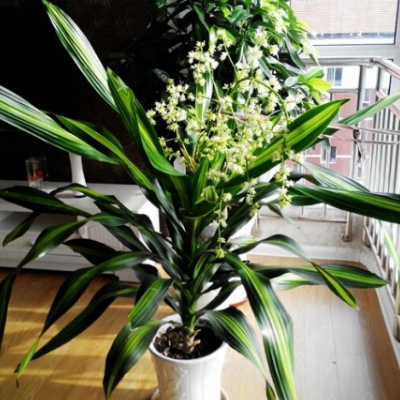
Is Dracaena fragrans toxic:
Non-toxic. It likes a high-temperature, high-humidity, well-ventilated environment. The suitable growth temperature is 20-30°C. It prefers light but also tolerates shade, fears scorching sun, and avoids dryness and drought. It likes loose, well-drained sandy soil. Placed in an indoor spot with ordinary light, it can last 6 months to 2 years, and it can effectively absorb harmful gases such as formaldehyde and benzene indoors. It is one of the most shade-tolerant ornamental plants among indoor green plants.
What should you do if Dracaena fragrans leaves turn yellow:
1. The environment and temperature have not met the growth conditions of Dracaena fragrans.
2. Lack of fertilizer, lack of water, or long-term lack of light.
3. The leaves have been covered with dust for a long time, causing disease.
If Dracaena fragrans leaves turn yellow, you can check the situations above one by one. At the same time, you can repot it with some potted soil that has better air permeability, and mix in 1/3 sand. Once watering, light and temperature all meet the requirements, and the yellowed leaves are cut off, this can help prevent the problem. At the same time, you can strengthen daily care to avoid pest and disease damage.
Dracaena fragrans is suited to a high-temperature, high-humidity environment. It can grow in both sufficient light and shade. A dormancy temperature of 13°C is suitable, and it must not be lower than 5°C. Dracaena fragrans stays evergreen in all four seasons, has strong adaptability, is easy to manage, grows slowly, and has a long lifespan. It is an excellent foliage plant for indoors and outdoors, especially indoors. For light, 50—60% shading is best, and direct strong light should be avoided.
When grown indoors, Dracaena fragrans should be placed in a spot with relatively sufficient light. Insufficient light will make its leaves fade, become slender, and develop wavy leaf edges. For fertilizing Dracaena fragrans, organic fertilizer can be used, such as decomposed peanut bran or human manure and urine as barnyard manure, while also applying a three-element foliar fertilizer 3—4 times a month. Dracaena fragrans likes high temperature and high humidity, with an optimal growth temperature of 20—30°C. In winter, when the temperature is below 10°C, cold protection measures should be taken to prevent cold damage from drying out the leaves. Pay attention to good ventilation and keep the relative air humidity above 80%.
Alright, that is all for the introduction on solutions for yellowing leaves of Dracaena fragrans. Dracaena fragrans is not toxic.
Is Dracaena fragrans flowering toxic_Complete collection of Dracaena fragrans pictures
Dracaena fragrans is a green plant belonging to the genus Dracaena in the family Liliaceae. Its leaf form is very elegant, making it a fine plant suitable for all kinds of home decoration. It is suitable for placement in the living room, study, office, and so on. It can absorb harmful substances such as formaldehyde and toluene, and it is a plant with relatively good shade tolerance indoors. Its ability to cope with light is very strong, and it is suitable for placement in relatively dark places, with very good ornamental value. Below, let us take a look at whether Dracaena fragrans flowering is toxic, and enjoy a brief appreciation of a complete collection of Dracaena fragrans pictures.
[Complete collection of Dracaena fragrans pictures—morphological characteristics]
Dracaena fragrans is an evergreen small tree plant. Its plant height is generally 4cm, and its leaves are very wide and linear, rather leathery, with a shape that is ovate or oblong, a heart-shaped base, and growing on the upper half of the stem. In the middle of Dracaena fragrans there is a broad yellow stripe, the leaf edges are green, the edges are acuminate and slightly blunt, and the leaves are curved and bow-shaped. The plant height of Dracaena fragrans is 60-120cm, and it is a very popular indoor potted flowering and foliage plant. It is generally grown in studies, living rooms, home interiors, and so on, looking very elegant and simple and giving people a sense of exotic charm. Its plant shape is very graceful and regular, and it is one of the world's very famous indoor foliage plants.
[Complete collection of Dracaena fragrans pictures—growth habits]
Dracaena fragrans likes to grow in an environment with sufficient sunlight, moisture, and good ventilation, and its tolerance for partial shade is very good, but it cannot grow in a relatively shady environment for a long time. It can receive some scattered light, otherwise the plant will become leggy. In summer, direct sunlight should be avoided, otherwise the leaves will be scorched, and the leaves will turn yellow or white. Under insufficient light, the leaves of Dracaena fragrans are grayish green, the glossiness is not particularly good, and the basal leaves are yellow, thus losing ornamental value. When Dracaena fragrans is growing, do not water it excessively. Keep the soil dry-wet alternating, as this is more conducive to the growth of Dracaena fragrans. Also keep Dracaena fragrans clean, and combine the amount of fertilizer with the amount of watering, applying some water-soluble decomposed fertilizer, preferably cake fertilizer. Especially during the growth period, sufficient fertilizer and water must be given, as this is more conducive to the growth of Dracaena fragrans.
[Complete collection of Dracaena fragrans pictures—cultivation methods]
When cultivating Dracaena fragrans, choose relatively superior varieties, and use plants that grow more robustly and have not been harmed by pests or diseases for cuttings propagation. After cutting, keep the soil moist and loose with relatively good air circulation, and cover the plant with plastic film to maintain humidity and temperature. At the same time, use tiles or similar material for drainage and air circulation. In spring, summer, and autumn, place it in a shady place during the day, and keep it in the open air at night. In winter, it needs to be placed indoors to maintain the temperature and humidity of the environment. The suitable growth temperature for Dracaena fragrans is 20-30°C. In winter, the temperature must not be lower than 10°C, otherwise the leaves will wither or turn yellow. Under insufficient light, place it in a semi-shaded environment and give it some scattered light, as this is more conducive to growth. Also keep the leaf surface clean, otherwise it will bring pest and disease damage, thereby reducing ornamental value.
[Is Dracaena fragrans flowering toxic]
Dracaena fragrans is a foliage plant with very good ornamental value. It is suitable for indoor cultivation and can help absorb harmful gases such as formaldehyde and toluene in the air. It is one of the more shade-tolerant indoor plants. It does bloom, and when the flowers are in full bloom they give off a fragrance, along with pollen and secreted mucus. Many people have doubts about whether Dracaena fragrans flowering is toxic. Dracaena fragrans flowers are not toxic, but if some people have a relatively sensitive constitution, they may experience allergies or trigger allergic diseases and other symptoms when Dracaena fragrans blooms. So everyone can rest assured when cultivating Dracaena fragrans; Dracaena fragrans flowering has no toxicity at all.
More related information Dianthus chinensis pictures Dianthus plumarius pictures Rubber tree cultivation methods Spathiphyllum cultivation methods
Daily care and management key points for 10 common household ornamental plants
How should ornamental plants grown in home courtyards be managed? Today the Hui Nong Wang editor mainly brings you the key points for home care and planting of several common ornamental plants. Flower lovers who need them can save this.
1 Money Tree (Chinese name: Malabar chestnut)
Money Tree is a plant of the genus Pachira in the family Bombacaceae. It is evergreen in all four seasons and has the function of absorbing carbon monoxide and carbon dioxide. It can effectively change the indoor air environment and also plays a certain role in purifying residual indoor smoke odor. Coupled with its auspicious name, it is currently deeply loved by people.
Money Tree likes a high-temperature, high-humidity growth environment, has poor cold resistance, likes acidic soil, and avoids alkaline soil and heavy clay soil; it is drought-tolerant and also tolerant of waterlogging; although it likes light, its shade tolerance is also very strong, so it is suitable for long-term placement indoors in a spot with relatively good light. The key point of home care and management lies in watering. Generally speaking, you should master the watering principle of dry-wet alternating. In spring and autumn, when the temperature is relatively moderate, decide the number of waterings according to the dry or humid condition of the air. Under normal circumstances, watering once every 2-3 d is enough. In summer, when temperatures are high and the temperature exceeds 35°C, water at least 2 times a day. If the air conditioner is kept on indoors for a long time, pay attention to frequently spraying water mist on the leaf surface to maintain air humidity. In spring and autumn, fertilize 2-3 times a month, which can promote new leaf growth. At the same time, pay attention to maintaining the air humidity of the indoor environment to prevent new leaves from stagnating in growth. In winter, when the temperature is relatively low, Money Tree is in a semi-dormant period. At this time, do not water too much. Watering once every 5-7 d is enough. At the same time, ensure relatively sufficient light to guarantee leaf quality and ornamental value.
2 Fortune Tree (Chinese name: Heteropanax fragrans)
Fortune Tree is a plant of the genus Heteropanax in the family Araliaceae. It has luxuriant leaves and branches, a straight trunk, an open crown, and a naturally elegant tree form. The whole plant has a naturally spreading tree shape and a vigorous, upright tree posture, with extremely strong ornamental value, making it suitable for home placement.
For Fortune Tree, during the growing season the potted soil should often be kept moist, and the potted soil must not be allowed to dry out, especially in midsummer. Spray water on the leaf surface frequently; excessive dryness will make the leaf tips and leaves dry up. However, in winter the potted soil should not be too wet, and you can often spray water mist on the leaf surface. The planting pot must not accumulate water, and you must not water frequently, as root rot is very likely to occur. In spring and autumn, Fortune Tree should receive somewhat more light, with 3-4 h of light per day, to maintain the bright color of the leaves. In summer and autumn, provide appropriate shade, spray water once a day, and clean dust from the leaf surface to make growth more vigorous and the leaf color greener.
In a high-temperature environment, Fortune Tree is prone to leaf spot disease. When placing Fortune Tree indoors, ventilation and light transmission should be strengthened. If a small number of diseased leaves are found, remove and burn them in time. When scale insects harm Fortune Tree, if a small number of live insects are found, wipe them off in time with a damp cloth, or remove them with transparent tape.
3 Golden Pothos (Chinese name: Devil's Ivy)
Golden Pothos is a plant of the genus Epipremnum in the family Araceae. It is good-looking and inexpensive, and convenient to grow and care for. It can absorb harmful gases such as formaldehyde, benzene, and trichloroethylene in the air, equivalent to an indoor air purifier. Together with its dripping green leaves and tender stems, it has won people's boundless affection.
Golden Pothos likes a warm, moist, semi-shaded growth environment, and is also relatively tolerant of dry environments. It is a commonly used plant for indoor placement. The potting soil for planting should be loose, well-drained, and have a certain fertility; Golden Pothos is relatively sensitive to light. When placed indoors, do not put it in a place where sunlight can shine directly, so as to avoid damaging the leaves, causing yellow spots, and affecting the ornamental effect; because its root system grows quickly, long-term moist soil will lead to root rot and rotting of the lower leaves. Therefore, while ensuring good soil water permeability, you must also master moderate watering. While keeping the potted soil dry, in summer and autumn frequently spray water mist on the leaf surface and around it to increase air humidity. During home care, pay attention to applying a water-soluble liquid fertilizer once every 10-15 d to strengthen leaf growth and make the leaf color glossy as new.
4 Spider Plant
Spider Plant is a plant of the genus Chlorophytum in the family Liliaceae. It has the function of absorbing toxic gases such as formaldehyde, carbon monoxide, carbon dioxide, and nicotine, and plays a role in purifying the air. It has long been loved by people.
Spider Plant likes a warm, moist, semi-shaded growth environment and can be cultivated year-round in a bright room. Spider Plant has strong adaptability and is relatively tolerant of arid growth; long-term waterlogging easily causes root rot. Its growth is not cold-tolerant, and the leaves do not grow well in winter, so attention should be paid to heat preservation and care; the growth of Spider Plant does not have high light requirements and it can also grow under weak light, but under certain light conditions, the leaf color of Spider Plant (especially Golden-centered and Silver-edged Spider Plant) will be brighter. During home cultivation, the potted soil should often be kept moist, but not to the point of water accumulation. During the vigorous leaf growth period, water mist should often be sprayed on the leaf surface and around it to increase air humidity. When watering, pay attention to the condition of the potted soil. Generally speaking, in the high-temperature summer season, watering 2 times a day is better. In spring and autumn, when the temperature is moderate, depending on the soil condition, watering once a day is enough; because the root system of Spider Plant is fleshy, and winter is the dormant period, watering once every 4-5 d is enough. However, if the room is kept warm, the amount of watering can be appropriately increased according to the situation, but master the principle of watering thoroughly after drying, and the amount of watering should not be too much. During the peak growth season, it is recommended to apply a water-soluble liquid fertilizer once every 15 d to ensure its leaf growth capacity and improve the ornamental effect; frequently spray water mist around the plant, which can increase the number of spider plant runners and improve ornamentality.
5 ZZ Plant
ZZ Plant is a plant of the genus Zamioculcas in the family Araceae. Like Money Tree and Fortune Tree, it is a new-generation indoor foliage plant with a graceful and regular plant shape. Because its leaves are very much like strings of copper coins, it is named ZZ Plant. Coupled with its good, bright leaf gloss and rich exotic flavor, it has become a popular potted ornamental plant nowadays. Especially when placed in a relatively bright living room or study, it appears even more elegant and simple, highlighting the owner's taste.
ZZ Plant likes a warm, slightly dry, semi-shaded growth environment. The suitable growth temperature is 20-30°C. It is a plant that likes light and also tolerates shade, but it fears cold. Long-term low temperatures will cause the leaf stems and leaves to wilt, and even the whole plant to die. It likes light but is not tolerant of exposure to the sun. Direct contact with direct light easily causes leaf scorch. It tolerates shade, but must not be too shady; long-term shade easily causes leaves to turn yellow and fall off. The potted soil fears water accumulation. During home cultivation, it is best to choose humus soil with good water permeability, and it is best not to use pond soil with too strong stickiness. In summer, when the indoor temperature reaches above 33°C, attention should be paid to cooling the plant, and frequently spraying water on the leaf surface, which keeps the leaf color bright and ensures a normal growth environment. In winter, pay attention to spraying water on the leaf surface and the environment around the plant to maintain relative air humidity above 50%, but pay attention to controlling the amount of watering and keep the potted soil slightly dry, otherwise it easily leads to root rot and even the death of the whole plant. After the Mid-Autumn Festival, when the temperature is below 20°C, try to replace watering with misting to avoid overly wet potted soil affecting the growth of the whole plant. Therefore, we often also call ZZ Plant the "lazy person's flower." If watering is too frequent, the result is the opposite of what is desired.
6 Anthurium
Anthurium is a plant of the genus Anthurium in the family Araceae, a perennial evergreen herbaceous flower; it is suitable for both flower and foliage viewing. Because its flowers are bright red, its flower shape is unique, it can be displayed for a long time, and it can absorb toxic gases harmful to the human body in the air such as benzene and trichloroethylene, playing a role in purifying the air, it has been deeply loved by the general public in recent years.
Anthurium likes to grow in a warm, highly shaded, humid-air environment. It is not tolerant of heat and avoids direct sunlight. Its root system is aerial roots, so the potted soil is required to have good aeration. Its optimal growth temperature is 18-28°C, and it likes relatively high air humidity during growth; generally the air humidity should not be lower than 50%. During the suitable temperature period, in spring and autumn generally water once every 3 d, keeping the potted soil slightly moist. In the high-temperature summer season, it is best to water once a day and frequently spray water mist around the plant to increase air humidity. Summer is a critical period for Anthurium growth, and getting through summer safely is crucial for Anthurium growth. If there is relatively sufficient light at high temperatures, the leaf surface is prone to scorching. Because damaged leaves will not reverse, it will affect the overall quality of Anthurium. Therefore, during summer care, attention should be paid to cooling and maintaining indoor air humidity. In winter, generally water once every 5 d. In the Fuzhou area, it is only necessary to appropriately maintain indoor temperature and increase air humidity to ensure the normal growth of Anthurium.
7 Parlor Palm
Parlor Palm is a plant of the genus Chamaedorea in the family Arecaceae. It likes a warm, semi-shaded environment and is extremely shade-tolerant. Its suitable growth room temperature is 18-24°C. It is named because its shape resembles the coconut of an island country. In addition, it can absorb toxic gases such as benzene, trichloroethylene, and formaldehyde in the air. Placed indoors, it is not only full of greenery but also presents a charming tropical style with a unique charm. It has been sought after by the public as a new favorite for indoor flower display.
For Parlor Palm, when planting at home, the potted soil should preferably be well-drained, loose, fertile loam, and a small amount of base fertilizer should be applied as the cultivation substrate. From March to September is the growth period of Parlor Palm. Keep the potted soil moist, but preferably without water accumulation. Parlor Palm likes a low-light environment and avoids direct strong sunlight; therefore, when placing it indoors, pay attention not to place it near a windowsill, to prevent direct sunlight from scorching the leaves. Its leaf color will become lighter or yellow, affecting the ornamental effect. At 13°C the plant enters the dormancy period, and its demand for water and fertilizer decreases. At this time, apply less or no fertilizer, and keep the pot surface slightly dry, so as to avoid root rot and affect growth the following year. Overall, the care of Parlor Palm is still relatively extensive. When watering, follow the principle of preferring dry over wet and watering thoroughly after drying. You can frequently spray water on the leaf surface to maintain air humidity and keep the leaf color evergreen. However, plants kept indoors for a long time or in a high-temperature, high-humidity environment are prone to brown spot disease, which can be controlled with 800-1 000 times thiophanate or chlorothalonil. When indoor air is dry and ventilation is poor, scale insects are also likely to occur. If scale insects are found, it is best to remove them manually. For a small number grown at home, you can also dilute essential balm and spray the water mist on the leaf surface, which can also achieve a very good insect prevention and removal effect.
8 Lucky Bamboo
Lucky Bamboo is a plant of the genus Dracaena in the family Agavaceae. Currently, Lucky Bamboo on the market is sold in diverse forms, including tower type, woven flower basket type, ingot type, and many other shapes. As potted plants or water-grown plants, they all have excellent ornamental value. Moreover, because it resembles bamboo but is not bamboo, it symbolizes rising step by step, and is deeply loved by everyone.
Lucky Bamboo likes a high-temperature, shady, and humid growth environment. The plant has strong shade tolerance, is tolerant of waterlogging, and has very good fertilizer tolerance and cold resistance. During home cultivation, if it is bottle-inserted or tower-style water-grown Lucky Bamboo, change the water once every 3-4 d. It is best not to change the water directly with tap water. After drawing the water, it is best to let it sit for 1 d to ensure the water is clean and fresh; when adding water, the amount should be small, just covering the bottom, otherwise root rot easily occurs. Lucky Bamboo likes aged water. After the plant has rooted, it should not be changed frequently; add water only after the water in the bottle or container has evaporated completely; however, it also must not be short of water for a long time. Long-term water shortage will cause the stem epidermis of Lucky Bamboo to shrink, then turn yellow, lose ornamental value, and even die. It is best to inject a few drops of alcohol into the water-grown container every half month or add a little white sugar, which plays a role in sterilization and increasing nutrition; you can also grind half an aspirin tablet or 1 vitamin C tablet into powder, dissolve it in 500 g of water, and drip a few drops in when adding water, which can keep the leaves emerald green (no need after roots grow). Basket-style or potted Lucky Bamboo should be planted in well-drained sandy soil or semi-muddy sand and alluvial clay. The suitable growth temperature is 20-28°C, and it can tolerate a low temperature of 2-3°C. Summer and autumn, the high-temperature and high-humidity seasons, are the best periods for its growth. Because Lucky Bamboo does not have high requirements for light intensity and has good shade tolerance, it is suitable for placement in a bright, scattered-light environment for growth. If the light is too strong and the whole plant is exposed to the sun, it will cause phenomena such as leaves turning yellow, fading green, and slow growth, seriously affecting the ornamental effect. In spring and autumn, apply a compound fertilizer once a month. When growing Lucky Bamboo at home, no matter which cultivation method is used, pay attention not to place Lucky Bamboo where an air conditioner or electric fan can blow directly on it, as this will dry the leaves and affect ornamental value. In addition, the light radiation heat of a television will also affect the growth of Lucky Bamboo, causing the leaf tips and leaf edges to dry up and affecting ornamentality.
9 Snake Plant
Snake Plant is a plant of the genus Sansevieria in the family Agavaceae. It has a relatively strong function of absorbing formaldehyde. Especially in newly renovated houses or after newly purchased furniture, placing a few pots of Snake Plant indoors can effectively absorb harmful substances in the air and reduce the harm to family members from the environment. Snake Plant is a succulent plant. Placing a few pots of Snake Plant in bathrooms, kitchens, and other spaces can play a role in absorbing moisture and sterilizing, making it a good helper for purifying air at home.
Snake Plant likes a sunny and warm growth environment. It is moisture-tolerant, shade-tolerant, and can withstand various harsh growth environments such as drought and extreme shade. However, it fears waterlogging. During home cultivation, it is better to choose well-drained sandy soil or peat soil for planting. The plant is in a vigorous growth season in spring, summer, and autumn. At this time, leaves grow and tiller quickly. Keep the potted soil moist but preferably without water accumulation, and apply more water-soluble organic liquid fertilizer to promote its growth. Snake Plant is not cold-tolerant and needs to overwinter safely in an environment not lower than 10°C. Therefore, autumn and winter are slow-growth dormant periods. Control the amount of watering and just keep the potted soil slightly dry. Do not water too much. When watering, also pay attention to avoid pouring water into the leaf rosette, so as to prevent the leaves from being soaked in wet soil for a long time, causing rot or leaf folding. In winter, fertilization may not be needed, as its own nutrients are enough for the plant itself to overwinter. However, if the indoor temperature can reach above 18°C, Snake Plant can also grow normally in winter. When placing Snake Plant at home, it should be placed in a spot with good indoor light but without strong light exposure. Being kept in a shaded place or under strong sunlight for a long time easily causes the yellow-edged characteristic to narrow or fade, and new leaves to appear dark brown, losing the original ornamental value. Compared with other home-grown foliage plants, Snake Plant's overall growth speed and reproduction are relatively fast. Therefore, when the pot is full, artificial pruning should be carried out in time. Cut off old leaves and overly dense areas, or divide and plant them separately, to ensure sufficient growth space for the plant. When repotting, pay attention to applying some nutrients in the new soil to increase its division growth speed and achieve the effect of quickly forming a full pot.
10 Golden-centered Dracaena fragrans
Golden-centered Dracaena fragrans is a plant of the genus Dracaena in the family Liliaceae. It is a new variety that has emerged on the market in recent years. It is actually a variant of Brazilian iron, but its leaves are thicker, more upright, and brighter in color, and its ornamental value is also higher than that of Brazilian iron. It can effectively absorb harmful gases such as formaldehyde and benzene indoors, so it is deeply loved by the general public.
Golden-centered Dracaena fragrans likes to grow in a high-temperature, high-humidity, well-ventilated environment. Its optimal growth temperature is 20-30°C. During the growth period, it likes light and also tolerates shade, but fears direct sunlight. It likes a high-humidity environment and avoids dryness and drought; when cultivating, the potted soil is best chosen as loose sandy soil or peat soil with good drainage and air permeability. For watering Golden-centered Dracaena fragrans, use the principle of dry-wet alternating. Generally, wait until the potted soil is 70% dry before watering. When watering, water thoroughly at one time. Do not give half water, so as to avoid root asphyxiation causing the death of the whole plant. During the peak growth season, also frequently spray water on the leaves or around the plant to increase the surrounding environmental humidity. During the plum rain season, or in high-humidity, high-heat seasons, prevent water accumulation in the planting pot to avoid root rot. Golden-centered Dracaena fragrans grows relatively slowly. Overall, its demand for fertilizer is not large. Generally, during the peak growth season, applying a dilute water-soluble fertilizer once about every 15 d is enough. Frequent fertilization instead causes new leaves to become leggy and affects ornamentality.
Dear flower friends, do you grow these ornamental plants at home? If you do or want to grow them, you can come to Hui Nong Wang to learn more!