What to Do If Your Begonia maculata Won't Bloom? A Detailed Guide to the Correct Pruning Method
Begonia maculata originally comes from Brazil and is a plant well suited to garden pots. So what should you do if your Begonia maculata won't bloom? How do you prune Begonia maculata?
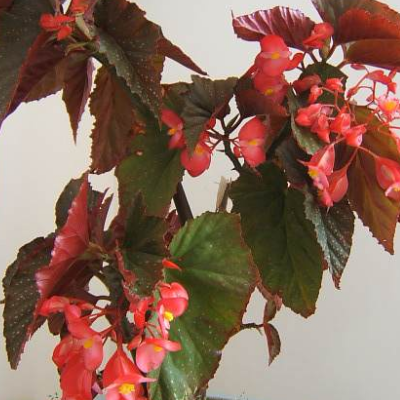
What to do if Begonia maculata won't bloom:
1. Improper planting management
Begonia maculata is a shallow-rooted plant that likes semi-shaded, humid and warm places. It does not like the cold and cannot tolerate harsh sun exposure; the ideal temperature is between 15° and 25°. So you should check whether these factors are the cause. It is also fairly drought-tolerant but afraid of waterlogging, so we need to check whether you are watering too much. If you are, you need to drain the water and change the soil.
2. Improper fertilisation
Because fertiliser is an essential element for plant growth, you should fertilise when the soil in the pot is dry, then water a little afterwards so the plant can absorb it better. When the stems are not growing particularly vigorously, or when repotting, you must not use large amounts of fertiliser. If you accidentally give too much, you should change the soil. In spring, generally feeding once about every half a month is enough. When summer temperatures are high, the plant stops growing, so the amount of fertiliser should be reduced. When it is flowering and in winter, you must not add any more fertiliser.
3. Lighting reasons
Begonia maculata likes shade and is afraid of harsh sun, so it is quite suitable for growing on a balcony all year round. In spring, autumn and winter you should still give it enough sunlight. In summer it should not be exposed to direct strong light; too much sun will make the leaves of the whole plant turn yellow and growth will start to slow down, which will also prevent it from flowering.
4. Failure to prune in time
While it is growing we should step up pruning of the plant, as this keeps its shape looking good. This is especially true for plants that have been growing for many years: you must not let them grow too tall, so you should prune in time when repotting in spring. This helps the plant produce new branches and bloom more beautifully.
5. Caused by pest and disease damage
We can check whether Begonia maculata has insects, because if pests are damaging it, they will also hinder the plant's growth and make it less likely to bloom. So we should spray a little pesticide as appropriate to prevent disease and pests, which will help it bloom well.
How to prune Begonia maculata:
1. Pruning in spring or autumn is more suitable
When pruning Begonia maculata you must choose a suitable season. Because it grows quickly in summer and needs a lot of nutrients, and the branches and leaves of the side shoots are also reduced, leading to insufficient nutrients, which makes the flowers wither or drop. Pruning in winter makes growth difficult. So it is best to prune in spring or autumn. First, it will not cause a lack of nutrients and difficult growth. Second, when the branches and leaves have just grown out or have dropped, they need fewer nutrients, so pruning at this time will not affect Begonia maculata.
2. Use dedicated pruning shears
When pruning Begonia maculata, it is best to use tree shears rather than grabbing any pair of scissors. If the scissors are not sharp, when pruning the begonia they may fail to cut through the bark layer, or they may deform the branches and affect its growth. Of course, rusty or oily scissors are also no good, as they will contaminate the branches and affect their growth. So you must use dedicated shears to cut.
3. Remove the poor branches and keep the good ones
When pruning, we should keep the good branches and remove the bad ones. Generally, keeping just 4 plants is enough when pruning; too many will make growth poor and too dense. This is because the main branches will also put out many small branches. If it is too dense, the leaves inside will rot and the colour of the branches will change.
4. Prune the lower outer branches as much as possible and keep the inner ones
When pruning, do not trim too much inside; generally just trimming the outside is enough. Then cut away the scattered, surplus branches, which allows better ventilation and prevents rot. It also ensures plenty of space for growth. In the end it will also make it look a bit better, and it looks quite nice placed in the home.
5. Branches that must be cut off
While Begonia maculata is growing, its branches grow in a rather random way. This makes it look untidy. So they need to be cut off. Also those that cannot grow well, the relatively small branches, the diseased ones with insects, and the crooked, uneven ones all need to be cut off.
Well, everyone, you have all understood it clearly now, right? You know how to prune Begonia maculata now.
What to do if Begonia maculata won't bloom
1. Improper planting management
Begonia maculata is a shallow-rooted plant that likes semi-shaded, humid and warm places. It does not like the cold and cannot tolerate harsh sun exposure; the ideal temperature is between 15° and 25°. So you should check whether these factors are the cause. It is also fairly drought-tolerant but afraid of waterlogging, so we need to check whether you are watering too much. If you are, you need to drain the water and change the soil.
2. Improper fertilisation
Because fertiliser is an essential element for plant growth, you should fertilise when the soil in the pot is dry, then water a little afterwards so the plant can absorb it better. When the stems are not growing particularly vigorously, or when repotting, you must not use large amounts of fertiliser. If you accidentally give too much, you should change the soil. In spring, generally feeding once about every half a month is enough. When summer temperatures are high, the plant stops growing, so the amount of fertiliser should be reduced. When it is flowering and in winter, you must not add any more fertiliser.
3. Lighting reasons
Begonia maculata likes shade and is afraid of harsh sun, so it is quite suitable for growing on a balcony all year round. In spring, autumn and winter you should still give it enough sunlight. In summer it should not be exposed to direct strong light; too much sun will make the leaves of the whole plant turn yellow and growth will start to slow down, which will also prevent it from flowering.
4. Failure to prune in time
While it is growing we should step up pruning of the plant, as this keeps its shape looking good. This is especially true for plants that have been growing for many years: you must not let them grow too tall, so you should prune in time when repotting in spring. This helps the plant produce new branches and bloom more beautifully.
5. Caused by pest and disease damage
We can check whether Begonia maculata has insects, because if pests are damaging it, they will also hinder the plant's growth and make it less likely to bloom. So we should spray a little pesticide as appropriate to prevent disease and pests, which will help it bloom well.
How to prune Begonia maculata, pruning after flowering
How to prune Begonia maculata. Generally, Begonia maculata needs regular trimming to maintain a good plant shape, usually pruned after flowering, along with pruning during routine care. Below, take a look at the methods and points to note for pruning Begonia maculata.
How to prune Begonia maculata 1. Pruning timeFor the pruning time of Begonia maculata, it is generally recommended that growers prune in spring or autumn. So why choose spring and autumn for pruning? Mainly because
a. It will not cause a lack of nutrients and difficult growth.
b. When the branches and leaves of Begonia maculata have just grown out or have dropped, they need fewer nutrients, so pruning at this time will not affect Begonia maculata.
2. Pruning toolsBefore pruning Begonia maculata, you must prepare the pruning shears. Avoid using rusty or oily scissors, as they will contaminate the branches of Begonia maculata and affect their growth.
3. Pruning after floweringEach time Begonia maculata finishes flowering, cut off the flowers together with the few leaves below them to encourage new shoots to sprout. According to the overall shape of the plant, control the height and cut off branches that are too tall to maintain the shape.
4. Prune the poor branchesWhen pruning Begonia maculata, first prune away the poor branches, which generally include dried-up branches, thin branches and scattered, surplus branches, keeping the main branches to maintain a perfect plant shape.
5. Prune the lower, outer branchesWhen pruning, do not trim too many of the inner branches; generally just trimming the outside is enough. Then cut away the scattered, surplus branches, which allows better ventilation and prevents rot. It also ensures plenty of space for growth.