What to Do When Australian Pine Leaves Turn Yellow, Wither, or Grow Too Long
The Australian pine (Norfolk Island pine, Araucaria heterophylla) is a plant, a super beautiful potted plant, really lovely. What should you do when its leaves turn yellow and wither? What should you do when its leaves grow too long:
What to do when Australian pine leaves turn yellow and wither:
The Australian pine likes a warm and humid environment, and the care environment should maintain good shade tolerance. In summer, avoid direct sun exposure and provide appropriate shade.
In winter, keep the environment warm and avoid freezing. In addition, maintain a certain level of humidity; if the air is too dry, the branches and leaves of the Australian pine will easily wilt.
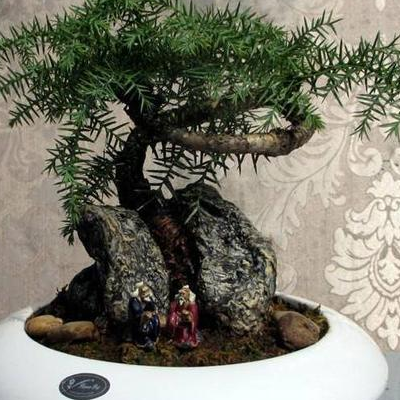
The root system of the Australian pine is very robust, making it very suitable for shaping into various bonsai. Even a very small young plant can be trained into a bonsai form, looking very elegant and unique.
To plant an Australian pine, prepare loose, fertile, well-draining sandy soil, avoid waterlogged soil, and the soil should also be slightly acidic.
For potted soil, you can use a mix of peat moss, leaf mold, and an appropriate amount of river sand.
When caring for an Australian pine, you can water it frequently during the growing season, as long as the pot soil is not waterlogged. Also, during high temperatures, frequently spray water around it to cool it down. In addition, strengthen environmental ventilation so that the environment stays fresh and can also be appropriately cooled.
The location for caring for an Australian pine should have relatively sufficient light, but not too intense; maintain appropriate scattered light.
In winter, do a good job of cold protection to avoid frostbite; keep the minimum care temperature above 7 degrees. In summer, the best care temperature is below 33 degrees; it is best to keep it on a windowsill, and in summer you can provide shade.
When caring for an Australian pine, during the growing season you can apply light fertilizer frequently, which can maintain vigorous growth and make the branches and leaves more verdant. The fertilizer should mainly be a balanced fertilizer. If the soil fertility is insufficient, it can easily cause yellowing leaves and other conditions. The amount of watering for an Australian pine actually depends on the care location. If the humidity is high and the environment is cool and shady, then water about once a week. But if it is kept on a balcony or windowsill with scattered light and good ventilation, then appropriately increase watering, and also spray water appropriately to increase environmental humidity.
What to do when Australian pine leaves grow too long:
You can shorten the long branches, and the tips on top can also be cut off, or you can give it a shape. The Australian pine likes light and is drought-tolerant, and is relatively shade-tolerant. Place it in a bright and ventilated spot on the balcony, water thoroughly when the soil is dry, and it likes humidity, so spraying the leaves frequently with water is better. It likes fertilizer and water, so adding some nutrient solution when watering is better.
Yellowing leaves on an Australian pine means it has not been cared for well; pay attention to how to handle leaves that are too long.
What to do when Australian pine leaves wither
Insufficient nutrients
If the leaves wither due to insufficient nutrients, then at this time you need to fertilize. Generally, buy a little nitrogen fertilizer at a flower shop, as well as phosphorus and potassium fertilizer, inorganic chemical fertilizer. After buying them, start fertilizing immediately, and fertilize in stages; you cannot apply too much at one time, as too much will also make the leaves turn yellow.
Too much fertilizer
Sometimes, to make it grow faster and greener, people start fertilizing heavily, which causes excessive fertilizer. The leaves become larger and then gradually wither. At this time, we can only water, or replace the soil, which means picking out part of the soil with too much fertilizer, putting in some soil without fertilizer, mixing it evenly, and then watering a little.
High soil alkalinity
Because the Australian pine is not suitable for living in soil with too high alkalinity; if it is too high, the leaves will also turn yellow. At this time, we need to move it out and place it in another large pot with low alkalinity.
Not enough sunlight
Sometimes, if it is placed in a shady place for a long time, it will cause too much water accumulation, and the leaves will also turn yellow and wither. So at this time, we need to move the flowerpot to a place with good sunlight, and after a few days of sun exposure, it will gradually recover.
Too much water accumulation
Sometimes watering too much is also bad, because too much watering will make the soil form clumps, making it not breathable and causing its roots to soak in water for a long time, then wither and die. At this time, we need to use a hoe to loosen the soil, then put it in the sun to dry. As long as the roots are not too rotten, there is hope of saving it.
Insect damage
Generally, there will be insects in the raised part of the roots. If they bite the roots badly, there is no way. We should put some medicine in the soil to kill the insects. If it is only slightly damaged, it can survive.
How to fertilize Australian pine, when to fertilize Australian pine / fertilize once every 2 weeks in spring and autumn
“For a crop to flower, it all depends on fertilizer.” Although the Australian pine does not have high fertilizer requirements, its growth needs sufficient nutrients, so fertilizing becomes very important. However, when it comes to fertilizing the Australian pine, many flower lovers do not know what to do. So how do you fertilize an Australian pine? When do you fertilize an Australian pine? Now let's take a look at the fertilization methods for the Australian pine.
I. How to fertilize Australian pine
Applying an appropriate amount of fertilizer can make the Australian pine grow lush branches and leaves. In the spring and autumn growing seasons, apply fertilizer once every two weeks, choosing morning or evening. When fertilizing, it is best to apply light fertilizer frequently to avoid fertilizer damage. In winter, when the temperature is very low, stop fertilizing. When the plant grows to a certain height, to avoid excessive nutrients, you should also stop fertilizing.
II. Fertilization methods for Australian pine
(1) What fertilizer to use for Australian pine
First, the fertilizer applied to the Australian pine should be acidic. As for what fertilizer to use for the Australian pine, you can buy special flower fertilizer on the market; those are very environmentally friendly and very suitable for indoor use. Specifically, you can use a nitrogen fertilizer nutrient solution for the spring and autumn growing seasons. When using it, dilute it according to the instructions. After spraying, it can promote the development of the Australian pine's leaf surface and branches, and stabilize the root system.
(2) When to fertilize Australian pine
Regarding this question, it actually mainly depends on the growth state of the Australian pine, as follows:
1. If it comes down to which time of day, you should choose morning or evening; on cloudy and rainy days, it can be done all day. Overall, avoid fertilizing when the sunlight is strong, as this helps with fertilizer absorption.
2. During the Australian pine's growing season, apply fertilizer once every two weeks. At this time, if fertilization is insufficient, it is easy for the Australian pine to show symptoms of yellowing leaves, and pest damage may also occur.
3. When growing indoors, once the Australian pine reaches a certain height and you think it has grown about tall enough, you can stop fertilizing. After doing this, you can avoid the plant growing too tall.
(3) Precautions for fertilizing Australian pine
1. When fertilizing the Australian pine, be sure to apply light fertilizer frequently, and do not overdose. After fertilizing, also water appropriately; combining water and fertilizer allows the Australian pine to absorb it better.
2. The Australian pine likes a warm environment. When the temperature is below 10°C, its growth will slow down, and at this time fertilization should be stopped.
3. When the Australian pine's leaves wither or it has just been repotted, do not fertilize immediately, otherwise it is easy to cause a backlash.
4. Newly transplanted seedlings or newly emerged buds need to wait until their root systems mature before fertilizing, specifically one month after transplanting.