Orchid Propagation Methods and Indoor/Outdoor Placement Tips
Orchids are a flower that many households like to grow, and they have a certain ornamental value. How do orchids propagate? Should orchids be placed indoors or outdoors?
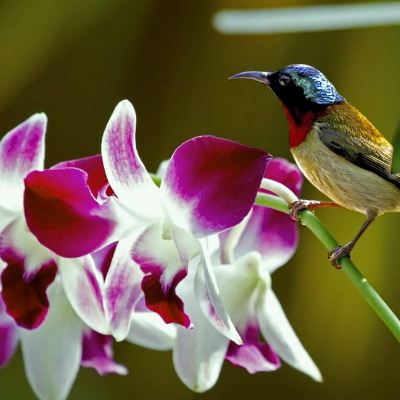
How orchids propagate:
1. Seed propagation: Orchid seeds are extremely fine, containing only one incompletely developed embryo, with very low germination capacity; moreover, the seed coat does not readily absorb water, so sowing by conventional methods will not produce germination. Therefore, orchid mycorrhizal fungi or artificial culture media are needed to supply nutrients before germination can occur.
2. Tissue culture: Tissue culture of orchids has already been successfully achieved, and this method can be used for propagation where conditions permit.
3. Division propagation
① Timing of division: This can be done in both spring and autumn, generally once every three years. Any plant that is growing vigorously with densely clustered pseudobulbs can be divided. After division, each clump must retain at least 5 pseudobulbs connected together. Before division, watering should be reduced so that the potting soil is relatively dry.
② Division method: When potting up after division, first cover the drainage hole at the bottom of the pot with broken tile pieces, then spread a layer of coarse gravel to occupy 1/5-1/4 of the pot's depth, then add coarse-grained soil and a small amount of fine soil, and finally plant in sandy loam rich in humus. The planting depth should be such that the pseudobulbs are just barely buried in the soil, leaving a 2 cm rim at the edge of the pot, topped with Selaginella uncinata or fine gravel.
③ Post-planting care: After planting is complete, water thoroughly, place in a shaded spot for 10-15 days, keep the soil moist, then gradually reduce watering and carry out normal maintenance.
Should orchids be placed indoors or outdoors:
The placement location of orchids is very important and directly affects their growth and development. Generally, they are placed outdoors in spring, summer and autumn (in summer, in a shaded outdoor spot), and indoors in winter. Outdoors, it is best to have open space on all sides with humid air; indoors, there should be ample light, preferably facing south, as this benefits orchid growth. Orchid pots are best placed on wooden stands or tables, not on the ground. Although orchids enjoy cool conditions, if kept in a sheltered spot year-round they will rarely bloom. Orchid growers discovered long ago that orchids on the shady side of a mountain have long leaves but sparse flowers, while those on the sunny side have short leaves but many flowers. Therefore, when cultivating orchids, attention must be paid to lighting. In spring and summer, orchids are best shaded with reed blinds, or placed at an indoor east- or south-facing ventilated window. Orchids under blinds should have their pots rotated once every half month so that all sides receive light, which promotes balanced growth of the plant. When the cool autumn arrives, the potted orchids should be moved out from the shaded spot and allowed to bask in the morning sun for half a day, but care should be taken that autumn is not dry. In cold weather, keep them indoors under a south-facing window to overwinter, but they need not be too warm; it is best to cover them with a plastic film cover to maintain appropriate humidity on the leaf surface. As for pest and disease control, if brown rust disease or southern blight occurs, treat with 0.5% lime sulfur mixture. If there are ant nests, the pot can be soaked in water to drive them away.
Well, that concludes the introduction to orchid propagation methods. Orchids can be kept outdoors except in winter.
Is Michelia alba (white champaca) toxic? Can Michelia alba be placed indoors? / Non-toxic, can be placed indoors
Michelia alba is the national flower of the South American country Ecuador, and today it can be seen all over the world. This flower has high ornamental value, so many people want to grow it. However, before growing it, we first need to know: is Michelia alba toxic? Can Michelia alba be placed indoors? Below, the editor will walk you through the details.
I. Is Michelia alba toxic? Non-toxic
Regarding whether Michelia alba is toxic, the answer is no. This flower itself carries no toxicity, and its appearance is very fresh and elegant, giving people a very comfortable feeling. In addition, it also has extremely high medicinal value, with good therapeutic effects on many ailments, and is a commonly used garden ornamental flower.
II. Can Michelia alba be placed indoors? Yes
Regarding whether Michelia alba can be placed indoors, it actually can be. Not only can it be placed indoors, but there are also many benefits to placing it indoors. As for what exactly they are, they are described in detail in the section below on the benefits of placing Michelia alba indoors. Let's continue reading.
III. Benefits of placing Michelia alba indoors
1. Beautifying the environment
Michelia alba has great value in beautifying the environment. Whether grown in a courtyard or indoors, it has a good effect, as it can beautify the surrounding environment and give people a comfortable living space. In addition, substances that brighten the complexion can be extracted from it, giving it a good skincare effect for women.
2. Purifying the air
Michelia alba is a natural air freshener. It can absorb harmful substances remaining in the air and reduce environmental pollution. If a Michelia alba is grown at home, it can make people's living environment healthier and more comfortable. However, although it can freshen the air, light is also indispensable during its growth process, so if it is kept at home, it is best to move it outdoors every day to receive a few hours of light.
3. Edible value
In addition to the above two points, Michelia alba also has good edible value. Mixing its petals with ingredients such as flour and white sugar, then frying them in oil, can produce a sweet and delicious pastry. Adding a few Michelia alba petals when cooking porridge also makes the porridge more fragrant and delicious. So its petals can be said to be an essential seasoning for food preparation.
4. Improving feng shui
Michelia alba is considered superior in feng shui. It is a plant that can improve the feng shui environment of the home. Growing a Michelia alba at home can bring people good luck. In addition, its flower language represents pure love and sincerity, and it also has a good effect on strengthening the bond between husband and wife.
Summary: After reading the above content, everyone should have a certain understanding of whether Michelia alba is toxic and whether it can be placed at home. In fact, besides the above benefits of placing it indoors, this flower also has many practical values. The details are introduced by the editor in the article on the effects and functions of Michelia alba. Friends who are interested can take a look.
How to grow Michelia alba in winter: control indoor temperature / reduce watering
Winter is a relatively difficult period for the vast majority of plants, and Michelia alba is no exception. It does not have strong resistance to severe cold, so special attention must be paid when growing it. Regarding how to grow Michelia alba in winter, what points need attention? Below, the editor will walk you through it.
How to grow Michelia alba in winter
To know how to grow Michelia alba in winter, we first need to take good anti-freezing measures, and then pay special attention to temperature control, watering, fertilizing and other aspects. The details are described in detail below. Let's take a look together.
1. Anti-freezing management
In winter we generally grow Michelia alba indoors, but even when grown indoors we still need to take good anti-freezing measures. We need to pour an appropriate amount of anti-freezing water into the soil, which can improve Michelia alba's resistance to severe cold weather.
2. Temperature control
Regarding how to grow Michelia alba in winter, temperature control is a very important part. Generally, it is best to keep the indoor temperature above 5°C, so that Michelia alba will not suffer frost damage due to excessively low temperatures. Also, ventilation must be maintained and it must not be too enclosed, otherwise pests and diseases can easily take advantage of the situation. Everyone should remember this point.
3. Fertilization management
Winter is the dormant period for Michelia alba, so no fertilizing is needed. We only need to fertilize it once half a month before winter arrives, and after winter passes we can return to the normal fertilizing frequency.
4. Watering management
Regarding how to grow Michelia alba in winter, watering is also a very important point, but there is no specific frequency. We just need to maintain the principle of not watering until dry. Wait until the potting soil is completely dry before watering it, and the amount of water should not be too large. Generally, watering a moderate amount to keep the soil somewhat moist is enough, so as to avoid frost damage to the plant caused by too much water.
5. Light management
Michelia alba is a light-loving plant. Although we generally grow it indoors in winter, it still needs to receive an appropriate period of light every day. This time can be chosen at noon each day when the temperature rises. At this time we can move it outdoors to a spot with direct sunlight, and move it back indoors when the sun is about to set. This can increase Michelia alba's cold resistance.
Summary: After reading the above content, everyone should have a certain understanding of how to grow Michelia alba in winter. In fact, the winter care methods for Michelia alba still have some points in common with ordinary care methods. You can refer to the article on Michelia alba growing methods for cultivation, and I believe it will be of some help to everyone.