What is the best season for transplanting orchids and what planting soil should be used?
Orchids are a symbol of nobility and elegance, and are known as the "gentleman," which shows how popular they are. What season is most suitable for transplanting orchids? What soil is best for growing orchids?
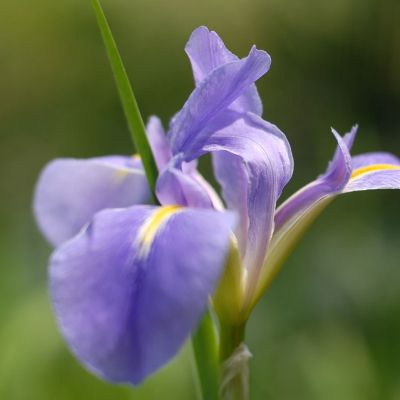
The most suitable season for transplanting orchids:
Spring is the golden season for orchids' annual growth, and also the critical moment for repotting, dividing and sprouting. It is also the time when orchid growers review and summarize the results of the previous year's orchid growing.
The optimal temperature for dividing orchids is 5-15 degrees. 10 degrees is the dormant threshold temperature for orchids. Therefore, repotting at around 10 degrees has the least effect on orchids, so repotting can be done in both spring and autumn.
As the saying goes, "Repot in spring and the leaves grow; repot in autumn and the flowers grow; repot often and the leaves grow; repot seldom and the flowers grow." This is the repotting principle that orchid growers keep firmly in mind. Generally, repotting should be done in spring and autumn, with early April around Qingming in spring and around the autumn equinox in autumn being suitable. When repotting in spring, orchids will quickly enter a vigorous growth period, so spring repotting is better than autumn repotting. Summer is hot and winter is cold, both being the dormant period for orchids. Repotting in these seasons is not conducive to orchids re-establishing themselves in the pot.
What soil is best for growing orchids:
It is generally believed that the best soil should be moist year-round and rich in humus, with a pH value between 5—6, loose and well ventilated.
This can be demonstrated by the places where orchids grow. Orchids are distributed in central China, southwest China, south China and east China. They generally grow in high mountains and steep ridges, by streams in valleys with dense trees, and in shaded spots beside rocks. This can be understood as: moderately and continuously moist, not exposed to direct light for long periods, with plenty of fallen leaves, no standing rainwater, and soil that is mostly sandy loam and on the acidic side.
Let us consider the characteristics of orchid roots: the roots are fleshy with thin skin, and have a strong ability to absorb and store water and trace elements such as boron and zinc. If planted too deep or in soil that is too compacted, gas exchange at the roots is affected, and the roots are prone to rotting. Generally, you can dig up soil from under trees on a hill to plant them, or mix three parts peat soil with one part sandy soil, together with an appropriate amount of fermented sawdust and cow dung.
Alright, that is all for the introduction to the soil used for orchids. Spring is the most suitable season for transplanting orchids. I hope everyone understands now.
What is the flower language of magnolia? A detailed explanation of magnolia planting methods
Magnolia is clean and simple, without excessive embellishment or decoration, and has always been loved by people. So what is the flower language of magnolia? Below is a detailed explanation of magnolia planting methods and flower language.
What is the flower language of magnolia? A detailed explanation of magnolia planting methods
Magnolia profile
Chinese name: Magnolia
Scientific name: Magnolia liliflora Desr.
Alternative names: Linlan, Guilan, Dulan, Mulian, Mubi, Huangxin, Ziyulan, Nülanghua, etc.
Family: Magnoliaceae
Genus: Magnolia
Origin and distribution: Magnolia is a plant native to mixed forests and mountain forests in the central mountainous regions of China, in mixed woods on mountain slopes at an altitude of 700-1800 m. It is now cultivated in all provinces and regions.
Morphological characteristics: a deciduous small tree, 5 m tall. The wood is fragrant. Leaves are alternate, obovate-elliptic; flowers are terminal, with 6 petals, purple-red on the outside and nearly white on the inside; the fruit is oblong. Roots are fleshy.
It is said that magnolia was introduced to Japan during the Tang Dynasty of China, and was introduced to Europe in the 17th century (brought to Britain in 1790). Because of its large and beautiful flowers, it spread widely in Europe and America. In the United States, a magnolia society was even established specifically for magnolia, and now a rich and varied range of magnolia garden cultivars has been bred.
What is the flower language of magnolia? A detailed explanation of magnolia planting methods
What is the flower language of magnolia?
The magnolia tree can reach 5 m in height, and when the flowers open they stand proudly on the branches, pure white and holy. Because magnolia blooms first and only grows leaves after the flowers fade, when magnolia blooms the whole tree is pure white without any mixed colors, giving people a sudden feeling of reverence. Therefore, the flower language of magnolia is a noble soul.
A noble soul, it can be given on Teachers' Day. Every year on Teachers' Day, children nowadays all like to give their teachers gifts. Sending a greeting card is not environmentally friendly and is rather outdated, and sending an expensive gift does not suit a child's status. It would be better to give a magnolia in full bloom to express respect and praise for the teacher's noble soul.
The Tang Dynasty poet Bai Juyi once wrote a poem specifically praising magnolia, which says: "The purple chamber, in the sun, splits open like rouge; the plain and gorgeous blooms open in the wind like smooth powder. No wonder it alone is so rich in rouge-and-powder charm; magnolia was once a maiden who came." Here, magnolia borrows from the ancient legend of the female heroine Hua Mulan.
What is the flower language of magnolia? A detailed explanation of magnolia planting methods
Magnolia planting methods
It is mostly propagated by layering and division. Sometimes seeding is also used. For division, it can be done in spring and autumn. Dig out the mother plant with dense branches and plant the divisions separately, and prune the root system and shorten the branches. For layering, choose one- or two-year-old branches, and in early spring the mound layering method or the trench layering method can be used for propagation. For sowing, collect seeds in September, store them in sand in winter, and sow in spring the following year; they germinate 20-30 days after sowing. Cultivation and management are simple; pay attention to preventing drought and waterlogging, and fertilize in time. Transplanting can be done in autumn or before flowering in early spring. Small seedlings should be dipped in mud slurry, and large seedlings must be moved with a soil ball. Fertilize once before and once after the flowering period, mainly with phosphorus and potassium fertilizer. In the high temperatures of summer and the dry season of autumn, maintain soil moisture. After flowering and before new shoots sprout, dead branches and dense branches should be pruned and leggy branches should be shortened.
Magnolia likes light and is slightly shade-tolerant. It likes a warm and humid climate and can also tolerate cold. It likes fertile, moist, well-drained sandy soil, is not drought-tolerant, and avoids alkaline soil; it grows poorly on dry, alkaline or clay soil. The roots are fleshy, afraid of waterlogging, and have poor wound healing ability, so transplanting is not easy to succeed. It has strong tillering ability. Magnolia is propagated by division, layering, cuttings, etc.
Magnolia should be transplanted in spring before flowering or in autumn after leaf fall. Small and medium seedlings need to keep their original soil, and large seedlings should be moved with a soil ball. Magnolia likes fertilizer. Apply decomposed manure or barnyard manure as a base fertilizer each year from October to November. After flowering, during the period when buds sprout and branches grow, apply 2-3 topdressings of quick-acting nitrogen fertilizer. In the dry season, cover the root area and water appropriately. The following year it can be expected to have abundant flowers and luxuriant leaves.
For magnolia to develop a tree form, it is necessary to remove tillers and sprouts and to train the branches. Magnolia root rot, red spider mites, stem borers and so on should be controlled in time.
Magnolia cultivation techniques
Magnolia is mostly propagated by layering and division. Sometimes seeding is also used. For magnolia division, it can be done in spring and autumn. Dig out the mother plant with dense branches and plant the divisions separately, and prune the root system and shorten the branches. For layering, choose one- or two-year-old branches, and in early spring the mound layering method or the trench layering method can be used for propagation. For sowing, collect seeds in September, store them in sand in winter, and sow in spring the following year; they germinate 20-30 days after sowing. Cultivation and management are simple; pay attention to preventing drought and waterlogging, and fertilize in time. Transplanting can be done in autumn or before flowering in early spring. Small seedlings should be dipped in mud slurry, and large seedlings must be moved with a soil ball. Fertilize once before and once after the flowering period, mainly with phosphorus and potassium fertilizer. In the high temperatures of summer and the dry season of autumn, maintain soil moisture. After flowering and before new shoots sprout, dead branches and dense branches should be pruned and leggy branches should be shortened.
Magnolia likes light and is slightly shade-tolerant. It likes a warm and humid climate and can also tolerate cold. It likes fertile, moist, well-drained sandy soil, is not drought-tolerant, and avoids alkaline soil; it grows poorly on dry, alkaline or clay soil. The roots are fleshy, afraid of waterlogging, and have poor wound healing ability, so transplanting is not easy to succeed. It has strong tillering ability. Magnolia is propagated by division, layering, cuttings, etc.
Magnolia should be transplanted in spring before flowering or in autumn after leaf fall. Small and medium seedlings need to keep their original soil, and large seedlings should be moved with a soil ball. Magnolia likes fertilizer. Apply decomposed manure or barnyard manure as a base fertilizer each year from October to November. After flowering, during the period when buds sprout and branches grow, apply 2-3 topdressings of quick-acting nitrogen fertilizer. In the dry season, cover the root area and water appropriately. The following year it can be expected to have abundant flowers and luxuriant leaves.
For magnolia to develop a tree form, it is necessary to remove tillers and sprouts and to train the branches. Magnolia root rot, red spider mites, stem borers and so on should be controlled in time.
Magnolia likes light and is relatively cold-tolerant, but not drought-tolerant. It requires fertile sandy soil and does not tolerate alkaline soil. It is afraid of waterlogging. Magnolia likes a humid, semi-shaded climate and likes fertilizer. In winter, for soil with good permeability, dig holes and apply organic fertilizer, such as bone meal and cake fertilizer. Magnolia has relatively strong cold tolerance, but avoids drought and waterlogging. Usually ensure the water supply, and frequently spray water on the leaves to increase air humidity, so as to avoid yellowing and falling leaves.
