Is the Florist's Peony (Paeonia lactiflora) Poisonous? Causes of Yellowing Leaves and How to Fix Them
The florist's peony is an unusually beautiful flower, with large blooms and fairly vivid colors. So what is the way to deal with yellowing leaves on a florist's peony? Is it poisonous?
What to do when the leaves of a florist's peony turn yellow:
If the yellowing is caused by natural phenomena, you can leave it alone, or you can simply cut it off. When growing plants, try not to bruise them. If wounds appear, including cut openings, take care of them carefully; you can spray the wounds with a disinfectant or the like to prevent infection.
Although it does not have a great demand for fertilizer, it cannot go without fertilizing for a long time, especially during the flowering and growing periods, when sufficient nutrients must be maintained.
In winter, if the temperature has already dropped to 5°C, it must be moved indoors to overwinter. In summer, when the temperature exceeds 35°C, it should be placed in a shady spot, but no matter where it is grown, good ventilation must be ensured. If the soil is too wet, you can insert a bamboo skewer into the soil, which can effectively relieve the situation a little, but keep it as far from the roots as possible to avoid piercing the roots.
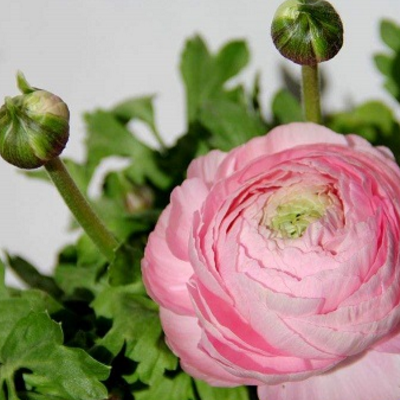
Is the florist's peony poisonous?
It is a highly sought-after indoor potted ornamental plant, with large, brightly colored flowers, and different plants have flowers of different colors. It is best placed at home for viewing to decorate the indoor environment, but it is indeed poisonous. Its stems, leaves and flowers are all toxic, but no research shows that it releases toxic gases.
That is all for the methods of dealing with yellowing leaves on the florist's peony. It is poisonous, so do not eat it.
What to Do When Peony Leaves Turn Yellow: How to Grow Potted Peonies
Peonies come in many varieties, with vivid colors and a magnificent appearance, and have long enjoyed the reputation of "king of flowers," so many people want to grow them at home. However, peonies are not suitable for potted cultivation indoors, so anyone who wants to grow them should learn a bit more about potted peonies. Below, we introduce how to grow potted peonies, as well as the causes of yellowing peony leaves and the solutions.
What to do when peony leaves turn yellow
1. Overwatering causes peony leaves to turn yellow: This is caused by watering too frequently. Its characteristic is that the old leaves show no obvious change, while the young leaves turn yellow.
Solution: In this case, water control should be applied immediately, and watering should be done appropriately.
2. Long-term lack of water causes peony leaves to turn yellow: This is caused by lack of water and drought. Its characteristic is that the old leaves turn yellow first, from the bottom upward. If the lack of water lasts a little long, the whole plant's leaves will turn yellow, and it may even die.
Solution: Water promptly.
3. Alkaline soil causes peony leaves to turn yellow: If a peony grows in soil that is fairly alkaline, its leaves will also lose their green color and turn yellow. The symptoms begin between the veins of new leaves, while the veins, especially the main veins, remain green, making the alternating yellow and green pattern very obvious. As the degree of yellowing worsens, the veins gradually lose their green color, then the whole leaf turns white, the leaf margins scorch, and the leaves fall off. In severe cases, the branch tips die back, leading to the death of the whole plant.
Solution: For this "yellowing" phenomenon, you can spray the leaves with a 0.2% to 0.3% ferrous sulfate solution 3 to 5 times. Do not make the concentration too high, and mix it fresh each time for immediate use.
4. Overfertilizing peonies causes leaves to turn yellow: This is caused by fertilizing too frequently or with too high a concentration. Its characteristic is that the young leaves are thick and fleshy, glossy, and uneven.
Solution: Reduce fertilizing, cultivate the soil, and water.
5. Long-term lack of fertilizer causes peony leaves to turn yellow: This is caused by insufficient fertilizer, too low a fertilizing concentration, and too long an interval between fertilizing. Its characteristic is that the young leaves and tender stems turn yellow first. If this phenomenon is seen and fertilizer is not applied in time, it can also cause the whole plant's leaves to turn yellow and may even kill it.
Solution: For flowers lacking fertilizer, by no means apply a large amount of strong fertilizer all at once, to avoid burning the roots.
6. Root rot causes peony leaves to turn yellow: Peony cultivation sites are often continuously cropped for many years on the same land, which contains many pathogens, especially the fungus Fusarium, causing the peony's roots and stem bases to rot. This weakens the ability to absorb water and nutrients, causing the lower leaves to gradually turn yellow, fall off or scorch from the bottom upward, while the color of the new shoot tips and new leaves remains normal. This is the yellow-leaf symptom shown by root rot when the peony is drought-stressed.
Solution: Maintain soil permeability and ensure good drainage.
7. Pests and diseases cause peony leaves to turn yellow: Peonies are often harmed by underground pests such as white grubs and mole crickets, as well as nematodes. The leaves lose their green color and turn earthy yellow, and may even scorch. The main characteristic of this symptom is that a single plant or several plants in one spot have yellowing, scorched leaves.
Solution: When this symptom is found, inspect promptly and quickly apply pesticide to control the underground pests.
How to grow potted peonies
For growing peonies in pots, it is best to plant them in September-October. For home cultivation, special attention should be paid to variety selection. Compared with other varieties, peonies such as 'Luoyang Hong' and 'Hu Hong' are more suitable for potted cultivation, as they have somewhat stronger adaptability to the environment. For the plant, it is best to choose a 3-4 year old small peony grafted onto a herbaceous peony rootstock, or a division seedling with 3-5 branches. Peonies can also be propagated by sowing, but growing them from seed takes 4-5 years to bloom.
The peony is a deep-rooted deciduous shrub flower. It likes sunlight, tolerates cold, loves a cool environment and dislikes high temperatures and stuffiness, and is suitable for growing in loose, fertile, well-drained sandy soil (it is best to choose a mix of sandy soil and cake fertilizer, or a culture soil made by mixing thoroughly rotted barnyard manure, garden soil and coarse sand in a 1:1:1 ratio). Because the peony has fairly long roots and is a fairly large plant, it is suited to being planted in the ground. If it is to be potted, choose a large, well-draining clay pot with a depth of more than 30 cm. It is best to use a clay crock 60-70 cm deep. The weather in the south is hot and dry, so in summer, when temperatures are high, the peony must be protected from scorching sun and cooling measures must be taken promptly. Some flower growers report that the peonies they planted do not bloom. Here is a reminder: if the temperature is not controlled well and the plant is allowed to overheat and drop its leaves, this will seriously affect future blooming.
April-May is the flowering period for peonies. With proper management, the normal flowering period is generally about 10 to 15 days; of course, some have a longer flowering period, about 20 days! The flowering period of peonies is affected by climate and temperature. When peonies bloom, you can set up a cover or temporarily place them indoors to avoid direct sunlight, which can extend the flowering period. For main branches whose terminal buds are leaf buds, these should be removed to prevent excessive vegetative growth and to avoid affecting blooming. To make peony flowers more vivid, during the flowering period you can spray the leaves 2-3 times with a 0.5%-1% potassium dihydrogen phosphate solution.
After the flowers fade, promptly remove the flowers and prune the branches. Cut according to the tree's natural growth habit combined with the shape you want, and at the same time apply a wound-healing antiseptic film to the pruning cuts to protect the wounds and prevent pathogens from invading and infecting them. If you want a lower plant with dense flower clusters, cut back more heavily to inhibit branch spread and root-sucker development. Generally, it is appropriate to keep 5-6 branches per plant.
What to Do When Peony Leaves Turn Yellow, Causes of Yellowing Peony Leaves (Cut Dead Leaves and Spray Pesticide)
As everyone knows, the peony is China's national flower, and peonies are very beautiful and deeply loved by people. Potted peonies are quite easy to grow, but if they are not cared for properly, yellowing leaves can easily occur. Many people do not know what to do when peony leaves turn yellow. First, we need to understand the causes of yellowing peony leaves, and then treat the problem accordingly.
I. What to Do When Peony Leaves Turn Yellow: Cut Off Dead Leaves and Treat the Cause
The peony is China's national flower. Peonies are easy to grow, and you can keep a pot at home. Earlier we discussed how to grow peonies and the effects and benefits of peonies. Now let's talk about a common problem everyone encounters: what to do when peony leaves turn yellow. There are many causes of yellowing peony leaves; watering too much or exposing them to strong sunlight can both cause leaves to turn yellow, and the solutions differ for different causes. But no matter the cause, the dead leaves must be removed.
II. Causes of Yellowing Peony Leaves and Solutions
1. Too much or too little watering
Symptoms: If you water too frequently and too much, young leaves will turn yellow, while old leaves show no obvious change. If you water too little and the plant lacks water, the old leaves begin to turn yellow from the bottom upward. If the lack of water lasts a fairly long time, the whole plant's leaves turn dull yellow, and it may even die.
Solution: Water at the right time and in the right amount, according to the condition of the potting soil. For smaller pots, water frequently; for larger pots, water after the soil surface dries. It is best to water thoroughly, and do not let water accumulate in the potting soil.
2. Alkaline soil
Symptoms: If a peony grows in soil that is fairly alkaline, its leaves will also lose their green color and turn yellow. The symptoms begin between the veins of new leaves, while the veins, especially the main veins, remain green, making the alternating yellow and green pattern very obvious. As the degree of yellowing worsens, the veins gradually lose their green color, then the whole leaf turns white, the leaf margins scorch, and the leaves fall off. In severe cases, the branch tips die back, leading to the death of the whole plant.
Solution: For this “yellowing” phenomenon, you can spray the leaves with a 0.2% to 0.3% ferrous sulfate solution 3 to 5 times. Do not make the concentration too high, and mix it fresh each time for immediate use.
3. Root rot
Symptoms: The peony has fleshy roots. Unsuitable potting soil, failure to repot in time, and pathogen infection can all cause root rot leading to yellowing leaves. In the early stage, it is very hard to notice anything unusual in the above-ground part, but the roots' absorption capacity gradually weakens, and the lower leaves slowly turn yellow, gradually spreading to the whole plant.
Solution: When faced with the above situation of peony leaves turning yellow, what should you do? You should repot and check the growth of the roots every year, and prune the roots in time. Pay attention to moderation when watering, to avoid water accumulation and root rot.
4. Improper fertilizing
Symptoms: Overfertilizing or fertilizing too frequently is one of the causes of yellowing peony leaves. The leaf surface grows well, and the leaf tissue is thick and glossy, but over time the leaves become uneven, and in severe cases root rot may occur. When the peony lacks nutrients, or has not been fertilized for a long time, the young leaves and tender stems turn yellow, gradually causing the whole plant to turn yellow and may even kill it.
Solution: If too much fertilizer was applied, water promptly; in severe cases, take the plant out of the pot and replace the soil. When fertilizer is lacking, do not apply strong fertilizer all at once; replenish nutrients gradually.
5. Pests and diseases
Symptoms: Peonies are often harmed by underground pests such as white grubs and mole crickets, as well as nematodes. The leaves lose their green color and turn earthy yellow, and may even scorch. The main characteristic of this symptom is that a single plant or several plants in one spot have yellowing, scorched leaves.
Solution: When symptoms appear, promptly drench the roots with a pesticide, or take the plant out of the pot, disinfect it, and replace the soil with new soil.
III. Tips for Caring for Peonies
1. For peonies grown at home, they must be placed in a spot with good sunlight and good ventilation.
2. Because a potted peony has a fairly small capacity, holds little soil and has limited water-holding capacity, it must be watered promptly to maintain the peony's normal water needs. Right after potting, water thoroughly once immediately. Afterward, depending on whether the soil is wet or dry, water once every 3-4 days, keeping the potting soil moist.
3. The nutrients in the pot are limited, so only by applying fertilizer at the right times can the peony's normal growth and development be ensured. Fertilizing can begin in the spring of the second year, using sesame, peanut or soybean cake soaked in water and fermented. When applying, dilute with water, and fertilize 1-2 times a week during the growing period. Those who like peonies can plant a pot at home; you will surely come to like peonies more and more. The above is the complete answer on the causes of yellowing peony leaves and what to do when peony leaves turn yellow. We hope it helps everyone.