What to Do When a Money Tree (Radermachera) Drops Its Leaves? And How It Differs from the Peace Tree
The money tree is a plant with an auspicious name, which makes it a very suitable feng shui plant to grow. So what should you do when a money tree drops its leaves? What is the difference between a money tree and a peace tree?
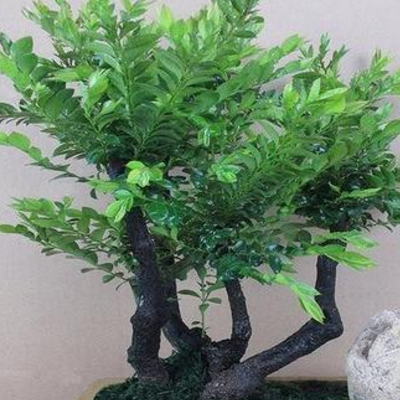
What to do when a money tree drops its leaves:
1. Too much water
The first cause is very likely too much water, which keeps the soil in a moist state for a long time. This lowers the oxygen content in the soil, so the roots cannot normally absorb oxygen and nutrients, and the money tree then begins to drop its leaves. The solution is to reduce watering and regularly work the soil to keep it breathable and well-draining.
2. Not enough water
The second cause may be insufficient water. When growing a money tree, if watering is not adequate enough, the soil will end up half moist and half dry, which prevents the roots from absorbing enough and leads to a lack of nutrients, causing leaf drop. In this case, water promptly and mist the surrounding area, gradually increasing the amount of water from little to more until the plant returns to normal.
3. Nutrient deficiency or excess
The third cause is a fertilizer problem. If the plant has not been fertilized or repotted for a long time, the nutrient elements in the soil will be lacking, leading to poor leaf development. We should regularly repot the money tree to keep the soil fresh and fertile, and can also apply organic fertilizer on schedule. When fertilizing, do not overdo it either; too much fertilizer can also easily cause the plant's leaves to drop.
4. High temperatures
The last one is the effect of high temperatures. In summer, when the temperature is high, simply placing it outdoors can easily sunburn the money tree, and the leaves will slowly turn yellow and then drop, ruining its appearance. But if it is placed in a spot without light, it will likewise fail to get sunlight, causing the leaves to wilt and growth to become weak. So light must be controlled well, and the plant should be placed in a ventilated spot to grow.
What is the difference between a money tree and a peace tree:
Radermachera sinica, also called snake tree, bean-pod tree, bone-setting umbrella, etc., commonly known as the happiness tree; it is a small tree up to 10 m tall; petioles, leaf rachises and inflorescences are all hairless. It has bipinnate compound leaves, rarely tripinnate, with the leaf rachis about 30 cm long; the leaflets are ovate to ovate-lanceolate, 4-7 cm long and 2-3.5 cm wide, with a tail-like acuminate apex and a broad wedge-shaped base, entire margins, and 5-6 pairs of lateral veins slanting upward, hairless on both sides. It likes high temperatures, high humidity and sunny environments, and grows in valley or flatland open forests; it is distributed in tropical regions of China such as Guangdong and Taiwan, China, and also in other countries such as India and the Philippines. The roots, leaves and fruits of Radermachera sinica can be used medicinally; they have the effects of cooling the blood, reducing swelling and bringing down fever, and can also treat bruises and venomous snake bites.
The money tree, also known as Sophora japonica var. violacea, with aliases such as huai, shougong huai, huai flower wood, huai flower tree, bean huai, golden medicine tree, purple flower huai and fragrant flower huai, belongs to the legume family, Sophora genus, and is a deciduous tree. The bark is grayish-brown with longitudinal cracks. The young branches of this tree are green and hairless. The pinnate compound leaves reach up to 25 cm long; the leaf rachis is initially sparsely pubescent and soon becomes completely smooth; the petiole base is swollen and wraps around the bud; the stipules are variable in shape, sometimes ovate and leaf-like, sometimes linear or subulate, and fall early; it is very spectacular and beautiful. The fragrant flower huai has dense leaves and branches, an open crown, a straight trunk, and a magnificent appearance; the whole tree has a naturally spreading form and a vigorous, upright posture, with strong ornamental value. It is native to China and is now widely cultivated in provinces and regions across the north and south, and is especially common in North China and the Loess Plateau region. It is also distributed in Japan and Vietnam, grows wild in Korea, and has been introduced in countries across Europe and the Americas.
The difference in appearance between the money tree and the happiness tree lies mainly in their leaves. The leaves of the money tree are larger than those of the happiness tree, and their leaf edges are smooth, while the leaves of the happiness tree are smaller and have irregular edges.
In addition, the happiness tree is a small-to-medium potted plant, often placed in balconies, bedrooms, entrance halls and other places in home decoration. Its leaves are dense and emerald green, full of vitality and energy, and it can serve as a plant to boost household feng shui and support the owner's fortunes, bringing people good luck, happiness and auspiciousness.
The money tree, by contrast, has a graceful crown and fragrant flowers, and is an excellent nectar plant. Its flowers and pods are used medicinally and also have cooling, astringent, bleeding-stopping and blood-pressure-lowering effects, while its leaves and root bark also have heat-clearing and detoxifying effects and can treat sore toxins. As a feng shui plant, it can be placed in the bedroom, study, balcony and other places at home. It not only beautifies the environment and purifies the air, but also calms the mind and boosts positive energy.
Alright, friends, you all understand clearly now, and know what the differences are between the money tree and the peace tree.
What to do when happiness tree leaves drop at a touch, and how to save a happiness tree that is dropping leaves / repotting
The happiness tree sounds wonderful just from its name, and after seeing its sturdy, handsome form and emerald green leaves, you want to grow it even more. In daily life, many people grow happiness trees, but during cultivation many flower lovers run into leaf drop. So what should you do when happiness tree leaves drop at a touch? How do you save a happiness tree that is dropping leaves? Here, the editor will answer your questions.
1. Happiness tree leaves drop at a touch - find the cause
As a plant with a beautiful meaning, the happiness tree is grown in many people's homes, but many of them often run into troublesome problems, such as happiness tree leaves turning yellow and dropping at a touch. What exactly is going on? To address this, we first need to check the causes of happiness tree leaf drop.
According to the editor's research, there are generally six situations that can cause happiness tree leaf drop: 1. improper watering; 2. improper fertilizing; 3. temperature reasons; 4. light reasons; 5. humidity problems; 6. insect reasons. Next, the editor will tell you how to save a happiness tree that is dropping leaves.
2. How to save a happiness tree that is dropping leaves
1. Improper watering
In happiness tree cultivation methods, watering is essential, but this is troublesome for many beginners. That is because the happiness tree likes a moist environment, but beginners often cannot control the degree and end up causing leaf drop. Improper watering falls into two situations: first, overwatering; second, underwatering.
Overwatering: the soil stays moist for a long time, and at this point the oxygen content of the soil drops. In severe cases, the happiness tree roots cannot normally absorb oxygen and nutrients, and then the happiness tree's leaves drop at a touch. Solution: immediately reduce watering, and loosen the soil often so the soil is well aerated.
Underwatering: the happiness tree roots do not absorb enough, which very easily causes the leaves to become dull and lusterless and to drop at a touch. Its signs are: the lower old leaves age and gradually wither and yellow from the bottom upward and fall off. Solution: water lightly so it gradually recovers, then return to normal watering.
2. Improper fertilizing
Besides improper watering, improper fertilizing can also cause happiness tree leaves to drop at a touch. Improper fertilizing also falls into two situations: first, overfertilizing; second, underfertilizing.
Overfertilizing: the new leaves absorb plenty of nutrients and grow thick and fleshy with an uneven surface, while the old leaves struggle to absorb nutrients and thus dry at the tips, scorch yellow and drop. Solution: immediately stop fertilizing and increase watering to dilute the fertilizer in the pot; or, more simply, directly replace the potting soil so the money tree becomes refreshed again.
Underfertilizing: if the plant has not been fertilized or repotted for a long time, the soil will lack nutrient elements, causing happiness tree leaves to drop at a touch. Solution: replace with new loose, fertile potting soil and apply a diluted compound flower fertilizer.
3. Temperature reasons
The happiness tree likes a warm environment, with an optimal growing temperature of 22-28°C. In hot seasons, once the temperature exceeds 30°C, the growth of the happiness tree is affected, and over time its leaves will drop at a touch; in winter, once the temperature falls below 5°C, the phenomenon of happiness tree leaves dropping at a touch will also appear.
Solution: how do you save a happiness tree that is dropping leaves? If the temperature is too high, mist the leaf surface as much as possible to lower the temperature, or move it to a shaded, ventilated, cool place to spend the summer; if the temperature is too low, move the plant indoors with air conditioning or an electric heater, and make sure the room temperature is not lower than 8°C so it can pass the winter safely.
4. Light reasons
Happiness tree leaves drop at a touch, and besides water and fertilizer, light cannot be ignored either. If leaf drop is caused by light, it also falls into two situations: first, light that is too strong; second, light that is too little.
Light too strong: the happiness tree is a light-loving plant and can also tolerate shade somewhat, so full sun and semi-shade environments are both acceptable. But once it is exposed to strong sun, it very easily causes the leaf tips and leaf margins of young leaves to scorch, or the leaves to yellow and drop. Solution: promptly move the happiness tree to a well-ventilated shady spot and water it lightly.
Light too little: too much light is no good, but if the happiness tree is placed in a dim indoor spot for a long time, the chlorophyll in the leaves will decrease, and over time the leaves will also yellow and fall off. Solution: very simple, just increase the light duration.
5. Humidity problems
During happiness tree cultivation, maintaining the air humidity around the plant is also very important. Once the air is too dry, the happiness tree often shows dry, withered leaf tips that drop off.
Solution: how do you save a happiness tree that is dropping leaves? At this point, you should take measures such as misting and covering with a plastic film to increase air humidity, keeping it at 70-80%.
6. Insect reasons
During the care of the happiness tree, improper handling can leave it troubled by pests and diseases. When it develops leaf spot disease, its leaves will partially necrose, showing yellow spots or blotches, and in severe cases the whole leaf withers, yellows and drops. In addition, when the happiness tree is harmed by pests such as scale insects, its leaves are also at risk of dropping.
Solution: identify which pest or disease it is, then spray the corresponding pesticide. As for what to spray, that is described in detail in the pest and disease control section for the happiness tree, so I will not say more here.
Regarding happiness tree leaves dropping at a touch, after reading the above content, you should know what to do when you encounter it again. In fact, leaf drop is triggered by one cause, but is often the result of multiple factors, so when you run into this situation, you must make a correct diagnosis so you can treat the root cause.
What to do when lucky bamboo leaves turn yellow?
Lucky bamboo is liked by many people because of its strong ornamental value, auspicious meaning, some purifying effect indoors, and because it has always been easy to grow. But during cultivation, people often encounter one situation that makes them anxious: the leaves frequently turn yellow.
Chinese scientific name: lucky bamboo; Latin scientific name: Dracaena sanderiana. Former name: Dracaena sanderiana, with aliases bamboo banana, ten-thousand-year bamboo, longevity bamboo, Dracaena sanderiana, fortune bamboo, lucky tower, bamboo tower, tower bamboo. When placed in the Wenchang position it is also called Wenchang bamboo (usually 4 stalks are placed). It belongs to the Ruscaceae family, Dracaena genus. It is native to Cameroon in western Africa.
Lucky bamboo is a perennial evergreen herbaceous plant, with a plant height of 1.5-2.5 m or more. If grown for ornamental commercial display, a cultivated height of 80-100 cm is appropriate. It is mostly grown in nurseries, likes shade and humidity, and has thick stems and leaves. Its varieties include green-leaf, green leaf with white edges (called silver edge), green leaf with yellow edges (called gold edge), and green leaf with silver center (called silver center). It is mainly used as a potted ornamental plant with high ornamental value, and symbolizes "great fortune and great profit," which is also how its name came about. China has the congratulatory phrase "when flowers bloom, prosperity comes; when bamboo is reported, peace prevails," which is why it is liked by everyone. Lucky bamboo is easy to grow, symbolizes "great fortune and great profit," and has high ornamental value, so it is much sought after on the international market.
What to do when lucky bamboo leaves turn yellow
1. Before placing in water, cut off the leaves at the base of the cutting and cut the base into a slanted opening with a sharp knife; the cut should be smooth to help absorb water and nutrients. Replace the clear water once every 3-4 days, and do not move the position or change the direction within 10 days; in about 15 days, silvery-white fibrous roots can grow out.
2. After rooting, it is best not to change the water; only add water in time once the water has decreased through evaporation. Frequent water changes easily cause yellow leaves and withered branches.
3. After rooting, promptly apply a small amount of compound chemical fertilizer, and the leaves will be glossy green and the stems sturdy. If no fertilizer is applied for a long time, the plant will grow weakly and the leaf color will easily turn yellow. But fertilizing must not be excessive, to avoid "burning the roots" or causing leggy growth. In spring and autumn, applying compound chemical fertilizer once a month is enough. According to material introductions, to avoid leggy growth in water-grown lucky bamboo, do not apply chemical fertilizer; instead, it is best to add a few drops of brandy to the bottle about every 3 weeks, plus a small amount of nutrient solution, which can keep the leaves emerald green.
4. Do not place lucky bamboo next to a television or in places constantly hit by air conditioners or electric fans, to avoid dry leaf tips and leaf margins.
For water-cultured lucky bamboo (fortune bamboo) showing yellow leaves, the cause can be sought from the following two aspects:
First, check the water quality, mainly to see whether the root system is fresh. If the root system has rotted due to water quality, then switch to cooled boiled water.
Second, check the light conditions of the placement site. If the light is too dim, or it is hot and unventilated, or the air is dry, all of these will cause the leaves to turn yellow; but if the placement site has light that is too strong, it will likewise cause the leaves to turn yellow and lose their spirit.
So what should be done for lucky bamboo showing yellow leaves?
If it is caused by light, first cut off the yellow leaves, and also cut off the rotted root system at the same time, then create a clean, suitably warm, cool, moist environment with good scattered light for it. If the root system has rotted due to unclean water quality, first cut off the yellow leaves. When the symptoms are not severe, it is best to change the water often and place it in a ventilated position with fairly ample sunlight for restorative care; when the symptoms are severe, appropriately spray pesticide or add a small amount of fungicide to the water dish.
Lucky bamboo leaves turning yellow because of low temperatures
It is an evergreen woody plant that likes high temperature and high humidity environments, and is also shade-tolerant and waterlogging-tolerant, with a certain cold resistance. When the winter temperature is below 10°C, the leaves will turn yellow and drop.
For indoor ornamental display, nutrients are usually not added to the soaking liquid of lucky bamboo, to prevent the stem nodes from rotting. It is best to grow it in overnight tap water or cooled boiled water, which can be replaced once every 10-15 days, and once every 5-7 days in summer. But each time only pour out half and add a new half; it is not suitable to replace it all, otherwise the root system will not adapt. If you want water-grown lucky bamboo to keep growing, you can add a small amount of urea and potassium dihydrogen phosphate aqueous solution to the soaking liquid, with the concentration controlled at about 0.1%, replacing it once every half month, and you can also spray the fertilizer liquid on the leaf surface. When it grows more new buds, promptly cut off diseased buds and insect-infested buds, otherwise they will harm the whole pot of lucky bamboo; for weak buds and "tyrant buds," etc., it is also very necessary to give appropriate thinning, provided it does not affect the overall shape and ornamental value of the lucky bamboo. It adds a quiet, warm and beautiful atmosphere.
It is not only low temperature; when air humidity is low and it is relatively dry, this situation will also appear.
Lucky bamboo is native to the Canary Islands and the tropical regions of Africa and Asia, and is now widely introduced and cultivated in China. It likes high temperature and high humidity environments, and is not strict about light requirements; it likes light and can also tolerate shade. It is suitable for growing in well-drained sandy loam. The suitable growth temperature is 20-30°C, and the overwintering temperature is 10°C.
Lucky bamboo is propagated by cuttings. Cuttings are mostly taken when shaping and pruning. As lucky bamboo grown for many years grows taller, the base of the stem usually loses its leaves and the plant shape deteriorates; in the growing season, the stem can be cut into 5-10 cm sections as cuttings, and inserted into vermiculite or river sand, usually rooting and sprouting in 1-2 weeks.
For potted lucky bamboo, equal parts leaf mold, garden soil and river sand can be mixed for cultivation, or coconut coir and leaf mold plus a small amount of base fertilizer can be used as the growing medium. In management, the key is to control humidity and temperature well. In the growing season, the potting soil should often be kept moist, and the leaves should be misted often to maintain relatively high environmental humidity; too dry will cause dry leaf tips; in winter, the potting soil should not be too damp, but the leaves should still be misted often, and cold protection should be done well to avoid the leaves turning yellow, shriveling and even dropping. In the vigorous growing months of May-September, apply liquid fertilizer or granular compound fertilizer 2-3 times a month to keep the leaves emerald green and glossy. It is not strict about light requirements and is suitable for growing under bright scattered light; avoid direct harsh sun. If exposed to strong sun or dryness, the leaf surface will become rough, scorched, and lack luster, reducing its ornamental value.
Causes of lucky bamboo leaves turning yellow
When yellow leaves appear, the cause can be sought from the following two aspects:
First, check the water quality, mainly to see whether the root system is fresh. If the root system has rotted due to water quality, then switch to cooled boiled water.
Second, check the light conditions of the placement site. If the light is too dim, or it is hot and unventilated, or the air is dry, all of these will cause the leaves to turn yellow; but if the placement site has light that is too strong, it will likewise cause the leaves to turn yellow and lose their spirit. For lucky bamboo showing yellow leaves, if it is caused by light, first cut off the yellow leaves, and also cut off the rotted root system at the same time, then create a clean, suitably warm, cool, moist environment with good scattered light for it. If the root system has rotted due to unclean water quality, first cut off the yellow leaves. When the symptoms are not severe, it is best to change the water often and place it in a ventilated position with fairly ample sunlight for restorative care; when the symptoms are severe, appropriately spray pesticide or add a small amount of fungicide to the water dish.
Potted lucky bamboo
There are many causes of yellow leaves. Below are the causes of lucky bamboo leaves turning yellow and the remedies I have provided for you: scorch yellow: strong direct sunlight hitting the lucky bamboo easily causes the leaf tips and leaf margins of the plant to wither, and the sun-facing parts of the leaves to show yellow spots. Moving it to a shady spot will do. Light-deficiency yellow: being placed in a hidden environment for a long time, the leaves cannot get enough sunlight and cannot form chlorophyll, so the whole plant's leaves turn yellow and then drop; supplementing light can prevent this problem. Fertilizer yellow: yellowing of the plant caused by too much fertilizer or too high a concentration. It shows as the tips of new leaves turning dry brown, the leaf surface usually thick and lusterless and not spreading smoothly, and the old leaves scorching yellow and dropping. Fertilizing should be stopped immediately; in severe cases, use plenty of clean water to wash away some of the fertilizer. Fertilizer-deficiency yellow: it shows as the color of tender leaves becoming lighter, yellow or pale green, while the old leaves are relatively normal or gradually turn from green to yellow. Usually apply thin fertilizer frequently and add some alum water at the right time (lucky bamboo is a foliage plant, so fertilizer mainly based on nitrogen should be applied).
For those that have not rooted, also note that the water depth should probably not be too deep; 5-10 cm is appropriate. In addition, before rooting, it should not be placed in direct sunlight for the time being; if the light is too strong, it will also cause yellow leaves. Remove the yellow leaves and place it in a relatively bright indoor spot. Before rooting, try not to change the placement direction of the plant. Do not turn the pot.
Lucky bamboo tends to grow in clumps, so when repotting and adding soil, pay attention to pruning old and damaged fibrous roots and thinning out excess stems and leaves to prevent excessive nutrient consumption and to protect the roots and leaves. If shaping is not attended to, it can also easily cause the leaves to turn yellow.
Water yellow and drought yellow: to judge whether lucky bamboo leaves turning yellow is water yellow or drought yellow, you can determine it from the different signs of yellowing. Water yellow shows on the tender leaves, while the old leaves have not turned yellow; drought yellow is when the old leaves wither, yellow and drop, while the new leaves grow relatively normally. Once determined, you can increase or reduce water according to the cause of the yellowing.
Scorch yellow and light-deficiency yellow: similarly, too much or too little light will also cause lucky bamboo leaves to turn yellow. The yellowing caused by too much light is called scorch yellow, showing as yellow spots on the sun-facing parts of the leaves; light-deficiency yellow is yellowing caused by insufficient light leading to insufficient chlorophyll formation, with the whole plant's leaves yellowing and dropping. Simply strengthening light can prevent it.
Fertilizer yellow and fertilizer-deficiency yellow: every plant needs fertilizer, and the fertilizer concentration directly affects the plant's growth. Applying the right amount of fertilizer makes the plant grow strong, while too much or too little fertilizer triggers a series of problems, such as lucky bamboo leaves turning yellow. Too much fertilizer makes the surface of new leaves thick and lusterless and the old leaves scorch yellow and drop, so the fertilizer should be washed away; too little fertilizer makes the color of tender leaves become lighter and the old leaves gradually turn yellow, so apply thin fertilizer.
Points to note after lucky bamboo leaves turn yellow
Based on the above three points, without expanding too much, just emphasize that lucky bamboo likes high-temperature environments, and when the winter temperature is below 8°C, insulation measures should be added to help the lucky bamboo overwinter safely.