How to propagate verbena by cuttings? I'll tell you the sowing time as well
Verbena is a fairly common household plant, and its flowering period is long, generally lasting from February all the way to November, so what are the cutting methods for verbena? When should it be sown?
Cutting methods for verbena:
1. Cutting time
Cuttings are generally taken from April to July, at a temperature of around 15-20°C.
2. Cutting medium
The cutting medium must retain water and drain well. It is generally hard for households to obtain an ideal cutting medium, so here we can buy a pre-mixed cutting medium. Medium-coarse river sand can also be used, but before use it needs to be rinsed several times with clean water, and it is best to disinfect it. Do not use river sand from saline-alkaline areas; it is not suitable for the growth of flowering plants.
3. Selection of cutting branches
Cuttings are generally taken together with pinching, choosing thick, pest- and disease-free, robustly growing shoot tips as the cuttings.
4. Management after cutting
Temperature
The rooting temperature for verbena is 18-25°C; below 18°C the plant roots slowly. Above 25°C, the cut end of the cutting is easily infected by pathogens and rots, and the higher the temperature, the greater the rot. If low temperatures are encountered during cutting, the flower pot or container holding the cuttings can be wrapped in plastic film. When the temperature is too high, shade treatment should be given. Place the cuttings in a cool place and mist them frequently.
Humidity
After cutting, a relatively high air humidity must be maintained, generally a relative humidity of 75-80%. The cuttings can be misted every day, 1-3 times a day; on sunny days with high temperatures, mist more often, and on cloudy or rainy days, mist less or not at all. Be careful not to mist excessively, as the cuttings are prone to rot from pathogen infection in the water.
Light
Cutting propagation cannot do without sunlight, but the stronger the light, the higher the temperature inside the cuttings, the more vigorous the transpiration of the cuttings, and the more water they consume, which is not conducive to the survival of the cuttings. Therefore, after cutting, 50-80% of the sunlight must be blocked, and after the root system grows out, gradually remove the shade net: on sunny days, remove the shade net at 4:00 pm each day, and cover it again before 9:00 am the next day.
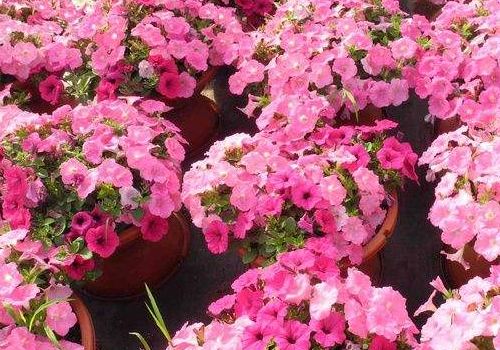
When to sow verbena:
Verbena is often sown in autumn in late September.
I. Preparation before sowing
1. Disinfect the medium to prevent pathogen infection. Common disinfection methods include the sun-drying method, directly placing the soil under the sun to bake, or heating the soil in a pot to directly kill pests and diseases.
2. Germination: soak the seeds in warm water for three to ten hours, until the seeds absorb water and swell.
II. Sowing
Sow the verbena seeds evenly into a seedling tray, covering with about 1 cm of soil. After sowing, use a sprayer to moisten the sowing medium. Afterwards, when the potting soil is slightly dry, continue to water, but the force of watering must not be too strong, so as not to wash the seeds up.
III. Management after sowing
After autumn sowing, when a cold wave and low temperatures occur, the flower pot can be wrapped in plastic film to help keep warm and moist; after the seedlings emerge, promptly uncover the film, and let the seedlings receive sunlight before 9:30 am each day, or after 3:30 pm, otherwise the seedlings will grow very weak and spindly; after most of the seeds have sprouted, appropriate thinning is needed: pull out the diseased and unhealthy seedlings so that the remaining seedlings have a certain amount of space between them; when most of the seedlings have grown 3 or more leaves, they can be transplanted into pots.
Alright, friends, you all understand clearly now, right? You know that verbena is generally sown in September.
Verbena planting methods and precautions for verbena cuttings
Verbena is also known as herb five-color plum, ground-covering verbena, ground-covering brocade, four-season hydrangea, etc. It is a perennial herbaceous plant of the genus Verbena in the family Verbenaceae, native to South America. It can be used as flowerbed and flower border material, and can also be grown as pot flowers or planted in large areas in places suitable for potted viewing or for arranging flower platforms, garden gaps, and tree beds. Now let's take a look at the cultivation methods for verbena!
Growth habits of verbena
Verbena likes sunlight and does not tolerate shade; it is relatively cold-tolerant, poor in shade tolerance, and not drought-tolerant. In the north it is mostly cultivated as an annual herbaceous flower, and it can bloom normally in hot summers. It grows in sunny, loose, and fertile soil, and blooms profusely. It likes a warm and humid climate, likes sun, and is not drought-tolerant. It is not strict about soil requirements, but in loose, fertile, and relatively moist neutral soil it can root at every node, grow robustly, and bloom profusely. In Shanghai, in places with a relatively warm microclimate, it can overwinter outdoors.
Propagation methods for verbena
1. Sowing: the germination rate of verbena seeds is relatively low, only about 50%, and germination is very slow and uneven; at a temperature of 15-17°C, it takes 2-3 weeks before seedlings begin to emerge. Sowing time is mostly in spring. After the seeds are sown, they should be placed in a dark place, and not only should the soil be kept moist, but the air should also be kept humid. Watering cannot be done by pouring directly from top to bottom; instead, use a shallow dish or similar container holding 3-4 cm of water, then immerse the flower pot in it and let the water enter through the drainage holes at the bottom of the pot; after the soil is moistened, take it out, otherwise the germination rate will be even lower.
2. Cuttings: verbena cuttings can be taken in May-June, when the temperature is around 15°C. First take slightly woody branches, cut them into 5-6 cm long sections as cuttings, insert them into a wet sand bed, then immediately shade them; after 2-3 days they can briefly receive morning and evening sunlight to promote growth, and after about two weeks they can send out new buds and roots. When the seedlings have grown 5-6 true leaves, transplant them, and when they have grown to 7-8 cm, plant them in their final position.
Cultivation methods for verbena
1. Soil: verbena is not strict about soil requirements, but in loose, fertile, and relatively moist neutral soil it can root at every node, grow robustly, and bloom profusely.
2. Watering: because verbena has a relatively shallow root system, watering should be paid attention to in summer to prevent drought. During the maintenance period, too much or too little water is not conducive to growth; with too much water, the stems become thin and weak and leggy, and the amount of flowering decreases; with a lack of water, the plant grows and develops poorly, and there will be a phenomenon of early seed setting.
3. Sunlight: verbena needs to be maintained under shaded conditions in spring, summer, and autumn. When the temperature is relatively high, if it is placed under direct sunlight for maintenance, the leaves will noticeably become smaller, the internodes of the branches will shorten, the lower leaves will yellow and fall off, and growth will be very slow or it will enter a semi-dormant state.
4. Temperature: verbena likes a warm climate and dislikes extreme heat. In summer, when the temperature is above 34°C, growth is noticeably poor. It is not tolerant of frost and cold; in winter, when the temperature is below 4°C, it enters dormancy or dies. The most suitable growth temperature is 15-25°C. It is generally sown in autumn and winter to avoid the high temperatures of summer.
5. Fertilizing: like other herbaceous flowers, verbena has a relatively high demand for fertilizer and water, but the fertilizing (watering) principle of "light fertilizer applied frequently, small amounts but many times, complete nutrition" should be followed, and after fertilizing, the leaves and flowers should be kept dry at night.
6. Pruning: before flowering, verbena is generally pinched twice to encourage more flowering branches to sprout.
How to propagate verbena: cutting and sowing propagation methods for verbena
Verbena can be propagated by sowing and cuttings. With these two propagation methods, flower lovers can choose a suitable propagation method according to their own conditions. Below is a summary of the sowing and cutting propagation methods for verbena.
How to propagate verbena 1. Sowing propagation methodThe sowing time for verbena is generally in spring; usually after sowing, it will bloom around July. However, with the sowing method, the germination rate of verbena seeds is relatively low, at about 50%, and germination is slow and uneven. If at a temperature of 15-17°C, it takes two to three weeks after sowing before seedlings begin to emerge.
2. Cutting propagation methodAs long as the temperature is suitable, verbena cuttings can be taken all year round. First select slightly woody branches, cut them into 5-6 cm long sections as cuttings, insert them into a wet sand bed, then immediately shade them; after 2-3 days they can briefly receive morning and evening sunlight to promote growth, and after about two weeks they can send out new buds and roots.
The suitable time for verbena cuttings is from November to March of the following year, and the survival rate of cuttings is as high as 100%; next is September—October, with a cutting survival rate of 80—85%; the lower cutting survival rate is in May—August, at 10—25%. Based on observations over the past year, and combined with its growth characteristics, take corresponding measures and choose a suitable cutting time.