The pothos froze and its leaves went soft - can it still be saved?
Pothos sometimes undergoes changes in the plant itself because of improper care methods such as watering. Can pothos come back to life after freezing? What should be done when the leaves go soft?
Can pothos come back to life after freezing:
1. Put the pothos in a greenhouse or in the corridor of a south-facing enclosed balcony, and cut off the frozen stems and leaves; the roots are still alive. After some time it can revive.
2. It can survive; put it in a warm place and after some time it will grow back on its own.
3. Pour a little garlic juice at the roots. If only a few leaves were frozen, it is fine. As long as the growing point and the roots are not frozen, it can come back to life.
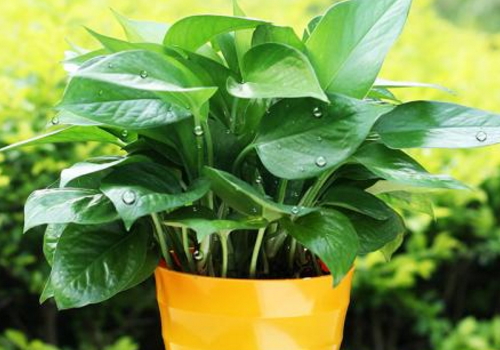
What should be done when pothos leaves go soft:
The reasons for pothos leaves going soft include temperature too low, improper watering, unsuitable light, improper fertilizing, humidity too low, and pests and diseases. If it has been overwatered, you can stop watering for the time being and mist every day. If it lacks water, water it thoroughly. If it is too shady or too sunny, just move it near a window. If there are pests and diseases, you need to spray a targeted pesticide for prevention. In addition, wiping the leaves often is also a good preventive method. If fertilizing has been improper, then fertilizer should be applied sparingly and frequently, and it must not be “fed full” all at once, otherwise fertilizer burn is likely.
Pothos, an evergreen vine of the Araceae family. It likes a warm, humid and semi-shady environment. Care points:
1. Pothos is fairly shade-tolerant; in spring, summer and autumn it can be placed near a window, with scattered light being enough. In winter, place it at a south-facing window to get more sunlight. 2. If it stays in a shady spot for a long time without sunlight, the leaf surface will lose its gloss.
3. The suitable growing temperature is 20-30 degrees, and it must not go below 15 degrees at the lowest.
4. When watering, take care not to let it get too dry or too wet; in winter there must be no waterlogging. When room temperature is too low, watering should be controlled.
5. Often rinse the leaf surface with clean water at about room temperature, to keep the leaves oily green.
6. In the peak growing season, apply a light fertilizer once every two weeks; if the pot is too small, it should be repotted.
Alright, that is all for the introduction to the causes of pothos leaves going soft and the solutions; I hope everyone understands now.
Pothos Epipremnum aureum (Scindapus aureus) Pothos illustrated guide: how to grow pothos / how to propagate pothos
Pothos profilePothos Epipremnum aureum (Scindapus aureus)
Aliases: Devil's ivy, stone citrus, bamboo-leaf grass, golden pothos, golden vine, stone citrus
Classification: vine flowers
Family and genus: Plantae, Angiosperms, Monocots, Alismatales, Araceae, Epipremnum
Peak flowering period: does not flower
Pothos, also known as golden pothos, devil's ivy, golden vine and so on, is a plant of the genus Epipremnum in the Araceae family. Originating in tropical rainforest regions, it is an evergreen vine of the Araceae family. The green leaves have yellow patches; it twines strongly, has aerial roots, and usually has hanging branches. The leaves are heart-shaped, emerald green and glossy, mixed with yellow patches, pleasing to the eye. Pothos has high ornamental value, and people often make it into pothos poles, wall hangings, hanging baskets, water cuttings and rockery decorations. The trailing stems hang down naturally, which can both purify the air and make full use of space, adding lively lines and bright colors to dull cabinet surfaces. It is known as the "sea, land and air plant..."
Pothos growing methods and precautions, an introduction to pothos
Pothos, also known as golden pothos, devil's ivy, golden vine and so on, is a plant of the genus Epipremnum in the Araceae family. Originating in tropical rainforest regions, it is an evergreen vine of the Araceae family. The green leaves have yellow patches; it twines strongly, has aerial roots, and usually has hanging branches. The leaves are heart-shaped, emerald green and glossy, mixed with yellow patches, pleasing to the eye.
Pothos has high ornamental value, and people often make it into pothos poles, wall hangings, hanging baskets, water cuttings and rockery decorations. The trailing stems hang down naturally, which can both purify the air and make full use of space, adding lively lines and bright colors to dull cabinet surfaces. It is known as the "sea, land and air plant".
Pothos grows in tropical regions, often climbing on rocks and tree trunks in rainforests, and can grow into a huge vine. It twines strongly and has well-developed aerial roots. Pothos belongs to the Araceae family and can be grown hydroponically.
Pothos originates from the tropical rainforest regions of Central and South America. It is an evergreen vine of the Araceae family. Pothos is a plant of the genus Philodendron in the Araceae family, belonging to climbing foliage flowers. It likes warm, humid environments; the vine can reach several meters long, with aerial roots at the nodes, and the leaves grow larger and larger. The leaves are alternate and evergreen. Pothos has high ornamental value, can purify the air, and can make full use of space. At present, it is artificially cultivated in gardens and indoors in various places in China such as Shanghai, Jiangsu, Fujian, Taiwan, China, Guangdong and Guangxi.
Pothos is usually grown indoors in pots, placed in studies, living rooms and offices; it can bring a beautiful visual effect and purify the environment. Among large vines, pothos, like spider plants and ivy, has a powerful air-purifying effect. Because pothos can absorb benzene, formaldehyde and so on from the air, it is widely grown indoors. Moving plants from outdoors to indoors is difficult, so next let us learn about pothos growing methods and precautions.
Pothos is one of the very best indoor decorative plants. The pothos stems are slender and soft, and the leaves are delicate and beautiful. Pothos twines strongly and has well-developed aerial roots; you can let it climb on a cylinder tied with palm fiber and place it in an entrance hall or hotel, or train it into a hanging form and place it in a study or on a windowsill, or set it on top of a cabinet and let its trailing stems hang down calmly, or after the trailing stems hang too long, loop and hang them into a ring, just like an emerald relief. Pothos is a flower that is quite suitable for indoor placement.
Morphological characteristics of pothos
Pothos is a perennial evergreen vine; both stems and leaves are fleshy, and the nodes bear aerial roots. Leaves are alternate, ovate-oblong, heart-shaped, waxy, 10-15 cm long; the leaves are dark green and glossy. There are variegated cultivars inlaid with irregular golden stripes or spots.
Pothos is a large evergreen herbaceous vine, often climbing on rocks and tree trunks; it can grow up to 20 m tall, with a vine diameter of 4 cm, and indoor growing height can reach about 2 m. The stems and vines of pothos are sturdy, the vine can reach several meters long, and the trailing stems can reach more than ten meters, with aerial roots at the nodes.
As pothos grows older, the stems thicken and the leaves grow larger and larger. Young branches are whip-like, slender and long, with larger leaves on the lower side, papery, broadly ovate, short acuminate, and heart-shaped at the base. On mature branches the petioles are sturdy, and the leaves are thinly leathery, emerald green, with irregular pure yellow patches, entire, unequal-sided ovate or ovate-oblong, acuminate at the tip and deeply heart-shaped at the base.
The largest leaves can reach 100 cm long and 45 cm wide (young plants are generally under 20 cm). Young leaves are ovate-heart-shaped; newly propagated seedlings have smaller and paler leaves, while mature leaves are long-ovate, about 30 cm long and about 10 cm wide. The deep green leaf surface is inlaid with irregular yellow-white spots or stripes.
Due to differences in fertilizer and water conditions, the size of pothos leaves varies. Pothos has luxuriant branches and leaves, good shade tolerance, and is evergreen all year round with a gloss. In winter, outdoor vegetation withers and fades, while indoor pothos remains lush, so it is an excellent indoor foliage plant.
Because the stems and vines of pothos grow quickly, people often grow it in a pole-and-vine style. That is, erect a support in the center of the pot, wrap some palm fiber around the support, with the support diameter reaching 22-12 cm, then plant 3-4 seedlings in the pot and let their stems and vines climb and grow around the pole. Some also plant pothos in a flower pot and place it on a flower stand, letting its stems and vines hang down like a green curtain, which is quite charming. It also has a certain effect of adsorbing formaldehyde and benzene, and when used together with Maya Blue it will achieve a long-lasting protective effect; it is suitable for growing in places such as homes and offices.
Ecological habits of pothos
Pothos likes warm, humid and semi-shady environments, is sensitive to light, and fears direct strong light. The soil is best as fertile leaf mold or peat soil, and the winter temperature should not be lower than 15°C.
Pothos is a shade-loving plant, avoids direct sunlight, and likes shade. For indoor cultivation it can be placed by a window, but direct sunlight must be avoided. Too strong sunlight will scorch pothos leaves, while too much shade will make the beautiful markings on the leaf surface disappear. Generally, receiving four hours of scattered light is best for the growth and development of pothos.
Pothos likes warm, humid environments and requires loose, fertile, well-drained soil. For potted pothos, choose fertile, loose, well-drained leaf mold, preferably slightly acidic. Pothos is extremely shade-tolerant and can be placed year-round in a sunny spot indoors. In a dimly lit room, it should be moved every half month to a brighter environment for a period of recovery, otherwise the internodes tend to elongate and the leaves become smaller. Pothos likes hot and humid environments; the overwintering temperature should not be lower than 15°C, the pot soil should be kept moist, and the leaf surface should be misted often to raise air humidity and favor the growth of aerial roots. During the vigorous growing period, apply liquid fertilizer once a month. For plants kept indoors for a long time, the leaves at the base of the stems tend to fall off, reducing ornamental value; in May and June when the temperature warms up, pruning and renewal can be carried out together with cuttings to encourage new buds from the basal stems.
It likes warm, humid environmental conditions, likes shade, and avoids strong light. It is heat-tolerant, moisture-tolerant, and not cold-tolerant. It likes soil rich in humus, loose and fertile, and slightly acidic.
Pothos is sensitive to temperature and avoids direct sunlight in summer; under strong light the leaves easily turn yellow and fall off, so shade should be provided outdoors in summer. In winter, it can grow well under bright scattered light indoors, with sturdy nodes and splendid leaf color. During the growing period it has relatively high water requirements; besides normally replenishing water to the pot soil, the leaf surface should also be misted often. For pole-and-vine cultivation, more water should also be sprayed on the palm fiber pole so that the palm fiber fully absorbs water for the aerial roots winding around the stem to absorb. Apply a nitrogen-phosphorus-potassium compound fertilizer once every 2 weeks, or spray a 0.2% potassium dihydrogen phosphate solution weekly, to make the leaves emerald green and the markings more vivid.
Cultivation techniques for pothos
Pothos is very robust and can be potted indoors in all four seasons, and can be placed for a long time in a bright spot in the pot. If kept in a dark place for a long time, the leaves will become smaller and the internodes longer, and for color-leaf varieties the leaf color will fade, affecting ornamental value. In summer it needs to be in a semi-shady environment, avoiding direct sunlight.
The suitable growing temperature is about 25°C during the day, and the suitable winter temperature should be kept at 10-13°C, generally not lower than 7°C. In the warm winter areas of South China and Southwest China it can be cultivated in the open ground.
Pothos likes hot and humid environments, and the leaf surface and ground need to be misted often while the pot soil is kept moist. In the growing season, apply a compound fertilizer once about every 2 weeks.
It is often potted, and can also be used as a hanging basket or planted in an indoor planting trough. Generally, a support is erected in the pot for its vines to climb on; it is best to use dead wood or snake wood (the trunk of tree ferns) covered with moss, or a cylinder made of wire mesh can also be used for planting. If planted in a hanging basket or planting trough, the stems and vines are generally allowed to hang freely, without needing a support. Usually repot once every 2-3 years. In May-June each year, carry out appropriate pruning and renewal to promote new branches from the basal stems and make the clump fuller. The growing medium is best as a mix of leaf mold and garden soil; it can also grow in water.
Features
(1) Pothos is all shipped from Guangzhou to all parts of the country and bought back in winter; pothos has generally been frosted, so placed indoors it will
soon show yellow leaves and so on. After these frozen leaves have all turned yellow and fallen, new ones will still grow again around the Spring Festival.
(2) Generally, newly bought pothos has an adaptation period of about 1 month in a new environment, and yellow leaves at the bottom are normal. But remember: do not directly peel off yellow or dead leaves; cut them off from the middle of the petiole. This avoids excessive water loss and added wounds from direct peeling, which would cause the upper leaves to turn yellow as well.
(3) Pothos is not afraid of shade, but a very dark environment also makes it grow poorly! You can regularly move its position to a place with good light (but it must not be exposed to strong sun).
(4) To grow pothos well, proper ventilation is also needed.
(5) When watering, you can wet the pole, which is covered with aerial roots. From time to time, spray a little nitrogen fertilizer on the leaves and pour a little diluted ferrous sulfate solution into the soil.
(6) If the leaves have already turned very yellow, be sure to control watering; too much or too little water is both bad. At this time, place the pothos in a well-ventilated place with light.
(7) Pothos fears freezing; after freezing it will turn black until it dies.
(8) When the pothos has grown very long and has climbed over
Precautions
The soil requirements for planting pothos are already a commonplace topic: the soil should be mainly fertile, loose, well-drained leaf mold, and slightly acidic soil gives the best results. In a dimly lit room, some lights should be turned on, which helps the plant grow.
1. Water more. Pothos likes to live in a humid environment, so it is best to water more. In summer the weather is hot and water dissipates quickly; besides watering more, the leaves should also be misted. The amount of watering depends on the pot soil; larger pothos plants should be watered more.
2. Avoid exposure to strong sun. Pothos grows in the shaded places under large trees, so it is a shade-loving plant and cannot be exposed to the sun, otherwise the newly sprouted leaves will lose water and become smaller, with dull color, and the leaf edges are easily scorched. It is enough to provide sunlight for photosynthesis.
3. Appropriate temperature. Although pothos does not like blazing sun, it is still quite sensitive to temperature; if the temperature is too low it is easily frostbitten. A room temperature of about 20 degrees is enough. If heating equipment is installed, pothos leaves must not be too close to it. If the indoor temperature is kept above 10 degrees, pothos can pass the winter safely.
4. Fertilizing. Because it is grown indoors, pothos absorbs less nutrients than outdoors. It is recommended to apply fertilizer once every half month; you can buy fertilizer specially for pothos on the market. Or ask the flower shop owner to help choose fertilizer.
5. Maintain air humidity. Pothos grows faster in environments with higher air humidity. It is recommended to maintain indoor humidity; a humidifier can be used to increase air humidity. A specific method is to spray water around the pothos.
Daily management
Hydroponic pothos is generally placed in a sunny spot indoors, where a warm temperature and relatively good light can be maintained to promote plant growth. In addition, it cannot receive direct sunlight. In winter, especially in northern China where winters are very cold, appropriate insulation measures should be taken at this time. At different stages of hydroponic pothos growth, additional fertilizer should be applied according to growth needs to ensure nutrient supply. Hydroponic pothos has relatively high water requirements; the soil should be kept moist, watered heavily once a month, and the leaves can be wiped every day to keep them fresh. Regularly prune hydroponic pothos to keep the branches and leaves shapely and emerald green, and prevent and treat pests and diseases.
What you need to know about pothos growing methods
In principle, pothos likes moisture, and during the growing season watering should keep the pot soil moist frequently. In summer, while watering fully, attention should also be paid to misting the leaf surface often. Whether to water every day is affected by many conditions, such as how much pot soil there is, plant size, pot material, care environment and so on; water consumption varies greatly, and the above principles should be followed to judge specifically.
Pothos must not be watered with rice-washing water. Although rice-washing water contains many nutrients that can be used, it must be composted, fermented and rotted before use; otherwise it not only easily breeds insects, but in severe cases can also cause root rot.
Pothos has fairly strong shade tolerance and can be kept indoors year-round for home cultivation. If kept outdoors, attention should be paid to shading, especially in summer, to prevent direct strong light, otherwise new leaves will become smaller, the leaf color dull, and the leaf edges will also be easily scorched.
Tips
1. Pothos develops best when cultivated in loose, organic-rich, slightly acidic to neutral sandy loam. Repot once every three years. Pothos is a shade-loving plant, avoids direct sunlight, likes scattered light, and is fairly shade-tolerant; receiving four hours of scattered light is usually best.
2. Propagation uses cuttings and stem layering. Select robust pothos vines and cut them into sections of two nodes, taking care not to damage the aerial roots. Spray with New High Lipid Film to retain moisture; the survival rate is above 90%.
3. Pothos likes relatively high air humidity and a humid environment. Midsummer is the peak growth period for pothos; several times a day you can mist the aerial roots and leaf surface of the pothos, which can both wash dust off the leaves, helping pothos breathe, and keep the leaf color emerald green, while also lowering leaf surface temperature and increasing the air humidity of the micro-environment so the leaves grow better. For fertilizing pothos, nitrogen fertilizer is main and potassium fertilizer is supplementary. Spray New High Lipid Film to retain fertilizer and moisture. In winter, when room temperature is relatively low, pothos is in a dormant state, so water less and just keep the pot soil from drying out.
4. The most suitable growing temperature for pothos is 18°C-21°C during the day and 20°C-23°C at night. In winter, as long as the indoor temperature is not lower than 15°C, pothos can overwinter safely; if the temperature is lower than 10°C, it easily causes leaf drop and affects growth. During the growing period, timely spraying of Zhuangjingling can make the plant stems sturdy, the leaves thick, the leaf color fresh and tender, and the plant luxuriant.
Features
(1) Pothos is all shipped from Guangzhou to all parts of the country and bought back in winter; pothos has generally been frosted, so placed indoors it will soon show yellow leaves and so on. After these frozen leaves have all turned yellow and fallen, new ones will still grow again around the Spring Festival.
(2) Generally, newly bought pothos has an adaptation period of about 1 month in a new environment, and yellow leaves at the bottom are normal. But remember: do not directly peel off yellow or dead leaves; cut them off from the middle of the petiole. This avoids excessive water loss and added wounds from direct peeling, which would cause the upper leaves to turn yellow as well.
(3) Pothos is not afraid of shade, but a very dark environment also makes it grow poorly! You can regularly move its position to a place with good light (but it must not be exposed to strong sun).
(4) To grow pothos well, proper ventilation is also needed.
(5) When watering, you can wet the pole, which is covered with aerial roots. From time to time, spray a little nitrogen fertilizer on the leaves and pour a little diluted ferrous sulfate solution into the soil.
(6) If the leaves have already turned very yellow, be sure to control watering; too much or too little water is both bad. At this time, place the pothos in a well-ventilated place with light.
(7) Pothos fears freezing; after freezing it will turn black until it dies.
(8) When the pothos has grown very long and climbs over the top of the pole, it should be cut off, or the head can be turned around to let it climb downward; do not let it grow wildly.
(9) It can be grown as a climber and is suitable for beautifying indoor and outdoor walls, staircases and so on.
Cultivation
Pothos has vigorous vitality. From a lush pot of pothos you can break off 3-5 stem sections, put them in a bottle with 500 ml of clean water, drip in 2-3 drops of "fish-and-plant co-culture" nutrient solution, and in a week new roots will grow. Change the water once every 10 days, and gently rinse the roots with your hand to prevent root rot; if within the 10 days the water evaporates or is insufficient, you can add new clean water without rinsing.
Pothos grows quickly and cultivation management is extensive. During cultivation and management, in summer more water should be sprayed on the plant, and a foliar fertilizer should be applied once every 10 days to keep the leaves green. For potted seedlings, when the seedlings grow 30 cm above the growing pole they should be cut off; when the basal leaves have fallen by 30%-50%, they should be discarded and replanted. The green-pole potted form is an ideal plant for courtyard gateposts and wall greening, and its leaves are also excellent foliage for flower arrangements.
Cultivation points
Extensive management. For cultivation, choose a plot with fertile soil; after planting, water thoroughly and spray to retain moisture. In the dry autumn weather, mist 2-3 times a day; if the air is too dry the leaf color becomes dull and lusterless. It likes ample scattered light; if too dark, the stripes become dim and ornamental value decreases. It has low fertilizer requirements; fertilize 2-3 times in the growing season, mainly with nitrogen fertilizer.
Protection
Pothos likes hot and humid conditions, and the best growing temperature is 20°C to 30°C. Creating a suitable growing environment for it in winter becomes the key to success or failure in care. In terms of care, attention should be paid to the following aspects:
Light: Pothos is not strongly heliotropic, but in winter, in order to make up for the lack of temperature and photosynthesis, its light should be increased. The method is to place the pothos in the spot with the best indoor light, or move it to a sealed balcony to bask in the sun at noon. At the same time, when the temperature is low, open windows as little as possible, because in a very short time the leaves may be frostbitten.
Temperature: In the north, with a room temperature above 10°C, pothos can overwinter safely; with a room temperature above 20°C, pothos can grow normally. Ordinary households generally have no problem reaching this temperature; note that temperature differences should not be too large, and also note that the leaves should not be close to heating equipment.
Humidity: Under the condition of ensuring normal temperature, increasing humidity is extremely beneficial to plant growth. Humidity can be increased by the following methods: keep the plant near a humidifier, with the humidifier running more than 5 hours a day; use a sprayer adjusted to the mist setting to spray water on the plant's leaves, stems and aerial roots several times a day; keep an appropriate amount of water in the flower pot saucer and increase the local humidity around the plant through its evaporation; gently wipe the leaf surface with a cold wet towel or toilet paper, or lightly apply it to the leaf surface for a short time (1-2 hours per day); cover the plant with transparent plastic film to create a small greenhouse effect, supplementing the plant's water through evaporation of water vapor from the soil, for no more than 2 hours a day, as too long will affect the plant's ventilation and photosynthesis.
Water: The amount of watering in winter should be strictly controlled according to room temperature. After heating begins, watering must not be too frequent either; when watering, pour less into the pot and let water seep through the palm fiber. In addition, water should also be sprayed at the aerial roots on the palm pole to reduce insufficient root water uptake caused by too-rapid evaporation. Water for winter watering is better after being left to stand for a day; if it is too cold it easily damages the roots.
Fertilizer: In winter plants grow slowly, so fertilize less. After the beginning of winter, fertilizing should mainly be foliar spraying. Foliar fertilizer should be a special-purpose fertilizer; ordinary inorganic fertilizers are not easily absorbed. Foliar fertilizers such as the Beida Huahuashen series and Japan's Hana Ichiban can be used.
Note
Like peace lilies, pothos belongs to the Araceae family, and its toxic part is mainly in its sap.
It is a fact that pothos is toxic, and growing pothos at home is also no problem, because as long as you do not consume the sap of pothos, it will not cause poisoning. Although the sap of pothos is toxic, it is only mildly toxic. During care, even if you touch pothos leaves, as long as you do not directly eat them, it will not affect your body. In addition, many people today grow pothos hydroponically; if you touch the water used for growing, as long as you do not drink it, there is generally no harm.
Of course, accidental ingestion is one aspect, and contact is also an issue that needs attention in cultivation. As a plant whose sap is mildly toxic, accidental ingestion may cause allergic reactions. So during everyday care, everyone should especially take care not to put it in the mouth, and it is also best not to let food come into contact with pothos. Regarding the effect of pothos sap on the body, experts say that pothos sap is toxic; whether adult or child, skin contact may cause redness, swelling and itching, and accidental ingestion may also cause sore throat. For toxic plants such as pothos, the toxin mainly comes from the sap in the plant stems. Even if they are grown at home or in the office, as long as you do not directly touch the sap with your hands, it will not cause poisoning.
From this it can be seen that pothos can be grown, and according to garden experts, plants such as pothos and peace lilies actually do more good than harm for the public. Although their sap is toxic, they can all absorb formaldehyde, and their air-cleaning effect is also very good, so everyone need not "turn pale at the mention of poison", nor think that because they are toxic they should not be grown. Moreover, growing pothos at home is very useful for purifying the home environment, so everyone can still choose to grow pothos at home.
Specifics
(1) Light: The original growing condition of pothos is in forests shaded by towering trees, so it is not strongly heliotropic. But in the autumn and winter in the north, in order to make up for the lack of temperature and photosynthesis, its light intensity should be increased. At the same time, when the temperature is low, open windows as little as possible, because in a very short time the leaves may be frostbitten.
(2) Temperature: In the north, with a room temperature above 10°C, pothos can overwinter safely.
(3) Humidity: This refers to the water content of the air in the plant's growing environment. Under the condition of ensuring normal temperature, increasing humidity is extremely beneficial to plant growth. Humidity can be increased by the following methods. Keep the plant near a humidifier, with the humidifier running more than 5 hours a day, so the plant can enjoy the mist sprayed by the humidifier; use a sprayer adjusted to the mist setting to spray the plant's leaves, stems and aerial roots, increasing the local temperature of the plant through evaporation; use a cold
wet towel or toilet paper to gently wipe the leaf surface, or lightly apply it to the leaf surface for a short time (1-2 hours per day); cover the plant with transparent plastic film to create a small greenhouse effect, supplementing the plant's water through evaporation of water vapor from the soil, for no more than 2 hours a day, as too long will affect the plant's ventilation and photosynthesis.
(4) Water: The amount of watering in autumn and winter should be strictly controlled according to room temperature. Before heating begins, the temperature is relatively low and the plant's soil evaporates relatively slowly, so watering should be reduced, with the amount controlled at 1/4 to 1/2 of the original. Even after heating begins, watering must not be too frequent either; when watering, pour less into the pot and let water seep through the palm fiber. In addition, water should also be sprayed at the places where aerial roots grow on the palm pole, to reduce insufficient root water uptake caused by too-rapid evaporation. Water for winter watering is better after being left to stand for a day; if the water is too cold it easily damages the roots.
(5) Fertilizer: In the autumn and winter in the north, plants mostly grow slowly or even stop growing, so fertilizing should be reduced. Before the beginning of winter, mainly apply liquid inorganic fertilizer by watering or spraying, about once every 15 days. After the beginning of winter, fertilizing should mainly be foliar spraying, mainly through the stomata on the leaf surface, with the fertilizer effect acting directly on the leaf surface. Foliar fertilizer should be a special-purpose fertilizer; ordinary inorganic fertilizers are not easily absorbed by the leaf surface. The Beida Huahuashen series and Japan's Hana Ichiban can all be used as foliar fertilizer.
(6) Pests and diseases: Pothos plants are easily affected by pests and pathogens. Typical pests affecting pothos include mealybugs, red spider mites and scale insects. Mealybugs are usually the most common and can be removed with alcohol insecticide, a cotton swab, or by hand.
Typical pathogens (fungi and bacteria) affect a range of pothos varieties and usually cause root rot, leaf spot and wilt. Be careful not to overwater, to prevent root rot from occurring. When choosing to buy a pothos plant, take the plant out of the pot and check its roots. See whether it has complete and healthy roots. Pothos, also known as golden pothos, originates from tropical rainforest regions and is an evergreen vine of the Araceae family. The overwintering temperature should not be lower than 15°C, the pot soil should be kept moist, and the leaf surface should be misted often to raise air humidity and favor the growth of aerial roots. Vigorous growth method.
Shaping
Plant or directly insert 4-5 plants per pot, and set up a palm pole in the middle of the pot so that the pothos can twine and grow upward. Shaping and pruning are carried out in spring. When the stems and vines have covered the palm pole and the tips exceed the palm pole by about 20 cm, cut off the stem tips of 2-3 of the plants by 40 cm. After the cut shoots sprout new buds and new leaves, then cut off the stem tips of the remaining plants. For potted plants whose whole plant or lower half has lost leaves due to winter freezing or other reasons, half of the plant's stems and vines can be cut back by 1/2, and the other half by 2/3 or 3/4, so that the cut points are staggered in height; in this way the new leaves growing below the cut points can quickly cover the palm pole.
When growing in water, the water amount must not be too much; just submerging the roots is enough, as too much water easily rots the stems and leaves.
Yellow leaves
(1) Pothos bought back in winter has generally been frosted, so placed indoors it will quickly show yellow leaves. After these frozen yellowed leaves have all fallen, new leaves will still grow again around the Spring Festival.
(2) Generally, newly bought pothos has an adaptation period of about 1 month in a new environment, and yellow leaves at the bottom are normal. But remember: do not directly peel off yellow or dead leaves; cut them off from the middle of the petiole. This avoids excessive water loss and added wounds from direct peeling, which would cause the upper leaves to turn yellow as well.
(3) Although pothos is not afraid of shade, a very dark environment can also cause yellow leaves, so you can regularly move its position to a place with good light; at the same time it must not be exposed to strong sun. Excessive exposure under strong light will not only cause yellow leaves and leaf drop, but can also lead to the death of the whole plant.
(4) Soil that is too dry or too wet, both conditions can cause metabolic disorders, damage the root system, and lead to yellowing and falling leaves.
(5) Lack of fertilizer and malnutrition can also cause yellow leaves, and at this time fertilizer should be supplemented promptly.
(6) Beer can be appropriately used as fertilizer; method: mix beer with water at a 1:1 ratio and spray it on the stems and leaves.
(7) Excessive topdressing can also easily cause root burn, leading to yellowing and withering leaves; water can be used to dilute the fertilizer so the nutrients flow away with the water.
Evergreen techniques
In spring, summer, and autumn, it can be placed near an east- or north-facing windowsill, and in winter it can be placed at a south-facing window. If it is kept for a long time in an environment that is too dark, it will not only cause the trailing stems to become leggy, with longer internodes and a sparse plant shape, but the yellow-white stripes on the leaves will also become smaller and paler, and the markings may even disappear completely and fade to green. If grown outdoors, pay attention to shading, especially in summer, and be even more careful to prevent direct strong light, otherwise new leaves will become smaller, the leaf color will be dull, and the leaf margins will easily be scorched. The suitable temperature for pothos growth is 20°C-30°C, and in winter the indoor temperature should not be lower than 15°C.
Pothos likes moisture. During the growing season, watering should keep the potting soil moist at all times, and the soil must never be allowed to dry out, otherwise it easily causes yellow leaves and a poor plant shape. If watering is excessive and causes waterlogging in the pot, it easily causes root rot and withered leaves, especially when the indoor temperature is low in winter, when watering should be controlled even more carefully. In summer, while watering thoroughly, also pay attention to frequently misting the leaf surfaces. In winter, when the climate is dry, the leaves also need to be sprayed and washed once every 4-5 days with warm water to wash away dust on the leaf surfaces, which helps keep the leaves glossy and emerald green.
Propagation methods of pothos
It does not easily bloom, so cuttings are commonly used for propagation. From May to July, take shoots from the stem tips or base, cut them into sections about 10 cm long, and insert them into a propagation bed mixed with equal amounts of fine sand and peat. Maintain appropriate humidity and a temperature of 21-25°C, and in a semi-shaded environment new roots can be produced in about 3 weeks. After rooting, they can be potted, with 3-4 plants per pot. Older branches can also be used for cuttings; cut branches with buds into sections of 4-5 nodes, insert them in the same way, and they can also grow into new plants. Layering propagation can also be used and can be carried out during the growing season.
The propagation method for hydroponic pothos is asexual cutting propagation.
Each year in spring and summer, when the climate and environment are suitable, propagation can be carried out. Generally, a relatively long and healthy branch is selected from hydroponic pothos as the new plant; it is separated from the mother plant, its basal stem is slightly prepared, and then it is cultivated in water or nutrient solution. After some time, when new roots and buds have grown, it can be transplanted into a flowerpot for cultivation.
Cutting propagation is generally used: cut 3-5 branches 20 cm long, remove the leaves from the basal 2 nodes, and then pot them directly; afterward transplant them into pots, water thoroughly, place them in a cool and ventilated place, and just keep the potting soil moist. Pothos can also be grown hydroponically, but because the plant is relatively small, its ornamental value will be affected to some extent.
Cuttings
Propagation uses cuttings and stem burial. Select robust pothos vines, cut them into sections of two nodes, being careful not to damage the aerial roots, then insert them into plain sand or coal cinders to a depth of 1/3 of the cutting. Water thoroughly and place in a shaded place, mist the leaf surfaces daily or cover with plastic film to retain moisture, and keep the ambient temperature no lower than 20°C; the survival rate is generally above 90%.
Household potted pothos is relatively simple. First, there should be at least 4 established seedlings in one pot. The potting soil should be loose, fertile, and rich in organic matter, which is beneficial for shaping. Second, pothos requires growth in an environment with a relatively high temperature (in winter the indoor temperature should not be lower than 10°C, otherwise yellowing and leaf drop easily occur) and relatively strong diffused light. If it is too dark for a long time, the internodes will become thin, long, and weak, and the leaves will also become thinner, paler, and lose their luster. In late spring and early summer (April-August), cut branches 15-30 cm long, remove the leaves from the basal 1-2 nodes, pot them directly in culture soil, with 3-5 per pot, water thoroughly, plant in a cool and ventilated place, keep the potting soil moist, and they will root and sprout in about one month; in the same year they can grow into plants with ornamental value.
Water cuttings
Pothos can also be propagated by water cuttings of terminal buds; method: cut tender, robust stems and vines into sections 20-30 cm long, insert them directly into a bottle filled with clean water, change the water once every 8-9 days, and they can root and survive in more than 10 days. Because potted pothos is limited by the potting soil, after being cultivated for too long the plant easily ages, and the leaves become smaller and fall off. Therefore, after 2 to 3 years of cultivation, repotting or pruning and renewal is necessary.
Hydroponic pothos grows relatively quickly and is extensively managed. During cultivation and management, in summer water should be sprayed on the plants more often, and nutrient solution should be added once every 10 days to keep the leaves green. For potted seedlings, when the seedlings grow 30 cm up the cultivation column, they should be cut off; plant or directly insert 4-5 plants per pot, and set up a palm column in the middle of the pot to make it convenient for hydroponic pothos to twine upward as it grows. After short pruning, when new buds and new leaves sprout, cut off the stem tips of the remaining plants.
Disease control of pothos: pothos anthracnose
This pathogen mostly harms the middle section of leaves, and can also harm flowers. At first, wet reddish-brown or dark brown small pustule-like spots appear on the diseased part, with a chlorotic halo around the spots. After expanding, they form long oval or long strip-shaped patches, with dark brown edges and a yellow-brown interior, and with ring-like patterns formed by dark spots converging. Because its spot color is dark brown, it is also called black spot disease or dark brown disease. It can repeatedly infect during the plant's growing period.
Control methods
1. There are many pesticides that can control anthracnose, such as mancozeb, carbendazim, thiophanate, and tante-ling, all of which have certain control effects.
2. German-made "Sporgon" at 1,500 times dilution is a specific remedy for treating anthracnose.
Yellow leaves
(1) Pothos bought back in winter has generally been exposed to cold, so when placed indoors it will quickly show yellow leaves. After these cold-damaged yellow leaves have all fallen, new leaves will still grow again around the Spring Festival.
(4) Generally, newly bought pothos has an adaptation period of about 1 month in a new environment, and yellow leaves at the bottom are normal. However, remember: do not directly peel off yellow or dead leaves; cut them off from the middle of the petiole. This avoids excessive water loss and added wounds caused by direct peeling, which would otherwise cause the upper leaves to turn yellow as well.
(3) Although pothos is not afraid of shade, a very dark environment can also cause yellow leaves, so the position can be moved regularly to a place with good light; at the same time, it must not be exposed to full sun. Excessive exposure under strong light will not only cause yellow leaves and leaf drop, but can also cause the entire plant to die.
(4) Soil that is too dry or too wet, both conditions can cause metabolic disorders, damage the root system, and lead to yellowing and falling leaves.
(5) Lack of fertilizer and malnutrition can also cause yellow leaves, and at this time fertilizer should be supplemented promptly.
(6) Beer can be appropriately used as fertilizer; method: mix beer with water at a 1:1 ratio and spray it on the stems and leaves.
(7) Excessive topdressing can also easily cause root burn, leading to yellowing and withering leaves; water can be used to dilute the fertilizer so the nutrients flow away with the water.
Pests and diseases
Pothos plants are very susceptible to problems from pests and pathogens. Typical pests affecting pothos include mealybugs, red spider mites, and scale insects. Mealybugs are usually the most common and can be removed with alcohol insecticide, cotton swabs, or by hand.
Typical pathogens (fungi and bacteria) affect a range of pothos varieties and usually cause root rot, leaf spot, and wilt. Be careful not to overwater to prevent root rot. When choosing to buy a pothos plant, take the plant out of the pot and check its roots. See whether it has complete and healthy roots. Pothos is also called golden pothos and originated in tropical rainforest regions. It is an evergreen vine in the Araceae family. The overwintering temperature should not be lower than 15°C, the potting soil should be kept moist, and the leaf surfaces should be misted frequently to raise air humidity and facilitate the growth of aerial roots. Vigorous growth method.
Potted cultivation methods for pothos
Because potted pothos is limited by the potting soil, after being cultivated for too long the plant easily ages, and the leaves become smaller and fall off. Therefore, after 2 to 3 years of cultivation, repotting or pruning and renewal is necessary.
Pothos likes warm, humid environments and requires loose, fertile soil with good drainage. For potted pothos, fertile, loose leaf mold with good drainage should be selected, preferably slightly acidic. Pothos is extremely shade-tolerant and can be placed indoors in a sunny spot in all four seasons. In a relatively dark room, it should be moved every half month to a brighter environment for a period of recovery. Pothos likes hot and humid environments; the overwintering temperature should not be lower than 15°C, the potting soil should be kept moist, and the leaf surfaces should be misted frequently to raise air humidity and facilitate the growth of aerial roots. During the vigorous growth period, liquid fertilizer can be applied once a month. In May and June, when the temperature turns warmer, pruning and renewal can be combined with cuttings to encourage new buds to sprout from the basal stems.
Pothos develops best when cultivated in loose, organic-rich, slightly acidic to neutral sandy loam. It can be made by composting 70% leaf mold, 20% red loam, and 10% rapeseed cake and bone meal. Repot once every three years. Pothos is a shade-loving plant, avoids direct sunlight, likes diffused light, and is relatively shade-tolerant. Indoor cultivation can place it beside a window, but direct sunlight should be avoided. Too strong sunlight will scorch pothos leaves, while too much shade will cause the beautiful markings on the leaf surfaces to disappear. Generally, receiving four hours of diffused light gives the best growth and development for pothos.
Pothos likes relatively high air humidity and a moist environment. In midsummer, the peak growth period for pothos, the aerial roots and leaf surfaces can be misted several times a day, which can both wash dust from the leaves, helping pothos breathe, and keep the leaf color emerald green; it can also lower leaf surface temperature, increase the air humidity of the micro-environment, and help the leaves grow better. The potting soil should be kept moist; when the potting soil is found to have turned pale, water thoroughly. In winter, when the indoor temperature is relatively low and pothos is in a dormant state, watering should be reduced, and it is enough to keep the potting soil from drying out.
The most suitable growth temperatures for pothos are 20°C-28°C during the day and 15°C-18°C at night. In winter, as long as the indoor temperature is not lower than 10°C, pothos can safely overwinter; if the temperature is lower than 5, it easily causes leaf drop and affects growth. For fertilizing pothos, nitrogen fertilizer is primary and potassium fertilizer is supplementary. Before the spring growing season for pothos arrives, apply a 0.3% solution of ammonium sulfate or urea once about every 10 days, and use a 0.5‰-1‰ urea solution for one foliar feeding, which can both meet the growth needs of pothos and keep the leaves green and glossy. Fertilization should stop in winter.
Usually, propagation of potted pothos uses cuttings and stem burial. Select robust pothos vines, cut them into sections of two nodes, being careful not to damage the aerial roots, then insert them into plain sand or coal cinders to a depth of 1/3 of the cutting. Water thoroughly and place in a shaded place, mist the leaf surfaces daily or cover with plastic film to retain moisture; as long as the environment is kept no lower than 20, the survival rate is generally above 90%. In late spring and early summer, cut branches 15 cm to 30 cm long, remove the leaves from the basal 1 to 2 nodes, pot them directly in culture soil, with 3 to 5 per pot, water thoroughly, plant in a cool and ventilated place, keep the potting soil moist, and they will root and sprout in about one month; in the same year they can grow into plants with ornamental value. In spring and summer, cuttings from branches root easily; for making a totem pole, terminal cuttings with large leaves must be used, as this shapes more quickly. Pothos can also be grown in water, but compared with soil cultivation the plant is smaller.
Plant or directly insert 4-5 plants per pot, and set up a palm column in the middle of the pot to make it convenient for pothos to twine upward as it grows. Shaping and pruning are carried out in spring. When the stems and vines have covered the palm column and the tips extend about 20 cm beyond the palm column, cut off 40 cm of the stem tips of 2-3 of the plants. After short pruning, when new buds and new leaves sprout, cut off the stem tips of the remaining plants. For potted plants that have lost leaves on the whole plant or the lower half due to winter cold or other reasons, half of the stems and vines can be shortened by 1/2 and the other half by 2/3 or 3/4, so that the cut heights are staggered; in this way, the new leaves growing below the cuts can quickly cover the palm column.
When growing in water, the water volume must not be too much; it is enough to submerge the roots. When the water volume is too great, the stems and leaves easily rot.
Hydroponic methods for pothos
1.Propagation methods for hydroponic pothos
The propagation method for hydroponic pothos is asexual cutting propagation. Each year in spring and summer, when the climate and environment are suitable, propagation can be carried out. Generally, a relatively long and healthy branch is selected from hydroponic pothos as the new plant; it is separated from the mother plant, its basal stem is slightly prepared, and then it is cultivated in water or nutrient solution. After some time, when new roots and buds have grown, it can be transplanted into a flowerpot for cultivation.
2.Daily management of hydroponic pothos
Hydroponic pothos is generally placed indoors in a sunny place, where it can maintain a warm temperature and relatively good light to promote plant growth. In addition, it cannot receive direct sunlight. In winter, especially in northern China where winter is very cold, insulation measures should be taken appropriately at this time. At different growth stages of hydroponic pothos, additional fertilization should be carried out according to growth needs to ensure nutrient supply. Hydroponic pothos has relatively high water requirements, so the soil should be kept moist. Water generously once a month, and the leaves can be wiped every day to keep them fresh. Regularly prune hydroponic pothos to keep the branches and leaves well-shaped and emerald green, and prevent and treat pests and diseases.
3.Natural habits of hydroponic pothos
Hydroponic pothos is a green plant with very high ornamental value. Its emerald, graceful appearance and very long branches can droop downward like a gauze curtain, making it very beautiful. It not only adds greenery to interiors but also a soft charm, and it is a very popular ornamental plant on the market. Hydroponic pothos is a plant that grows in tropical regions. Its branches have climbing ability and can attach to objects as they grow, hanging down like a waterfall, very beautiful. Hydroponic pothos grows in tropical regions and likes warm, humid climatic environments. It has relatively high temperature requirements, and winter must not be too cold. It has relatively high requirements for rainwater and moisture and likes humid environments. Hydroponic pothos is suitable for growing in fertile, moist soil with good drainage.
During care, attention must be paid to the following aspects:
1. Light 2. Temperature 3. Humidity 4. Water 5. Fertilization and pruning
Winter care of pothos
Pothos likes heat and humidity, and its optimal growth temperature is 20°C to 30°C. Creating a suitable growth environment for it in winter becomes the key to the success or failure of care. In terms of care, attention should be paid to the following aspects:
Light
Pothos does not have a strong tendency toward sunlight, but in winter, in order to make up for the lack of temperature and photosynthesis, its light should be increased. The method is to place pothos in the brightest place indoors, or move it to a sealed balcony to bask in the sun at noon. At the same time, when the temperature is low, windows should be opened as little as possible, because in an extremely short time the leaves may be frostbitten.
Temperature
In the north, with an indoor temperature above 10°C, pothos can safely overwinter; with an indoor temperature above 20°C, pothos can grow normally. For ordinary households, reaching this temperature is generally not a problem. What needs attention is avoiding too large a temperature difference, and also making sure the leaves do not get close to heating equipment.
Humidity
Under the condition of ensuring normal temperature, increasing humidity is extremely beneficial to plant growth. Humidity can be increased by the following methods: place the plant near a humidifier, with the humidifier running for more than 5 hours each day; use a sprayer adjusted to the mist setting to spray water on the plant's leaves, stems, and aerial roots several times a day; keep an appropriate amount of water in the flowerpot saucer and increase the local humidity around the plant through its evaporation; gently wipe the leaf surfaces with a cold wet towel or toilet paper, or apply it lightly to the leaf surfaces for a short time (1-2 hours per day); cover the plant with transparent plastic film to create a mini-greenhouse effect, supplementing the plant's moisture through evaporation of water vapor from the soil, for no more than 2 hours per day, as too long a time will affect the plant's ventilation and photosynthesis.
Water
In winter, the amount of watering should be strictly controlled according to room temperature. After heating begins, watering should not be too frequent. When watering, do not pour too much into the pot; water should seep through the palm fiber. In addition, water should also be sprayed on the aerial roots on the palm column to reduce insufficient root water uptake caused by overly rapid evaporation. Water used for watering in winter is best after being left to stand for a day; water that is too cold easily damages the roots.
Fertilizer
In winter, plant growth is slow, so less fertilizer should be applied. After the beginning of winter, fertilization should mainly be foliar spraying. Foliar fertilizer should be a special-purpose fertilizer; ordinary inorganic fertilizers are not easily absorbed. Foliar fertilizers such as the Beida Huahuashen series and the Japanese-made Hana Ichiban can be used.
Variety classification of pothos
Pothos has many aliases around the world, including Australian native monstera, centipede tongavine, devil's ivy, golden pothos, hunter's robe, ivy arum, money plant, silver vine, Solomon Islands ivy, taro vine, and others.
Green-leaf pothos: the leaves are entirely green, with no patterns or mixed colors;
Yellow-leaf pothos (golden pothos): the leaves are light golden yellow, and the leaves are relatively thin;
Variegated pothos: variegated pothos refers to pothos whose leaves have markings of various colors. Based on the color and characteristics of the patterns, 3 variants have been discovered so far;
Silver pothos (E. a. 'Marble Queen'): the leaves have milky white markings, and it is more robust than the original variety;
Golden pothos (E. a. 'Golden Pothos'): the leaves have irregular yellow stripes;
Tricolor pothos (E. a. 'Tricolor'): the leaf surface has green and yellow-creamy white markings;
Satin pothos: the leaf surface is velvety green, covered with silver-green patches or spots;
2008 new variety pothos 'N'Joy': it is the first variety with curled leaves to appear; the leaves are relatively small, and the leaf color is green with white markings.
Distribution area of pothos
Pothos is native to the tropical rainforest regions of Central America and South America. At present, there are artificial garden and indoor plantings in various places in China, including Shanghai, Jiangsu, Fujian, Taiwan, China, Guangdong, and Guangxi.
Pothos, also called golden pothos, has been widely distributed around the world since ancient times, including South Australia, Malaysia, Indochina, China, Japan, and India. In modern times it has been introduced to most tropical and subtropical forests in the world.
Native to the tropical rainforest regions of Central America and South America. At present, there are artificial garden and indoor plantings in various places in China, including Shanghai, Jiangsu, Fujian, Taiwan, China, Guangdong, and Guangxi.
Uses and purposes of pothos: ornamental value
Pothos is one of the very excellent indoor decorative plants, a climbing vine foliage flower. Its vines are slender and soft, and its leaves are delicate and elegant. Place a nested pot high on top of a furniture cabinet and let its vines droop naturally, or after the trailing vines become too long, coil and hang them into a ring, just like an emerald relief. This not only makes full use of space and purifies the air, but also adds a lively, brightly colored green decoration to a dull cabinet surface. It is full of vitality and adds a warm charm to the room.
Pothos is an evergreen vine with yellow patches on its green leaves, very shiny. It can be placed in a study or in a relatively high place by a windowsill, letting its vines droop naturally, just like an emerald relief. This not only makes full use of space, but also adds a lively, brightly colored green decoration to the room, full of charm. In addition, it can be cultivated in water as a delicate small decoration for the room.
It has strong twining ability and well-developed aerial roots. It can be allowed to climb on a cylinder tied with palm fiber and placed in an entrance hall or hotel, or it can be trained into a hanging form and placed in a study or on a windowsill. It is a flower relatively suitable for indoor placement. This not only makes full use of space and purifies the air, but also adds a lively, brightly colored green decoration to a dull cabinet surface. It is full of vitality and adds a warm charm to the room. Its flower language, "watching over happiness," also increases its ornamental appeal.
Greening value
Pothos not only has strong vitality, but when placed indoors, its air-purifying ability is no less than that of ivy and spider plants. Pothos can absorb benzene, trichloroethylene, formaldehyde, and others from the air. According to environmental scientists, a newly renovated new home should be ventilated more, and at the same time Maya Blue harmful gas adsorbent can be used, and then several pots of pothos placed; basically the move-in standard can then be reached. Newly laid flooring very easily produces harmful substances. Because pothos can simultaneously purify benzene, trichloroethylene, and formaldehyde from the air, it is very suitable for placement in newly renovated rooms.
Green purifier. Pothos is a relatively common green plant, with long branches draping and swaying gracefully, very capable of making a space full of vitality. Pothos also has an extremely strong air purification function and has the reputation of being a green purifier. Pothos can convert formaldehyde into substances such as sugar or amino acids during metabolism, and can also decompose and absorb benzene emitted by copiers and printers. Therefore, whether in a living room or an office, it is a great air purifier.
Environmental protection value
Environmental scientists have found that one pot of pothos in a room of 8-10 sq m is equivalent to an air purifier and can effectively absorb harmful gases such as formaldehyde, benzene, and trichloroethylene from the air. Pothos not only has strong vitality, but when placed indoors, its air-purifying ability is no less than that of ivy and spider plants. Newly laid flooring very easily produces harmful substances. Because pothos can simultaneously purify benzene, trichloroethylene, and formaldehyde from the air, it is very suitable for placement in newly renovated rooms.
Landscape uses of pothos
Pothos has colorful leaves and is evergreen in all four seasons. It is an extremely excellent foliage plant, suitable for greening walls, wall edges, and tree trunks, and can also be used as groundcover under tree shade.
Medicinal or dietary therapeutic value of pothos
The medical information and healthy dietary therapy information on Huahua.com is for reference only and cannot be used as a basis for diagnosis or medical treatment. Any health problem should be consulted with professional medical staff, and treatment for any disease should follow a doctor's advice.
Ultimate flower-protecting task: love yourself, start from reality, and strictly follow a doctor's advice. For illness, do not be careless, do not delay, do not give up hope; face it bravely, warm the silent world with love, and care for the flower field in your heart with your heart.
Medicinal value
Effects: activate blood and disperse stasis.
Indications: used for traumatic injuries.
Nature, flavor, and meridian entry: pungent, neutral. Kidney meridian.
Usage and dosage: oral administration: decocted in water, 3-9 grams.
External use: appropriate amount, pounded and applied.
Textual research: first recorded in "Flora of Guangzhou."
Decorative uses of pothos
Pothos is a plant with excellent effects in purifying formaldehyde and ammonia, and placing it near a computer also has a relatively good anti-radiation effect. However, its sap is toxic, and children should avoid touching it.
1.Pothos pot column
In the natural environment, pothos grows by attaching to tree trunks with its aerial roots and growing upward. Based on this habit, garden workers weave pothos columns for people to appreciate.
The specific method is: erect a support pillar covered with palm fiber in the center of the pot (bamboo or wooden poles can also be used), build up flower mud at the base, press it firm, then plant three or four small pothos seedlings around the pillar, and use fine string to tie these branches and leaves spirally onto the stake, and the pothos column is complete. Afterward, strengthen water and fertilizer management. When it has been cultivated into a lush green pothos column, place it in a courtyard, hall, office, or room, making people feel surrounded by greenery and quiet and fresh, full of wild charm.
2.Wall hanging and suspension
Pothos vines are several meters long, and the branches and leaves are soft and drooping. Several stems can be grown in water or soil and hung in a bamboo basket or hanging pot in front of a window or in the center of a room. Its green long branches and trailing leaves hang low, soft and elegant, pleasing to the eye and refreshing to the spirit.
3.Water cutting for ornament
Soak pothos branches in a water bottle, and the branches can remain full of vitality for several years. If paired with other flowers, it also has a special charm.
4.Greening rockeries
Around rockeries in courtyards, because of poor conditions, plants often grow poorly, but pothos can grow very well. Planting pothos not only beautifies the rockery, but also allows appreciation of pothos's graceful branches and hanging green leaves, decorating the rockery vividly and full of interest.
Precautions for pothos
Like Alocasia macrorrhizos, pothos belongs to the Araceae family, and its toxic part is mainly its sap.
It is a fact that pothos is toxic, and keeping pothos at home is also no problem, because as long as the sap of pothos is not consumed, it will not cause poisoning. Although the sap of pothos is toxic, it is also low-toxicity. During cultivation, even if everyone touches pothos leaves, as long as they do not directly eat them, it will not affect the body. In addition, many people now grow pothos hydroponically. If they touch the water used for cultivation, as long as they do not drink it, there is generally no harm.
Of course, accidental ingestion is one aspect, but contact is also an issue to watch out for when keeping them. As a plant with mildly toxic sap, ingesting it can potentially cause allergic reactions. So during everyday care, everyone should be especially careful not to put it in the mouth, and it is best not to let food come into contact with pothos. Regarding the effects of pothos sap on the body, experts say that the sap of pothos is toxic; whether an adult or a child, skin contact may cause redness, swelling and itching, and accidental ingestion may also cause throat pain. For toxic plants such as pothos, the toxins mainly come from the sap in the plant stems. Even if they are grown at home or in the office, as long as you do not directly touch the sap with your hands, it will not cause poisoning.
From this it can be seen that pothos can be grown, and according to landscape experts, plants such as pothos and peace lily are actually more beneficial than harmful to the public. Although their sap is toxic, they can all absorb formaldehyde, and their air-cleaning effect is also very good, so there is no need to "turn pale at the mention of poison," nor to think that because they are toxic they should not be grown. Moreover, keeping pothos at home is very useful for purifying the home environment, so everyone can still choose to grow pothos at home.
The flower language of pothos
Pothos is one of the most popular indoor hanging plants. Its vines are slender and soft, and its leaves are delicate and elegant. Place a pot on top of a cabinet at home and let its vines hang down freely, or after the vines have trailed too long, loop and hang them into a circle, just like an emerald relief. This not only makes full use of space, but pothos can also effectively absorb harmful gases in the air such as formaldehyde, benzene and trichloroethylene, making it an effective air purifier.
Pothos's ornamental value and air-purifying effect have brought it into countless homes. At the same time, pothos's flower language of "resilience and kindness" and "watching over happiness" gives people an extra layer of expectation when growing it.
Pothos flower language one: resilience and kindness.
Pothos is a herbaceous plant with extremely strong vitality. It can grow as long as there is water, and is also called the "flower of life." Its trailing green branches and leaves are very easy to satisfy, and even drinking water feels like happiness. The resilient and kind pothos asks for very little, yet gives everyone back a great deal.
Pothos flower language two: watching over happiness.
Pothos comes to life upon contact with water, and because of its tenacious vitality it is called the "flower of life." Its trailing green branches and leaves are very easy to satisfy, and even drinking water makes it feel happy.
Pothos does not easily bloom. The pothos flower belongs to a rare plant unique to Tibet, China, produced in the cold regions of Tibet, China, in the Himalayas. Pothos grown at home will never bloom. Some people say that the greatest dream of pothos is to be able to produce beautiful flowers. They work tirelessly toward this dream, looking forward to the arrival of happiness.
Pothos pictures
How to care for plants over winter
Winter is the season when people easily whine and act delicate in every way, but it is also the season when the number of plant killers rises sharply. Why? The weather is cold, and even people give up on treatment, let alone plants. We are not tycoons either, and cannot casually set up a glass room, greenhouse, flower room or the like so that houseplants can pass the winter stress-free. If you do not want to see your plants turn into dried corpses next spring, start helping your plants through the winter now.
Succulents over winter:
Grown outdoors, more outstanding
Varieties: Echeveria 'Gilva', Echeveria pulidonis, Pachyveria 'Clavifolia', Orostachys iwarenge, Sedum adolphi, etc.
Friends who grow succulents, if your succulents did not even survive the summer heat and died, then you do not need to read the following passage... If poor care led to your succulents becoming leggy, you can still "behead" those succulents that are not plump and are growing wildly upward, and then we can talk about the wintering issue.
Many people envy the vivid colors of some imported succulents, but after buying them back at a high price, within a few days of growing them the colors of the succulents all "fade." So, did you water heavily? Did you treasure them and keep them indoors? The native habitats of succulents generally have harsh living conditions, and a large temperature difference between day and night suits them best. To grow succulents well, it is best to imitate their native environment as much as possible. The vivid colors we see in succulents only appear in winter. In fact, this is not really a very healthy state; it appears only when multiple unfavorable factors such as cutting off water and low temperatures stack up. If you want to see succulents "color up" in winter, it is recommended to grow them outdoors or semi-outdoors. A balcony that can receive sunlight also works, and a fully sunlit rooftop is even better. Chengdu cools down at a relatively mild rate, so succulents will not convert to vivid colors as quickly as those grown in the north. You have to wait; only after about mid-December will outdoor-grown succulents become plump and stunning.
Winter is not the growing season for succulents. It is best not to carry out activities such as repotting or root trimming, and to wait until after February next year to do so.
Small shrubs over winter:
Light topdressing, wait to prune
Varieties: jasmine, Chinese rose, banana shrub, camellia, osmanthus, etc.
Small shrubs like jasmine stop blooming at the end of October. At this time of year, probably only four-season osmanthus and various miniature Chinese roses are still blooming sporadically, and camellias also have varieties that bloom in autumn, though the quality of autumn flowers is not as good as spring flowers. Small shrubs do not need to be moved indoors for winter. Most of them will stay green throughout the winter, and for the lonely winter balcony, small shrubs are the best embellishment.
The vigorous growing season for small shrubs is spring and summer, and in winter most grow slowly. Have you ever noticed that for flower pots growing jasmine or Chinese roses, the potting soil dries very slowly in winter? The transpiration of the plants is far less intense than during the growing season.
In principle, small shrubs are best pruned after February next year. When the new buds of jasmine have just emerged, you can prune hard, basically cutting the branches back to only 5~10 cm from the soil surface. Chinese roses can be pruned in the depths of winter, because by then the moisture content in the branches of Chinese roses is already relatively low, so pruning at this time is less likely to cause infection. They can also be pruned in early spring. The principle of pruning is to tidy the form of the Chinese rose plant and remove unnecessary branches. Diseased branches and weak branches should be wholly removed. Strong branches produced this year should be cut back by about 1/3 to 1/2, with the cut made at an outward-facing bud. This pruning principle does not apply to climbing Chinese roses; climbing Chinese roses are pruned using another method. Do not worry that being "ruthless" with Chinese roses will adversely affect next year's growth. In fact, giving Chinese roses one "major pruning" each year promotes the sprouting of new strong branches in spring.
Pruning of small shrubs all follows one principle: prune strong branches lightly, prune thin and weak branches heavily. In addition, before the depths of winter arrive, a small amount of bone meal or diluted liquid fertilizer can be applied to give the small shrubs "backing" for winter. Also, for next spring's major pruning and topdressing, it is time to prepare some bone meal and already fermented chicken manure fertilizer.
Orchids over winter:
Take good care of them, bring them indoors quickly
Varieties: Cymbidium kanran, Cymbidium ensifolium, Cymbidium sinense, Dendrobium, Cattleya, Angraecum, etc.
Note that Clivia is really not an orchid. Many species of Dendrobium, Paphiopedilum, Angraecum and others that are hastily grouped as "foreign orchids" are in fact native to China, China and are one hundred percent "Chinese orchids"! Almost all orchids greatly favor weakly acidic growing media rich in humus and air with high humidity. Outdoors in Chengdu in winter, if there is no specially made warm room, it is best to move orchids indoors for the winter.
For ordinary Chinese orchids, before the temperature drops to 5°C, it is best to apply diluted liquid fertilizer once, and place them near a window where they can receive scattered light. If the surface of the growing medium for Chinese orchids feels slightly dry to the touch, it is time to water promptly. In winter, tap water is too cold, and rash watering will irritate the delicate fleshy roots of Chinese orchids. It is best to let tap water stand until it reaches room temperature and then water slowly. In winter, plant transpiration is low, so do not water too frequently, and be careful to prevent root rot. Cymbidium faberi, which likes to bloom abundantly around the Spring Festival, is relatively tough. You can now mix a small amount of bone meal into the growing medium to supplement phosphorus fertilizer for it.
So what about the plump Dendrobium, Cattleya, Paphiopedilum and Angraecum? There is nothing else to it but to likewise reduce watering in winter, apply diluted liquid fertilizer at least once, and move them indoors. Whether they are grown by tying them to tree fern boards or wood, or grown in sphagnum moss, or grown with broken bricks plus bark for these orchids commonly called "foreign orchids," you should prepare enough growing medium in winter for next year's repotting, such as bark, expanded clay pellets, broken bricks, sphagnum moss, tree fern boards, etc. Most Dendrobium species, such as Dendrobium loddigesii, Dendrobium nobile, Dendrobium chrysotoxum and Dendrobium chrysanthum, will drop their leaves in winter until they are bare stems, and then produce fragrant flowers in early spring. Therefore, it is best to apply granular "old-style fertilizer," burying a few grains at the edge of the pot where the Dendrobium is grown. When watering, the fertilizer seeps into the growing medium and provides nutrients for flowering.
Angraecum also blooms in spring, but healthy Angraecum will slowly send out flower spikes around this time. Keeping the growing medium of Angraecum sufficiently moist and nutrient-rich is what should be paid most attention to in winter.
Other plants:
They are all "grassroots" plants that do not need much fuss
Varieties: pothos, asparagus fern, geranium, mint, amaryllis
For common plants like asparagus fern, pothos and geranium, there is no need to worry and move them around all day. Many plants fear heat far more than cold. Moreover, winter temperatures in the south often hover above 0°C, so there is no need to worry that they will freeze to death. As long as they can maintain normal sunlight, wintering is not a problem.
In particular, do not water plants casually in winter. The result of random watering is that one day you find that plant which clearly still looked fine has quietly died, and when you dig into the soil around the roots, the root system has completely rotted.
Before spring arrives, you can give the "grassroots" plants one more round of fertilizer. This fertilization can be granular fertilizer, organic fertilizer, or liquid flower fertilizer, but remember to apply a little less to avoid burning the roots.
Also, for next spring, you need to prepare...
Pruning shears
Spring is the season when pruning activities are in full swing. Prepare a pair of strong pruning shears, preferably a size suitable for all the plant branches in your home. If you have tall shrubs at home or trees that need frequent pruning, then prepare a hand saw as well.
Fertilizer
Fertilizers include many kinds: oil residue left after pressing oil, defatted bone meal, peanut bran and fermented chicken manure all count. Every spring, attentive flower growers gather their household plants to repot, trim roots and change soil. If you do not have the conditions for that, simply adding the above kinds of organic fertilizer to the potting soil in spring will also greatly improve soil fertility. If conditions allow, in spring you can replace one third of the original potting soil in the pot, then add new soil, to promote renewed growth of the plant root system.
Leaf mold
You can buy commercially fermented leaf mold, or collect fallen leaves and compost it yourself, except the latter takes longer and requires great patience. The benefits of adding leaf mold to potting soil in spring are, first, to replenish humus for potting soil whose humus has already been mostly consumed, and second, during the further decomposition of leaf mold, the soil as a whole becomes weakly acidic, which suits the growth of some plants, but clematis is not among them; it prefers slightly alkaline soil.
Mini interaction
My hydrangea at home has recently started to look half-dead. What should I do?
Answer: Prune it. Cut all the branches off 5 cm above the potting soil. Of course, if you think cutting it bald looks too ugly, you can also keep a few branches. Then just water whenever you see the potting soil is dry.
I just bought a poodle. The seller said I can only feed it twice a day, and each meal should be about enough to spread two layers in the dog bowl; any more and the dog will grow wildly. But I feel like the dog is sniffing for food all the time. Could it be hungry?
Answer: Many newcomers always agonize over exactly how much to feed a puppy per meal. Here I want to say that the idea circulating online and among sellers that a meal can only be a certain number of kibble pieces is very ridiculous and unscientific. This is because every dog food has a different density and kibble size, and some dog foods with large differences in density and size will differ by double in weight for the same number of pieces, so feeding a dog should not be done by counting pieces.
The correct method is to buy a kitchen electronic scale, available on Taobao, generally a few dozen yuan each, and it can weigh up to 10 jin. First weigh the puppy, then multiply its body weight (in grams) by 5%; this is its daily feeding amount. Divide it into 3~4 feedings. For example, if the puppy weighs 2 jin, then its daily feeding amount should be 1000x0.05=50 grams, and then divide this 50 grams of dog food into 3 portions and feed one portion each time. About every 10-odd days, you can weigh the puppy again and recalculate.
Generally, feeding a puppy this way will not cause abnormalities, but I still need to tell everyone to pay attention to observing the dog's stool. If the stool is very soft and not formed, it may be that you fed too much. You can appropriately reduce it from the previous feeding amount. If after reducing it the stool becomes very good and well formed, then continue feeding in that way. If you have already reduced the feeding amount countless times and the dog still has soft stool, then the possibility that the dog is not suited to this type of dog food cannot be ruled out, and you can consider changing food.