How Often to Water Pothos? Causes of Yellow Leaves and Solutions
Pothos is a plant many people keep, and sometimes you will notice problems with its leaves. How often should you water pothos? What should you do if the leaves turn yellow?
How often to water pothos:
1. Water-cultured pothos actually needs watering every day! But this does not mean you should just pour water directly into the vase; instead, use a watering can to spray water onto the pothos leaves. This serves two purposes: first, it can wash dust off the leaves, which helps the pothos breathe; second, it can lower the leaf surface temperature and increase the air humidity of the micro-environment, allowing the plant to grow more healthily.
2. In addition, normally growing pothos does not need frequent water changes. Instead, add water when the water level drops. The temperature of the added water should match room temperature, so it is best to let it sit indoors for one to two days before adding it.
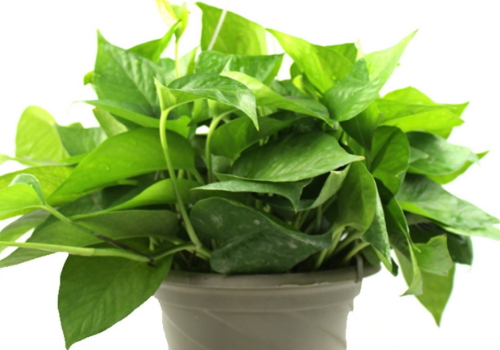
What to do if pothos leaves turn yellow:
1. Water appropriately
When growing pothos, do not overwater. At most, spray water at the roots. You only need to keep the soil moist. You can frequently spray water on the leaves to cool the pothos and, at the same time, replenish moisture.
In summer, water more, but follow the principle of “keep the potting soil moist without waterlogging.” In winter, reduce watering to once every two to three days.
3. Provide reasonable light
Although pothos likes a shady environment, it is best to receive sunlight at noon for photosynthesis, then bring it back indoors. Make sure it receives strong light once within half a month. In summer, be sure not to let pothos receive direct sunlight, as the leaves will be scorched. In winter, it can receive appropriate light.
4. Control the amount of fertilizer
Because pothos has relatively high fertilizer requirements, it is best to use a special fertilizer and add less inorganic fertilizer. In winter, pothos grows more slowly, so fertilizer should be reduced, but during the summer growing season it can be increased appropriately. The main fertilization method is spraying liquid fertilizer.
5. Pay attention to observation
During the growth of pothos, pay more attention to observation. If you find leaves turning yellow, promptly identify the cause and take corresponding measures. Do not just put it aside after buying it and ignore it, because then the pothos will develop all kinds of problems and eventually die.
Well, that is all for the introduction to watering pothos and solutions for yellow leaves. Everyone understands now, right?
[How Often to Water Pothos] How Often to Water Hydroponic and Soil-Grown Pothos
How often to water pothos and how exactly to water it is a problem many flower lovers encounter. Although pothos is relatively easy to grow, improper watering can cause yellow leaves and root rot. Below is a summary of how often to water hydroponic pothos and soil-grown pothos and how to water them. I hope it helps flower lovers growing pothos.
How often (how many days) to water pothos 1. How often to water hydroponic pothos and how to water itWater-cultured pothos needs watering every day. But this does not mean you should just pour water directly into the vase; instead, use a watering can to spray water onto the pothos leaves. Hydroponic pothos grows relatively quickly and its cultivation and management are simple. During cultivation and management, in summer you should spray water on the plant more often, add nutrient solution once every 10 days to keep the leaves green, and change the water once every 2 to 3 days.
a. It can wash dust off the leaves, which helps the pothos breathe;
b. It can lower the leaf surface temperature and increase the air humidity of the micro-environment, allowing the plant to grow more healthily.
c. Normally growing pothos does not need frequent water changes. Instead, add water when the water level drops. The temperature of the added water should match room temperature, so it is best to let it sit indoors for one to two days before adding it.
2. How often to water soil-grown pothos and how to water itThere is no fixed watering schedule for soil-grown pothos. It is best to keep the soil moist. If the soil in the pot is relatively moist, there is no need to water the soil again. If the soil turns slightly white, it means it is time to water. When watering pothos, also appropriately consider seasonal factors.
a. In summer, the temperature is higher, pothos grows vigorously and holds more water, so it needs watering about once every 2 days;
b. In autumn and winter, the amount of watering should be controlled according to indoor temperature. When room temperature is below 10 degrees, the soil of the plant evaporates more slowly, so watering should be reduced to once every 4~5 days. After heating begins, watering should also not be too frequent; water once every 3~4 days.
3. Watering times for pothos throughout the yearWatering pothos also requires considering the season. In summer, it is best to water in the morning and evening; in spring and autumn, choose around 9 a.m. or 3 p.m.; in winter, watering at noon is best. Of course, if the indoor temperature matches the water temperature, you can water at any time throughout the year, and there is no need to stick rigidly to a set form.
4. What should you do if pothos is overwatered?Here we are mainly talking about the situation where soil-grown pothos is overwatered. How exactly should you remedy overwatering in time?
a. First put the whole pot of pothos in a dry, ventilated place so the excess water in the pot evaporates in time.
b. Then use a small stick or small shovel to loosen the potting soil to speed up water evaporation.
c. Leave it for a few days without watering the pothos. After the potting soil becomes slightly dry, water a small amount so the potting soil is slightly moist.
d. The next time you water the pothos, pay attention to whether water accumulates in the pot. Once there is waterlogging, stop watering immediately, and reduce the amount of watering afterward as well.
Hydroponic Pothos Care Methods: What to Do if Hydroponic Pothos Leaves Turn Yellow
Hydroponic pothos is an ornamental plant that everyone very much likes to grow. Its vines are slender and soft, and its leaves are delicate and beautiful. Placing a pot on home furniture or an office desk instantly brightens the whole space. Below, the editor introduces the cultivation methods for hydroponic pothos and what to do if hydroponic pothos leaves turn yellow.
Hydroponic pothos is one of the very good indoor decorative hydroponic plants, a climbing vine foliage flower. Its vines are slender and soft, and its leaves are delicate and beautiful. Place a pot on top of a furniture cabinet and let its vines hang down freely, or after the hanging vines grow too long, loop and hang them into a ring, just like an emerald relief. Hydroponic pothos likes warm, humid environments and requires loose, fertile soil with good drainage. Hydroponic pothos is extremely shade-tolerant and can be placed in a sunny indoor spot in all four seasons. In dimmer indoor areas, it should be moved every half month to a brighter environment for a period of recovery, otherwise the internodes tend to lengthen and the leaves become smaller.
Hydroponic pothos care methods
1. First, choose good pothos stems. Healthy, strong stems with aerial roots are the good candidates for hydroponics. After such stems with aerial roots are cut and placed in clean water, they can quickly adapt to the hydroponic environment and will grow water roots in about ten days. Note that the part of the stem placed in water must not have leaves, otherwise leaves soaking in water can easily affect water quality. In addition, you can also select potted plants with a better plant shape, wash the soil off the roots, cut off excess old roots, and place them in clean water; they are also very easy to keep alive.
2. In the first few days of hydroponics, pay attention to changing the water. Change it once every two to three days with water at the same temperature as the room. After water roots grow, change the water once a week. After new leaves grow, you can add nutrient solution once about every ten days, or spray some diluted nutrient solution water on the leaves. This can make the leaves green and glossy.
3. The root system of hydroponic pothos should be cleaned and trimmed regularly. If the roots are too long, cut them shorter in time to avoid nutrient loss. If the roots rot and become sticky, also clean them in time, cut off the rotten roots, soak them in potassium permanganate solution for disinfection, and then resume care. In the first few days of resuming care, do the same as at the beginning of hydroponics: change the water once every two to three days. After growth has fully recovered, change the water once every ten days.
4. Hydroponic pothos needs sufficient scattered light for its leaves to spread out and stay green. Usually it is best to place it where there is enough scattered light. If the environment is too dark, you can move it about every ten days to a place with enough scattered light to receive several hours of light, which can also maintain the glossiness of the leaf color.
5. Pothos itself likes a warm, humid environment. In dry seasons, frequently spray water on the leaves. While increasing environmental humidity, this can also clean the leaves. In winter, the placement location should be away from heating, and attention should be paid to preventing cold damage. Hydroponic leaves are delicate and very sensitive to temperature changes, so try to keep room temperature normal and avoid large temperature differences.
6. Like potted pothos, hydroponic pothos also needs frequent pruning. Cut off excessively long and disordered stems to maintain a well-spaced, orderly appearance.
Tip: The water for hydroponic pothos is a very key part. Tap water, well water, clean river water, etc. can be used, but the water should be left to sit for one to two days before use.
Hydroponic pothos cultivation methods
1. Hydroponic pothos is mainly grown by cuttings. In late spring and early summer, cut 15 cm to 30 cm stems, remove the leaves from 1 to 2 basal nodes, and plant them directly in pots with cultivation soil, 3 to 5 per pot. Water thoroughly, place in a cool, ventilated place, and keep the potting soil moist. They will take root and sprout in about one month, and in that same year can grow into plants with ornamental value. In spring and summer, cuttings from stems take root easily; for making a totem pole, you must use top cuttings with large leaves, so that it takes shape relatively quickly. Hydroponic pothos can also be grown in water, but compared with soil cultivation the plant is smaller. Newly cut hydroponic pothos grown in water generally needs within about a week to grow a root system.
2. In the north in autumn and winter, to compensate for the lack of temperature and photosynthesis, you should instead increase its light intensity. The method is to place the hydroponic pothos in the brightest indoor spot, or move it to a sealed balcony to bask in the sun at noon. At the same time, when the temperature is low, open windows as little as possible, because in an extremely short time the leaves may be frostbitten. At room temperature above 10°C, hydroponic pothos can safely overwinter; at room temperature above 20°C, hydroponic pothos can grow normally. Ordinary homes can generally reach this temperature without much problem. What needs attention is avoiding too large a temperature difference, and also making sure the leaves are not close to heating equipment.
3. The amount of watering in autumn and winter should be strictly controlled according to room temperature. Before heating begins, the temperature is lower and the plant's soil evaporates more slowly, so watering should be reduced, with the amount controlled between 1/4-1/2 of the original. Even after heating begins, watering should not be too frequent. When watering, pour less into the pot and let water seep through the coir. In addition, water should also be sprayed where the aerial roots grow on the coir pole to reduce insufficient root water uptake caused by overly rapid evaporation. Water used in winter is better after being left to sit for one day; water that is too cold easily damages the roots. In autumn and winter, plants mostly grow slowly or even stop growing, so fertilization should be reduced. Before winter begins, mainly use liquid inorganic fertilizer, once about every 15 days. After winter begins, fertilization should mainly be foliar spraying, mainly through the stomata on the leaf surface, so that the fertilizer is absorbed through the stomata on the leaf surface and the fertilizer effect can act directly on the leaves. Foliar fertilizer should be a special fertilizer; ordinary inorganic fertilizer is not easily absorbed by the leaves.
4. Hydroponic pothos grows relatively quickly and its cultivation and management are simple. During cultivation and management, in summer you should spray water on the plant more often and add nutrient solution once every 10 days to keep the leaves green. For potted seedlings, when the seedlings grow 30 cm up the cultivation pole, they should be cut off; when fallen lower leaves reach 30%-50%, they should be discarded and replanted. The green-column potted form is an ideal plant for courtyard gateposts and wall greening, and its leaves are also an excellent material for flower arrangement foliage. Plant or directly insert 4-5 plants per pot, and set up a coir pole in the middle of the pot to make it easier for the hydroponic pothos to twine and grow upward. Shaping and pruning are carried out in spring. When the stems and vines have covered the coir pole and the tips extend about 20 cm beyond the coir pole, cut off the stem tips of 2-3 of them by 40 cm. After new buds and new leaves sprout following the shortening, cut off the stem tips of the remaining plants.
What to do if hydroponic pothos leaves turn yellow
1. First, choose good pothos stems. Healthy, strong stems with aerial roots are the good candidates for hydroponics. After such stems with aerial roots are cut and placed in clean water, they can quickly adapt to the hydroponic environment and will grow water roots in about ten days. Note that the part of the stem placed in water must not have leaves, otherwise leaves soaking in water can easily affect water quality. In addition, you can also select potted plants with a better plant shape, wash the soil off the roots, cut off excess old roots, and place them in clean water; they are also very easy to keep alive.
2. In the first few days of hydroponics, pay attention to changing the water. Change it once every two to three days with water at the same temperature as the room. After water roots grow, change the water once a week. After new leaves grow, you can add nutrient solution once about every ten days, or spray some diluted nutrient solution water on the leaves. This can make the leaves green and glossy.
3. The root system of hydroponic pothos should be cleaned and trimmed regularly. If the roots are too long, cut them shorter in time to avoid nutrient loss. If the roots rot and become sticky, also clean them in time, cut off the rotten roots, soak them in potassium permanganate solution for disinfection, and then resume care. In the first few days of resuming care, do the same as at the beginning of hydroponics: change the water once every two to three days. After growth has fully recovered, change the water once every ten days.