How should kale be grown to do well, and is it afraid of light?
Kale is a plant that many people like to grow, and it is also an edible plant, so how should kale be grown? Is it afraid of light?
How to grow kale:
1. Light
Kale is a plant that likes light and is not very shade-tolerant. When growing it, it should be placed in a spot with plenty of light, preferably in a place with scattered light and good ventilation.
2. Temperature
Kale is a plant that likes a cool climate. It can tolerate cold and also heat, so kale is relatively easy to cultivate. The suitable temperature for kale growth is between 15°C——25°C, and the germination temperature for sowing is between 18°C——25°C.
3. Soil
Kale is not strict about the soil required for growth. It is suitable for growing in loose, fertile soil with good drainage, and it can tolerate saline-alkali soil.
4. Watering
Kale is not strict about water needs. It is not drought-tolerant and is afraid of waterlogging. During the growth period of kale, the potting soil should be kept moist, but do not water too much, otherwise root rot will occur.
5. Fertilizing
Kale has a fairly high demand for fertilizer. It should be fertilized once or twice a month, mainly with phosphorus fertilizer and potassium fertilizer. Do not use too much nitrogen fertilizer, otherwise it will cause the leaves to grow excessively.
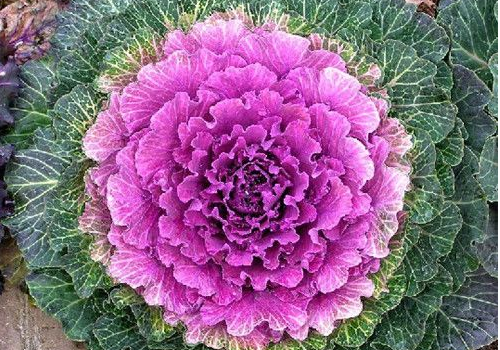
Is kale afraid of light:
Kale is not only not afraid of light, but is also a plant that likes light.
The main varieties of kale are, first, the round-leaf series, whose leaves have slightly wavy patterns and good cold resistance. Second, the curly-leaf series, whose leaf edges are curled and which colors faster than other varieties under high-temperature conditions. Third, the feather-leaf series, whose feather-like leaves all have finely serrated or coarsely serrated edges, with larger flower heads, sturdy stems that are not easy to bend, and strong cold resistance. Kale likes cool conditions, has relatively strong cold resistance, is not strict about soil, likes soil rich in humus, and has strong resistance.
Kale seedling raising can use two methods: nutrient-cup seedling raising and seedbed seedling raising. Seedlings can be raised and transplanted from August to December. When raising seedlings, first water the seedling bed thoroughly, then after sowing cover with 0.5-1 cm of fine soil, with a seeding rate of 30 grams per mu. After emergence, keep the seedbed moist. When the seedlings grow to 5-6 true leaves, they can be planted out into the field. For summer seedling raising, shade netting can be used for covering, and for winter seedling raising, attention should be paid to keeping warm. Kale has a relatively long growth period and a long continuous harvest period, and has a high demand for nutrients. Applying sufficient base fertilizer before land preparation is the key to obtaining high yields. When the seedlings grow to 5-6 true leaves, they can be planted out into the field, with a plant spacing of 30 cm and a row spacing of 40 cm, planting 3500-4000 plants per mu. For nutrient-cup seedling raising, a “send-off fertilizer” can be applied once before planting; for seedbed seedling raising, a “root-setting fertilizer” can be applied once after winter planting to promote seedling growth.
Alright, friends, you all understand clearly now, and know that kale is not afraid of light.
What fruits are suitable for growing on a balcony, and what vegetables are suitable for growing
Balcony. Some people's balconies at home are unusually large. This kind is super suitable for growing fruits and vegetables and the like, so what fruits are suitable for growing on a balcony? What vegetables are suitable for growing:
What fruits are suitable for growing on a balcony:
If you are preparing to grow fruit trees on a balcony or in a courtyard, then let us see which ones are suitable.
1. Strawberry
Strawberries are very common potted plants. Most of them are perennials. Plant once and you can harvest many times. Of course, in winter they need proper warmth.
If you choose everbearing strawberries, that is most suitable. They can fruit twice, in June and late summer, and only need a large pot to grow very well.
2. Blueberry
Blueberries are slightly different from strawberries. You need to plant two pots for them to fruit, or have a neighbor growing blueberries. They fruit from June to August and need a container 55 cm deep, with a diameter also needing to be more than 45 cm.
It likes acidic soil. Peat soil or compost soil can be used, and it also needs plenty of light.
3. Fig
Figs can also fruit in containers, but at least a container more than 40 cm is needed. They are not too picky about soil, but they need well-drained soil.
Figs are also relatively drought-tolerant. Their growth needs plenty of sunlight, but in summer they need watering almost every day, because water in pots evaporates especially quickly.
4. Tomato
Are tomatoes considered a fruit? But they really can be grown in containers. Their growth needs some support, so some trellises need to be made. Potted tomatoes need to be chosen from very compact varieties. Cherry tomatoes can be chosen, and a sufficiently large container should be selected.
5. Pineapple
Among potted fruits, is pineapple one you like? Keeping a pineapple alive is not very difficult. Gardeners can simply cut off the crown of a pineapple. But if you want it to fruit, then a very large pot is needed, along with plenty of light and frequent light fertilizing.
6. Cantaloupe
Potted cantaloupe really is possible. Of course, the fruit grown is not fresh-tasting (quite unpalatable), so if you just want to grow it for looks, you also need to make some netting to support them as they climb, and then you can grow them in a large container.
7. Banana
Do not think bananas all grow several meters tall. Relatively dwarf varieties have now been bred, and it is a perennial plant. After fruiting once, cutting off the stem allows it to grow again.
Potted care needs a large container, well-drained soil, and plenty of sunlight. Of course, the most important thing is a warm, humid climate year-round.
8. Watermelon
What is the experience of growing potted watermelon like? But now there is also a newly marketed thumb watermelon, a cucumber-flavored variety, which belongs to an improved wild fruit.
Other varieties can also be tried. You can grow them in a sunny place, and they need some trellises to grow.
9. Blackcurrant
Although I have not eaten this kind of currant, I have seen this kind of currant jam. It looks like a good choice for potting as well, but its growth needs a relatively large space, and it needs frequent watering, frequent light fertilizing, and proper pruning, and it also needs trellis support.
10. Gooseberry
This is a very cute plant. Its fruits look like little lanterns, with a kind of exquisite, translucent feel. Their care is similar to that of currants. They need a large container, and also plenty of light and a warm, slightly moist environment.
11. Citrus fruit trees
You can choose kumquat, orange, or lemon as potted fruit trees. These are relatively common potted fruit trees and are also relatively easy to care for, especially kumquat. Many friends buy a pot when spring arrives.
They have many dwarf varieties, and growing them in a large container is completely fine.
12. Mulberry
When I was little, my neighbor raised some silkworms, which needed a lot of mulberry leaves, so naturally I saw mulberry trees. The fruit of the mulberry tree is the mulberry. When the fruit turns black, it is especially sweet, and mulberries are also very suitable for potted care. Ripe fruit needs to be picked promptly, whether you eat it or not, otherwise it easily stains the ground. (Friends who have eaten mulberries will understand.)
13. Passion fruit
Passion fruit is a very beautiful tropical fruit. The basic condition for care is a warm, humid tropical or subtropical climate. They can also be grown as potted climbing plants and need a trellis, preferably a grid-like frame.
Tips for potted fruit gardening:
Potted fruits all need plenty of light, well-drained potting soil, and frequent light fertilizing. (Give fertilizer once every one or two weeks.)
If the fruit tree grows larger and larger, the container must also be changed every year, otherwise the fruit tree is very likely to die.
What vegetables are suitable for growing on a balcony:
1. Tomato
Undoubtedly, tomatoes are the most vital vegetable. You can grow them in flowerpots. Tomatoes need plenty of sunlight every day (5-6 hours a day is best). The size of the container depends on the tomato variety you want to grow. You can try high-yielding cherry tomatoes.
2. Green beans
Most legume vegetables are climbing, dense types. They grow upward, grow very fast in flowerpots, and are very easy to grow.
You can grow them on a lattice by a wall. Within a few weeks, you will get a green wall, and they will all climb up along the lattice. It needs plenty of sunlight and a long, deep pot.
3. Lettuce
Lettuce grows quickly and can be planted all year round. You will soon harvest a large pot of vegetables. Since lettuce is a fast-growing seasonal crop, gardeners in the north can plant it in spring, summer, and autumn, while gardeners in the south can also plant it in winter.
Lettuce does not need too deep a flowerpot. When planting, be sure to leave at least 10-odd cm of space between each plant. It needs fertile, well-drained soil, frequent watering, and keeping the soil moist.
4. Chili pepper
Chili peppers are potted plants with very high yields. Their root system is relatively large and deep, so they need a large, deep flowerpot, and also need a sunny and warm place to thrive. They need fertile, well-drained soil and proper fertilizing.
5. Cherry radish
This kind of radish is very cute, with red skin and white flesh. It is also a very fast-growing vegetable and very suitable for container growing. Do they look like cherries?
6. Bok choy
This bok choy can be harvested in about a few weeks after planting. It does not need too much sunlight; about 3-4 hours of sunlight a day is about enough. However, they need plenty of water and occasional organic fertilizer to thrive.
7. Western baby spinach
Spinach is one of the best potted vegetables. It can grow very well in pots, and can even be grown in relatively shady places with just a little sunlight occasionally. It does not need a very deep container, has a relatively shallow root system, grows relatively quickly, and is also suitable for growing on a windowsill.
8. Pea
Peas like a mild environment. They are a relatively interesting plant, with cute flowers, and can be grown on a trellis. Potted peas also need some support. They can be grown on a balcony, choosing some low-growing varieties, and watered frequently, because peas like slightly moist soil, as long as it is not waterlogged, and placed in a spot that can receive plenty of sunlight.
9. Carrot
Carrots grow best in cool weather. Potted care requires regular watering; otherwise keep the potting soil slightly moist and do not let it get too dry. Growing this plant in containers is easy, and it does not need too much space either.
10. Cucumber
Cucumbers are heavy feeders and also need frequent watering. In a medium-sized pot (depending on the variety) and with plenty of sun. You can have your own successful crisp cucumbers within a few months.
11. Eggplant
Although eggplant easily attracts pests, it is still very easy to grow well. They need a warm, humid environment and can tolerate high temperatures. It is a relatively suitable summer crop. If you live in the warm south, it can be grown all year round, keeping plenty of sunlight and proper fertilizing.
12. Zucchini
Zucchini is a very easy plant to grow. Zucchini grown in containers can also give a good harvest. Although I do not like eating it, I quite like growing it. It is the most suitable balcony or rooftop vegetable, and it likes sunlight.
13. Kale
Kale is also relatively suitable for potted care. It has emerald green leaves. It is recommended to grow one plant per pot. Its root system is not too deep, but it grows relatively thick and strong, and grows very quickly.
Of course, it also has a great many varieties. Gardeners in warm regions can grow it year-round!
14. Beet
Beets relatively like growing in a warm environment. Of course, it is also a relatively cold-tolerant crop and is also very suitable for potted care. A flowerpot of more than 15 cm is enough to grow it, and it does not need to be too deep.
15. Mustard greens
Mustard greens are not cold-tolerant and like a warm environment. They do not need much care to grow and are relatively easy plants to grow. The germination rate from sowing is very high!
16. Garlic
Garlic is expensive, but it is one of the healthiest foods. The best part is that you can also grow them in containers at home. Garlic greens can also be eaten. You can use them in salads, sandwiches, and many other preparations. To grow garlic in containers, choose a pot at least 6-8 inches deep and as wide as possible. You need to leave 5-6 inches of space between each clove of your plants.
17. Red-stemmed beet
Red-stemmed beet has red and pink stems, which are edible. Even in pots, it grows very quickly, and it is perennial, so it can be harvested multiple times. This vegetable is very cold-tolerant and can grow freely in the north, but it needs a relatively deep container and well-drained soil.
18. Bitter melon
How can summer be without green bitter melon (bitter gourd)? It is one of the best vegetables for cooling and soothing the mood in the hot summer. It can also grow very well in a large container. Because it needs to climb to grow, some support should be made, or a lattice should be prepared. The container depth needs to be more than 30 cm. A long trough-shaped container is most suitable!
19. Okra
Okra likes a warm environment and is very easy to grow, without needing any advanced gardening skills. As long as it is given a sunny environment and a set amount of fertilizer, that is enough. Dwarf okra varieties are more suitable for potted care.
That is all for the fruits and vegetables suitable for growing on a balcony. Hurry and grow a few plants!
Clever management for home flower growing, flowers will bloom in winter
Blooming for three seasons is already impressive enough, so how can the fourth season also be bright and colorful? Forced New Year flowers from the greenhouse wither in a desperate posture within a few days of arriving. This is not your fault. The important thing is to choose the right flowers and care for them properly. Winter blooming is not a miracle.Varieties that bloom in winter
Apart from special varieties such as wintersweet, narcissus, and poinsettia, most flowers basically go dormant once winter arrives. But there are still some flowers that, whether in the north or south, no matter how severe the cold, remain beautiful in the freezing winter. Who are they?
Indoor winter-blooming varieties
Hyacinth: There are 4 colors: red, white, pink, and light purple. The normal flowering period is from December to January. The fragrance is rich, and it can tolerate short periods of frost. The thickness of the soil layer covering the hyacinth determines the flowering period. To bloom from December to January, choose a soil layer 10-15 cm thick; if you want it later, use a soil layer of about 8 cm.
Similar flowers include crocus, cyclamen, and others.
Geranium: Indoors at normal room temperature, as long as the temperature reaches above 15°C, does not fall below 8°C at night, and water is given when dry, it can bloom joyfully throughout the winter. At around 10°C, it can maintain an evergreen state.
Geranium likes sunlight, warmth, is slightly drought-tolerant, and is afraid of waterlogging. Daily management requires pruning branches and pinching off growing tips. After flowering, remove spent flowers to promote the growth of new flower buds. Pinching multiple times can promote increased branching and bud formation.
Similar flowers also include: cineraria, which can bloom from December to April.
Its growth habits suit indoor environments. It should have plenty of light. The soil should be loose, well-drained leaf mold or peat soil. Keep the potting soil moist and minimize watering. Winter temperature should not be below 10°C.
New winter flowers for outdoor courtyards Witch hazel series: Deciduous shrubs, with large, fragrant flowers. Depending on the variety, they can bloom from November to February of the following year.
Kale: It can withstand heavy snow and low temperatures of minus 11°C, adding a touch of greenery to the severe winter. Introduced to the north, it can serve as an excellent open-field herbaceous flower for winter.
Heather series: Low shrubs with abundant varieties. The flowering period outdoors in winter can last from December to April of the following year. Flower colors vary by variety, including rose red, white, and others.
Give a little warmth and they bloom
Some flowers, as long as they are brought into a space with a certain temperature and guaranteed daily natural light, can likewise bloom throughout the winter.
Crabapple: The most suitable growing temperature is 15-22°C. It prefers a warm, humid, and semi-shaded environment, and dislikes high temperatures and waterlogging. Short-day conditions can advance the flowering period, and the short daylight of winter happens to meet its needs.
Anthurium: The optimal growing temperature for potted anthurium is 20-30°C, with a minimum temperature of 14°C. Air humidity is the key to successful anthurium cultivation, so the leaves should be misted frequently throughout the year, which allows it to keep blooming continuously.Azalea: In winter, azaleas usually enter dormancy, but if the balcony or room temperature reaches a certain level, for example between 15-25°C, even summer azaleas will end dormancy and bloom continuously. In winter, azaleas need little water; generally water once every 4 to 5 days.
Hibiscus: In a warm room in the north, the hotter it is, the more brilliantly it blooms. The temperature needs to stay above 20°C, with at least 8 hours of sunlight daily. It is recommended to place it on a south-facing windowsill or balcony with full sun.Phalaenopsis: During the peak flowering period, the indoor temperature should be kept between 15-18°C, with enhanced ventilation and humidity. In the north, do not place the flowers on or too close to a radiator, and do not let direct sunlight hit them. The water temperature for watering should ideally be close to room temperature, and the leaves can be misted frequently with a sprayer to increase humidity. During the growing period, a special orchid fertilizer diluted 2000 to 3000 times can be applied; during the flowering period, it is best not to fertilize.
Lily: Most varieties prefer a cool, moist, semi-shaded environment and are relatively cold-tolerant. The suitable growing temperature is 12-18°C. In winter, even if the temperature drops to 3-5°C, they will not die from the cold. They bloom normally at 12-25°C.