How to Grow Strawberries on a Balcony and When They Bear Fruit
Strawberries are a fruit that many people love to eat, and they are so delicious. So how do you grow strawberries on a balcony? How long does it take for strawberries to bear fruit?
How to grow strawberries on a balcony:
1. The environment strawberries need:
Strawberries need to be grown in a sunny, warm environment. In addition, the soil must have good drainage. If you want to plant them in the ground, be careful not to use soil that has previously grown potatoes, because strawberries are easily infected by a bacterium that affects potatoes.
When strawberries bear fruit, they need to be separated from the soil, so growing strawberries in flower pots is a better choice. You can choose a multi-purpose flower pot and spread a layer of stones on the surface of the soil in the pot, so that when watering, it is not easy for mud to splash onto the strawberries. If planting in the ground, you can use some dry grass, or a mat, to protect the strawberries.
2. The three-year cycle of growing strawberries:
Strawberry cultivation has a three-year cycle. In the first year, you can only harvest very few strawberries; in the second year, you will harvest a lot, but by the third year or after three years, strawberry yields drop significantly and the plants need to be replaced. Therefore, arrange the propagation of new plants reasonably to ensure that some strawberries are second-year plants every year, so you can get the greatest economic benefit.
When strawberries are growing well, they produce a kind of runner, and at the end of the runner new small plants form. When the small plant grows to 3-4 leaves, you can cut it off, plant it in another flower pot, and be careful with watering. It is best not to let first-year new plants bear strawberries; only let them grow more leaves. So when you find that a one-year-old strawberry plant has bloomed, remove the flowers. At the same time, do not forget to hang a small tag on the plant with the planting date of the new plant written on it, so you will not forget later. Remove other excess runners from the new plant. If strawberries are planted in the ground in a yard, also pay attention to weeding. When watering, be careful not to get the strawberries wet, because once strawberries are splashed wet with water, they rot easily.
3. Strawberry care:
Once strawberries begin to bear fruit and turn red, be careful not to let birds peck at them, because birds easily notice red things. Put a net over the strawberries, or cover the strawberries with a wooden basket. But if you have a greenhouse at home, you can move the strawberries into the greenhouse, which is even better. Strawberries also bear fruit more easily. After the strawberry fruiting period is over, you can move them out of the greenhouse and place them outdoors to overwinter. In a way, if strawberry plants experience some frost, it is more beneficial for increasing yields the following year.
Strawberries are very easy plants to cultivate and can be transplanted. Sometimes you may notice yellow leaves on the plant, but do not worry; just remove them. In winter, you can keep the yellow leaves until new leaves grow out the following spring, then remove the dead yellow leaves, and pay attention to watering, weeding, and pest control. You can also grow strawberries in plant bags, but be sure to water evenly, and prevent birds from pecking at the strawberries and prevent pests. The soil in plant bags dries out easily, so it needs to be checked often to keep the soil moist.
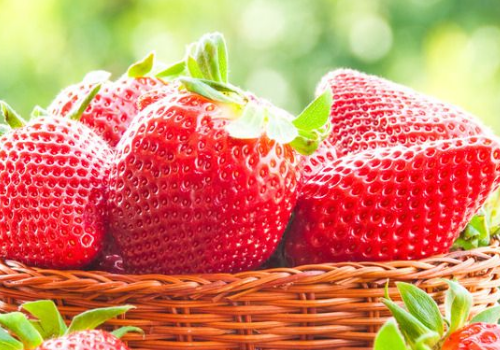
How long does it take for strawberries to bear fruit?
Strawberries generally bear fruit after about three months of planting.
If you plant strawberries in March now, you can generally harvest strawberries in late May or June! If there is drought, the strawberry patch should be irrigated once every 5-7 days. Attach a length of metal pipe to the front end of a rubber hose for hole irrigation, which saves water and also keeps the bed soil loose. When there is a lot of rain in autumn, drain water promptly. Drainage ditches should be prepared early around the strawberry patch so that the water in the furrows inside the shed can be drained completely.
That is the introduction to how to grow strawberries on a balcony. Strawberries generally take three months to bear fruit.
What Fruits Are Suitable for Growing on a Balcony and What Vegetables Are Suitable for Growing
Balcony: some people's balconies at home are unusually large. In that case, they are super suitable for growing fruits and vegetables and the like. So what fruits are suitable for growing on a balcony? What vegetables are suitable for growing:
What fruits are suitable for growing on a balcony:
If you are preparing to grow fruit trees on a balcony or in a courtyard, let us look at which ones are suitable.
1. Strawberry
Strawberries are very common potted plants. Most of them are perennials, and you can harvest many times from one planting. Of course, they need proper warmth in winter.
If you choose everbearing strawberries, that is the most suitable. They can be kept for two harvests, in June and late summer, and only need a large pot to grow very well.
2. Blueberry
Blueberries are slightly different from strawberries. You need to plant two pots for them to bear fruit, or a neighbor must grow blueberries. They bear fruit from June to August, and need a container 55 cm deep, with a diameter also needing to be more than 45 cm.
They like acidic soil, can use peat soil or compost soil, and also need plenty of light.
3. Fig
Figs can also bear fruit in containers, but at minimum you need to use a container more than 40 cm. They are not too picky about soil, but they need well-drained soil.
Figs are also fairly drought-tolerant. Their growth needs plenty of sunlight, but in summer they need watering almost every day, because water in pots evaporates especially quickly.
4. Tomato
Is a tomato a fruit? But it really can be grown in containers. Their growth needs some support, so you need to make some trellises. Potted tomatoes need to be a very compact variety; you can choose cherry tomatoes, and choose a large enough container.
5. Pineapple
Among potted fruits, is pineapple one you like? Growing a pineapple is not very difficult. Gardeners can simply cut off the crown of a pineapple, but if you want it to bear fruit, you need a very large pot, plenty of light, and frequent light fertilizing.
6. Cantaloupe
Potted cantaloupe is indeed possible. Of course, the fruit grown is not fresh-tasting (it is hard to eat), so if you just want to grow it to look at, you also need to make some netting to support their vines, and then you can cultivate them in a large container.
7. Banana
Do not think bananas all grow several meters tall. Dwarf varieties have now been bred, and it is a perennial plant. After fruiting once, cutting off the stem lets it grow again.
Potted care needs a large container, well-drained soil, and plenty of sunlight. Of course, the most important thing is a warm, humid climate year-round.
8. Watermelon
What is the experience of growing watermelon in a pot like? But now there is also a newly marketed thumb watermelon, a cucumber-flavored variety, improved from a wild fruit.
Other varieties can also be tried. You can grow them in a sunny place, and they need some trellises to grow.
9. Blackcurrant
Although I have not eaten this kind of currant, I have seen this kind of currant jam. It looks like a good choice for potting too, but its growth needs a relatively large space, and it needs frequent watering, frequent light fertilizing, proper pruning, and also support from a trellis.
10. Gooseberry
This is a very cute plant. Its fruits look like little lanterns, giving a sense of being exquisite and translucent. Their care is similar to currants. They need a large container, plenty of light, and a warm, slightly moist environment.
11. Citrus fruit trees
You can choose kumquat, orange, or lemon as potted fruit trees. These are relatively common potted fruit trees and are also fairly easy to care for, especially kumquat. Many friends buy a pot when spring arrives.
They have many dwarf varieties, and growing them in a large container is no problem at all.
12. Mulberry
When I was little, a neighbor raised some silkworms and needed a lot of mulberry leaves, so naturally I saw mulberry trees. The fruit of the mulberry tree is the mulberry. When the fruit turns black, it is especially sweet, and mulberries are also very suitable for potted care. Ripe fruit needs to be picked promptly, whether you eat it or not, otherwise it easily stains the ground. (Gardeners who have eaten mulberries will understand.)
13. Passion fruit
Passion fruit is a very beautiful tropical fruit. The basic condition for care is a warm, humid tropical or subtropical climate. They can also be grown as potted climbing plants and need a trellis; a grid-like trellis is best.
Tips for potted fruit gardening:
Potted fruits all need plenty of light, well-drained potting soil, and frequent light fertilizing. (Give fertilizer once every one or two weeks.)
If the fruit tree grows larger and larger, the container must also be changed every year, otherwise the fruit tree easily dies.
What vegetables are suitable for growing on a balcony:
1. Tomato
There is no doubt that tomato is the most vigorous vegetable. You can grow it in a flower pot. Tomatoes need plenty of sunlight every day (5-6 hours per day is best). The size of the container depends on the tomato variety you want to grow. You can try high-yield cherry tomatoes.
2. Green bean
Most bean vegetables are dense climbing types. They grow upward, grow very fast in flower pots, and are very easy to grow.
You can grow them on a trellis by a wall. Within a few weeks, you will get a green wall; they will all climb up along the trellis. It needs plenty of sunlight and a long, deep pot.
3. Lettuce
Lettuce grows quickly and can be grown all year. You can soon harvest a big pot of vegetables. Because lettuce is a fast-growing seasonal crop, gardeners in the north can grow it in spring, summer, and autumn, while gardeners in the south can also grow it in winter.
Lettuce does not need too deep a flower pot. When planting, be sure to leave at least 10 cm or more of space between each plant. It needs fertile, well-drained soil, frequent watering, and keeping the soil moist.
4. Chili pepper
Chili pepper is a potted plant with a very high yield. Its root system is relatively large and deep, so it needs a large, deep flower pot, and also needs a sunny and warm place to thrive. It needs fertile, well-drained soil and proper fertilizing.
5. Cherry radish
This kind of radish is very cute, with red skin and a white center. It is also a very fast-growing vegetable and is very suitable for container growing. Do they look like cherries?
6. Napa cabbage
This napa cabbage can be harvested after about a few weeks of planting. It does not need too much sunlight; about 3-4 hours of sunlight per day is enough. However, they need plenty of water and occasional organic fertilizer to thrive.
7. Spinach
Spinach is one of the best potted vegetables. It can grow very well in pots, and can even be grown in relatively shady places; a little sunlight occasionally is enough. It does not need a very deep container, has a relatively shallow root system, grows relatively quickly, and is also suitable for growing on a windowsill.
8. Pea
Peas like a mild environment. They are a relatively interesting plant, with cute flowers, and can be grown on a trellis; potted peas also need some support. They can be cared for on a balcony. Choose some low-growing varieties and water frequently, because peas like slightly moist soil; just do not let water accumulate, and place them where they can receive plenty of sunlight.
9. Carrot
Carrots grow best in cool weather. Potted care requires regular watering; otherwise keep the potting soil slightly moist and do not let it get too dry. Growing this plant in a container is easy, and it does not need too much space.
10. Cucumber
Cucumbers are heavy feeders and also need frequent watering. Grow them in a medium-sized pot (depending on the variety) and give them plenty of sun. Within a few months you can have your own successfully grown crisp cucumbers.
11. Eggplant
Although eggplant easily attracts pests, it is still very easy to grow well. They need a warm, humid environment and can tolerate high temperatures. It is a relatively suitable summer crop. If you live in the warm south, you can grow it all year round, keeping plenty of sunlight and fertilizing properly.
12. Zucchini
Zucchini is a very easy plant to grow. Zucchini grown in containers can also give a bumper harvest. Although I do not like eating it, I quite like growing it. It is the most suitable vegetable for a balcony or rooftop, and it likes sunlight.
13. Kale
Kale is also relatively suitable for potted care, with emerald green leaves. It is recommended to grow one plant per pot. Its root system is not too deep, but it grows relatively sturdy and grows very quickly.
Of course, it also has a great many varieties. Gardeners in warm regions can grow it year-round!
14. Beet
Beets relatively like growing in a warm environment. Of course, it is also a relatively cold-tolerant crop and is also very suitable for potted care. A flower pot more than 15 cm is enough to grow it, and it does not need to be too deep.
15. Mustard greens
Mustard greens are not cold-tolerant and like a warm environment. They do not need much care to grow and are relatively easy plants to grow. The seed germination rate is very high!
16. Garlic
Garlic is expensive, but it is one of the healthiest foods. The best part is that you can also grow them in containers at home. Garlic greens can also be eaten; you can use them in salads, sandwiches, and many other preparations. To grow garlic in containers, choose a pot at least 6-8 inches deep and as wide as possible. You need to leave 5-6 inches of space between each clove of your plants.
17. Red-stemmed beet
Red-stemmed beet has red and pink stems, and those are edible. Even in pots, it grows very quickly, and it is perennial, so it can be harvested multiple times. This vegetable is very cold-tolerant and can grow freely in the north, but it needs a relatively deep container and well-drained soil.
18. Bitter melon
How can summer be without green bitter melon (bitter gourd)? It is one of the last vegetables to cool and soothe the mood in the hot summer. It can also grow very well in a large container. Because it needs to climb to grow, you need to make some supports, or set up a trellis. The container depth must be more than 30 cm; a long trough-shaped container is the most suitable!
19. Okra
Okra likes a warm environment and is very easy to grow, requiring no advanced gardening skills. As long as you provide it with a sunny environment and a set amount of fertilizer, that is enough. Dwarf okra varieties are more suitable for potted care.
That is the introduction to fruits and vegetables suitable for growing on a balcony. Hurry and grow a few plants!
Step-by-Step Guide to Growing Strawberries in Balcony Flower Pots
Gardeners, when you are tired of growing flowers, do you sometimes also want to grow some fruit to add interest to life? Growing fruit is not only for viewing, but also for eating. Just thinking about it is extremely great. So what fruit should you grow on a home balcony? Hahaha! Grow strawberries on the balcony! The editor will share the full steps for growing strawberries in balcony flower pots.
Before Growing Strawberries on a Balcony:
Strawberries are very easy plants to cultivate and can be transplanted. Sometimes you may notice yellow leaves on the plant, but do not worry; just remove them. In winter, you can keep the yellow leaves until new leaves grow out the following spring, then remove the dead yellow leaves, and pay attention to watering, weeding, and pest control. You can also grow strawberries in plant bags, but be sure to water evenly, and prevent birds from pecking at the strawberries and prevent pests. The soil in plant bags dries out easily, so it needs to be checked often to keep the soil moist.
Steps for Growing Strawberries on a Balcony
1. Sowing
Strawberry seeds are relatively small, so sowing must be done carefully. It is best to use sifted fine sandy loam mixed with some finer humus soil to fill the flower pot, and sow in the pot. Before sowing, spray thoroughly with water. After broadcast sowing, cover with about 0.5 cm of sifted fine soil. Cover the pot with plastic film, spray water with a fine-nozzle watering can every day, and keep the soil moist. At a temperature of 25°C, seedlings begin to emerge 15 days after sowing. When the seedlings grow 2 true leaves, divide them into pots, and when they have 4-5 leaves, they can be moved into a larger pot.
2. Seedling-stage management
Watering: The seedling stage is not suitable for flooding irrigation; sprinkler irrigation can be used to meet the water supply. After the seedlings grow to 6 true leaves, small flooding irrigation can be used to prevent silt from burying the seedlings.
Topdressing: When the small seedlings grow to 6 true leaves, the first topdressing can be done, and urea is suitable. Urea can be dissolved in water to make a dilute fertilizer and sprayed on. For the first topdressing, the amount should be small. After that, topdress once every 20-30 days. As the seedlings grow larger, the amount of fertilizer can be appropriately increased.
3. Growth care
If planting only a small amount, try not to use pesticides. You can spray with a large amount of dishwashing detergent diluted in water; you can also place some melon rind, beer, and so on nearby to lure away snails and other soft-bodied crawling pests.
In autumn, spread a layer of soil over the plants to prevent frost. After the soil freezes, you can spread another 3-4 inches of dry grass over the plants. By the following spring, when new leaves grow out, remove the dry grass. After the weather turns warm and stable, remove the covering soil on the surface of the plants. But leave some dry grass between the rows to prevent weeds from growing and to keep soil moisture.
If you have a greenhouse at home, you can move the strawberries into the greenhouse, which is even better. Strawberries also bear fruit more easily. After the strawberry fruiting period is over, you can move them out of the greenhouse and place them outdoors to overwinter. In a way, if strawberry plants experience some frost, it is more beneficial for increasing yields the following year.
Strawberry cultivation has a three-year cycle. In the first year, you can only harvest very few strawberries; in the second year, you will harvest a lot, but by the third year or after three years, strawberry yields drop significantly and the plants need to be replaced.
So is growing strawberries on a balcony much simpler? Growing flowers and fruit is about finding joy in life. As long as something makes you happy, that is fine.