How to Grow Rosemary from Seed and How It Differs from Sage
Rosemary is a shrub in the Lamiaceae family, generally growing in warm places. So what is the method for growing rosemary from seed? And how does it differ from sage?
Methods for growing rosemary from seed:
Rosemary propagation mainly includes three methods: sowing, cuttings and layering, among which sowing is the more common one. However, because rosemary seeds have a low germination rate, mastering the correct seed-growing method is crucial to ensuring the germination rate of sowing.
Rosemary seeds are generally sown for seedlings in a greenhouse in early spring. Either traditional soil seedling raising or plug tray seedling raising can be used, but the germination rate is very low, generally only 10-20%. Moreover, in the first year rosemary grows extremely slowly; even by autumn the plant is not much larger than when it was first planted, and it takes 2-3 years to form a large yield, which is very slow. Therefore, vegetative propagation is generally used in production. However, plants grown from seed have a more fragrant scent, so which propagation method to use depends on the need.
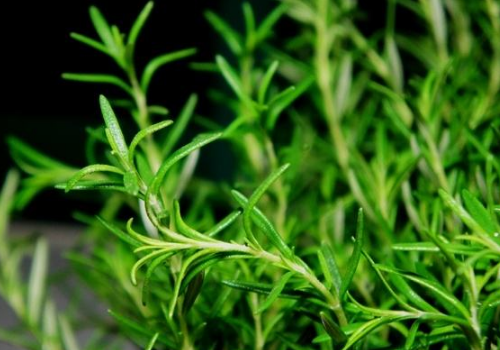
Differences between rosemary and sage:
1. Differences in family, genus and species: Although sage and rosemary both belong to the phylum Angiospermae and the class Dicotyledoneae, when further subdivided the two are very different. Sage belongs to the genus Salvia, an aromatic plant in the subclass Sympetalae, while rosemary belongs to the genus Rosmarinus, a shrub in the subclass Asteridae.
2. Morphological differences: Sage is shrub-like and relatively short, with oval leaves that are hairy and gray-green or white-green; its verticillasters are purple, pink or white, the flowers have a pungent fragrance, and the flowering period is earlier. Rosemary, by contrast, is taller, with dark gray stems and hairy young branches; as the young branches grow into old branches they change from four-angled to cylindrical, the leaves grow in clusters with short stalks or no stalks, the flowers are opposite, and the flowering period is later.
3. Differences in origin: Based on the different growth habits of sage and rosemary, their growing regions also differ greatly. In our country, sage is generally distributed along the Yangtze River and in the provinces to its south, excluding plateau and basin regions, while rosemary can be planted not only in most of the south but also in Shandong, where it is cultivated as an economic crop.
4. Differences in medicinal value: As a medicinal herb, sage's main effects include clearing heat and detoxifying, promoting blood circulation and removing blood stasis, reducing swelling and regulating menstruation, etc. It mainly treats jaundice, dysentery, sores and damp-heat, bruises and injuries, etc., and is traditionally also used for hospital disinfection. Rosemary's main medicinal function is calming the nerves and refreshing the mind, mainly treating insomnia, headache and palpitations.
Well, now you know the differences between rosemary and sage.
When does rosemary bloom (which month)? Differences between sage and rosemary
Rosemary's main purpose is not for flower viewing, so people do not particularly look forward to its flowering period, to the point that most people overlook the existence of rosemary flowers. But rosemary is indeed a plant that can bloom, and as for when it blooms, why not learn about it together with the editor.
When does rosemary bloom
Rosemary is a perennial herbaceous plant. In its natural environment its flowering period is from November to April, when the upper and top parts of the branches are covered with small light blue and white flowers. But in a relatively cool environment, rosemary may also bloom from June to July.
Differences between sage and rosemary
1. Differences in family, genus and species
Although sage and rosemary both belong to the phylum Angiospermae and the class Dicotyledoneae, when further subdivided the two are very different. Sage belongs to the genus Salvia, an aromatic plant in the subclass Sympetalae, while rosemary belongs to the genus Rosmarinus, a shrub in the subclass Asteridae.
2. Morphological differences
Sage is shrub-like and relatively short, with oval leaves that are hairy and gray-green or white-green; its verticillasters are purple, pink or white, the flowers have a pungent fragrance, and the flowering period is earlier. Rosemary, by contrast, is taller, with dark gray stems and hairy young branches; as the young branches grow into old branches they change from four-angled to cylindrical, the leaves grow in clusters with short stalks or no stalks, the flowers are opposite, and the flowering period is later.
3. Differences in origin
Based on the different growth habits of sage and rosemary, their growing regions also differ greatly. In our country, sage is generally distributed along the Yangtze River and in the provinces to its south, excluding plateau and basin regions, while rosemary can be planted not only in most of the south but also in Shandong, where it is cultivated as an economic crop.
4. Differences in medicinal value
As a medicinal herb, sage's main effects include clearing heat and detoxifying, promoting blood circulation and removing blood stasis, reducing swelling and regulating menstruation, etc. It mainly treats jaundice, dysentery, sores and damp-heat, bruises and injuries, etc., and is traditionally also used for hospital disinfection. Rosemary's main medicinal function is calming the nerves and refreshing the mind, mainly treating insomnia, headache and palpitations.
How to Prune Rosemary
When pruning rosemary, it is mainly divided into shaping pruning and harvest pruning.
Shaping pruning is mainly about the fact that during rosemary's growth, the branches keep growing, and basically every leaf axil produces small buds. As the branches grow, these small buds gradually develop into new branches, so after a long period of growth the whole rosemary plant presents a messy state with branches growing sideways, which affects ventilation and light penetration and makes rosemary prone to pests and diseases. Therefore, to help rosemary grow better and keep an attractive shape, you can prune it regularly and tidy up its form.
Harvest pruning is also a fairly commonly used method. During rosemary's growth, it can be harvested multiple times; when harvesting, the main thing collected is rosemary's branches and leaves. The harvest pruning method is fairly simple: you can prune with scissors or pick directly by hand. When harvesting, note that the sap at rosemary's wounds will dry and is very hard to remove, so protective measures must be taken when harvest pruning. When harvesting, you can harvest 3——4 times a year according to rosemary's growth.
The Benefits of Rosemary
1. Helps with sleep
Rosemary's flowers and seeds can relieve headaches, help with sleep and prevent hair loss. Many families like to use incense in water; the ones bought from the market are all chemical preparations, so how can they compare with natural plant fragrance? At the same time, rosemary also has bactericidal and antiviral effects.
2. Enhances memory
Rosemary can relieve flatulence, enhance memory, refresh the mind, reduce headache symptoms and also relieve hair loss symptoms. Brewing rosemary as tea, its fragrance can refresh the mind, enhance brain function and improve memory. Placing a small pot in the study is both fragrant and refreshing! Students who need to memorize a lot can drink rosemary tea.
3. Enhances concentration
Rosemary can improve impairments in speech, vision and hearing, enhance concentration, treat rheumatic pain, strengthen liver function, lower blood sugar, help treat arteriosclerosis, and help restore vitality to paralyzed limbs.
4. Beauty and skin care
Rosemary has a strong astringent effect, which can help us clean hair follicles and deep skin, and can make pores smaller, thus making the skin look finer and smoother.
5. Weight loss
Rosemary flower tea can promote blood circulation, lower cholesterol, inhibit obesity and has a weight-loss effect.
Rosemary's flowers are very small and scattered, so encountering a bloom and enjoying it well is also a form of respect for the plant itself. But an even more advanced form of respect is not to waste it, to make the best use of it as much as possible, and to give full play to rosemary's value.
How to sow lavender seeds? Lavender seed growing methods
Image: lavender
[Common question] How to sow lavender seeds? Lavender seed growing methods
[Expert answer]
Tools/materials:Flower pots, seeds, garden soil, gardening tools, etc.;
Method/steps:
1. Container
Lavender is a perennial small shrub that can generally be used for about 10 years. The varieties are undemanding and easy to cultivate; they like sunlight, tolerate heat, drought, extreme cold and poor soil, and resist saline-alkali soil. The cultivation site needs sufficient sunlight and good ventilation. Time required from sowing to flowering (or harvest): 18-20 weeks. Lavender is best cultivated in containers of medium size or larger.
2. Growing medium
Lavender seeds are relatively small and have a low germination rate, so the soil generally used for sowing needs to be loose, breathable, with high water-holding capacity, and fully sterilized to make the soil fluffy. If conditions permit, you can use a mixed soil of plant ash, vermiculite, peat, sphagnum moss, perlite, osmund fiber, etc., or buy special flower-growing soil at a flower market.
3. Warm water soaking
Lavender seeds should be soaked in warm water below 40°C. After the water cools, continue soaking for 12-24 hours before planting, which makes germination easier.
4. Sowing method
Generally, for slightly larger seeds (such as lavender, sage, rosemary), you can sow every 3-5 cm in each container depending on the area. After germination, keep the stronger seedlings according to how the young seedlings are growing. For very small seeds (such as marjoram), you can broadcast them over a large area. Dip your hand in some seeds and gently scatter them on the soil. After germination, thin the seedlings. Keep 1-3 seedlings as appropriate.
5. Covering with soil
The thickness of the soil covering the seeds depends on the size of the seeds. Generally it is 2-3 times the diameter of the seed. For small seeds the soil should be spread thinner; for lavender seeds, cover with less than 1 cm of soil. Some seeds are strongly phototactic and do not need to be covered with soil (such as lemon balm and rosemary).
6. Moisture retention
After sowing, water thoroughly in one go. Use a fine watering can to water. Do not use force, to avoid washing the seeds away. It is best to use the bottom-watering method: fill a large basin with water to 2/3 of its capacity and set the container in the basin, letting water slowly seep in through the bottom holes of the container (the water level in the large basin should not exceed the height of the soil in the container). After sowing, you can also cover the container with plastic wrap and prick a few small holes in the wrap for ventilation. Place the container in sunlight and maintain a temperature of about 20°C; most seeds can germinate after one week.
7. Management after germination
After lavender seeds germinate, you can remove the plastic wrap. For small seeds, you can wait until the seedlings are a bit stronger before removing it.
8. Potting and transplanting
After lavender seeds sown over a large area germinate and the seedlings grow 4-6 true leaves, they can be potted. Note that the spacing between seedlings is generally 3-5 cm. Use small pots at first. After the seedlings grow larger, switch to larger pots as appropriate. When changing pots, wait until the soil is somewhat dry (because you need to water after repotting; if the soil is wet, the damp period is too long and the seedlings easily grow poorly). First add more than half of a nutrient-rich potting soil to the small pot. To avoid damaging the root system, do not shake off the soil near the roots when transplanting. Move it directly into the small pot, then fill the soil up around the roots. After transplanting, be sure to water thoroughly and shade it for a few days. Then it can be placed in sunlight for care.
[Editor's comments] After lavender was introduced and cultivated in our country, lavender has always been very popular with the public. So how do you sow lavender seeds? You should know that lavender seeds do not have a high germination rate, and many flower lovers report sowing failures. Here the First Agricultural Economics editor has summarized some good methods and suggestions. The above text introduces the tools and method steps needed for sowing lavender seeds. We hope everyone can grow lavender from seed.