Is Dichondra repens toxic? A detailed guide to growing it from hanging seeds
Dichondra repens has excellent beneficial properties and can even be placed in the bedroom, so is Dichondra repens toxic? How do you grow it from hanging seeds?
Is Dichondra repens toxic:
Dichondra repens is not toxic. Dichondra repens is a common herbal medicine with effects such as protecting the liver and lowering enzymes, relieving pain, fighting inflammation, fighting bacteria, and reducing fever and promoting bile flow. Older generations often boiled it to make herbal tea, so Dichondra repens is not only non-toxic but also has good medicinal value.
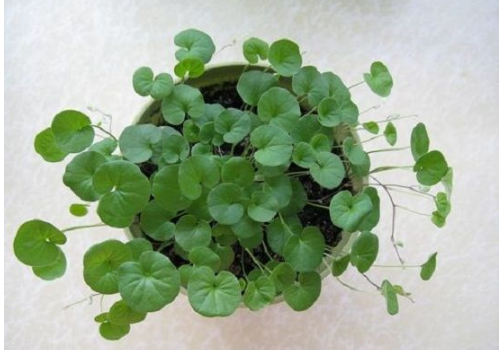
How do you grow hanging Dichondra repens from seeds:
Dichondra repens is a common foliage plant. Because its stems grow creeping along the ground and it has a trailing growth habit, it is very suitable for hanging up as a hanging basket plant. Whether grown alone or in a mixed planter, hanging Dichondra repens has a very good greening effect. In container cultivation, hanging Dichondra repens is usually propagated by sowing, so if you want to grow hanging Dichondra repens into a waterfall, you first need to master how to grow it from seeds.
Sowing propagation of hanging Dichondra repens can be done in spring or autumn. Spring sowing is best in April-May, and autumn sowing is best in September-October, but the best time is still spring. The optimal temperature for sowing and propagating hanging Dichondra repens is 21°C.
Before sowing hanging Dichondra repens seeds, soak the seeds in water for 4 hours first, then sow; the effect is better. Before sowing hanging Dichondra repens, prepare the flower pot first, disinfect the soil in advance, and water it thoroughly. Sow the treated seeds in rows or broadcast them over the prepared flower pot, then cover with about 1-2 cm of soil and cover with a straw curtain, which can maintain the temperature and humidity for germination, promote uniform emergence, and increase the emergence rate. After sowing, pay attention to watering; generally, germination occurs 7-10 days after sowing.
Alright, everyone now knows that Dichondra repens is not toxic.
Is Hydrocotyle vulgaris toxic? How do you grow Hydrocotyle vulgaris seeds
Hydrocotyle vulgaris is one of the most popular aquatic plants at present. But many people say that Hydrocotyle vulgaris is toxic, so is Hydrocotyle vulgaris actually toxic? How do you grow Hydrocotyle vulgaris seeds? Today I will share this knowledge with everyone.
How do you grow Hydrocotyle vulgaris seeds?
Hydrocotyle vulgaris is relatively rarely propagated by sowing; generally, it is propagated directly by division. Because Hydrocotyle vulgaris is very easy to keep alive, most flower enthusiasts directly buy Hydrocotyle vulgaris seedlings, though some also like to grow Hydrocotyle vulgaris from seed, since in some places the distance is too far to mail seedlings. In addition, be careful when buying seeds and do not buy fake Hydrocotyle vulgaris seeds. Some flower enthusiasts bought blue-coated Hydrocotyle vulgaris seeds, but according to their experience, most of these are Dichondra repens seeds.
For the sowing methods of Hydrocotyle vulgaris, there are mainly two methods: one is the standard ordinary sowing method, and the other is more rough and simple, directly throwing the seeds into water and soaking them, and they will sprout on their own.
Sowing method one: pour the seeds into a small container, add just enough water to cover the seeds, and if the temperature is low, wrap it with plastic wrap. Change the water frequently, place it in a cool, ventilated place, and after a few days it will sprout. Once the sprouts grow to about 1 cm, they can be planted.
Sowing method two: soak the seeds in a small amount of water for half an hour, put soil in a pot, water it thoroughly, then pour the seeds together with the soaking water into the pot, trying to pour them evenly and not pile them together. Cover with a thin layer of soil, spray water, and spray twice a day, just enough to keep the surface moist. Place in a warm, dark place, and they will sprout in about three days. Once true leaves grow, they can be transplanted to hydroponics.
Is Hydrocotyle vulgaris toxic?
It is said that "Hydrocotyle vulgaris is one of 52 plants that can cause cancer," so is Hydrocotyle vulgaris really toxic? In fact, Hydrocotyle vulgaris is not toxic. Not only is it non-toxic, Hydrocotyle vulgaris can also be used medicinally. It can be used as medicine and has effects such as promoting diuresis, clearing heat and draining dampness, and detoxifying and reducing swelling. So why is there such a rumor? The reason is that there is a plant called Lysimachia christinae, which is also known as Hydrocotyle vulgaris, or "ground-lying copper coin," and is a perennial herbaceous plant. Lysimachia christinae is not Hydrocotyle vulgaris; they just share the same alias. What is toxic is Lysimachia christinae, not Hydrocotyle vulgaris, and these are two different plants. So we can safely grow Hydrocotyle vulgaris.
Hydrocotyle vulgaris is not toxic and can be safely kept in the bedroom. Its flowers are even less toxic. Its flowering period is around April, and it produces small white flowers. Hydrocotyle vulgaris is one of the beautiful and easy-to-grow aquatic plants. It can be grown indoors in pots or hanging baskets, making the home appear fresh and natural and making people feel relaxed and happy.
Dichondra repens Forst. Dichondra repens profile: how to grow Dichondra repens / how to propagate Dichondra repens
Dichondra repens profileDichondra repens Forst.
Aliases: small Lysimachia christinae, lotus-bud grass, meat wonton grass, golden key, Hydrocotyle vulgaris, small Dichondra repens, jaundice grass, purse grass
Classification: perennial herbaceous flower
Family and genus: Plantae, Angiosperms, Dicotyledons, Tubiflorae, Convolvulaceae, Dichondra
Full bloom period: spring
Dichondra repens, also known as small Lysimachia christinae, lotus-bud grass, meat wonton grass, golden key, Hydrocotyle vulgaris, small Dichondra repens, and jaundice grass, is a plant in the Convolvulaceae family and Dichondra genus. It is distributed in areas south of the Yangtze River in China (including the Taiwan region), and is widely distributed in Guizhou, Guangxi, Fujian, Sichuan, Zhejiang, Hunan, and other places. It grows in areas at altitudes of 1300 m to 1980 m, mostly along roadsides, on mountain slopes and grasslands, or by ditches, and has already been introduced and cultivated artificially. Dichondra repens is a commonly used herbal medicine among the Miao people for treating hepatitis, with the Miao medicinal name "Wobisheliu." It is a perennial creeping herbaceous plant, harvested from April to June. Bitter and pungent in taste, slightly cold in nature...
How to grow and care for Dichondra repens and precautions: an introduction to Dichondra repens
Dichondra repens, also known as small Lysimachia christinae, lotus-bud grass, meat wonton grass, golden key, Hydrocotyle vulgaris, small Dichondra repens, and jaundice grass, is a plant in the Convolvulaceae family and Dichondra genus. It is distributed in areas south of the Yangtze River in China (including the Taiwan region), and is widely distributed in Guizhou, Guangxi, Fujian, Sichuan, Zhejiang, Hunan, and other places. It grows in areas at altitudes of 1300 m to 1980 m, mostly along roadsides, on mountain slopes and grasslands, or by ditches, and has already been introduced and cultivated artificially.
Dichondra repens is a commonly used herbal medicine among the Miao people for treating hepatitis, with the Miao medicinal name "Wobisheliu." It is a perennial creeping herbaceous plant, harvested from April to June. Bitter and pungent in taste, slightly cold in nature, mainly entering the lung and stomach meridians, it has the effects of clearing heat and detoxifying, promoting diuresis, and activating blood circulation. It is a resource-rich Miao folk medicinal herb with good development and utilization value. The herbal medicine Dichondra repens, also called small Lysimachia christinae, mainly treats: clearing heat; draining dampness; detoxifying. Used for jaundice; dysentery; urolithiasis with sand-like stones; white turbidity; edema; boils and sores; traumatic injuries; venomous snake bites.
Morphological characteristics of Dichondra repens
Dichondra repens is a perennial creeping small herb. The stems are slender, covered with gray short soft hairs, and root at the nodes. Leaves are kidney-shaped to round, 4-25 mm in diameter, with a broad rounded or slightly notched apex, a broad heart-shaped base, slightly hairy on the upper surface, appressed short soft hairs on the underside, and entire margins; the petiole is long, (1.5)3-5(6) cm.
The flowers of Dichondra repens are solitary in the leaf axils. The pedicel is shorter than the petiole and thread-like; the sepals are obovate-oblong to spoon-shaped, blunt, 2-3 mm long, hairy on the back and margins; the corolla is bell-shaped, shorter than to slightly longer than the calyx, yellow, deeply 5-lobed, with the lobes oblong-lanceolate and hairless; there are 5 stamens, inserted at the sinuses between the 2 corolla lobes, with short filaments of equal length; the ovary is sparsely soft-hairy, 2-locular, with 4 ovules, 2 styles, and capitate stigmas. The capsule is nearly spherical, small, shorter than the calyx, about 1.5 mm in diameter, and membranous. Seeds 1-2, yellow to brown, hairless.
Dichondra repens, also known as small Lysimachia christinae, is a perennial creeping small herb. The stems are slender, covered with gray short soft hairs, and root at the nodes. Leaves are alternate; the petiole is 3-5 cm long; the leaf blade is kidney-shaped to round, 0.4-2.5 cm in diameter, with a broad rounded or slightly notched apex, a broad heart-shaped base, slightly hairy on the upper surface, appressed short soft hairs on the underside, and entire margins. Flowers are solitary in the leaf axils, and the pedicel is shorter than the petiole and thread-like; there are 5 sepals, obovate-oblong to spoon-shaped, 2-3 mm long, hairy on the back and margins; the corolla is bell-shaped, yellow, deeply 5-parted; the ovary is sparsely soft-hairy, 2-locular, with 2 styles and capitate stigmas. The capsule is nearly spherical, about 1.5 mm in diameter, and membranous. Seeds 1-2, yellow to brown, hairless.
The flowering period of Dichondra repens is April, and the fruiting period is July-August.
Ecological habits of Dichondra repens
Dichondra repens likes warm, humid climates. It not only has strong adaptability, competitiveness, and invasiveness, and vigorous vitality, but also has a certain tolerance to trampling. It is not very strict about soil requirements; as long as drainage conditions are moderate, it can be grown in both sandy loam and clay.
Dichondra repens grows in semi-shaded, moist, fertile fields or mountain areas. It mostly grows under open forests, at forest edges, and on mountain slopes, roadsides, riverbanks, river beaches, and shaded wet grasslands, often growing in clusters and distributed in patches. Dichondra repens has a growth habit of both liking light and tolerating shade, and has strong resistance to disease and pollution.
Distribution range of Dichondra repens
Dichondra repens is mainly distributed in tropical and subtropical regions of both hemispheres.
In China, Dichondra repens is distributed in all provinces south of the Yangtze River and in Taiwan province, and is widely distributed in Guizhou, Guangxi, Fujian, Sichuan, Zhejiang, Hunan, and other places. It grows at altitudes of 1300-1980 m, on mountain slopes and grasslands, along roadsides, or by ditches. It is widely distributed in tropical and subtropical regions of both hemispheres.
Cultivation techniques, management, and care for Dichondra repens
Fertilization
Because Dichondra repens creeps along the ground and its leaves are relatively broad, fertilization is very difficult. If fertilization techniques are not strictly controlled, it can cause severe fertilizer burn. Generally speaking, if using highly soluble fertilizer, it is best to dissolve it first and then spray it with a sprayer; if using fertilizer that cannot dissolve immediately, then after fertilizing, water heavily to wash the fertilizer that has fallen on the leaves into the soil and make it dissolve as quickly as possible, which can reduce the degree of burning; or fertilize first, then use a broom to sweep the fertilizer under the leaves, and then water. At the same time, avoid fertilizing during high temperatures.
It likes nitrogen fertilizer. Usually, in combination with rain and watering, apply appropriate amounts of nitrogen fertilizer as a top dressing. It is best to apply 3-5 kg/mu of urea plus 5-10 kg/mu of diammonium phosphate. After the turf has been cultivated for 2-3 years, because the rhizomes become densely packed together, it is easy to cause soil compaction and affect aeration and water infiltration. Depending on the situation, spike holes can be made, or a knife or spade can be used to cut lines and sever the grass roots to increase soil looseness. At the same time, add nitrogen fertilizer and water appropriately to restore the lawn's vitality.
Under suitable humidity conditions, the creeping stems of Dichondra repens grow rapidly and have a very strong invasive ability. These characteristics determine its suitability for extensive management. However, like other turfgrasses, Dichondra repens lawns also have some difficulties in maintenance.
Weed control
The types of weeds appearing in Dichondra repens lawns are fewer than those in bermudagrass, Manila grass, and tall fescue lawns. This phenomenon is partly because Dichondra repens lawns have strong creeping ability, and partly because Dichondra repens has a long green period, turns green early, and has strong competitiveness against weeds. However, in newly planted Dichondra repens lawns, because it takes 2-3 months of growth to fully cover the ground, weeds can easily invade before full coverage. When there are few weeds, manual pulling can be used; if there are many weeds, herbicides can be used. A single spray of the compound agent Lujun SL-2 at 525-675 g/hm2 can control most weed damage, with a residual effect lasting up to 80-90 d, and it is safe for Dichondra repens lawns. It is worth noting that herbicides are ideally used at the weed seedling stage.
Watering
Regular irrigation and moderate fertilization are needed. After seedlings emerge, water 1-2 times per week, and increase irrigation frequency in dry seasons. After the turf forms, watering should be controlled in early spring and early winter; during the peak growth period around the Spring Festival, determine watering frequency according to the soil. During the growing period, apply 3-6 grams of nitrogen fertilizer per square meter, generally fertilizing 1-2 times each year in spring and autumn, which helps maintain the lawn's appearance. Improper fertilization can easily cause fertilizer burn. Generally speaking, fertilizer should be dissolved before spraying, or a large amount of water should be applied after fertilizing, to avoid the above phenomenon; at the same time, also avoid fertilizing during high temperatures.
How to grow Dichondra repens: key cultivation points
Land preparation
Rototill the ground loose, rake it level, and refine it so that the soil particles are below 2 cm in diameter. Adjust the soil pH to 5.5-7.0. Use formalin: water = 1:40 for soil disinfection, with a dosage of 10-15 L per square meter of bed surface. Before disinfection, the soil needs to be dry.
Trenching and transplanting
On the prepared turf bed, open small trenches 2-3 cm deep, with 3-4 cm between trenches. Separate the prepared Dichondra repens plants and place them evenly in the trenches, keeping the plant spacing in the trenches at 3-4 cm, cover with 2 cm of soil, water thoroughly once, cover with a shade net or straw curtain, and keep the soil moist every day. On the 5th day after planting, the plants grow vigorously, but the creeping branches have not yet fully contacted the ground to grow new roots; on the 10th day, a large number of creeping stems fully contact the ground and grow new roots and new shoots.
Cultivation by covering with fine sand
Before planting, water the prepared turf bed thoroughly. Manually tear apart the Dichondra repens turf and spread it evenly over the turf bed, then evenly scatter the prepared fine sandy soil over the Dichondra repens, covering with 6-10 mm of sand, keeping the fine sandy soil completely moist, and cover with a shade net to prevent excessive water evaporation. By the 5th day, a large number of new roots have grown from the creeping stem nodes of Dichondra repens; by the 10th day, a large number of new branches have grown from the places where new roots emerged.
Propagation methods of Dichondra repens
Dichondra repens is commonly propagated by sowing and division.
Sowing propagation
For Dichondra repens, spring sowing is best in April-May, and autumn sowing is best in September-October. When the soil temperature reaches 21°C, it is the best sowing time. The sowing rate is 10-15 g/m2. Before sowing, soak the seeds in 50 mg/kg GA for 4 hours before sowing; the effect is better. Sow the treated seeds in rows or broadcast them over the prepared turf bed, then use a nail rake to rake the ground so that the seeds enter the soil 1-2 cm, press them down, and cover with non-woven fabric or a straw curtain to increase germination temperature and maintain soil moisture, promote uniform emergence, and increase the emergence rate.
Generally, sow in spring from March to April or in autumn from September to October, with a sowing rate of 10-15 grams per square meter. Usually, mix evenly with fine sandy soil and then broadcast. After sowing, cover with a thin layer of soil and a layer of non-woven fabric, pay attention to watering, and germination will begin successively in 7-10 days. In practice, creeping stems are often used for vegetative propagation. First, deeply plow and level the ground, remove debris, and apply sufficient base fertilizer, then lay turf blocks, cover slightly with fine sand or fine soil, roll, and water.
Clump division propagation
In April-May, lift the creeping stems with soil and divide them into small clumps, then plant them at a hole spacing of 15-20 cm. After planting, water to keep moist, and pay attention to removing weeds.
Disease control of Dichondra repens: disease control
Dichondra repens lawns have strong disease resistance, and only southern blight and a small amount of Phyllosticta leaf spot occur. The above diseases mostly occur in the high-temperature, high-humidity season from July to August. Using drugs such as chlorothalonil and carbendazim and spraying once every 7-10 days can effectively prevent the occurrence and development of diseases.
Rust disease
The main symptom is the production of reddish-brown powdery scabs or striped spots on stems and leaves, which later turn dark brown. Generally, rust spores begin to spread in April, first appearing on the leaves, expanding to the whole plant in summer, and in severe cases can cause the lawn to wither and die in large patches.
Control methods
First, avoid applying nitrogen fertilizer in summer; second, use chemical control. You can use 20% triadimefon emulsifiable concentrate at 30-40 milliliters per mu, or 40% carbendazim suspension concentrate at 75-100 milliliters per mu.
Sclerotinia disease
The main symptom of affected plants is the appearance of round brown or slightly brown spots, which become large lesions as the disease worsens. In particular, high temperature and high humidity in summer, or improper nitrogen fertilizer application, can aggravate the disease and cause large bald patches in the lawn.
Control methods
First, when the disease occurs, dig out the plants in the affected area together with a 5 cm layer of soil and dispose of them in a centralized manner, and use 40% quintozene powder at 2 grams per square meter mixed with soil to disinfect and sterilize. Second, pay attention to drainage during the rainy season. When the disease is severe, 75% chlorothalonil wettable powder can be used for control at 100-125 grams per mu.
Southern blight
Leaves, stems, and roots can all be affected. Affected leaves show irregular yellowing and withered disease spots, and in severe cases the entire leaf dies and wilts. On severely affected plants, white silky mycelium and sclerotia about 1 mm in diameter can be seen at the stem base and near the soil surface. The sclerotia are initially white, then turn yellow and brown. Affected yellowing Dichondra repens lawns initially appear as circular patches several tens of centimeters in diameter, and as the disease develops, they can expand into irregular dead grass rings several meters across. Sclerotia are the main primary infection source of this disease. Sclerotium rolfsii is a soil-inhabiting fungus, and its hyphae can spread widely in the soil, becoming a secondary infection source. This disease is a high-temperature (optimum 25°C-35°C), high-humidity disease. In addition, soil rich in organic matter also favors the occurrence of this disease.
Chemical control
You can choose 1% Junliting 1000-fold solution or 25% prochloraz 2000-2500-fold solution for spraying.
Pest control
The larvae of scarab beetles, white grubs, and the larvae of noctuid moths, such as armyworms and black cutworms, are the main pests of Dichondra repens lawns. Dichondra repens lawn grass leaves are relatively tender and have high sap content, so they are very seriously damaged by armyworms. During the adult emergence period, use the adults' phototaxis and chemotaxis with black light lamps, poison bait, and poisonous grass to trap and kill them, reducing their egg-laying. For white grubs, use 50% phoxim 1000-fold solution and spray the lawn in the evening (or drench it); for armyworms and black cutworm larvae, use 40% omethoate 1000-fold solution for spray control. Especially repeating the spray once the next day gives the best effect. Insecticides such as phoxim and lesben can also be considered. Another organism harmful to Dichondra repens is the snail, which can be controlled by alternating use of Mida, Miehanluo, and similar products.
Meadow moth
This insect is seriously harmful to lawns. It bores into and eats grass roots and stems, interrupting the plant's water supply, causing stems and leaves to turn yellow and eventually die.
Control methods
It can be caught and killed with black light lamps, or trapped and killed with sugar-vinegar liquid, and can also be sprayed with 40% lesben 1000-fold solution.
Acrida cinerea
It chews leaves and tender stems. When the infestation is severe, the stems and leaves are all eaten. The damage is most severe from June to August.
Control methods
Use 0.5 kg of trichlorfon or dichlorvos per mu added to 500 kg of water for spraying, or manually concentrate manpower in the morning to catch and kill them.
Black cutworm
It specifically eats young tender stems and leaves, preventing the lawn from growing normally, and in severe cases can cause plants to die in patches.
Control methods
Use 50% diazinon emulsifiable concentrate at 50-100 milliliters per mu, or 25% carbaryl wettable powder at 200-250 grams per mu.
Medicinal or dietary value of Dichondra repens
The medical information and health dietary information on Huhuawang are for reference only and cannot be used as a basis for diagnosis or medical treatment. For any health problem, consult professional medical personnel, and for the treatment of any disease, follow medical advice.
Ultimate flower-protecting task: love yourself, start from reality, and strictly follow medical advice. For illness, do not be careless, do not delay, do not give up hope, face it bravely, use love to warm the silent world, and use your heart to care for the flower field within.
Medicinal value
Functions and indications
Jaundice; dysentery; urolithiasis with sand-like stones; white turbidity; edema; boils and sores; traumatic injuries; venomous snake bites. Clear heat and drain dampness, detoxify and reduce swelling. Used for hepatitis, cholecystitis, dysentery, nephritic edema, urinary tract infection, urinary tract stones, tonsillitis, and traumatic injuries.
Usage and dosage
Internal use: decoct in water, 6-15 g; fresh product 30-60 g. External use: appropriate amount, pound and apply.
Nature and flavor
Slightly bitter, sweet, cold in nature. Enters the water and wind elements.
Supplementary formulas
1. To treat "Longniu," "Longmengshahei": Dichondra repens 15 g, Siegesbeckia orientalis 10 g, Plantago asiatica 15 g, Verbena officinalis root 15 g. Decoct and take.
2. To treat "Longandale": Dichondra repens 30 g, Desmodium triquetrum 15 g, Cassia tora root 15 g, Imperata cylindrica root 15 g, Isatis root 20 g. Decoct and take.
3. To treat "Longhaimaimaoba": Dichondra repens 20 g, Lagenaria siceraria tip 15 g, black sugarcane bud eye 20 g, Acorus gramineus 10 g. Decoct and take.
4. To treat "Longhaixian": Dichondra repens 30 g. Decoct in water, add a little table salt, and take orally.
5. To treat "Longshalongjiehuo," "Longshalongjiehougaiban, ole," "Longshalongdajiebengliang," "Shuofenglinglan": Dichondra repens 15 g, pound into a paste, and take orally with external water.
Medication contraindications
Gangmu Shiyi: avoid salt.
Pharmacological effects
1. Liver-protecting and enzyme-lowering effect
Pharmacological experimental studies show that Dichondra repens extract has a certain therapeutic and protective effect on acute liver injury in animals caused by carbon tetrachloride (CCl4), and can significantly reduce the elevated serum transaminases in mice caused by liver injury within 1 week and 3 weeks; it reduces pathological changes in the liver, and can also increase the inverted albumin-globulin ratio after liver injury; experiments with fresh Dichondra repens grass juice show that it reduces the serum alanine aminotransferase (ALT), serum and liver tissue malondialdehyde (MDA) contents in CCl4-poisoned mice in a dose-dependent manner, significantly increases superoxide dismutase (SOD) levels, and markedly reduces hepatocyte degeneration and necrosis. Therefore, it has a significant protective effect on acute liver injury caused by CCl4. ALT is released when the mitochondrial membrane lipids of damaged liver cells dissolve in large amounts. This drug can reduce cell membrane permeability, inhibit the release of intracellular enzymes, thereby improving liver injury and promoting the recovery of liver function. MDA content reflects the degree of tissue peroxidation. SOD is an antioxidant enzyme in the body that can scavenge free radicals and prevent free radical damage to cell structures. Fresh Dichondra repens juice can reduce MDA content, increase SOD activity, and reduce lipid peroxidation in the liver, thereby achieving a liver-protecting effect.
For mouse liver injury caused by D-galactosamine (D-Glan), thioacetamide (TAA), and 1-naphthyl isothiocyanate (ANIT), it can significantly reduce serum transaminases and liver triglycerides in mice with D-Glan-induced liver injury and reduce pathological changes in liver tissue; it can reduce serum alanine aminotransferase in mice with induced liver injury, reduce the elevated serum total bilirubin (Tbil) and serum transaminases (ALT and AST) in mice with induced cholestatic jaundice, improve experimental jaundice-type liver injury, promote the recovery of liver function so that bilirubin is excreted normally, and play a role in protecting the liver and reducing jaundice; it also significantly reduces triglyceride (TG) content in liver tissue. In anti-hepatitis B virus experiments, the maximum non-toxic concentration of the compound (2R,3R)-2,3-dihydroxy-2-methyl-γ-butyrolactone was 0.4 μmol/ml, with an inhibition rate of 22.4% against HBsAg and 19.6% against HBeAg, showing a certain inhibitory effect on hepatitis B virus. The active ingredients of Dichondra repens for liver protection and the specific cellular and molecular biological mechanisms still need further research.
2. Analgesic effect
Using the writhing method, hot plate method, and electrical stimulation method to stimulate mice, different doses of Dichondra repens extract were administered, and the pain threshold of the mice was measured. The results show that Dichondra repens extract has a good analgesic effect.
3. Anti-inflammatory effect
Small doses of Dichondra repens extract have a significant inhibitory effect on the increase in capillary permeability caused by acetic acid; it inhibits carrageenan-induced inflammatory swelling of rat toes. Dichondra repens extract and its petroleum ether extract can both significantly inhibit xylene-induced acute inflammatory edema of mouse ears, but the anti-inflammatory effect of the petroleum ether extract of Dichondra repens has no obvious dose-dependent relationship. For different inflammation models, the medium dose consistently has good pharmacological activity.
4. Antibacterial effect
Microbiological tests show that Dichondra repens extract has strong antibacterial effects against Gram-positive pathogenic cocci such as Staphylococcus aureus and beta-hemolytic Streptococcus; while its effect on Gram-negative bacilli such as Escherichia coli, Salmonella typhi, Proteus and Enterobacter aerogenes is weaker, mainly inhibitory. It is ineffective against Shigella flexneri.
5. Antipyretic and choleretic effects
A high dose of Dichondra repens extract (32.5g/kg) can significantly lower the fever temperature in rats induced by peptone, and the effect lasts a long time, showing a good antipyretic effect. Infusing a low dose of Dichondra repens extract (8.2g/kg) into the rat duodenum significantly increased bile flow within 120 minutes, indicating that the drug has a strong choleretic effect.
6. Immune-enhancing effects
A low dose of Dichondra repens can significantly increase the weight of the animal immune organs thymus and spleen, enhance the phagocytic function of mononuclear macrophages, and raise the level of serum hemolysin, indicating that the drug promotes cellular immunity and humoral immunity.
7. Anticancer effects
HG-ICP-AES determination shows that the Se content in Dichondra repens is relatively high. The element Se has high antioxidant activity, 50 to 500 times that of vitamin E. It can scavenge free radicals in the body, prevent organ aging and pathological changes, delay aging, enhance human immunity, and resist the toxic effects of toxic heavy metals. Studies have proven that the element Se can inhibit the growth of cancer cells and the synthesis of their DNA, RNA and proteins, inhibit the transcription of oncogenes, and interfere with the metabolic process of carcinogens in the human body, thereby effectively fighting cancer.
Chemical composition
Dichondra repens mainly contains beta-sitosterol, vanillin, n-octatriacontane, maltol, ursolic acid, scopoletin, umbelliferone: tormentic acid, uracil, skimmin, glycerin and (N-benzoyl-L-phenylalanyl)-O-acetyl-L-phenylalaninol; various flavonoid components such as flavonoids, flavonols and isoflavones, with a total flavonoid content of 0.937%; volatile oils, sugars and trace elements.
The role and uses of Dichondra repens: ornamental value
Dichondra repens has emerald green leaves, a low plant form, dense and beautiful leaves, tolerates light trampling, has vigorous vitality, strong stress resistance, wide adaptability, low requirements for growing conditions, and needs no pruning.
The garden use of Dichondra repens: garden ornamentation
Dichondra repens has advantages such as long lifespan, a long green period, beautiful form, easy propagation, easy management, shade tolerance and high temperature tolerance. It is an excellent lawn grass and ground cover landscaping material, worthy of being called a "green carpet". It is suitable for cultivation and ornamentation in parks, government offices, courtyard green spaces, etc., and can also be used as a soil-fixing material on ditch slopes, embankment slopes and roadsides.
Greening effect
Dichondra repens has both ornamental value and the effects of fixing soil, protecting slopes, greening and purifying the environment. As an excellent ground cover plant, it has been widely used in the northern subtropical regions of southern China.
Cultural background of Dichondra repens: documentary accounts
1. "Baicao Jing": Clears damp-heat. Treats jaundice, abdominal distension, white turbid urine, and amenorrhea; pound the juice to apply to hot eyes; decoct in water to wash hemorrhoid swelling and pain.
2. "Guizhou Folk Prescription Collection": Treats weakness after illness and lifts the spirits; it can also promote diuresis and treat edema.
3. "Guangxi Traditional Chinese Medicine Records": Promotes diuresis, disperses blood stasis, and relieves pain. Treats five types of strangury, white turbid urine, and dysentery; externally treats bruises and cuts, and wind-fire eye pain.
4. "Sichuan Traditional Chinese Medicine Records": Dispels wind and regulates qi. Treats wind-cold cough, bruises, and jaundice.
5. "Flora of China": The whole herb used as medicine has the effects of clearing heat and promoting diuresis, dispelling wind and relieving pain, stopping bleeding and promoting tissue regeneration, reducing inflammation and detoxifying, and killing parasites. It can treat acute and chronic hepatitis, icteric hepatitis, cholecystitis, nephritis, urinary tract infections, tonsillitis, stomatitis, and boils and furuncles, venomous snake bites, breast abscess, dysentery, malaria, pulmonary hemorrhage, etc.
Alternative names
Dichondra repens, jaundice herb, pennywort, meat wonton herb, golden key, luopi herb, winecup nest, golden ear-picker, chicken-eye herb, small lamp dish herb, small wind-facing herb, small bowl herb, small lobelia, dibula, star herb, small yuanbao herb, ground money, small toad bowl, nine-linked rings, jade wonton, small half coin, called by Xianju people: small bowl head.
Dichondra repens pictures