Is Myrtle Poisonous? A Full Guide to Its Propagation Methods
The fruit of the myrtle has relatively good nutritional and medicinal value, and it can also be used to make wine for drinking. So, is myrtle poisonous? What are its propagation methods?
Is myrtle poisonous:
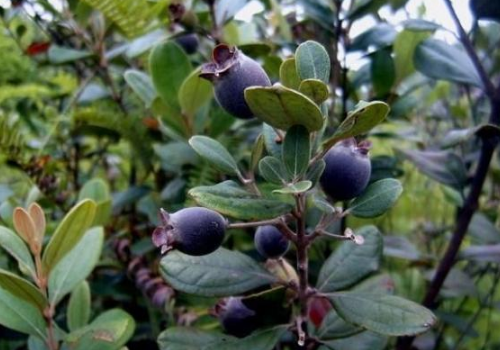
Myrtle is not poisonous, and it can be picked and eaten when the myrtle fruit is ripe. Myrtle belongs to the family Myrtaceae, which has a total of 72 genera and 2,752 species, all of them tropical plants, mostly famous fruit trees and various useful plants. Myrtle is a wild fruit commonly seen on the hills when I was a child. It is called differently in each place, and its aliases include: Duoni, Gangren, Shanren, Duolian, Dangli root, Renzishu, Douren, Zhongni, Wuduzi, Taojiuniang, Dangni, and so on.
What propagation methods does myrtle have:
I. Seed propagation method
Before sowing, the seeds must first be selected. Whether the seeds are chosen well or not directly affects whether sowing can succeed. It is best to use seeds collected in the current year. The longer the seeds are stored, the lower their germination rate. Choose seeds that are plump, not damaged or deformed, and free of pests and diseases. For household seed disinfection, it is common to soak the seeds in hot water at about 60°C for a quarter of an hour, and then use warm hot water to promote germination for 12 to 24 hours. Disinfect the substrate used for sowing. The best method is to put it in a pot and heat it while stirring, so that any pests and diseases are killed by the heat. Soak the seeds in warm hot water (at a temperature similar to face-washing water) for 12 to 24 hours, until the seeds absorb water and swell. For very common seeds that germinate easily, this step can be skipped. For tiny seeds that are difficult to pick up with your hands or other tools, you can moisten one end of a toothpick with water, stick the seeds one by one onto the surface of the substrate, cover them with substrate 1 cm thick, and then place the sowing flowerpot into water, with the water depth at 1/2 to 2/3 of the height of the flowerpot, letting the water slowly soak upward. For larger seeds that can be picked up with your hands or other tools, place the seeds directly into the substrate and sow them in spots at a spacing of 3×5 cm. After sowing, cover with substrate to a thickness of 2 to 3 times the size of the seeds. After sowing, you can use a sprayer or a fine-hole watering can to moisten the sowing substrate. Later, when the potting soil is slightly dry, water again. Still be careful not to water too forcefully, so as not to wash the seeds out.
Management after sowing: After sowing in late autumn, early spring, or winter, when a cold wave and low temperatures occur, you can wrap the flowerpot in plastic film to help keep it warm and moist; after the seedlings emerge, uncover the film promptly, and let the seedlings receive sunlight before 9:30 every morning or after 3:30 in the afternoon, otherwise the seedlings will grow very weak; after most of the seeds have sprouted, appropriate thinning is needed: pull out the diseased and unhealthy seedlings so that the remaining seedlings have a certain amount of space between them; when most of the seedlings have grown 3 or more leaves, they can be transplanted.
II. Cutting propagation method
When carrying out softwood cuttings, in late spring to early autumn when the plant is growing vigorously, choose robust current-year branches as cuttings. After cutting the branches off, select the sturdy parts and cut them into sections 5 to 15 cm long, each section bearing more than 3 leaf nodes. When cutting the cuttings, note that the upper cut should be made horizontally about 1 cm above the topmost leaf node, and the lower cut should be made diagonally about 0.5 cm below the bottommost leaf node. Both the upper and lower cuts must be smooth (the knife must be sharp). When carrying out hardwood cuttings, after temperatures rise in early spring, choose robust branches from the previous year as cuttings. Each cutting usually retains 3 to 4 nodes, and the cutting method is the same as for softwood cuttings.
All right, now you know how to propagate myrtle.
Is Myrtle Poisonous? What Is the Flower Language of Myrtle?
Plants and flowers are something everyone relatively likes. Plants and flowers not only have their own exclusive flower language, but also their own characteristics. So, is myrtle poisonous? What is its flower language? Next, let us learn together about whether myrtle is poisonous and about the flower language of myrtle.
I. Is myrtle poisonous
Myrtle is not poisonous, and it can be picked and eaten when the myrtle fruit is ripe. Myrtle belongs to the family Myrtaceae, which has a total of 72 genera and 2,752 species, all of them tropical plants, mostly famous fruit trees and various useful plants. Myrtle is a wild fruit commonly seen on the hills when I was a child. It is called differently in each place, and its aliases include: Duoni, Gangren, Shanren, Duolian, Dangli root, Renzishu, Douren, Zhongni, Wuduzi, Taojiuniang, Dangni, and so on.
II. What is the flower language of myrtle
Myrtle flower language: eerie, mysterious
Myrtle has a compact plant form and stays evergreen all year round. Its flowers are first white and then red, with red and white setting each other off, very gorgeous, and the flowering period is also relatively long. The fruit color turns from bright red to dark red, and both are ornamental. In landscaping, it can be used in clumps, in patches, or as a single plant to accent green spaces, and can achieve relatively good results.
Myrtle grows rapidly, tolerates poor soil, and has strong resistance to stress. It has a compact plant form and stays evergreen all year round. The plant height is 1 to 2 m, and young branches have short downy hairs. The leaves are opposite, leathery, elliptical or obovate. The cyme is axillary, with 3 to 5 flowers, and 5 petals, obovate. The flowers are first white and then red, rose red, or purple-red. The flower color on the same plant varies greatly, with red and white intermingled, gorgeous and elegant, very eye-catching and fascinating. The flowers open successively, and the flowering period can reach more than 2 months. The branches and trunk are highly flexible, and it can be made into bonsai or planted in clumps or patches in courtyards. It is a wild flower with good greening and beautifying effects, and has gradually been included by some cities in the list of ornamental garden plants.
III. The legend of myrtle
In Guangxi, a legend is popular: At some unknown era, in one place, the common people fled into the mountains and forests one after another in order to resist the feudal rulers' conscription and forced labor. They did not bring much grain, and it was eaten up within a few days. Just when they were suffering from hunger, someone discovered a small tree bearing a fruit shaped like a pomegranate and about the size of a cherry, with a somewhat dark red skin, which looked fleshy and juicy and could stave off hunger. Regardless of whether it was poisonous or not, he reached out and picked one to eat. Unexpectedly, it was truly a sweet and delicious fruit. So he quickly called his companions to gather them together. When they had eaten all the fruit in one place, they went to other places to look for more. They lived on the mountain and relied on this fruit to sustain their lives. Only after the matter had passed did they safely come down the mountain. To commemorate this experience, they gave this plant a name, calling it "escape-army grain," and it is still called this even now.
The above isIs myrtle poisonousandthe flower language of myrtlehas been introduced. Although the flower language of myrtle is eerie and mysterious, it does not mean that myrtle is poisonous. I hope it is helpful to everyone.
Recommended reading:
①Myrtle cultivation methods and myrtle care experience
②When does myrtle ripen and what effects does myrtle have
③Is croton poisonous and can it cause cancer? Can croton be placed indoors?
④Is Alocasia macrorrhizos poisonous? Can it absorb formaldehyde? Functions and effects of Alocasia macrorrhizos
⑤Is peace lily poisonous? Is peace lily suitable for growing indoors?
Camptotheca cultivation methods and precautions
Chinese scientific name: CamptothecaAliases: Qianzhangshu, Shuitongshu, HanlianmuKingdom: PlantaeDivision: AngiospermsClass: DicotyledonsOrder: MyrtalesFamily: NyssaceaeGenus: CamptothecaSpecies: Camptotheca acuminataDistribution area: Jiangsu, Zhejiang, Fujian, Hubei, Hunan, Sichuan, Guangxi, YunnanDosage: root bark: 9-15 g; fruit: 3-9 gToxicity: toxicCamptotheca, a traditional Chinese medicine name. It refers to the fruit, root, root bark, tree bark, and leaves of the plant Camptotheca acuminata Decne. of the family Nyssaceae. It is distributed in Jiangsu, Zhejiang, Fujian, Jiangxi, Hubei, Hunan, Sichuan, Guizhou, Guangdong, Guangxi, Yunnan, and other places. It has the effects of fighting cancer, clearing heat, and killing parasites. It is often used for gastric cancer, colon cancer, rectal cancer, bladder cancer, chronic myelogenous leukemia, and acute lymphoblastic leukemia; externally for psoriasis. In clinical practice, camptothecin is mostly extracted for use.1. Medicinal parts
Fruit, root, root bark, tree bark, leaves.2. Nature and flavor
Bitter and astringent in taste, cool in nature.3. Meridian entry
Enters the spleen, stomach, and liver meridians.4. Effects
Fighting cancer, clearing heat, killing parasites.5. Indications
Used for gastric cancer, colon cancer, rectal cancer, bladder cancer, chronic myelogenous leukemia, and acute lymphoblastic leukemia; externally for psoriasis. In clinical practice, camptothecin is mostly extracted for use.6. Related combinations
1. For gastric cancer, colon cancer, rectal cancer, and bladder cancer: grind camptotheca root bark into powder, 3 times a day, 3 g each time; grind camptotheca fruit into powder, once a day, 6 g each time. (From "Differentiation of Symptoms and Treatment")2. Leukemia: camptotheca root 30 g, Agrimonia pilosa, Pyrola, Yan zhu, honeysuckle, and Pteris multifida 30 g each, licorice 9 g. Decoct the juice and drink it as tea. (From "Bencao Pianbi")