How to Save a Yew with Dry, Dropping Leaves
Many people are growing a yew bonsai for the first time, so they do not know the specific growing methods. How do you save a yew whose leaves have dried up? What should you do when the leaves drop?
How to save a yew with dry leaves:
A: Severe water imbalance
Yew is drought-tolerant but not waterlogging-tolerant. If waterlogging is severe and the potting soil is too wet, oxygen in the potting soil becomes insufficient, the roots undergo anaerobic respiration, which then turns into alcohol poisoning, the roots suffocate and rot, causing the death of the whole plant.
Solution: Water thoroughly each time, watering when dry and letting it dry out between waterings. When the surface soil of the pot is dry, the soil in the middle is not necessarily short of water. When watering, you can combine it with agents to prevent root rot: add 1 g of dexon per pot diluted in water, or 2 g of carbendazim, or an active root-promoting agent diluted in water; you can also add ferrous sulfate diluted in water. The concentration should be low rather than high, following the principle of small amounts applied frequently.
B: Severely insufficient light
Although yew is a shade-tolerant tree species, it still must have appropriate light to carry out normal photosynthesis. If light is insufficient, photosynthetic products are few, and there will be a lack of sufficient nutrients; the photosynthetic products cannot circulate back to supply the roots, so the roots lack nutrients and are in a starving state, causing the leaves to yellow and drop. This is a way for the plant to self-regulate.
Solution: Place it on a balcony or outdoors in the morning and evening; the placement period can be once every few days.
C: Small pot, large seedling
The potting soil cannot supply enough nutrients, causing the seedling to yellow. The roots densely fill the edge of the pot and are sensitive to outside temperature, causing root tip death, which then shows as yellowing, drying and leaf drop on the branches of the plant.
Solution: Choose the cool morning or evening hours to repot. The bottom hole of a large pot should be raised, and the bottom layer is best lined with a layer of stones the size of an egg to help drainage and prevent water accumulation. Use humus soil for the potting soil, add an appropriate amount of ferrous sulfate, and be sure to mix it evenly. First, it has a disinfecting effect on the potting soil; second, it can supply iron element over the long term and prevent the leaves from yellowing due to iron deficiency.
D: Lack of nutrients
Nutrients in the potting soil are lacking and the soil is compacted, causing the leaves to dry up.
Solution: Use 10-20 g of organic fertilizer per pot, or rotted cake fertilizer, apply it together with loosening the potting soil and then water, or dilute it in water and apply, and it can also be combined with spraying foliar fertilizer.
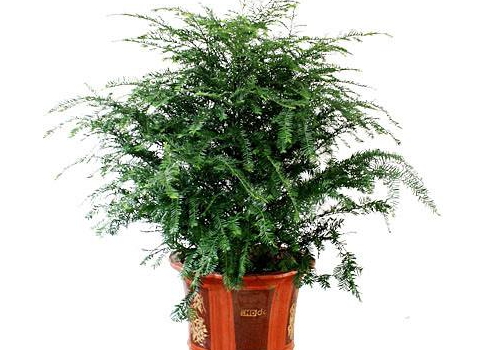
What to do when a yew drops its leaves:
If a yew shows such symptoms after being transplanted into a pot, it means the care environment and measures are still not appropriate.
1. In terms of the care environment, since the yew has just been potted, it must be given half shade and must not be exposed to full sun. Although yew is relatively shade-tolerant, it should not be given a fully shaded environment either. The air should be humid and slightly ventilated, and there should not be strong drafts. If the air is dry, it is best to spray water on the ground of the growing environment and into the air. When spraying water on the plant, you must ensure that water does not flow into the potting soil.
2. As for watering, you must water only after the surface soil has dried. Do not keep it moist, otherwise it is very unsuitable for wounded roots.
3. Place it in a semi-shaded, slightly ventilated spot, maintain relatively high air humidity, and water the roots when dry and let them dry out between waterings. When the potting soil needs watering, choose a 500-600 times diluted carbendazim solution instead of clear water.
Alright, that is all for the introduction to solutions for yew leaf problems. Everyone understands now, right?
Reasons for Yellowing Yew Leaves: What to Do When Yew Leaves Dry Up
Yew is an ornamental flowering plant that many people most enjoy growing at home, but during cultivation it often shows symptoms of yellowing or drying leaves. What should be done then? In fact, there are many reasons that cause yew leaves to yellow and dry, and they should be treated according to the cause. Below I will explain in detail the reasons for yellowing yew leaves and what to do when yew leaves dry up.
Reasons for Yellowing Yew Leaves: What to Do When Yew Leaves Dry Up1. Insufficient light causes yellowing leaves
If a yew gets insufficient light during cultivation, it will develop yellowing or dry leaves. Although this plant is very shade-tolerant, it still needs an appropriate amount of sunlight while growing. If light is insufficient, photosynthesis cannot proceed, and the leaves will also turn yellow and dry. In this case, simply move the yew into the sunlight in the morning and evening to avoid these yellowing and drying leaves.
2. Water imbalance causes yellowing leaves
Water imbalance is also an important reason for yellowing or drying yew leaves. Therefore, when watering a yew normally, special care is needed: water thoroughly when watering, but do not overwater. In addition, adding some carbendazim or ferrous sulfate when watering is also very beneficial for preventing leaves from turning yellow and drying up.
3. A small pot with a large seedling can also cause yellowing leaves
When growing a yew normally, you should repot it in time. If there is a small pot with a large seedling, the yew leaves will also show yellowing or drying symptoms, because when the seedling is large and the pot is small, it simply cannot provide the necessary nutrients for the yew, and its roots will also extend to the edge of the pot, causing root tip death. Once this happens, the yew leaves will turn yellow or directly dry up and fall off.
What to Do When Yew Leaves Dry Up: Teaching You How to Rescue a Withering Yew
Yew is an ancient relict tree species left over from the Quaternary glaciation, with a history of 2.5 million years on Earth. It is a national first-class protected plant, but now some people also cultivate yew artificially, so what should be done when yew leaves dry up? How should it be rescued?
What to do when yew leaves dry up:
There are many reasons for yew leaves drying up, and the cause should be identified and solved accordingly. For example, excessively high temperature and excessively high density can both cause leaves to dry up.
Causes of drying and solutions:
A: Severe water imbalance
Yew is drought-tolerant but not waterlogging-tolerant. If waterlogging is severe and the potting soil is too wet, oxygen in the potting soil becomes insufficient, the roots undergo anaerobic respiration, which then turns into alcohol poisoning, the roots suffocate and rot, causing the death of the whole plant.
Solution:
Water thoroughly each time, watering when dry and letting it dry out between waterings. When the surface soil of the pot is dry, the soil in the middle is not necessarily short of water. When watering, you can combine it with agents to prevent root rot: add 1 g of dexon per pot diluted in water, or 2 g of carbendazim, or an active root-promoting agent diluted in water; you can also add ferrous sulfate diluted in water. The concentration should be low rather than high, following the principle of small amounts applied frequently.
B: Severely insufficient light
Although yew is a shade-tolerant tree species, it still must have appropriate light to carry out normal photosynthesis. If light is insufficient, photosynthetic products are few, and there will be a lack of sufficient nutrients; the photosynthetic products cannot circulate back to supply the roots, so the roots lack nutrients and are in a starving state, causing the leaves to yellow and drop. This is a way for the plant to self-regulate.
Solution:
Place it on a balcony or outdoors in the morning and evening; the placement period can be once every few days.
C: Small pot, large seedling
The potting soil cannot supply enough nutrients, causing the seedling to yellow. The roots densely fill the edge of the pot and are sensitive to outside temperature, causing root tip death, which then shows as yellowing, drying and leaf drop on the branches of the plant.
Solution:
Choose the cool morning or evening hours to repot. The bottom hole of a large pot should be raised, and the bottom layer is best lined with a layer of stones the size of an egg to help drainage and prevent water accumulation. Use humus soil for the potting soil, add an appropriate amount of ferrous sulfate, and be sure to mix it evenly. First, it has a disinfecting effect on the potting soil; second, it can supply iron element over the long term and prevent the leaves from yellowing due to iron deficiency.
D: Lack of nutrients
Nutrients in the potting soil are lacking and the soil is compacted, causing the leaves to dry up.
Solution:
Use 10-20 g of organic fertilizer per pot, or rotted cake fertilizer, apply it together with loosening the potting soil and then water, or dilute it in water and apply, and it can also be combined with spraying foliar fertilizer.
Foliar fertilizer: urea 0.3% + ferrous sulfate 0.3%, potassium dihydrogen phosphate 0.3% + carbendazim 0.1%
Mix the fertilizers into a medicinal solution and spray it on the leaves, with a cycle of once every seven to ten days. At other times, mainly spray water. Tap water needs to be left to stand for 2-3 days before the surface water can be used.
Since leaf fertilization mainly relies on absorption through the stomata, and the stomata are mainly concentrated on the back of the leaves, when spraying water or medicine, it is required to spray from the leaf surface to the leaf back so as to achieve a good absorption effect. The best time for spraying is around five in the afternoon.
Methods for rescuing a withering yew:
Fertilizer and water: Yew is a shade-loving tree species and grows relatively slowly, but its resistance is extremely strong. It grows best in a cool, humid climate and acidic soil. It likes fertilizer, but in pots it should not be applied too much; otherwise, the foliage becomes dense and hides the branches and trunk framework, or new branches grow wildly and ruin the overall shape. Yew is not drought-tolerant, and it is hard for it to recover after losing water. Keep the potting soil moist and use a substrate with good water retention when potting.
Pruning: Remove overly dense branches, or appropriately remove unnecessary leaves on the branches, so that the branches and leaves in the crown are well balanced and just right.
Potting and repotting: Yew has relatively developed roots that are slightly fleshy. Do not injure the roots when potting or repotting, and pay special attention when potting or repotting during the growing season. Otherwise, the survival rate is affected. About half a month after the roots are injured, the needles turn yellow, wither and die.
Shading: Yew likes shade and avoids direct light. In a greenhouse it should be maintained under shade; indoors, simply place it in a bright spot.