Cultivation Methods and Price Guide for Yew Bonsai
The yew (Taxus) is a nationally protected plant, so wild specimens must not be touched; you can buy cultivated ones. How do you grow yew bonsai? How much does it cost?
How to grow yew bonsai:
1. Choose a spot for the bonsai with relatively good air circulation.
2. When the potting soil becomes slightly compacted, loosen the surface layer of soil.
3. After watering the yew, promptly clear away excess water in the saucer to keep the roots well aerated.
4. Water: Mastering moisture correctly is the key to caring for yew. When the surface of the potting soil lightens in color and dries out, and the upper leaves look dull and limp, it means the plant needs water. The water temperature for watering the plant must not differ too much from the soil temperature; when watering yew, do it slowly.
5. Temperature: Yew can grow normally in both winter and summer, but note that after winter arrives it needs protection from the cold; especially at night it should no longer be placed outdoors. Yew absolutely must not be kept in a room where the doors and windows stay closed for long periods.
6. Light: Yew likes shade and must not be exposed to strong direct sun. It is suitable for indoor placement, but it should not be placed in a spot without light. Each day the bonsai can receive about 25% of full sunlight.
7. Fertilizer: The potting soil for yew is made by combining native field soil with nutrient soil. It is loose in texture, high in organic matter, strong in water retention, fertilizer retention and aeration, full of nutrients, and has a pH within 7.
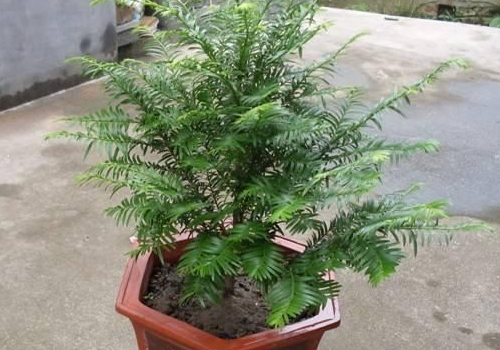
How much does yew bonsai cost:
The yew is an ancient relict tree species left over from the Quaternary glaciation. Because it grows slowly and its natural distribution is extremely sparse, and no large-scale yew raw material forest base has yet been formed worldwide, yew prices are generally relatively high. Yew seedlings range in price from around ten-plus yuan to tens of thousands of yuan, and differences in age and size all affect the price of yew.
Usually a yew bonsai costs at least 600 yuan; a five-year-old yew in a pot sells on the market for around 1,500 yuan; yew timber on the market costs around 50,000 yuan per cubic meter; and yew extracts are even more expensive, with high-purity taxol generally priced at at least around 2 million yuan per kilogram, a price comparable to gold.
Well, that is all for the introduction to yew bonsai prices and growing methods. I trust everyone understands now.
Yew Bonsai Cultivation Methods Yew Bonsai Cultivation Precautions
Yew is evergreen year-round, precious and elegant, and especially tolerant of shade, making it very suitable for long-term indoor display. Placing a few pots of yew in a room can both reflect the owner's refinement and aesthetic sense and adorn the room with elegance. So what are the cultivation methods for yew bonsai, and what should be noted during cultivation? Below, the editor will introduce the cultivation methods for yew bonsai!
Introduction to Yew
Yew is an evergreen tree with an upright trunk. Because of its graceful plant shape and deep green foliage, it also works very well for making bonsai. In its place of origin it can grow to 20 m tall, but in pots it is generally kept at 1 to 3 m, or even shorter, and the bark of the roots, branches and trunk is reddish-brown. Yew likes cool climates and can withstand low temperatures below minus 30 degrees Celsius, showing extremely strong cold resistance. The most suitable temperature for yew growth is 20-25 degrees Celsius, and the most suitable soil is a sandy soil with good drainage.
Yew Bonsai Cultivation Methods
1. Repotting: After a yew bonsai has been grown for two years, the sapling gradually grows larger and its root system becomes more developed, so the original pot no longer meets the yew's growth needs and it must be repotted into a larger pot. When transplanting, it is best to break the old pot apart, without damaging the original root ball, and slowly move it into the new pot, then water to settle the roots. For yew bonsai, choose a slightly larger flower pot and make several more holes in the lower part of the pot to enhance drainage and aeration.
2. Soil: The soil for growing yew should be loose, rich in humus, fertile and slightly acidic (pH=5-6.5). Loam is best, and a mixed growing medium of peat soil, perlite and loam can also be used. If the potting soil becomes slightly compacted, promptly loosen the surface soil of the yew bonsai.
3. Light: Yew likes shade and tolerates drought, and should be placed indoors. In summer it needs appropriate shading, and it must not be placed in a room with western sun exposure or beside an air-conditioning vent or radiator, as that will cause the yew's leaves to lose water, leading to dehydration of the branches and leaves and finally curling and drying of the leaves.
4. Watering: Yew should be watered in moderation, and the frequency of watering depends on how dry or moist the soil is. If the surface of the yew's potting soil turns slightly yellowish-white and the leaves curl just slightly, there is no need to water; simply mist the yew's leaf surfaces. When the soil turns white, the yew bonsai should be watered. Note that when watering, soak it thoroughly in one go so the yew bonsai fully absorbs enough water. Water thoroughly so the potting soil absorbs enough moisture. Too much or too frequent watering will cause the yew to rot at the roots, and long-term drought and lack of water are also bad for yew growth.
5. Fertilizing: A newly purchased yew bonsai already contains prepared nutrient soil, so no fertilizing is needed for 3 months; afterward it can be fertilized once every 2 to 3 months. Yew should not be given chemical fertilizers; cake fertilizer is best. When fertilizing, take care to apply it along the edge of the pot and avoid touching the bonsai's roots.
6. Pruning: In a newly purchased yew bonsai, because part of the root system is damaged when it is transplanted from the growing base into the pot, the nutrient supply between roots and branches and leaves becomes unbalanced. If the leaves still curl and dry even when the potting soil is kept moist, it is best to prune the bonsai's branches and leaves appropriately to reduce excessive nutrient consumption by the branches and leaves and allow the root system to recover its growth. Pruning can create any shape, trimming it into an umbrella shape, pagoda shape, round shape and many other forms.
7. Pests and diseases: In hot and dry seasons, individual young yew trees may develop leaf blight and red blight, which can be prevented and controlled by spraying 1% Bordeaux mixture.
Precautions for Yew Bonsai Cultivation
1. For a newly purchased yew bonsai, it is best to spray the leaf surfaces with a 800- to 1000-fold dilution of potassium dihydrogen phosphate solution about every three or four days, generally before 10 a.m., or around 4 p.m. After spraying three to four times in succession, gradually reduce it to about once a month.
2. The climate in the north is dry with little rain. Water when the soil surface is dry, and be sure to soak it thoroughly in one go, especially in summer. The northern air is dry, so the leaf surfaces easily become short of water and droop; when the leaves look less plump, use a small spray bottle to spray the leaf surfaces from bottom to top (in summer this can be done daily).
3. In summer, provide appropriate shading. In winter, at minus 20 degrees Celsius, the yew does not need insulation, but during the dormancy period (from early December of the current year to the end of February of the following year) it should not be watered.
4. Yew bonsai should not be watered with tea water; especially in Beijing, where the water is relatively hard and high in alkalinity, the water must be left standing for a day before being used for watering and spraying.
5. In central China, the yew growing season runs from early April to the end of October each year. During this period, water those placed outdoors once every 15 to 20 days, and those indoors once every 20 to 25 days.
6. Too much or too frequent watering of yew will cause root rot and lead to death. Especially when there is heavy rain in summer, those placed outdoors should have excess rainwater drained away promptly to prevent the yew from being soaked in water for long periods.
Yew Bonsai Prices Yew Bonsai Cultivation Guide
The yew is a rare and endangered species left over from the Quaternary glaciation 2.5 million years ago, a living fossil among plants. In 1994, the yew was designated a first-class protected plant in our country, and all 42 countries worldwide that have yew call it a "national treasure," making it a veritable "giant panda of the plant world." So how much does yew bonsai cost?
Yew Bonsai Prices
30 cm above ground height - seedling quote - 8 yuan
40 cm above ground height - seedling quote - 12 yuan
50 cm above ground height - seedling quote - 25 yuan
60 cm above ground height - seedling quote - 60 yuan
1 m above ground height - seedling quote - 100 yuan
2 m above ground height - seedling quote - 360 yuan
3 m above ground height - seedling quote - 680 yuan
The above yew prices are for reference only.
Precautions for Yew Cultivation
1. The flower pot chosen should be appropriately larger, and several more holes should be made in the lower part of the pot, mainly to enhance the pot's drainage and aeration.
2. Water in moderation; the frequency of watering depends on how dry or moist the soil is for small potted plants. In central China, the growing season runs from early April to the end of October each year. During this period, water those placed outdoors once every 15 to 20 days, and those indoors once every 20 to 25 days. Too much or too frequent watering of yew will cause root rot and lead to death (most deaths of indoor potted bonsai are caused by overwatering). Especially when there is heavy rain in summer, those placed outdoors should have excess rainwater drained away promptly to prevent the yew from being soaked in water for long periods.
3. In summer, provide appropriate shading. In winter, at minus 20 degrees Celsius, the yew does not need insulation, but during the dormancy period (from early December of the current year to the end of February of the following year) it should not be watered.
4. Yew should not be given chemical fertilizers. Depending on the situation, an appropriate amount of farmyard manure or cake fertilizer (such as cottonseed cake, peanut cake, sesame cake) may be applied. When fertilizing, apply it as much as possible along the pot wall and do not approach the yew's roots.
5. After a bonsai has been grown for two years, the sapling gradually grows larger and its root system becomes more developed. The original flower pot can no longer meet the needs of growth and it must be repotted into a larger pot. When transplanting, it is best to break the old pot apart, without damaging the original root ball, and slowly move it into the new pot, then water to settle the roots. If conditions allow, the yew sapling can be transplanted into open ground to grow, and its growth rate will be faster.