Can African Jasmine Be Grown in Water? A Detailed Explanation of Its Feng Shui Role
African jasmine is a kind of plant, and many people like it; it is super beautiful. So can this African jasmine be grown in water? What feng shui roles does it have:
Can African jasmine be grown in water:
African jasmine can be grown in water.
1. Be sure to use mineral water as the medium (tap water and cooled boiled water both easily grow algae)
2. Tear off the advertising paper on the outer surface of the mineral water bottle (to increase the light intensity inside the bottle)
3. Cuttings of 5-8 cm are suitable
4. As much as possible, face the leaves inside the bottle toward the sun
5. A tap water depth of about 1 cm is suitable. On the premise that the water surface covers the end of the cutting, the shallower the water, the better (the shallower the water, the higher the average dissolved oxygen content in the water, which is beneficial for rooting)
6. The water temperature must be well controlled (in hot summer, it is best to place it on a south-facing windowsill in an air-conditioned room to receive scattered light, suitable for air-conditioned offices and laboratories; in spring and autumn, it is enough to properly shade the bottom of the bottle)
7. Keep all the leaves on the cutting, do not cut off even one (if they can fit into the bottle)
8. The bottle mouth must not be covered (the inside of the bottle needs ventilation)
9. When transferring from water to soil, it is best to use plain soil (clean soil with little organic matter, not easy to breed mold)
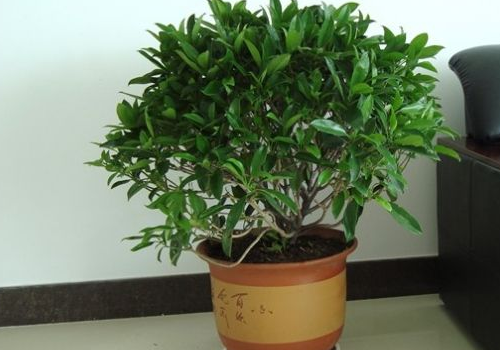
Feng shui role of African jasmine:
African jasmine also has a certain feng shui role. Placing African jasmine on a windowsill can attract wind into the house. African jasmine is usually relatively large in size. If placed at a window position, when wind blows past, it will block the wind, change the wind direction, and make the wind turn and blow into the home. A home with wind blowing in is believed to have good feng shui. The leaves of African jasmine are relatively dark in color and also have the effect of warding off evil.
African jasmine can be grown in water, and keeping it at home also has the effect of warding off evil.
What Are the Roles of Gerbera? Gerbera Cultivation Methods
Gerbera: (scientific name: GerberajamesoniiBolus) is a perennial herbaceous plant in the Asteraceae family, also known as African daisy, Transvaal daisy, and Barberton daisy. It is propagated by sowing or division. The plant height is 30-45 cm, the rhizome is short, wrapped by residual leaf stalks, most leaves are basal, and pinnately lobed. It has relatively thick fibrous roots, terminal inflorescences, and large flowers. The flower colors include red, white, yellow, orange, purple, etc. The colors are rich, management saves labor, and it can be supplied year-round in warm regions. It is an important material in modern cut flowers, used for flower arrangements and making flower baskets, and can also be grown as a potted ornamental.
The main types can be divided into modern cut flower types and dwarf cultivated types. Its place of origin is South Africa, and it was later introduced to the United Kingdom. It is now widely cultivated around the world. It is said that gerbera can also change the home environment. Below, let us take a look at how gerbera changes the home environment and its cultivation methods.
Introduction to Gerbera
1. The appearance of gerbera. Many small and pointed petals surround a sun-shaped flower center; the soft flower center is full of yellow, red, or pink, etc., a very cute appearance. It is a perennial herb in the Asteraceae family, with fine hairs on the whole plant, most leaves basal, pinnately lobed, capitulum solitary, plant height 30-45 cm, leaves basal, leaf stalks long, leaf blades oblong-spatulate, pinnately lobed or deeply lobed. The capitulum is solitary, 20-40 cm above the leaves, flower diameter 10-12 cm, involucre disc-shaped, bell-shaped, ligulate petals 1-2 or multiple whorls in double-petal form, flower colors include bright red, orange-red, light red, yellow, etc. It usually blooms in all four seasons, with spring and autumn being the most abundant.
2. It needs appropriate temperature, humidity, and pH. Gerbera is a perennial evergreen herbaceous plant with persistent roots, and there are about 45 species in the same genus. It likes an environment that is warm in winter and cool in summer, with air circulation and sufficient sunlight. It is not cold-tolerant and avoids intense heat. It likes fertile, loose, well-drained sandy loam rich in humus, avoids heavy clay soil, and prefers slightly acidic soil. The most suitable pH for growth is 6.0-7.0. The suitable growth temperature is 20-25°C, the suitable winter temperature is 12-15°C, and growth stops below 10°C. It is a semi-cold-tolerant flower and can endure short-term low temperatures of 0°C.
2. It is a flower full of poetic charm. Gerbera is also known as the Flamingo Lily and symbolizes mutual respect and mutual love, perseverance, and fearlessness of hardship. In some regions, people like to use Flamingo Lily to make bouquets to decorate the bridal room during wedding celebrations. Taking its homophonic meaning, it reflects the meaning of mutual respect and mutual love between newlyweds. The gerbera flower shape is radial and is often used as the main body of flower arrangements, mostly configured with sword fern and asparagus fern. At the same time, it also represents mystery, excitement, perseverance, elegance, reclusion, and nobility. Its flower language is passion and eternal happiness.
3. It has many varieties, each with its own characteristics. Gerbera varieties can be divided into three categories: narrow-petal type, wide-petal type, and double-petal type. Common ones include Marin: yellow double-petal; Delfi: white wide-petal; Helios: vermilion wide-petal; Carmen: deep rose-red wide-petal; Kitty: rose-red petals and black center. At present, varieties with black centers are especially loved by people.
4. Its name comes from a legend. In the early 20th century, Madagascar, located in southern Africa, was a small country rich in tropical flowers and plants. There was a local girl named Slangyini who had loved this kind of wildflower with slightly curved stems and drooping flowers since childhood. When she married, she asked for more of them to be placed in the hall to add to the wedding atmosphere. Relatives and friends from all sides sang and danced and frequently toasted each other. Unexpectedly, the groom, with very little tolerance for alcohol, became drunk after only three rounds of drinks. He bowed his head and bent his waist, leaning east and west, and the bride had no choice but to help him into the bedroom to rest. Seeing this supporting posture and how similar it was to the growth posture of that wildflower, quite a few girls said in unison: "Oh, the flower really looks like it is supporting the groom!" From then on, the name Flamingo Lily spread widely.
The Role of Gerbera in the Home Environment
1. It can regulate indoor temperature. When the temperature is high, it can lower it; when the temperature is low, it can raise it. In hot summer, gerbera performs respiration, taking in carbon dioxide with heat from the air and then releasing oxygen. In this process, it absorbs part of the heat, making the overall indoor temperature lower. In winter, whether indoors or outdoors, it is very cold. African jasmine will perform respiration, and during respiration it produces heat, driving the temperature of the whole home to rise and playing a heat-preserving role.
2. Its role in beautifying the home cannot be ignored. Gerbera, also known as African daisy, Transvaal daisy, and Barberton daisy, is a perennial herbaceous plant with terminal inflorescences. The flower colors include red, white, yellow, orange, purple, etc. With so many dazzling colors, if planted in one home at the same time, the home becomes colorful and extremely beautiful. Potted gerbera is often used to decorate doorways and halls, and its cut flowers are used in vases and flower arrangements to adorn desks, display windows, and living rooms. With pink gerbera as the main flower, matched with dendrobium, baby's breath, and orchid leaves, the tone is elegant and the appeal is strong. If red gerbera is used as the main flower, matched with sword fern, palm bamboo leaves, dried branches, and dyed walnuts for wall-hanging decoration, it can produce a relatively strong decorative effect.
3. Gerbera can help judge a false situation of light and ventilation. Human living environments and plant growth needs have a certain degree of similarity. Gerbera is a light-loving plant, and a location with sufficient light should be chosen for cultivation. Seedlings should not be planted too deep, and the root buds need to be exposed above the soil surface. If light is insufficient, the flower stalks become soft and droop, and cut flower quality is not high. The color of gerbera in midsummer, especially under drought and water shortage conditions, becomes dark and dull; while flowers blooming during the suitable-temperature period of September-October or March-June of the following year have bright colors. This shows that gerbera is relatively sensitive to temperature and light intensity. In summer, it is necessary to keep the soil moist and not drought-stressed, cover with a 50% light-transmittance shade net, and spray the leaves to increase air humidity and lower temperature; in winter, full warmth preservation should be done to avoid freezing, with nighttime temperature not lower than 10°C and daytime not lower than 15°C. These are all very beneficial for improving the brightness of gerbera. In addition, mites are a major enemy in gerbera cultivation. Once damaged, not only does it lose brightness, but the shape of the petals also becomes incomplete. Observing the growth of gerbera can always bring certain help to our lives.
The Feng Shui Role of Gerbera
1. Gerbera can promote women's romance. The bedroom is probably the most important space for changing a woman. Especially when in love, random thoughts mostly occur in the bedroom. Love feng shui requires confirming the bedroom arrangement. For example, placing a fresh and long-lasting gerbera at the head of the bed, with a fragrance that is somewhat pleasant and will not easily disappear, can encourage oneself.
2. Gerbera can promote family harmony. Gerbera, like sunflower, is a flower that represents the sun in everyone's mind, except that the latter is tall and mighty, while the former is elegant and upright. If sunflower is the blazing sun shining high in summer, then gerbera is like the warm sun in winter, making people feel cozy. Someone once advocated using gerbera as the flower representing Father's Day, because gerbera is also called sun flower, and the sun can also symbolize fatherly love. The feng shui role of gerbera, the saying that it can make a family live in harmony and love each other, also arose from this.
3. For people whose Five Elements belong to fire, gerbera is their lucky flower. Chinese feng shui holds that the types, attributes, and placement positions of some plants can affect a person's fate. Plants also have yin-yang and Five Elements distinctions. Using them appropriately in different directions and environments can produce unexpectedly effective regulating effects. In geomancy, it is believed that plants are spiritual and can help people in various aspects to a certain extent. Therefore, plants are often used to regulate environmental qi. There are many types of plants and their natures differ greatly, so there are also many particularities when using them. Such plants are called feng shui plants. People whose Five Elements belong to fire should choose red as the main color, because red is the original color of fire, or choose the original color of wood, cyan, as the main color, because cyan wood generates and strengthens red fire. From a feng shui perspective, this can bring prosperous good luck to the homeowner and their family. Of course, besides red, gerbera also has many other colors, so gerbera is the lucky star of many people. As the color of gerbera changes, the group of people it blesses is different.
The Roles of Gerbera
1. Gerbera is a beautiful plant, and the effect of using it for home decoration is quite good. Potted gerbera is often used to decorate doorways and halls, and its cut flowers are used in vases and flower arrangements to adorn desks, display windows, and living rooms. With pink gerbera as the main flower, matched with dendrobium, baby's breath, and orchid leaves, the tone is elegant and the appeal is strong. If red gerbera is used as the main flower, matched with sword fern, palm bamboo leaves, dried branches, and dyed walnuts for wall-hanging decoration, it can produce a relatively strong decorative effect. At the same time, gerbera is also known as Flamingo Lily and is native to southern Africa. Its flowers are large and beautiful, with a charming posture, and it is an important cut flower decorative material. Large red gerbera is used for bridal bouquets. Together with rose, gladiolus, and carnation, it is listed as one of the world's best-selling "four major cut flowers."
2. Gerbera can measure whether the indoor environment is good or bad. Gerbera is a light-loving plant, and a location with sufficient light should be chosen for cultivation. Seedlings should not be planted too deep, and the root buds need to be exposed above the soil surface. If light is insufficient, the flower stalks become soft and droop, and cut flower quality is not high. From the growth of gerbera, one can judge whether a false pipeline is sufficient.
The color of gerbera in midsummer, especially under drought and water shortage conditions, becomes dark and dull; while flowers blooming during the suitable-temperature period of September-October or March-June of the following year have bright colors. This shows that gerbera is relatively sensitive to temperature and light intensity. In summer, it is necessary to keep the soil moist and not drought-stressed, cover with a 50% light-transmittance shade net, and spray the leaves to increase air humidity and lower temperature; in winter, full warmth preservation should be done to avoid freezing, with nighttime temperature not lower than 10°C and daytime not lower than 15°C. These are all very beneficial for improving the brightness of gerbera. In addition, mites are a major enemy in gerbera cultivation. Once damaged, not only does it lose brightness, but the shape of the petals also becomes incomplete. The cause of gerbera root rot is mostly root rot disease occurring in the roots, and once it occurs, it is difficult to cure completely. The external conditions for root rot are excessive moisture in the root soil, long-term water accumulation in the rhizosphere, or long-term rainfall in open fields, which can cause the death of gerbera plants. From the growth of gerbera, one can see whether its roots are growing healthily, and from the judgment of the roots, one can infer the home environment.
3. Gerbera also has quite a few roles in greening the home. Gerbera is a perennial herb. Leaves are pinnately deeply lobed. Flowers are solitary, capitulum, and flower branches rise above the leaf cluster. Common varieties include the red "Passion," the yellow "Sun Dance," the white "Bianca," etc. Miniature small flowers include "Ballroom" (white), "Ballet" (orange), "Sultan" (yellow), "Kanga" (red), etc. Planting one or two pots at home allows you to feel the breath of nature and also enjoy the fresh air released by gerbera every day.
The Role of Gerbera in Matching Home Styles
1. The flower language of gerbera has the role of encouraging and blessing the owner's life. Gerbera is also known as Flamingo Lily and symbolizes mutual respect and mutual love, perseverance, and fearlessness of hardship. In some regions, people like to use Flamingo Lily to make bouquets to decorate the bridal room during wedding celebrations. Taking its homophonic meaning, it reflects the meaning of mutual respect and mutual love between newlyweds. The gerbera flower shape is radial and is often used as the main body of flower arrangements, mostly configured with sword fern and asparagus fern. At the same time, it also represents mystery, excitement, perseverance, elegance, reclusion, and nobility. Its flower language is passion and eternal happiness. Its flower language all shows that gerbera is a plant that loves life. While living strongly itself, it also encourages everyone to love life.
2. Placed beside a TV or computer, it reflects a home style that yearns for health and loves nature. In a home, apart from the microwave oven, the place with the greatest radiation is in front of the TV and computer screens. When we look at computers and TVs for a long time, our eyes feel very tired. At this time, looking at the gerbera placed nearby is a kind of adjustment. The bright and natural colors make us feel comfortable and released. Also, before radiation enters our eyes and skin and affects our brain thinking, gerbera has already absorbed part of the radiation and removed part of the harm. A healthy home life is created at this time.
3. Placing gerbera in the living room can match a noble home style. Blooming flowers bring wealth and fully show luxury; this is the European style. The European style pursues elegant luxury, and this kind of gorgeous space is very suitable for setting off with the many-petaled gerbera. Compared with plants of Chinese temperament that focus on foliage, the European style pays more attention to flower appreciation pots. Indoor flowers are also mainly water-cultured cut flowers. Close your eyes; do you smell the rose scent beneath an English castle?
Gerbera comes from Africa, but it can not only display an African home style; it can also be matched with many different homes, and the more it is matched, the more wonderful it becomes.
Gerbera Cultivation Methods
Gerbera diseases are somewhat different from those of ordinary flowers. Let us learn about them together!
1. When caring for gerbera, focus on the diseases that may occur on it.
1. Phytophthora blight: The key technical point of prevention and control is that continuous cropping soil must be disinfected with Vydate and formaldehyde, etc.; see the instructions for use method and dosage; plant shallowly, with the root crown exposed 1 cm above the surface; prevent the soil from being too wet. If soil 10 cm below the surface does not form a ball after being placed in the palm and squeezed hard, then it can be watered; in the early stage of disease, part of the leaves turn red and begin to wilt. Drench the roots with 58% phosethyl-Al and mancozeb 400-fold solution, then after 7 days drench the roots with 64% carbendazim-plus powder 500-fold solution. Apply the pesticide in the morning and evening when the temperature is low, and stop applying when the temperature is above 28 degrees. Apply once every 7 days for 3 consecutive times.
2. Powdery mildew: The key technical point of prevention and control is to keep the greenhouse ventilated and low in humidity; remove diseased leaves in time; when disease occurs, spray 70% thiophanate-methyl 1500-fold solution, or use 20% Junke smoke for fumigation control, once every 7 days for 2-3 consecutive treatments. In addition, use sulfur fumigation for control. Put 20-30 g of sulfur powder into each fumigator each time. After lowering the curtain at 17:00 each day, keep the greenhouse closed, energize and heat for 2 hours, replace the sulfur powder once every 6 days, and continue fumigation for 15 days. During the outbreak period of powdery mildew, fumigate 8-10 h per day, and about 10 days are enough to eliminate powdery mildew.
3. Leaf spot disease: The key technical point of prevention and control is to promptly remove diseased leaves when found and destroy them centrally; in the early stage of disease, spray 2.5% myclobutanil emulsifiable concentrate 300-fold solution or 70% thiophanate-methyl wettable powder 800-****-fold solution, once every 7 days for 2-3 consecutive sprays.
4. Gray mold: The key technical point of prevention and control is that humidity control is the key to preventing and controlling gray mold. Thin out densely planted and overly dense leaves; increase ventilation and air permeability, and keep air humidity at 75-85%; water from below the plant crown cluster; to prevent water vapor from condensing on the flowers, after 10 a.m. on sunny days, gradually open the side greenhouse to avoid a sharp rise in temperature inside the greenhouse; in the early stage of disease, spray the leaf surface with 70% thiophanate-methyl 1500-fold solution, and combine with smoke agents for prevention and control.
5. Whitefly: The key technical point of prevention and control is to thoroughly remove weeds; insert yellow sticky boards for monitoring at any time, and once insect damage is found, take measures in time; choose good agents and use them correctly: whitefly easily develops resistance to pesticides, so pesticides must be rotated. Pesticides with better effects include beta-cypermethrin, abamectin, imidacloprid, etc. Choose dawn for spraying, keep the greenhouse closed for 4-5 hours after spraying, and spray once continuously the next morning.
2. Temperature requirements. Cultivation facilities should be used to meet as much as possible the temperature requirements of gerbera during the seedling stage, growth stage, and flowering stage, so as to facilitate normal growth and flowering. In China's South China region, it cannot overwinter outdoors; greenhouse cultivation is needed. Outside the Yangtze River basin, unheated plastic greenhouse cultivation can be used. In summer, a shade net needs to be covered on top of the greenhouse, and the plastic films on both sides of the greenhouse should be opened to lower the temperature. In winter, when the outdoor nighttime temperature approaches 0°C, seal the plastic film tightly to lower the temperature, and plastic film must be added inside the greenhouse. In sunny and warm weather, open the film at the south end of the greenhouse at noon for ventilation for about one hour.
3. Light requirements. Gerbera is a light-loving flower and needs full light in winter, but in summer attention should be paid to appropriate shading and strengthening ventilation to lower the temperature and prevent high temperatures from causing dormancy.
4. Irrigation requirements. After planting, during the seedling stage, it should remain appropriately moist and be given seedling hardening to promote root development and rapid seedling formation. During vigorous growth, sufficient water supply should be maintained, watering once every 3-4 days in summer and about once every half month in winter. When watering during the flowering period, be careful not to let water touch the center of the leaf cluster, to prevent flower bud rot. For open-field cultivation, pay attention to preventing waterlogging. In addition, watering can be combined with fertilization.
5. Topdressing requirements. Gerbera is a fertilizer-loving perennial root flower and has a large demand for fertilizer. The ratio of nitrogen, phosphorus, and potassium in fertilization is 15:18:25. When topdressing, special attention should be paid to supplementing potassium fertilizer. Generally, apply 2.5 kg of potassium nitrate, 1.2 kg of ammonium nitrate or ammonium phosphate per mu, once every 5-6 days in spring and autumn, and once every 10 days in winter and summer. If high temperature or relatively low temperature causes the plant to enter a semi-dormant state, stop fertilizing.
Side Effects of Plantain Herb: The Effects and Roles of Plantain Herb, What Are the Side Effects of Plantain Herb
Plantain herb belongs to Chinese herbal medicine. It can be used medicinally and also eaten, and is deeply loved by many people. This article mainly introduces some knowledge related to plantain herb for everyone: the effects and roles of plantain herb, and what are the side effects of plantain herb?
【Effects and RolesHangzhou white chrysanthemum, Rangoon creeper, Solomon's seal, rhodiola, peony, calendula, lily, Chinese rose, carnation, rosemary
Plantain Herb: The Effects and Roles of Plantain Herb, Side Effects of Plantain Herb
——————————————————————————————————————————————
Plant Profile
——————————————————————————————————————————————
Chinese name:Plantain
Scientific name:HERBA PLANTAGINIS
Aliases:Dangdao, Shengxi, Fuyi, Maxi, Lingxi, Niuxi, Niuyi, Plantain, Plantain Herb, Toad Clothes, Ox Tongue Grass, Toad Grass, Cart Wheel Vegetable, Frog Grass, Coin String Grass, White String Grass, Earth Gall Head, Pig Ear Grass, Rice Spoon Grass, Seven Stars Grass, Five Roots Grass, Yellow Toad Fish Grass, Toad Grass, Pig Belly Grass, Ash Basin Grass, Coin String Grass, Five Jin Grass, Donkey Ear Vegetable, Horse Doctor Grass, Horseshoe Grass, Duck Foot Board, Ox Sweet Grass, Yellow Toad Leaf, Field Spinach, Cart Wheel Vegetable, Ox Ear Seedling, Lawsuit Grass.
Family:Plantaginaceae
Genus:Plantago
Distribution:Distributed throughout China.
Ecological environment:Grows in mountain wilds, roadsides, flower gardens, vegetable gardens, and places such as ponds and riversides
Morphological characteristics:Stemless, with many slender fibrous roots; leaves basal, thin papery, ovate to broadly ovate, with 5 main leaf veins, leaf base extending downward to the petiole, 6-15 cm long, 3-8 cm wide; blooms year-round, spike inflorescences drawn out from the leaf cluster, about 15-30 cm long; small flowers white, corolla 4-lobed, stamens 4; capsule oblong, containing 4-6 seeds.
Effects and Roles of Plantain Herb
——————————————————————————————————————————————
◆Usually when a person takes 10 g of plantain herb decoction internally, it has a diuretic effect and increases the excretion of urea and uric acid.
◆It can increase bronchial secretions, slow respiratory movement, and have an expectorant and antitussive effect.
◆The water infusion of plantain herb has varying degrees of inhibitory effect in test tubes on Trichophyton concentricum, Microsporum lanosum, and Nocardia asteroides, etc.
◆It has a bidirectional regulating effect on gastric juice secretion.
◆Anti-inflammatory effect.
Traditional Chinese Medicine Properties ——————————————————————————————————————————————
Nature and flavor:Sweet; bland; slightly cold in nature.
Meridians entered:Enters the lung meridian; liver meridian; kidney meridian; bladder meridian.
Effects:Clears heat and promotes urination; drains dampness and stops diarrhea; improves vision; removes phlegm.
Indications:Mainly treats difficult urination; strangury turbidity and leukorrhea; edema and fullness; summerheat-dampness diarrhea and dysentery; red eyes and eye obstruction; phlegm-heat cough and asthma.
Usage and dosage:Internal use: decoct in water, 5-15 g, decoct wrapped; or make into pills or powders. External use: appropriate amount, decoct in water for washing or grind into powder and mix for application.
Medicinal source:The seeds and whole plant of Plantago asiatica, Plantago major, and Plantago depressa in the Plantaginaceae family.
Harvesting and storage:From June to October, gradually cut off yellow mature fruit spikes, dry in the sun, rub out the seeds, and remove impurities. Place in a ventilated and dry place, and protect from moisture.
Side Effects of Plantain Herb
——————————————————————————————————————————————
Because plantain herb is a diuretic drug, taking too much can easily cause low potassium and other electrolyte abnormalities; leading to gastrointestinal dysfunction and electrolyte imbalance.
Tips:The side effects of plantain herb are not significant, but for patients drinking plantain herb, if the effect is very little, it is better not to persist, so as to avoid affecting the stomach and intestines.
Medication contraindications for plantain herb
—————————————————————————————————————————————
"For those with internal injury due to overwork, sinking yang qi, kidney deficiency with seminal slippage, and no internal damp-heat, use cautiously."
"Diseases of internal injury due to overwork and sinking yang qi are all unsuitable for use. For those with kidney qi deficiency and collapse, plantain herb should not be used together with bland percolating drugs." — Recorded in Materia Medica Commentary
"Those with kidney deficiency and cold should especially avoid it." — Recorded in Compendium of Materia Medica Remarks
"Changshan is used as the guiding drug." — Recorded in Rihuazi Materia Medica
"If there is deficiency and slippery essence not being consolidated, it is forbidden." — Recorded in Materia Medica Fengyuan
"Conclusion:Although plantain herb has many functions and roles, because plantain herb is an important drug for moving water and draining heat, usually mainly treating diuresis, clearing strangury, bladder damp-heat, and clearing liver and lung wind-heat, it not only strengthens the kidneys and benefits essence, improves vision and protects the liver, but can also remove heart and chest irritability and heat. Therefore, plantain herb can be taken, but it is also not suitable for long-term consumption.
More Plant Encyclopedia
Agave, canna, red spider lily, forget-me-not, dandelion, Dendrobium officinale, yew, kapok, osmanthus, begonia, hydroponic plants
Home feng shui plants, bedroom feng shui plants, plum blossom, aloe, jasmine, radiation-absorbing plants, pennywort, potted landscape making, drug plants
Mistletoe, indoor flowers, money tree, lucky bamboo, potted plant making, anthurium, living stones, geranium, garden, Christmas cactus, peace lily
Cuban oregano, Peperomia obtusifolia, Spring Festival flowers, hydroponic lucky bamboo, African jasmine, rose, succulents, tropical plants, Rosa rubus