Can mint be grown hydroponically? A detailed guide to hydroponic methods
Mint is a plant that many people love, and it has a fresh, fragrant scent. So can mint be grown hydroponically? How to grow it hydroponically:
Can mint be grown hydroponically:
Yes, mint can be grown hydroponically.
Mint prefers a warm, humid environment with plenty of sunshine and abundant rainfall. Its rhizomes can sprout and emerge at 5-6°C, and the optimal growth temperature for the plant is 20-30°C. It has strong cold tolerance. Hydroponics can provide mint with plenty of water, so mint can indeed be grown hydroponically. Hydroponic mint does not require a whole plant; just one sprig of mint is enough, and it does not even need roots. Put it in prepared water, change the water about every three days, add a little nutrient solution if you have it, and if not, no need to add any. Leave it outside in the sun every day, and the mint will grow very well.
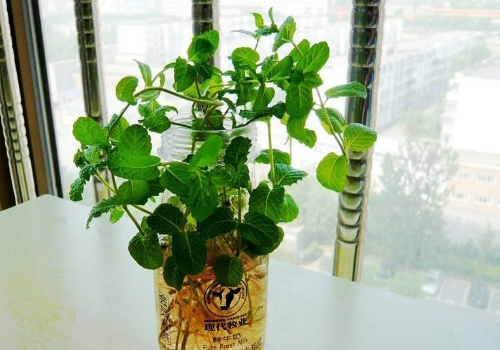
How to grow mint hydroponically:
1. Cut suitable hydroponic cuttings
To grow it hydroponically, we first need to prepare the cuttings. Generally, cut a few thick, disease-free branches, then wash them clean with fresh water, and after that they can be placed into the hydroponic container.
2. Add water and cultivate
Insert the prepared cuttings into the container, then gradually add water to the container. The water level should at least submerge a node that has had its leaves removed. After that, place it in a bright spot for care. Remember that during this period it must not be exposed to direct sunlight, and the water used is best tap water that has been left to stand for 2 days.
3. Care within the first week
During the first week of hydroponics, the leaves may wilt. Do not worry too much; you can temporarily move it to a relatively cool, ventilated place, and then lightly spray some water mist on the leaf surfaces. Basically, after two days, this phenomenon will disappear. After another 2 to 3 days, the cuttings will grow many white roots, which means the hydroponics has succeeded.
Mint can be grown hydroponically, but pay attention to the method to avoid problems such as yellowing leaves.
Can mint be grown hydroponically? How to water mint
Mint is very fresh and is a plant that many friends quite like. Especially in summer, it can not only decorate the environment but also be brewed as tea to relieve the heat. Today I will share with you whether mint can be grown hydroponically and how to water mint.
Can mint be grown hydroponically
Mint can be grown hydroponically. When growing it hydroponically, pay attention to the following key points:
Plenty of sunlight
Mint has considerable demands for both sunlight and water. Therefore, mint should be placed in a spot with ample light. Leaving it for a long time in a shaded place with weak light is not good for the plant's normal photosynthesis, is not good for leaf growth, and the number of roots will also decrease. Placing the hydroponic mint bottle in a well-lit spot once every two days is enough to meet its light requirements for growth.
Change the water frequently
There is no need to change the water too frequently; usually once a week is enough. If the base water in the bottle decreases, you can add an appropriate amount of water, but be sure not to fill it too full. At the same time, you can add an appropriate amount of nutrient solution to the water to ensure sufficient nutrients for mint's growth.
Spray water to maintain humidity
Although mint is grown hydroponically, the leaves still need to be sprayed with water to maintain humidity, generally twice a day. Use a small spray bottle, and do not spray too much water; mist-like water is more easily absorbed by the leaves.
If blackened leaves appear during hydroponic cultivation, remove the black leaves promptly. There is no need to worry about picking leaves from herbaceous plants; on the contrary, they usually grow more vigorously the more they are picked.
When changing the base water, wash the roots at the same time, remove the leaves in the water that have already rotted, and ensure the base water and the plant remain clean and healthy.
Whether grown hydroponically or in soil, mint grows very quickly. Therefore, the mother plant can be divided, that is, after pinching off one branch, divide it into two branches and continue growing them hydroponically or in soil.
Doesn't mint in a crystal-clear bottle look even more lush and lovely? Then hurry home and make a bottle, so that the freshness of nature can accompany you at all times.
How to water mint
1. In summer, when the temperature has already reached over 30°C, mint is most short of water at this time. It is a plant that likes water and sunlight, so it basically needs watering every day.
2. Likewise, in summer, if you are not at home for several days, the mint may dry out and die. So there is a way to avoid worrying that it will be affected: before going out, soak the flowerpot in a basin filled with water. Then when you come back, it will still look very healthy.
3. If the mint is placed in a shaded spot and the soil in the flowerpot stays moist, then it does not need watering every day. If it is placed under the sun where evaporation is fast, then it needs frequent watering.
4. Even if mint has not been watered for several days and the leaves have dried up and wilted, there is no need to worry. Just replenish the water immediately. As long as there is vitality in the roots, it can still grow leaves again.
5. If the flowerpot is large, or if the mint is planted in a flowerbed, the watering interval can be extended and the frequency reduced. If the flowerpot is small, then it needs more watering.
6. In winter, as long as the soil in the pot is not so dry that it turns white, it is fine. Just water it a little to keep it slightly moist. Wait until spring, when new shoots emerge, and then water again.
That is all for sharing on whether mint can be grown hydroponically and how to water mint. I hope this article is helpful to everyone, and I wish you good luck.
How to grow hydroponic mint: The hydroponic method for mint
Mint is an aromatic crop with special economic value. It is also called wild mint, night fragrance, and so on. It is a perennial herbaceous plant in the Lamiaceae family, genus Mentha. The plant is green and aromatic, with opposite leaves and small pale purple labiate flowers. After flowering, it produces small dark purple-brown seed-like fruits. It mostly grows by rivers in mountain wilds and wetlands, and its rhizomes spread underground. Now let's take a look at how to grow hydroponic mint!
Mint's growth habits
1. Temperature: Mint has strong adaptability to temperature. Its rhizomes overwinter and can tolerate low temperatures of -15°C. Its optimal growth temperature is 25-30°C. When the temperature is below 15°C, growth is slow; when it is above 20°C, growth speeds up. At 20-30°C, as long as water and nutrients are suitable, the higher the temperature, the faster it grows.
2. Light: Mint is a long-day crop and likes sunlight. Long sunshine can promote mint flowering and help the accumulation of mint oil and menthol.
3. Soil: Mint is not very strict about soil requirements. Apart from overly sandy, overly clayey, excessively acidic or alkaline soils, and low-lying poorly drained soils, it can generally be planted in ordinary soil, with sandy loam and alluvial soil being better. The suitable soil pH is 6-7.5.
Hydroponic methods for mint
1. Prepare an empty cup; a plastic cup or porcelain cup is fine. Fill it with tap water.
2. Cut a somewhat longer section of branch from the mother mint plant. You can leave it for 12 hours to let the wound dry, then insert it into sand, or you can grow it hydroponically directly.
3. Choose spring or summer for hydroponics, when the temperature is higher and warmer, as this makes rooting easier. Generally, when grown hydroponically in summer, roots begin to grow in just over a week.
How to grow hydroponic mint?
1. Plenty of sunlight: Mint has considerable demands for both sunlight and water. Therefore, mint should be placed in a spot with ample light. Leaving it for a long time in a shaded place with weak light is not good for the plant's normal photosynthesis, is not good for leaf growth, and the number of roots will also decrease. Placing the hydroponic mint bottle in a well-lit spot once every two days is enough to meet its light requirements for growth.
2. Change the water in time: There is no need to change the water too frequently; usually once a week is enough. If the base water in the bottle decreases, you can add an appropriate amount of water, but be sure not to fill it too full. At the same time, you can add an appropriate amount of nutrient solution to the water to ensure sufficient nutrients for mint's growth.
3. Spray water to maintain humidity: Although mint is grown hydroponically, the leaves still need to be sprayed with water to maintain humidity, generally twice a day. Use a small spray bottle, and do not spray too much water; mist-like water is more easily absorbed by the leaves.
Precautions for hydroponic mint
1. If blackened leaves appear during hydroponic cultivation, remove the black leaves promptly. There is no need to worry about picking leaves from herbaceous plants; on the contrary, they usually grow more vigorously the more they are picked.
2. When changing the base water, wash the roots at the same time, remove the leaves in the water that have already rotted, and ensure the base water and the plant remain clean and healthy.
3. Whether grown hydroponically or in soil, mint grows very quickly. Therefore, the mother plant can be divided, that is, after pinching off one branch, divide it into two branches and continue growing them hydroponically or in soil.