How to grow Queen's Crape Myrtle seeds and what are its medicinal effects?
Queen's Crape Myrtle (Lagerstroemia speciosa), this is also one of the planting methods, many people know about it, so what is the seed planting method for Queen's Crape Myrtle? What are its medicinal effects:
Queen's Crape Myrtle seed planting method:
Choose semi-lignified young seedlings to transplant into the field, apply enough base fertilizer in the planting hole before setting out.
During the growing period of young trees, apply fertilizer once a month, and pay attention to pinching off buds and training the trunk. After the plant matures, apply fertilizer twice a year; during the flowering period apply a compound fertilizer mainly containing phosphorus to promote abundant flowering. After the leaves fall and the plant goes dormant in winter, prune once.
Cut off remaining flower branches, fruit branches, overly dense branches, and diseased and pest-damaged branches, and apply base fertilizer (mainly organic fertilizer) around the base, which can promote growth and vigorous flowering the following year.
Pests and diseases are rare. Pests include scale insects that damage the branches, and they should be killed early or controlled by spraying pesticides such as dimethoate.
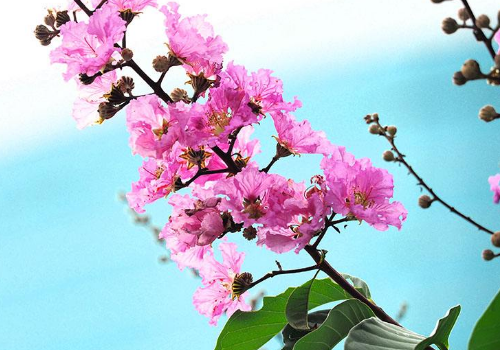
Medicinal effects of Queen's Crape Myrtle:
The bark, leaves, seeds, and roots of Queen's Crape Myrtle can all be used as medicine, and the medicinal effects differ by part. Its bark and seeds are natural laxatives, while the seeds of Queen's Crape Myrtle have strong anesthetic properties and can provide pain relief. The leaves of Queen's Crape Myrtle are commonly used to treat diabetes in humans; they can lower blood sugar while enhancing the body's antioxidant capacity, offering great benefits for delaying aging.
The planting method for Queen's Crape Myrtle is introduced here; it can be used as medicine.
Knowledge and cultivation exchange of flowers and plants
Flowers and plants have both broad and narrow meanings. In the narrow sense, flowers and plants refer to ornamental herbaceous plants, such as garden balsam, chrysanthemum, scarlet sage, cockscomb, etc.; in the broad sense, in addition to ornamental herbaceous plants, flowers and plants also include herbaceous or woody ground cover plants, flowering shrubs, flowering trees, and bonsai, such as ground cover plants like dwarf lilyturf, sedum, and creeping phlox; trees and flowering shrubs such as plum blossom, peach blossom, Chinese rose, and camellia, etc. In addition, tall trees and shrubs distributed in southern regions, when moved to cold northern regions, can only be grown as potted plants in greenhouses for ornamental purposes, such as white orchid, Indian rubber tree, and palm plants, which are also included in the broad sense of flowers and plants.
Definition of flowers and plants
Flowers and plants have both broad and narrow meanings. In the narrow sense, flowers and plants refer to ornamental herbaceous plants, such as garden balsam, chrysanthemum, scarlet sage, cockscomb, etc.; in the broad sense, in addition to ornamental herbaceous plants, flowers and plants also include herbaceous or woody ground cover plants, flowering shrubs, flowering trees, and bonsai, such as ground cover plants like dwarf lilyturf, sedum, and creeping phlox.
Flowers and plants in the narrow sense
The manifestation of plant maturity, producing flowers of various colors with ornamental effect.
Classification of flower and plant species: Herbaceous: divided into perennial herbaceous and annual herbaceous.
Woody: divided into trees and shrubs
Flowers and plants in the broad sense
In addition to ornamental herbaceous plants, herbaceous and woody ground cover plants, flowering shrubs, flowering trees, bonsai, and greenhouse ornamental plants, etc.
Pronunciation: huāhuì
Edit this section: Uses of flowers and plants
In modern society, people often grow, buy, and wear flowers in various ways because of their pleasant appearance and fragrance. Around the world, people use fresh flowers throughout their lives in various activities and occasions:
Used to celebrate a new birth or religious baptism
Used as a corsage or boutonniere at social gatherings or festivals
Used to express love or respect
Used for wedding decoration
Used for home decoration
Used as a commemorative gift at farewell or welcome banquets to express longing
Used at funerals to express grief; used for offerings or worship of deities
Explanation
1. Flowers and grasses.
2. Chinese painting themed on flowers and grasses.
Overview of flowers and plants
In common terms
, “flower” is the reproductive organ of a plant, referring to ornamental plants with graceful posture, bright colors, and fragrant scent, while “hui” is a general term for grasses. By convention, ornamental shrubs and small trees that can be potted are often included, collectively called “flowers and plants.”
Classification of flowers and plants
Overview
There are extremely many kinds of flowers and plants, with a wide range, including not only flowering plants but also mosses and ferns. Their cultivation and application methods are also diverse. Therefore, because the bases for classification differ, there are many classification methods for flowers and plants.
According to ecological habits
Classification based on ecological habits
This classification method is based on the life form and ecological habits of flower and plant species and is the most widely used.
Open-field flowers and plants
These complete their entire growth process under natural conditions without protected cultivation. Open-field flowers and plants can be divided into three categories according to their life history.
1. Annual flowers and plants.
Plants that complete their life history within one growing season. That is, from sowing to flowering, fruiting, and withering, all are completed within one growing season. Generally sown in spring, they grow in summer and autumn, flower and fruit, then wither, so annual flowers and plants are also called spring-sown flowers and plants. Such as garden balsam, cockscomb, zinnia, purslane, marigold, etc.
2. Biennial flowers and plants.
Flowers and plants that complete their life history within two growing seasons. In the current year they only grow vegetative organs, and after overwintering they flower, fruit, and die. This type of flowers and plants is generally sown in autumn and flowers the following spring. Therefore, this type of flowers and plants is often called autumn-sown flowers and plants. Such as China pink, stock, ornamental kale, cineraria, etc.
3. Perennial flowers and plants.
Individuals that live more than two years and can flower and fruit multiple times. According to changes in the form of the underground parts, they can be divided into two categories:
(1) Herbaceous perennials: the underground parts have normal form and do not undergo metamorphosis. Such as Chinese peony, hosta, daylily, etc.
(2) Bulbous flowers and plants: the underground parts are metamorphosed and thickened. According to their metamorphosed shapes, they are further divided into the following five categories
①: Bulb type, the underground stem is in the shape of fish scales. Those covered outside by a papery tunic are called tunicate bulbs, such as narcissus, tulip, and amaryllis. Those whose scales are not covered by an outer tunic are called nontunicate bulbs, such as lily.
②: Corm type. The underground stem is spherical or oblate, with a leathery outer covering. Such as gladiolus, freesia, etc.
③: Rhizome type. The underground stem is thickened and root-like, with obvious nodes on it, and new buds are borne at the tips of branches, such as canna, lotus, water lily, hosta, etc.
④: Tuber type. The underground stem is irregularly block-shaped or strip-shaped, such as calla lily, cyclamen, gloxinia, tuberose, etc.
⑤: Tuberous root type. The main underground root is thickened and block-shaped, and the root system grows from the end of the tuberous root, such as dahlia.
4. Aquatic flowers and plants
Flowers and plants that grow in water or marshy land, such as water lily, lotus, etc.
5. Rock flowers and plants
Refers to flowers and plants with strong drought tolerance that are suitable for cultivation in rock gardens. They are often selected in gardens. They are generally herbaceous perennials or subshrubs with woody bases, as well as shade- and moisture-loving flowers and plants such as ferns. Garden flower and plant planting and cultivation
[Cultivation measures]
For certain annual flowers and plants, staged sowing or other methods can be used to make the flowering period earlier or later. Measures such as pruning and pinching can also control the flowering period. For example, frequently cutting off the remaining flower branches can make them bloom again after the branches renew; pinching before flowering can delay flowering.
[Temperature regulation]
Most flowers and plants can bloom earlier in winter by heating. For flowering trees that bloom continuously in summer, such as jasmine, heating to force buds in spring is often used to make them bloom earlier; timely heating before the temperature drops in late autumn can prolong the flowering period. For flowering trees that are still dormant before the temperature rises in early spring, artificial low temperature (1-4°C) can prolong the plant's dormancy period, thereby delaying flowering. For flowers and plants in bud or just beginning to open, placing them in a cold room at 2-5°C can also slow plant metabolism, thereby delaying the flowering period. Certain flowers and plants that stop growing and do not bloom under extreme heat conditions, such as fuchsia, can be prompted to bloom continuously by taking cooling measures during the hot season. By using the inductive effect of low temperature on flowering in certain plants, for biennial flowers and plants originally sown in autumn, treating their newly sprouted seeds or seedlings at low temperature so they pass vernalization can allow them to bloom in the same year. Different flower and plant species have different temperature and time requirements for vernalization treatment, and generally 1-2°C is the most effective.
[Light regulation]
This includes different methods such as supplemental lighting, shading, and reversing light and dark. To make long-day flowers and plants bloom in autumn and winter when natural daylight is short, artificial supplemental lighting can be added for 3-4 hours after sunset, supplemented by appropriate heating; to delay flowering, such as shading with black cloth for several hours during the day, the flowering period can be postponed. For short-day flowers and plants such as poinsettia, if shaded for several hours in the evening or morning, flowering can be advanced; conversely, if artificial lighting is increased for several hours, flowering can be delayed. In addition, for flowers and plants with the habit of blooming at night, such as epiphyllum, if after budding they are shaded during the day and given artificial light at night, they can be made to bloom during the day.
[Water and fertilizer control]
Some bulbous flowers and plants, under dry conditions, after dormancy and complete differentiation, still retain their flower buds in the bulb until water is supplied, when they grow and bloom. Therefore, the timing of flowering can be controlled by regulating the water supply time. Some flowering trees have already differentiated flower buds at the turn of spring and summer; at this time, if drought conditions are artificially created to promote early defoliation or leaf removal, and then water is supplied by spraying, they can often bloom a second time in the same year. For herbaceous flowers and plants that bloom successively, applying an additional fertilizer once at the end of flowering can prolong the flowering period; in the early growth stage of flowers and plants, if too much nitrogen fertilizer is applied alone, flowering is often delayed. After the plant's vegetative growth reaches a certain level, applying additional fertilizer can advance flowering.
[Application of growth regulators]
The growth regulators commonly used in flowering period control are mostly gibberellin, ethephon, and chlormequat, among which gibberellin has a relatively significant effect in promoting flowering. It is commonly used to treat the dormant buds of tree peony and the flower stems of narcissus and clivia, etc.
In addition to the above measures, methods such as removing lateral flower buds to accelerate the opening of the main flower bud, and removing the main flower bud to promote the opening of lateral flower buds, can also be used.
Among the various measures for flowering period control, some play a leading role and some play a supplementary role, and they can be used simultaneously or successively. They should be selected according to differences in plant species and varieties, while also paying attention to coordination with other corresponding measures and environmental conditions.
Greenhouse flowers and plants
Refers to flowers and plants native to tropical, subtropical, and warm southern regions. In cold northern regions, cultivation must be carried out in greenhouses, or they need protection in greenhouses to overwinter in winter. They can be divided into the following categories:
1. Annual and biennial flowers and plants. Such as cineraria, calceolaria, sweet pea, etc.
2. Herbaceous perennials. Such as African daisy, clivia, etc.
3. Bulbous flowers and plants. Such as cyclamen, amaryllis, gloxinia, calla lily, caladium, etc.
4. Orchid family plants are further divided according to their ecological habits into:
(1) Terrestrial orchids: such as Cymbidium goeringii, Cymbidium faberi, Cymbidium ensifolium, Cymbidium kanran, Cymbidium sinense, Cymbidium tortisepalum, etc.
(2) Epiphytic orchids: such as Dendrobium, Vanda, Paphiopedilum, etc.
5. Succulent plants: refers to plants whose stems and leaves have well-developed water-storage tissue and are thick, fleshy, and metamorphosed. They include plants of the Cactaceae, Crassulaceae, Euphorbiaceae, Asteraceae, Bromeliaceae, Agavaceae, and other families.
6. Ferns. According to different ornamental uses, they can be further divided into the following four categories:
(1) Ferns for garden greening. Such as Selaginella uncinata and Alsophila spinulosa. Among them, Alsophila spinulosa, also called tree fern, is the largest fern, with a height of more than 10 m. It is an ancient group and is an endangered species in our country and a first-class protected plant in our country. In addition, Salvinia natans and Azolla are good materials for water surface greening.
(2) Potted foliage ferns. Such as Lycopodium, Odontosoria chinensis, Pteris vittata, Adiantum, etc. Among them, Lycopodium, Nephrolepis, and Blechnum are important materials for cut flower foliage.
(3) Hanging ferns. Such as Nephrolepis and Asplenium nidus, etc.
(4) Rock and bonsai ferns. Such as Selaginella and Gonocormus. Among them, Gonocormus is the smallest in form among ferns, only a few cm in size.
7. Carnivorous plants. Such as Nepenthes and Sarracenia, etc. In some cut flower art, they are often used as artistic flower arrangement materials.
8. Bromeliaceae plants. Such as Billbergia and pineapple, etc.
9. Palmae plants. Such as Livistona chinensis, Rhapis excelsa, and Chamaedorea elegans, and other foliage flowers and plants.
10. Flowering trees include poinsettia, croton, etc.
11. Aquatic flowers and plants include Victoria amazonica, tropical water lily, etc.
Classification according to garden use
1. Flowerbed flowers and plants
Refers to annual and biennial open-field flowers and plants that can be used to arrange flowerbeds. For example, those blooming in spring include pansy and China pink; summer flowerbed flowers and plants often include garden balsam and daisy; for autumn, scarlet sage, marigold, September chrysanthemum, etc. are selected; in winter, ornamental kale, etc. can be appropriately arranged in flowerbeds.
2. Potted flowers and plants
These are potted flowers used to decorate interiors and courtyards in potted form. Such as Chaenomeles cathayensis, Chinese hibiscus, asparagus fern, poinsettia, kumquat, etc.
3. Indoor flowers and plants
Refers to a type of flowers and plants that carry out the dark reaction process of photosynthesis through the C4 pathway. Generally, foliage plants can all serve as indoor ornamental flowers and plants. Such as Pachira aquatica, Dracaena fragrans, Spathiphyllum, Epipremnum aureum, colorful corn, etc.
4. Cut flowers and plants
(1) Herbaceous perennial type: such as African daisy, baby's breath, and bird of paradise.
(2) Bulbous type: lily, tulip, calla lily, freesia, etc.
(3) Woody cut flowers: such as peach blossom, plum blossom, tree peony, Chinese rose, rose, etc.
5. Foliage flowers and plants
Mainly determined according to the ornamental part. Such as Spathiphyllum, sago palm, ferns, etc.
6. Shade shed flowers and plants
In garden design, flowers and plants growing under pavilions and tree shade. Dwarf lilyturf, red clover, and ferns can all serve as shade shed flowers and plants.
7. Sun-loving flowers and plants
Flowers and plants that need sufficient sunlight to bloom are called sun-loving flowers and plants. Sun-loving flowers and plants are suitable for growing under full light and strong light. If light is insufficient, growth and development will be poor, flowering will be late or they will fail to bloom, and the flower color will not be bright and the fragrance will not be strong. Sun-loving flowers and plants, such as:
(1) Spring flowers and plants: plum blossom, narcissus, winter jasmine, peach blossom, white magnolia, purple magnolia, viburnum, Chaenomeles speciosa, Chaenomeles cathayensis, Malus halliana, tree peony, Chinese peony, lilac, Chinese rose, rose, redbud, weigela, forsythia, Yunnan yellow jasmine, caragana, cyclamen, hyacinth, tulip, calla lily, periwinkle, geranium, primrose, cineraria, petunia, corn poppy, snapdragon, verbena, etc.
(2) Summer and autumn flowers and plants: gardenia, jasmine, Aglaia odorata, Murraya paniculata, woody night-blooming jasmine, osmanthus, southern magnolia, Chinese hibiscus, cotton rose, rose of Sharon, crape myrtle, oleander, bougainvillea, pineapple flower, Serissa japonica, dahlia, Lantana camara, canna, sunflower, hollyhock, Gerbera jamesonii, plumeria, Zephyranthes, China aster, scarlet sage, cockscomb, garden balsam, purslane, Amaranthus tricolor, daisy, marigold, chrysanthemum, lotus, water lily, etc.
(3) Winter flowers and plants: wintersweet, poinsettia, silver willow, sasanqua, freesia, etc.
(4) Fruit trees: Mengshan papaya, ginkgo, pomegranate, kumquat, orange, grape, loquat, jujube tree, persimmon, kiwifruit, fig, Cydonia, firethorn, winter coral, etc.
(5) Vines: wisteria, trumpet creeper, rose, Banksia rose, honeysuckle, Boston ivy, morning glory, cypress vine, etc.
(6) Foliage type: five-needle pine, black pine, Pinus thunbergii 'Aurea', cedar, dragon juniper, Podocarpus macrophyllus, willow, tamarisk, red maple, palm, Euonymus japonicus, rubber tree, sago palm, dragon blood tree, banana, croton, butcher's broom, coleus, etc.
(7) Succulent type: cactus, bougainvillea, cactus ball, cactus mountain, gem flower, Mammillaria, etc.
Classification according to economic use
1. Medicinal flowers and plants
For example, tree peony, Chinese peony, Platycodon grandiflorus, morning glory, dwarf lilyturf, cockscomb, garden balsam, lily, Fritillaria, and Dendrobium are important medicinal plants. In addition, honeysuckle, chrysanthemum, lotus, etc. are all common Chinese medicinal materials.
2. Spice Flowers
Fragrant flowers are widely used in food, light industry and other fields. For example, osmanthus can be used as a food spice and for brewing wine; jasmine, magnolia and others can be used to scent tea; chrysanthemums can be made into premium foods and dishes; magnolia, roses, narcissus, wintersweet and others can be used to extract essences. Among them, rose oil extracted from roses is hailed on the international market as “liquid gold”, and its value is even higher than gold. On the market, a single rose bud is worth 6 fen.
3. Edible Flowers
The leaves or flowers of the plants are used directly for food. For example, lilies can be used both as cut flowers and as food; chrysanthemum greens and daylily can be used both as landscaping seedlings and as food.
Classification Based on the Place of Origin of Flowers
Climate Types
1. China Climate Type
Also known as the continental east coast climate type. This climate type is further divided into a warm type and a cool type according to differences in winter temperatures:
1. Warm type (low-latitude regions), for example: Chinese narcissus, Chinese pink, camellia, rhododendron, lily, etc.
2. Cool type (high-latitude regions), for example: chrysanthemum, Chinese peony, bleeding heart, and Chaenomeles speciosa.
2. European Climate Type
Also known as the continental west coast climate type, such as: pansy, daisy, ornamental kale, stock, etc. In our region, these flowers are generally cultivated as biennials, that is, sown in summer and autumn and blooming the following spring.
3. Mediterranean Climate Type
Because these regions have dry summers, perennial flowers often take bulbous forms. Such as: hyacinth, freesia, tulip, cyclamen, oxalis, etc.
4. Mexican Climate Type, also known as the tropical highland climate type, found in tropical and subtropical mountainous regions. Yunnan Province in China also belongs to this type. Flowers native to this type include: dahlia, poinsettia, marigold, Yunnan camellia, Chinese rose, etc.
5. Tropical Climate Type. Flowers native to the tropics need to be cultivated in greenhouses in temperate zones, while annual herbaceous flowers can be cultivated in the open field during the frost-free period:
1. Famous flowers native to the tropics of Asia, Africa and Oceania include: cockscomb, snake plant, coleus, croton, etc.
2. Famous flowers native to the tropics of Central America and South America include: anthurium, periwinkle, canna, morning glory, etc.
6. Desert Climate Type
These regions are mostly barren deserts, mainly succulents.
1. Aloe. The main varieties planted in the Science and Technology Park of the Shuyang Agriculture and Forestry Bureau include Curacao, variegated, woody, Yuanjiang, and soap aloe, etc.
2. Cactus. There are two categories: ordinary ornamental cactus and edible cactus.
3. Pencil tree. Also known as the green milk bush. Native to tropical South Africa; it can be cultivated in the open field in southwest and south China.
4. Agave. Sisal, a common landscaping tree species, is a plant of the same genus.
7. Frigid Climate Type
Mainly distributed in Alaska and Siberia. These regions have long and severe winters and short, cool summers. The plant growing period is only 2-3 months. Because summers in this climate type have long days and strong winds, the plants are low-growing, slow-growing, and often form cushions. The main flowers include: narrow-leaf lily, gentian, and snow lotus.
Classification Based on Natural Distribution
Divided into tropical flowers, temperate flowers, frigid flowers, alpine flowers, aquatic flowers, rock flowers, and desert flowers.
“Flowers” has both narrow and broad interpretations. In the narrow sense, “flowers” refers to herbaceous plants with ornamental value, such as chrysanthemums, garden balsam, etc. In the broad sense, “flowers” refers to all plants whose flowers, stems, leaves, fruits or roots have ornamental value in form or color. Therefore, flowers in the broad sense include not only herbaceous plants, but also trees, shrubs, vines and groundcover plants.
Classification Based on Water Requirements
Drought-tolerant flowers: such as cactus, sedum, jade plant, stonecrop, snake plant, aloe and large-flowered purslane, etc. These flowers adapt to dry, hot growing environments; their leaves often become modified, and some even degenerate. The flowers also have water-storage structures within their bodies, so they can endure drought. The amount of watering must be small, and the principle of “better dry than wet” should be followed, keeping the potting soil on the dry side, otherwise it is easy to cause root or stem rot, and in severe cases even death.
Semi-drought-tolerant flowers: such as plum blossom, camellia, rhododendron, wintersweet, geranium, asparagus fern and pines and cypresses. The leaves of these flowers are mostly grassy or waxy, or the branches and leaves are needle-like. When watering, the principle of “water thoroughly after drying out” should be followed, that is, water only after the surface layer of the potting soil has completely dried, and water thoroughly when watering.
Mesophytic flowers: most types of flowers belong to this category. Such as pomegranate, Chinese rose, jasmine, hibiscus, Aglaia, bird of paradise, clivia, ornamental bamboo, and annual and biennial herbaceous flowers, perennial flowers, etc. They grow and develop well in moist soil, and grow poorly in overly wet or overly dry soil. Therefore, when watering, the principle of “water when dry, stop when wet” should be followed. The so-called “when dry” means watering when the color of the surface soil in the pot becomes lighter; “when wet” means that each watering should just thoroughly water all the potting soil, and should not result in “half water” that is wet on top and dry below. This watering method can not only meet the water needed for the growth and development of such flowers, but also ensure the oxygen needed for root respiration, which is beneficial to the robust growth of the flowers.
Wet-loving flowers: such as Guangdong evergreen, umbrella plant, calla lily, saxifrage, acorus, Monstera deliciosa, ornamental ferns, etc. They require a growing environment with plenty of water in order to grow and develop well. Therefore, when watering, the principle of “better wet than dry” should be followed, but there must be no water accumulation, otherwise the branches and leaves will often wither and be damaged.
Aquatic flowers: such as lotus, water lily, water hyacinth, etc. Their roots or stems must be in water to survive. Therefore, conditions must be created to meet their requirements.
Classification of Flowers
Classification by Biological Characteristics
Different flowers have different biological characteristics. Their requirements for environmental conditions such as light, temperature and water are also different. By convention, flowers are often divided into the following four types according to these differences.
1. Sun-loving and shade-tolerant flowers
(1) Sun-loving flowers, such as Chinese rose, jasmine, pomegranate and most other flowers, require sufficient sunlight, and such flowers are called sun-loving flowers. If the light is insufficient, they will grow and develop poorly, bloom late or fail to bloom, and the flower color will not be bright and the fragrance will not be strong.
(2) Shade-tolerant flowers, such as hosta, hydrangea, rhododendron, etc., can grow well with only weak scattered light, and are called shade-tolerant flowers. If they are placed in the sun and exposed for a long time, they will instead fail to grow and develop normally.
2. Cold-tolerant and warmth-loving flowers
(1) Cold-tolerant flowers, such as Chinese rose, calendula, pink, pomegranate, etc., can generally withstand short-term low temperatures of minus 3-5°C, and in winter they can overwinter outdoors.
(2) Warmth-loving flowers, such as dahlia, canna, jasmine, begonia, etc., generally need humidity conditions of 15-30°C to grow and develop normally. They are not tolerant of low temperatures, and in winter they need to overwinter indoors at higher temperatures.
3. Long-day, short-day and neutral flowers
(1) Long-day flowers, such as hydrangea, cineraria, etc., need more than 12 hours of sunlight per day, and are called long-day flowers. If this specific requirement cannot be met, they will not bud or bloom.
(2) Short-day flowers, such as chrysanthemum, scarlet sage, etc., need less than 12 hours of sunlight per day, and after a period of time they can bud and bloom. If the sunlight time is too long, they will not bud or bloom.
(3) Neutral flowers, such as geranium, pink, begonia, Chinese rose, etc., are not sensitive to the length of daily sunlight. Whether under long-day or short-day conditions, they will bud and bloom normally, and are called neutral flowers.
Aquatic, xerophytic and moist-soil flowers
(1) Aquatic flowers, such as water lily, must live in water to grow and develop normally, and are called aquatic flowers.
However, due to the development of science and technology, hydroponic flowers have appeared and are developing in the Chinese market. Hydroponic flowers use modern bioengineering technology and physical, chemical and bioengineering means to domesticate ordinary plants and flowers so that they can grow in water for a long time, forming a new generation of high-tech agricultural projects. With hydroponic flowers, the fragrance of flowers fills the room above and fish swim freely below. They are hygienic, environmentally friendly and labor-saving, so hydroponic flowers are also called “lazy person's flowers”.
(2) Xerophytic flowers, such as cacti and sedums, need only very little water to grow and develop normally, and are called xerophytic flowers.
(3) Moist-soil flowers, such as Chinese rose, gardenia, osmanthus, dahlia, pink and most other flowers, require growth in soil with relatively high humidity and good drainage, and are called moist-soil flowers. During the growing season, moist-soil flowers consume a relatively large amount of water every day, so attention must be paid to timely replenishing water in the soil to maintain a moist state.
Flower Cultivation Methods
Planting includes transplanting and final planting. The methods are the same. Final planting means the plant is no longer moved after planting, while transplanting is a cultivation measure before final planting, changing the planting distance for the plant to suit its growth needs.
1. Transplanting
Transplanting is intended to enlarge the row spacing of seedlings of various specifications so that the seedlings can obtain sufficient nutrients, light and air. At the same time, cutting the main root of the seedling during transplanting can cause the seedling to produce more lateral roots, forming a well-developed root system conducive to its growth.
Before transplanting, sown seedlings generally need thinning, removing overly dense, weak or diseased young seedlings. The thinned seedlings can also be planted elsewhere. Field-grown seedlings are transplanted for the first time when they have 4-5 true leaves. Seedlings sown in pots are often transplanted when 1-2 true leaves appear. The row spacing for transplanting depends on the size of the seedlings, their growth rate, and the retention period after transplanting. The preparation of the seedling bed for transplanting is basically the same as that for sowing. The soil at transplanting should be neither too dry nor too wet. Generally, transplanting should be done when the soil is dry, but if the soil is too dry, the seedlings are prone to wilting, so the bed should be watered the day before planting, and transplanting should be done when the soil particles have absorbed water, expanded, and no longer stick to the hand. When the soil is wet, it is not only inconvenient to handle, but after planting the soil becomes compacted, which is unfavorable to seedling growth. When transplanting, do not press the soil too firmly, so as to avoid injuring the roots. When watering, the soil particles will settle with the water, allowing close contact with the root system. Transplanting is best done on a windless, cloudy day. If the weather is clear, the light is strong and it is hot, it is advisable to transplant in the evening. Before transplanting, the varieties must be clearly distinguished to avoid mixing. When digging seedlings, cut the main root without damaging the fibrous roots, and transplant with as much root-protecting soil as possible. Digging seedlings and planting should be coordinated, digging and planting as you go. If the wind is strong and evaporation is intense, the dug seedlings should be covered for shade. The transplanting hole should be slightly larger so that the roots can stretch out smoothly. The planting depth should be consistent with the original planting depth, or 1-2 cm deeper. Too shallow makes them prone to lodging; too deep leads to poor development. After planting, water thoroughly immediately, and water again to ensure sufficient amount. In dry weather, water while planting. In summer, shade the plants in the early stage after transplanting to reduce evaporation and avoid wilting.
2. Final planting
Final planting includes planting large seedlings after transplanting, potted seedlings, stored bulbs, perennial flowers and woody flowers in a place where they will no longer be moved. Before final planting, the soil structure should be improved, the pH adjusted, and drainage conditions improved according to the needs of the plants. Generally, plants need fertile, loose and well-drained soil. Fertilizer can be mixed in during soil preparation or applied at the bottom of the hole after digging. The spacing used at final planting should be determined according to the size of the flower plant when mature, or according to planting requirements. When digging seedlings, root-protecting soil should generally be retained. Soil that is too wet or too dry is not suitable for digging seedlings. The amount of soil retained depends on the size of the root system. Deciduous tree species planted during the dormant period do not need to retain soil. Evergreen flowering trees and species that are difficult to transplant must retain a complete mud ball, and the mud ball should be tied with straw rope. When final planting, holes should be opened. The holes should be larger and deeper than the root system or mud ball of the seedling to be planted. Lift the stem base of the seedling close to the soil surface and place it upright into the hole. Then shovel soil from around the hole into the hole until about 2/3 full, shake the seedling so that soil particles closely contact the root system, then press the soil firmly around the outer part of the root system, and finally fill the hole with loose soil so that it is level with the ground and slightly concave. After planting, water immediately twice. After planting herbaceous flower seedlings, water again the next day. Bulbous flowers generally do not need watering at the initial stage of planting; if it is too dry, water thoroughly once. When final planting large perennial flowers and woody flowers, root pruning should be carried out at the same time, and damaged roots, rotten roots and dead roots should all be cut off. After final planting large tree seedlings, support stakes should also be set up, or ropes should be arranged in three diagonal directions to prevent them from falling over.
Regional Distribution of Flower Planting in China
China's advantages in flower planting are reflected in several aspects, including germplasm resources, climate resources, labor resources, market advantages, and flower culture advantages. During the “10th Five-Year Plan” period, China's flower planting area reached 640,000 hectares, an increase of 326.7% over the 150,000 hectares at the end of the “9th Five-Year Plan” period. Among them, the provinces with a planting area of more than 50,000 hectares are Henan, Jiangsu, Zhejiang and Guangdong, and those with more than 20,000 hectares include Hebei, Shandong, Hunan and Gansu. China's flower area already accounts for one third of the world's total flower production area. In 2005, there were 2,586 flower markets and 64,908 enterprises nationwide, including 8,334 large and medium-sized enterprises with a planting area of more than 3 hectares or an annual turnover of more than 5 million yuan, 1,251,313 flower farmers, 4,401,095 employees, and 132,318 professional and technical personnel. At the end of the “10th Five-Year Plan” period, key national flower production areas had initially taken shape, and the variety structure was further optimized. Regionalized industries formed a southern tropical and subtropical flower production area focusing on Yunnan, Sichuan, Jiangsu, Zhejiang and Hainan; a southern tropical foliage plant production area focusing on Guangdong and Fujian; an ornamental seedling production area focusing on Zhejiang, Sichuan, Henan and Hebei; a northern flower production area mainly based on Beijing, Shandong and Hebei; and a northeastern flower production area centered on Liaoning.
Flower Language
Flower language refers to the use of flowers by people to express human language, to express certain feelings and wishes. It is a form of information exchange gradually formed by convention under certain historical conditions and recognized by a certain range of people. To appreciate flowers, one must understand flower language. Flower language constitutes the core of flower culture. In flower communication, although flower language is silent, at such times silence is better than sound, and the meanings and emotional expressions in it are even greater than speech. One should not casually give flowers to others before understanding flower language just because one wants to express some feeling, because the result will only cause misunderstanding.
Flower language first originated in ancient Greece. At that time, not only flowers but also leaves and fruit trees had certain meanings. In Greek mythology, there is a record of the story that the god of love created the rose at birth, and from that era the rose became synonymous with love. Flower language in the early 19th century
originated in France, and then spread to Britain and the United States. It was created by some writers, mainly for publishing gift books, especially for the leisure reading of upper-class ladies at that time.
Flower language truly became popular during the period of the French royal court. Nobles organized and archived folk materials about flowers, which included information about flower language. Such information was perfectly embodied in the garden architecture of the later court period.
The public's acceptance of flower language came in the mid-19th century. At that time, social customs were not yet very open, and expressing love in public was an embarrassing matter, so flowers given between lovers became messengers of love.
With the development of the times, flowers became a kind of gift in social interaction, and more complete flower language represented the giver's intention.
The editor takes you to the market: what exactly is the price of the Chinese fan palm?
Do you still remember the large palm-leaf fans used for cooling off under trees when you were a child? They were handmade from the leaves of the Chinese fan palm we are going to talk about today. We may not be familiar with the name Chinese fan palm, but in real life its uses are very extensive, and daily handicrafts are only one part of that. Its upright posture and rich tropical style also make it occupy a considerable place in the landscaping market. So, under current market conditions, what is the price of the Chinese fan palm? Let the editor chat with you about it.
The Chinese fan palm is also called fan-leaf palm and palm tree. In plant taxonomy, it is an evergreen tall tree species of the genus Livistona in the palm family. It is native to southern China and is cultivated in Guangdong, Guangxi, Fujian, Taiwan, China and other provinces and regions. Generally speaking, the market price of the Chinese fan palm should be distinguished according to its variety, growth stage, etc., and large-volume purchases can also obtain considerable discounts.
The price of Chinese fan palm seeds is not expensive, generally only about 10 yuan per 500 grams. Of course, if you want to choose plump seeds that are guaranteed to germinate, it is still advisable to choose reliable, reputable merchants. Even paying 2 to 5 times the price for this is reasonable.
The price of Chinese fan palm heeling-in seedlings is priced according to different specifications and heights. Below, the editor gives some reference prices. Actual prices still need to be consulted and communicated with specific merchants. A 2-meter Chinese fan palm heeling-in seedling costs about 200 yuan each; a 2.5-meter Chinese fan palm heeling-in seedling costs about 300 yuan each; a 3-meter Chinese fan palm heeling-in seedling costs about 350 yuan each; a 3.5-meter Chinese fan palm heeling-in seedling costs about 400 yuan each; a 4-meter Chinese fan palm heeling-in seedling costs about 500 yuan each; and a 4.5-meter Chinese fan palm heeling-in seedling costs about 550 yuan each.
The price of finished Chinese fan palm trees is relatively expensive, generally around one thousand. However, this kind of finished tree is relatively difficult to transplant, and there are few buyers in the market. Instead, the sales prospects of artificial Chinese fan palm trees are very broad, and their prices are also around one thousand. At the same time, the Chinese fan palm has a wide range of uses. In Longchuan County, Guangdong Province, China, the Chinese fan palm can be processed into dozens of kinds of daily handicrafts, utensils and so on, and is an important foreign-exchange-earning raw material for handicrafts. These daily handicrafts are often not expensive. The palm-leaf fan mentioned by the editor at the beginning is also handmade from Chinese fan palm leaves.
Introduction to Chinese Fan Palm Wholesale Planting Bases
Jingyunfeng Seed Industry
Jingyunfeng Seed Industry is a large comprehensive seed company . After years of careful development, it has become a large domestic flower and tree seed company; its sales network has covered the whole country; its overseas export areas have covered the Asia-Pacific region, Europe and the United States, the South African mainland, etc.; it has large seed processing equipment, harvesting equipment, testing equipment, processing equipment, constant-temperature cold storage, sand pile storage, a professional technical team, and a complete sales service system; it ensures the quality of every seed; and it strives for the service concept of one seed, one sprout. We not only harvest locally, but also harvest at various flower and tree bases and forest areas across the country and import from abroad. It has been rated many times by our county, city and provincial forestry and landscaping departments as: honest unit, model example and many other honors. It has received unanimous praise from peers and professionals at home and abroad, and has made important contributions to the motherland's green ecological and environmental protection. Main sales: nursery stock seeds, flower seeds, forest tree seeds, afforestation seeds, lawn seeds, groundcover seeds, slope protection seeds...
Home of Herbaceous Flowers
Home of Herbaceous Flowers (Yuchunfeng Agricultural Products Business Department, Yishan Town, Guanyun County) is a large company producing and selling various nursery stock, flowers, lawns and large-scale seed sales. After years of careful development, it has become a large domestic flower and tree seed sales office; its sales network has covered the whole country; its overseas export areas have covered the Asia-Pacific region, Europe and the United States, the South African mainland, etc.; we have large seed processing equipment, harvesting equipment, testing equipment, processing equipment, constant-temperature cold storage, sand pile storage, a professional technical team, and a complete sales service system; we ensure the quality of every seed; and we strive for the service concept of one seed, one sprout. Relying on China's extra-large flower and nursery stock as an important source for seed harvesting, we have achieved our current large-scale development and won the unanimous trust and praise of many new and old customers! A friend for life after one cooperation!
1. Street tree categories:Excellent landscape nursery stock such as camphor, goldenrain tree, tall privet, cherry blossom, redbud, crape myrtle, Magnolia grandiflora, white magnolia, purple magnolia, yellow magnolia, ginkgo, plane tree, zelkova, purple-leaf peach, ornamental peach, papaya, Chinese scholar tree, weeping pagoda tree, golden locust, weeping willow, golden silk willow, white ash, silk tree, dawn redwood, purple-leaf plum, rose of Sharon, Jiangnan locust, palm, Chinese dogwood, hybrid tulip tree, horse chestnut, Chinese pistache, Chinese wingnut, dragon-claw pagoda tree, chinaberry, paulownia, torch tree, purple-leaf peach, red maple, etc.
2. Hedge and color block categories:Excellent landscape nursery stock such as red-leaf photinia seedlings and balls, dragon juniper, Chinese arborvitae, golden-leaf privet, large-leaf boxwood, small-leaf boxwood, golden-edged boxwood, red-leaf berberis, small-leaf privet, red prince weigela, red-leaf photinia, golden-leaf caryopteris, red-hat rose, hydrangea, French holly, Japanese holly, yellow-hat rose, floribunda rose, golden-spotted juniper, sisal, red-leaf privet, water ash, rose, winter jasmine, forsythia, Chinese arborvitae, hypericum, pittosporum, pomegranate, nandina, cedar, Sabina chinensis, creeping juniper, sandy juniper, euonymus, loropetalum, photinia ball, firethorn ball, holly ball, wood hydrangea, three-lobed spirea, bridal wreath spirea, gold mound spirea, red-flowered spirea, goldflame spirea, pearl spirea, etc.
3. Flowering shrubs:Excellent landscape nursery stock such as red plum, green plum, weeping plum, dragon plum, white plum, wintersweet, elm-leaf plum, pearl bush, golden-stamen plum, five-color plum, red-leaf peach, ornamental peach, longevity peach, Amur honeysuckle, lilac, rose of Sharon, hibiscus, paperbush, wood hydrangea, banksia rose, oleander, red-twig dogwood, spirea, flowering pomegranate, winter jasmine, kerria, forsythia, winter jasmine, mahonia, small-leaf mahonia, azalea, rhododendron, Chaenomeles speciosa, hall crabapple, Japanese quince, snow-in-summer, gardenia, coral, elm-leaf peach, callistemon, rose, floribunda rose, red-hat rose, yellow-hat rose, Mannheim, miniature rose, groundcover rose, variety rose, etc.
4. Groundcover and herbaceous flower categories:Dwarf lilyturf, autumn zephyrlily, dwarf lilyturf, golden-edged dwarf lilyturf, hosta, red-flowered oxalis, dwarf canna, large-flowered daylily (Golden Doll), German iris, amaryllis, Japanese sacred lily, chrysanthemum, National Day chrysanthemum, coleus, scarlet sage, etc.
5. Climbing plants:Excellent landscape nursery stock such as Boston ivy, wisteria, Virginia creeper, trumpet vine, star jasmine, honeysuckle, three-leaf ivy (Chinese ivy), five-leaf ivy (American ivy), Chinese ivy, variegated ivy, climbing rose, etc. . The above nursery stock, flowers, lawns and seeds come in many varieties, complete specifications, large quantities and excellent quality; we will provide you with the highest-quality nursery stock and seeds at the most favorable prices, truly achieving both fine quality and low price! We warmly welcome your visit!
Main Values
Medicinal
Chinese fan palm seed is the seed of the Chinese fan palm. Its nature and flavor are neutral and bland, and it has the effects of counteracting toxins and fighting cancer, and of resolving stasis and stopping bleeding. It is commonly used among the people to treat leukemia, nasopharyngeal carcinoma, choriocarcinoma and esophageal cancer.
Each extracted fraction of Chinese fan palm seed extract can inhibit the proliferation of liver cancer cells HepG2 and leukemia cells HL60, and has strong in vitro antitumor activity.
Daily life
Its young leaves can be used to weave palm-leaf fans; old leaves can be used to make straw rain capes, etc., and the ribs of the leaf segments can be used to make toothpicks.
Landscaping
The Chinese fan palm is evergreen in all four seasons, with an umbrella-shaped crown and large fan-like leaves. It is an important landscaping tree species in tropical and subtropical regions. It is often planted in rows to create scenery. In summer, its dense shade blocks the sun, presenting a tropical scene.
Craftsmanship
In Xinhui, Guangdong, apart from the trunk of the Chinese fan palm not being processed and utilized, the palm leaves have been processed into straw rain capes, boat awnings, coverings for house roofs, and made into exquisite palm-leaf fans and high-grade handicrafts, such as palm mats, flower baskets, painted fans, woven fans, etc., which are exported to Japan, Europe and the United States, Southeast Asia and other places.
The prices of Chinese fan palm were compiled by the editor based on relevant materials. All listed prices are only reference prices. If you really want to buy Chinese fan palms, you must consult by phone in person, shop around, and only then can a deal be reached. Beautiful Chinese fan palm bonsai are also very suitable for decorating interior spaces in office buildings. At the same time, the editor believes that the current emphasis on urban landscaping construction means that the development prospects for landscaping trees will remain broad in the future.