Snapdragon Wilting: What to Do? A Detailed Guide to Flowering-Period Care
Snapdragon is a plant that blooms, as many people know, and a great many people love it. So what should you do when a snapdragon wilts? How do you care for it during the flowering period:
What to do when a snapdragon wilts:
1. Causes of wilting
As the saying goes, treat the disease to save the patient; only by first understanding the causes of wilting can you better and more accurately work out a plan for prevention and control. The main causes are as follows:
The first is disease. A common disease of this plant is leaf blight, which mainly damages two parts, the stems and the leaves. In severe cases, it causes the leaves to turn black and die, but they hang on the stems and do not drop off.
The second possible cause is too much time in the sun. This situation mainly occurs in summer when the sun is particularly fierce. With excessive exposure, both the leaves and the flowers become limp.
The third cause may be too much watering, or letting it get drenched in heavy rain, which leads to waterlogging in the soil and also causes the leaves to turn yellow and wilt.
2. Prevention and control methods
For the first case, you can first remove the leaves that have already been affected by disease, then treat them with a specialized fungicide. In addition, one more thing to note: ventilate frequently, and keep the temperature within a certain range, generally around 16 degrees Celsius is fine.
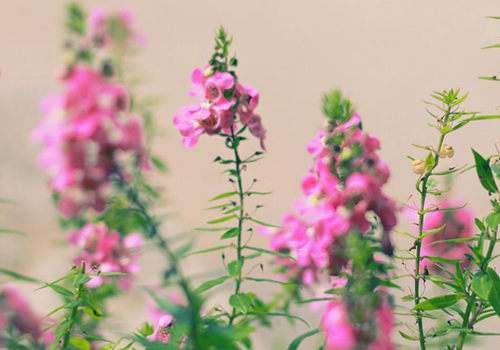
Beautiful snapdragon flowers
If it is the second situation, then you need to handle the light factor correctly. Getting some sun normally is of course good, and it also helps strengthen the plant's immunity and resistance. But we should also choose the right time; morning and afternoon are fine, while at noon try to move the plant indoors, especially in summer when the blazing sun is high in the sky.
As for the third case, you can remedy it through proper watering; do not water too much at one time. In addition, during the rainy season, move the plant away in time.
How to care for snapdragons during the flowering period:
1. Fertilizing
Fertilize once every half month; you can choose Huiyou or a special fertilizer for potted flowers. Do not apply nitrogen fertilizer during the bud stage, as it easily causes leggy growth.
2. Watering During the flowering period, prevent the soil from becoming too dry or too wet; just keep the potting soil moist, and do not let water accumulate. You can spray a fine mist around the plant to keep the flowering stems bright and fresh.
3. Pruning
After flowering, you can cut off the aboveground part, water thoroughly once, and about a week later new shoots will sprout again. Apply a dilute liquid fertilizer about once every ten days until the flower buds form. Alternatively, after the flowers open, pinch off the growing tips, and the new shoots that sprout can keep blooming continuously, very brilliantly.
4. Cut flowers
Snapdragon cut flowers do not tolerate squeezing, but if cut too early the buds are not easy to open. Therefore, it is best to cut when 2 to 3 flowers at the base of the inflorescence have opened and the upper buds are just beginning to open. After cutting, grade the cut flowers by flower color, plant height and spike length, in bunches of 10 to 20 stems.
That is all for the causes of snapdragon wilting. Now you know how to care for it during the flowering period, right!
How to grow snapdragons so they bloom more? Snapdragon cultivation methods
It is snapdragon flowering season again. Its flowers look like lips, with a swollen base, and are brilliantly colored, in white, pale red, deep red, yellow, pure gold and other colors. They can be grown in pots for ornamental viewing, and are suitable for us to admire at home at noon. Now, before the snapdragons bloom, how should we care for them? Let us learn together below.
If you want the snapdragons you grow to bloom, then we first need to know when they bloom and what time their flowering period is. After all, when snapdragons bloom has a very big relationship with when they are planted. If we sow in spring or summer, then the flowering time is roughly around June to July, or September to October.
So how should snapdragons be grown so they can produce more flowers? First we need to know what kind of soil is suitable for snapdragon growth, because snapdragons have relatively high soil requirements. Besides using loose, breathable, well-drained acidic soil when planting, we also need to pay attention to fertilizing it. During its flowering period we must fertilize it in a timely manner; its flowering period averages 15 days, and fertilizing once is enough. But be sure not to fertilize during the flowering period, and do not fertilize before the flowers open, especially with nitrogen fertilizer, as this will cause the plant to grow leggy and make the flowers very hard to open.
During the snapdragon flowering period, we must water it in a timely manner and not let the pot dry out, because this will leave the plant short of water and shorten the flowering period, causing the flowers to wilt. But we also cannot water it too much, because overwatering easily causes waterlogging. On average, watering once every 2 to 3 days is enough, and we can use a spray bottle to mist water to maintain air humidity.
Snapdragons are light-loving flowering plants. Only under conditions of ample sunlight can they produce beautiful flowers. Without enough sunlight, snapdragons will grow leggy, which affects their blooming; in severe cases, snapdragons may even fail to bloom. So apart from summer, when the sunlight is intense and we need to shade them, it is best to keep them in the sun the rest of the time, because this ensures their normal growth.
At the same time, we should also prune snapdragons appropriately. If you want snapdragons to bloom, proper pruning is very necessary. We need to pinch off the growing tips, which helps them branch. During care, cut off weak branches, dead branches, crossing branches and overly dense branches. After each bloom, we need to promptly cut off the spent flowers and the stems that have already bloomed; this is to promote the sprouting of new branches and extend the flowering period.
The above is the snapdragon cultivation method compiled by the editor. Isn't it simple? Snapdragon flowers are very beautiful, so friends who like them should not miss out!
Snapdragon Antirrhinum majus Snapdragon illustrated guide: How to grow snapdragons / How to propagate snapdragons
Snapdragon profileSnapdragon Antirrhinum majus
Aliases: Dragon's-mouth flower, dragon-head flower, Yangcaique, lion flower
Classification: Perennial herbaceous flower
Family and genus: Plantae, Angiosperms, Dicotyledoneae, Tubiflorae, Scrophulariaceae, Antirrhinum
Peak flowering period: Spring
Snapdragon, also known as: dragon-head flower, lion flower, dragon's-mouth flower, Yangcaique, Latin name: Antirrhinum majus L., is a perennial herbaceous plant of the Scrophulariaceae family and the genus Antirrhinum. It is often grown as a biennial or annual, with a plant height of 20 to 70 cm, and leaves that are oblong-lanceolate. Racemose inflorescence, corolla tubular and two-lipped, with the base swollen into a sac shape, the upper lip upright, 2-lobed, and the lower lip 3-lobed, spreading and curved outward. It comes in white, pale red, deep red, flesh color, deep yellow, light yellow, yellow-orange and other colors. It can be grown in pots, and because its flower colors are brilliant, it is very suitable for ornamental viewing. Native to the Mediterranean, it has been introduced and cultivated in Nanning, Guangxi. Native to the Mediterranean region, divided...
Snapdragon cultivation methods and precautions An introduction to snapdragons
Snapdragon, also known as: dragon-head flower, lion flower, dragon's-mouth flower, Yangcaique, Latin name: Antirrhinum majus L., is a perennial herbaceous plant of the Scrophulariaceae family and the genus Antirrhinum. It is often grown as a biennial or annual, with a plant height of 20 to 70 cm, and leaves that are oblong-lanceolate. Racemose inflorescence, corolla tubular and two-lipped, with the base swollen into a sac shape, the upper lip upright, 2-lobed, and the lower lip 3-lobed, spreading and curved outward. It comes in white, pale red, deep red, flesh color, deep yellow, light yellow, yellow-orange and other colors. It can be grown in pots, and because its flower colors are brilliant, it is very suitable for ornamental viewing. Native to the Mediterranean, it has been introduced and cultivated in Nanning, Guangxi. Native to the Mediterranean region, its distribution ranges north to Morocco and Portugal, south to France, and east to Turkey and Syria. Southern China [Snapdragon is named for its flower shape resembling a goldfish, and its Latin scientific name "Antirrhinum" means "nose-like", while "majus" means "blooms in May". At the same time, it is also a Chinese medicinal herb, with the effects of clearing heat and detoxifying, cooling blood and reducing swelling. It can also be pressed for oil for consumption, nutritious and healthy.
Morphological characteristics of snapdragons
It is a perennial herbaceous flower, often grown as a biennial or annual, with a plant height of 30-50 cm. The stem is erect, and the leaves are oblong-lanceolate. The raceme is terminal, and the corolla is tubular and two-lipped, covered with fine hairs on the outside. Common cultivated varieties include red, purple, yellow and white, with a flowering period of May to June. The capsule is dark brown, with a fruiting period of July to August.
Perennial erect herb, the base of the stem sometimes woody, up to 80 cm tall. The base of the stem is hairless, the middle and upper parts are covered with glandular hairs, and the base sometimes branches. The lower leaves are opposite, the upper leaves are often alternate, with short petioles; the leaf blades are hairless, lanceolate to oblong-lanceolate, 2-6 cm long, with entire margins. The raceme is terminal, densely covered with glandular hairs; the pedicel is 5-7 mm long; the calyx is nearly as long as the pedicel, deeply 5-parted, the lobes ovate, obtuse or acute; the corolla comes in many colors, from red and purple to white, 3-5 cm long, with the base extending forward and downward into a pouch shape, the upper lip upright and broad, 2-parted, and the lower lip 3-lobed, bulging upward toward the upper lip in the middle and closing the throat, making the corolla mask-like; there are 4 stamens, 2 long. The capsule is ovate, about 15 mm long, with the base strongly extending forward, covered with glandular hairs, and dehiscing by pores at the tip. Native to southern Europe. Cultivated in gardens everywhere, sometimes escaping to the wild.
Snapdragon is a perennial herb, often grown as an annual or biennial flower. The plant height is 20 to 70 cm, and the leaves are oblong-lanceolate. Racemose inflorescence, corolla tubular and two-lipped, with the base swollen into a sac shape, the upper lip upright, 2-lobed, and the lower lip 3-lobed, spreading and curved outward, in white, pale red, deep red, flesh color, deep yellow, light yellow, yellow-orange and other colors. Its growth habit is relatively cold-tolerant, not heat-tolerant, likes sunlight, and also tolerates partial shade.
Snapdragon is a perennial herbaceous plant with an upright plant form, 0.5-1 m tall, up to a maximum of 2 m. The upper leaves are spirally alternate, lanceolate, while the basal leaves are opposite, 1-7 cm long and 2-2.5 cm wide. The flowers form a terminal raceme, each flower 3.5-4.5 cm long, two-lipped and bilaterally symmetrical. Wild plants have flower colors from pink to purple, with the two lips often yellow, and the stem color is also related to the flower color. The flowering period is very long, March to June. The fruit is an ovate capsule, 10-14 mm in diameter, containing a large number of seeds.
Ecological habits of snapdragons
Native to the Mediterranean coast of southern Europe and North Africa. Cold-tolerant, not tolerant of severe heat, and able to tolerate partial shade. It likes loose, fertile, well-drained soil and requires a pH of 5.5-7.0. It is a relatively long-day plant; late-maturing varieties are sensitive to long days, and long days clearly promote flower bud differentiation, but have little effect on flower bud development. Temperature has no direct relationship with flower bud differentiation, but has a clear effect on plant height, flower spikes and flower number. The suitable temperature for growth is 15-20 degrees C, with night temperature not lower than 5 degrees C. After budding, if it encounters relatively low temperatures, the larger flower buds will suffer cold damage. It is a perennial herbaceous flower, often grown as a biennial or annual.
Native to the Mediterranean region, its distribution ranges north to Morocco and Portugal, south to France, and east to Turkey and Syria. Cultivated in gardens everywhere, sometimes escaping to the wild.
Snapdragon is a light-loving herb. Under conditions of ample sunlight, the plant is dwarf, compact in clumps, grows neatly, is uniform in height, blooms neatly, and has brilliant flower colors. Under partial shade conditions, the plant grows taller, the inflorescence elongates, and the flower colors are paler. It is not sensitive to day length; for example, the Hua Yu series of snapdragons is almost insensitive to day length. During the vernalization stage, high temperatures are unfavorable for snapdragon growth and development. The suitable temperature for flowering is 15 degrees C to 16 degrees C; for some varieties, when the temperature exceeds 15 degrees C, no branching occurs, affecting the plant form. Snapdragon is relatively sensitive to water and cannot be waterlogged, otherwise the root system rots and the stems and leaves turn yellow and wilt. Snapdragon is a light-loving herb; under conditions of ample sunlight, the plant is dwarf, compact in clumps, grows neatly, is uniform in height, blooms neatly, and has brilliant flower colors; under partial shade conditions, the plant grows taller, the inflorescence elongates, and the flower colors are paler. It is not sensitive to day length; for example, the Hua Yu series of snapdragons is almost insensitive to day length. It likes well-drained, humus-rich, fertile, slightly heavy soil, with neutral or alkaline soil being especially good.
Snapdragon cultivation techniques: Timely sowing
Snapdragons can be propagated by sowing and cuttings, but sowing propagation is the main method, and sowing is usually best in mid-September. The sowing substrate is sterilized humus soil or peat soil, generally using a shallow pot with a 30 cm diameter. Before sowing, fill the pot with soil, leaving 1-2 cm at the rim. Then gently press the potting soil level and sow. After sowing, cover with a thin layer of fine soil, then gently firm it with a wooden board so that the seeds and soil are closely combined. After sowing, place the pot in a water basin and let water seep up from the bottom until the entire soil surface is moist, then cover the pot surface with glass to reduce water evaporation, and finally place the pot in a shady, cool place.
Post-sowing management of snapdragons
Post-sowing management is mainly water management; watering should be even, and the pot surface should not be too dry or too wet. Remove the glass at night to allow ventilation, and cover it again during the day to prevent water evaporation. The seeds sprout and emerge 7 or 8 days after sowing. After the seedlings emerge, the glass can be removed to let them receive light.
Transplanting snapdragons
When the seedlings grow 4-5 true leaves, they can be moved into flower pots with a diameter of 8-12 cm. The potting soil should be a mix of 7 parts humus soil and 3 parts garden soil. Water the seedlings with a watering can, until thoroughly watered. As the seedlings gradually grow, change the pot once more, planting them in flower pots with a diameter of 20-24 cm.
Temperature and humidity
Snapdragon is relatively cold-tolerant and also tolerates partial shade. It can withstand low temperatures above -5 degrees C, and below -5 degrees C it is prone to freezing to death. Snapdragon is moisture-tolerant and afraid of drought. During care and management, watering must follow the principle of "water when dry, stop when wet", spraying water once about every 2 days.
Reasonable fertilizing Strengthen fertilizer and water management. When fertilizing, pay attention to the combination of nitrogen, phosphorus and potassium. Snapdragon has root nodules and can fix nitrogen itself, so under normal circumstances there is no need to apply nitrogen fertilizer; appropriately increasing phosphorus and potassium fertilizer is enough. During the growth period, apply fermented oil residue water once every half month along with watering. When flower buds appear, spraying with a 1.2% potassium dihydrogen phosphate solution is even better. Before each fertilizing, loosen the soil and weed.
Suitable pruning When snapdragon seedlings grow to about 10 cm, they can be pinched, to shorten the plant height, increase the number of side branches, and increase flowers. When pruning, cut off diseased and weak branches, dead old branches and overly dense branches. After each bloom, cut off the branches that have already bloomed, to encourage them to sprout new branches and continue blooming.
Open-field cultivation
Snapdragon likes sunlight and also tolerates partial shade, avoids high temperatures and is somewhat cold-tolerant. When cultivating in the open field, note the following:
Timely pinching: To increase branching, pinch in time during cultivation, especially for medium and tall varieties. Generally, pinch when the seedlings are about 12 cm tall, and pinch once more when the plants reach 20 cm; this encourages side branch growth and dwarfing of the plant. Varieties used for cut flowers should not be pinched; instead, remove the side buds so that nutrients are concentrated in the main branch, but as the flowering branches grow, tie them with thin bamboo in time to keep them straight.
Planting in a sunny spot: Since snapdragons like sun, when planting, choose a place with ample sunlight, loose, fertile soil and good drainage. Usually pay attention to removing weeds; this is beneficial for snapdragon growth and flowering.
Reasonable fertilizing and watering: Snapdragon is a fertilizer-loving flowering plant, and the seedlings grow slowly. Before planting, plow the land first and apply base fertilizer. After planting, water thoroughly once, then decide based on the weather, preventing the soil from becoming too dry or too wet. For fertilizing, during the growth period apply dilute cake fertilizer water or liquid fertilizer based mainly on nitrogen fertilizer twice, to promote the growth of branches and leaves, but note that too much fertilizer will cause leggy growth and affect flowering. During the bud stage, apply dilute liquid fertilizer based mainly on phosphorus and potassium 1 to 2 times, which is beneficial for brilliant flower colors. After rain, pay attention to drainage. After flowering, cut off the aboveground part level with the ground, water thoroughly once, then pay attention to fertilizer and water management. In summer, shade appropriately and lower the temperature, and in this way it can bloom again in autumn.
Timely seed collection: Snapdragons can self-sow and reproduce. When the fruit matures in June to July, harvest it in time. You can cut it off together with the pedicel, place it on a bamboo mat to dry, shake out the seeds and store them in a dry place, and sow in September. Snapdragon varieties easily mix, so mother plants kept for seed collection need to be grown in isolation to avoid producing hybrids.
Management and precautions
Potted snapdragons commonly use 10 cm pots, and sown seedlings can be transplanted into pots 6 weeks after germination. During the growth period, maintain a temperature of 16 degrees C, keep the potting soil moist and provide ample sunlight. Some dwarf varieties can bloom 60-0 days after sowing. Tall and medium-stemmed varieties are pinched to encourage more branching and more blooming. To date, growth regulators are more often used to dwarf plants and regulate the flowering period. Spraying 0.05%-0.1% daminozide 10 days after pinching has a significant dwarfing effect. Spraying 0.25%-0.4% daminozide at the seedling stage can advance flowering and make the flowers more compact. If 0.4%-0.8% daminozide is sprayed 2 to 4 times, flowering can be delayed.
During the growth period, fertilize once every half month, or use "Huiyou" 15-15-30 special fertilizer for potted flowers. After flowering, pinch in time and increase fertilizer. At a temperature of 13 to 16 degrees C, it can continue blooming continuously. Snapdragons easily cross naturally; to keep varieties pure, mother plants kept for seed need isolated seed collection. Of course, many double-flowered and F1 hybrid snapdragons are very hard to get seeds from.
Sowing: It is generally considered that the suitable temperature for germination is 15-20 degrees C, with about 10 degrees C at night, so sow in late September to early October. Because the seeds are small, to avoid sowing too thickly, mix them with sand or dry soil before broadcasting or drilling; do not cover with soil, and absorb water from the bottom of the pot. They germinate after 7-10 days. The soil used is an equal mix of akadama soil and leaf mold. After 2-3 true leaves grow, transplant into No. 2.5-3 pots. Sandy loam is best for the planting soil. Before planting, apply enough base fertilizer: 600 kg of fully decomposed farmyard manure per 100 sq m, evenly turned into the cultivation layer. Snapdragons are usually ready for planting when the seedlings are 10-12 cm tall. When planting, lay a 15 x 15 cm support net flat on the bed surface and plant 1 plant in each mesh. In the early stage after planting, the seedlings should be appropriately shaded. Throughout the entire growth process of snapdragons, generally three layers of netting are set up to prevent the flowering stems from bending or lodging.
Fertilizer and water: During the growth of snapdragons, topdressing is usually done once about every 10 days. Snapdragons dislike waterlogged soil, otherwise the root system rots and the stems and leaves turn yellow and wilt. But insufficient watering affects their growth and development. The soil should often be kept moist, and it is better to let it dry slightly between two waterings. In addition, when watering, try to avoid supplying water from above the plant, to reduce leaf surface moisture and the spread of disease by splashing water droplets.
Light: Under conditions of ample sunlight, snapdragon plants grow neatly, are uniform in height, bloom neatly, and have brilliant flower colors. Under partial shade conditions, the plants grow taller, the inflorescence elongates, and the flower colors are paler. Snapdragon is a long-day plant; although there are now many neutral varieties, supplementing light for 4 hours in winter and extending the day length can advance flowering.
Temperature: For greenhouse cultivation, maintain a night temperature of 15 degrees C and a day temperature of about 22 to 28 degrees C. If the temperature is too low, dropping to 2 to 3 degrees C, the plants will not be harmed, but the flowering period is delayed, blind flowers increase and cut flower quality declines.
Cultivation precautions
Variety selection: For potted snapdragons, it is best to choose dwarf varieties with abundant flowers, to increase the ornamental value of the pot. Pot and potting soil selection. For the potted container, it is best to use a clay pot or plastic pot with a diameter of about 15 cm, but with good air permeability. The cultivation substrate should be loose, fertile, well-drained potting soil, or an even mix of leaf mold, peat and plant ash. Before planting, apply some dry livestock manure or cake fertilizer powder, and add a little bone meal or superphosphate as base fertilizer.
Watering and fertilizing: After planting, water thoroughly, then water whenever the potting soil becomes dry. During the growth period, apply dilute liquid fertilizer based mainly on nitrogen and potassium fertilizer once every 10 days, and spray 0.1% potassium dihydrogen phosphate during the bud stage to make the flower colors brilliant. Usually prevent waterlogging in the potting soil and pay attention to loosening the soil often.
Pruning: After flowering, you can cut off the aboveground part level with the soil, water thoroughly once, and after about a week new shoots will sprout. Then apply dilute liquid fertilizer once about every 10 days until the flower buds form. Usually pay attention to watering appropriately, and in summer shade appropriately and lower the temperature, so that it can bloom again in autumn.
Snapdragon propagation methods
Mainly by seed propagation and cutting propagation.
Seed propagation: In the Guangdong region, sowing is generally suitable after autumn, with October to November being best. Snapdragon seeds are tiny, about 6500 to 7000 seeds per gram. Sow within a temperature range of 18 degrees C to 21 degrees C, and seedlings emerge after 1 week. Before sowing, soak the seeds in a potassium permanganate solution of about 0.5% concentration for 1 to 2 hours. After disinfection, it can kill pathogenic bacteria carried on the seed surface, and it also helps seed germination, prompting the seeds to germinate quickly and the seedlings to grow neatly and robustly. Sowing can generally adopt seedbed sowing or plug tray sowing.
Seedbed sowing: For the seedbed, it is best to choose sandy loam with a loose soil structure, a low groundwater table, good drainage and rich organic matter. The seedbed requires fine, level soil particles. To prevent pests and diseases, turn and sun-dry the sowing field 2-3 times about 25 days before sowing, and disinfect the soil with carbofuran before sowing. When sowing, water the seedbed thoroughly, mix the seeds with fine sand at 1:4, evenly broadcast them on the seedbed, and after sowing cover with a thin layer of plant ash. After watering, cover with a 50% shade net; never expose to the blazing sun. Seedlings can be transplanted 5-6 weeks after emergence.
Plug tray sowing: Disinfection of seeds and medium is very important. Before sowing, soak the seeds in a potassium permanganate solution of about 0.5% concentration for 1-2 hours. Add 150-200 g of thiophanate-methyl powder per cubic meter of medium (about 20 bags), stir 2-3 times so that the chemical and the medium are fully mixed, then stir while spraying water, adjusting until the medium is "holds together when squeezed in the hand, but crumbles when released". Cover with plastic film and pile for 8-10 hours, then fill into plug trays. Each plug tray can sow 200 seeds, one seed per cell. After sowing, gently press with your hand so that the seeds adhere to the medium, then spray thoroughly with a sprayer and cover with newspaper or plastic film. If the nursery can control dryness, moisture and temperature, then covering is unnecessary. Keep the newspaper moist for a long time, and uncover the newspaper after the seeds germinate.
Cutting propagation: For cuttings, you can use the axillary buds of robust seedlings sown that year, or cut the terminal buds of robust seedlings of the current year (combined with pinching) for cuttings. You can also, after the flowers fade, choose robust plants, cut off the old branches, keep 2-3 m of main stem above ground, and after cutting apply a compound fertilizer based mainly on nitrogen; after buds emerge, cut them for cuttings. The cutting length is about 3-4 nodes; cut as much as possible below a node, remove the lower leaves and keep 1-2 upper leaves. Then mix "Gen Taiyang" rooting agent at 400 times dilution with yellow mud into a slurry, dip the cut end of the cutting in the slurry, and after the slurry dries insert it into the nursery bed. The nursery bed should be covered with a 70% shade net. The nursery bed medium can be fresh river sand or fresh yellow mud. Use a thin bamboo stick to make holes in the substrate in advance, insert the cutting while making the hole, and gently firm the culture soil at the base of the cutting with two fingers so that the cutting and the medium are combined. The cutting density is about 2.5 cm x 3.0, with the standard that the leaves of the cuttings touch but do not overlap, and the insertion depth is controlled so that one node enters the soil. After inserting, water thoroughly, and thereafter spray the leaf surface 1 to several times a day. For snapdragon cuttings using the "Gen Taiyang" rooting agent treatment method, see the attached table. From the attached table it can be seen that using the "Gen Taiyang" rooting agent for cutting propagation has remarkable results; 8 days after inserting, they can be transplanted. Management is convenient, saving manpower and material resources.
Sow in open-field seedbeds in August to September, and transplant at a spacing of 4 cm x 4 cm when true leaves appear. Spring-sown seedlings have their vigorous growth period right in the high temperatures of summer, grow poorly, and are prone to pests and diseases. Seed germination has a light requirement, so do not cover with soil after sowing.
The suitable temperature for germination is 18-20 degrees C, and seedlings emerge in 5-7 days. The sowing substrate can be a mix of 5 parts garden soil, 3 parts leaf mold and 2 parts sand, or an equal mix of peat, perlite and vermiculite.
For cut flowers, when growing multiple stems, timely pinching and netting are needed. The first pinching can be done at the 4-true-leaf stage, keeping 1-2 internodes. When the plant is 15-20 CM tall, set up the first layer of netting; at 30-40 CM, set up the second layer of netting. As the plant grows taller, the net position is gradually raised.
Snapdragons like fertilizer. Base fertilizer should be applied 20 days before planting, commonly using compost, chicken manure and cake fertilizer and other fertilizers rich in nitrogen, phosphorus and potassium. Topdressing depends on the growth situation, generally applying 3 kg of nitrogen, phosphorus and potassium compound fertilizer per 100 sq m each time.
To make the stems sturdy, potassium fertilizer should be applied as appropriate in the later stage.
Snapdragons are propagated by seed, and can also be propagated by cuttings. In production there are two types, autumn sowing and spring sowing. Generally, warm regions sow in autumn, and cold northern regions sow in spring, with autumn sowing flowering better. Snapdragon seeds are tiny; when sowing, add a small amount of fine sand and broadcast evenly, without covering with soil. At around 15 degrees C, seedlings emerge in about 10 days. Pay attention to thinning; transplant once at the 4-5 true leaf stage. For open-field ornamental viewing, pinch appropriately to encourage side branches to sprout and increase the ornamental effect. To extend the flowering period, promptly cut off the spent flowers after blooming, so that new flowers can continue to open. If grown for cut flowers, then do not pinch, and promptly remove side buds, and pay attention to fertilizing; nitrogen fertilizer has a good effect on snapdragons. For seed collection, cut off the entire fruiting branch, dry it and thresh it; seed viability can be maintained for 3 to 4 years.
Snapdragon disease control
Damping-off is the main disease occurring at the snapdragon seedling stage, and can be controlled by drenching with captan.
Leaf blight, bacterial leaf spot, anthracnose and other diseases infect leaves and stems, and can be controlled with Bordeaux mixture or a 400-times dilution of ethyl parathion. Sclerotinia disease can be sprayed with a 1000-times dilution of thiophanate-methyl. For aphids and cutworms, a 1000-times dilution of 40% omethoate emulsifiable concentrate can be used for control.
Phytophthora blight
Phytophthora blight, also called stem rot, mainly harms the stems and roots. After the pathogen invades the stem base, it forms light brown lesions; the lesions are water-soaked and constricted and rot, and in severe cases often cause the plant to die. When air humidity is high, white thread-like material can grow on the lesions.
Control methods:
a. Strengthen cultivation management, avoid continuous cropping; promptly pull out diseased plants and burn them, reducing the source of infection and lowering the incidence rate. 2 to 3 weeks before planting, disinfect the soil with formalin: spray the soil with 30 ml of the chemical in 50 times water, then cover with plastic film, remove the covering after 5 days, and use only after 1 to 2 weeks when the chemical smell has dissipated.
b. Chemical control In the early stage of the disease, spray with a 300-times dilution of 40% fosetyl-aluminum wettable powder; you can also drench the root and stem base of the plant with an 800-times solution of 50% dichlofluanid wettable powder, using 4 L of the chemical.
Seedling rot
It is a serious seedling-stage disease, and can occur from after seed germination through the entire seedling stage. The stem or root of the seedling near the soil surface begins to become water-soaked, then gradually turns brown and constricted; in severe cases the diseased part rots, so that the whole plant lodges or wilts and dies.
Control methods:
a. At the seedling stage, control the amount of watering; the soil should not be too wet; sow at the right time to avoid the seedlings being affected by unsuitable temperatures; seedlings should not be planted too densely, and thin them in time; keep the greenhouse ventilated and light-transmitting, lower the temperature between plants, and control the conditions for disease development. In addition, you can disinfect the soil with 70% quintozene powder, at a rate of 5 to 8 g per sq m, mixed evenly with an appropriate amount of fine sand and then broadcast.
b. Chemical control. In the early stage of the disease, promptly spray the young stems of the seedlings and the nearby soil with an 800 to 1000-times dilution of 50% carbendazim wettable powder; you can also spray with an 800 to 1000-times dilution of chlorothalonil wettable powder.
Rust
It mainly harms the leaves, young stems and calyx of snapdragons. Diseased leaves show yellow-green blister-like water spots, which then gradually expand; after the blister-like spots rupture, reddish-brown urediniospore masses are exposed, and the leaf tissue around the lesions turns pale yellow. The symptoms on young stems and calyx are similar to those on the leaves. Affected plants grow weakly, and in severe cases the leaves scorch and wither.
Control methods:
a. Promptly remove and burn diseased leaves as soon as they are found, to prevent spread; pay attention to ventilation and light transmission, and plants should not be planted too densely;
b. Chemical control. In the early stage of the disease, spray with a 200-times dilution of 15% triadimefon wettable powder, or a 400-times dilution of 65% zineb wettable powder.
Leaf blight
It mainly occurs on the leaves and stems. When the leaves are infected, small water-soaked spots first appear at the leaf tip or leaf margin, then turn pale white and gradually expand into round or irregular brown lesions; the center of the lesion has irregular brown concentric rings and is scattered with many small black dots. Infected young leaves become distorted, and in severe cases the leaves shrink and die, hanging on the stems without dropping off. Stem lesions are elongated or encircle the stem, water-soaked, slightly sunken, grayish-white in the center with dark brown edges; the diseased part often cracks and bears many small black dots, and the small black dots are sometimes arranged in concentric rings. When the stem is affected at the seedling stage, it often causes the seedlings to lodge.
Control methods:
a. Strengthen cultivation management, promptly remove diseased leaves or pull out diseased plants and burn them, to reduce the primary infection source; the greenhouse should be well ventilated, plants should not be too dense, and nitrogen fertilizer should not be applied alone.
b. Chemical control. In the early stage of the disease, spray with Bordeaux mixture or a 600-times dilution of 65% zineb wettable powder.
Gray mold
It can harm the stems, leaves and flowers of the plant, with flowers being the main target. The pathogen invades through weakened host tissue. When the leaves are affected, it often first occurs at the leaf tip or leaf margin. In the early stage of the disease, water-soaked spots appear on the diseased part, then gradually expand, and the diseased tissue turns dark brown and rots. After the pathogen invades, it can also cause infection of the pedicel and stem, producing canker spots. When the lesions encircle the pedicel or stem, they can cause the flower spike to wither. Under humid conditions, the affected parts are covered by a grayish-brown mold layer, and often produce small black granular sclerotia.
Control methods:
a. Promptly remove diseased flowers and leaves and burn them in a centralized manner, to reduce the infection source. The greenhouse should be well ventilated, watering should not be excessive, and the temperature and humidity inside should be controlled. Apply nitrogen fertilizer reasonably and appropriately increase phosphorus and potassium fertilizer to improve the plant's disease resistance. During flower management, try to avoid causing wounds to the plants, reducing opportunities for pathogen infection.
b. Chemical control. In the early stage of the disease, spray with 70% thiophanate-methyl wettable powder at 800-1000 times dilution, or 50% carbendazim wettable powder at 800-1000 times dilution. Spray once a week, for 2-3 consecutive times.
Aphids
They usually gather on tender buds, tender leaves and tender shoots to pierce and suck the sap, causing the affected parts of the plant to shrivel and deform. Aphids also secrete honeydew that contaminates the plant and induces diseases such as sooty mold. They can be sprayed and killed with methomyl at 600-800 times dilution or 25% derris at 800 times dilution, or with 40% emulsifiable concentrate Supracide at 800-1000 times dilution. Supracide is a broad-spectrum organophosphorus scale insecticide with contact, stomach and strong penetrant action; it can penetrate into plant tissues and has a very good control effect on chewing and piercing-sucking mouthpart pests. Spray once a week, for 2-3 consecutive times; it has a special effect on scale insects and aphids.
Red spider mites
They mostly pierce and suck leaf sap on the underside of leaves, causing the leaves to discolor and even curl. They can be sprayed and killed with 40% dicofol at 1000 times dilution in water.
Whiteflies
Sucking plant sap causes leaves to fade, curl and shrivel, and they also often serve as vectors for various toxins. They can be sprayed and killed with a 0.01% solution of deltamethrin.
Thrips
Adults or nymphs live on plants and feed on young buds, tender leaves, flowers and young fruit. Tender leaves curl after being fed upon, and buds and flowers wilt after being damaged. In the early stage of the disease, spray and kill with 25% derris or 40% dimethoate at 400-500 times dilution.
Variety classification of snapdragon
Common varieties include the Floral Showers series, a tetraploid type, plant height 15-20 cm, with good branching; among them the bicolor types are even more attractive, and the apricot-yellow/white bicolor is the newest variety. The Chimes series, a tetraploid type, plant height 15-20 cm, with strong branching. Tahiti, plant height 20-25 cm, with rich colors, including 5 bicolor types; the famous purple/white and rose-red/white bicolor types are the earliest-flowering varieties among the dwarf types, flowering 10 days earlier. Sweetheart, plant height 15 cm, a dwarf F1 hybrid, double flowers, azalea type, with rich flower colors. Little Darling, plant height 30 cm, with strong branching, azalea type. Bells, plant height 20-25 cm, butterfly type, among which Red Bells is a new variety that sells very well on the international flower market. In addition, new varieties include La Bella, plant height 45-50 cm, with strong branching, beautiful flower shape and bright colors. Black Prince, plant height 40-45 cm, brown leaves, deep red flowers. Madame Butterfly, double azalea type, with flower colors including pink, deep red, golden yellow, yellow, rose red, etc.
Excellent varieties should belong to the early-maturing line, with good quality, and be able to consistently maintain bright flower color after cutting; strong cold resistance, with few "blind flowers"; tall and thick plants, with hard, straight-growing flower stems. Cutting usually begins in December, and a second cutting can also be done in March-April of the following year, with the second cut also of fairly good quality. First-generation hybrids utilizing heterosis have become the main varieties for commercial cut flower cultivation.
(1) F1 hybrids: Saotome: red; Red Dragon: velvet deep red
Pioneer: deep purplish red
Benihime: peach; Otome: bright peach
Mianlong, Yuying: scarlet-orange
Crown, Yellow Dragon: yellow; White Dragon, White Ridge, New Snow, White Light Dragon: white.
(2) Original species
Magic: deep peach
White Wonder: pure white
Peace: pure white
Jiangzhu: milky white, etc.
Distribution area of snapdragon
Native to the southern European Mediterranean coast and North Africa. It is cultivated in parks and courtyards throughout China.
Dietary or medicinal value of snapdragon
The medical information and health dietary information on Huahunet are for reference only and cannot be used as a basis for diagnosis or medical treatment. Any health problem should be consulted with professional medical personnel, and the treatment of any disease should follow a doctor's advice.
Ultimate flower-protecting mission: love yourself, start from reality, and strictly follow a doctor's advice. For illness, do not be careless, do not delay, do not give up hope; face it bravely, warm the silent world with love, and care for the flower field in your heart with your heart.
Medicinal value
The whole plant of snapdragon can also be used as medicine, with the effects of clearing heat and detoxifying, cooling blood and reducing swelling. Snapdragon is a traditional Chinese medicine in China; its taste is slightly bitter, and its entire herb can be used as medicine. It is a cooling-natured Chinese medicine. The medicinal properties of snapdragon include clearing deficiency heat, removing toxins, invigorating blood circulation and eliminating swelling and pain. It can treat symptoms of summer colds and headache with fever, and can also treat conditions such as fractures, sprains and skin abscesses. It can be taken internally or used externally. For internal use, crush snapdragon and decoct it for oral administration. However, because snapdragon is somewhat toxic, when consuming it you must follow a doctor's instructions and take it according to the dosage and method. For external application, simply apply the crushed snapdragon powder to the suppurating area. The whole herb is bitter in taste and cool in nature. It has the functions of clearing heat and detoxifying, cooling blood and reducing swelling. For external use, it is used for bruises and sprains, sores and swellings.
1. Medicinal scope
[Drug name]: Snapdragon
[Source]: The whole herb of the dicotyledonous medicinal plant snapdragon, of the family Scrophulariaceae.
2. Plant effects
[Effects]: Clearing heat and detoxifying. Indications: used for bruises and sprains, sores and swellings.
[Nature, flavor and meridian entry]: Bitter, cool. Enters the liver meridian.
[Usage and dosage]: Internal use: decoct in water, 9-15 grams. External use: appropriate amount, grind into powder and sprinkle on the affected area.
[Other names]: Longtoucai, Yangcaique ("Guangxi Medicinal Plant Directory") [Textual research]: First recorded in "Iconographia Cormophytorum Sinicorum".
3. Plant toxicity
【Warning]: This plant is toxic; accidental ingestion may cause swelling and pain of the throat and tongue, difficulty breathing, and stomach pain; skin allergy is possible, and contact may cause itching. Therefore, medicinal use must follow a doctor's advice.
Edible value
It is also a very good oil crop. The oil pressed from snapdragon can be used for human consumption, and it is very healthy and nutritious.
The role, uses and application value of snapdragon
Snapdragon is actually a kind of flower. As its name suggests, each of its small petals is like a glittering fish scale, and its many brightly colored flowers form a large clustered bouquet of snapdragon, with high ornamental value. Snapdragon flowers come in many colors such as white, pink, deep red, flesh color and orange. Most amazing is that a single snapdragon flower stem can produce flowers of two different colors; the bicolor flowers are very surprising, making it a plant of extremely high ornamental value. Because snapdragon flowers are large and beautiful, many countries place great importance on using snapdragon to beautify the environment and decorate courtyards. Snapdragon is generally planted in flower beds, outside windows, or placed indoors as bonsai, or a single snapdragon flower stem is used to make flower arrangements and other crafts. In recent years snapdragon has risen to fame in the cut flower and flower arrangement world, and has won the affection of many flower art enthusiasts.
Internationally, snapdragon is widely used for potted plants, flower beds, windowsills, planting troughs and indoor landscape arrangements, and in recent years it has also been used for cut flower viewing. Therefore, progress in variety improvement of snapdragon has been very rapid, especially in Western Europe. The Dutch company S&G Seeds has made great achievements in snapdragon breeding. To date, besides dwarf types, semi-dwarf types and tall-stem types, snapdragon also includes ultra-dwarf types with a plant height of 10 cm, and many belong to tetraploid varieties. Recently, new double-flowered azalea-type and butterfly-type varieties have also been bred. In snapdragon production, in European countries such as the Netherlands, Denmark, Sweden, Norway and Belgium, potted plants and flower bed plants are mainly produced, and cut flowers are also produced. In Japan, mainly potted flowers are produced, with a small amount of cut flowers. Cultivation of snapdragon in China began in the 1930s, mainly for potted flowers, flower beds and flower borders, in small quantities. After the founding of New China, although it developed rapidly, it was mainly arranged in park flower beds and flower borders, with aging varieties and single colors. After the 1980s, dwarf snapdragon varieties were introduced and widely used for potted plants and flower bed arrangements.
Dwarf and ultra-dwarf snapdragon varieties are used for potted flower cultivation, embellishing windowsills, balconies and doorways, especially the double-flowered and azalea-type varieties, which are highly ornamental. When placed in groups in city squares to form scenic spots, the decorative effect is remarkable. Medium-stem and tall-stem varieties are used to arrange flower borders and areas beside buildings, and their landscape effect is very attractive. Of course, they are also good cut flower materials; using them to make flower baskets or vase arrangements enhances a joyful and happy atmosphere.
Snapdragon is an excellent material for flower beds and flower borders. Tall varieties can be used as cut flowers and background material; dwarf varieties can be used for potted viewing and as flower bed edging; medium varieties combine the uses of both tall and dwarf varieties.
Snapdragon has many flower colors, beautiful and bright. Tall and medium types can be used for flower clusters, flower groups and cut flowers. Medium and dwarf types are suitable for various flower beds, ornamental potted flowers, etc.
Cultural background and legends of snapdragon
The flower of Saint John Calbett, who went from nobleman to monk in the 11th century
Since ancient times, Christianity has had the custom of linking saints with specific flowers. This arose because when the church commemorated saints, it often decorated the altar with blooming flowers! Moreover, in medieval Catholic monasteries, all kinds of flowers were planted almost like in a horticultural center. Over time, the church combined the 366 days' saints with different flowers, forming the so-called flower calendar. At that time most monasteries were located in Southern Europe, and Southern Europe has a Mediterranean climate, extremely suitable for growing flowers and plants. Snapdragon was chosen to honor the 11th-century Floreffe nobleman Saint John Calbett, who later became a monk. The place of origin of snapdragon is Southern Europe, and it is a perennial herbaceous plant of the family Scrophulariaceae. Although its lifespan is not long, its blooming flowers are large and beautiful, and it is quite favored by horticulturists.
Snapdragon is a rather interesting plant. In Europe, this flower's appearance closely resembles a boxer dog; in Japan, it grows to look like a goldfish. However, this plant is not only valuable for people to admire; the oil produced after its seeds are pressed is as useful as olive oil. Therefore its flower language is "possessing useful value." People blessed by this flower, even if they appear carefree on the surface, are in fact intellectuals with inner substance. In matters of love, timely boldness can make a rival retreat in the face of difficulty and understand that you are not someone to be trifled with.
It carries the meanings of "arrogance" and "showing off." Red flowers represent "fortune is at hand," yellow flowers represent "abundant gold and jade," white flowers represent "kindheartedness," pink flowers represent "dragons flying and phoenixes dancing," and purple flowers represent "flowers bloom and the moon is full." It is the lucky flower of Aquarius and people born in the Year of the Dragon, and also the birthday flower of those born on July 2.
1. Snapdragon - a hall full of gold and silver
Legend says there was a goldfish that fell in love with a boy. The boy came to the lake to fish every day, and the goldfish would punctually watch the boy from under the water each time he came. One day the goldfish waited for the boy, but the boy never appeared again. After a long time, a flower like a fish grew by the lakeside, gazing at the lake and waiting for the boy to appear.
2. Red snapdragon - fortune is at hand
Caesar, leader of the ancient Roman Republic, wore a wreath of fiery red snapdragon before every campaign and after every victory. Caesar believed this flower could bring courage and victory to him and his soldiers.
3. White snapdragon - lively and bustling
It is said that Princess Elisabeth of the Bourbon dynasty loved gardening and cultivation from childhood and was proficient in the art of flower arrangement. After the French Revolution broke out, the princess still went her own way. Even when she was executed by the revolutionaries, she still had her garden on her mind, and calmly said to the executioner, would you like to see my garden? It is much more beautiful there than this world. The plank beneath the princess's feet was removed, yet not a trace of pain could be seen on her face.
Character experiences
Other characters in "Hozuki's Coolheadedness." An ornamental pet created by Hozuki through variety improvement. It is classified as "animal and plant," and differs from the "snapdragon" that exists in the human world; its flowers grow to look just like goldfish. The longest-lived varieties can exceed 3 m in height. Every autumn the flowers' appearance turns red, and the middle also turns red-purple (Karakasa says it "looks like cyanosis"). Among collectors it seems to have the name "chaotic turquoise" and is quite highly priced. It has many enthusiasts, so a selection fair is held every autumn. In addition, different individuals seem to have different calls, and they can also be used to communicate. Furthermore, the varieties cultivated by Hozuki also have the ability to walk on their own. Not only are they edible (in the work they are made into sashimi and can also become grilled fish), Hakutaku also sells a vitality tonic made by boiling 100 withered snapdragons. Momotaro, on the other hand, says "although it can make you stronger, won't it make people strange?" and feels uneasy, but Hakutaku says "there are absolutely no side effects."
The flower language of snapdragon
Snapdragon: a pure heart
White snapdragon: kindheartedness
Red snapdragon: fortune is at hand
Pink snapdragon: dragons flying and phoenixes dancing, good fortune and auspiciousness
Yellow snapdragon: a hall full of gold and silver
Purple snapdragon: flowers bloom and the moon is full
Variegated snapdragon: huge profits
Birthday flower: snapdragon; flower language: possessing useful value
Snapdragon pictures