When to plant Chrysanthemum nankingense? Detailed planting methods
Chrysanthemum nankingense can be grown, and it is cultivated in quite a few regions. When to plant Chrysanthemum nankingense? How to grow it?
When to plant Chrysanthemum nankingense:
Since the optimum growing temperature for Chrysanthemum nankingense is 12-20°C, the best sowing time is from early February to early March. Chrysanthemum nankingense is easy to cultivate. For small-scale planting, division propagation can be used; for large-scale planting, direct seeding or seedling transplanting can be used, and multi-year cultivation is also possible. If perennial cultivation is adopted, the plants age after 3-4 years and need to be renewed.
How to grow Chrysanthemum nankingense:
Chrysanthemum nankingense, also known as chrysanthemum leaf, roadside yellow, or wild chrysanthemum, is a perennial herbaceous plant with persistent roots. It is rich in nutrients and has effects such as cooling, reducing fever, stimulating the appetite, and lowering blood pressure. The optimum growing temperature is 12-20°C. There are two main varieties in the northern Jiangsu region, one with small leaves and one with large leaves, and large-leaf Chrysanthemum nankingense is mostly selected for production.
1. Site selection and land preparation:
Fertile sandy loam soil is preferable. Before sowing or transplanting, apply sufficient base fertilizer, prepare the land carefully, and make beds 1.2-1.5 m wide and about 20-30 cm high.
2. Propagation methods:
Chrysanthemum nankingense can be propagated by seed, division, and cuttings. Cutting propagation is preferable, and the method is: in May-June, select young shoots about 5-6 cm long, remove 2-3 leaves from the base of the stem, insert the young shoots into the seedbed to a depth of 1/3 of the shoot length, keep the soil moist after insertion, and shade with a shade net; they will take root in about half a month. The planting density is 30 cm-30 cm.
3. Field management:
First, apply sufficient base fertilizer and frequently apply “shoot-growing fertilizer.” Apply about 2500 kg of decomposed organic fertilizer per 667 sq m. At planting, apply a thin slurry of human and livestock manure once together with the rooting water, about 1500 kg per 667 sq m, to promote survival. After each harvest, apply fertilizer once together with watering, applying about 2000 kg of decomposed human and livestock manure per 667 sq m each time.
4. Harvesting and seed saving:
Protected cultivation can be harvested as early as March, while open-field cultivation generally begins harvesting in April-May. The peak harvest period is May-August, harvesting once every half month until budding and flowering in October-November. The more times it is harvested, the more vigorous the branching; frequent picking can also avoid aphid damage. The harvest standard is that the stem tips are tender and break when bent by hand, then they are tied into small bundles for market.
Well, that is all for the introduction to the planting time and techniques of Chrysanthemum nankingense, and I hope it is helpful to everyone.
When to harvest Chrysanthemum nankingense and how to pick it
Many people like to eat Chrysanthemum nankingense, and eating it has certain benefits for the body. When to harvest Chrysanthemum nankingense? How to pick it?
When to harvest Chrysanthemum nankingense:
Protected cultivation can be harvested as early as March, while open-field cultivation generally begins harvesting in April-May. The peak harvest period is May-August, harvesting once every half month until budding and flowering in October-November. The more times it is harvested, the more vigorous the branching; frequent picking can also avoid aphid damage. The harvest standard is that the stem tips are tender and break when bent by hand, then they are tied into small bundles for market. For contiguous planting, 150-200 kg can be harvested per 667 sq m at one time, with an annual yield of 4500-5000 kg. In the early harvest period, pick by hand or cut with scissors; later, when the plants have grown larger, they can be cut with a sickle. When picking, pay attention to the stubble height to maintain enough buds, which is beneficial for maintaining high yields later. In spring, leave a stubble of 3-5 cm; in autumn and winter, leave a stubble of 6-10 cm. It can be harvested 4-5 times in spring and summer, and 3-4 times in autumn and winter.
How to pick Chrysanthemum nankingense:
Just remove the stems that cannot be snapped by hand and the yellow leaves; it can be stir-fried plainly or made into soup.
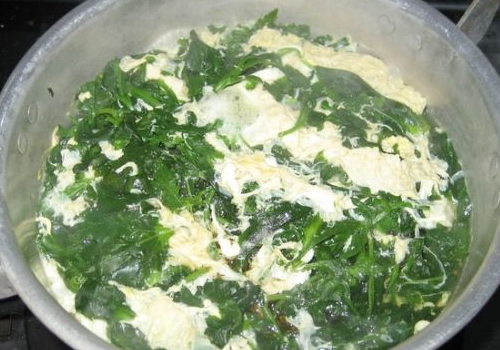
Chrysanthemum nankingense is a close relative of the herbaceous wild chrysanthemum of the genus Chrysanthemum in the Asteraceae family. There are two types, small-leaf Chrysanthemum nankingense and large-leaf Chrysanthemum nankingense, with the large-leaf type having better quality. Chrysanthemum nankingense is the most common dish on folk dining tables, especially Chrysanthemum nankingense and duck egg soup, which is an excellent summer heat-preventing and internal-heat-clearing food. Chrysanthemum nankingense is rich in nutrients and is a wild vegetable with great development prospects. In addition to nutrients such as protein, fat, cellulose, and vitamins, Chrysanthemum nankingense also contains flavonoids and volatile oils, has a special fragrance, and tastes cool and refreshing. It can be stir-fried, served cold, or boiled in soup.
Well, that is all for the introduction to the harvest time of Chrysanthemum nankingense, and I believe everyone understands now.
The planting methods of Chrysanthemum nankingense revealed
Hello friends, I wonder if any of you are from Jiangsu, Hunan, or Guizhou. Friends from the south may mostly have eaten or heard of Chrysanthemum nankingense! Chrysanthemum nankingense is also called chrysanthemum leaf, and some people also call it chrysanthemum vegetable, chrysanthemum lang, and other names. Why is it called that? That is because it looks a bit like wild chrysanthemum. Its tender stems and leaves can be eaten. Chrysanthemum nankingense is a vegetable that southern people often eat, and the Chrysanthemum nankingense egg soup made from it is especially suitable for drinking in summer. It can prevent heatstroke and also has the effects of clearing heat and detoxifying, and regulating the stomach and stimulating the appetite. For older people, it can also lower blood pressure! So its development prospects are especially broad.
Today, artificial cultivation in East China, Central China, South China, and North China is expanding year by year, especially in the Nanjing area, which has a long cultivation history and a large area. It is a very distinctive traditional wild vegetable in the Nanjing area. Chrysanthemum nankingense has strong adaptability, is easy to cultivate artificially, and has few pests and diseases. As a pollution-free green leafy vegetable, it can adjust the variety of market offerings. Developing Chrysanthemum nankingense production will have great market potential.
Cultivation techniques:
(1) Propagation methods
① Seed propagation
Seed propagation produces a large number of seedlings, and this method is generally used in large-scale production. Before sowing, plow deeply, apply fully decomposed organic fertilizer, hoe finely and level, and make flat beds. When sowing, mix the seeds evenly with a small amount of fine soil, then broadcast or drill. Use about 0.25 kg of seeds per 667 sq m. After sowing, cover with a layer of fine soil, then cover with plastic film to keep warm and moist and promote emergence. When the seedlings grow to have 2-3 true leaves, thin them, keeping a plant spacing of 10 cm. The thinned seedlings can be used as seedlings for transplanting to the field. If raising seedlings for transplanting, when the seedlings are 30 days old (with 2-3 true leaves), plant them in the cultivation field at a hole spacing of 20 cm square, with 3-5 plants per hole. For the sowing season, the southern region is from February to early March, and the North China region is in early April.
② Division propagation
In spring, dig out the overwintered plants, divide them into several plants, and plant them separately. Water promptly after planting to promote survival. This method makes plants grow quickly and is simple and easy to do, but the number of seedlings raised is small, so it is generally not used in production.
③ Cutting propagation
Cutting propagation can be carried out throughout the growing season, but the survival rate is highest when cuttings are taken in May-June. Take young shoots of Chrysanthemum nankingense (about 5-6 cm long), remove 2-3 leaves from the base, insert them into the seedbed with 1/2 of the shoot in the soil. Keep the soil moist after insertion. Generally, they take root in half a month and are then transplanted to the field.
(2) Field management
The cultivation and management of Chrysanthemum nankingense are relatively simple. For the base fertilizer in the cultivation field, generally 2000 kg of decomposed manure or barnyard manure can be applied per 667 sq m. Before the first harvest, apply light human and livestock manure water 2-3 times, once every 10-15 days, about 1500 kg each time per 667 sq m. After that, apply fertilizer once after each harvest, applying 2000 kg of light human and livestock manure water or 10 kg of urea per 667 sq m each time. If perennial cultivation is carried out, after the aboveground stems and leaves have completely dried up in winter, cut off the stems, and spread a layer of decomposed organic fertilizer on the soil surface to keep warm for overwintering.
Water appropriately during the growing period, and water thoroughly once together with fertilization. Keep the field moist frequently, and pay attention to timely drainage after rain. Pull out weeds in the field promptly, and carry out shallow intertillage when the soil becomes compacted.
(3) Pest and disease control
Chrysanthemum nankingense has strong disease resistance, and pests and diseases rarely occur. During large-scale cultivation, leaf spot disease, powdery mildew, dodder, and aphids may also appear.
Leaf spot disease: affected leaves show dark brown spots, which gradually expand and cause early leaf drop. Bordeaux mixture can be used for control.
Powdery mildew: affected leaves first develop white powdery disease spots, which gradually expand and merge into one patch, causing leaf deformation and stopping plant growth. Triadimefon wettable powder can be used for control.
In perennial cultivation, Chrysanthemum nankingense occasionally suffers from dodder parasitism, which can be controlled with the microbial herbicide Lubao No. 1 aqueous solution.
(4) Harvesting
Generally in April-May, harvesting begins when the plants are 10-15 cm tall and continues until budding and flowering in September-October. Protected cultivation can begin harvesting as early as March. The standard for harvesting young shoots is that they snap when bent by hand, about 10-15 cm long. When harvesting, pay attention in spring to leave a stubble of 3-5 cm, and in autumn leave a stubble of 6-10 cm, to maintain enough buds.
Requirements for environmental conditions:
Chrysanthemum nankingense is cold-resistant and afraid of heat. Seeds can germinate above 4°C, with the optimum germination temperature being 15-20°C. The optimum growing temperature for seedlings is 12-20°C. Mature plants can also grow in high-temperature seasons, but the quality of the edible part is poor.
Chrysanthemum nankingense is a short-day plant. Long-day and strong-light conditions are beneficial for vegetative growth, while short-day conditions are beneficial for flower bud formation, bolting, and flowering.
Chrysanthemum nankingense has relatively strict water requirements. During the growing period, a sufficient water supply must be maintained, but there must be no waterlogging.
Chrysanthemum nankingense has strong adaptability to soil and tolerates poor soil, not being choosy about soil texture, but when cultivated on well-drained, loose, and fertile soil, the yield is high and the quality is good.
Chrysanthemum nankingense can be divided into two types according to leaf size: one is large-leaf Chrysanthemum nankingense, and the other, of course, is small-leaf Chrysanthemum nankingense. The leaves of large-leaf Chrysanthemum nankingense are relatively larger, with some shallow lobes on the leaf edges and bluntly rounded tips, and it not only has good quality but also high yield. Therefore, large-leaf Chrysanthemum nankingense is mostly cultivated. Small-leaf Chrysanthemum nankingense, of course, has relatively small leaves, with deeply lobed leaf edges, and the petioles often show a relatively pale purple color. Because its quality is not as good as that of large-leaf Chrysanthemum nankingense, its yield is also relatively low. After listening to the editor, do you feel that Chrysanthemum nankingense has many benefits? Then plant it yourself and experience its magical effects!