How to Pronounce Oberonia iridifolia? A Detailed Guide to Planting and Blooming Time
Oberonia iridifolia, this plant is also super beautiful, many people like to grow it, it grows super beautifully, so how is Oberonia iridifolia pronounced? When to plant and bloom:
Pronunciation of Oberonia iridifolia:
yuan (Oberonia) wei (iris) hua (flower), yuan, wei (the tones are first and third respectively) similar to yuan
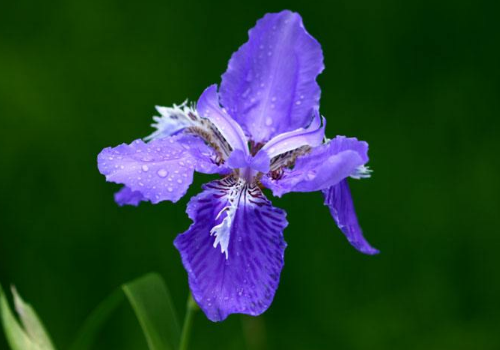
When to plant and bloom Oberonia iridifolia:
Planting:
It can be done in both spring and autumn, generally dividing the clump once every three years. Any plant that grows robustly with densely clustered pseudobulbs can be divided; after division, each clump must retain at least 5 pseudobulbs connected together.
Blooming:
The capsule of iris flowers is elliptical, about 2.5 mm long and about 2 mm wide; the fruit stalk is extremely short. The flowering and fruiting period is from August to December.
That is all for the introduction to the pronunciation of Oberonia iridifolia. It is generally planted in spring and autumn, and attention should be paid to the blooming time so as not to miss the flower-viewing season.
Oberonia iridifolia pictures, Oberonia iridifolia value, Oberonia iridifolia cultivation methods, Oberonia iridifolia price
Oberonia iridifolia
Oberonia iridifolia (scientific name: Oberonia iridifolia Roxb. ex Lindl.): stem short, inconspicuous. Leaves nearly basal, 5-6, distichous and imbricate, laterally flattened, fleshy, with articulations at the base. The scape emerges from the center of the leaf cluster, 20-25 cm long, more than twice the length of the leaves, nearly cylindrical, with narrow wings on both sides of the lower part; the raceme is up to 16 cm long, 5-6 mm in diameter, pendulous, densely bearing hundreds of small flowers; flowers reddish-brown; petals ovate-oblong, 0.9-1.1 mm long, about 0.6 mm wide, with irregular erose teeth on the margins; the lip is broadlyOberonia iridifolia pictures
Oberonia iridifolia has a short, inconspicuous stem. Leaves nearly basal, 5-6, distichous and imbricate, laterally flattened, fleshy, 6-16 cm long, 6-15 mm wide, apex shortly acuminate or obtuse, veins clearly visible after drying, lower inner side with a dry membranous margin, base with articulations.
The scape emerges from the center of the leaf cluster, 20-25 cm long, more than twice the length of the leaves, nearly cylindrical, with narrow wings on both sides of the lower part, up to 4 mm wide including the wings, with only a few very small sterile bracts near the lower part of the inflorescence, otherwise without sterile bracts; the raceme is up to 16 cm long, 5-6 mm in diameter, pendulous, densely bearing hundreds of small flowers; floral bracts nearly elliptical or oblong, 1.2-1.5 mm long, margins erose; pedicel and ovary about 1.5 mm long; flowers reddish-brown; the median sepal ovate or broadly ovate, 1-1.3 mm long, about 0.8 mm wide, apex obtuse; lateral sepals slightly narrower with acuminate apex.
The Value of Oberonia iridifolia
First, ornamental value. The rarer the orchid, the higher the price is driven up. For example, the Paphiopedilum discovered in Vietnam in the last century, because its flower shape is like a round pouch, and only one specific insect pollinates it, it appears extremely precious. In less than one or two years, the Paphiopedilum there were all collected bare;
Second is its medicinal value; the vast majority of wild orchids have medicinal value.
Cultivation Methods of Oberonia iridifolia
Propagation: mainly by division. Before sprouting in early spring, after flowering or after growth stops in autumn, divide the rhizome, each segment with 2-3 robust buds for planting, generally dividing once every 2-4 years; for species with thick rhizomes, after division the cut surface should be dipped in plant ash, sulfur powder or left to dry slightly before planting, to prevent infection by pathogens. Seed propagation is prone to variation and is mostly used for breeding new varieties; seeds should be sown immediately after collection, and seedlings need 3 years of cultivation before flowering.
Cultivation and pests and diseases: the planting site should have the soil plowed and mixed with compost, and planting should begin before Frost's Descent. Shallow planting is advisable; in well-drained loose soil the top of the rhizome should be about 5 cm below the ground, while in clay soil the top of the rhizome should be slightly above the ground. Throughout the growing period the soil must be kept moderately moist, with compound fertilizer applied as a top dressing 1-2 times per month, otherwise the flower stems will be short; after budding and after flowering, apply top dressing once more each time.
Oberonia iridifolia Price
These flowers grow everywhere in the streets and alleys. If you need to buy in large quantities, the price per seed is between 0.1-0.25
Related Encyclopedia
Pocket scale non-woven bag rush pith crab claw redmi note 3 ykk zipper ybs zipper large mountain cherry climbing rose wild senna winter plum green pine wristwatch Omega Longines famous watch children's building blocks flint zelkova orchid curling iron soursop
Oberonia iridifolia Oberonia iridifolia Roxb. ex Lindl. Oberonia iridifolia illustrated guide: how to grow Oberonia iridifolia / how to propagate Oberonia iridifolia
Oberonia iridifolia ProfileOberonia iridifolia Oberonia iridifolia Roxb. ex Lindl.
Cultivation methods and precautions of Oberonia iridifolia Introduction to Oberonia iridifolia
Oberonia iridifolia is a plant of the genus Oberonia in the orchid family. Oberonia iridifolia grows on trees in forests, at an altitude of 1300-1400 m. It is also distributed in Nepal, Sikkim, India, Myanmar, Laos, Vietnam, Malaysia, Indonesia and the Philippines.
Oberonia iridifolia, stem short, inconspicuous, leaves nearly basal, distichous and imbricate, laterally flattened, fleshy, the scape emerges from the center of the leaf cluster, nearly cylindrical, with narrow wings on both sides of the lower part, up to 4 mm wide including the wings, with only a few very small sterile bracts near the lower part of the inflorescence, otherwise without sterile bracts; the raceme is up to 16 cm long, 5-6 mm in diameter, pendulous, densely bearing hundreds of small flowers, flowers reddish-brown, capsule elliptical, flowering and fruiting period August-December, produced in southwestern to southern Yunnan (Yingjiang, Mengla, Jinghong).
Morphological Characteristics of Oberonia iridifolia Stem
Oberonia iridifolia has a short, inconspicuous stem.
Leaves
Leaves nearly basal, 5-6, distichous and imbricate, laterally flattened, fleshy, 6-16 cm long, 6-15 mm wide: apex shortly acuminate or obtuse, veins clearly visible after drying, lower inner side with a dry membranous margin, base with articulations.
Flowers
The flowers of Oberonia iridifolia are tiny and have no ornamental value. The scape emerges from the center of the leaf cluster, 20-25 cm long, more than twice the length of the leaves, nearly cylindrical, with narrow wings on both sides of the lower part, up to 4 mm wide including the wings, with only a few very small sterile bracts near the lower part of the inflorescence, otherwise without sterile bracts; the raceme is up to 16 cm long, 5-6 mm in diameter, pendulous, densely bearing hundreds of small flowers; floral bracts nearly elliptical or oblong, 1.2-1.5 mm long, margins erose; pedicel and ovary about 1.5 mm long; flowers reddish-brown;
The median sepal ovate or broadly ovate, 1-1.3 mm long, about 0.8 mm wide, apex obtuse; lateral sepals slightly narrower with acuminate apex; petals ovate-oblong, 0.9-1.1 mm long, about 0.6 mm wide, margins with irregular erose teeth; the lip broadly ovate or nearly semicircular in outline, about 1.5 mm long and wide, inconspicuously 3-lobed, base extending backward, margins with irregular lacerations or fringes, apex 2-lobed, the depth of the cleft about 1/3 of the total length of the lip; column short.
Fruit
The capsule of Oberonia iridifolia is elliptical, about 2.5 mm long and about 2 mm wide; the fruit stalk is extremely short.
Flowering and Fruiting Period
The flowering and fruiting period of Oberonia iridifolia is August-December.
Ecological Habits of Oberonia iridifolia
Oberonia iridifolia grows naturally on sunny slopes, forest margins and wet places by water, can tolerate dryness, and prefers a semi-shaded environment. Oberonia iridifolia is robust, with relatively strong cold tolerance, but does not tolerate heat; the optimum temperature for open-field cultivation is 15-20°C.
Oberonia iridifolia has no strict requirements for soil, preferring to grow in well-drained, moderately moist and slightly acidic loam, and can also grow on sandy soil and clay.
Cultivation Techniques of Oberonia iridifolia
Cultivation of Oberonia iridifolia is relatively extensive, but different site conditions and environments should be chosen according to different water requirements; wetland types need sufficient water, while terrestrial types need moderate control of water.
Besides open-field cultivation in warm regions, Oberonia iridifolia is mostly forced-cultivated in China. Before forcing cultivation, place the bulbs at 1C-C for cold storage for about 60 days; if flowering is desired in December, planting is needed about 70 days before flowering. For those intended to flower in February, plant 50-60 days before flowering, place at 8C-12C in the early stage, and when the scape gradually emerges, gradually raise to 20C-24C, increase the amount of watering, and maintain sufficient light and good ventilation. When cutting flowers, leave at least 2 leaves to facilitate continued growth of the bulb; after the stems and leaves wither, dig them up promptly, and the storage temperature should preferably be 27C-29C.
1) Soil and Fertilizer
Oberonia iridifolia prefers sandy soil, but can also be cultivated in other loose and fertile soils. Good drainage is required. Oberonia iridifolia is sensitive to salts; soil with excessive chemical fertilizer application and high salt ion concentration should be leached with water. Do not practice continuous cropping, and apply little or no superphosphate, as it is sensitive to the fluorine it contains.
The planting site should have the soil plowed and mixed with compost, and planting should begin before Frost's Descent. Shallow planting is advisable; in well-drained loose soil the top of the rhizome should be about 5 cm below the ground, while in clay soil the top of the rhizome should be slightly above the ground. Throughout the growing period the soil must be kept moderately moist, with compound fertilizer applied as a top dressing 1-2 times per month, otherwise the flower stems will be short; after budding and after flowering, apply top dressing once more each time.
2) Planting
The bed width is 1-1.2 m, with a width of 40-50 cm, and the plant and row spacing is 10 cm x 10 cm, or 15 cm x 15 cm; larger bulbs are planted slightly sparsely. After planting, cover with 3 cm of soil; too shallow and the plants tend to be short and prone to lodging, too deep and germination will be delayed with uneven flower buds.
3) The suitable cultivation temperature for Oberonia iridifolia is a soil temperature of 15°C, which can vary between 5-20°C; low temperatures will delay flowering and shorten the flower stems, and the optimum growth temperature is 17-20°C.
4) Fertilizer and Water
The soil should be kept with sufficient moisture; lack of water will cause the plants to be short and reduce flower quality. Oberonia iridifolia grows robustly and management can be somewhat extensive; after applying sufficient base fertilizer, generally appropriate top dressing according to growth conditions is sufficient.
5) Cut Flower Harvesting
When 1.5 cm of color shows at the top of the flower stem, it is the suitable harvesting period; because flowering is relatively fast, harvest and market immediately. For storage, place in a 2°C cold storage. When cutting flowers, try to keep more leaves at the base to benefit bulb growth, and also note that the cut flower stem has a certain length so as not to affect cut flower quality.
Cultivation Methods of Oberonia iridifolia Growing Temperature
After planting Oberonia iridifolia, temperature is the most important factor; the temperature should be above 5 degrees, the maximum temperature around 20 degrees, and the most suitable temperature around 17 degrees.
Growing Humidity
The ideal relative humidity is around 75%; be careful to avoid large fluctuations in humidity or gradual changes in humidity. On warm sunny days, cloudy days or humid weather, the relative humidity tends to be higher. Corresponding measures must be taken; humidity needs to be reduced by heating and ventilating at the same time.
Shading
Shading can control the temperature, humidity and light in the greenhouse. In months with strong light, the temperature in ventilated greenhouses and open fields is too high (above 25°C); in this case, shading together with ventilation can suppress the decline in cut flower quality.
Fertilization
Chemical fertilizers commonly used for greenhouse Oberonia iridifolia include potassium dihydrogen nitrate, compound fertilizer and some special orchid fertilizers, etc. The application method is to add water to make a 2000-fold diluted solution and then apply it manually by spraying or add it to an automatic sprinkler irrigation system for spraying. According to the different growth stages of Oberonia iridifolia, the composition of the chemical fertilizer applied should differ; the ratio of nitrogen, phosphorus and potassium in the fertilizer is 20:20:20 for the vegetative growth stage of small and medium seedlings; 7:11:27 for large seedlings and flowering plants. The fertilization interval should preferably be spraying once every 7 to 10 days.
Post-Flowering Treatment
After the flowers wither, the flower stem can be cut off from the base; when the substrate ages, it should be replaced promptly.
Propagation Methods of Oberonia iridifolia
Oberonia iridifolia is commonly propagated by division, and also by sowing; Oberonia iridifolia is mainly propagated by division. Before sprouting in early spring, after flowering or after growth stops in autumn, divide the rhizome, each segment with 2-3 robust buds for planting, generally dividing once every 2-4 years; for species with thick rhizomes, after division the cut surface should be dipped in plant ash, sulfur powder or left to dry slightly before planting, to prevent infection by pathogens. Seed propagation is prone to variation and is mostly used for breeding new varieties; seeds should be sown immediately after collection, and seedlings need 3 years of cultivation before flowering.
Division Propagation
It can be carried out when the rhizome elongates, once every 2-4 years, either after flowering in spring or in autumn. When dividing after flowering, flower buds can differentiate in autumn and bloom better the following year. When dividing the rhizome, each piece should preferably have 2-3 buds, with at least one bud. Sowing should be carried out immediately after the seeds mature, and they will bloom 2-3 years after sowing.
Oberonia iridifolia is mostly propagated by bulbs, which can be harvested once every 2-3 years. After harvesting, spread them in a ventilated, dry and cool place; the attached daughter bulbs and fibrous roots should not be separated or removed, otherwise the wounds will rot, and they should be separated only when planting in autumn. Axillary buds, axillary scales, the basal plate, flower stems and other different organs can also be used to cultivate new bulbs through tissue culture methods.
Pest and Disease Control of Oberonia iridifolia
The main pests and diseases of Oberonia iridifolia: brown spot, blue mold, southern blight, mosaic virus, aphids, nematodes, etc.; attention should be paid to their control.
Oberonia iridifolia commonly suffers from brown spot and soft rot, which can be sprayed with 50% carbendazim wettable powder at 1000 times dilution. Pests include scale insects and whiteflies, which can be killed by spraying with 2.5% deltamethrin EC at 3000 times dilution.
Variety Classification of Oberonia iridifolia
People often mistakenly call Phalaenopsis and Brazilian iris "Oberonia iridifolia" as well. Although both flowers carry the character "lan", they are different species and even different families, but the flowers do have similarities, and if one is not very familiar with them, one will really misidentify them.
1. Iris leaves are long grass-like leaves, while Phalaenopsis leaves are elliptical and fleshy
2. Iris roots are ordinary grass roots, relatively thin and darker in color, while Phalaenopsis roots are typical orchid-type fleshy aerial roots, relatively thick and lighter in color;
3. Iris flower petals are relatively thin, while Phalaenopsis petals are relatively thick;
4. Iris generally grows in soil, while Phalaenopsis generally grows in sphagnum moss (algae plants) or on dead wood.
Brazilian iris is 30-40 cm tall, with band-shaped sword-like leaves emerging from a short stem, and the leaf base is flat. It blooms white in spring, and its distinguishing feature is that the flower stem looks very similar to the leaves; at first glance, it looks like the leaves are blooming, which is astonishing. After flowering, young plants can grow, and after hanging down to the ground they can take root and grow. It is shade-tolerant, likes high temperature and high humidity, and the suitable growth temperature is about 20-28 degrees; in winter it needs warmth and shelter from wind, and when a cold wave strikes, temperatures below 10 degrees require prevention of cold damage; dry air will cause the leaf tips to scorch and wither.
The flowering period of Brazilian iris is very short, and its characteristic is that after emerging from the bud and showing the bud that day, it opens synchronously with the sun's rising time from the next day onward, with 8:00-12:00 being the stage of full bloom; after 15:00 it gradually withers, and after 19:00 it has faded.
Phalaenopsis was discovered in 1740, and more than seventy native species have been found to date, most of them produced in the humid regions of Asia, naturally distributed in Assam, Myanmar, the islands of the Indian Ocean, the South Sea Islands, the Philippines and even Taiwan. The Phalaenopsis produced in the forests around Wusenyong in Taitung and on Green Island are the most famous. However, due to deforestation and excessive collection, the resources have noticeably decreased. Phalaenopsis cultivated as a commodity is mostly artificially hybridized and selected varieties. Phalaenopsis has graceful flower posture and elegant flower colors, and is widely cultivated in countries around the world. Although it is an epiphytic orchid, it has no pseudobulbs, only a very short stem at the base. The leaves are broad and thick, oblong, and can reach more than 50 cm. Some varieties have beautiful light silvery mottling on the leaves, with purple underneath. The flower stalk emerges from the leaf axil, slightly curved, of varying lengths, bearing from a few to several hundred flowers, shaped like butterflies; the sepals are oblong, the lip has three lobes at the apex, and the flower colors are numerous and varied; it can bloom for more than a month, and abroad it is mostly used as a cut flower; it is a high-end product among foreign orchids.
Identifying Characteristics
Many people see that iris flowers look very similar to orchid flowers, so they mistakenly call iris flowers Oberonia iridifolia. In fact, Oberonia iridifolia and iris flowers are not only not the same plant, they are not even in the same family. Iris flowers are in the Iridaceae family, Iris genus, while Oberonia iridifolia is in the Orchidaceae family, Oberonia genus. The difference is enormous!
Distribution Range of Oberonia iridifolia
Oberonia iridifolia is produced in southwestern to southern Yunnan (Yingjiang, Mengla, Jinghong). It grows on trees in forests, at an altitude of 1300-1400 m.
Abroad, Oberonia iridifolia is mainly distributed in Nepal, Sikkim, India, Myanmar, Laos, Vietnam, Malaysia, Indonesia and the Philippines, and the type specimen was collected from India.
Uses of Oberonia iridifolia Ornamental Value
Its flower posture is graceful, like an iris and like a butterfly, with good application prospects. The leaves are emerald green and verdant, and the flowers are large and unusual, like fluttering colorful butterflies; it is one of the important flowers in gardens; it can also be used as a cut flower and ground cover plant. There is a variety, the white-flowered iris, with white flowers and light yellow markings at the base of the outer tepals.
Flower Language of Oberonia iridifolia
Flower language of Oberonia iridifolia: desperate love, messenger of love.
1. White iris represents purity
2. Yellow iris represents enduring friendship, enthusiasm and cheerfulness
3. Blue iris is admiration for the other's simple elegance and generosity or secret admiration; some also consider it to represent drifting in destiny and shattered passion, exquisite beauty, but fragile and fleeting
4. Purple iris symbolizes love and good fortune
Iris Alice (purple-blue): good news, messenger, missing you
German iris (deep sapphire blue): sacred
Small iris (bright yellow): working together to resist, one heart
Oberonia iridifolia pictures