How much is a jin of gesang flower seeds? With planting methods
Gesang flower, this plant, is liked by many people, and it grows anything but ordinary-looking. So how do you plant these gesang flower seeds? How much per jin:
How to plant gesang flower seeds:
The materials and tools are: cosmos seeds, flower pots, a trowel, potting soil, a watering can, etc.
1. Soil: First put the prepared seeds into a small plastic bag, then place it in a dry, cool place to keep the seeds fresh. Then prepare the flower pot; a large pot with a diameter of about 15cm is enough, then fill it with garden soil. The best seasons for sowing are spring or autumn. Then scatter the seeds into the flower pot, cover with a thin layer of soil to prevent them from being washed out when watering. Then water with enough water to settle the roots, and place the flower pot in a cool place. When the temperature is above 15°C, the germination rate will be very fast; generally sprouting begins after a week, and at this point the flower pot can be placed in a sunny place, avoiding strong light.
2. Watering and fertilizing: While cosmos is growing, fertilizer should not be applied too much, and watering should not be excessive either, as this will cause cosmos to grow leggy. If the cosmos plant is too tall, it will fail to bloom or produce very few flowers, affecting its ornamental value. It likes to grow in sunny places and dislikes waterlogging. If the potting soil is relatively poor, the flowers will bloom even more beautifully and naturally.
3. Pinching: While cosmos is growing, pinch off the central top branches to promote branching, which helps produce more abundant flowers.
4. Pest control: Cosmos is prone to attack by aphids and red spider mites. Be sure to maintain good light and air penetration. When these pests appear, you can brush them off with a small brush, or mix laundry detergent and dish soap with water and spray it on; a ratio of 1:100 is enough, and the concentration should not be too high. Spray twice a day, and the effect will be better.
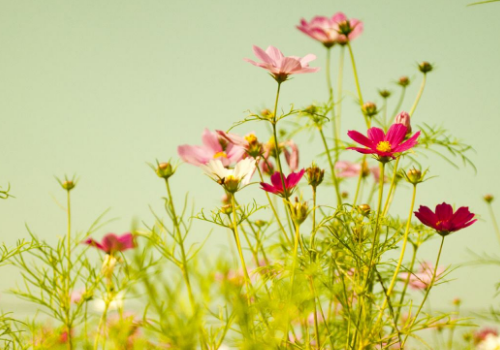
How much is a jin of gesang flower seeds:
Gesang flower seed price: divided into tall-stem and short-stem types, single-color and mixed-color; the price per jin is about 50-80 yuan.
That is all for the planting methods of gesang flower seeds. Now you know the price, right!
Potentilla fruticosa (shrubby cinquefoil) Potentilla fruticosa illustrated guide: how to grow Potentilla fruticosa / how to propagate Potentilla fruticosa
Potentilla fruticosa profilePotentilla fruticosa
Aliases: Jinlamei, Jinlaomei
Classification: herbaceous flowering plant
Family and genus: Plantae, Angiosperms, Dicotyledoneae, Rosales, Rosaceae, Potentilla
Full bloom period: summer
Potentilla fruticosa (scientific name: Potentilla fruticosa), also known as Jinlaomei, is called gesang flower in Tibetan (Tibetan pinyin: Gaisang Mêdog, Wylie: bsKal bZang Me Tog, transliterated "gesang meiduo"), and is the city flower of Lhasa. It is a deciduous shrub in the family Rosaceae, genus Potentilla, widely distributed in alpine regions from the subarctic to the north temperate zone of the Northern Hemisphere.
How to grow Potentilla fruticosa and precautions, an introduction to Potentilla fruticosa
Potentilla fruticosa (scientific name: Potentilla fruticosa), also known as Jinlaomei, is called gesang flower in Tibetan (Tibetan pinyin: Gaisang Mêdog, Wylie: bsKal bZang Me Tog, transliterated "gesang meiduo"), and is the city flower of Lhasa. It is a deciduous shrub in the family Rosaceae, genus Potentilla, widely distributed in alpine regions from the subarctic to the north temperate zone of the Northern Hemisphere.
Morphological characteristics of Potentilla fruticosa: branches
Potentilla fruticosa is a shrub, 0.5-2 m tall, much branched, with bark peeling longitudinally. Branchlets are reddish-brown, covered with long soft hairs when young.
Leaves
Potentilla fruticosa has pinnately compound leaves, with 2 pairs of leaflets, rarely 3 leaflets; the base of the upper pair of leaflets extends downward and merges with the leaf rachis; the petiole is covered with sericeous hairs or sparsely soft hairs; leaflets are oblong, obovate-oblong, or ovate-lanceolate, 0.7-2 cm long, 0.4-1 cm wide, entire, with flat margins, acute or rounded-obtuse at the apex, cuneate at the base, green on both sides, sparsely covered with sericeous hairs or soft hairs, or nearly glabrous when shed; stipules are membranous, broad and large, covered with long soft hairs on the outside or shed.
Flowers
Potentilla fruticosa flowers are solitary or several born at the branch tips; the pedicel is densely covered with long soft hairs or sericeous hairs; flowers are 2.2-3 cm in diameter; sepals are ovate, acute to shortly acuminate at the apex; epicalyx segments are lanceolate to obovate-lanceolate, acuminate to acute at the apex, nearly equal in length to the sepals, sparsely covered with sericeous hairs on the outside; petals are yellow, broadly obovate, rounded-obtuse at the apex, longer than the sepals; the style is nearly basal, club-shaped, slightly slender at the base, constricted at the top, with an enlarged stigma.
The flowering period of Potentilla fruticosa is May-July.
Fruit
The achene of Potentilla fruticosa is nearly ovate, brownish-brown, 1.5 mm long, covered with long soft hairs on the outside.
The fruiting period of Potentilla fruticosa is July-September.
Ecological habits of Potentilla fruticosa
Potentilla fruticosa grows in alpine shrublands, alpine meadows, hillsides, roadsides, and other places at an altitude of 3600-4800 m.
Potentilla fruticosa can tolerate low temperatures of -50°C. It likes slightly acidic to neutral, well-drained moist soil, and also tolerates drought and poor, thin soil.
Cultivation techniques for Potentilla fruticosa
Sowing and seedling raising: Soil preparation. Before land preparation, water thoroughly once. When the soil is suitably moist, carry out rotary tillage to a depth of 20-25 cm, and pass the top 10 cm of soil through a 1 cm mesh sieve. Soil disinfection: spread carbofuran on the seedbed at a rate of 45 g/sq m, and shallow-plow once to mix the insecticide in to control underground pests. Ten days before sowing, spray the seedbed with a 1% potassium permanganate aqueous solution to sterilize and disinfect the seedbed. Prepare nutrient soil: The culture soil is used as the subsoil under the sowing furrow and as the soil covering the seeds. Prepare the nutrient soil in the ratio river sand : peat : garden soil = 15 : 40 : 45, and sterilize it by drying at a high temperature of 105°C for 4 hours. The pH of the culture soil is 6.37. Seed germination: Soak the seeds in clean water at an initial temperature of 50°C, using a water volume 3 times the seed volume, let it cool naturally to room temperature, and soak for 24 hours. Remove the seeds and transfer them to a constant-temperature incubator, and germinate at a constant 25°C until 20%-80% or more of the seeds show white sprouts. Sowing: Use the water-settled drill sowing method, with a sowing period in mid-April. Pour enough bottom water into the sowing furrow, and after the water infiltrates, place 1-2 cm of culture soil underneath. Mix the seeds with wet sand at 1:2, sow them in the sowing furrow, and cover with culture soil to a thickness of about 0.2 cm. Cover the sowing bed surface with agricultural plastic film to help retain moisture and maintain a constant temperature.
Propagation methods
Seed selection
Before sowing, the seeds must first be selected. Whether the seeds are well chosen directly affects whether sowing can succeed.
1. It is best to use seeds collected in the current year. The longer the seeds are stored, the lower their germination rate.
2. Choose seeds that are plump and free of damage or deformity.
3. Choose seeds free of pests and diseases.
Disinfection
Disinfection includes two concepts: one refers to disinfecting the seeds, and the other refers to disinfecting the sowing substrate. For household seed disinfection, it is common to soak the seeds in hot water at about 60°C for a quarter of an hour, then use warm water to promote germination for 12-24 hours. To disinfect the sowing substrate, the best method is to put it in a pot and heat it while stirring; any pests or diseases will be killed by the heat.
Germination promotion
Soak the seeds in warm water (about the same temperature as face-washing water) for 12-24 hours, until the seeds absorb water and swell. For very common seeds that germinate easily, this step can be skipped.
Sowing
For tiny seeds that are difficult to pick up with hands or other tools, you can moisten one end of a toothpick with water and stick the seeds one by one onto the surface of the substrate, then cover with substrate 1 cm thick, then place the sown flower pot into water with a depth of 1/2-2/3 of the pot height, and let the water slowly soak upward (this method is called the "pot immersion method"); for larger seeds that can be picked up by hand or other tools, place the seeds directly into the substrate and sow them in holes at a spacing of 3 x 5 cm. After sowing, cover with substrate to a thickness 2-3 times that of the seeds. After sowing, use a sprayer or a fine-holed sprinkler to moisten the sowing substrate. Later, when the potting soil is slightly dry, sprinkle water again. Still be careful not to water too forcefully, so as not to wash the seeds out.
Management after sowing
After sowing in late autumn, early spring, or winter, when encountering cold waves and low temperatures, you can wrap the flower pot in plastic film to help keep it warm and moist; after the seedlings emerge, uncover the film promptly, and let the seedlings receive sunlight before 9:30 every morning, or after 3:30 in the afternoon, otherwise the seedlings will grow very weak; after most of the seeds have emerged, appropriate thinning is needed: pull out diseased and unhealthy seedlings so that the remaining seedlings have a certain amount of space from each other; when most of the seedlings have grown 3 or more leaves, they can be transplanted.
Planting methods: cuttings
Softwood cuttings are often taken in late spring and early autumn using current-year branches, or hardwood cuttings are taken in early spring using last-year branches.
Cutting substrate
This refers to nutrient soil, river sand, peat soil, and other materials used for cuttings. For household cuttings, limited conditions make it difficult to obtain an ideal cutting substrate. Medium-coarse river sand can also be used, but it should be rinsed several times with clean water before use. Sea sand and river sand from saline-alkali areas should not be used; they are not suitable for the growth of flowering plants.
Selection of cutting branches
For softwood cuttings, during the period of vigorous growth from late spring to early autumn, select robust current-year branches as cuttings. After cutting the branches off, choose the sturdy parts and cut them into sections 5-15 cm long, each section carrying more than 3 leaf nodes. When cutting the cuttings, note that the upper cut should be made horizontally about 1 cm above the topmost leaf node, and the lower cut should be made diagonally about 0.5 cm below the bottommost leaf node; both upper and lower cuts should be smooth (the knife should be sharp). For hardwood cuttings, after temperatures rise in early spring, select robust last-year branches as cuttings. Each cutting usually retains 3-4 nodes, and the cutting method is the same as for softwood cuttings.
Management after cutting
Temperature
The optimal temperature for cutting rooting is 20°C-30°C. Below 20°C, cuttings root with difficulty and slowly; above 30°C, the upper and lower cuts of the cuttings are easily infected by pathogens and rot, and the higher the temperature, the greater the proportion of rot. When low temperatures are encountered after cutting, the main measure for keeping warm is to wrap the flower pot or container used for cuttings with film; when the temperature is too high after cutting, the main cooling measure is to shade the cuttings, blocking 50-80% of sunlight, and at the same time spray the cuttings 3-5 times a day; on sunny days with higher temperatures, spray more often, while on cloudy and rainy days with lower temperatures and higher humidity, spray less often or not at all.
Humidity
After cutting, the relative air humidity must be maintained at 75-85%. The basic requirement for cutting rooting is that before the cuttings root, they must be kept fresh and tender enough to carry out photosynthesis to produce rooting substances. However, cuttings that have not rooted cannot absorb enough water to maintain their internal water balance. Therefore, spraying must be used to reduce water evaporation from the cuttings: under shaded conditions, spray the cuttings 3-5 times a day; the higher the temperature on sunny days, the more frequent the spraying; the lower the temperature on cloudy and rainy days, the less frequent the spraying or no spraying. However, excessive spraying makes the cuttings prone to infection by pathogens and rot, because many kinds of pathogens exist in water.
Light
Cutting propagation cannot do without sunlight, because the cuttings still need to continue photosynthesis to produce nutrients and rooting substances to supply their rooting needs. However, the stronger the light, the higher the temperature inside the cuttings, the more vigorous the transpiration of the cuttings, and the more water they consume, which is unfavorable for the survival of the cuttings. Therefore, after cutting, 50-80% of sunlight must be blocked. After the root system grows out, gradually remove the shade net: on sunny days, remove the shade net at 4:00 every afternoon, and cover it again before 9:00 the next morning.
Layering propagation
Select a robust branch, and from about 15-30 cm below the top shoot, peel off a ring of bark; the width of the wound after peeling is about 1 cm, and the depth should be just enough to remove the outer bark. Cut a piece of film 10-20 cm long and 5-8 cm wide, place some moistened garden soil on it, and wrap and bind the girdled part as if bandaging a wound, tying the upper and lower ends of the film tightly with a bulge in the middle. Roots form after about four to six weeks. After rooting, cut off the branch together with the root system, and it becomes a new plant.
Potting or transplanting
When potting small seedlings or repotting large plants that have been grown for several years, first place 2-3 cm of coarse granular substrate at the bottom of the pot as a drainage layer, sprinkle a layer of fully decomposed organic fertilizer on top as base fertilizer, about 1-2 cm thick, then cover with a thin layer of substrate about 1-2 cm thick, and then place the plant in, so as to separate the fertilizer from the root system and avoid burning the roots. After potting, water thoroughly once, and keep it in a shaded environment for a week. When transplanting small seedlings, first dig the planting hole, sprinkle a layer of organic fertilizer at the bottom of the planting hole as bottom fertilizer (base fertilizer), about 4-6 cm thick, then cover with a layer of soil and place the seedling in, so as to separate the fertilizer from the root system and avoid burning the roots. After placing the seedling in, backfill the soil, cover the root system, firm the soil with your feet, and water thoroughly once.
Humidity management
It likes a moist or semi-dry climate environment, and requires the relative air humidity of the growing environment to be 50-70%. When the relative air humidity is too low, the lower leaves turn yellow and fall off, and the upper leaves lose their luster.
Temperature management
Because it originates from subtropical regions, it has strict requirements for winter temperature, and stops growing when the ambient temperature is below 8°C.
Light management
It has a strong ability to adapt to light. When keeping it indoors, place it in a place with bright light as much as possible, such as a well-lit living room, bedroom, study, and similar places. After keeping it indoors for a period (about one month), move it outdoors to a shaded place (with warmth-retaining conditions in winter) for a period (about one month), and alternate back and forth in this way.
Fertilizer and water management
For potted plants, in addition to adding organic fertilizer when potting, appropriate fertilizer and water management should also be carried out during ordinary care. Spring, summer, and autumn: These three seasons are its peak growth seasons. Fertilizer and water management follows the cycle "Huabao" - clean water - "Huabao" - clean water, with an interval of about 1-4 days; on sunny days or during high temperatures, the interval is shorter, while on cloudy and rainy days or during low temperatures, the interval is longer or no watering is done. Winter: During the winter dormant period, the main task is to control fertilizer and water.
For field-planted plants, in spring and summer, according to drought conditions, apply fertilizer and water 2-4 times: first open a small trench in a ring 30-100 cm away from the root crown (the larger the plant, the farther from the root crown), with the trench width and depth both 20 cm. Sprinkle 25-50 jin of organic fertilizer into the trench, or 1-5 liang of granular compound fertilizer (chemical fertilizer), then water thoroughly. After winter begins and before spring begins, apply fertilizer once more in the above manner, but do not water.
Pruning
In winter, when the plant enters dormancy or semi-dormancy, cut off weak, pest-damaged, dead, and overly dense branches. Branch organization can also be combined with cuttings.
Repotting
As long as it is cared for properly, it will grow very quickly. When it grows to a certain size, consider giving it a larger pot so that it can continue to grow vigorously. For the culture soil and component ratios used for repotting, one of the following can be chosen: vegetable garden soil : cinder = 3:1; or garden soil : medium-coarse river sand : sawdust (mushroom residue) = 4:1:2; or one of paddy soil, pond mud, and leaf mold.
Removing from the pot
Place the flower to be repotted on the ground, first tap the sides of the pot lightly with your palm so that the root system is shaken and separates from the pot wall, then turn the flower pot upside down and place it on your left hand, gently pinch the plant between the index finger and middle finger of your left hand, brace your wrist and fingertips against the rim of the pot, tap the bottom of the pot with your right hand, then use your thumb to push the root soil downward from the bottom hole to let the plant come out. After it comes out, gently tap the potting soil with both palms to let excess soil fall off.
Flower pot preparation
Choose a flower pot of appropriate size. Cover the bottom hole of the pot with two pieces of tile or thin foam pieces, ensuring both that the potting soil is not washed out by water and that excess water can flow out in time. On top of the tile or foam, place a layer of expanded clay pellets or crushed red bricks as a drainage layer, about 2-3 cm thick. On the drainage layer, place organic fertilizer, about 1-3 cm thick. On the fertilizer, place a thin layer of substrate, about 2 cm thick, to separate the root system from the fertilizer. Finally, put the plant in, fill with nutrient soil, and leave about 2-3 cm from the pot rim.
Variety classification of Potentilla fruticosa
Potentilla fruticosa is widely distributed in the mountains of the north temperate zone, with records in Asia, Europe, and America. The morphology of branches, leaves, and flowers varies greatly. Some consider the variants and forms to belong to the same species, some consider those produced in Europe and America to be the same species with North America as its distribution center, and those produced in eastern Asia to be another species, with the main difference being leaf texture and indumentum. Those produced in Europe and America have thin, soft leaves, sparse veins, and fewer hairs on both surfaces, while those produced in Asia have harder, thicker leaves, dense veins, densely covered with sericeous hairs on the upper surface, and hairless or slightly soft-haired on the lower surface. We believe these leaf characteristics are greatly influenced by the ecological environment and can only be regarded as variation below the species level, and cannot be treated as independent species. In particular, specimens collected in ** and Heilongjiang and other provinces and regions of our country are not easy to distinguish from European specimens, while those produced in the southwestern provinces of our country have more appressed hairs on the upper surface of the leaves, or are densely covered with white sericeous hairs on the lower surface, and it is more appropriate to reclassify them as a variety.
Potentilla fruticosa var. rigida(variety)
The main difference between this variety and the original variety is that the upper surface of the leaflets is densely covered with appressed white soft hairs, the reticulate veins on the lower surface are more obvious and prominent, sparsely covered with soft hairs or hairless, and the margins often curl downward. Flowering and fruiting period is July-August.
Produced in Sichuan, Yunnan, and Tibet. It grows on hillside grasslands, in shrublands, or on rocks in forests, at an altitude of 2600-4600 m.
Potentilla fruticosa var. albicans (Economic Plant Handbook)
The lower surface of the leaflets of this variety is densely covered with silvery-white tomentum or sericeous hairs, making it easy to distinguish from the original variety. Flowering and fruiting period is June-September.
Produced in **, Sichuan, Yunnan, and Tibet. It grows in alpine grasslands, dry hillsides, forest edges, and shrublands, at an altitude of 400-**** m.
Potentilla fruticosa var. pumila(variety)
Cushion shrub, densely clustered, 5-10 cm tall. Leaflets 5, elliptical, 3-5 mm long, 3-4 mm wide, densely covered with appressed hairs on the upper surface, with obvious reticulate veins on the lower surface, nearly hairless or sparsely soft-haired, leaf margins curled back; single flowers terminal, flower diameter 1-1.5 cm, nearly sessile or with a very short stalk, easily distinguished from other varieties. Flowering period is June.
Produced in Tibet. It grows in alpine meadows, shrublands, and gravel slopes, at an altitude of 4200-5000 m.
Distribution area of Potentilla fruticosa
Potentilla fruticosa is produced in Heilongjiang, Jilin, Liaoning, Inner Mongolia, Hebei, Shanxi, Shaanxi, Gansu, **, Sichuan, Yunnan, and Tibet. It grows on hillside grasslands, gravel slopes, shrublands, and forest edges, at an altitude of 1000-4000 m.
Potentilla fruticosa is widely distributed in alpine regions from the subarctic to the north temperate zone of the Northern Hemisphere. It is extremely cold-hardy and can endure low temperatures of -50°C, so it is also found in Siberia and even the Arctic region. Potentilla fruticosa: produced in Qinghai, Gansu, Sichuan, and Yunnan; distributed in Northeast and North China; widely distributed in the north temperate zone. On the Qinghai-Tibet Plateau of our country, Tibetans call Potentilla fruticosa "gesang meiduo", that is, gesang flower. It grows among rocks or in shrublands on mountain tops. Deciduous shrub. Odd-pinnate compound leaves, with silky soft hairs on both sides.
Commonly present: Produced in Northeast, North, Northwest, and Southwest China; also distributed in Japan, Mongolia, Europe, and North America. It has been introduced at the Hebei Yanqing Horticultural Center.
Medicinal or dietary therapeutic value of Potentilla fruticosa
The medical information and health dietary therapy information on Huhua Network is for reference only and cannot be used as a basis for diagnosis or medical treatment. For any health problem, consult professional medical personnel, and for the treatment of any disease, please follow doctor's orders.
Ultimate flower-protecting mission: To love yourself, start from reality and strictly follow doctor's orders. Toward illness, do not be careless, do not delay, do not give up hope, face it bravely, warm the silent world with love, and care for the flower field in your heart with your heart.
Potentilla fruticosa has dense branches and leaves and bright yellow flowers. It is suitable as an ornamental shrub in gardens, and also looks very beautiful as a low hedge. The leaves and fruits contain tannins and can be used to extract tanning extract. The tender leaves can be used as a substitute for tea. The flowers and leaves are used as medicine and have the effects of strengthening the spleen, resolving dampness, clearing summer heat, and regulating menstruation. In the mountainous areas of Inner Mongolia, it is a medium-grade forage plant, and camels like to eat it most. Tibetans widely use it as a building material, filling it under eaves or above and below doors and windows.
Medicinal value
Chemical composition
The branches of Potentilla fruticosa contain flavonoids (689 mg%, namely quercetin, kaempferol, and cyanidin), tannins, and quinones, as well as ellagic acid, caffeic acid, sinapic acid, and ferulic acid. The leaves, bark, and xylem contain large amounts of tannins, and the flowers contain a small amount of tannins; these tannins belong to gallotannins and catechin tannins. Fresh leaves contain vitamin C 145.9-223.3 mg%, and dried leaves contain 292.4-380.4 mg%, and they respectively contain carotene 8.35 mg% and 15.12 mg%.
Harvest time
1. Potentilla fruticosa: flowers June-September.
2. Potentilla parvifolia: flowering period July-August.
Collection and processing
For traditional Chinese medicine, collect inflorescences and leaves during the summer flowering period, and dry them separately in the shade for later use. For Mongolian medicine, harvest stems and branches with flowers in summer and autumn, dry them in the shade, and use them raw or charred.
Medicinal parts
Flowers and leaves are used as medicine.
Storage method
Collect flowers and leaves at the peak flowering period, remove old branches, and dry in the sun.
Nature, flavor, and functions
Bitter in taste, cool in nature. Strengthens the spleen and resolves dampness. Leaves: slightly sweet in taste, neutral in nature. Clears summer heat, benefits the brain and clears the heart, strengthens the stomach and aids digestion, regulates menstruation. In Mongolian medicine, sweet and astringent in taste, neutral in nature. Aids digestion, relieves cough, reduces swelling; the ash: can dry "Xiri Wusu".
Indications
Treats indigestion, edema, leukorrhea with reddish-white discharge, and mastitis. Leaves: treat heatstroke, dizziness, food stagnation, and irregular menstruation. In Mongolian medicine, treats indigestion, cough, edema, "Xiri Wusu" syndrome, and mastitis.
Dosage and Usage
In traditional Chinese medicine, 6-10 grams, decocted in water, or steeped in water as a tea substitute. In Mongolian medicine
The Effects and Uses of Shrubby Cinquefoil
Other uses: The branches and leaves of shrubby cinquefoil are soft, and in spring horses and sheep enjoy eating them, as do cattle. Its crude protein and fat content are both high, and its total energy is also relatively high. Therefore, in areas where high-quality forage grasses are scarce, shrubby cinquefoil is still a forage grass with feeding value.
According to measurements taken in 1977, when the coverage of shrubby cinquefoil is 30%-50%, the yield of dried stems and leaves can reach 708.8 kg/hectare, making it a relatively high-yielding forage grass in alpine regions.
Shrubby cinquefoil plants are compact, with brilliantly colored flowers and a long flowering period, making them a good flowering ornamental tree species. They can be planted in alpine gardens or rock gardens, and can also be planted as hedges.
Cultural Background of Shrubby Cinquefoil: Verification in Medical Texts
"Blue Beryl" records: "Bannage has red stems, yellow flowers, and small leaves; burned to ash, it treats breast swelling and pain in women and reduces ascites."
"Jingzhu Bencao" records that Bannage treats breast swelling and pain in women. This product has woody stems, yellow-brown in color, and small leaves. It is divided into yellow and white types. The white one is Bangaer (silver cinquefoil), which bears white flowers. The yellow one is called Bannage (shrubby cinquefoil), which bears yellow flowers, and is further divided into large and small types; the large one is the same as silver cinquefoil. The small one is about one zha (about 30 cm) tall, with slender, smooth stems. Both large types grow on both the sunny and shady sides of high ground, while the small type of shrubby cinquefoil grows in waterlogged flats. The ash of all three can dry yellow water. Rangjun Duojie said: "Bannage (regardless of yellow or white) treats indigestion and lung disease." The product referred to in the above records as the yellow-flowered type is shrubby cinquefoil.
Shrubby Cinquefoil Images
What Family Does Shrubby Cinquefoil Belong To? Cultivation Methods for Shrubby Cinquefoil
Shrubby cinquefoil (scientific name: Potentilla fruticosa), also known as golden hardhack, is called Gaisang flower in Tibetan (Tibetan pinyin: Gaisang Mêdog, Wylie: bsKal bZang Me Tog, transliterated as “Gaisang Meiduo”), and is the city flower of Lhasa. Many people do not know what family shrubby cinquefoil belongs to. Shrubby cinquefoil belongs to the Rosaceae family. Now let's take a look at some related knowledge about shrubby cinquefoil with the editor.
Introduction to Shrubby Cinquefoil
Shrubby cinquefoil (scientific name: Potentilla fruticosa), also known as golden hardhack, is called Gaisang flower in Tibetan (Tibetan pinyin: Gaisang Mêdog, Wylie: bsKal bZang Me Tog, transliterated as “Gaisang Meiduo”), and is the city flower of Lhasa. It is a deciduous shrub in the genus Potentilla of the Rosaceae family, widely distributed in alpine regions from the subarctic to the north temperate zone of the Northern Hemisphere.
I. Morphological Characteristics
Branches: Shrubby cinquefoil is a shrub, 0.5-2 m tall, much branched, with bark peeling off longitudinally. Branchlets are reddish-brown, covered with long soft hairs when young.
Leaves: Shrubby cinquefoil has pinnately compound leaves, with 2 pairs of leaflets, rarely 3 leaflets; the base of the upper pair of leaflets extends downward and merges with the leaf rachis; the petiole is covered with silky hairs or sparse soft hairs; the leaflets are oblong, obovate-oblong, or ovate-lanceolate, 0.7-2 cm long, 0.4-1 cm wide, with entire margins, flat edges, acute or rounded-obtuse apex, wedge-shaped base, green on both sides, sparsely covered with silky hairs or soft hairs or nearly hairless when shed; stipules are membranous, broad, covered with long soft hairs outside or shed.
Flowers: Shrubby cinquefoil bears single flowers or several flowers at the top of branches; the pedicel is densely covered with long soft hairs or silky hairs; flowers are 2.2-3 cm in diameter; sepals are ovate, with apex acute to shortly acuminate; epicalyx segments are lanceolate to obovate-lanceolate, with apex acuminate to acute, nearly equal in length to the sepals, sparsely covered with silky hairs outside; petals are yellow, broadly obovate, with rounded-obtuse apex, longer than the sepals; the style is nearly basal, club-shaped, slightly slender at the base, constricted at the top, with an enlarged stigma. The flowering period of shrubby cinquefoil is May to July.
Fruit: The achene of shrubby cinquefoil is nearly ovate, brownish-brown, 1.5 mm long, covered with long soft hairs outside. The fruiting period of shrubby cinquefoil is July to September.
II. Ecological Habits
Shrubby cinquefoil grows in alpine shrublands, alpine meadows, hillsides, and roadsides at an altitude of 3600-4800 m.
Shrubby cinquefoil can tolerate low temperatures of -50°C. It prefers slightly acidic to neutral, well-drained moist soil, and is also tolerant of drought and barren conditions.
Cultivation Methods for Shrubby Cinquefoil
I. Cultivation Techniques for Shrubby Cinquefoil
Sowing and seedling raising: Soil preparation - Water thoroughly once before land preparation, then rotary till when the soil moisture is suitable, with a depth of 20-25 cm; pass the top 10 cm of soil through a mesh sieve with a pore diameter of 1 cm. Soil disinfection - Spread carbofuran on the seedbed at a rate of 45 g/m2, then shallow plow once to mix the insecticide for controlling underground pests. Ten days before sowing, spray a 1% potassium permanganate aqueous solution on the seedbed for sterilization and disinfection. Preparing nutrient soil - The culture soil used for the subsoil in the sowing furrow and for covering the seeds is prepared by mixing river sand : peat : garden soil = 15 : 40 : 45, then sterilized by drying at a high temperature of 105°C for 4 hours. The pH value of the culture soil is 6.37. Seed germination - Soak the seeds in clean water at an initial temperature of 50°C, using a water volume 3 times the seed volume, let it cool naturally to room temperature, and soak for 24 hours. Remove the seeds and transfer them to a constant-temperature incubator, germinating at a constant 25°C until 20%-80% or more of the seeds have sprouted white. Sowing - Use the furrow sowing method with bottom watering, with the sowing period in mid-April. Pour sufficient bottom water into the sowing furrow, and after the water seeps down, place 1-2 cm of culture soil as the subsoil. Mix the seeds with wet sand at 1:2, sow in the furrow, and cover with culture soil at a thickness of about 0.2 cm. Cover the sowing bed surface with agricultural plastic film to help retain moisture and maintain a constant temperature.
II. Propagation Methods
1. Seed Selection
Before sowing, the seeds must first be selected. Whether the seeds are selected well or not directly affects whether sowing can succeed.
1) It is best to use seeds harvested in the current year. The longer the seeds are stored, the lower their germination rate.
2) Choose seeds that are plump and free from damage or deformity.
3) Choose seeds free from pests and diseases.
2. Disinfection
Disinfection includes two concepts: one refers to disinfecting the seeds, and the other refers to disinfecting the sowing substrate. For household seed disinfection, it is common to soak the seeds in hot water at about 60°C for a quarter of an hour, then use warm water to promote germination for 12-24 hours. To disinfect the sowing substrate, the best method is to heat it in a pot, which can scald all pests and diseases to death.
3. Germination Promotion
Soak the seeds in warm water (temperature similar to face-washing water) for 12-24 hours, until the seeds absorb water and swell. For very common seeds that germinate easily, this step can be skipped.
4. Sowing
For tiny seeds that are difficult to pick up with hands or other tools, moisten one end of a toothpick with water and stick the seeds one by one onto the surface of the substrate, then cover with substrate 1 cm thick. Then place the sowing pot into water, with the water depth at 1/2-2/3 of the pot height, allowing the water to slowly soak upward (this method is called the “pot soaking method”); for larger seeds that can be picked up by hand or other tools, place the seeds directly into the substrate and sow them at a spacing of 3×5 cm. After sowing, cover with substrate at a thickness 2-3 times that of the seeds. After sowing, use a sprayer or a fine-hole watering can to moisten the sowing substrate. Later, when the pot soil is slightly dry, water again, still taking care not to water too forcefully, so as not to wash the seeds away.
III. Management After Sowing
After sowing in late autumn, early spring, or winter, when encountering cold waves and low temperatures, the flower pot can be wrapped in plastic film to help preserve heat and moisture; after the seedlings emerge, the film should be removed promptly, and the seedlings should be exposed to sunlight before 9:30 a.m. each day, or after 3:30 p.m., otherwise the seedlings will grow very weak; after most of the seeds have sprouted, appropriate thinning is needed: pull out diseased and unhealthy seedlings so that the remaining seedlings have a certain amount of space from each other; when most of the seedlings have grown 3 or more leaves, they can be transplanted.
IV. Planting Methods
1. Cuttage
Softwood cuttings are often taken in late spring and early autumn using current-year branches, or hardwood cuttings are taken in early spring using last-year branches.
2. Cutting Substrate
This refers to the nutrient soil, river sand, peat soil, or other materials used for cuttings. For household cuttings, due to limited conditions, it is difficult to obtain an ideal cutting substrate. Medium-coarse river sand can also be used, but it should be rinsed several times with clean water before use. Sea sand and river sand from saline-alkali areas should not be used, as they are not suitable for the growth of flowering plants.
3. Selection of Cutting Branches
When performing softwood cuttings, from late spring to early autumn when the plant is growing vigorously, select robust current-year branches as cuttings. After cutting off the branches, choose the sturdy parts and cut them into sections 5-15 cm long, each section bearing more than 3 leaf nodes. When cutting the cuttings, note that the upper cut should be made flat about 1 cm above the topmost leaf node, and the lower cut should be made obliquely about 0.5 cm below the bottommost leaf node. Both the upper and lower cuts should be smooth (the knife should be sharp). When performing hardwood cuttings, after the temperature rises in early spring, select robust last-year branches as cuttings. Each cutting usually retains 3-4 nodes, and the cutting method is the same as for softwood cuttings.
4. Management After Cutting
Temperature: The optimal temperature for rooting of cuttings is 20°C-30°C. Below 20°C, rooting of cuttings is difficult and slow; above 30°C, the upper and lower cuts of the cuttings are prone to infection by pathogens and rot, and the higher the temperature, the greater the proportion of rot. When low temperatures occur after cutting, the main measure for heat preservation is to wrap the flower pot or container used for cuttings with plastic film; when the temperature is too high after cutting, the main cooling measure is to shade the cuttings, blocking 50%-80% of sunlight, and at the same time spray the cuttings 3-5 times a day. On sunny days with higher temperatures, spray more frequently; on cloudy and rainy days with lower temperatures and higher humidity, spray less frequently or not at all.
Humidity: After cutting, the relative air humidity must be maintained at 75%-85%. The basic requirement for rooting of cuttings is that before the cuttings root, they must remain fresh and tender so they can carry out photosynthesis to produce rooting substances. However, cuttings that have not rooted cannot absorb enough water to maintain their internal water balance. Therefore, spraying must be used to reduce water evaporation from the cuttings: under shaded conditions, spray the cuttings 3-5 times a day. On sunny days, the higher the temperature, the more frequent the spraying; on cloudy and rainy days, the lower the temperature, the less frequent the spraying or no spraying. However, excessive spraying makes the cuttings prone to infection by pathogens and rot, because many kinds of pathogens exist in water.
Light: Cutting propagation cannot do without sunlight, because the cuttings still need to continue photosynthesis to produce nutrients and rooting substances to supply their rooting needs. However, the stronger the light, the higher the temperature inside the cuttings, the more vigorous the transpiration of the cuttings, and the more water they consume, which is not conducive to the survival of the cuttings. Therefore, after cutting, 50%-80% of sunlight must be blocked. After the root system grows out, gradually remove the shading net: on sunny days, remove the shading net at 4:00 p.m. each day, and cover it again before 9:00 a.m. the next day.
5. Layering Propagation
Select a robust branch, and from about 15-30 cm below the top shoot, peel off a ring of bark, with the wound width after peeling about 1 cm, and the depth just enough to remove the outer bark. Cut a piece of plastic film 10-20 cm long and 5-8 cm wide, place some moistened garden soil on it, and wrap the girdled part as if bandaging a wound, tying the upper and lower ends of the film tightly, with the middle bulging. Roots will form in about four to six weeks. After rooting, cut off the branch together with the root system, and it becomes a new plant.
V. Potting or Transplanting
When potting small seedlings or repotting large plants that have been grown for several years, first place a 2-3 cm thick layer of coarse substrate at the bottom of the pot as a drainage layer, sprinkle a layer of fully decomposed organic fertilizer on top as base fertilizer, about 1-2 cm thick, then cover with a thin layer of substrate about 1-2 cm thick, and then place the plant in, so as to separate the fertilizer from the root system and avoid burning the roots. After potting, water thoroughly once and place in a shaded environment for one week of care. When transplanting small seedlings, first dig the planting hole, sprinkle a layer of organic fertilizer at the bottom of the planting hole as bottom fertilizer (base fertilizer), about 4-6 cm thick, then cover with a layer of soil and place the seedling in, so as to separate the fertilizer from the root system and avoid burning the roots. After placing the seedling in, backfill the soil to cover the root system, press the soil firm with your foot, and water thoroughly once.
Humidity management: It likes a moist or semi-dry climate environment, and requires the relative air humidity of the growing environment to be 50%-70%. When the relative air humidity is too low, the lower leaves turn yellow and fall off, and the upper leaves lose their luster.
Temperature management: Because it originates from subtropical regions, it has strict requirements for winter temperature, and stops growing when the ambient temperature is below 8°C.
Light management: It has strong adaptability to light. When maintaining it indoors, place it in a place with bright light as much as possible, such as a well-lit living room, bedroom, study, and similar places. After maintaining it indoors for a period (about one month), move it outdoors to a shaded place (with heat preservation conditions in winter) for a period of care (about one month), and alternate in this way.
Fertilizer and water management: For potted plants, in addition to adding organic fertilizer when potting, appropriate fertilizer and water management should also be carried out during regular care. Spring, summer, and autumn - These three seasons are its peak growing seasons. Fertilizer and water management follows the cycle of “Huabao”——clear water——“Huabao”——clear water, with an interval of about 1-4 days. On sunny days or during high temperatures, the interval is shorter; on cloudy and rainy days or during low temperatures, the interval is longer or no watering is done. Winter - During the winter dormant period, the main task is to control fertilizer and water.
For field-planted plants, in spring and summer, according to drought conditions, apply fertilizer and water 2-4 times: first open a small ditch in a ring 30-100 cm away from the root crown (the larger the plant, the farther from the root crown), with the ditch width and depth both 20 cm. Sprinkle 25-50 jin of organic fertilizer into the ditch, or 1-5 liang of granular compound fertilizer (chemical fertilizer), then water thoroughly. After winter begins and before spring begins, apply fertilizer once more according to the above method, but no watering is needed.
Pruning: In winter, when the plant enters dormancy or semi-dormancy, cut off weak, pest-damaged, dead, and overly dense branches. Branch organization can also be combined with cutting propagation.
Repotting: As long as it is cared for properly, it will grow very quickly. When it grows to a certain size, consider giving it a larger pot so it can continue to grow vigorously. For the culture soil and component ratios used for repotting, one of the following can be chosen: vegetable garden soil : furnace slag = 3:1; or garden soil : medium-coarse river sand : sawdust (mushroom residue) = 4:1:2; or one of paddy soil, pond mud, or leaf mold.
Depotting: Place the flower to be repotted on the ground, first pat the sides of the pot gently with your palm to make the root system vibrate and separate from the pot wall, then turn the flower pot upside down on your left hand, gently clamp the plant between your left index finger and middle finger, brace the rim of the pot with your wrist and fingertips, pat the bottom of the pot with your right hand, then use your thumb to push the root soil downward from the bottom hole to let the plant come out. After it comes out, pat the pot soil gently with both palms to let excess soil fall off.
Flower pot preparation: Choose a flower pot of appropriate size. Cover the bottom hole of the pot with two pieces of tile or thin foam pieces, ensuring both that the pot soil is not washed out by water and that excess water can flow out in time. On top of the tile or foam, place a layer of ceramsite or crushed red brick as a drainage layer, about 2-3 cm thick. On the drainage layer, place organic fertilizer, about 1-3 cm thick, and on the fertilizer place a thin layer of substrate, about 2 cm thick, to separate the root system from the fertilizer. Finally, place the plant in, fill with nutrient soil, and leave about 2-3 cm from the pot rim.
Variety Classification of Shrubby Cinquefoil
Shrubby cinquefoil is widely distributed in the mountains of the north temperate zone, with records in Asia, Europe, and America. The morphology of its branches, leaves, and flowers varies greatly. Some believe they are varieties and forms of the same species; some believe that those produced in Europe and America are the same species, with North America as their distribution center, while those produced in eastern Asia are another species, with the main differences being leaf texture and indumentum. Those produced in Europe and America have thin, soft leaves, sparse veins, and fewer hairs on both surfaces, while those produced in Asia have relatively hard and thick leaves, dense veins, densely covered with silky hairs on the upper surface, and hairless or slightly soft-hairy on the lower surface. We believe that these leaf characteristics are greatly influenced by the ecological environment and can only be regarded as variation below the species level, and cannot be regarded as independent species. In particular, specimens collected in China's ** and Heilongjiang and other provinces and regions are not easy to distinguish from European specimens, while those produced in the southwestern provinces of China have more appressed hairs on the upper surface of the leaves, or are densely covered with white silky hairs on the lower surface, making it more appropriate to reclassify them as varieties.
1. Appressed-hair Shrubby Cinquefoil (variety)
The main difference between this variety and the original variety is that the upper surface of the leaflets is densely covered with appressed white soft hairs, the reticulate veins on the lower surface are relatively obvious and prominent, sparsely covered with soft hairs or hairless, and the margins often roll downward. Flowering and fruiting period is July-August.
Produced in Sichuan, Yunnan, and Tibet. Grows on hillside grasslands, shrublands, or rocks in forests, at an altitude of 2600-4600 m.
White-haired Shrubby Cinquefoil (Economic Plant Handbook)
The lower surface of the leaflets of this variety is densely covered with silvery-white tomentum or silky hairs, making it easy to distinguish from the original variety. Flowering and fruiting period is June-September.
Produced in **, Sichuan, Yunnan, and Tibet. Grows in alpine grasslands, dry hillsides, forest margins, and shrublands, at an altitude of 400-**** m.
2. Cushion Shrubby Cinquefoil (variety)
Cushion shrub, densely tufted, 5-10 cm tall. Leaflets 5, elliptic, 3-5 mm long, 3-4 mm wide, densely covered with appressed hairs on the upper surface, with obvious reticulate veins on the lower surface, almost hairless or sparsely soft-hairy, leaf margins rolled back; single flowers terminal, flower diameter 1-1.5 cm, almost sessile or with a very short stalk, easy to distinguish from other varieties. Flowering period is June.
Produced in Tibet. Grows in alpine meadows, shrublands, and gravel slopes, at an altitude of 4200-5000 m.