How to grow Maxillaria tenuifolia, and is it a rare and precious variety?
The leaves of Maxillaria tenuifolia are linear, bright red or dark red in color, and it is famous for its chocolate fragrance. So what is the cultivation method for Maxillaria tenuifolia? Is it a rare and precious variety?
Cultivation methods for Maxillaria tenuifolia:
1. Growth habits. Maxillaria tenuifolia loves heat and prefers to survive in a high-temperature and high-humidity environment. It likes sunny days most. In spring, autumn, and winter, when the sunlight is mild, it can even receive a full day of light, but in summer it needs to avoid the harsh midday sunlight, or receive only half a day of light, and shade netting can also be used to block part of the sunlight.
2. Watering method. During cultivation, sphagnum moss can be used to retain water. Water when the sphagnum moss is half dry. If wrinkles appear on the pseudobulbs of Maxillaria tenuifolia, it indicates a lack of water, and watering at this time will restore them to their original state.
3. Fertilizing method. Maxillaria tenuifolia grows very quickly, so it needs more fertilizer. Therefore, in addition to regularly applying slow-release fertilizer, quick-acting fertilizer can be applied in spring and summer when growth is faster.
4. Propagation method. Propagation of Maxillaria tenuifolia is mainly by division, and spring and summer are more suitable. Groups of 3-5 bulbs can be used as one unit and planted separately into pots.
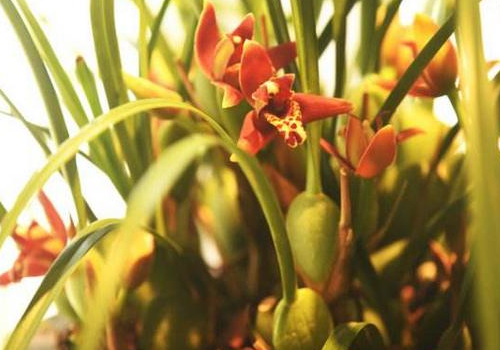
Is Maxillaria tenuifolia a rare and precious variety:
Maxillaria tenuifolia can be considered a rare and precious flower. It was only cultivated in our country in recent years. The flowers of Maxillaria tenuifolia are not especially outstanding, but its fragrance is very attractive. Planting just one can fill a room with fragrance. Therefore, Maxillaria tenuifolia is also praised as “one of the best-smelling orchids”.
Well, the above is some introduction about Maxillaria tenuifolia, and I hope it is helpful to everyone.
How to grow Euphorbia tirucalli|How to grow Euphorbia tirucalli|Euphorbia tirucalli picture appreciation
NO.1 How to grow Euphorbia tirucalli|Euphorbia tirucalli picture appreciation
Euphorbia tirucalliIts scientific name is Hylocereus undatus, also called night-blooming cereus, sword flower, seven-star sword flower, etc. It is a plant of the Cactaceae family, Hylocereus genus, so its flowers are also very similar to those of other flowers in the Cactaceae family, such as Epiphyllum, Schlumbergera, and cactus flowers.[Euphorbia tirucallihas thick stems, dark green, with three ridges. Its flowers are white, large in shape, and have a faint fragrance. Now let us enjoyEuphorbia tirucalli picturestogether.
Euphorbia tirucalli picture appreciation Various decorative flower ornaments! Highlight a high-end lifestyle taste! Click to view>>
For many office buildings and homes being renovated now, the content of toxic gases such as formaldehyde is relatively high. Perhaps many people do not know thatEuphorbia tirucallihas the effect of absorbing such toxic gases and is a very good air-purifying plant. So by masteringthe cultivation method of Euphorbia tirucalliyou can grow a pot yourself and place it in the office or at home.
Potted Euphorbia tirucalli picture Euphorbia tirucalliis a climbing plant with epiphytic habits. Outdoors, it can use aerial roots to attach to tree trunks, walls, and other buildings for growth. Indoor cultivationmethods for Euphorbia tirucallimainly include the following points:
1. Cultivation soil: Euphorbia tirucalli likes loose, fertile soil rich in humus. For potting soil, a culture soil made by mixing 1 part leaf mold and 1 part coarse sand and adding a small amount of decomposed chicken manure or cow manure can be used.
Euphorbia tirucalli picture appreciation
2. Light and temperature: In summer, it should be kept in a semi-shaded environment. In winter, it requires sufficient light and should be placed in a sunny spot indoors. The temperature should preferably be kept above 10°C. When the temperature is below 10°C, frost damage is likely to occur.
3. Watering and fertilizing: In spring, watering should not be excessive. Watering once every 10-15 days is enough, but water should be sprayed on the plant every day to increase air humidity. In summer, it should be watered once a day, preferably in the morning or evening. In winter, the pot soil should be kept moderately dry, and plastic film can be used to wrap the pot for protection during overwintering. The overwintering cultivation environment should maintain both a relatively high temperature and relatively high air humidity.
Dragon fruit_ Euphorbia tirucalli picture appreciation
In addition, to preventEuphorbia tirucalliplants from aging too early and to maintain vitality at the base, attention should also be paid to regular pruning. Cut off some old branches that do not bloom much, and also remove weak buds growing below so that the terminal buds develop fully and extend, resulting in more flowers.
Euphorbia tirucalli picture appreciation
After reading the editor's introduction toEuphorbia tirucalliand enjoyingEuphorbia tirucalli pictures, do you have some understanding ofEuphorbia tirucalliand knowhow to grow Euphorbia tirucalli?
Perhaps you also want to know:
● How to grow Epipremnum aureum and precautions
● When does Rosa chinensis bloom
● The symbolic meaning of lilies
● How to grow Hydrangea macrophylla
Extended: How to grow Euphorbia tirucalli / Euphorbia tirucalli cultivation methods / How to grow and prune Euphorbia tirucalli
NO.2 How to grow Ixora chinensis, and its role in the home
How Ixora chinensis matches home stylesIxora chinensis is also called Shandan, Maizimu, Yingdan, Baihong, Xiandan flower, Yingdan flower, water hydrangea, etc. Ixora chinensis has a beautiful plant shape, dense flowering, rich flower colors, and flowers to enjoy all year round. It is an important potted woody flower. Ixora chinensis is a common flower plant that can often be seen in roadside flower beds, and some people also choose potted planting to decorate their homes.
Ixora chinensis is the national flower of Myanmar. The plant is low, the flowers and leaves are elegant, and the flower colors are rich, including red, white, orange, yellow, and bicolor. It is planted outdoors in southern China and is suitable for courtyards, hotels, and scenic areas. With staggered heights and bright flower colors, the landscape effect is excellent. Ixora chinensis has a long flowering period and can bloom every year from March to December.
To date, it is widely used for potted ornamental purposes both in China and abroad, small and exquisite, with lush flowers and leaves. Potted plants are especially suitable for placement on windowsills, balconies, and living rooms. The clustered flowers have a sense of steadiness and overall boldness. Placing a pot of Ixora chinensis at a client's place displays a beautiful picture in which the petals, though small and shaped like melon seed shells, are numerous and often gathered in clusters on the branches, with bright red color like balls of blazing flames, making it one of the beautiful potted plants that decorate the home.
The bedroom is also a key decorative target for Ixora chinensis, displaying a cute style. Ixora chinensis is a very cute plant. If you see it every day when you wake up and before you sleep, your mood will surely feel much better because it is cute.
Ixora chinensis [Ixora chinensis] How to grow Ixora chinensis, and its role in the home
Feng shui applications of Ixora chinensisAccording to customs handed down in our country's history, dragon boat racing activities are held every year during the Dragon Boat Festival. In order to ward off evil spirits, drive away demons, eliminate disease and plague, and seek good fortune, ordinary people inserted this flower together with Acorus calamus and Artemisia argyi on door rails. Over time, this flower was called Ixora chinensis. In southern Fujian, Chaoshan in Guangdong, and other places, people in the past had to hang bundles of "Five Auspicious Plants" tied with red string under the lintel, door rings, and even eaves during the Dragon Boat Festival, namely the 5 plants Artemisia argyi, Acorus calamus, pomegranate flower, garlic, and Ixora chinensis, used to ward off evil and eliminate epidemics. Therefore, Ixora chinensis is considered among the people to be an auspicious plant capable of warding off evil, bringing blessings, and protecting family peace and health. At present, Ixora chinensis is still the national flower of Myanmar.
Ixora chinensis is native to the wild mountains of Guangdong, Guangxi, Fujian, and other places in our country. Its plant shape is beautiful, and its flowers often bloom without fading, gathering in clusters on the branches. The red varieties have flowers like balls of blazing flames. In the south, it can be used as a potted plant or in gardens, while in the north it is mainly grown as a greenhouse potted ornamental. Ixora chinensis is also a potted flower very suitable for home cultivation.
Ixora chinensis [Ixora chinensis] How to grow Ixora chinensis, and its role in the home
The role of Ixora chinensis in the homeIxora chinensis, an evergreen small shrub, with old stems black and cracked, and young stems smooth and hairless. Leaves opposite, almost sessile, thinly leathery or papery, corolla lobes and stamens both 4. Berries nearly spherical, red-black when ripe.
Ixora chinensis has medicinal value. Its effects include dispersing blood stasis and stopping bleeding, regulating menstruation, lowering blood pressure, clearing the liver, activating blood, and relieving pain. It is used for hypertension, irregular menstruation, tendon and bone fractures, and sores. Roots and stems: pulmonary tuberculosis hemoptysis, stomach pain, rheumatic joint pain, and traumatic injuries.
Ixora chinensis is quite common in southern China and is now widely planted in tropical cities for courtyard viewing; its flower color is bright red and beautiful, and its flowering period is long. Ixora chinensis has a beautiful plant shape, dense flowering, rich flower colors, and flowers to enjoy all year round. It is an important potted woody flower widely used for potted viewing. Ixora chinensis likes a high-temperature, humid, and sunny environment. When planting, it is best to place it outdoors where it can receive sunlight. Water after the soil surface in the pot is clearly dry. It is planted outdoors in the south and is suitable for courtyards, balconies, and scenic areas. As a potted plant, it is especially suitable for windowsills, balconies, and living room display.
Ixora chinensis [Ixora chinensis] How to grow Ixora chinensis, and its role in the home
How to grow Ixora chinensisIxora chinensis likes warmth, humidity, and relatively sufficient sunlight. It is an indicator plant of acidic soil and must be grown in acidic soil, requiring loose soil with good drainage. During the growth period, pay attention to fertilizing and pinching to promote branching. Ixora chinensis likes warmth, humidity, and a sunny environment. It is not cold-tolerant, tolerates semi-shade, and does not tolerate waterlogging or strong light. The suitable growth temperature for Ixora chinensis is 15-25°C, 24-30°C from March to September, and 13-18°C from September to the following March. The winter temperature should not be lower than 0°C, as too low a temperature makes it susceptible to frost damage. Ixora chinensis likes moisture and fears dryness.
Ixora chinensis needs sufficient sunlight, especially during the stem and leaf growth period. Under sufficient sunlight, the leaves are emerald green and glossy, which is conducive to inflorescence formation, neat flowering, and bright flower colors. It can also grow in a semi-shaded environment, but the leaves are light green, lacking gloss, with fewer flowers and lighter flower colors. However, appropriate shading during strong summer light can prolong the viewing period of the flowers.
Ixora chinensis can be propagated by sowing, layering, or cuttings. Cuttings can be done throughout the growing season, especially in June-July. Take 2-3 nodes of plump one-year-old branches. Layering is done in early spring. For newly propagated small seedlings, after potting they should be kept in a semi-shaded place for care. After they survive and sprout new shoots, when the weather is dry, attention should be paid to spraying water to increase humidity. When the seedlings grow to about 15 cm, they should be pinched to promote side branches and make the plant shape fuller. It is better to do this in June-July. Select semi-mature branches, insert them into a sand bed, and they will root 40-50 days after insertion. Soaking the cuttings in 0.5% indolebutyric acid solution for 3-5 seconds can shorten the rooting period. Collect seeds in winter and sow in spring. The suitable germination temperature is 22-24°C. After sowing, they germinate in 20-25 days. When 3-4 pairs of true leaves have grown, the seedlings can be moved into 8 cm pots. For plants of Ixora chinensis with many and dense branches, perform ring barking 20 cm from the top, wrap with peat and plastic film, and they can heal and root in more than 2 months.
Ixora chinensis [Ixora chinensis] How to grow Ixora chinensis, and its role in the home
Brief introduction to Ixora chinensisIxora chinensis, also known as Yingdan, Xiandan flower, and Baihong, is a plant of the Rubiaceae family, Ixora genus. The plant is low, the flowers and leaves are elegant, and the flower colors are rich, including red, orange, yellow, white, and bicolor. It has a beautiful plant shape, dense flowering, rich flower colors, and flowers to enjoy all year round. It is an important potted woody flower and is the national flower of Myanmar. The plant is low, the flowers and leaves are elegant, and the flower colors are rich, including red, orange, yellow, white, and bicolor. Ixora chinensis has a beautiful plant shape, dense flowering, rich flower colors, and flowers to enjoy all year round. It is an important potted woody flower. It is widely used for potted viewing.
Ixora chinensis, an evergreen small shrub, with old stems black and cracked, and young stems smooth and hairless. Leaves opposite, almost sessile, thinly leathery or papery, corolla lobes and stamens both 4. Berries nearly spherical, red-black when ripe. Flowers 1-2 cm in diameter, corolla tube 3-3.5 cm long, with 4 lobes, corolla red or orange-red. Flowering period in summer. Leaves opposite, sometimes appearing almost 4-whorled due to extremely short internodes, lanceolate, oblong-lanceolate to oblong-obovate, 6-13 cm long, 3-4 cm wide, apex obtuse or rounded, base shortly acute or rounded. Inflorescence terminal, many-flowered, with short peduncle; peduncle 5-15 mm long, red together with branches, rarely covered with powdery pubescence, often supported at the base by 2 small leaves; bracts and bracteoles minute, paired at the base of the receptacle; flowers pedicellate or sessile. Ixora chinensis fruit nearly spherical, paired, with 1 groove in the middle, red-black when mature; seeds 4-4.5 mm long and wide, convex above, concave below. Flowering period May-July.
Extended: How to grow Ixora chinensis / Cultivation of Ixora chinensis / Make money by growing at home
Extended: How to grow Ixora chinensis / Cultivation of Ixora chinensis / Make money by growing at home
NO.3 Clerodendrum thomsoniae pictures, how to grow red-flowered Clerodendrum thomsoniae
Clerodendrumthomsoniae is often used as a potted plant in Europe and America, adorning summer balconies and courtyards. It has a graceful posture, bright and novel.[Also because of its strong vitality, many flowers, and few pests and diseases, if pruned in time after the flowers fade in summer, it can be expected to bloom a second time before the end of the year, and other characteristics make it most suitable for home cultivation.
Clerodendrum thomsoniae pictures, how to grow red-flowered Clerodendrum thomsoniae
——————————————————————————————————————————————
[Plant profile]
——————————————————————————————————————————————
Chinese name:Clerodendrum thomsoniae
Scientific name:Clerodendrum thomsonae
Alias names:Qilin spitting pearl, pearl treasure grass, pearl treasure lotus, stinking peony vine, white-flowered snake tongue grass
Family:Verbenaceae
Genus:Clerodendrum L.
Origin and distribution:Native to Senegal in western Cameroon in tropical West Africa
Morphological characteristics:Perennial evergreen vine. Plant height 2-5 m, stems four-angled; leaves opposite, oblong. Cymes axillary; blooms in spring and summer, flowers very beautiful, calyx white and relatively large, upper part of corolla deep red. When blooming, the red corolla extends from the white calyx, just like a dragon spitting a pearl, hence the name. Fruit fleshy spherical, blue, seeds relatively large, oblong, black.
Growth habits of Clerodendrum thomsoniae
——————————————————————————————————————————————
◆Clerodendrum thomsoniae is native to the tropics and likes a warm, humid, and sunny environment. It is not cold-tolerant. The suitable growth temperature for Clerodendrum thomsoniae is 18-30°C from February to October, and 13-16°C from October to the following February. The winter temperature should not be lower than 8°C, otherwise at best the leaves will fall, and at worst the young stems will wither.
◆Clerodendrum thomsoniae is sensitive to water. During the stem and leaf growth period, keep the soil moist, but watering must not be excessive. Too much water will cause only vines to grow without flowering, and even yellowing and falling leaves, root rot, and death. In winter, watering should be reduced to let it enter dormancy for safe overwintering. In the high-temperature summer season, it should be watered sufficiently and appropriately shaded.
◆Clerodendrum thomsoniae needs sufficient light in winter. Insufficient light will cause vine growth and no flowering. Stronger light promotes flower bud differentiation and development. It should not be placed in darkness for a long time.
◆The soil should be fertile, loose, and well-drained sandy loam. For potting, use culture soil or a mixed soil of peat soil and coarse sand.
How to grow red-flowered Clerodendrum thomsoniae
——————————————————————————————————————————————
◆Planting: For potted Clerodendrum thomsoniae, generally repot once every one or two years, either in early spring or after the flowers fade. First place broken tiles over the drainage hole, then add a small amount of bone meal as base fertilizer, then fill with new culture soil (4 parts leaf mold, 4 parts garden soil, 2 parts sandy soil), plant the plant, and leave 2-3 cm of rim space for fertilizing and watering. After repotting, water thoroughly and place in a shaded place to recover. After recovery, move it to a sunny place for care.
◆Fertilizing: Do not fertilize too much. During the flowering season, apply 1 time of decomposed dilute cake fertilizer water every 7-10 days, for 3-4 consecutive applications. If yellowing is found, apply 0.2% ferrous sulfate water, which can gradually turn the leaves from yellow to green.
◆Shaping: To create a beautiful plant shape for Clerodendrum thomsoniae, when cutting seedlings or sowing seedlings in pots have grown to 15 cm, cut the branches 10 cm from the pot rim to promote the sprouting of thick new branches. During the growth period, strictly control the height of branches and pay attention to topping and pinching to achieve neat branching and dense flowering in the future. Half a month after pinching, apply daminozide or chlormequat to control height, achieving a short plant, lush leaves, and many flowers. In spring repotting, prune and shorten the upper branches to make the plant round and neat, with more branches and more flowers.
"Conclusion:The appearance of Clerodendrum thomsoniae is very peculiar. It is delicate and cute, yet not fragile, possessing tenacious vitality to resist severe heat. Have you learned how to grow red-flowered Clerodendrum thomsoniae?
[More plant encyclopedia]
Aloe jasmine radiation-proof plants Hydrocotyle vulgaris potted plants bonsai making drug plants mistletoe indoor flowers Pachira aquatica Rohdea japonica
Hydroponic lucky bamboo potted plant making Anthurium mint Lithops Pelargonium garden Schlumbergera Spathiphyllum Sansevieria Kunlun snow chrysanthemum
water lily flower pot Matthiola Magnolia Jasminum nudiflorum Mimosa blue enchantress hydroponic Cyclamen Dieffenbachia Pachira glabra lucky bamboo
Peperomia Pistacia Rosa chinensis Zamioculcas blooming Serissa Hydrangea Bambusa multiplex mosquito repellent grass Ficus elastica Podocarpus Fuchsia
NO.4 How to grow Ixora chinensis
Ixora chinensis is also called Yingdan, Xiandan flower, Baihong, Shandan, Yingdan flower, water hydrangea, and Baihong. It has a beautiful plant shape, dense flowering, rich flower colors, and flowers to enjoy all year round. It is an important potted woody flower and is the national flower of Myanmar. The plant is low, the flowers and leaves are elegant, and the flower colors are rich, including red, orange, yellow, white, and bicolor. Ixora chinensis has a long flowering period and can bloom every year from March to December.
Ixora chinensis likes a warm, humid, and sunny environment. It is not cold-tolerant, tolerates semi-shade, and does not tolerate waterlogging or strong light. The suitable growth temperature for Ixora chinensis is 15-25°C, 24-30°C from March to September, and 13-18°C from September to the following March. The winter temperature should not be lower than 0°C, as too low a temperature makes it susceptible to frost damage. On the contrary, Ixora chinensis is tolerant of high temperatures and grows normally above 32°C.
Overall, Ixora chinensis has relatively strong adaptability to temperature. Ixora chinensis likes moisture and fears dryness. During the stem and leaf growth period, sufficient water is needed to keep the pot soil moist, which is conducive to the sprouting of branch tips and leaf growth. However, being too wet for a long time can easily cause part of the root system to rot, affecting growth and flowering. If the soil is too dry or alternates between dry and wet, and water supply is not timely, leaf drop will occur.
Ixora chinensis needs sufficient sunlight, especially during the stem and leaf growth period. Under sufficient sunlight, the leaves are emerald green and glossy, which is conducive to inflorescence formation, neat flowering, and bright flower colors. It can also grow in a semi-shaded environment, but the leaves are light green, lacking gloss, with fewer flowers and lighter flower colors. However, appropriate shading during strong summer light can prolong the viewing period of the flowers.
For Ixora chinensis cultivation, the best soil is fertile, loose, and well-drained acidic sandy loam. For potting, use a mixed soil of culture soil, peat soil, and coarse sand, with a pH of 5-5.5 being suitable.
NO.5 How to grow Euphorbia tirucalli and its feng shui role, effects and pictures of Euphorbia tirucalli
Abstract: Generally, anything associated with dragons is considered auspicious and lucky. So what kind of good fortune does the dragon bone plant (Euphorbia tirucalli) bring? And what applications does it have in home feng shui?Keywords: dragon bone plant cultivation methods, dragon bone feng shui effects, dragon bone flower benefits, dragon bone flower pictures
Generally, anything associated with dragons is considered auspicious and lucky. So what kind of good fortune does the dragon bone plant bring? And what applications does it have in home feng shui?
Dragon bone plant cultivation methods and feng shui effects, dragon bone flower benefits and pictures
Dragon fruit is actually the fruit of a plant called dragon bone, which is very common in Guangdong. The so-called dragon bone is a plant of the genus Hylocereus in the cactus family. The dragon bone mentioned here is a plant of the genus Hylocereus in the cactus family. It is also called sword flower, Hylocereus flower, queen of the night, and Euphorbia royleana among other names. Its stem is extremely long, green, and fleshy, often constricted into segments, with 3 broad ribs whose edges are wavy. The leaves are reduced to spines in small areoles along the rib margins. It uses aerial roots to climb on shrubs, trees, or walls. The flowers are solitary, opening at night and closing during the day, white, large, blooming in summer and autumn. The fleshy berry is oval, about 10 cm long, red, with scales, nearly smooth when ripe - this is what is commonly called dragon fruit.
I. Basic Information About Dragon Bone
Dragon bone is a climbing shrub with a plant height of 3-6 cm, extremely elongated stems about 8 m or longer, green and fleshy, often constricted into segments. The stem is triangular-columnar, much branched, with wavy margins, becoming angular when mature, with small depressions, bearing 1-3 inconspicuous small spines, and aerial roots that attach to tree trunks, walls, or other objects. The flowers are large, white, with sepals united at the base into a long tube, bearing linear-lanceolate large scales. The outer part of the flower is yellow-green, the inner part white. It blooms in summer, opening at night for a very short time, and is fragrant. Its fruit is the dragon fruit. It is suitable for courtyard planting, pot cultivation, or as a hedge plant. It is native to tropical and subtropical regions of the Americas, and is widely cultivated in other tropical and subtropical regions. In China, it is mainly distributed in Guangdong and Guangxi, with Guangzhou, Zhaoqing, Foshan, and Lingnan as the main production areas. Its flower products are very popular in domestic and international markets, mainly used to make flower dishes and soups, achieving the purpose of strengthening the body and promoting health through mild nourishment.
Dragon bone plant cultivation methods and feng shui effects, dragon bone flower benefits and pictures
II. Dragon Bone and Home Decor Pairing
In home applications, besides having the effect of neutralizing negative energy, dragon bone also has a good purifying effect. For newly renovated homes and office buildings, it has a good absorption effect on formaldehyde, benzene, radon, ammonia, and TVOC.
However, planting dragon bone indoors requires extra attention, because the fleshy stems have sharp spines, and the white sap in the stems is toxic, especially harmful if it gets into the eyes. So when growing it at home, special attention must be paid to placement to avoid children and elderly people being pricked or poisoned. Furthermore, dragon bone flower is drought-tolerant and sun-tolerant, suitable for sunny locations, and not suitable for dark indoor spots. Therefore, dragon bone flowers kept indoors for ornamental purposes should be placed near a window with sunlight as much as possible.
The dragon bone flowers are large and imposing, and since dragon bone belongs to the cactus family, cacti give the impression of plants with extremely strong vitality growing in deserts. So planting a pot of dragon bone at home adds a sense of boldness and also adds much vitality to the home.
Generally speaking, dragon bone is often planted in courtyards or at wall corners. Planted in the ground at the corners or edges of exhibition greenhouses, it can display a tropical rainforest scene, and can also serve as a hedge plant. In pots, it can be used as rootstock for grafting other cactus family plants.
3. Watering and Fertilizing: Dragon bone is a drought-tolerant plant, so watering in spring should not be excessive - watering once every 10-15 days is sufficient, but the plant should be misted daily to increase air humidity. In summer, water once a day, preferably in the morning or evening. In winter, the potting soil should be kept moderately dry, and plastic film can be used to wrap the pot for protection during winter.
Pruning methods for dragon bone flower: First, cut off old branches that rarely bloom. Second, take advantage of the vigorous new shoots at the top that bloom abundantly by removing weak shoots growing below, allowing the terminal buds to fully develop and extend, giving play to apical dominance. Queen of the night blooms from May to November, about 7-8 cycles, with each cycle spaced about 20 days apart. The flower reaches full size 25-30 days after budding. This is also the best harvest period. The best harvest time is the morning or afternoon of the day after blooming. The flowers sold and exported are processed into dried flowers.
For potted dragon bone flower, use a culture soil made by mixing equal parts of humus soil, garden soil, and river sand, plus a small amount of bone meal or plant ash. In South China and southern Fujian, it can be grown outdoors, often planted beside walls or large trees to facilitate climbing. In northern regions, it is only suitable for indoor cultivation and must be potted, but should have adequate light, otherwise it will grow poorly in dark places over time. During the growing season, fertilizer and water should be sufficient, generally applying decomposed liquid fertilizer once every half month. The optimal growth temperature is 25°C to 30°C. Before winter, move indoors to a well-lit location. In winter, control watering and stop fertilizing, keeping the temperature at around 8°C for safe overwintering. It is sensitive to low temperatures; below 5°C, the stem segments are prone to rotting. Hylocereus has aerial roots that can attach to walls, old trees, or cliffs. When the fleshy stems extend, pay attention to timely guiding and arranging them according to ornamental requirements to enhance the visual effect.
Dragon bone plant cultivation methods and feng shui effects, dragon bone flower benefits and pictures
V. Uses of Dragon Bone
Dragon bone can be used medicinally and has obvious therapeutic effects on cerebral arteriosclerosis and cardiovascular diseases. It has the functions of clearing heat and moistening the lungs, eliminating phlegm and relieving cough, and nourishing and beautifying. It is an excellent mild nourishing soup ingredient. People in Guangdong are accustomed to using it to stew pork bones, adding candied dates or a small amount of monk fruit, and simmering for one to two hours to make a slow-cooked soup that is both sweet and aromatic and beneficial, especially suitable for people who smoke and drink alcohol long-term. It can also be used to purify air, with good absorption effects on formaldehyde, benzene, radon, ammonia, and TVOC.
Benefits and Effects of Dragon Bone Flower
Dragon bone flower, also known as queen of the night or sword flower, belongs to the cactus family. Abundantly produced in the Dachashan area of Bama, Guangxi - the world-famous longevity village - dragon bone flower enjoys superior geographical location and good climatic conditions, and is a valuable local specialty. Dragon bone flower is rich in nutritional and medicinal value. Medical science believes that dragon bone flower has obvious therapeutic effects on cerebral arteriosclerosis and cardiovascular diseases, and has the functions of clearing heat and moistening the lungs, eliminating phlegm and relieving cough, and nourishing and beautifying. Local people are accustomed to using it to make pig trotter soup and pork bone soup. The taste is sweet and aromatic, making it an excellent mild nourishing soup ingredient.
How to consume: 1. Soak dragon bone flower in hot water until soft, tear the flowers into small pieces, wash and set aside; 2. Chop pig trotters or pork bones into small pieces, blanch in boiling water, then add to a soup pot along with the prepared dragon bone flower and an appropriate amount of water. Add an appropriate amount of salt, ginger slices, and cooking wine, then simmer over low heat for about 1 hour.
Dragon bone plant cultivation methods and feng shui effects, dragon bone flower benefits and pictures
III. Feng Shui Applications of Dragon Bone
Everyone knows that plants have a close relationship with home feng shui. Since ancient times, it has been said that "trees facing the house bring good fortune; trees with their backs to the house bring misfortune," showing that traditional feng shui believes plants have a great influence on the feng shui of a home. Generally speaking, in feng shui, places that have a life-promoting effect - such as balconies - should have plants that are relatively tall and sturdy; the thicker and larger the leaves and the greener they are, the better. So placing large-leaved evergreen plants in auspicious positions has a life-promoting effect. In unfavorable positions - for example, if looking out from the balcony the surrounding environment is harsh, with nearby sharp corners shooting toward the home, streets rushing straight at it, streets curving away like a bow, or facing temples, hospitals, or cemeteries - then plants that can neutralize negative energy must be placed there. Usually, what distinguishes energy-neutralizing plants from life-promoting plants is that their stems or leaves have thorns. So placing cactus and other thorny plants has the effect of "neutralizing negative energy," making it retreat, and can protect the home. As for other positions, placing any plant has little effect.
Therefore, a plant like dragon bone, which is imposing and has a very unique appearance, with stems growing upright and tall, shaped like an upright dragon's spine, full of power, is most suitable for placement in unfavorable positions, having a strong defensive effect against external negative energy.
Dragon bone plant cultivation methods and feng shui effects, dragon bone flower benefits and pictures
IV. Cultivation Methods for Dragon Bone Flower
Dragon bone flower likes warm, humid, and semi-shaded environments. Under direct strong sunlight, the plant turns yellow. It is drought-tolerant but afraid of low temperatures and frost. The optimal growth temperature is 25-35°C. The winter overwintering temperature must not be lower than 7°C, otherwise it is prone to cold damage and the stem segments easily rot. It prefers fertile loam soil rich in humus, so the following points should be noted during cultivation:
1. Planting: Sandy loam rich in humus is best, so a culture soil made by mixing 1 part leaf mold and 1 part coarse sand with a small amount of decomposed chicken manure or cow manure can be used.
2. Light and Temperature: Since dragon bone turns yellow under direct strong sunlight, it should be kept in semi-shaded conditions in summer. In winter, it requires sufficient light and should be placed in a sunny indoor spot, with temperature maintained above 10°C.
How to grow osmanthus well? How to cultivate osmanthus
Osmanthus, also called rock osmanthus or dan gui, belongs to the Oleaceae family as an evergreen tree. It is native to Guangxi, Guangdong, Sichuan, Yunnan, Hubei and other provinces and regions in China. According to legend, Guilin in Guangxi is named for its many osmanthus trees; Guihua Village in Xianning County, Hubei, is known as the "Home of Osmanthus"; Guihuazhou in Shunde County, Guangdong, is beautifully named "Guizhou" because three fragrant osmanthus trees grow on Funing Hill; in front of the Wu Hou tomb in Mian County, Shaanxi, there are two osmanthus trees with a history of over a thousand years, said to have been planted during the Han Dynasty, which people call "Han Gui."The osmanthus tree has dense branches and leaves. The leaves are oval, opposite, dark green on the surface, with fine serrated edges. The axillary flowers are in cymes. Its varieties and variants include golden osmanthus, silver osmanthus, dan gui, and four-season osmanthus. The newly opened flowers of golden osmanthus are light yellow, gradually turning golden yellow, with a strong fragrance. Silver osmanthus flowers are pale yellow or mixed yellow-white, with a rich fragrance. Dan gui flowers are orange-red, tangerine-red and other colors, with a light fragrance. Four-season osmanthus flowers are lemon-colored or pale yellow, with a delicate fragrance. The fruit of osmanthus is purple-black and oval.
Osmanthus is one of the precious flowers loved by the Chinese people. Its leaves are emerald green and elegant, not withering through winter. Its floral fragrance wafts far and its subtle scent floats about. It is an excellent ornamental plant for gardens, courtyards, and homes. Osmanthus likes sunlight but also tolerates semi-shade. It likes warmth, tolerates high temperatures, fears waterlogging, and avoids alkaline soil. It is suitable for planting in well-ventilated, fertile sandy loam.
For potted osmanthus, the potting soil can use 4 parts river sand, 6 parts leaf mold, with a small amount of fish scales, hoof and horn pieces, or bone meal added. Choose seedlings with a relatively short and small plant shape, a relatively thick main trunk, and compact branches and leaves for planting, to show a vigorous appearance and have a unique elegance. After potting, do not water too much - keeping the potting soil moist is sufficient. When the branches and leaves begin to grow vigorously, apply more decomposed fertilizer water. Generally, apply a top dressing mainly of pig manure and urine, mixed with some soybean cake, bone meal, and 1% ferrous sulfate. Never use human feces and urine, which is too harsh as fertilizer. Apply once every 5-7 days until just before flowering. From May to August, which is the stage of osmanthus development and flower bud differentiation, water is most needed. During extreme heat, water twice daily in the morning and evening, and top dressing should be applied in the evening. In autumn, water once every two days. In areas north of the Yangtze River, move indoors around the time of Frost's Descent (around late October), and keep the potting soil moist. In March of the following spring, gradually move it outdoors to a sunny, well-ventilated location.