What does the pomegranate flower symbolize, and what causes its leaves to turn yellow?
Pomegranate flowers, I believe many people have seen them, and they are very beautiful. What do pomegranate flowers represent? Why do the leaves turn yellow?
What pomegranate flowers represent:
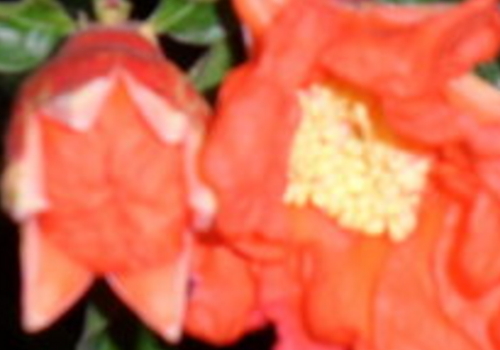
The pomegranate flower is the flower of the pomegranate, a deciduous shrub or small tree; it belongs to the genus Punica. The pomegranate trunk is grayish-brown with flaky peeling, and the young branches are yellow-green, smooth, often four-angled, mostly spiny at the tips, with no terminal bud. Pomegranate leaves are simple, opposite or clustered, oblong or obovate, with new leaves tender green or bronze. The flowers, one to several, are borne at the tips of branches or in leaf axils; the calyx is bell-shaped, fleshy, 6-lobed at the apex, smooth on the surface with a waxy coating, orange-red, and persistent. There are 5 to 7 petals, red or white, single or double. Pomegranate is commonly propagated by cuttings, division, and layering. It has medicinal value for astringing and stopping diarrhea and killing insects, and can be made into dishes such as stir-fried pomegranate flowers. Its flower language is: mature beauty, wealth and honor, and a house full of children and grandchildren. It is the city flower of Xi'an.
Why pomegranate leaves turn yellow:
1. Overwatering: The young leaves at the top of the plant turn pale yellow, the old leaves also gradually turn yellow, and the new shoots shrivel. This is caused by prolonged rain or excessive watering, which makes the soil in the pot too wet, deprives the soil of oxygen, and rots the roots. You should loosen the soil often, control watering, and avoid heavy rain spraying.
2. Dry soil: The leaves at the top are normal in color, while the lower leaves gradually dry, turn yellow, and fall upward from the bottom. This is caused by the pot soil being too full or water not penetrating for a long time, which ages the lower leaves and branches. You should water moderately and keep the soil moist.
3. Lack of fertilizer: The leaves are thin and yellow. This is caused by the plant being too large for the pot, or by not repotting or changing the soil for a long time, or by insufficient fertilizer. You should gradually increase water and fertilizer and repot in due course.
4. Fertilizer burn: The leaves become uneven and do not spread out, the new leaves are thick, and the old leaves gradually turn yellow. You should water frequently, stop fertilizing for a while, and you may scatter a few vegetable seeds in the pot and pull out the seedlings after they sprout, so as to consume the excess fertilizer in the pot and help the plant return to normal growth.
5. Alkalinity: For plants that like acidic soil, the leaves gradually turn yellow because the soil is too alkaline. You can water them with water soaked in green grass and apply a little ferrous sulfate, and the leaves will turn green again.
6. Unsuitable light: Potted flowers often placed indoors tend to develop yellow leaves. For sun-loving plants, insufficient light can also cause yellow leaves. For some plants that like a cool environment, high temperatures and direct sun can also make the leaves turn yellow and fall.
Well, that is all for the introduction to pomegranate leaves. I hope everyone understands now.
What is the flower language of mimosa? How many meanings does the flower language of mimosa represent?
What is the flower language of mimosa? How many meanings does the flower language of mimosa represent? Mimosa is an indoor ornamental plant that folds its leaves when touched by external force, and it is very interesting, so it is loved by people. Moreover, it is easy to grow and suitable for placing on a balcony or indoors as a potted flower. It has a slender and lovely appearance, and also a shy heart like a young girl, so planting a mimosa will definitely give you an experience different from other plants. Today we are going to learn about what the flower language of mimosa is. How many meanings does the flower language of mimosa represent? Let's take a look together. When does winter jasmine bloom
The flower language of mimosa
Overview of mimosaThe feathery, slender leaves of mimosa close immediately when touched by external force, hence the name mimosa. Its leaves also respond to heat and light, so in the evening their leaves also fold up. Mimosa, also known as zhixiucao, huhecao, and pachoucao. It grows in clusters, the base of the stem becomes woody, and it can reach 1 m in height, with poor cold tolerance. If you lightly touch the feathery, slender leaves, the leaves close immediately, which is why it is called mimosa. The flowers are pink, and the inflorescence is spherical and light and airy. The gentle and sweet flower shape creates a romantic feeling. When does the pomegranate flower bloom
The flower language of mimosa
The legend of the flower language of mimosaLong ago, there was a poor man named Han. Because he could not bear the abuse of his sister-in-law, he left home and went out alone to make his way in the world. He was quite diligent, and in less than a few years, a heavenly fairy named Huan took a liking to him and was reborn into the mortal world. After Huan and Han met, they were mutually attracted and became husband and wife. The young couple lived very sweetly.
However, their happy days did not last long. Because Han's sister-in-law was jealous of them, she tried every means to break up the couple, and even maliciously wanted her younger sister-in-law to do hard labor for her. One day, the sister-in-law asked Huan to come to her house to weave one hundred zhang of cloth for her. At this time, Huan was near her due date, but she could not refuse her sister-in-law, so she had to go. Huan wove cloth for her sister-in-law day and night, but unexpectedly, before the cloth was finished, she was about to give birth. In the end, she had no choice but to wave toward the sky.
The flower language of mimosa
Incredibly, a group of fairies flew into the room and wove cloth for her... Before dawn, the cloth was already finished. Unexpectedly, Han's sister-in-law witnessed everything and exaggerated it to Han, accusing Huan of being a demon or monster. And Han actually believed it and secretly killed her while she slept. Later, Han discovered that Huan was actually a fairy reborn, and he knew he had been wrong. He felt deeply sorry toward his wife and was ashamed and guilty all day long. In the end, he died from excessive grief.Later, a grass grew on Han's gravestone. When the wind blew or someone touched it, its leaves would close. People all said this was the transformation of Han, and that the leaves opened and closed because of shame. Therefore, this grass was called "mimosa". Cao Lu asks Chen He to quit Running Man
The flower language of mimosa
The flower language of mimosa
When we gently touch mimosa, its leaves immediately close tightly and droop. Even when a gust of wind blows past, mimosa will also show this behavior. In this situation, mimosa is like a shy young girl, so the flower language of mimosa also includes shyness. People born under the blessing of this flower are very shy and timid, and very afraid of strangers. They are especially sensitive and also have strong self-esteem. However, if they are with people who understand them, they will be much more relaxed and at ease. They value quality over quantity in making friends and like feelings that flow steadily like a long stream.The flower language of mimosa is shyness, sensitivity, and politeness. When mimosa represents shyness, it is like a bashful young girl, and it can also be a girl just beginning to fall in love; another meaning is children, symbolizing happiness and joy every day in life. Is mimosa a poisonous plant? Because its plant contains mimosine O-β-D-glucoside, long-term contact with or ingestion of it can cause the hair follicles in skin cells to deteriorate, thereby causing hair and eyebrows to turn yellow and even fall out.
The flower language of mimosa
The flower language of mimosa represents several meaningsMimosa flower language: politeness, because when mimosa is subjected to external force, its leaves curl up. It is as if it is bowing to people, so its flower language is "politeness".
Mimosa flower language: shyness, because lightly touching the leaves of this plant makes them close tightly and droop immediately, and even a gust of wind will cause this behavior, just like a shy young girl. Therefore its flower language is - shyness.
Mimosa flower language: sensitivity, because people born under the blessing of this flower are very shy and timid, and very afraid of strangers. They are especially sensitive and also have strong self-esteem. However, if they are with people who understand them, they will be much more relaxed and at ease. They value quality over quantity in making friends and like feelings that flow steadily like a long stream.
Related links: Does mimosa bloom? How to grow mimosa? How long can mimosa be kept?
What are the characteristics of mimosa? Is mimosa poisonous?
You may be interested in: The flower language of calla lily The flower language of kalanchoe The flower language of Chinese trumpet creeper The flower language of moss rose The flower language of cactus The flower language of gladiolus
Pomegranate Punica granatum Linn Pomegranate illustrated guide: How to grow pomegranate / How to propagate pomegranate
Pomegranate profilePomegranate Punica granatum Linn
Pomegranate cultivation methods and precautions Introduction to pomegranate
Pomegranate: (scientific name: Punica granatum), also known as anshiliu and hailiu, belongs to the family Lythraceae, genus Punica. It is a deciduous shrub or small tree. It has needle-like branches, and the leaves are long obovate or long elliptic, hairless. The flowering period is May to June, mostly vermilion, and there are also yellow and white forms. The berry is nearly spherical, and the fruit ripening period is September to October. The outer seed coat is fleshy and semi-transparent, juicy; the inner seed coat is leathery. It is native to Iran and its surrounding areas. Its nature and flavor are sweet, sour-astringent, and warm, and it has effects such as killing insects, astringing, astringing the intestines, and stopping diarrhea. Pomegranate fruit is rich in nutrients, and its vitamin C content is 1 to 2 times higher than that of apples and pears. It was introduced from the Western Regions in the Western Han Dynasty. The city flower of Xi'an is the pomegranate flower.
[Source] The fruit of the pomegranate plant Punica granatum of the family Lythraceae.
[Aliases] Anshiliu, Jinying, Shanliye, Thai pomegranate.
[Nature and flavor] Neutral, sweet, sour, astringent.
[Functions] Promote fluid production and quench thirst, astringe and stop diarrhea, control diabetes.
[Composition] Red-skinned pomegranate (green-skinned pomegranate in parentheses) edible portion 57% (55%). Per 100 g it contains energy 268 (255) kJ, water 78.7 (79.5) g, protein 1.3 (1.2) g, fat 0.1 (0.2) g, dietary fiber 4.9 (4.9) g, carbohydrates 14.5 (13.6) g, thiamine 0.05 (0.05) mg, riboflavin 0.03 (0.03) mg; vitamin C 13 (8) mg, vitamin E 3.72 (4.53) mg; potassium 218 (243) m9, sodium 0.8 (1.3) mg, calcium 16 (6) mg, magnesium 16 (15) mg, iron 0.2 (0.2) mg, manganese 0.18 (0.15) mg, zinc 0.19 (0.18) mg, copper 0.17 (0.1) mg, phosphorus 76 (68) mg. Selenium was not detected.
Pomegranate is the fruit of a plant in the family Lythraceae. It originated in China's Western Regions and was introduced to the Central Plains during the Han Dynasty. The pomegranate ripening season is during the two major festivals of Mid-Autumn Festival and National Day, and it is an auspicious gift for relatives and friends. In addition, pomegranate can eliminate the symptoms of female menopause.
[Explanation of the name] Li Shizhen said: The pomegranate blooms in May, and has three colors: red, yellow, and white. Single-petaled flowers bear fruit; multi-petaled flowers do not bear fruit, and even if they bear fruit, they have no seeds. The fruit has three types: sweet, sour, and bitter.
Pomegranate is a remarkable berry. The outer seed coat is fleshy and semi-transparent, juicy; the inner seed coat is leathery.
Yang Zuoren's original pomegranate flower, branch, and leaf picture album (20 pictures) The pomegranate is a deciduous shrub or small tree, and in the tropics it is an evergreen tree. The crown is clump-shaped and naturally round-headed. The roots are yellow-brown. It grows vigorously, and root suckers easily form at the root crown. The tree can reach 5-7 m in height, generally 3-4 m, but dwarf pomegranate is only about 1 m tall or even shorter. The trunk is grayish-brown with tumor-like protrusions, and the trunk mostly twists to the left. There are many branches inside the crown, and the young branches are angular, mostly square. The twigs are flexible and not easy to break. The primary branches are alternately opposite on vigorously growing twigs and have small thorns. The length of the thorns is related to the variety and growth conditions. Vigorous trees have more thorns, and old trees have fewer thorns. The bud color changes with the seasons, with three colors: purple, green, and orange. The leaves are opposite or clustered, long lanceolate to oblong, or elliptic-lanceolate, 2-8 cm long, 1-2 cm wide, pointed at the tip, glossy on the surface, with the midrib raised on the back; they have short petioles. The flowers are bisexual. Depending on whether the ovary is well developed, there are bell-shaped flowers and tubular flowers. The former has a well-developed ovary and is good at fertilizing and setting fruit, while the latter often withers without setting fruit; generally 1 to several flowers are borne at the tips of the current year's new shoots and in the leaf axils below the tips; the sepals are hard, fleshy, tubular, 5-7 lobed, adnate to the ovary, and persistent; the petals are obovate, equal in number to the sepals and alternate with them, imbricate. Flowers are divided into single-petaled and double-petaled. Double-petaled varieties mostly have stamens and pistils transformed into petals and are sterile, with petals numbering up to dozens; the flowers are mostly red, and there are also white and colors such as yellow, pink, and agate. Stamens are numerous, and the filaments are hairless. The pistil has 1 style, longer than the stamens, 4-8 carpels, and an inferior ovary. After maturity it becomes a large, many-chambered, many-seeded berry, with many seeds in each chamber; the outer seed coat is fleshy, bright red, pale red, or white, juicy, sweet with some sourness, and this is the edible part; the inner seed coat is horny, and some have degenerated and softened, namely the soft-seeded pomegranate. Fruit pomegranate has a flowering period from May to June, with pomegranate flowers like fire, and a fruiting period from September to October. Flower pomegranate has a flowering period from May to October.
Ecological habits of pomegranate
Pomegranate likes light and has a certain cold tolerance, but in the chilly early spring, cold protection should be done well. It likes moist, fertile calcareous soil, and the flowering period is May to July. Double-petaled flowers mostly have difficulty setting fruit and are mainly grown for flower viewing; single-petaled flowers easily set fruit and are mainly grown for fruit viewing. The calyx is leathery, and the berry is nearly spherical and ripens in autumn. [1] According to analysis, pomegranate fruit contains 17% carbohydrates, 79% water, and 13-17% sugar, among which the vitamin C content is 1-2 times higher than that of apples, while the content of fat and protein is relatively low. The fruit is mainly eaten fresh.
Propagation methods of pomegranate
Pomegranate is relatively tolerant of poor and dry soil and afraid of waterlogging, and needs a great deal of water during the growing season. The main cultivation methods for pomegranate include garden cultivation, fruit tree cultivation, bonsai, and pot cultivation.
Pomegranate is commonly propagated by cuttings, division, and layering.
[Cuttings]: In spring, select biennial branches, or in summer use semi-lignified branches for cuttings. After insertion, they root in 15-20 days.
[Division]: In early spring in April, when the buds begin to sprout, dig out robust root sucker seedlings and plant them separately.
[Layering]: It can be done in spring and autumn. There is no need to notch the bark. Before the buds sprout, press root tiller branches into the soil. After rooting through the summer, cut them away from the mother plant, and they can become seedlings in autumn. For open-field cultivation, choose a site with sufficient light and good drainage. During growth, fertilize once a month. It is necessary to frequently remove root suckers and prune dead branches, diseased branches, dense branches, and leggy branches to facilitate ventilation and light penetration. For pot cultivation, shallow planting is suitable, watering should be controlled, and it is better dry than wet. During the growing period, pinching is needed to control vegetative growth and promote flower bud formation.
Disease and pest control of pomegranate
The main focus should be on the two periods before and after fruit setting, with pest control in the early stage and disease control in the later stage. From the end of April to the middle and early ten days of May, pomegranate trees are prone to pests such as slug moths, aphids, stink bugs, scale insects, and cotton leafworms. After fruit setting, the main diseases are white rot, black pox, and anthracnose.
Control before fruit setting
Use 12 ml (1 tube) of 33% chlorpyrifos emulsifiable concentrate, dilute 1500 times, and spray it on the front and back leaf surfaces of the pomegranate tree. If aphids still occur after an interval of 3-5 days, use 10 g of 2.5% imidacloprid wettable powder diluted 1500 times and spray the front and back leaf surfaces. After that, spray once every 7-10 days with alternating chemicals, and the effect is excellent. Every year from June to July is the peak season for peach fruit borers on pomegranate trees. If not controlled in time, it is extremely harmful to pomegranate trees. After pomegranate fruit is bored by peach fruit borers, if there is high temperature and rain, water pours into the boreholes, causing the pomegranates to slowly rot, with a damage rate of more than 60%. At this time, use 50% phoxim emulsifiable concentrate, dilute 800 times, mix with mud, and paste it on the flower stalk, or spray with dichlorvos or kung fu 2000-fold solution. To avoid parasitism and spread by peach fruit borers, the leaves around the pomegranate fruit should be removed.
Spray decis, fenpropathrin, etc. to control slug moths and aphids; methidathion, chlorpyrifos, etc. to control scale insects, with good results.
Disease control
Pomegranate trees should be pruned in time in summer to improve ventilation and light conditions and reduce the occurrence of pests and diseases. After fruit setting, the main diseases are white rot, black pox, and anthracnose. Spraying an equal-strength Bordeaux mixture 200-fold solution about once every half month can prevent the occurrence of many diseases. When the disease is severe, fungicides such as thiophanate-methyl, mancozeb, and carbendazim can be sprayed.
Note
Do not use omethoate and dichlorvos pesticides to control pomegranate tree pests, because pomegranate trees are sensitive to these pesticides. Do not use methamidophos or monocrotophos during the flowering period. These pesticides easily harm bees, affect pollination, and reduce the fruit-setting rate.
Variety classification of pomegranate
Pomegranate is a plant in the family Lythraceae, genus Punica. As a cultivated plant, there is only one species, namely pomegranate. In addition, on the island of Socotra in the Indian Ocean, a wild species of Punica was once found and named Socotra wild pomegranate, which has no cultivation value. After long-term artificial cultivation and domestication, pomegranate has developed many variant types, and there are now 6 varieties:
(1) White pomegranate: large flowers, white.
(2) Red pomegranate (double-petaled pomegranate): also called four-petaled pomegranate, with large flowers and large fruit.
(3) Double-petaled pomegranate: flowers white or pink.
(4) Dwarf pomegranate (four-season pomegranate): the plant is short, the flowers are small, and the fruit is small. It blooms many times each year, and the flowering period is long. It is mainly ornamental.
(5) Black pomegranate: branches slender and soft, leaves narrow and small, fruit purple-black, poor in taste, mainly for potted ornamental use.
(6) Variegated-flowered pomegranate (agate pomegranate): flowers variegated.
Cultivation techniques of pomegranate
In the Hotan region, although pomegranate has a long cultivation history and a wide distribution area, and Uyghur farmers have had a fine tradition of cultivating pomegranate historically, pomegranate cultivation is mostly in front of and behind houses or beside trees. However, it had long not been taken seriously by people. With reform and opening up and the increasing improvement of people's living standards, the economic value and cultivation value of pomegranate gradually attracted people's attention.
1. Varieties are uneven in quality, and yield is low and unstable. In particular, there are many inferior varieties, which directly affect the yield and quality of pomegranate. While expanding the cultivation area, there still exists disregard for superior varieties, soil conditions, and management measures.
2. Management is extensive and per-unit yield is relatively low. Compared with common fruit trees, the production and management technology level of pomegranate is still lacking, such as inadequate fertilizer and water, and unreasonable pruning or no pruning.
3. Deep-processing technology is not sufficiently complete.
4. There is still a great gap in the utilization of resources and the breeding of superior varieties.
With the expansion of pomegranate cultivation area and market demand, production must pay close attention to the above problems and other situations that may occur, so that this tree species can produce greater economic benefits.
Cultivation knowledge
1. Planting: Planting or repotting can be done from after leaf fall in autumn to before bud break the following spring. For ground planting, choose a sunny, wind-sheltered, slightly elevated place, and the soil should be loose, fertile, and well-drained. For pot cultivation, use a mixed growing medium of leaf mold, garden soil, and river sand, and add an appropriate amount of decomposed organic fertilizer. When planting, keep a soil ball, appropriately shorten and prune the aboveground part, water thoroughly after planting, and keep it in a shaded place for care. After it sprouts and survives, move it to a ventilated place with sufficient sunlight.
2. Light and temperature: Light and temperature are important conditions affecting flower bud formation. During the growing period, full sun is required, and the more sufficient the light, the more numerous and vivid the flowers. A wind-sheltered, sunny, dry environment is favorable for flower bud formation and blooming. When light is insufficient, it will only grow leaves and not bloom, affecting the ornamental effect. The suitable growth temperature is 15-20°C, and the winter temperature should not be lower than -18°C, otherwise it will suffer cold damage.
3. Watering and fertilizing: Pomegranate is drought-tolerant and likes a dry environment. Watering should follow the principle of "water thoroughly when dry," keeping the pot soil in a state of "dry and wet alternating, better dry than wet." During the flowering and fruiting period, do not water too much, and the pot soil must not be too wet, otherwise the branches will grow leggy, leading to flower drop, fruit drop, and fruit cracking. In the rainy season, drain water in time. Both ground-planted and potted pomegranates should be given sufficient base fertilizer, then apply 1 more round of decomposed organic fertilizer before winter, and then apply 1 round of decomposed organic fertilizer before winter each year. For young trees, apply in a ring-shaped trench 1 m from the tree; for old trees, apply in radial trenches 20 cm deep. Potted pomegranate should follow the principle of "light fertilizer applied frequently," applying dilute fertilizer water once a week during the vigorous growth period. Apply phosphorus and potassium fertilizer as a top dressing over the long term to preserve flowers and fruit.
4. Shaping and pruning: Because pomegranate branches are fine, dense, and messy, pruning is needed to achieve a beautiful plant shape. Generally, pomegranate can be trained into a single-trunk round head or flat head shape; it can also be trained into a clump-shaped open form; it can also be made into bonsai pomegranate. Use thinning and heading back, and cut off dead branches, leggy branches, crossing branches, diseased and weak branches, and dense angular branches. In summer, pinch in time, thin flowers and fruit, and achieve the effect of ventilation and light penetration, beautiful plant shape, lush flowers and leaves, and abundant fruit.
Fruit cracking control
First, during the early stage of fruit growth from May to July, irrigate multiple times to maintain the most suitable soil moisture, and after irrigation cover with grass or film to preserve moisture, so that the fruit grows at a uniform rate.
Second, during the later stage of fruit growth (the rainy season from August to September), stop irrigation, drain excess water in time, and maintain moderate soil moisture to prevent fruit cracking caused by absorbing too much water.
Third, adopt the measure of bagging young fruit, which can not only prevent pests and diseases but also maintain relatively good humidity inside the fruit bag, allowing the fruit to grow at a uniform rate, and prevent rainwater in the rainy season from directly soaking into the fruit and causing the seeds to grow rapidly, thereby bursting the peel.
Fourth, harvest ripe fruit in time to prevent the peel from bursting due to absorbing too much water.
Medicinal dietary or medicinal value of pomegranate
The medical information and health dietary information on Huahua Network are for reference only and cannot be used as a basis for diagnosis or medical treatment. For any health problem, consult professional medical personnel, and for the treatment of any disease, please follow medical advice.
Ultimate flower-protecting mission: Love yourself, start from reality, and strictly follow medical advice. For illness, do not be careless, do not delay, do not give up hope, face it bravely, warm the silent world with love, and care for the flower field in your heart with your heart.
The main nutrients of pomegranate include carbohydrates, protein, calcium, phosphorus, vitamin B1, vitamin B2, vitamin C, etc.
1. Pomegranate symbolizes auspiciousness
Pomegranate has a long history in China and is very loved by the Chinese people, because it is beautiful in appearance, sweet and sour in taste, and even more because it symbolizes auspiciousness, representing the beautiful life the Chinese people hope for, of prosperity and many children and blessings. Ancient Chinese literati especially loved pomegranate and endowed it with many emotions. Pomegranate flowers are brilliantly colored like fire, and when the flowering season arrives they are very flourishing. Chinese people have always liked red, and pomegranate flowers covering the branches symbolize prosperity, beauty, and a flourishing life, so many Chinese people like to plant one or two pomegranates in their own courtyards to pray that life will be as flourishing as pomegranate flowers.
2. Pomegranate also has medicinal value
Pomegranate is rich in nutrients and can very well supplement the nutritional elements needed by the human body. It has the effects of beautifying the face, resisting aging, and also protecting our eyes. In addition, regular consumption of pomegranate also has a strong effect in resisting bacteria and viruses, and has good therapeutic effects on some skin diseases and cancers. Pomegranate can also protect our heart, regulate the normal movement frequency of the heart, soften our blood vessels, and has the effects of nourishing blood and qi.
3. Pomegranate is rich in nutrients
Pomegranate fruit is like red gems, and the seeds are sweet and sour, delicious, and juicy, with high nutritional value. It is rich in fruit sugars, high-quality protein, easily absorbed fats, etc., which can supplement the human body's energy and calories without increasing the body's burden. Pomegranate contains abundant vitamins, especially B and C, and trace mineral elements, which can supplement the trace elements and nutrients lacking in the human body. Pomegranate is also rich in various acids, including organic acids and folic acid, which have health benefits for the human body. Not only is the fruit of pomegranate rich in nutrients, but its leaves and fruit seeds are also very valuable.
4. Pomegranate has strong antioxidant effects, and juicing with the peel is even better
The delicately red pomegranate has been proven to have strong antioxidant effects. It contains a component called ellagic acid, which can protect cells from pollution in the environment and the harm of UV rays, nourish cells, and slow the aging of the body. Studies have shown that ellagic acid is even more "powerful" in radiation protection than the polyphenols contained in red wine and green tea.
Medicinal value
1. Broad-spectrum antibacterial: Pomegranate peel contains a variety of alkaloids. Antibacterial tests have confirmed that the alcohol extract of pomegranate and the water decoction of the peel have broad-spectrum antibacterial effects. They have obvious inhibitory effects on Staphylococcus aureus, hemolytic streptococcus, Vibrio cholerae, Shigella dysenteriae, etc., among which the effect on Shigella shigae is the strongest. The water infusion of pomegranate peel also has varying degrees of inhibitory effects on various skin fungi in test tubes, and the decoction of pomegranate peel can also inhibit influenza virus;
2. Astringing, astringing the intestines: Pomegranate tastes sour and contains alkaloids, ursolic acid, etc., and has an obvious astringent effect. It can astringe the intestines and stop bleeding. In addition, because it has a good antibacterial effect, it is a good product for treating diseases such as dysentery, diarrhea, blood in the stool, spermatorrhea, and rectal prolapse;
3. Expelling and killing parasites: Pomegranate peel and pomegranate root bark both contain punicalagin, which has an anesthetic effect on human parasites and is an important medicine for expelling and killing parasites, especially with a stronger killing effect on tapeworms. It can be used to treat abdominal pain from parasitic accumulation, scabies, etc.;
4. Stopping bleeding, improving eyesight: Pomegranate flowers are sour and astringent in nature and flavor and neutral. If dried in the sun and ground into powder, they have a good hemostatic effect and can also stop red and white vaginal discharge. Soaking pomegranate flowers in water to wash the eyes also has the effect of improving eyesight.
5. Pomegranate is warm in nature and sweet, sour, and astringent in taste, and enters the lung, kidney, and large intestine meridians; it has the effects of promoting fluid production and quenching thirst, astringing and securing, stopping diarrhea, and stopping bleeding; it mainly treats conditions such as fluid depletion with dry mouth and throat, polydipsia, chronic diarrhea, chronic dysentery, blood in the stool, and abnormal uterine bleeding.
Pomegranate juice contains a variety of amino acids and trace elements, and has multiple functions such as aiding digestion, resisting gastric ulcers, softening blood vessels, lowering blood lipids and blood sugar, and lowering cholesterol. It can prevent coronary heart disease and high blood pressure, and can achieve the effects of strengthening the stomach, refreshing the mind, enhancing appetite, and prolonging life. For those who drink excessively, it has a remarkable effect in sobering them up.
Pomegranate can be said to be a treasure all over. The peel, root, and flowers can all be used as medicine. Its peel contains components such as malic acid, tannins, and alkaloids. According to relevant experiments, pomegranate peel has obvious antibacterial and astringent functions, can make the intestinal mucosa contract, and reduce the secretions of the intestinal mucosa, so it can effectively treat diarrhea, dysentery, and other conditions, and has a good inhibitory effect on Shigella dysenteriae and Escherichia coli. In addition, the peel of pomegranate contains alkaline substances and has the effect of expelling parasites; pomegranate flowers have a hemostatic function, and soaking pomegranate flowers in water to wash the eyes also has the effect of improving eyesight. Modern medical research has found that the "punicalagin" contained in pomegranate peel has inhibitory effects on Salmonella typhi, Shigella dysenteriae, Mycobacterium tuberculosis, Pseudomonas aeruginosa, and various skin fungi. There are many folk proven remedies using pomegranate fruit, peel, and leaves to treat diseases, such as:
[Mouth sores]
① Pomegranate peel, calcined into charcoal and ground into powder, apply inside the mouth, twice a day. A little indigo naturalis may also be added.
② Mash pomegranate pulp together with the seeds, soak in boiling water, and after it cools, take the water and gargle, several times a day. It can treat mouth and tongue sores and oral ulcers.
[Diarrhea]
① 15 grams of pomegranate peel, decoct in water, add brown sugar or white sugar, and drink. Take twice a day before meals.
② 15 grams of pomegranate peel and 10 grams of nutmeg (degreased), decoct in water and take.
③ 30 grams of fresh pomegranate peel, mash into a paste, apply to the navel, fix with adhesive tape, and change the medicine once every 24 hours. Generally, 1-3 applications can cure it. This formula is also suitable for treating diarrhea in children.
④ 1 fresh pomegranate, mashed whole with the peel, add a small amount of table salt, decoct in water and take the liquid, can treat chronic diarrhea and chronic dysentery.
[Hemorrhoids]Calcined pomegranate with the peel, ground into a fine powder, add an appropriate amount of white granulated sugar and mix well, take 5-7 grams each time with boiled water, 2 times a day.
[Blood in the stool]
① An appropriate amount of pomegranate rind, stir-fried dry and ground into powder, take 9 grams each time, 3 times a day, taken with boiled water.
② Pomegranate calcined to preserve its nature, ground into a fine powder, add an appropriate amount of brown sugar and mix well, take 9 grams each time, mixed with boiled water, 3 times a day.
[Rectal prolapse]
① 30 grams of pomegranate rind, 15 grams of alum, decoct in water and wash the affected area.
② Pomegranate rind and old wall soil, add a little white alum, decoct thickly for fumigation and washing, then add fried and ground Chinese gall (Rhus chinensis) and apply it to hold the prolapse up.
③ 15 grams of pomegranate rind, decoct in water, first fumigate then wash.
[Nosebleeds]
① Pomegranate flowers or tender pomegranate leaves, rolled into small balls and inserted into the nostrils, several times a day.
② 30 grams of pomegranate rind, decocted in water and taken.
[Burns and scalds]
① Red pomegranate flowers, ground into a fine powder, mixed with sesame oil and applied to the injured area.
② An appropriate amount of pomegranate rind ground into powder, mixed with sesame oil and applied to the affected area.
[Otitis media]
① Pomegranate flowers placed on a tile and dried over heat, ground into powder, add a little borneol, and blow into the ear. This formula can treat otitis media with pus that will not dry up.
② 15 grams of pomegranate rind, dried over heat, add 1 gram of borneol and grind together into powder for later use. When treating, first clean the pus in the ear with hydrogen peroxide, wipe dry with a sterilized cotton swab, then blow the medicinal powder into the ear, once a day or once every other day.
[Psoriasis]
① Fresh pomegranate rind, dipped in alum powder and rubbed on the affected area, 3 times a day.
② 1 part pomegranate rind (fried into charcoal and ground into a fine powder), add 3 parts sesame oil, mix into a paste, and apply to the affected area. 2 times a day, effective with continuous multiple applications.
[Leukorrhea in women]Pomegranate rind burned to preserve its nature, ground into a fine powder, take 3-6 grams each time on an empty stomach, taken with sugar water.
[Vaginal sores]60 grams of fresh pomegranate rind, 15 grams of honeysuckle stem (Lonicera japonica), 3 grams of Coptis chinensis, decoct in water for a sitz bath, once each morning and evening every day.
[Uterine prolapse]30 grams of pomegranate rind, 6 grams each of Chinese gall (Rhus chinensis) and white alum, decoct in water for external washing.
[Wind-fire red eyes]50 grams of fresh pomegranate leaves, washed clean, add 500 milliliters of water, decoct down to 250 milliliters, filter out the dregs, and use the liquid to wash or drip into the eyes.
[Tonsillitis]1-2 fresh pomegranates, take the flesh-bearing seeds and mash them, soak in boiled water and filter, gargle after it cools, several times a day. This formula can also treat laryngitis, mouth sores, and stomatitis.
[Traumatic bleeding]
① Equal parts pomegranate flowers and bletilla (Bletilla striata), sun-dried or oven-dried, ground into a fine powder and mixed evenly, apply externally to the wound, bandage and press tight with gauze.
② 500 grams of pomegranate rind, 125 grams each of Lindera aggregata and Chinese gall (Rhus chinensis). First decoct the pomegranate rind and Chinese gall, after 20 minutes add the Lindera aggregata and decoct for 10 minutes, remove the dregs, absorb the decoction dry with cotton, sun-dry for later use. When using, apply to the wound, then bandage. Note: do not let the wound come into contact with cold water.
③ Pomegranate flowers, sun-dried and ground into powder, sprinkled on the wound.
④ 20 grams of pomegranate rind, 10 grams of longan seeds, add 0.3 grams of borneol and mix evenly, apply to the affected area.
[Indigestion]
① 1 sour pomegranate, chew the pulp and seeds thoroughly and swallow.
② 15 grams of fresh pomegranate rind, mashed and applied to the Shenque acupoint at the navel, remove after 12 hours, and apply again after two hours. This formula is suitable for simple indigestion in children, and can also serve as auxiliary treatment for diarrhea, abdominal bloating, and poor appetite.
③ 30 grams of pomegranate rind, 1 dose per day, decocted in water and taken in 2 divided doses, taken continuously for 3-5 doses. Reduce the amount for children.
④ 30 grams each of pomegranate rind and eggplant root, baked yellow together and ground into powder, 3 grams each time, mixed with boiled water, once each morning and evening. Reduce the amount for children. Formulas ③ and ④ are also suitable for treating diarrhea.
[Neurodermatitis]
① Fresh pomegranate rind dipped in alum powder, rubbed on the affected area, 3-5 times a day.
② 1 part pomegranate rind (fried into charcoal, ground into a fine powder), 3 parts sesame oil, mixed into a paste, applied to the affected area, 2 times a day.
[Expelling roundworms and tapeworms]Equal parts pomegranate rind and areca nut, ground into a fine powder, take 10 grams each time (reduce for children), 2 times a day, taken for two consecutive days.
[Chronic bronchitis in the elderly]Sour pomegranate, held in the mouth every night, until cured.
Red pomegranate is rich in minerals and has two major antioxidant components - red pomegranate polyphenols and anthocyanins. It also contains linoleic acid, vitamin C, B6, E, and folic acid. The extracted essence of minerals such as calcium, magnesium, and zinc contained in red pomegranate can quickly replenish the moisture lost by the skin, making the skin brighter and softer.
Medicinal value of pomegranate rind
[Drug name]: Pomegranate rind
[Pinyin]: SHILIUPI pomegranate rind
[English name]: Pomegranate Rind
[Source]The fruit rind of the pomegranate, a plant of the Punicaceae family.
[Plant morphology]Pomegranate (from "Leigong Paozhi Lun"), also known as: Chuliu ("Guangya"), Anshiliu (Zhang Hua, "Bowu Zhi"), Danruo ("Youyang Zazu"), Jinying ("Gangmu"), Jinpang ("Qunfang Pu"), Xieliu, Haishiliu, Anxiliu, Xi'anliu, Zhongshiliu. Deciduous shrub or tree, 2-5 m tall. Bark grayish green; young branches nearly round or slightly four-angled, branch tips usually spur-like, hairless; leaves opposite or clustered; leaf blades obovate to long elliptic, 2.5-6 cm long, 1-1.8 cm wide, apex pointed or slightly concave; base gradually narrowed, entire margin, upper surface glossy, hairless, lower surface with a raised midrib, with a short petiole. Flowers 1 to several, borne at the tips of small branches or in the leaf axils, pedicels 2-3 mm long; flower diameter about 3 cm; calyx tube bell-shaped, fleshy and thick, red, with 6 lobes, triangular-ovate; petals 6, red, alternating with the sepals, obovate, wrinkled; stamens numerous, inserted in the middle of the calyx tube, anthers spherical, filaments slender and short; pistil 1, ovary inferior or semi-inferior, upper part 6-loculed with parietal placentation, lower part 3-loculed with axial placentation, style rounded, stigma capitate. Berry nearly spherical, rind thick and leathery, yellow when ripe, or tinged with red, with a thin septum inside, apex with a persistent calyx. Seeds numerous, obovate, with angular edges. Flowering period May-June. Fruiting period July-August. Grows on sunny mountain slopes or cultivated in courtyards. Distributed in most parts of China.
[Collection]In autumn when the fruit is ripe and the apex splits, pick it, remove the seeds and the septum, cut into sections and sun-dry, or dry over a low fire.
[Medicinal material]The dried fruit rind is irregular or semicircular in fragment form, 2-3 mm thick. The outer surface is dark red or brownish red, rough, with small white raised dots; the apex has a remnant persistent calyx; the base has a fruit stalk. The inner surface is bright yellow or brownish yellow, with raised reticulate residual traces of the fruit base. Texture brittle yet hard, easily broken. Odor weak, taste astringent. Those with thick, solid rind and red-brown color are considered best.
[Chemical composition]Contains tannins 10.4-21.3%, wax 0.8%, resin 4.5%, mannitol 1.8%, sugar 2.7%, gum 3.2%, inulin 1.0%, mucilage 0.6%, gallic acid 4.0%, malic acid, pectin and calcium oxalate, isoquercitrin.
[Processing]Remove impurities, remove all residual inner pulp and seeds, wash clean, cut into pieces, and sun-dry.
"Leigong Paozhi Lun": "Whenever using pomegranate rind, leaves, or root, do not let them come into contact with iron. If using pomegranate husk, regardless of dry or wet, first soak it overnight in rice water, strain it out at dawn, when the water is like ink, ... only then can it be used."
[Nature and flavor]Sour and astringent, warm, toxic.
① "Yaoxing Lun": "Sour in taste, non-toxic."
② "Diannan Bencao": "Cold in nature, sour and astringent in taste."
③ "Gangmu": "Sour and astringent, dampening, non-toxic."
④ "Guangxi Zhongyao": "Bitter and astringent in taste, warm in nature, toxic."
[Meridian entry]Enters the Large Intestine and Kidney meridians.
① "Leigong Paozhi Yaoxing Jie": "Enters the two meridians of the Large Intestine and Kidney."
② "Bencao Cuoyao": "Enters the Hand Taiyin and Foot Shaoyin meridians."
[12][Functions and indications]Astringes the intestines, stops bleeding, expels parasites. Treats chronic diarrhea, chronic dysentery, blood in the stool, rectal prolapse, spermatorrhea, abnormal uterine bleeding, leukorrhea, abdominal pain from parasitic accumulation, and scabies.
① "Bielu": "Treats dysentery, stops spermatorrhea."
② "Yaoxing Lun": "Treats wind in the tendons and bones, inability to walk with the legs and feet, and contracture and pain when walking. Mainly astringes the intestines, stops red and white dysentery. Take the juice to stop tearing of the eyes, and treat spermatorrhea."
③ "Bencao Shiyi": "Mainly treats roundworms. Decoct and take."
④ "Diannan Bencao": "Treats long-standing watery diarrhea, roasted with fried granulated sugar and taken, also treats dysentery with pus and blood, and bleeding from the large intestine." "Decocted with Aristolochia debilis to treat malnutrition and worms in children."
⑤ "Bencao Mengquan": "Treats tooth decay."
⑥ "Gangmu": "Stops diarrhea and dysentery, bleeding, rectal prolapse, and abnormal uterine bleeding and leukorrhea."
⑦ "Shengcaoyao Xingbei Yao": "Treats tumor sores, washes hernia pain."
⑧ "Bencao Qiuyuan": "Washes spots, scabies, and ringworm."
⑨ "Kexue de Minjian Yaocao": "Expels hookworms and tapeworms."
[Usage and dosage]Internal use: decocted, 0.8-1.5 qian; or as a powder. External use: decoct in water for fumigation and washing, or grind into powder and mix for application.
[Cautions and contraindications]"Bencao Congxin": "It can linger in the diaphragm and form phlegm; for those whose dysentery accumulation is not yet cleared, taking it too early will instead cause harm."
[Drug combinations]: With granulated sugar, it relaxes tension and stops diarrhea; with Aristolochia debilis, it resolves malnutrition and expels parasites; with Coptis chinensis, it clears heat and dries dampness; with areca nut, it expels roundworms and kills parasites.
[Selected formulas]① To treat chronic dysentery that does not heal: dried old pomegranate, made into a fine powder, mixed with rice water and taken, three to four qian. ("Puji Fang" Shenshou San)
② To treat sudden incessant flooding in pregnancy with abdominal pain: 2 liang of pomegranate rind, 3 liang of angelica, 2 liang of ass-hide glue (prepared), and two pieces of prepared mugwort the size of a chicken egg. The above four ingredients are boiled in 9 sheng of water down to 2 sheng, divided into three doses. ("Chanjing Fang" Pomegranate Rind Decoction)
③ To treat blood before the stool, which makes the face yellow: vinegar-treated pomegranate rind, roasted and ground into powder, take 2 qian each time, taken with a decoction of eggplant branches. ("Qianjin Fang")
④ To treat rectal prolapse: pomegranate rind and old wall soil, add a little white alum, decoct thickly for fumigation and washing, then add fried and ground Chinese gall (Rhus chinensis) and apply it to hold the prolapse up. ("Yichao Leibian")
⑤ To treat heart pain from various parasites that is unbearable, with much sour water vomited: 1 liang of sour pomegranate rind (chopped), 2 liang of peach wood charm (chopped), 1 liang of lead powder, 2 ge of wine, and 2 qian of areca nut powder. For the above medicines, use 2 large cups of water, decoct the first two ingredients down to 1 cup, remove the dregs, add the lead powder, areca nut, and wine, decoct once more to a boil, take slightly warm, divided into three doses. ("Sheng Hui Fang" Pomegranate Rind Powder)
⑥ To expel tapeworms and roundworms: equal parts pomegranate rind and areca nut, ground into a fine powder, take 2 qian each time (reduce for children), 2 times a day, taken for two consecutive days. ("Shandong Zhongcaoyao Shouce")
[Clinical application]① Treatment of bacillary dysentery: Pomegranate rind was made into a 50% or 60% decoction, 10-20 milliliters each time, taken 3-5 times a day, with 7-10 days as one course of treatment; for chronic bacillary dysentery, it can be taken continuously for 2 weeks, stopped for 1 week, then taken for another 2 weeks as one course. In treating 50 cases of acute bacillary dysentery, after one course, 49 cases were cured and 1 case improved. After taking the medicine, the average time for fever to subside was 1.3 days, the time for abdominal pain and tenesmus to disappear was about 4.8 days, the time for stools to return to normal was around 4.6 days, and the time for stool microscopy to return to normal was 5.3 days. In treating 4 cases of chronic bacillary dysentery, 2 weeks after stopping the medicine, sigmoidoscopy showed that the lesions had all disappeared, and stool cultures were negative more than 3 times.
② Treatment of amoebic dysentery: 60% pomegranate rind decoction, 20 milliliters each time, 3 times a day, taken after meals, with 6 consecutive days as one course. If ineffective, another course can be taken. In 40 patients followed up for half a year after one course, none had any symptoms, of which 36 cases had stool examinations negative 3 times in a row. During the medication period, there was occasional nausea and tinnitus, which disappeared on their own.
③ Treatment of various infectious inflammations: Pomegranate rind was made into a 100% decoction, dried over heat and ground into powder and put into capsules for oral administration, 3 times a day, 1-2 capsules each time. In treating a total of 415 cases of enteritis, biliary tract infection, acute and chronic bronchitis, pulmonary infection, chronic appendicitis, lymphadenitis, multiple boils, and traumatic infection, 305 cases were cured, 57 cases basically cured, 36 cases improved, and 17 cases ineffective.
In addition, frying pomegranate rind until charred and grinding it into powder and sprinkling it into the ear has a certain effect on suppurative otitis media.
Dietary therapy value
1. Suitable for people with dry mouth and tongue, people with diarrhea, and people with tonsillitis;
2. Not suitable for people with constipation, patients with urethritis, people with diabetes, and people with excess heat and food stagnation.
Food incompatibilities
Pomegranate should not be eaten together with tomatoes, crabs, watermelon, or potatoes.
If taken together with potatoes, one can drink water soaked with chives to detoxify.
Dietary therapy effects
Pomegranate is warm in nature and sweet, sour, and astringent in taste, entering the Lung, Kidney, and Large Intestine meridians;
It has the effects of promoting fluid production and quenching thirst, astringing and securing, stopping diarrhea, and stopping bleeding;
It mainly treats conditions such as fluid depletion with dry mouth and throat, excessive thirst, chronic diarrhea, chronic dysentery, blood in the stool, and abnormal uterine bleeding.
1. One sour pomegranate, calcined to preserve its nature and ground into powder, taken entirely in one day, treats chronic dysentery from intestinal looseness; if taken with brown sugar water, it treats bleeding from the large intestine.
2. Sour pomegranate rind, calcined to preserve its nature and ground into powder, take 6 grams each time, treats incessant chronic diarrhea; if applied externally inside the mouth, it treats mouth sores and bleeding from various sores in the mouth.
3. Sour pomegranate rind, decocted in water or taken with brown sugar, treats red dysentery, blood in the urine, and nosebleeds.
4. 15 to 30 grams of sour pomegranate rind, add an appropriate amount of brown sugar and decoct in water, treats diarrhea due to spleen deficiency.
5. 5 grams of sour pomegranate rind and 10 grams of raw hawthorn, ground together into a fine powder, divided into two doses, taken with brown sugar mixed with boiled water, treats watery diarrhea.
6. Sour pomegranate rind ground into powder, take 6 grams every morning, taken with boiled water, treats chronic diarrhea or bleeding in the stool.
7. 15 grams of sour pomegranate rind and 10 grams of fennel, decocted in water and taken, treats chronic dysentery.
8. 30 grams of sour pomegranate rind, decocted in water to make a juice, mixed with 6 grams of Glauber's salt, taken on an empty stomach, expels roundworms.
9. Remove the outer bark of pomegranate tree root, take 15 grams of the secondary bark (halve for children), decoct in water and mix with brown sugar and take, also expels roundworms.
10. 30 grams of pomegranate rind and 120 grams of areca nut, decocted in water, taken entirely in one dose on an empty stomach in the morning, and one hour later take 15 grams of mirabilite or 6 grams of rhubarb, to expel tapeworms. Pomegranate rind decocted in water, washed with cold, treats impetigo.
11. Fresh pomegranate rind dipped in alum powder, rubbed on the affected area, three times a day, treats psoriasis.
12. Seven white pomegranate flowers and 10 grams of Prunella vulgaris, decocted in water and taken, treats lung abscess.
13. 20 grams of white pomegranate flowers, decocted in water, divided into three doses taken before meals, treats dysentery and rectal prolapse.
14. One white pomegranate rind and one white lotus seed pod, decocted in water and taken, treats excessive menstruation.
Ornamental value
The tree form is graceful, the branches and leaves are elegant; in early spring the tender leaves sprout green, delicate and charming; in midsummer it is full of blooms like brocade, with brilliant colors; in autumn the accumulated fruits hang, whether planted alone or in groups in courtyards, in corners of parks, planted in pairs at the entrances of gates and courtyards, or planted in rows beside paths, streams, slopes, and buildings, it is also suitable for making various stump landscapes and for viewing as cut flowers in vases.
Bonsai production
Pomegranate flowers are large and brilliantly colored, with a long flowering period, blooming continuously from around the wheat harvest until October, and the pomegranate fruit is brightly colored. Because it can both be enjoyed for its flowers and provide edible fruit, it is deeply loved by people, and bonsai made from pomegranate are especially favored.
(1) Selection of varieties and flower pots:
For mainly viewing flowers, one should choose varieties with large flowers, bright colors, and double petals, such as large-flowered pomegranate; for mainly viewing fruit, one can choose red varieties with beautiful fruit shape, such as Taishan red pomegranate, or it can be determined according to personal preference or need. For flower pots, clay tile pots are best, because they drain and breathe well, which is beneficial to pomegranate growth; their drawback is that they are not very attractive and are easily damaged, while plastic pots, porcelain-glazed pots, and the like are attractive in appearance and come in many styles, but have poorer breathability and drainage, so they can be chosen according to the situation. The size of the pot should be determined according to the size of the seedling.
(2) Preparation of culture soil:
The soil for potted pomegranate requires looseness and ventilation, fertilizer retention and water storage, and rich nutrients. It can be mixed evenly with 3 parts garden topsoil, 3 parts leaf mold, 2 parts barnyard manure, and 2 parts fine sand, or mixed as culture soil with horse manure, garden soil, and fine sand at a ratio of 1/3 each, piled up and covered tightly with plastic film, sterilized at high temperature for 15-20 days, then sifted and put into pots.
(3) Potting and planting:
Before sprouting in spring, cover the drainage hole at the bottom of the flower pot with a tile piece, then fill with soil, filling about 2/3 of the flower pot, and pile the soil into a mound shape. Choose a seedling with intact roots, many fibrous roots, and a good tree shape, spread the root system and place it into the pot, continue filling with soil, and while filling soil gently lift the seedling upward so that the root system comes into close contact with the soil. The pot soil should not be too full; keep the root crown level with the soil surface, press the soil firm, and water thoroughly; after the water seeps down, cover the surface with dry soil to preserve moisture, place it in a semi-shaded place, and generally do not water before sprouting in order to facilitate warming and rooting.
(4) Bonsai shaping and production techniques:
Bonsai can be mainly divided into two major categories, tree-stump bonsai and landscape bonsai, according to the different materials selected and processing methods. For example, Zaozhuang Yicheng pomegranate bonsai is mainly tree-stump bonsai, which uses the pomegranate tree as the main body, and sometimes also uses rocks and stones as a setting to make elegant and peculiar pomegranate bonsai, mainly for viewing the various shaped postures of the pomegranate tree as well as the characteristics of the trunk, flowers, fruits, branches, and leaves. Through artistic processing such as carving, binding and pulling, twisting shoots, pruning, pinching, bud removal, peeling bark, cutting wounds, and bending, along with careful cultivation, long-term control of growth and development, pomegranate bonsai are created that form the momentum of a miniature forest and the appearance of ancient simplicity.
The main forms are as follows:
1. Upright trunk style: The trunk is tall and straight, elegant and graceful, branching at a height of 20-30 cm, unrestrained and airy.
2. Slanting trunk style: The trunk leans to one side, the branches and leaves are distributed naturally and orderly, and the tree shape has dynamic movement within its balance, more poetic than the upright trunk form.
3. Curved trunk style: The trunk is twisted, and the tree shape is full of variation, but it must not be bent excessively; if there are too many bends, it loses its beauty instead.
4. Prostrate trunk style: The main part of the trunk lies horizontally on the pot surface, like a tree struck by lightning or blown down by wind; the tree shape is aged and grotesque, full of wild charm.
5. Cascade style: The trunk twists and hangs down, like an old pine or vine growing downward.
6. Withered trunk style: Part of the trunk is withered and decayed while the branches and leaves remain lush, like a withered tree meeting spring.
7. Double trunk style: One tree with two trunks; it is best if one is high and one is low, one bending down and one facing up, so that the shape appears graceful.
8. Combined planting style: Two or more pomegranate trees, with diverse cultivars, flowers blooming and fruits ripening, with a distinctive style.
9. Rock-attached style: The pomegranate tree is planted in a crevice of rock, with its roots set in the potting soil; from a distance it looks like a tree growing on a mountain cliff, quaint, natural, vivid and picturesque.
(5) Management techniques:
1. Branch and leaf management: When new shoots grow to 10-15 cm, pinch off the growing tips to control growth and promote flowering; adventitious buds sprouting from the trunk, main branches and root crown affect the shape and ventilation and should be removed promptly. To dwarf the tree, during the period of vigorous new shoot growth, spray 2-3 times with a 200-fold dilution of 15% paclobutrazol solution, which helps control growth and promote flowering and can also achieve the effect of reducing the dragon to a single inch.
2. Fertilization: Pomegranate likes fertilizer; when planting, apply sufficient base fertilizer, and during each phenological period of the growing season, apply topdressing multiple times to supplement the nutrients needed for plant growth. In spring, mainly nitrogen fertilizer; in autumn, mainly phosphorus and potassium fertilizer; or use fully decomposed liquid made from bean cake, chicken and duck manure, etc., for irrigation, and carry out 3-5 foliar fertilizer sprays during the growing season, with a spray concentration of 0.3%-0.5% potassium dihydrogen phosphate solution, to supplement soil fertilization.
3. Watering: The pomegranate tree is a drought-tolerant tree species; too much water makes the tree prone to excessive vegetative growth. Generally, do not water unless the soil is dry, and when watering, water thoroughly. If fertilizing is not done after rain, then water must be applied after fertilizing. During the flowering and fruit-setting periods, maintain appropriate drought to prevent flower and fruit drop.
Rapidly replenishes moisture
Because pomegranate contains very rich minerals, as well as two major antioxidant components, anthocyanins and red pomegranate polyphenols, and also contains vitamin C, linoleic acid and folic acid, etc., it can quickly replenish moisture for our skin.
First, prepare one pomegranate, one egg white, and one large spoonful of honey. Next, peel the pomegranate and take out the arils, then put them into a juicer to extract the juice. After taking the pomegranate juice, add the egg white and honey, then stir thoroughly. Finally, after stirring well, soak a facial mask sheet in it, and after the mask sheet fully absorbs the nutrient liquid, you can begin applying it to the face, but before applying it to the face, be sure to cleanse the skin thoroughly. It is recommended to gently peel off the mask sheet after 15 minutes, then rinse the facial skin with clean water, and care for the skin as usual. Although pomegranate's beauty and skincare effects are very good, it is recommended to do this only 2-3 times per week; doing it too frequently is instead bad for the skin.
Protects the eyes
Anthocyanins are, so far, the substance that humans can extract from food that can protect the eye area, and because pomegranate contains anthocyanins, eating more pomegranates can protect our eyes. However, the organic salts contained in pomegranate are very high, so remember to brush your teeth promptly after eating pomegranate, otherwise it will corrode the enamel of the teeth.
The distribution regions of pomegranate
Pomegranate is native to Iran, Afghanistan and other countries. Today, in Iran, Afghanistan, Azerbaijan and the Republic of Georgia, on mountains at an altitude of 300-1000 m, there are still large areas of wild pomegranate forests. In 1983, Chinese scholars investigating fruit tree resources in Tibet found that on the barren slopes on both banks of the Cha'e River in the Three Rivers basin at an altitude of 1700-3000 m, a large number of wild ancient pomegranate communities are distributed, so some scholars also believe that the Three Rivers basin region is one of the places of origin of pomegranate. Pomegranate is one of the earliest fruit trees and ornamental trees introduced and cultivated by humans. China, India, and various places along the Mediterranean in Asia, Africa and Europe all cultivate it as a fruit tree, with Africa having especially many. In the United States, it is mainly distributed in California. In Spain, on the Iberian Peninsula in southwestern Europe, pomegranate is regarded as the national flower; across its 500,000 sq km of territory, whether on highland mountains, in front of and behind houses in towns and villages, or in parks and gardens of coastal cities, pomegranate flowers are planted in especially great numbers. Pomegranate is relatively widely distributed in its place of origin, Iran, and nearby areas, where quite a few excellent cultivars have been selected and bred.
After pomegranate was introduced into China, because its flowers and fruits are beautiful and it is easy to cultivate, it became deeply loved by people. It was included as the "month flower" of the fifth lunar month, and the fifth month is called "pomegranate month."
In China, except for extremely cold regions, it is cultivated and distributed in both the north and the south. The main propagation and cultivation areas include Jiangsu, Zhejiang and other places.
Requirements for establishing a pomegranate orchard: Deep soil layers and well-drained sandy loam or loam are suitable; a pH value between 4.5 and 8.2 is acceptable; waterlogging tolerance is generally moderate. Among these, there are relatively more in Shaanxi (Lintong pomegranate in Xi'an, and the city flower of Xi'an is the pomegranate flower), Anhui (with Huaiyuan pomegranate being the most famous), Shandong, Jiangsu, Henan, Sichuan, Yunnan and **. In the Beijing and Tianjin area, it can still be planted in the ground in places with good microclimatic conditions.
North of the isotherm where the annual extreme minimum temperature averages -19°C, pomegranate cannot be planted in the open ground and is generally grown in pots.
Pomegranate is distributed in some areas across the country. Among the edible famous varieties are Shaanxi Lintong pomegranate, with white-skinned sweet pomegranate, whose arils are like snow and jade, very juicy and extremely sweet;
there is red sour pomegranate, whose arils are translucent water-red and sour; there are also Yunnan Mengzi County green-shell pomegranate, Sichuan green-skin pomegranate, Shandong Zaozhuang soft-seed pomegranate, Anhui Huaibei Baizitang pomegranate, Guangxi rouge pomegranate, etc.
China's key production areas for pomegranate, mainly for fruit production, include Lintong, Qianxian, Sanyuan, etc. in Shaanxi Province; Huaiyuan, Xiaoxian, Suixi, Chaoxian, etc. in Anhui Province; Zaozhuang, etc. in Shandong Province; Suzhou, Nanjing, Xuzhou, Pixian, etc. in Jiangsu Province; and Mengzi, Qiaojia, Jianshui, Chenggong, etc. in Yunnan Province. **Yecheng pomegranate has large fruit and excellent quality and is relatively famous; Huili in Sichuan is rich in green-skin and red-skin soft-seed pomegranates, whose seeds can also be chewed when eaten, reducing the trouble of eating pomegranates. Huili pomegranate was already an imperial tribute designated by the emperor during the Tang Dynasty, sent into the palace every year by the King of Nanzhao, and is world-famous.
Moreover, the pomegranate from Huaiyuan, Anhui, is the best. As the saying goes: Huaiyuan's pomegranate, Dangshan's pear, Xiaoxian's grape.
The cultural background of pomegranate
As an auspicious symbol, pomegranate has been loved by the folk for thousands of years. The emergence of the peony pomegranate has added a rare flower to our country and even the world's flower gardens. It can be planted widely in fields and can also be cultivated in parks, homes, hotels, along roadsides and at tourist destinations to beautify the environment. Its development prospects are extremely broad.
Pomegranate culture is expressed in many aspects:
Pomegranate calligraphy and painting, pomegranate bellybands, pomegranate mooncake molds, pomegranate seal carving, pomegranate paper-cutting, pomegranate hair embroidery, pomegranate photography, pomegranate sachets, pomegranate carpets, pomegranate dough figurines, pomegranate trays, and even pomegranate neckties. In ancient times, boiled red pomegranate juice was used as a beverage, food coloring, and dye. Famous pomegranate varieties include: Lintong's large red egg "rock sugar pomegranate," Huaiyuan's "crystal pomegranate," Qiaojia and Huili's "copper-skin pomegranate," Xichang's "gem pomegranate," Yixian's "soft-core pomegranate," and Tongshan's "seedless pomegranate."
Origin of the name
Pomegranate is native to the Persia (present-day Iran) area and was introduced into China in the 2nd century BC. "In what year in the State of Anshi, pomegranate flowers were presented as tribute from ten thousand li away. Far off by the source of the river, relying on the Han envoy's raft." According to Jin dynasty Zhang Hua's Bowu Zhi: "When the Han envoy Zhang Qian was sent to the Western Regions, he obtained pomegranate seeds from the State of Anshi in Tulin and brought them back, hence it was named An pomegranate."
Historical anecdotes of pomegranate
Pomegranate, also known as An pomegranate. In ancient times it was called Danruo, Wodan, Tulin, Ruoliu. It is a woody plant of the pomegranate family. The fruit is round and spherical, red, yellow, or green. The rind is leathery. The fruit is large with many seeds; the seeds are white, yellow, or red. It is native to Iran, Afghanistan and other places. On a crown unearthed in Iraq dating back more than 4000 years, there are exquisite pomegranate patterns, which shows that its cultivation history is long and far-reaching. In the Han Dynasty, pomegranate was introduced into China via the Silk Road, and was first planted in the Shanglin Garden and the Lishan Hot Spring area. In the Western Jin Dynasty, rhapsodies on pomegranate flourished greatly. Pan Yue: "The pomegranate is a wondrous tree under heaven, a famous fruit of the nine provinces." During the Northern and Southern Dynasties, pomegranate poems and pomegranate skirts appeared. Since ancient times, pomegranate has been an auspicious symbol; it symbolizes "many sons and much blessing." In the Tang Dynasty, the etiquette of giving pomegranates at weddings was popular, and the myth of the "Pomegranate Fairy" began to appear. In the Song Dynasty, "pomegranate fertility worship" was popular, and pomegranate couplets and riddles began to flourish. In the Jin and Yuan dynasties, "pomegranate songs" were popular. Planting pomegranates in courtyards and growing pomegranates in pots began to spread. People in the Song Dynasty also used the number of seeds inside a split-open pomegranate fruit to divine and predict the number of people who would pass the imperial examinations; over time, the phrase "pomegranate fruit passes the examination" spread, implying success in the imperial examination. During the Ming and Qing dynasties, because the Mid-Autumn Festival was exactly the pomegranate marketing season, there arose the folk custom of "on the fifteenth of the eighth month the moon is round, pomegranates and mooncakes are offered to the immortals." For more than 2000 years, pomegranate has continuously moved south and east, taking root, flowering, and fruiting in various places. Modern pomegranate culture has become more and more developed, and Lintong has acquired the elegant title of "Pomegranate City."
Cultural connotations
Perhaps because pomegranate is a product of Chinese and foreign combination, there are very many poems and ci by famous writers of successive dynasties chanting pomegranate, forming a uniquely distinctive pomegranate culture. Pomegranate has many beautiful names: Wodan, An pomegranate, Ruoliu, Danruo, Jinying, Jinpang, Tulin, Tianjiang, etc. Dan means red. Pomegranate flowers come in colors such as bright red, peach red, orange yellow, pink, and white, with fiery red being the most common, so the color it leaves people is fiery red. The fifth lunar month is the season when pomegranate flowers bloom most brilliantly, so the fifth month is also elegantly called "pomegranate month." The flower deity of the fifth-month pomegranate flower is the legendary Tang dynasty bestower of blessings and saintly ruler who guards the home, Zhong Kui. The pomegranate flower has also been designated as the "Xi'an city flower" by Xi'an, Shaanxi, China, the hometown of Zhong Kui and the hometown of Liu Hai; as for the folk paintings of Zhong Kui, a brilliant red pomegranate flower is inserted by his ear, further expressing that the fiery-tempered Zhong Kui serves as the fiery pomegranate flower deity. Although it is a poetic imagination of ancient people, it is also most appropriate. In the Ming dynasty theory of "host and guest" in flower arranging, pomegranate flower is always listed as one of the flower hosts, called the flower league leader, accompanied by gardenia, hollyhock, baby chrysanthemum, dianthus, crape myrtle, etc.; these flowers are called flower guest ministers or flower attendants, and are even likened to concubines and maidservants, which shows how highly the ancients esteemed pomegranate.
Pomegranate is also closely related to Chinese clothing culture. Perhaps this is because some people say pomegranate flowers resemble the skirt hems of dancing girls. In Emperor Yuan of Liang's "Wu Qi Qu" there is the lyric "lotus as sash, pomegranate skirt," and the allusion of the "pomegranate skirt" comes from this. Ancient women, when wearing skirts, mostly liked pomegranate red, and at that time the dye for red skirts was mainly extracted from pomegranate flowers, so people also called red skirts "pomegranate skirts." Over time, "pomegranate skirt" became a byword for young women in ancient times. When people describe a man being conquered by a woman's beauty, they say he "bows down beneath the pomegranate skirt."
Introduction to Lintong pomegranate
Pomegranate is a major specialty product of Shaanxi. It combines the best qualities of pomegranates nationwide and has long been famous for its brilliant color, large fruit, thin skin, abundant juice, sweet taste, soft and delicious kernels, plump seeds, little residue, and excellent quality. Lintong pomegranate ranks first among the country's five famous pomegranates and is listed as a treasure among fruits. It has historically been a tribute item for feudal emperors and is renowned throughout the country and famous overseas.
Lintong pomegranate is rich in nutrition, with a sugar content as high as 11%-14%, fruit acid 0.4%-1.0%, water content 79%, protein and fat each 0.6%, and vitamin C content 2-3 times that of apples and pears. Its phosphorus content is especially prominent, reaching 145 mg per hundred grams, ranking among the top among fruits. It also contains carbohydrates, iron, calcium and other minerals. Its arils taste sweet and delicious and contain 36%-61% juice.
Lintong pomegranate is also a commonly used Chinese medicine among farming families and can treat many diseases. The rind, flowers, leaves, and roots can all be used as medicine. Its nature and flavor are sweet, sour, warm, astringent, and non-toxic, and it contains various alkaloids, tannins, etc. The Mingyi Bielu says: it can "treat dysentery and stop spermatorrhea." Luo Shi Hui Yue Yi Jing says: "Pomegranate rind, sour and astringent in nature, has the effect of stopping downward discharge, stopping diarrhea and dysentery, bloody stool, uterine bleeding, prolapse of the anus, and spermatorrhea." The Bencao Gangmu says it can "ward off hunger, quench thirst, dispel drunkenness and stop intoxication." Its fruit is rich in pomegranate essence, warm and astringent in nature, both moistening dryness and astringing, and is used to treat gastrointestinal diseases, hypertension and coronary heart disease. Its rind contains various alkaloids such as pelletierine, methylpelletierine, isopelletierine, methylisopelletierine, and pseudopelletierine, with a total content of 1.8%. It can treat tonsillitis, stomatitis, enteritis, biliary tract infection, bronchitis, pneumonia, chronic appendicitis, trauma infection, chronic cough due to deficiency-cold, bloody stool and uterine bleeding, intestinal tapeworm, and other disorders. Pomegranate seeds also have a certain therapeutic effect on tapeworm, fasciolopsis, hookworm, roundworm and toothache. Its flowers can treat hematemesis, epistaxis and chronic purulent discharge from otitis media, etc. The root also has the effect of expelling tapeworm. The leaves can treat eye diseases. But pomegranate damages lung qi, and eating too much is not beneficial.
Lintong pomegranate culture
The outstanding Lishan of Lintong, a place with outstanding people and land, not only left the Chinese nation extremely rich and precious Qin and Tang cultural relics, but also cultivated the colorful flower of Chinese pomegranate culture. The emergence, development and maturity of Chinese pomegranate culture embody the meaning of "gathering famous flowers from abroad and bearing abundant fruits at home," show the love and yearning of Shaanxi people through the ages for beautiful and auspicious things, and inspire the people of Lintong in their longing for and pursuit of modern cultural life.
The authentic Chinese pomegranate is in Lintong, and Lintong is the birthplace of Chinese pomegranate culture. When Premier Zhou Enlai accompanied foreign guests to visit the Terracotta Army of Qin Shi Huang, he saw that nothing grew on the mountain because the mercury content exceeded the standard, and asked why pomegranates were not planted; as a result, pomegranates flourished greatly. The 18 pomegranate trees in front of Chairman Mao's Memorial Hall were transplanted from Lintong by the elders of Shaanxi.
Zhang Qian obtained pomegranate seeds and introduced them into the interior via the Silk Road, first planting them in the then imperial capital Chang'an's Shanglin Garden and the Lishan Hot Spring Palace. According to the recollection of Yu Yuan, the Han dynasty director of Shanglin, the Shanglin Garden at that time planted as many as three thousand rare flowers and exotic plants, among which were "ten An pomegranate trees." Because it won the favor of Emperor Wu of Han, he later ordered people to plant pomegranates in the Lishan Hot Spring Palace.
Folk legends
Regarding the origin of Lintong pomegranate, there is also a magical legend. It is said that when Nüwa smelted stones to mend the sky, she lost a red gemstone at the foot of Lishan. One year, the prince of the State of Anshi (An refers to present-day Bukhara, Shi refers to Tashkent) went hunting and saw in the mountain forest a golden-winged bird about to freeze to death. He hurriedly carried it back to the palace, feeding it and treating its illness. After the golden-winged bird was saved, in order to repay the prince's life-saving grace, it traveled thousands of miles to carry that red gemstone from the foot of Lishan to the imperial garden of the State of Anshi. Before long, a wondrous tree with red flowers and luxuriant leaves grew, and the king of Anshi named it "An pomegranate."
In 119 BC, Zhang Qian was sent as an envoy to the Western Regions and came to the State of Anshi. At that time, the State of Anshi was suffering a great drought; the land was barren for thousands of li, the crops were withered and yellow, and even the pomegranate trees in the imperial garden were barely alive. So Zhang Qian told them the Han dynasty's experience in building water conservancy, saving a batch of crops and also saving this pomegranate tree. That year the pomegranate flowers bloomed especially red, and the fruits were especially large. When Zhang Qian returned to the country, the king of Anshi gave him many gold, silver and jewels, none of which he accepted; he took only some pomegranate seeds and brought them back as souvenirs. From then on, the pomegranate transformed from the "red gemstone" of Lishan began to settle and multiply in Chang'an's Shanglin Garden and at the foot of Lishan, becoming today's Lintong pomegranate.
Natural factors
The reason pomegranates planted at the same time in the Shanglin Garden and the Lishan Hot Spring Palace could multiply for a long time in Lintong is: the area at the northern foot of Lishan has "red silt soil" mixed with gravel and loess, with good permeability and abundant light resources; the four seasons have clear cold and warm, dry and wet distinctions; the air has little dust content, and light visibility is good. These all suit the characteristics of pomegranate: liking warmth, liking light, resisting drought, and tolerating poor soil. "Things compete, nature selects, and the fit survive," so the pomegranates of Lishan, over two thousand years, have bloomed ever more red, becoming one of China's ten famous flowers; their fruits have grown ever larger, with some single fruits reaching more than 1 jin; and their propagation has become wider and wider, already spread to many regions across the country. Pomegranates from other places, whether in sweetness, size, or outward beauty, cannot compare with Lishan pomegranates.
Huaiyuan pomegranate
Huaiyuan pomegranate is produced in Huaiyuan County, Bengbu. The ancients once praised it as "seeds white and crystal-clear like crystal, fruit as large as a bowl, skin yellow with red showing through, kernels fine as corn, bright and clean as pearls, flesh plump and core small, juice abundant and taste sweet," and "one seed in the mouth, sweet as holding honey." Huaiyuan pomegranate is one of China's five famous precious pomegranate varieties, and Huaiyuan jade-seed pomegranate ranks first. During the Ming and Qing dynasties it was sent into the palace as a tribute. With its unique quality, Huaiyuan pomegranate sells well in major and medium-sized cities across the country and is also exported to Europe and Asia. Huaiyuan pomegranate has brilliant color; the rind is orange-red, interspersed with yellow and white, marked with red blush, and has a verdant luster, like carved jade and congealed fat, a remarkable sight. Huaiyuan pomegranate includes the world-famous jade-seed, agate-seed, the large and beautiful Dabengzi, Erbengzi, green-skin, etc., and the red and delightful pink-skin, red gourd, canna, etc.
The flower language of pomegranate
[The story of pomegranate] Pomegranate was originally called An pomegranate. According to historical records, around the 2nd century AD, pomegranate was produced in the Western Regions then under the Han dynasty - the States of An and Shi (present-day Bukhara and Tashkent in Uzbekistan). It was only when Zhang Qian of the Han Dynasty was sent to the Western Regions that it was introduced into the interior. There is also a beautiful tale behind this.
After Zhang Qian arrived in the State of Anshi in the Western Regions, in front of the house where he stayed, there was a tree in full bloom with splendid flowers, their color brilliant as fire. Zhang Qian liked it very much and often stood beside it to admire it; later, upon inquiry, he learned it was a pomegranate tree. Later, when drought came, the pomegranate flowers and leaves gradually withered. Zhang Qian from time to time carried water to irrigate it, thereby causing its branches and leaves to turn green again and its pomegranate flowers to regain their brilliance.
When Zhang Qian completed his mission and returned to the Central Plains, the king of Anshi offered him gold and gifts, all of which he refused, but he requested to bring back that pomegranate tree, and the king gladly agreed. Unfortunately, on the way back Zhang Qian was intercepted by the Xiongnu, and during the fighting that pomegranate tree was lost. When Zhang Qian's party arrived in Chang'an, Emperor Wu of Han led the hundred officials out of the city to welcome them. Just at that moment, a young woman in a red skirt and green clothes was seen running toward Zhang Qian, panting and teary-eyed.
Emperor Wu of Han and the hundred officials were all startled, not knowing what had happened. Zhang Qian looked carefully and was also greatly surprised. Was this not the girl he had coaxed out the door when he was staying in the State of Anshi? It turned out that on the night before Zhang Qian set out, his door was gently knocked open, and he saw that girl saluting him and asking to go with her benefactor to the Central Plains. Zhang Qian did not understand for a moment what was going on, and thought to himself that she must be a maidservant of the State of Anshi who wanted to flee with him to the Central Plains. As he was an envoy of the Han, he could not stir up trouble because of this, so he urged her out the door. He had not expected that today she would catch up again. Zhang Qian asked: "You are not in the State of Anshi; why have you traveled a thousand li to chase after us?" The girl replied with tears: "I do not seek wealth or honor; I only seek to repay the grace of your watering. I was robbed on the way, which prevented me from following you the whole way." Having spoken, she suddenly disappeared and immediately turned into a pomegranate tree full of flowers and lush leaves. Zhang Qian suddenly understood and reported to Emperor Wu of Han the matter of watering the pomegranate tree in the State of Anshi. Emperor Wu of Han was overjoyed and ordered the gardener to transplant it into the imperial garden; from then on, pomegranate trees existed in the land of the Central Plains.
In his rhapsody praising the pomegranate, Pan Yue wrote: "The pomegranate is a wondrous tree under heaven, a famous fruit of the nine provinces; its flavor is infused with liquid, and its fragrance overflows."
The whole pomegranate plant is a treasure; its flowers, leaves, fruit, rind, and root bark can all be used medicinally. Pomegranate flower, "dried in the shade and made into powder, taken with iron elixir for one year, turns white hair black as lacquer," which shows it has the effect of darkening hair, but it is more often used to stop bleeding. Folk commonly use pomegranate leaves to treat bruises and injuries, applying the mashed leaves to the injured area. The pomegranate fruit is red as agate, white as crystal, and its taste is fresh, sweet and delicious. Pomegranate root bark can kill insects, and pomegranate rind is sour and astringent and can stop diarrhea and dysentery. If used appropriately, pomegranate is an effective folk single remedy.
[Flower language] The flower language and symbolic meaning of An pomegranate and pomegranate flower: mature beauty
The An pomegranate, native to Iran and Afghanistan, is a very beautiful flower. The An pomegranate flower is a unisexual flower; the flowers on one tree are divided into female flowers and male flowers, and female flowers and male flowers are relatively easy to distinguish, because female flowers are larger and more beautiful than male flowers, but both female and male flowers are very attractive, and the flower colors are mostly red or white. Both can attract bees and butterflies. Seen from a distance, it is like a mature woman wearing a colorful skirt dancing gracefully there, very pleasing to the eye. Therefore, its flower language is: mature beauty
Pomegranate pictures