A Detailed Guide to Planting and Propagating Surinan Cherry Bonsai
Surinam cherry is relatively rare, but some people like to grow it. How do you plant Surinam cherry bonsai? How do you propagate it?
How to plant Surinam cherry bonsai:
1. Soil: For potted Surinam cherry, mix 5 parts humus soil, 3 parts garden soil, and 2 parts sandy soil, and mix in a small amount of superphosphate, bone meal, and other phosphorus-potassium fertilizers.
2. Fertilizing: Although Surinam cherry likes fertilizer, it does not like concentrated fertilizer, so apply thin fertilizer frequently. Apply 1 time of decomposed dilute liquid fertilizer every 10-15 days. For young trees or during the shoot-growing stage, use mainly nitrogen fertilizer; at other times, apply a compound fertilizer based mainly on phosphorus and potassium fertilizers.
3. Light: During the growing season, keep Surinam cherry outdoors in a sunny, well-ventilated place for care. During high summer temperatures, provide appropriate shading to prevent exposure to scorching sun.
4. Watering: During the growing period, water Surinam cherry frequently; do not let the potting soil dry out. Frequently spray water on the plant and the surrounding environment to increase air humidity.
5. Pruning: Surinam cherry tolerates pruning and can be pruned and shaped according to different tree forms. During the growing season, remove useless buds at any time and pinch back timely to maintain a perfect plant shape.
How to propagate Surinam cherry bonsai:
1. Sowing: Spring and autumn are suitable times for sowing Surinam cherry. Take out the seeds and wash them clean, then shallowly bury them in loose soil. They can germinate after about 3 weeks. After about 1 year, when the seedlings are more than 15 cm tall, transplant them.
2. Division: Around the plant, young plants growing from the root zone of the mother plant can often be found on the ground nearby, and they can also be dug up and planted. However, Surinam cherry has very few fine roots, so when transplanting, special care should be taken to dig deeply and avoid cutting the roots as much as possible, so as not to affect the survival rate of transplanting.
Alright, that is all for the introduction to the planting methods of Surinam cherry bonsai. Everyone understands now, right?
Bonsai Cultivation Techniques for Surinam Cherry (Brazilian Cherry)
Chinese scientific name: Surinam cherry Latin scientific name: Eugenia unifloraOther names: Brazilian cherry Kingdom: Plantae
Phylum: Angiosperms Subphylum: Angiosperms
Class: Dicotyledons Order: Myrtales
Family: Myrtaceae Genus: Eugenia
Species: Surinam cherry Distribution area: Brazil, southern China
Surinam cherry (Eugenia uniflora L.), also known as Surinam cherry and Pitanga, has a graceful tree shape, dark green leaves, and remains evergreen all year round; its fruit has a peculiar shape, beautiful color, and delicious taste. It is an excellent flowering and woody plant suitable for both ornamental and edible use, and is well worth promoting.
>Potted management
Surinam cherry is suitable for growing in slightly acidic sandy soil rich in humus, loose and fertile, and with good air permeability. For potting, mix 5 parts humus soil, 3 parts garden soil, and 2 parts sandy soil, and mix in a small amount of superphosphate, bone meal, and other phosphorus-potassium fertilizers. During the growing season, keep it outdoors in a sunny, well-ventilated place for care. During high summer temperatures, provide appropriate shading to prevent exposure to scorching sun;
During the growing period, water frequently; do not let the potting soil dry out. Frequently spray water on the plant and the surrounding environment to increase air humidity. Although Surinam cherry likes fertilizer, it does not like concentrated fertilizer, so apply thin fertilizer frequently. Apply 1 time of decomposed dilute liquid fertilizer every 10-15 days. For young trees or during the shoot-growing stage, use mainly nitrogen fertilizer; at other times, apply a compound fertilizer based mainly on phosphorus and potassium fertilizers.
In winter, move it indoors, control watering, and it can overwinter safely above 5°C. Surinam cherry tolerates pruning and can be pruned and shaped according to different tree forms. During the growing season, remove useless buds at any time and pinch back timely to maintain a perfect plant shape. Repot once in spring about every 2 years. When repotting, remove 2/3 of the old soil, cut off overly long old roots, and replant with new cultivation soil.
August is the flower bud differentiation period of Surinam cherry. Watering should be appropriately controlled and phosphorus-potassium fertilizer increased. By October, flower buds will appear. In winter, pay attention to keeping warm; the temperature must not be lower than 10°C. In early December, some old leaves fall off, and flowering begins one after another. During the flowering period, do not splash water onto the flowers when watering. When grown outdoors in the south, also pay attention to rain protection to avoid flower drop. Because the flowering period is in winter, there are no insects to pollinate, so artificial pollination can be carried out every morning to increase fruit set. Surinam cherry has the habit of flowering while fruiting. In order to make the fruits uniform in size, try to keep the same batch of fruits. When the fruits reach the required number, the remaining flower buds can be cut off, and small fruits, weak fruits, and overly dense fruits can be thinned out so that the fruits are uniform in size. When the fruits are stable, increase the amount of phosphorus-potassium fertilizer, and spray 1 time of 0.2% potassium dihydrogen phosphate solution about every 7 days. By February to March, the fruits mature, and this is the best ornamental period for Surinam cherry. If the winter temperature is relatively low, the flowering period of Surinam cherry will be delayed to February to March of the following year, and the fruits will mature one after another only in May to June.
After the ornamental period, remove the remaining fruits and carry out 1 heavy pruning of the plant. Cut off thin and weak branches and diseased branches, and shorten overly long branches. After pruning, strengthen water and fertilizer management, and new buds will grow in about 20 days. When the new buds grow to 15-20 cm, pinch them back. For the branches that sprout again after pinching, except for keeping 3-5 as "sacrificial branches" to grow freely, remove the terminal buds of the remaining branches to promote short and slender autumn buds and form flowering branches, thereby achieving the goal of more flowering and more fruiting. By the end of November, when the old leaves mature and nutrients retract, cut off the "sacrificial branches."
>Propagation
Sowing: After the fruit matures, take out the seeds and sow them immediately after collection. After sowing, keep the soil moist. Seedlings emerge in about 40 days, and are divided and transplanted in spring of the second year.
Root cutting: This can be done together with spring repotting. Cut off robust thick roots and use them for cuttings, which have a very high survival rate.
How to grow Surinam cherry
How to grow Surinam cherry
Basic information on Surinam cherry
Scientific name: Eugenia uniflora
Aliases: Rengang putao, flat cherry, Surinam cherry, Brazilian cherry, Pitanga.
Family and genus: Myrtaceae, Eugenia.
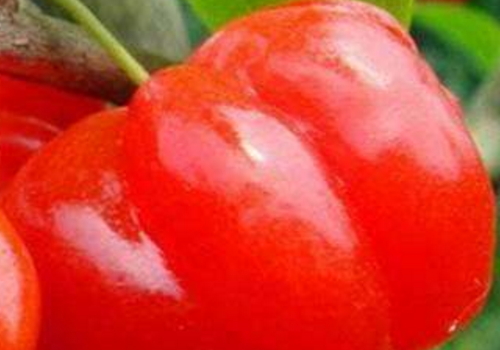
Semi-evergreen or evergreen shrub or small tree, up to 4-5 m tall. Branches soft and drooping. Leaves opposite, ovate to elliptic, apex acuminate, 2.5-3.5 cm long, entire, dark green, grayish white on the underside, veins on the surface conspicuously sunken, petiole short. From summer to autumn, it flowers while fruiting, with slender peduncles. Flowers small, white, fragrant, solitary or in cymes of 2-5 borne in leaf axils. Fruit stalk relatively long; berry oblate, 1.5-2 cm in diameter, with 8 longitudinal ridges, initially pale green, then turning yellow to orange-red, bright red when mature, edible. Seeds yellow-white, oblate.
Surinam cherry has emerald green leaves, and the newly grown young leaves are brownish red. It also blooms continuously from summer to autumn, often with flowers and green, yellow, orange-red to red berries on the same plant. Its fruits hang among the branches and leaves, just like countless small red lanterns dotting among them, rich in color and crystal-clear and lovely. It is an excellent flower species with both fine foliage and fruit for appreciation. Because it tolerates pruning and its branches and trunk are vigorous and twisted, it can also be made into stump bonsai.
[Surinam cherry propagation] Sowing, division, cuttings.
(1) Sowing: In spring and autumn, after the seeds mature, sow immediately after collection. The germination capacity of the seeds can be maintained for about 30 days. After sowing, keep the seedbed moist, and germination occurs in 20-40 days. After 3-4 years of cultivation, it can bear fruit.
(2) Division: Adult plants often sprout young plants at the root zone, which can be dug up and planted separately.
(3) Cuttings: The root cutting method can be used, usually carried out together with spring repotting. Cut robust thick roots into cuttings about 10 cm long for cutting, with a very high survival rate.
[Key points for cultivating and growing Surinam cherry]
(1) Temperature: Likes high-temperature weather; the most suitable temperature for growth is 23-30°C. It has a certain cold resistance and can endure short-term low temperatures of -3 to -2°C. However, in winter the temperature is best kept above 5°C; when the temperature is low, leaf drop will occur. If the temperature is kept above 10°C in winter, although some old leaves will fall off in early December, it can still continue to bloom.
(2) Light: It does not have high light requirements, likes sufficient sunlight, and tolerates semi-shade. It can grow normally under both full sunlight and semi-shade conditions. However, during high summer temperatures, appropriate shading is needed to prevent exposure to scorching sun.
(3) Watering: Likes humid environmental conditions and does not tolerate drought. During the growing period, water thoroughly, especially during high summer temperatures and strong sun, when even more attention should be paid to water supply. But it dislikes poor drainage. During the flower bud differentiation period, water should be appropriately reduced to promote flower bud differentiation. When watering, avoid splashing water on the flowers; when growing outdoors, pay attention to rain protection to avoid flower drop. In winter, watering should be controlled to keep the potting soil relatively dry. If the plant continues to grow and bloom because of high winter temperatures, then normal watering should be given.
(4) Environmental humidity: Likes a humid environment. During the growing season, frequently spray water on the branches, leaves, and surrounding environment to increase environmental humidity.
(5) Fertilizing: Does not tolerate barrenness and likes fertilizer, but does not like concentrated fertilizer. Fertilizing should follow the principle of "thin fertilizer applied frequently." During growth, apply fertilizer 1 time every 10-15 days. For young trees and
during the period of branch and leaf growth, fertilization should be mainly nitrogen fertilizer. After entering the flower bud differentiation period, phosphorus-potassium fertilizer should be increased to promote flower bud differentiation and flowering and fruiting. When fruiting is stable, spray 1 time of 0.2% potassium dihydrogen phosphate solution about every 7 days, which is beneficial for fruit enlargement and beautiful coloration.
(6) Pruning: Tolerates pruning. After the ornamental period, remove the remaining fruits and carry out 1 heavy pruning of the plant. In addition to cutting off thin and weak branches, overly dense branches, and diseased and pest-damaged branches, also shorten the remaining long branches so the plant can recover good growth. After pruning, strengthen water and fertilizer management, and new buds will grow after about 20 days. When the new buds grow to 15-20 cm, pinch them back 1 time. After pinching, the lateral branches that emerge should be pinched again after they grow longer, in order to control branch length and form flower buds, thereby achieving the goal of more flowering and more fruiting and maintaining a good tree shape. Because it has the habit of flowering while fruiting, in order to make the fruits uniform in size, # try to keep the same batch of fruits. When the fruits reach a certain number, the flower buds formed afterward should be cut off, and small fruits and overly dense fruits should be thinned. The plant can also be pruned into round, conical, and other shapes. '
(7) Potting and repotting: For pot cultivation, a slightly larger pot is suitable. Because its roots are taproots and it has very few fine roots, when transplanting and potting, take care not to damage the root system as much as possible. For vigorously growing plants, repot 1 time every 2 years. When repotting, remove 2/3 of the old soil and cut off overly long old roots. It likes slightly acidic sandy soil rich in humus, loose and fertile, and with good air permeability. The substrate can be prepared from materials such as leaf mold, garden soil, peat soil, and coarse sand, and mixed with a small amount of superphosphate, bone meal, and other phosphorus-potassium fertilizers as base fertilizer.
(8) Artificial supplementary pollination: If it blooms in winter, because there are no insects to pollinate, artificial supplementary pollination should be carried out every morning to increase fruit set.
(9) Pest and disease control: There are rarely pests and diseases, but sometimes there is damage from anthracnose, scale insects, adult scarab beetles, butterfly larvae, and other pests and diseases.
[Common problems in cultivating and growing Surinam cherry]
Common problems Causes
Leaf drop ① Low temperature; ② potting soil too dry or too wet; ③ use of concentrated fertilizer
Flower drop ① Low temperature; ② potting soil too dry or too wet; ③ water splashed on flowers or rain during flowering
Few fruits ① Light too weak; ② applying only nitrogen fertilizer during flower bud differentiation; ③ failure to pinch back in the early growth stage; ④ no artificial supplementary pollination