What diseases can cockscomb cure? What is the market price per jin of its seeds
Cockscomb (Celosia cristata) is an extremely beautiful flower, and it is extremely well suited to being grown in courtyards. So what diseases can cockscomb cure? What is the market price per jin of its seeds:
What diseases can cockscomb cure:
Although there is damp-heat in the body and external invasion of damp pathogens, when liver qi is stagnated, the liver wood will overcome the spleen earth, causing the spleen to lose its transporting function and be unable to transform dampness, so that water-dampness remains within the body. Therefore, by caring well for the liver and keeping it from being damaged - cockscomb enters the liver meridian - while nourishing the liver it can also tonify the spleen and stop leukorrhea, making it a traditional good medicine for treating leukorrhea diseases. In cases of vaginal trichomoniasis, the method is likewise to dry white cockscomb in the sun and grind it into powder, but this time it is not taken mixed with wine; instead it is taken with rice soup. The dosage is 6-10 grams at a time, three times a day. Besides trichomonal vaginitis, this method is also effective for other types of vaginal inflammation and excessive leukorrhea. Among gynecological diseases, apart from abnormal leukorrhea, the most common is irregular menstruation. Based on its effect of cooling the blood and stopping bleeding, cockscomb can also be used to treat excessive menstruation and incessant menstrual bleeding. For example, the method of using cockscomb to treat incessant menstruation is also recorded in the "Jixiao Fang": take an appropriate amount of red cockscomb, dry it in the sun, and grind it into powder. Take 5-9 grams each time, mixed with wine on an empty stomach.
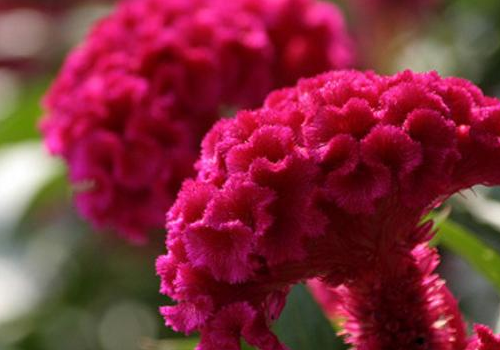
What is the market price per jin of cockscomb seeds:
The price of cockscomb seeds is about 100-120 yuan per jin, but prices vary greatly depending on seed quality, variety, market, and so on. There are many varieties of cockscomb; plant types come in tall, medium, and dwarf forms, and the shapes include cockscomb-shaped, torch-shaped, pom-pom-shaped, feather-shaped, and fan-shaped. Flower colors include bright red, orange-yellow, dark red, purple, white, and mixed red-and-yellow, while leaf colors include dark red, emerald green, yellow-green, and red-green. The seed prices of different varieties differ greatly.
That is all for the introduction to the diseases cockscomb can cure. Now you know the price too!
Does cockscomb treat gynecological diseases? What diseases can cockscomb cure
Because its shape looks rather like a rooster's head, everyone calls it by this name. It is deeply loved by people not only because it looks beautiful, but more importantly because it has high medicinal value, being especially suitable for women and bringing no small amount of help to female friends.
Does cockscomb treat gynecological diseases
Cockscomb can treat gynecological diseases. Cockscomb has the effects of cooling the blood, stopping bleeding, stopping leukorrhea, and stopping dysentery. It has an excellent therapeutic effect on functional uterine bleeding, excessive leukorrhea, dysentery, and other conditions, and is a good gynecological medicine. Among gynecological diseases, apart from abnormal leukorrhea, the most common is irregular menstruation. Cockscomb can also be used to treat excessive menstruation and incessant menstrual bleeding.
What diseases can cockscomb cure
Although there is damp-heat in the body and external invasion of damp pathogens, when liver qi is stagnated, the liver wood will overcome the spleen earth, causing the spleen to lose its transporting function and be unable to transform dampness, so that water-dampness remains within the body. Therefore, by caring well for the liver and keeping it from being damaged - cockscomb enters the liver meridian - while nourishing the liver it can also tonify the spleen and stop leukorrhea, making it a traditional good medicine for treating leukorrhea diseases. In cases of vaginal trichomoniasis, the method is likewise to dry white cockscomb in the sun and grind it into powder, but this time it is not taken mixed with wine; instead it is taken with rice soup. The dosage is 6-10 grams at a time, three times a day. Besides trichomonal vaginitis, this method is also effective for other types of vaginal inflammation and excessive leukorrhea. Among gynecological diseases, apart from abnormal leukorrhea, the most common is irregular menstruation. Based on its effect of cooling the blood and stopping bleeding, cockscomb can also be used to treat excessive menstruation and incessant menstrual bleeding. For example, the method of using cockscomb to treat incessant menstruation is also recorded in the "Jixiao Fang": take an appropriate amount of red cockscomb, dry it in the sun, and grind it into powder. Take 5-9 grams each time, mixed with wine on an empty stomach.
How to prepare cockscomb
1. Stewed pig lungs with cockscomb
Ingredients: 20 grams white cockscomb, 100 grams pig lungs, 30 grams rock sugar
Preparation:
1. Wash the white cockscomb, put it in a gauze bag and seal it; wash the pig lungs and cut them into granules; crush the rock sugar.
2. Put the white cockscomb, rock sugar, and pig lungs together into a stewing cup, and add 200 milliliters of water.
3. Place the stewing cup over high heat and bring to a boil, then switch to low heat and stew for 50 minutes.
Effects: Clears heat and detoxifies, cools the blood and stops bleeding. For patients with cirrhotic ascites who also have bleeding.
2. Cockscomb egg soup
Ingredients: 40 grams cockscomb, 1 egg, an appropriate amount of white sugar.
Method: Add two bowls of water to the cockscomb, simmer down to one bowl, remove the residue, break the egg and stir it evenly, bring to a boil, and add an appropriate amount of white sugar.
Effects: Clears heat, cools the blood, and stops bleeding. Suitable for blood-heat metrorrhagia, epistaxis, hematemesis, hemafecia, hematuria, and thrombocytopenic purpura.
3. Cockscomb sponge cake
Ingredients: 5 cups japonica rice, turbid liquor, white sugar, hot water, salt, large jujubes, cockscomb, rock ear, black sesame
Method
1. Soak the japonica rice in 20°C water for 8 hours, then remove and grind into flour.
2. Mix the dough at a ratio of 100 grams japonica rice flour to 10 grams white sugar, 15 grams turbid liquor, and 45 grams water, and ferment at 30°C for 8 hours.
3. Remove the pits from the large jujubes and cut them into shreds. Choose red and tender cockscomb, wash it and take it out, and stir-fry it together with the black sesame.
4. Put the mixed dough into a sponge cake frame or steamer lined with clean hemp cloth, and place the large jujubes, cockscomb, black sesame, and rock ear on top as seasonings.
5. After steam is seen rising from the steamer, steam for more than 20 minutes, and after cooling, cut into diamond and square shapes.
How to plant cockscomb seeds
1. Sowing seeds
Cockscomb is commonly propagated by seed. At Qingming, choose a good plot, apply sufficient base fertilizer, plow finely and harrow evenly, level and make beds, scatter the seeds evenly over the bed surface, cover the seeds slightly, firm the soil and water thoroughly. Generally at a temperature of 15-20°C, seedlings emerge in 10-15 days. For summer sowing after Mangzhong, seize the dry period to clear weeds, and it can also be intercropped with white peony, tree peony, or other crops, using one jin of seed per mu.
2. Seedling management
When the seedlings are 2 cun tall, thin them to a row spacing of 1 chi and a plant spacing of 8 cun. The thinned seedlings can be transplanted to other fields, and after transplanting they must be watered. During the seedling stage, be sure to weed and loosen the soil, and when it is not too dry, water as little as possible. When the seedlings are about a chi tall, apply a topdressing once. After the rows close, appropriately remove old leaves. When flowering and heading, if the weather is dry, water appropriately, and in the rainy season strictly prevent water accumulation in low-lying areas. After heading, the flower buds in the leaf axils of the lower part can be removed to help nutrients concentrate on the growth of the main spike at the top.
It turns out cockscomb can also make so many delicious dishes. Once made, they not only taste good but also bring many benefits to the body. Friends who like it should quickly choose their favorite and try making it. You can also each make one with your friends, and then you can hold a “cockscomb food” gathering.
Cockscomb picture collection: cockscomb information and characteristics
Cockscomb gets its name because its inflorescence resembles a rooster's comb. Most of its flowers are red, and it is one of the relatively famous herbaceous flowers. Its colors are bright and lively, and because of its ornamental value, many people like to use it to beautify the environment. So what exactly is cockscomb like, and what characteristics does it have? Let us learn about it:
Cockscomb pictures:
Cockscomb information and characteristics:
[Basic information]
Scientific name: cockscomb
Latin scientific name: Celosia Cristata
Aliases: cockscomb flower, laolaihong, luhua cockscomb, pen cockscomb, small-head cockscomb, phoenix-tail cockscomb, big rooster flower, rooster-foot root, red cockscomb.
Distribution: native to tropical Africa, the Americas, and India. In China it is mainly distributed in Anhui, Beijing, Fujian, Gansu, Guangdong, Guangxi, and many other regions.
[Morphological characteristics]
Cockscomb is an annual herb, with a plant height of 40-100 cm. The stem is upright and stout. The leaves are alternate, long ovate or ovate-lanceolate. The spike-like inflorescence is terminal, appearing fan-shaped, kidney-shaped, oblate-spherical, and so on. Its natural flowering period is from summer and autumn to the first frost. It is commonly propagated by seed. During the growth period it prefers high temperature, full light, and dry air. It is relatively drought-tolerant but not cold-tolerant, and has strong reproductive capacity. It is harvested when the flowers are in full bloom in autumn and dried in the sun. The leaves are ovate-lanceolate to lanceolate, with entire margins. The inflorescences are terminal and axillary, flat and cockscomb-shaped. The flowers come in white, pale yellow, golden yellow, pale red, fiery red, purple-red, brown-red, orange-red, and other colors. The utricle is ovate, and the seeds are black and glossy.
The stem of cockscomb is red or greenish-white. The leaves are alternate and stalked, and the leaves have many colors such as dark red, emerald green, yellow-green, and red-green; the flowers gather at the top, resemble a cockscomb, are flat, thick, and soft, and appear like an inverted broom on the plant. The flower colors are also rich and varied, including purple, orange-yellow, white, and mixed red-and-yellow. The seeds are tiny, purple-black, and hidden within the fluff of the flower crown. Cockscomb plants come in tall, medium, and dwarf types. The dwarf type is only 30 cm tall, while the tall type can reach 2 m; in 2009, Wang Jinzhang, a resident of Shahekou District in Dalian, grew one 2.4 m tall. Cockscomb has a relatively long flowering period, and can bloom from July to December. This product is a spike-like inflorescence, mostly flat and fleshy, cockscomb-shaped. It is 8-25 cm long, 5-20 cm wide, with a maximum diameter of 40 cm. The upper edge is broad, wrinkled, and densely covered with linear scales, while the lower end gradually narrows, often retaining a flat stem. The surface is red, purple-red, or yellowish-white; below the middle, many small flowers are densely borne, and the persistent bracts and perianth segments of each flower are membranous. The fruit dehisces by a lid, and the seeds are flat, round-kidney-shaped, black, and glossy. It is light in weight and flexible in texture. It has no odor and a mild taste.
Cockscomb is divided into red and white types. Although they belong to the same genus, because their medicinal properties differ, each has its own uses, and red cockscomb is the main type circulating on the market. Those with large flowers, bright color, and short stalks are considered of good quality.
[Growth habits]
Cockscomb prefers a warm, dry climate. It is afraid of drought, likes sunlight, and is not tolerant of waterlogging, but it is not demanding about soil. It can generally be planted in ordinary soil and courtyards, and it is a new way to develop courtyard economies at present. People with insight may wish to give it a try.
The effects and functions of cockscomb
1. It has a good effect of decorating the home, and this is beyond doubt. Cockscomb, also known as luhua cockscomb, pen cockscomb, big-head cockscomb, phoenix-tail cockscomb, and so on. Because its flower shape and color resemble the comb on a rooster's head, it is named cockscomb. >>More
2. It can effectively treat gynecological diseases. Because the inflorescence morphology differs, cockscomb varieties can be divided into broom cockscomb, face cockscomb, mandarin-duck cockscomb, tassel cockscomb, and so on. The test-tube method proves that the decoction of cockscomb has a good effect on human vaginal trichomonads; after the parasite bodies come into contact with the medicinal liquid for 5-10 minutes, they tend to disappear. It mainly cools the blood, stops bleeding, treats hemorrhoidal bleeding, red-and-white dysentery, hematemesis, hemoptysis, bloody strangury, women's metrorrhagia, and red-and-white leukorrhea. >>More
3. It is an ideal healthy food. Per 100 grams of fresh cockscomb, the main components come from the cockscomb inflorescence, which contains a large amount of protein, as well as rich potassium, sodium, calcium, magnesium, iron, phosphorus, zinc, β-carotene, vitamins 1 and 2, vitamins, and other minerals and vitamins.
4. Cockscomb can make a very tasty soup.
(1) Turtle glue cockscomb egg soup: Break 150 grams of eggs into a bowl, add 20 grams of turtle glue and stir evenly; wash 75 grams of cockscomb and cut it into slices; heat melted chicken fat in a wok, add the egg mixture and stir-fry until puffed, add pork soup and refined salt, bring to a boil for 2 minutes, then add cockscomb and pepper, cook until done, remove from the heat into a bowl, and add 25 grams of chopped scallions before eating. This soup has the effects of nourishing yin and moistening dryness, nourishing and enriching the blood, and cooling the blood and stopping bleeding.
(2) Bird's nest cockscomb lung slice soup: Add 18 grams of high-grade bird's nest to clean water and steam until the bird's nest is soft; then put half a portion of high-grade clear soup, refined salt, cooking wine, ginger-scallion juice, the softened bird's nest, and 300 grams of blanched clean pig lung slices into a clean pot, place over high heat and bring to a boil, then add 60 grams of clean cockscomb slices, bring to a boil and cook until flavorful, and it is ready to eat. This soup has the effects of nourishing yin and moistening dryness, benefiting the spleen and stomach, clearing lung heat, stopping diarrhea and coughing, and treating hemoptysis and hematemesis.
5. Cockscomb has a very good effect of greening the home. Cockscomb [3] is named because its inflorescence is red, flat, and shaped like a cockscomb, and it enjoys the reputation of "the bird among flowers." Cockscomb is one of the famous open-ground herbaceous flowers in gardens. Its inflorescence is terminal and conspicuous, with diverse shapes and colors, bright and lively, and it has relatively high ornamental value, making it an important flowerbed flower. Tall varieties are used in flower borders and flowerbeds, and are also very good cut flower materials; cut flowers kept in a vase can last more than 10 [days]. They can also be made into dried flowers, which do not wither for a long time. Dwarf varieties are potted or used as border plantings.
Cockscomb cultivation techniques
Climate and soil
It prefers a warm climate. It is not demanding about soil, but cultivation is better in sandy loam with good drainage.
Planting
Seed propagation. Generally direct seeding is used, but seedling transplanting is also possible. For direct seeding, use 5-6 liang of seed per mu, mix evenly with wood ash mixed with human and livestock manure water, and open holes on the bed at a row and plant spacing of about 30 cm each, about 3 cm deep. The bottom of the holes should be flat. First apply human and livestock manure water, then evenly scatter the seed ash.
Field management
When the seedlings are 7-10 cm tall, thin and fill in the seedlings, leaving 4-5 strong seedlings per hole. Weed and topdress; the first time after thinning, and the second time in May. Water during drought. [2]
Harvesting and processing
Generally around White Dew, the seeds gradually turn black and mature. The flower stalks can be cut in time and placed in a ventilated place to dry and thresh. The flowers and seeds are managed separately and used separately as medicine. Generally, the yield per mu is 300 jin of seeds and about 1000 jin of flowers. When drying the flowers, take them out early and bring them back late, and do not let them be exposed to night dew, so as to avoid deterioration and reduced medicinal efficacy. The seeds must be winnowed clean, bagged, and stored to prevent mildew and insects. [3]
Management and care
(1) Plant in sandy loam soil that is high and dry in terrain, sunny, fertile, and well drained.
(2) Do not water too much during the growth period. Control watering after flowering. Water appropriately during dry weather, and drain promptly on rainy days.
(3) Remove all axillary buds starting from the seedling stage.
(4) After the cockscomb has formed, apply a dilute compound liquid fertilizer once every 10 days (2-3 times).
The flower language of cockscomb
Cockscomb grows in autumn. When the passion of summer is replaced by the bleak autumn wind and people's moods gradually become melancholy, cockscomb blooms like fire, with fiery red colors and clusters of blossoms. People therefore give it the flower language of "eternal true love."
That is all for sharing with everyone regarding cockscomb pictures, cockscomb information and characteristics, and related information. We hope it can help everyone. For more cockscomb-related information, please follow the Tubatu Learn Decoration Flowers column.