When does the cypress vine bloom? Yellowing leaves can be solved this way
Many people grow cypress vine, and they encounter some problems during care. When does the cypress vine bloom? What to do when the leaves turn yellow?
When does the cypress vine bloom:
The flowering period of the cypress vine: from early July to late September
The cypress vine loves light and prefers a warm, humid environment. It grows in areas at altitudes of 0 to 2500 m and is not cold-tolerant. It can self-sow (generally it is introduced and cultivated artificially) and requires fertile soil. It has strong stress resistance and is easy to manage. Its capsule contains 4 seeds, which fall to the ground after maturing and grow on their own the following year.
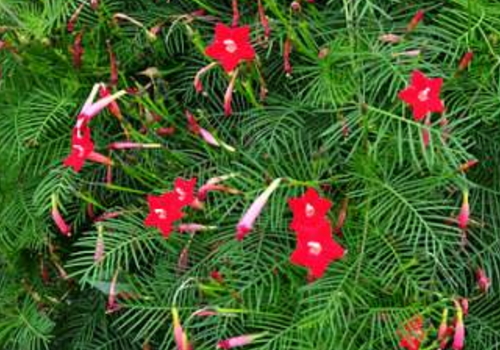
What to do when the cypress vine leaves turn yellow:
1. Choosing soil
The cypress vine is suitable for growing in loose, fertile sandy soil. You can mix leaf mold and garden soil as a growing medium, and add some nitrogen-phosphorus-potassium compound fertilizer as a base fertilizer.
2. Reasonable watering
Generally, water once a week, and you can decide whether to increase watering based on the growth condition. Overall, keep the potting soil moist but not waterlogged.
3. Pest and disease prevention
When the cypress vine develops disease, it can be sprayed for treatment with a 500-fold dilution of 50% thiophanate wettable powder.
4. Controlling light
When caring for the cypress vine normally, ensure sufficient light. In summer, when the sunlight is too strong, pay attention to shading, and it can be placed in a well-ventilated, cool place.
5. Reasonable fertilizing
When planting the cypress vine, apply a certain amount of base fertilizer. After that, topdress once a month; if no base fertilizer was applied, then fertilize once every 15 to 20 days.
6. Temperature control
In summer, when the temperature is too high, move the cypress vine indoors to a cool place and appropriately spray water on the leaf surface to cool it down. In winter, when the temperature is low, it should also be moved indoors to ensure the indoor temperature.
Alright, that is all for the solutions to yellowing cypress vine leaves. Friends, you all understand now, right?
When does the cypress vine bloom? Which months are the cypress vine's flowering period?
Many friends like to grow a pot of flowering plants, which can not only decorate the home environment but also cultivate character. However, growing a plant until it blooms is the most fulfilling. The cypress vine, commonly known as the five-pointed star flower, and just hearing this name lets people imagine its beautiful flowers. Its flowers are bright in color and very lovable. So, when does it bloom?
When does the cypress vine bloom?
When the cypress vine blooms, it opens every day, opening in the morning and withering in the afternoon. Its flowering period is generally from early July to late September.
Which months are the cypress vine's flowering period?
The flowering period of the cypress vine is from early July to late September, and the flowering period is very long. In the areas of Anhui, Hubei, and Hunan in China, the flowering period of the cypress vine can last from April to November each year. After the cypress vine blooms, it produces seeds, and the fruit ripening period is September to November.
Cypress vine growing methods and precautions
Cypress vine growing methods
1. Water and fertilizer management
The cypress vine has a relatively large demand for water and fertilizer. Generally, when the cypress vine plant grows to a certain size and can be transplanted or potted, first apply a certain amount of base fertilizer. After that, fertilize once a month. In addition to regular fertilizing, before flowering it also needs 1-2 applications of liquid fertilizer to ensure sufficient nutrients for flowering. When fertilizing, nitrogen-phosphorus-potassium compound fertilizer or granular fertilizer is best, ensuring that the cypress vine's growth has sufficient trace elements. Do not apply only one type, to prevent excessive vegetative growth and few flowers.
When transplanting the cypress vine, be sure to water thoroughly. After that, only water once a week to ensure the water supply. However, as the plant grows and the temperature changes, the watering time should change, from watering once a week to watering once a day, keeping the potting soil moist but not waterlogged.
2. Light and temperature
The cypress vine is native to tropical regions, and the characteristic of tropical regions is high temperature and sufficient light. Therefore, the cypress vine is a plant that likes warmth, is not cold-tolerant, and is afraid of frost. The temperature requirement of its growing environment is relatively high. When the temperature is low, the growth of the cypress vine slows down. The cypress vine requires sufficient sunlight. Most types do not have strict requirements for day length, but sufficient light must still be ensured.
3. Soil
The cypress vine does not have strict soil requirements, but loose and fertile soil is best. You can choose fertile soil in a sunny location.
2. Precautions for growing cypress vine
1. Propagation methods of cypress vine
The cypress vine can be propagated by sowing, cuttings, and layering. Propagation is mainly by sowing, the method is simple, and the cypress vine can self-sow.
2. Pest and disease control of cypress vine
The cypress vine has strong vitality and good adaptability, and generally has no pests or diseases.
What to do when the cypress vine leaves turn yellow
1. Cause: soil. The cypress vine does not have strict soil requirements, but if the soil does not meet the needs of its growing environment, it can also cause the leaves to turn yellow and produce few flowers.
Measure: choosing soil. The cypress vine is suitable for growing in loose, fertile sandy soil. You can mix leaf mold and garden soil as a growing medium, and add some nitrogen-phosphorus-potassium compound fertilizer as a base fertilizer.
2. Cause: improper watering. Too much or too little watering will affect the growth of the cypress vine. Too much causes waterlogging, root rot and yellow leaves; too little causes only evaporation without water supply, and the leaves age, turn yellow, and even fall off.
Measure: reasonable watering. Generally, water once a week, and you can decide whether to increase watering based on the growth condition. Overall, keep the potting soil moist but not waterlogged.
3. Cause: pests and diseases. Leaf spot and powdery mildew often cause damage, making the cypress vine leaves turn yellow.
Measure: pest and disease prevention. When the cypress vine develops disease, it can be sprayed for treatment with a 500-fold dilution of 50% thiophanate wettable powder.
4. Cause: light. Exposure to strong sunlight can easily cause the leaf tips of the cypress vine to scorch or the leaves to turn withered yellow. Insufficient light causes poor growth of the cypress vine and can also lead to yellow leaves.
Measure: controlling light. When caring for the cypress vine normally, ensure sufficient light. In summer, when the sunlight is too strong, pay attention to shading, and it can be placed in a well-ventilated, cool place.
5. Cause: lack of fertilizer. The cypress vine has relatively high fertilizer requirements during growth, and sufficient base fertilizer should be applied. If the base fertilizer is insufficient, the leaves will also turn yellow.
Measure: reasonable fertilizing. When planting the cypress vine, apply a certain amount of base fertilizer. After that, topdress once a month; if no base fertilizer was applied, then fertilize once every 15 to 20 days.
6. Cause: temperature. The cypress vine likes warmth and is not cold-tolerant. The growing temperature cannot be too high or too low, otherwise the leaves easily turn yellow or the plant even dies.
Measure: temperature control. In summer, when the temperature is too high, move the cypress vine indoors to a cool place and appropriately spray water on the leaf surface to cool it down. In winter, when the temperature is low, it should also be moved indoors to ensure the indoor temperature.
The cypress vine is native to Mexico. After being introduced to China, it has been widely planted with the development of cultivation techniques. Its flowers are very beautiful, just as poetic as its name. If you like it, you can also grow it in a pot and display it indoors!
What to do when the cypress vine leaves turn yellow? 7 common causes you need to know, with solutions
During plant cultivation, many factors can affect its growth. For example, when we water improperly, its leaves may turn yellow; when water accumulates for a long time, the roots may rot, and so on. Therefore, we need to avoid these situations through the correct cypress vine growing methods. But what should be done if the cypress vine leaves turn yellow? Let's look at the common causes and solutions.
What to do when the cypress vine leaves turn yellow
1. Excessive water: the roots of the cypress vine are relatively afraid of water and moisture, because it is a taproot flowering plant. If there is excessive water, the roots rot very easily. The main causes of excessive water include watering too much, poor drainage during the rainy season, and so on. The solution is to water appropriately, ensure good soil drainage, and pay attention to preventing waterlogging on rainy days.
2. Lack of water and drought: when growing the cypress vine, you should neither give excessive water nor let it lack water for a long time, because its growth and flowering cannot be separated from water absorption. If there is a long-term lack of water, the water in the plant will be used up, and the old leaves will turn yellow and fall off. The solution is reasonable watering; for the method, you can refer to the detailed introduction in how to water the cypress vine.
3. Sunlight too strong: although the cypress vine likes a sunny environment very much, and it is also a plant native to the tropics, in many places in China the summer temperature is getting higher and higher, especially the sunlight in midsummer is very strong. But when the sunlight is too strong, the leaves of the cypress vine may also be sunburned and turn yellow. What should be done about yellow cypress vine leaves caused by this reason? The answer is appropriate shading in midsummer.
4. Lack of light: most plants like places with relatively sufficient light, and the cypress vine is no exception. If it is placed in a place where there is often not much light, its leaves will not only turn yellow and fall off, but the stems will also curl and shrink. So normally avoid placing it in a dim place.
5. Temperature too low: the cypress vine likes heat and fears cold, and its cold tolerance is very weak. Once the temperature is below 10 degrees when growing it and no insulation measures are taken, its leaves and plant may very likely be frostbitten. If it is caused by this reason, you need to remove the yellow leaves and then quickly place the cypress vine in a warm place for care.
6. Insufficient fertilizer: the cypress vine has a very small demand for fertilizer, but when planting it you cannot completely skip fertilizing, and even less can you apply only nitrogen fertilizer or phosphorus fertilizer. If fertilizer is lacking, then the newly grown leaves may turn yellow, and it may also grow excessively. The solution is to topdress once every 2-3 weeks, while also paying attention to balanced nutrition.
7. Pest and disease problems: when powdery mildew, leaf spot, aphids, and scarab beetles harm the cypress vine, they can all cause its leaves to turn yellow. Moreover, not only do they turn yellow, but disease spots also appear on the plant, ultimately causing the plant to wither and die. Therefore, prevention and treatment must be done well; the methods were introduced in detail in cypress vine pest and disease control.
Care of the cypress vine flower
1. Soil: the cypress vine has relatively low soil requirements, and most soils are suitable for planting. However, it is best to choose fertile, looser leaf mold, and it is more suitable to choose soil from places that can receive sunlight. These soils will be healthier and safer, and less likely to contain pathogens.
2. Fertilizer and water: the first watering must be thorough, then place it in a semi-shaded place for 5-7 days. During this stage, do not fertilize. After 1 week, when it begins to resume growth, apply liquid fertilizer once every 3-4 weeks. For normal watering, water according to the moisture condition of the soil, watering after the soil dries, and each watering should be thorough.
3. Temperature and light: the cypress vine likes a warm environment and is relatively afraid of cold, so avoid keeping it in a lower-temperature environment. In the cypress vine growing methods and precautions, light is very important. During the growing period, let it enjoy sufficient sunlight.