Is Clematis Poisonous? Learn the Correct Way to Grow It
But did you know that some plants are not suitable for growing indoors? Is clematis poisonous? What is the method for growing it?
Is clematis poisonous:
Clematis is not poisonous. It has a certain ornamental value; besides that, it also has medicinal value. Used medicinally, clematis can treat many diseases. Medicinally, clematis is mainly diuretic, and it can also dredge meridians, moisten the intestines and relieve constipation, and has a detoxifying effect.
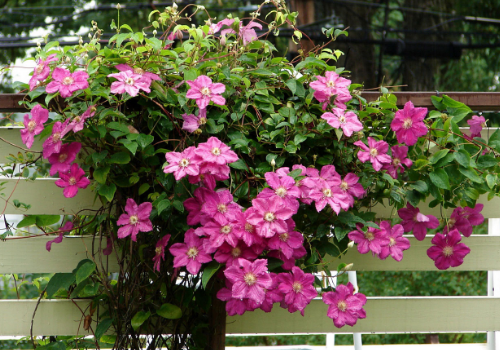
What is the method for growing clematis:
1. Soil. It prefers fertile, well-drained alkaline loam and dislikes waterlogging. The most important thing is that the potting soil must be breathable. If conditions allow, choose some better soil that has been strictly sterilized. If conditions are poor, you can use perlite and peat. Try not to dig garden soil directly for potting.
2. Watering. For clematis to grow well, the root system must breathe smoothly, so watering should alternate between dry and wet. Let the potting soil have time to dry out. Generally, when the soil 2-3 cm below the surface is dry, you can water. If it is a plastic pot, that is a different matter: you can judge by the weight of the potting soil, and water when it becomes lighter; for a clay pot, observe the potting soil, and when it turns white, it needs watering. When watering, you must water thoroughly; watering thoroughly means at least water flows out from the bottom of the pot. After watering, make sure to ventilate promptly.
3. Light. Potted clematis can be grown under full light from autumn to early spring of the following year without shading. After entering summer, strong light will cause clematis leaves to age and turn yellow and grow poorly, so appropriate shading is needed. When caring for it indoors, at least about 4 hours of sunlight per day must be ensured, otherwise clematis will grow poorly.
4. Fertilizing. Stick to light fertilizer applied frequently, and avoid seeking quick results. There are many varieties of clematis, and some are not tolerant of fertilizer, such as Clematis macropetala, evergreen clematis, and Montana clematis, which should be given less fertilizer during care. Also, when fertilizing seedlings, it is best to use only root-promoting and seedling-establishing fertilizer, and do not apply heavy fertilizer. Winter is the best season to fertilize clematis; basically, fertilize once and it will last for several months.
Go buy one or two pots of lovely plants and take them home.
How to Grow Lemon Balm: Learn to Raise a Household Air Guardian
The lemon balm plant is short and full, tolerant of shade, and gives off a faint fresh fragrance when touched by hand. It can absorb harmful indoor gases and release fresh negative oxygen ions, purify the air, beautify the environment, reduce pollution, and protect the eyes. It is called the nemesis of hidden killers and the guardian of health, specifically absorbing toxic and harmful gases in indoor air. It is quite beneficial to the home environment. Below let us look at how to grow lemon balm:
Basic information about lemon balm:
Lemon balm, scientific name lemon balm or curly-leaf mint, Latin name: Melissa Officinalis, English name: Lemon balm, also known by aliases such as balm mint, bee balm, and bee flower. It is a perennial herbaceous plant with persistent roots in the Lamiaceae family.
Lemon balm, plant height 50 cm, stems and leaves with a soapy fragrance, verticillaster inflorescence, white labiate flowers, flowering period July-August. It is heat-tolerant and cold-tolerant, relatively tolerant of drought and waterlogging, and also tolerant of pruning. Prune once before the Start of Winter, and it can overwinter safely. In winter it can withstand low temperatures below 0°C, and in summer growth is restricted at high temperatures above 30°C. The most suitable growth temperature is between 10-20°C. Lemon balm propagates easily and can be grown from seed, cuttings, and division.
How to grow lemon balm:
1. Sunlight:Lemon balm prefers bright light. If the room has very good lighting, place lemon balm in a spot with sunlight, and normal indoor ventilation is enough; if the room lighting is not very good, such as in a bathroom or kitchen, place lemon balm in the room for 72 hours, then move it to a place with ample sunlight, and after 72 hours or so put it back. When the weather is not cold, it can also be placed outside to absorb light and get fresh air.
2. Temperature:Lemon balm has low requirements for temperature when grown. In winter it can withstand low temperatures below 0°C, but in summer growth is restricted at high temperatures above 30°C. The most suitable growth temperature is between 10~20°C.
3. Watering:Water it with clean water or rice-washing water every 3-5 days. If the branches and leaves wilt due to lack of water, replenish water immediately and they will recover quickly. For nutrient solution, commonly used general plant nutrient solution can be used.
4. Pruning:Lemon balm grows very quickly. It is recommended to prune once a week. Just cut above the new leaves growing on higher nodes. If black-edged leaves or old leaves at the base appear, do not worry; just pull them off.
5. Pests:Lemon balm can give off volatile oil with bactericidal effects and can absorb harmful gases, so pest problems basically do not occur. As long as you maintain the water, light, temperature, and other conditions needed for lemon balm growth, it is fine.
Lemon balm is a plant that is quite beneficial to the home air environment. Grown at home, it can absorb harmful gases and release negative oxygen ions, which is good for human health. Moreover, its growing method is simple, so it is best to place a few pots when decorating a home.
More plants:
[Dragon Tree] [Dieffenbachia] [Lucky Bamboo] [Japanese Aralia] [Nandina] [Ivy] [Epiphyllum]
[Spider Plant] [Winter Jasmine] [Cymbidium] [Aglaia] [Crinum Lily] [Magnolia] [Peace Lily] [Anthurium]
[Bird of Paradise] [Hydrangea] [Dahlia] [Cineraria] [Clematis] [Lantana] [Pansy] [Daphne]
[Tulip] [Night-blooming Jasmine] [Tuberose] [Hibiscus] [Kalanchoe] [African Daisy] [Mimosa] [Campanula]
[Water Lily] [Oriental Lily] [Hydrangea] [Red Maple] [Japanese Maple] [Scarlet Sage] [Iris]
Which Flowers Are Not Suitable for Growing in Rooms
Recently, the editor of the Landscape Ecology Network has often seen that small potted plants from various places are very popular in the market, with good market sales. As someone who also likes growing green plants, I cannot help but share with everyone which plants are not suitable for growing indoors. These plants that are not suitable for indoor growing are not absolutely impossible to grow; it is just that relatively speaking, they are suitable for placing outdoors for everyone to admire.
Dwarf Gardenia
Elderberry
1. Coniferous and cypress plants, dwarf gardenia, elderberry, etc. These plants produce unusual odors, causing abnormal reactions such as decreased appetite and nausea.
Night-blooming Jasmine
2. Flowers with high oxygen consumption. Such as lilac and night-blooming jasmine, they are extremely unfavorable to the health of patients with heart disease and high blood pressure. During the day they photosynthesize, lowering indoor oxygen concentration; at night they release a large amount of waste gas, which is unfavorable to health.
Pelargonium (Geranium)
3. Flowers and plants that cause allergies. Such as pelargonium (geranium), ormosia, wild chrysanthemum, lucky bamboo, broad bean, pineapple, ginkgo, and lacquer tree, etc. Frequent contact can cause skin allergies. The floral scents of rose, Chinese rose, and lily can also cause allergies in some people.
Oleander
4. The floral scent molecules of oleander stimulate the nerves, making people drowsy and reducing intelligence. In addition, oleander is also one of the more toxic plants.
Tulip
5. Tulip flowers contain toxic alkaloids, and excessive contact can cause hair loss.
Poinsettia
Crown of Thorns
6. Also, plants such as mimosa, poinsettia, oleander, yellow azalea, dieffenbachia, crown of thorns (Euphorbia milii), calla lily, and croton have toxins in their plant bodies. Poinsettia has toxic leaf sap. If you do not break or touch the sap, it will not harm health, and planting it outdoors can be for ornamental purposes.
In the materials there are 52 species of carcinogenic plants. If friends like to grow these plants, they must pay attention to the details of planting. These include: Sterculia scaphigera, croton, fine-leaf croton, bee-waist ficus, Shishan croton, hairy-fruited croton, croton, crown of thorns, cat's-eye herb, sun spurge, kansui, caper spurge, alpine snow, Euphorbia milii, thousand-root grass, red-backed osmanthus, chicken-tail wood, multi-lobed physic nut, red bird coral, mountain tallow, Chinese tallow, round-leaf tallow, tung tree, wood tung tree, fire calamity thorn, daphne flower, edgeworthia, wolf's bane, yellow daphne, wikstroemia, soil agarwood, fine-axis daphne, sappanwood, Desmodium styracifolium, red-bud euphorbia, cleavers, yellow-haired tofu firewood, false forsythia, blackberry lily, iris, silver-powder fern, yellow-flowered clematis, Tinospora crispa, datura, three-edge, red impatiens, scissors share, hard-pod tree, broad-leaf kiwi, Hainan trichosanthes, bitter almond, Huai achyranthes.