A Detailed Guide to Sichuan Pepper Cultivation Methods and Harvest Period
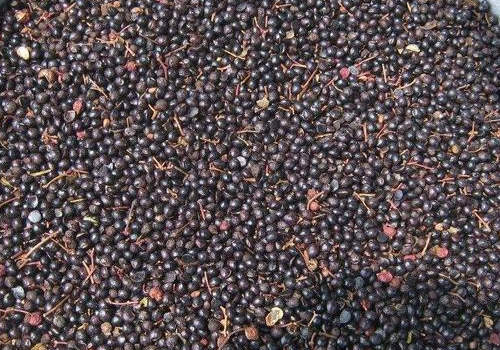
Sichuan pepper is divided into the husk and the seed; the husk is used for cooking, while the seed is used for pressing oil. Sichuan pepper seeds are heavier than the husks. So how is Sichuan pepper cultivated? How long is the harvest period?
How Sichuan pepper is cultivated:
1. Seed treatment
Seed treatment: the seed shell of Sichuan pepper is hard, high in oil, and impermeable to water, making germination relatively difficult. Before sowing, the seeds must first undergo degreasing treatment and storage. For autumn sowing, soak the seeds in alkaline water; use 0.025 kg of alkaline powder per 1 kg of seeds, add water until the seeds are submerged, remove the empty and shriveled grains, soak for 2 days, rub and wash off the oil from the seed coat, then remove and rinse clean with fresh water before sowing.
For spring sowing, several methods can be used to treat the seeds, such as stratified sand storage, mixing with cow dung, mixing and piling with horse dung, or storage in a small pit. Stratified sand storage is the conventional treatment method; for mixing with cow dung, use 6 parts fresh cow dung and 1 part Sichuan pepper seeds, mix evenly, bury in a pit 30 cm deep for winter storage, then take them out the following spring before sowing, break them up, and sow together with the cow dung;
For mixing and piling with horse dung, from mid-March to mid-April, mix water-selected Sichuan pepper seeds with 3 parts horse dung, place in a pile in the sun, turn them over, and sow once they show white sprouts; small pit storage means digging a pit, filling it with water, and storing over winter.
2. Sowing
Sowing is divided into spring sowing and autumn sowing. In spring-drought areas, sowing before the soil freezes in autumn is best; seedlings emerge evenly and 10-15 days earlier than with spring sowing; spring sowing is generally around the "Spring Equinox." Sow 25 kg per mu. For seedling raising in small beds, drilling in furrows can be used, with 4 rows per bed, row spacing of 20 cm, furrow depth of 5 cm, and 1 cm of soil cover; sow 4-6 kg per mu, cover the bed surface with grass after sowing to retain moisture, and remove it in stages after seedlings emerge. The ridge-building method can also be used for seedling raising; for autumn sowing, open a furrow 1 cm deep and 9 cm wide every 24-27 cm, scatter the seeds evenly into the furrow, and after sowing, bank the soil from both sides onto the furrow.
After spring begins, check seed germination in time. If a few seeds are seen to have split open, scrape off part of the covering soil, leaving 2-3 cm; after 5-7 days, when most seeds have split open, scrape off another part of the covering soil, keeping the soil cover about 1 cm thick, and the seedlings will soon emerge completely. If spring sowing uses seeds that have been pre-sprouted, seedlings can emerge 4-5 days after sowing and be complete in about 10 days. This method is suitable for areas prone to spring drought.
3. Seedling stage management
When seedlings are 4-5 cm tall, thin and set the seedlings, keeping a spacing of 10-15 cm. During the seedling growth period, in June and July apply 3000-4500 kg of human manure and urine per mu, or 10-25 kg of chemical fertilizer; fertilization should be combined with irrigation, and after application, cultivate and weed in time. Sichuan pepper seedlings are most afraid of waterlogging; when the rainy season comes, the nursery must do a good job of waterlogging prevention and drainage. One-year-old seedlings reaching 70-100 cm in height can be lifted from the nursery for afforestation.
How long is the Sichuan pepper harvest period:
The harvest season for Sichuan pepper is generally August-September, which is also a great time for raising seedlings and collecting seeds from Sichuan pepper. At present, the main promoted varieties mainly include Dahongpao (Shizitou), Xiaohongpao, Huangjinjiao, Youjiao, and others. Seed collection trees should be selected from middle-aged trees with strong vigor, high fruit set, and excellent quality. When harvesting, select Sichuan pepper that is fully ripe, with purple-red fruit skin, and seeds that are blue-black on the outside, plump, and free of pests and diseases for seed use.
Sichuan pepper seeds are not expensive, and the price of the husk is higher than that of the seed. The method for pre-sprouting Sichuan pepper seeds is very simple: soak them in alkaline water for 2 days, wash off the oil, remove them, and they can be sown. Sowing has two stages, spring and autumn. Sichuan pepper cultivation is relatively easy, and management is also very simple. Harvesting Sichuan pepper requires the most manpower, because harvesting can only be done by hand, and the Sichuan pepper tree also has thorns.
You should all know the cultivation process of Sichuan pepper by now.
Sichuan pepper cultivation: how to select seedlings is the most critical!
Sichuan pepper has the characteristics of fast growth, early fruiting, large returns, wide uses, simple cultivation and management, strong adaptability, a well-developed root system, and the ability to conserve soil and water, so it is welcomed by everyone. Today I will share with you Sichuan pepper cultivation and why how to select seedlings is the most critical!
Sichuan pepper is a deciduous shrub, 3-5 m tall; the fruit, branches, leaves, and trunk all have a fragrance. Sichuan pepper prefers warmth, and during growth and development it needs relatively high temperatures. Sichuan pepper has strong adaptability to soil, and especially prefers deep, fertile, moist sandy loam; it is not strict about soil pH and grows well in neutral or acidic soil, and grows even better on calcareous mountain soil. Sichuan pepper has a strong light preference; grown in shade, it sets fruit poorly. It has strong sprouting ability, tolerates heavy pruning, and its latent buds are long-lived.
Sichuan pepper grows fast and fruits early. One-year-old seedlings can reach up to 1 m, and after planting they bloom and set fruit in 2 years, produce heavily in 3 years, continue for 15-20 years, and live 30-40 years; after aging they can be renewed by sprouting.
Main types of cultivated Sichuan pepper:
In taxonomy, cultivated Sichuan pepper has only the one species, Zanthoxylum bungeanum. Because propagation in China has long used seed-based seedling raising through sexual reproduction, and because of its wide cultivation range, influenced by internal genetic variation and external factors such as local climates, as well as the guiding effect of local people's taste habits, it can be divided into many cultivars according to different characteristics. The same cultivar also has different names and designations in different places, causing Sichuan pepper cultivars to be chaotic and difficult to define. They are usually divided by maturity period, quality, color, and flavor into two major categories: mid-late maturing numbing-hot type and mid-early maturing mild-numbing type. The main cultivated cultivars are introduced below.
1. Dahongpao: also called Shizitou, Dahongjiao, Getajiao, Fengjiao, Qinjiao, and others. Dahongpao is famous for its large grains, red color, strong flavor, and mellow aroma, and is the most widely cultivated cultivar in all regions. Among Dahongpao Sichuan peppers, there are also many selected cultivars in different places, such as Wucijiao, Hancheng's "Huanggajiao," and Gansu's "Qin'an No. 1," among others.
Tree characteristics: shrub or small tree; under natural growth conditions, the tree shape is mostly round-headed or clump-shaped. Trees in full fruit period are 3-5 m tall. One-year-old new shoots are purple-green; twigs are hard, upright, with relatively short internodes; fruit-bearing branches are thick and strong. Perennial branches are gray-brown; prickles are large and sparse, wide and thick at the base, often degenerating; as branch age increases, the prickles blunt and become wart-like growths. Pinnately compound leaves have 5-11 leaflets; leaf blades are broadly ovate, with acuminate tips, deep leaf color, relatively thick and glossy, smooth surface with a relatively thick waxy layer, and oil gland dots that are not very obvious.
Fruit characteristics: fruit stalks are relatively small; fruit clusters are tight; fruit grains are large, 5-6.5 mm in diameter; each cluster generally has 35-50 grains, and can reach more than 100 grains at most. Ripe fruit is deep red, with coarse, obvious wart-like glandular dots on the surface; the thousand-grain weight of fresh fruit is about 85 g. The maturity period is around the Beginning of Autumn, that is, late August to early September, but in Yichuan the maturity period varies greatly due to altitude, site environment, and climate change. Generally, in places near the Yellow River coast in drier years, harvest can begin in mid-August, while in areas such as Niujiadan Township in the Beiyuan region (at an altitude of about 1200 m), harvest cannot begin until late September, a difference of nearly 30 days between the earliest and latest. Under normal conditions, ripe fruit does not split easily; if the harvest period is too dry, it can cause a large amount of fruit to split on the tree. Generally, 4-4.5 kg of fresh fruit can be sun-dried into 1 kg of dried pepper; after drying, the pepper skin is deep red.
Cultivation characteristics: fast growth, early fruiting, high and stable yield. One-year-old seedlings can reach more than 1 m in height; after planting, they can set fruit in three years, enter full fruit period in 6-7 years, and in full fruit period each plant can produce 1-1.5 kg of dried pepper on average; yield peaks at 10-15 years, when a single plant can produce 3-5 kg of dried pepper. It likes fertilizer and water, is drought-resistant, and has relatively poor cold resistance; it is suitable for cultivation in warmer climates and relatively fertile, loose soil, especially single plants planted in "four-side" locations, which grow and fruit even better. The highest-yielding plant can produce up to 7.5 kg of dried pepper. If site conditions are poor and thin, it often forms "small old trees." It is the main excellent cultivar in the pepper areas on the west bank of the Yellow River and the Weibei pepper area.
2. Goujiao: the tree is robust, with a relatively wide branching angle and a relatively open tree form; perennial branches are gray-brown; prickles are large and sharp, with flat bases; leaf blades are relatively broad and large, ovate-oblong, lighter in color than Dahongpao, appearing pale green or yellow-green; fruit clusters are not compact, fruit stalks are relatively long, grains are small, fruit diameter about 4MM, thousand-grain weight of fresh fruit about 70 g, harvested around the End of Heat, fruit color pale red or yellow-red, and 3.5 kg can be dried into 1 kg. Characteristics: long lifespan, late sprouting, late flowering, freeze-resistant, and strongly resistant to late frost damage.
3. Xiaohongpao:
Characteristics: the tree body is similar to Dahongpao, but smaller; prickles are sparse and small, with strongly lignified bases, appearing platform-like; branching angle is large, tree form is open; perennial branches are gray-brown; branches are slender and soft, prone to drooping; leaf blades are small and thin, lighter in color. Fruit stalks are relatively long; fruit clusters are relatively loose; clusters are small and grains are small; fruit diameter is 4-4.5 cm; thousand-grain weight of fresh fruit is about 85 g; when ripe the fruit is bright red with a strong aroma; it matures in early to mid-August, that is, 10-15 days earlier than Dahongpao, and 3-3.5 kg can be dried into 1 kg.
Also: Qin'an No. 1, Shizitou Sichuan pepper: this cultivar is a variant individual discovered in 1982 by the Forestry Bureau of Qin'an County, Gansu Province, from Dahongpao Sichuan pepper, and was appraised at the provincial and municipal levels in 1983. This cultivar is an excellent short-branch variant of Dahongpao Sichuan pepper and has the characteristics of early maturity, high yield, high quality, stable traits, strong stress resistance, easy harvesting, and a wide suitable growing range. From flowering to full harvest, 84 days, it generally begins to mature in early August. The fruit is deep red, bright in color, strong in numbing flavor, and mellow in aroma. In full fruit period, a single plant can produce up to 15 kg of fresh Sichuan pepper, and 4 kg of fresh pepper can be sun-dried into 1 kg of dried pepper.
Its cultivation characteristics are: wide suitable growing range, and it can still grow and fruit normally between 1120-1840 m in altitude. It has strong stress resistance and more prominent drought tolerance, cold tolerance, water tolerance, and poor-soil tolerance than ordinary Dahongpao Sichuan pepper. It is of particularly important significance to promote it in the eastern Shaanxi sub-suitable area for Sichuan pepper, where frost and low-temperature damage are prone to occur.
In addition, there are also "Huanggajiao," "Shizitou," "Wuchi Huajiao," and others selected in Hancheng. Although Sichuan pepper reproduces by seed and its genetic traits are relatively stable, it can also be seen that variation is also common.
Sichuan pepper has a very long cultivation history in China, and its names are very complicated. Even the same cultivar has many different names. In identifying Sichuan pepper cultivars, they should be distinguished by their characteristics, and one should not only look at what they are called.
Sichuan pepper cultivation: how to select seedlings is the most critical. That is what I have shared with you above about the types of Sichuan pepper. You are welcome to come and add explanations.
What is the difference between rattan pepper and Sichuan pepper?
There is more than one kind of Sichuan pepper. Nowadays, the Sichuan pepper generally found in rural areas is green Sichuan pepper, which is also the most common kind. There is also red Sichuan pepper, which mainly grows in the Sichuan area, and its flavor is stronger than that of green Sichuan pepper. Besides these two kinds, there are also Baishajiao, Doujiao, and others. I do not know whether you have heard of rattan pepper. Is rattan pepper the same as Sichuan pepper? Let us learn about it together below.
What is the difference between rattan pepper and Sichuan pepper?
Rattan pepper and Sichuan pepper can be distinguished from the following aspects:
1. Appearance: rattan pepper is mainly small green granules, while Sichuan pepper is mainly red-brown.
2. Flavor: both rattan pepper and Sichuan pepper are seasonings, but rattan pepper is less pungent than Sichuan pepper. Rattan pepper can be used more, while Sichuan pepper should be used less.
3. Tree appearance: the Sichuan pepper tree looks larger, with relatively loose branches and leaves, and relatively thick branches. The rattan pepper tree is relatively short, with relatively compact branches and small branches and leaves.
4. Leaf appearance: Sichuan pepper not only has thicker leaves, but also has many leaves, mostly pinnately compound. Rattan pepper leaves are thinner, and compared with Sichuan pepper they are also relatively fewer, mostly pinnately compound, and there are pinnate wings on the leaf stalks.
5. Fruit appearance: Sichuan pepper fruit has stomata without wart-like protrusions, while rattan pepper fruit has relatively obvious wart-like protrusions, and the fruit skin has obvious bright spots under light.
Growing environment of rattan pepper
Rattan pepper is a light-loving tree species and prefers a climate environment with light and dry, cool conditions, and is relatively drought-tolerant. It usually grows and develops well in areas with an annual average temperature of 17-18°C and annual rainfall of 900-1300mm. However, it is not tolerant of waterlogging; prolonged standing water will cause the pepper tree to die. It is also not strict about soil requirements and can grow within a pH range of 6.5-8.0.
Main value of rattan pepper
Rattan pepper has wide uses and very high economic value. In industry, it is used the same way as Sichuan pepper, currently for making lubricants, paints, soap, and so on.
Medicinal value
The roots, stems, leaves, fruits, and seeds are all medicinal; they can dispel wind and scatter cold, promote qi and relieve pain, treat rheumatoid arthritis, toothache, and swelling and pain from falls and blows, and are also used as an insect repellent and fish-intoxicating agent.
Dietary value
Rattan pepper oil has a bright color. Its taste is refreshing, its numbing aroma is rich, and its numbing flavor is lingering. It is more fragrant, more numbing, and more ecological than Sichuan pepper oil, and is an ideal daily seasoning for hotels, restaurants, and homes.
Growing environment of Sichuan pepper
It is distributed from southern Northeast China in the north, to the northern slopes of the Five Ridges in the south, to the coastal areas of Jiangsu and Zhejiang in the southeast, and to southeastern Tibet in the southwest; Taiwan, Hainan, and Guangdong do not produce it. It is found from plains to relatively high-altitude mountain areas; in Qinghai, it is found on slopes at an altitude of 2500 m, and is also cultivated there. It is suitable for warm, humid, and deep, fertile loam and sandy loam. It has strong sprouting ability, is cold-tolerant and drought-tolerant, likes sunlight, has strong disease resistance, and its latent buds are long-lived, so it tolerates heavy pruning. It is not tolerant of waterlogging; short-term standing water can cause death.
Efficacy and effects of Sichuan pepper
The efficacy of Sichuan pepper mainly includes two aspects, medicinal and edible.
Medicinally, Sichuan pepper is a very important Chinese herbal medicine. It removes dampness, kills insects, relieves pain, and treats food accumulation, vomiting, cough, wind-cold, and hernia pain. It has a certain therapeutic effect on toothache, ascariasis, enterobiasis, genital itching, and sores and scabies. It acts to relieve pain, inhibit bacteria, and expel insects. It can be used to treat schistosomiasis, ascariasis, vulvar pruritus, and so on.
In terms of dietary therapy, Sichuan pepper is a very important seasoning. When stir-frying, when the oil is heated to 60% hot, add Sichuan pepper to make the dish very fragrant. Be sure not to put it in together with chili, because then the chili will burn before the fragrance of the Sichuan pepper is released. In addition, Sichuan pepper is suitable for cold pain in the tail and abdomen, poor appetite, and is suitable for frequent urination.
Harvest time of Sichuan pepper
1. The fruit maturity period of Sichuan pepper is greatly affected by cultivar, climate, and region, and the maturity period is very difficult to determine. Due to differences in cultivar, ecology, management level, and maturity period, the harvest period is generally July-September. In our region it is mainly Jiuyeqing Sichuan pepper, roughly from mid-to-late June to the end of August, and the maturity period varies from place to place.
2. External signs of maturity: when the leaves of Sichuan pepper appear oily and glossy, the fruit color turns red or purple-red, the wart-like protruding oil dots on the fruit skin are obvious and transparent and shiny, the seeds turn black, the fruit skin splits easily, and the aroma is strong with ample numbing flavor, choose a sunny day to harvest.
3. Harvesting method: determine the harvest time according to the cultivar's characteristics and uses, and choose a sunny morning to harvest. When harvesting, pick the whole cluster, and carefully use your hands to snap off or scissors to cut off the fruit cluster stalk. Never pinch the pepper grains with your hands to pick them, so as not to crush the oil cells on the Sichuan pepper fruit and reduce its color, aroma, flavor, and other qualities, affecting economic value. After picking, place them gently in the picking basket. At the same time, the pepper fruit in the picking basket should not be loaded too much, so as to avoid squeezing and bumping that cause the oil cells on the fruit skin to rupture and affect quality.
4. Harvesting precautions: first, protect the branch groups. The biggest characteristic of Sichuan pepper is that fruit-bearing branches have a very strong ability to bear fruit continuously; medium and long fruit-bearing branches are basically at the top of the fruit branches. When harvesting, if scissors are used to cut the flower clusters, it is very easy to cut off the main axis of the flower cluster, affecting the growth of new flower clusters. The correct way is: hold the fruit branch with one hand, and with the other hand pinch off the fruit cluster from the base of the fruit branch, keeping the main axis of the flower cluster as much as possible. Second, protect the leaves. After Sichuan pepper is harvested, the nutrients produced by the leaves all turn to nutrient accumulation. During the period from after picking the pepper to before overwintering (the end of October), keep the leaves as intact and as deep green and luxuriant as possible, to enhance photosynthesis and accumulate more nutrients.
Many people cannot distinguish rattan pepper from Sichuan pepper. From the appearance, these two things are very similar. However, they are different in many ways. In terms of flavor, Sichuan pepper has a stronger taste; their trees also differ. The rattan pepper tree is relatively short, with slender branches and leaves and thin leaves. The value of the two is about the same; both have the effects of seasoning and, in industry, of making lubricants, paints, soap, and so on.