How to water honeysuckle correctly, and what are the reasons it does not bloom
Honeysuckle, many people grow it, but it does not bloom. How to water honeysuckle? Why does it not bloom?
How to water honeysuckle:
The watering principle for honeysuckle is: water when the soil is dry, stop when it is moist, and keep soil moisture at 30%.
1. Spring and summer: In spring, when temperatures rise again, honeysuckle is in its peak growing season. If the amount of water given is sufficient, the plant will easily grow leggy, and the stems and leaves will mature ahead of time; in this case, less water should be given in summer. Conversely, if watering is controlled in spring and the plant grows normally, more water should be given in summer, because summer weather is hot and evaporation is high, so the watering frequency should be increased, but do not water excessively at one time, to avoid waterlogging that causes root rot.
2. Winter: Honeysuckle is fairly cold-resistant, so watering should be appropriately reduced at this time. Water according to how dry or moist the soil is; if the soil is rather dry, water it and keep the soil moist.
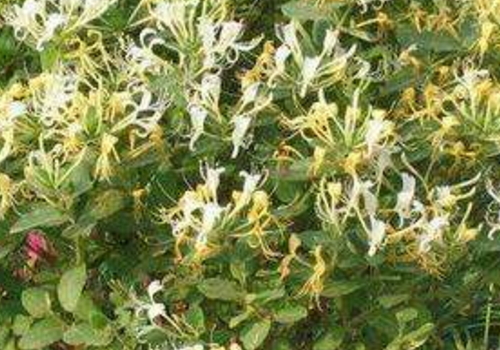
Why honeysuckle does not bloom:
1. Insufficient sunlight: Honeysuckle needs good light conditions to grow well. It must not be placed in a shaded spot; being kept in shade for a long time will cause honeysuckle not to bloom.
2. Poor ventilation: If the growing space for honeysuckle is too small, the air will not circulate, making it hard for it to grow and develop well. It is best to put up a trellis.
3. Phosphorus deficiency in the soil: If the soil lacks phosphorus when growing honeysuckle, it will also fail to bloom. At this time, increase the amount of phosphorus and potassium fertilizer applied and control the amount of nitrogen fertilizer applied.
4. Reasonable pruning: If pruning is not done well when growing honeysuckle, it will also fail to bloom. At this time, remove weak branches, diseased and pest-infested branches, and so on, so that nutrients are supplied in a concentrated way.
Well, that is all for the introduction on watering honeysuckle. I expect everyone understands now.
How to grow potted honeysuckle, honeysuckle cultivation methods and precautions / water appropriately
Honeysuckle is a very common flowering plant. The light floral fragrance of honeysuckle is very pleasant and it is deeply loved by people. Especially on country paths, honeysuckle can be seen everywhere. With advances in potting techniques, honeysuckle can also be grown in pots at home, but many people do not know how to grow honeysuckle. Below, let us take a look at the cultivation methods and precautions for honeysuckle.
I. How to grow potted honeysuckle: give it plenty of sun and water it appropriately
When it comes to honeysuckle, I believe everyone is familiar with it, especially those who grew up in rural areas. Honeysuckle has now become a common potted flower, so how do you grow honeysuckle? Honeysuckle has very strong vitality. As long as you control its watering amount and light, you can ensure your honeysuckle blooms all over the house. Below we will explain in detail the cultivation methods and precautions for honeysuckle.
II. Cultivation methods and precautions for honeysuckle
1. Cultivation
Autumn and winter are the dormant period of honeysuckle. At this time, you can dig up old honeysuckle stumps by the roadside. When digging, you can cut off most of the branches and keep the main trunk and necessary main branches. Cut off the main root and keep as many lateral roots and fibrous roots as possible. After digging it out, the roots should immediately be coated with soil, brought back and planted in a medium-sized clay pot with good air permeability, and carefully maintained to ensure survival.
2. Transplanting into pots
Honeysuckle is generally transplanted in spring before it sprouts. For courtyard ground planting, generally plant 2-3 plants per clump, dig a deep hole, apply dry mixed fertilizer and a small amount of superphosphate as base fertilizer, and water thoroughly after planting; if growing it on a balcony, you can use a larger flower pot to plant 1-2 honeysuckle plants, and just water thoroughly after planting.
3. Watering
Honeysuckle is relatively drought-tolerant. Generally, when there is sufficient rain, there is no need to water. In relatively dry weather, water appropriately. In generally sunny weather, after picking branches and leaves and picking flowers, water once every 3-5 days. During the plum rain season, pay attention to preventing waterlogging; increase watering in summer and reduce watering in winter; water again when the potting soil turns white. How to grow potted honeysuckle? To grow honeysuckle well, you must pay attention to the amount of watering. Below we will continue to look at the cultivation methods and precautions for honeysuckle.
4. Light
Potted honeysuckle is a distinctive plant with relatively high light requirements. When cultivating it at home, try to place it in an environment with sufficient sunlight. If it is kept in a poorly lit and damp, shaded environment, honeysuckle will show various undesirable symptoms such as weak branching, leaf drop, and few flowers. In addition, when the new shoots of potted honeysuckle grow to about 5 cm, spray paclobutrazol in time to prevent excessive rampant growth.
5. Fertilizing
When repotting honeysuckle in spring, apply an appropriate amount of cake fertilizer as base fertilizer. After that, before each flush of flowers at solar terms such as Grain Rain, Grain in Ear, and Major Heat, just scatter some dry cake fertilizer powder on the surface of the pot. Stop fertilizing in other seasons.
6. Pruning
Pruning can be done in summer, autumn, and winter. Generally, older branches that are relatively long should be heavily pruned to promote plant growth. In addition, when pruning, do not cut back excessively; instead, keep several main trunks and let them spread out in all directions to bloom.
7. Repotting
Because potted honeysuckle is limited by the flower pot, the amount of soil it can hold is small. After 2-3 years in the pot, the nutrients in the potting soil are gradually depleted and the soil becomes compacted. The roots that have grown for many years fill the entire pot, making it difficult for water to seep in and for applied fertilizer to be absorbed. Therefore, it is necessary to repot and change the soil in time. The time for repotting and changing soil should be set during the slow growth period of honeysuckle. After repotting and changing soil, water in time, just as when it was first planted, so that the soil at the bottom of the pot is completely soaked, and provide appropriate shade. Only after half a month can it be placed in a ventilated, sunny place.
III. Precautions for growing honeysuckle
The growing temperature for honeysuckle is 20-30°C. Its growth requires sufficient light, and in summer attention must also be paid to shading. Honeysuckle must not be grown in places that are too shaded, too dry, too wet, or prone to waterlogging. During the plum rain season, pay attention to drainage. After the second year of honeysuckle growth, pay attention to setting up a flower trellis or moving it near a hedge, wall railing, and so on, so that it can find support to attach to, twine around, and climb. When pests and diseases occur, pay attention to timely prevention and control. The above is all the content on how to grow honeysuckle and the cultivation methods and precautions for honeysuckle. I hope it can help everyone.
Methods to make honeysuckle bloom densely with short flowering branches
Many friends know that honeysuckle has certain medicinal value, and some friends hope that their honeysuckle will have short flower branches and dense blooms, but how exactly can you make your honeysuckle grow into the look you want? If you want your honeysuckle to bloom densely with short flowering branches, you must pay attention to choosing pot cultivation; ground planting is not suitable, and the methods below may be able to help you.
Honeysuckle
I. Water restriction
Honeysuckle is a vine. Without intervention, its branches grow quickly and long. In a pot, we can break the usual pattern: when it sprouts in spring, do not water at night, water in the morning; do not water heavily, water lightly; this makes its physiological water use unable to meet the needs of vigorous growth, causing new branches to become shorter and more mature. Once branches mature, they tend to bloom, and shortening reduces the distance between nodes, so flowering becomes concentrated and lush.
II. Fertilizer restriction
Before flower buds form, do not apply nitrogen fertilizer or apply as little as possible, and apply relatively more phosphorus and potassium fertilizer. Once the flower buds have basically formed and shoot growth has basically ended, then apply some nitrogen fertilizer in an appropriate amount, so as to create a situation of many flowers and large flowers.
III. Be lazy about repotting
That is, repot only once every 3-4 years. The purpose is to prevent it from sprouting more new roots. With fewer new roots, its absorption capacity is poorer, and combined with aging potting soil, it is very difficult for it to grow rampantly, thereby achieving the goals of controlling tree vigor, limiting branches, and making flowers bloom densely.
IV. Pruning
Cut off vigorous buds, shorten long branches, cut the long and keep the short. Then place it in a place with sufficient sunlight (half shade and half sun in summer) to prevent insufficient light from causing rampant growth.