Pruning Methods for Cymbidium Flower Spikes and Choosing Potting Soil for Cultivation
Cymbidium is a plant that many people like, and it has a certain ornamental value. How do you prune the flower spikes of Cymbidium? What soil should be used for cultivation?
How to prune the flower spikes of Cymbidium:
1. Cut the flower spike from the lower part, so that it does not affect the appearance and also ensures that too many nutrients are not consumed. In addition, Cymbidium likes humidity and sunlight, and the suitable temperature is between 10°C and 28°C. After cutting off the inflorescence, move it to a well-ventilated windowsill, which can promote better growth. After placing it for about a week, move the flower outdoors, proceeding step by step. Never move it suddenly from indoors to outdoors, because sudden changes in environment and light will affect its growth.
2. In addition, after the flower spikes are pruned, there is no need to repot. You can simply clean out and replace the rotten and blackened growing medium in the pot. Cymbidium is not afraid of being crowded, and the more crowded it is, the better it grows, which is even more beneficial for its own flowering.
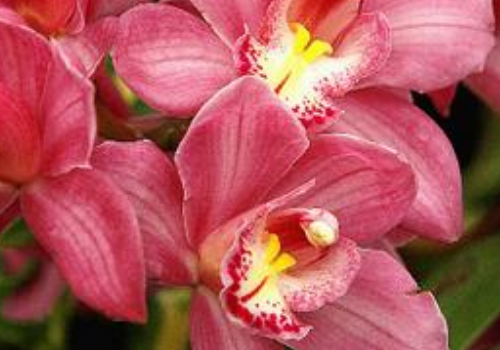
What soil should be used for cultivating Cymbidium:
1. Principles of soil selection
When cultivating Cymbidium, in principle, you should choose fertile acidic soil with good drainage. Generally, do not choose mud soil.
When making the soil, usually multiple types of soil are mixed and prepared twice, and during preparation it should be kept loose and breathable.
2. Soil preparation
Generally, when preparing soil, sphagnum moss, coconut coir, bark, peat, crushed brick pieces, etc. can be used as the growing medium for cultivating Cymbidium.
After cleaning these soils, mix them according to different needs, ensuring they are loose and breathable, contain moisture, and retain moisture.
In fact, when cultivating Cymbidium, when choosing soil, you can choose orchid soil, that is, soil that has previously been used to grow orchids. This kind of soil contains orchid symbiotic fungi, which plays a very important role in the growth of Cymbidium.
If you feel you do not know how to mix it yourself, you can buy some special soil for growing orchids.
Well, that is all for the introduction on pruning Cymbidium. I believe everyone understands now.
How to prune the flower spikes of Cymbidium, pruning methods for Cymbidium / pruning after flowering
Cymbidium, a hybrid orchid with a wide variety of cultivars, has developed to nearly 1000 varieties so far. Its flowers are large and its colors are rich, and it is deeply loved by flower enthusiasts. During the flowering period of Cymbidium, we can fully enjoy its beauty, but after it finishes flowering, it needs to be pruned. So how do you prune the flower spikes of Cymbidium? Now let us take a look at the pruning methods for Cymbidium.
I. How to prune the flower spikes of Cymbidium, the method is very important
In the cultivation methods for Cymbidium, besides light, water, and fertilizer that everyone needs to pay attention to, there is another point that cannot be ignored, and that is pruning the flower spikes. Pruning is a technical task, especially when pruning flower spikes, because incorrect pruning may kill the plant. So how to prune the flower spikes of Cymbidium requires us to master the method.
II. Pruning methods for Cymbidium
1. Reasons for pruning the flower spikes
Before understanding how to prune the flower spikes of Cymbidium, we must know the reasons for pruning the flower spikes. For this, I have summarized 2 points:
① After Cymbidium blooms, the flowers are large and numerous, and the top is too heavy, making it easy to lodging, so pruning is needed;
② The flowering period of Cymbidium is 1-2 months, after which the flowers gradually wither. Cutting off the flower spikes at this time can avoid consuming too many nutrients, benefit the sprouting of new buds, and not affect flowering the following year.
2. Pruning methods
① If there are many flowers, you can cut the flower spike of Cymbidium from the lower part, so that it does not affect the appearance and also ensures that too many nutrients are not consumed;
② After Cymbidium finishes flowering, cut off the residual flowers, gently take the plant out of the pot, clean up diseased roots, old roots, and residual roots, and then plant it into a slightly larger pot.
In addition, after the flower spikes are pruned, there is no need to repot. You can simply clean out and replace the rotten and blackened growing medium in the pot. Cymbidium is not afraid of being crowded, and the more crowded it is, the better it grows, which is even more beneficial for its own flowering.
3. Notes
How to prune the flower spikes of Cymbidium? Besides knowing the method, there are also some points to note, such as protecting the new buds and pseudobulbs during pruning. The original pseudobulbs and leaves of Cymbidium all need to be retained and cannot be pruned, because the Cymbidium plant is composed of mother bulbs, daughter bulbs, and grandchild bulbs. Among them, the grandchild bulb grows fastest and is also the bulb that sprouts and blooms in that year.
In addition, Cymbidium likes humidity and sunlight. After cutting off the inflorescence, you should move it to a well-ventilated windowsill, which can promote better growth. After placing it for about a week, move the Cymbidium outdoors, proceeding step by step. Never move it suddenly from indoors to outdoors, because sudden changes in environment and light will affect its growth.
Cultivation Methods for Cymbidium: Carefully Caring for the Beautiful Cymbidium
Many people who have been to flower markets should know that there is a kind of flower that is very attractive even from a distance. Its leaves are long and green, its flower posture is bold and unrestrained, and its flower colors are gorgeous, deeply loved by viewers. This is Cymbidium. Its flowers are large, brightly colored, and brilliantly varied, with neat flower shapes and firm texture, lasting a long time without fading. It is a rising star among orchids. So, how do you cultivate Cymbidium?
I. Brief Introduction to Cymbidium
Cymbidium (Latin scientific name: Cymbidium), also called Ximbi orchid, cicada orchid, Simbi orchid, etc., is a collective name for varieties with gorgeous colors and large flowers bred through artificial hybridization among the Cymbidium genus native to India, Myanmar, Thailand, Vietnam, and southern China and other regions. Cymbidium has long green leaves, a bold flower posture, and is magnificent and unrestrained. It is a world-famous "new star of orchids." It has the subtle fragrance and elegance of Chinese orchids, as well as the richness and variety of foreign orchids. It sells very well in the international flower market and is deeply favored by flower lovers.
II. How to grow Cymbidium
Cymbidium is not a species belonging to natural products, but was produced through artificial hybridization and cultivation. It first appeared in Britain in 1889, then spread to Europe, America, and other places, sweeping the foreign flower market. At present, Cymbidium has become the category with the most qualities among orchids, with nearly 20000 cultivated varieties.
The tissue culture period of Cymbidium is relatively long, reaching about 3 years. When the tissue-cultured seedlings undergo flower bud differentiation, it means they have entered the growth period, that is, normal flowering growth. During the reproductive growth stage, the lateral buds of Cymbidium gradually develop into flower buds, and then send out flower scapes.
After the flower buds form, in order for them to bloom normally and for the flower spikes to be beautiful, the surrounding temperature needs to be controlled. If the temperature is outside its normal growth range, it will inhibit its elongation growth and be unfavorable for normal flowering. Especially during the flowering period, the temperature must be strictly controlled. If you need to intervene in its flowering period to make it bloom longer, you can also maintain the temperature at 5-15°C during flowering, which can extend the flowering period by one season.
III. Cultivation Methods for Cymbidium
1. Light: except during high summer temperatures, it can receive direct sunlight. During high temperatures, provide 60% shading to prevent scorching;
2. Watering: in principle, water when dry, and water thoroughly. In spring, water once every three or four days. As the temperature rises and gradually reaches midsummer, the frequency of watering can be increased as appropriate;
3. Fertilizing: during the growth period, apply light fertilizer frequently. For long-acting compound solid fertilizer, scatter about ten granules in the pot at one time. Too much will burn the roots.
4. Bud removal: too many buds growing on old pseudobulbs should be removed in time, and the rest removed. This operation can continue until the end of November, and seedlings that grow afterward should be retained.
5. Pest and disease removal: if the cultivation environment for Cymbidium is poor, it is prone to pest and disease damage. Common diseases include Fusarium disease, black rot, soft rot, anthracnose, gray mold, southern blight, etc. Therefore, spray fungicide once every half month to prevent diseases. Special attention must also be paid to the cleaning of environmental sanitation, water sources, planting materials, and tools.
6. Pruning: the pseudobulbs of Cymbidium generally contain more than 4 leaf buds. In order not to disperse nutrients, the newly born small buds and their growth points must be thoroughly removed. This operation should begin after the flowering period ends, remove buds once a month, and stop before the new flowering period, so as to concentrate nutrients, strengthen the mother pseudobulb, and make the flowers bloom larger and more numerous.
Finally, regarding how to cultivate Cymbidium, this is a brief introduction to the important links of propagation, humidity, temperature, fertilizing, and watering. If you want to cultivate high-quality Cymbidium potted plants, in addition to this, you also need to understand more about the ecological habits of Cymbidium, know its preferences, and care for it carefully.