Can Tillandsia Be Grown in Water? A Detailed Guide to the Correct Watering Method
Many people grow Tillandsia, and there is some finesse when it comes to watering. How do you water Tillandsia? Can it be grown in water?
How to water Tillandsia:
1. Tillandsia needs moisture. Although Tillandsia can survive for a long time in a dry environment, in such conditions they are only surviving. If drought lasts too long, Tillandsia will also die. Watering Tillandsia requires ensuring it dries out completely before the next watering, which demands plenty of sunlight and good ventilation. It is best to water in the morning, so that the Tillandsia is dry by night.
2. You can judge whether watering is needed by the leaves. After watering, the leaves are firm and upright. When moisture is needed, they become soft and the color becomes glossy. If the leaves shrivel or curl, it means the plant is becoming dehydrated.
Watering schedule:
Tillandsia needs frequent watering, at least 2-3 times a week. Misting cannot meet their needs; they need spraying with water, and you must ensure a thorough water supply at least 2 times a week. The most effective method is to place the Tillandsia in a basin or bucket to soak. Or use a hose to wet the Tillandsia completely. Tillandsia is best soaked once every 1-2 weeks (if there is a flower bud, just soak for a few seconds, do not damage the petals. If the owner is away for a period, give sufficient water in advance.)
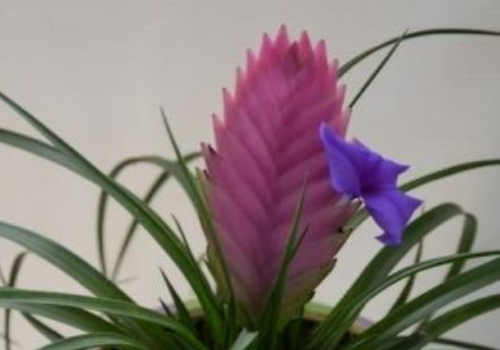
Can Tillandsia be grown in water:
Tillandsia can be grown in water.
1. Water cutting method
From a selected mother Tillandsia plant, cut off part of the stem or branch and insert it into water; under suitable conditions it will root, sprout and grow into a new plant. Cut the branch about 3-5 mm below the node, ensuring the cut surface is flat. When cutting a branch with aerial roots, take care to protect the aerial roots and insert it into the water.
2. Root washing method
Choose a robust, highly ornamental, well-formed plant, remove the soil, clean the roots and switch to water culture. When cleaning the roots, it is best to use running water. Place the cleaned plant in a prepared container, add tap water, and the water needs to cover 2/3-1/2 of the root system. At the beginning, change the clean water once a day, and clean the roots and container while changing the water. After a week, reduce the frequency. When Tillandsia grows new roots, it shows it has adapted to the water culture environment. After that, changing the water once every 7-10 days, or even longer, is enough.
Well, that is all for the introduction to watering Tillandsia. I hope everyone understands now.
Hydroponic Flower Knowledge | The Complete Guide to Hydroponic Flower Knowledge
Hydroponic Flower Knowledge | The Complete Guide to Hydroponic Flower Knowledge
Ten Questions on Hydroponic Flower Techniques
1. What flowers are suitable for hydroponics? What advantages does it have?
Answer: In theory, any flower can be grown hydroponically, but different types of flowers have different environmental requirements. For example, some varieties that need water control to promote flowering may have their flowering affected under hydroponic conditions, and some plants are sensitive to oxygen deprivation, requiring air to be pumped into the nutrient solution at regular intervals to supplement oxygen. At the same time, different types of flowers have different nutritional requirements, so a suitable nutrient solution formula must be used. Therefore, flowers and plants must undergo proper acclimation and adaptation before they can be grown hydroponically. There are many plants suitable for hydroponics, including the golden
pothos, money tree, Peperomia, Asplenium, Calathea, Philodendron 'Little Angel', Mariane, Sansevieria, golden barrel cactus and other cacti, as well as jewel orchid, snake plant, etc. Hydroponic flowers can go a long time without watering and fertilizing, have no foreign leaves, are clean and hygienic, beautiful and elegant, and are the first choice for home beautification and greening.
2. What substances are contained in the nutrient solution for hydroponic flowers?
Answer: The hydroponic nutrient solution contains all the essential nutrient elements needed for flower growth, including nitrogen, phosphorus, potassium, calcium, magnesium, sulfur, iron, manganese, zinc, copper, boron, molybdenum, chlorine, etc. It is a colorless, odorless, non-toxic product, so please use it with confidence.
3. Why do hydroponic flowers need two concentrated solutions?
Answer: The main reason the concentrated nutrient solution for hydroponic flowers is divided into two parts is that when the concentrations of metal nutrient elements such as calcium, magnesium, iron, zinc and copper in the nutrient solution are too high, they can precipitate each other and make the nutrients ineffective. Therefore, to ensure an adequate and balanced nutrient supply, compounds containing these non-toxic substances cannot be mixed together in the concentrated nutrient solution. So, if the hydroponic nutrient solution sold on the market today is of only one kind, its nutrients are often unbalanced.
4. Is more nutrient solution in the hydroponic flower container always better?
Answer: No. The depth of the nutrient solution in the container should be determined by the growth of the flower's root system and should not be too much. Generally, when the root system is relatively well developed, part of the root system should be left exposed to the air above the liquid surface, so that the roots can absorb some oxygen from the air; this is very beneficial for healthy root growth. Never add too much nutrient solution to the container, but it should not be too little either; if too little, you will need to replenish the nutrient solution frequently, causing inconvenience in management. Usually, maintaining a nutrient solution layer about 5-10 cm deep is enough.
5. Do home hydroponic flowers need sunlight?
Answer: This depends on the light requirements of the flowers being grown. If they are shade-loving species, they should not be exposed to direct sunlight. However, because hydroponic flowers placed at home are usually in an environment with poor light, even shade-loving flowers need to be placed on a balcony with slightly stronger light at regular intervals. Generally, placing them on the balcony for one day a week is enough.
6. Do hydroponic flowers need a different nutrient solution for each type of flower?
Answer: No. There are many varieties of hydroponic flowers, but not every type of flower needs a corresponding nutrient solution. It is enough to choose different nutrient solutions according to different major categories; of course, a general-purpose nutrient solution can also be used. At present, the Soilless Cultivation Technology Research Laboratory of South China Agricultural University has developed five types of nutrient solutions: general-purpose, foliage type, interior plant type, orchid type, and flowering type.
7. Can flowers grown directly in soil be converted directly to hydroponics?
Answer: Converting from soil cultivation to hydroponics must go through a series of treatments first. First, take out the soil-cultured flower and wash the roots clean, then soak the roots in a hydroponic root treatment solution for about 20 minutes before placing it in a hydroponic container for water culture.
8. Do fish kept together with flowers need to be fed?
Answer: No feeding is needed. This is because most of the small fish kept together with flowers only need to absorb plankton and secretions from the roots in the nutrient solution to meet their needs. If fed, the fish are more likely to overeat and die. At the same time, adding feed also easily makes the nutrient solution cloudy and reduces the dissolved oxygen content in the nutrient solution, affecting the growth of both the flowers and the fish.
9. When growing hydroponic flowers, when should the nutrient solution be replenished or replaced?
Answer: This depends on the speed at which the plant uses water. If the weather is dry and the plant is large, generally the nutrient solution needs to be replenished about every 15-20 days; when replenishing, just add an appropriate amount of nutrient solution. When replenishing the nutrient solution, never add too much; just add about 1/3-1/2 of the container's depth.
10. What is the shelf life of the concentrated nutrient solution for hydroponic flowers? What should be noted during storage?
Answer: The shelf life of the concentrated solution for hydroponic flowers is almost unlimited, but generally do not use any that has been stored for more than 5 years. When storing the concentrated nutrient solution, keep it away from light as much as possible and do not place it where children can reach it.
A Talk on Home Hydroponic Flower Experience
As an eco-friendly way of growing flowers, hydroponic flowers have the following characteristics compared with traditional soil-cultured flowers: 1) Water replaces soil, odorless and tasteless, clean and hygienic. 2) No need to repot or loosen soil, reducing the labor of growing flowers. 3) Light in weight, can be moved anytime and anywhere. 4) Flexible in material selection, can be reasonably matched according to indoor furnishings. 5) Fewer harmful microorganisms in the water, high seedling survival rate. The seedling survival rate can be stably maintained above 80%.
1. Flower varieties suitable for hydroponics. Many years of practice have proven that foliage plants are the first choice for home hydroponic flowers, such as Aglaonema modestum, Dieffenbachia, Monstera deliciosa, Alocasia, pothos, lucky bamboo, asparagus fern, spider plant, aloe, Commelina, Tradescantia zebrina, coleus, Dracaena fragrans, Chamaedorea elegans, hibiscus, fuchsia, etc. In addition, for scarlet sage, azalea, camellia, cyclamen, amaryllis, calla lily, crown of thorns, kalanchoe, hyacinth and other flowering plants, the hydroponic method gives good results. For ferns such as Nephrolepis, pot marigold, petunia, and Excoecaria cochinchinensis, the survival rate as hydroponic flowers is not high.
2. Selection of hydroponic containers and bedding materials. 1) Container. Any beautiful container that can hold water will do. It is best to use a transparent container, such as a beverage bottle (cut off the narrow neck), wine glass, teacup, vase, fish tank, etc. The top opening must be somewhat large to allow gas exchange. The size, height, shape, color and texture of the container should be in harmony with the hydroponic flower. It is best to clean and disinfect it before use. 2) Bedding material. The bedding material is often placed at the bottom of the hydroponic container and mainly serves to stabilize the plant, such as: pebbles, yellow sand, perlite, etc. Small pebbles that are elegant in appearance and varied in shape are best. They should also be cleaned and disinfected before use.
3. The time for hydroponics. Spring and autumn are the most suitable for hydroponics, but it also varies with the type of flower. If the indoor temperature is 15°C-28°C, foliage plants can be grown hydroponically all year round. Flowering plants are best grown hydroponically when the first flower is in bud, such as cyclamen, hyacinth, azalea, camellia, etc., which are often grown hydroponically in early January, so that the full bloom period coincides with the Spring Festival, giving people the joy of spring warmth and blooming flowers.
4. Obtaining and processing hydroponic materials. 1) Root washing method. Choose a potted plant with a full shape, vigorous growth, and no pests or diseases, take it out of the pot and remove the soil, wash the soil off the roots with water close to room temperature, and cut off roots that have become decayed or aged. If the fibrous roots are dense, about 1/3 can be cut off, but avoid damaging new roots. Then soak the roots in a 50% potassium permanganate aqueous solution for 30 minutes (this both sterilizes and disinfects, and also promotes new root growth), and then proceed with hydroponics. This method is mostly used for larger plants and flowers that are difficult to root. 2) Water cutting method. Select a robust, pest-free, semi-lignified branch of the current year, cut it off and insert it into water for hydroponics. The cutting position is usually two or three millimeters below a stem node. The cut should be smoothed with a sharp knife (wiped and disinfected with white liquor in advance), and the lower leaves of the branch should be removed. Before rooting, it is best to use an opaque container or wrap a black plastic bag around a transparent container to help the cutting root. This method is mostly used for flower varieties that root easily and grow quickly.
5. Water used for hydroponics and water changing. 1) Water. Mountain spring water is best; its water quality is clean, pollution-free, does not precipitate, and contains a variety of trace elements necessary for plant growth. Cooled boiled water is second best. It is best not to use tap water, because it contains many impurities, easily precipitates, and the chlorine in it is harmful to plant growth. If rainwater or snow water can be used for hydroponics, it is even more beneficial to flower growth. 2) Water changing. Because of the plant's normal growth and metabolism, after a period of hydroponics, the oxygen in the water is continuously consumed, and at the same time the root system produces mucus; the water quality is no longer as fresh as at the beginning, and a good deal of the nutrient solution added to the water has been absorbed by the plant. If too many unabsorbed elements remain, they can also harm the flowers. Therefore, the water must be changed regularly. The change in water quality is directly related to the temperature. Spring and autumn are the peak growing seasons for flowers, so change the water once every 7-10 days; in summer, change the water once every 4-6 days; in winter, change the water once every 15-20 days. Each time you change the water, wash away the mucus on the roots and cut off aged roots and rotten roots. The height of the added water should be level with the root zone. If it is too deep, it easily causes oxygen deprivation and root rot; if it is too shallow, the roots easily lack water and growth is affected.
6. Adding nutrient solution for hydroponics. Hydroponic nutrient solution is the fertilizer for hydroponic flowers. Generally, after half a month of hydroponics, flowers will produce new roots. Along with the growth of the flowers and plants, nutrient solution must be continuously added in combination with water changes. You can buy different types of flower nutrient solutions on the market as needed. It must be noted that: 1) The various nutrient solutions purchased are stock solutions and must be diluted before use. The dilution ratio varies with different flower types, so the instructions should be read carefully. 2) Each type of special nutrient solution must be used only for its intended purpose, avoiding mismatches. For example, if orchid nutrient solution is applied to clivia, it will cause the clivia not to bloom or to bloom very little. Some flowers do not need nutrient solution, especially during the dormant period; simply changing the water regularly or adding a small amount of sugar water or salt water also gives good results, such as for pothos and Dieffenbachia.
Techniques for the Prevention and Control of Pests and Diseases in Hydroponic Flowers
Hydroponics escapes infection from soil-borne pests and diseases, but it does not grow in a strictly disinfected vacuum environment, and it can still be harmed by pests and diseases in the display environment. Fungi, bacteria and viruses in the air can still infect the stems and leaves of hydroponic flowers, causing them to suffer varying degrees of disease. Aphids and scale insects can drift indoors with the wind and land on hydroponic flowers to suck sap. Moths lay eggs on the flowers, and when these hatch into larvae they will also chew the tender leaves and stem tips of the flowers. Flowers that have been removed from their pots, had their roots washed and switched to static hydroponics will likewise carry fungi, bacteria, viruses, eggs, larvae, etc. If these are not carefully checked and removed, they will leave hidden dangers.
Because of the special nature of the display environment for static hydroponic flowers, once pests or diseases occur, it is not appropriate to use chemical pesticides for insect control, nor to use large doses of fungicides for sterilization. Although these drugs can kill insects and sterilize, they also cause pollution to the environment at the same time.
The prevention of possible pests and diseases in hydroponic flowers should focus on prevention. When choosing flowers for hydroponics, select plants that are as robust, luxuriant in growth, and free of pests and diseases as possible. If pests are found during cultivation, manual capture or rinsing with tap water can be used to remove them. Infectious diseases occur relatively rarely in hydroponic flowers; only a few leaves may show brown lesions, shriveled and necrotic, or irregular round wet-soaked lesions, which are formed by fungal or bacterial infection. When discovered, the entire diseased leaf should be removed and burned so as not to let it spread. Prevention of non-infectious diseases. Non-infectious diseases are not caused by infection with pathogens; they are caused by unsuitable environments. Stuffy high-temperature weather in summer, cold winters, dry climates, scorching sun, poorly ventilated environments, excessive shading, nutrient solution that is too concentrated, or an inability to absorb it in a balanced way can all cause the leaf tips of static hydroponic flowers to scorch and dry up, and the lower leaves to yellow and fall off. When summer temperatures are too high, the dissolved oxygen in the solution drops sharply, making root rot likely, which is an even more common symptom of static hydroponics. In response to the above different symptoms, identify the corresponding causes, correct them, improve the cultivation environment, and avoid the occurrence of non-infectious diseases.
How should static hydroponic flowers with detached segments and rotten roots be cared for? Due to improper management, or root rot from oxygen deprivation, or infection by fungi, bacteria or viruses, hydroponic flowers may develop leaf spot disease, with leaves yellowing and falling off in large numbers, causing the lower end to become detached and losing ornamental value. For hydroponic flowers with detached segments and rotten roots, the method of plant renewal can be used: cut off the still-intact upper branch 3 cm below the stem node, insert it in clean water, and after a period of care and management it can grow new roots and become an independent plant. As for the lower branch with the detached segment, as long as it does not rot, it can also sprout new buds at the stem node, at which point you can switch to nutrient solution cultivation. Lucky bamboo, pothos, Ti plant, Syngonium, etc. can all use this method.
The Complete Home Hydroponic Flower Manual
Four Ways to Obtain Hydroponic Plants
1. Take flowers grown in soil or other organic substrates, or in inorganic substrates, out of their pots, remove the soil or inorganic substrate from the roots, and switch to static hydroponics with nutrient solution.
2. Use flower branches as cuttings, insert them directly into still water, and after rooting cultivate them with nutrient solution.
3. Some flowers produce runners (stolons) when growing, and small plantlets grow on the runners, such as spider plant and Aechmea; these small plantlets can be picked off and grown hydroponically directly.
4. For flowers that produce many tiller buds, such as clivia and bromeliads, the method of peeling off rooted tiller buds can be used for hydroponics.
How to Prepare Hydroponic Nutrient Solution
Home static hydroponic flowers (or simply hydroponic flowers) must meet three basic conditions:
1. Choose plants that are closely related to aquatic plants, that is, that retain aquatic genetic genes, to use as static hydroponic flowers.
2. Choose a leak-proof cultivation container without a bottom hole that matches the size and style of the hydroponic flower.
3. Use a low-conductivity nutrient solution with ion-balanced absorption (appropriate ratio) and complete mineral nutrients essential for flower and plant growth. The recommended formula is as follows:
1) Macroelements: calcium nitrate 0.27 g, potassium nitrate 0.13 g, monopotassium phosphate 0.08 g, magnesium sulfate 0.13 g.
2) Trace elements: disodium edetate 8.0 mg, ferrous sulfate 5.0 mg, manganese sulfate 1.4 mg, boric acid 2.0 mg, zinc sulfate 0.07 mg, copper sulfate 0.04 mg, sodium molybdate 0.09 mg. 3) Purified water: 1 liter (1000 ml).
The pH value is 5.5 to 6.5, and the electrical conductivity EC is < 0.5 mm/cm.
Cultivate the selected flower in a container, add the hydroponic nutrient solution and grow it, and it becomes a static hydroponic flower with a distinctive charm.
When preparing the nutrient solution, it is best to use purified water. Of course, ordinary drinking tap water can also be used to prepare the nutrient solution. Both have undergone strict treatment, are clean and hygienic, and meet the requirements of sterile (low-bacteria) cultivation. However, full attention must be paid to the fact that purified water has fewer impurities and pathogens and basically contains no nutrient elements essential to plants, while tap water, as the components in the water source change, contains nutrient elements in unstable forms. Therefore, the nutrient solution prepared with purified water has a stable and consistent composition, while the nutrient solution prepared with tap water has an unstable composition.
Liquid chlorine is used when disinfecting tap water. If the chlorine in tap water is excessive, it is harmful to flowers and plants. You can install a water purifier on the faucet. Let the tap water out, store it in a large-mouth bucket for a few days, and stir it a few times with a wooden stick to remove the chlorine. If you urgently need water for changing, you can add 3 to 5 grains of sodium thiosulfate (commonly known as hypo) to 10 kg of tap water and stir evenly, which can also achieve a chlorine-removal effect.
Most foliage flowers like a slightly acidic soil environment, and their intolerance of alkalinity cannot be changed during hydroponics. Static nutrient solution cultivation must adjust the pH of the solution to the range of 5.5 to 6.5, which can help the flowers absorb trace elements, keep physiological metabolism undisturbed, grow normally, and keep the leaves green.
How to Carry Out Foliar Fertilization
Static hydroponic flowers are grown under conditions of root oxygen deprivation, which will cause certain defects in the normal development of the flowers. To improve the quality of the flowers, the method of foliar fertilization can be used to supplement nutrient elements. During the vegetative growth period of the flowers, a 0.2% potassium nitrate dilution can be sprayed on the leaves. Use a fine-hole sprayer, try not to let the fertilizer solution run off, and spray the underside of the leaves as well. Spray once a week, twice during the growing season, and it can make hydroponic flowers flourish with luxuriant branches and leaves. For flowers suitable for both foliage and flower appreciation, such as Spathiphyllum, Begonia semperflorens, Begonia coccinea, calla lily, etc., during the bud stage you can spray the leaves once a week with a 0.15% monopotassium phosphate dilution until the flowers open.
Temperature Requirements for Hydroponic Flowers
Hydroponic flowers only change one method of flower cultivation; they do not change the growth habits of the flowers, nor can they change their habits. The foliage flowers used in static hydroponics mostly originate from Latin American rainforests, or from tropical high-temperature, high-humidity, shaded valley areas, and are cold-sensitive flowers and plants. Generally, when the temperature drops below 10°C, some varieties will suffer cold damage, with leaf edges scorching and drying, old leaves yellowing, drooping and falling off. Under static hydroponic conditions, this phenomenon will likewise occur. Some flowers are more cold-tolerant, such as English ivy, Vinca major, and Senecio, which grow normally at temperatures of 5°C to 7°C. When the temperature is above 30°C, the leaves of some flowers lose their luster, growth becomes sluggish, and brown scorch-like spots appear on the leaf margins, showing a dormant state of intolerance to high temperatures, such as Begonia coccinea, Begonia semperflorens, and coleus. At high temperatures above 30°C, root rot is common in static hydroponics; of course, this is also related to the fact that the dissolved oxygen in the nutrient solution decreases as the temperature rises. Keeping the temperature at 15°C to 28°C is suitable for various static hydroponic flowers. In addition, understanding the temperature required for the growth of each type of flower and creating a suitable temperature condition for its growth during static hydroponics is also very important.
Light Requirements for Hydroponic Flowers
Static hydroponics mostly uses relatively shade-tolerant, shade-loving foliage flowers and a small number of flowering flowers. The characteristic of these flowers is that they do not need strong direct light during the growing period, and some flower varieties grow well in relatively shaded environments. Generally placed indoors, in the living room, or office, as long as there is scattered light coming through doors and windows and indoor lamplight, their light needs can be fully met. If the light is too weak, the flower leaves cannot carry out normal photosynthesis, cannot accumulate enough nutrients, and grow poorly. Some colored-leaf flowers, such as coleus and croton, will lose the color of their leaves in a weaker-light environment and become dull and lusterless. Only in an environment with relatively sufficient light that is not exposed to strong direct light can such flowers maintain their leaf color and luster.
Plant growth has phototropism. The orientation of the placed flowers should be rotated at regular intervals. This work can be combined with cleaning the container and changing the nutrient solution. After cleaning the roots, rotate the flower 180 degrees relative to its original orientation for cultivation, so that the flower will not grow leaning to one side and the top shoot will always remain upright and upward.
Humid Environment and Good Ventilation
The places of origin of foliage flowers are mostly warm and humid environments. Static hydroponics also needs to create a relatively humid environment for them to grow well. A simple method is to spray the leaves of the flowers (to prevent the sprayed mist from dampening furniture, you can move them to a balcony or outdoors to do it, then move the flowers back indoors for display). When spraying, it is best to use a fine-hole nozzle so that the mist droplets stick to the leaf surface and do not run off. For the leaves of flowers that are relatively firm and have a waxy film, such as Monstera deliciosa and clivia, you can wipe the leaf surface with a damp towel, which both increases the humidity of the leaf surface and removes dust from the leaves. For those larger flowers that are difficult to move, you can place a shallow dish or basin of clean water beside the flower; the evaporated water can likewise increase the environmental humidity.
There must be a good ventilation environment. This is an important condition for the normal growth of flowers. Static hydroponic flowers placed in a room, if doors and windows are tightly closed and the air is turbid, are at a disadvantage for growth. Especially when people go to work and leave home during the day, if the room does not have doors and windows opened, and some even draw the curtains, in such a harsh environment hydroponic flowers can neither get the light they need nor fresh air, the dissolved oxygen keeps decreasing, and their growth becomes worse and worse, producing yellowing and falling leaves and thin, shriveled new shoots. The place where hydroponic flowers are placed should have doors and windows opened at regular intervals to create air convection, allowing fresh air from outside to enter the room, which can increase the dissolved oxygen content in the nutrient solution.
Rooms with air conditioning can, of course, achieve the temperature needed by hydroponic flowers, but the air in the room is dry, which will cause scorched edges on the leaves of flowers with thinner leaves, and withered leaf tips. Air-conditioned rooms likewise lack fresh air, reducing the dissolved oxygen content. Ventilation should be carried out in a timely manner; this is beneficial both to the growth of hydroponic flowers and to human health. Places where large hydroponic flowers are displayed especially need to do this work well.
Prevention and Control of Pests and Diseases in Hydroponic Flowers
Hydroponics escapes infection from soil-borne pests and diseases, but it does not grow in a strictly disinfected vacuum environment, and it can still be harmed by pests and diseases in the display environment. Fungi, bacteria and viruses in the air can still infect the stems and leaves of hydroponic flowers, causing them to suffer varying degrees of disease. Aphids and scale insects can drift indoors with the wind and land on hydroponic flowers to suck sap. Moths lay eggs on the flowers, and when these hatch into larvae they will also chew the tender leaves and stem tips of the flowers. Flowers that have been removed from their pots, had their roots washed and switched to static hydroponics will likewise carry fungi, bacteria, viruses, eggs, larvae, etc. If these are not carefully checked and removed, they will leave hidden dangers.
Because of the special nature of the display environment for static hydroponic flowers, once pests or diseases occur, it is not appropriate to use chemical pesticides for insect control, nor to use large doses of fungicides for sterilization. Although these drugs can kill insects and sterilize, they also cause pollution to the environment at the same time.
The prevention of possible pests and diseases in hydroponic flowers should focus on prevention. When choosing flowers for hydroponics, select plants that are as robust, luxuriant in growth, and free of pests and diseases as possible. If pests are found during cultivation, manual capture or rinsing with tap water can be used to remove them. Infectious diseases occur relatively rarely in hydroponic flowers; only a few leaves may show brown lesions, shriveled and necrotic, or irregular round wet-soaked lesions, which are formed by fungal or bacterial infection. When discovered, the entire diseased leaf should be removed and burned so as not to let it spread. Prevention of non-infectious diseases.
Non-infectious diseases are not caused by infection with pathogens; they are caused by unsuitable environments. Stuffy high-temperature weather in summer, cold winters, dry climates, scorching sun, poorly ventilated environments, excessive shading, nutrient solution that is too concentrated, or an inability to absorb it in a balanced way can all cause the leaf tips of static hydroponic flowers to scorch and dry up, and the lower leaves to yellow and fall off. When summer temperatures are too high, the dissolved oxygen in the solution drops sharply, making root rot likely, which is an even more common symptom of static hydroponics. In response to the above different symptoms, identify the corresponding causes, correct them, improve the cultivation environment, and avoid the occurrence of non-infectious diseases.
How should static hydroponic flowers with detached segments and rotten roots be cared for? Due to improper management, or root rot from oxygen deprivation, or infection by fungi, bacteria or viruses, hydroponic flowers may develop leaf spot disease, with leaves yellowing and falling off in large numbers, causing the lower end to become detached and losing ornamental value. For hydroponic flowers with detached segments and rotten roots, the method of plant renewal can be used: cut off the still-intact upper branch 3 cm below the stem node, insert it in clean water, and after a period of care and management it can grow new roots and become an independent plant. As for the lower branch with the detached segment, as long as it does not rot, it can also sprout new buds at the stem node, at which point you can switch to nutrient solution cultivation. Lucky bamboo, pothos, Ti plant, Syngonium, etc. can all use this method.
How Many Hydroponic Flowers Is Appropriate to Display
Growing hydroponic flowers indoors can help regulate mood, beautify the environment, and also purify the air. Displaying a few plants appropriately is beneficial. If the room area is not large and too many flowers are displayed, it will cause flowers to compete with people for oxygen at night. So how many flowers is appropriate to place indoors? According to scientists' experiments, it is considered appropriate, calculated by room area, to grow one or two kinds of flowers per 10 sq m of area. By this standard, for a room of 50 sq m to 60 sq m, displaying about 10 hydroponic flowers of varying sizes can satisfy viewing needs without causing flowers to compete with people for oxygen at night.
How to Choose Hydroponic Flower Materials in Winter
Hydroponic flowers are deeply loved by people for their clean, beautiful and easy-to-care-for characteristics. When choosing hydroponic flower materials in winter, you must pay attention to the following four "musts":
First, you must choose flower types suitable for hydroponics. If you buy types unsuitable for hydroponics and grow them in water, they will gradually die before long because the roots rot. Aquatic plants, hygrophytic plants, and a group of relatively drought-intolerant terrestrial plants are all fairly suitable for hydroponics, such as Cyperus alternifolius, Syngonium, pothos, Philodendron, Tradescantia zebrina, lucky bamboo, etc.
Second, you must choose flower types with strong cold resistance. Although some flowers are very suitable for hydroponics, they need relatively high temperatures to overwinter and are difficult to get through the winter safely in an ordinary home, being prone to cold damage. Flower materials with relatively strong cold resistance that can get through the winter with a little cold protection include Monstera deliciosa, Tradescantia pallida, aloe, spider plant, Cyperus alternifolius, Chamaedorea elegans, Rhapis excelsa, etc.
Third, you must choose flower materials that have already adapted to hydroponic conditions. Some flower vendors take soil-grown flowers out of the soil, wash the soil off the roots, and immediately supply them to the flower market. Although such flower materials look like they are growing normally, they still need to go through an adaptation process before they can grow normally in a hydroponic environment, so you must distinguish carefully when purchasing. Flower materials that have already adapted to hydroponic conditions will grow some white water roots at the roots or stem base.
Fourth, you must choose robust plants free of pests and diseases. Plants with spirited, upright branches and leaves and full, glossy leaves are conducive to showing the ornamental effect that the flowers should have.
The Advantages of Hydroponics
1. Simple daily management
The daily management of "Hydroponic Flower King" hydroponic flowers is very simple. Apart from changing the nutrient solution once every 7-10 days during the vigorous growth period in spring and summer, and once every 15-20 days in autumn and winter, it needs no special care. Usually you only need to spray water on the leaves in dry seasons or in air-conditioned environments; when there is dust on the leaves, just wipe them with a clean cloth or paper towel dipped in water. It saves the trouble of fertilizing, changing soil, and watering daily, and is very suitable for the fast-paced lifestyle of modern society.
2. Clean and stylish
Because hydroponic flowers are completely free from the soil cultivation environment and grow directly in a relatively sterile or low-bacteria nutrient solution environment, they will not, like soil-cultured flowers, pollute our living environment with pests and pathogens parasitic in the soil, making our homes safer, cleaner and more reassuring. Moreover, because they are free from soil, we can use more and more beautiful vases, containers and materials to grow them. Not only can we appreciate the flowers and leaves, but we can also appreciate the process of root growth and their myriad beautiful forms that are not usually seen. It is very neat and stylish.
3. Many applicable varieties, technology easy to master and operate
Because the technology for adapting plant roots from a soil environment to an aquatic environment has been overcome, "Hydroponic Flower King" does not need water roots cultivated through planting baskets, nor does it need the earlier computer or electric field mutagenesis. It only needs very simple technical treatment, and soil-grown roots can quickly transform into water roots. Anyone can grow vigorous, lush hydroponic flowers. This greatly shortens the production cycle, saves production costs, gives the product a larger profit margin, and increases the product's competitiveness in the market. At the same time, because production costs are lower, more people can enjoy the lifestyle fashion brought by new technology, rapidly expanding market share. Because no planting baskets are used, hydroponic flowers become more beautiful and refined.
Because rainwater will change the concentration and pH value of the nutrient solution, hydroponic flowers are not suitable for open-air cultivation. This makes it relatively difficult to grow some light-loving plants indoors at home with hydroponics, but the commonly seen shade-loving and semi-shade-loving flowers can basically all be successfully grown hydroponically. The number of tested varieties has now reached nearly four hundred. If your home has sunlight or an artificially adjusted greenhouse, then in theory any plant can be grown hydroponically, only with differing degrees of difficulty.
4. Green and eco-friendly, can keep flowers and fish together
"Hydroponic Flower King" nutrient solution contains no toxic ingredients, so fish and flowers can be kept together for a long time without any side effects harmful to the flowers or fish. The fish in our specialty store still grow well after long-term rearing, and some customers add the nutrient solution to aquariums to fertilize aquatic plants with very good results. Practice has proven that it is safe and reliable. At the same time, because it contains special ingredients, mosquitoes and insects are not likely to breed in the nutrient solution. Moreover, when you change the water, if you pour the discarded nutrient solution into the soil of your potted flowers at home, there will be even more unexpected surprises. Facts have proven that "Hydroponic Flower King" nutrient solution is a truly green and eco-friendly nutrient solution, and its effect is very obvious.
Selection of Hydroponic Flower Types
The growth and development of flowers requires suitable conditions of water, oxygen, nutrients, light, temperature, etc. The water used as a hydroponic medium contains a certain amount of oxygen. As long as light and temperature are suitable and the nutrient elements needed for plant growth are supplied in time, the flowers can grow normally in water.
Due to differences in the ecological habits and tissue structure of flowers, different flowers also have different requirements for the oxygen content in water. Some flowers have ventilating tissue in their bodies; the oxygen produced by these plants during photosynthesis can be sent through the ventilating tissue to the root system for respiration. Some flowers have aerial roots at the stem nodes, and these aerial roots can absorb the oxygen the plant needs from the air. Some flowers, although lacking ventilating tissue and aerial roots for absorbing oxygen, are very well adapted to hydroponic conditions. But if the oxygen content in the water cannot meet the needs of some flowers for normal growth and development, then such flowers are not suitable for hydroponics. Therefore, to succeed in hydroponics, you must choose flower types that can adapt to hydroponic conditions, and never cultivate blindly, lest hydroponics fail.
Flower Types Adapted to Hydroponics
Araceae
Araceae flowers have great adaptability to water conditions. When propagated by water cuttings, most can root in a relatively short time and grow rapidly, quickly forming a plant shape with a certain ornamental value; after soil-grown plants are washed with water, most of the original roots can adapt to the hydroponic environment. Araceae flowers adapted to hydroponics include pothos, Aglaonema modestum, Dieffenbachia, Aglaonema 'Silver King', Aglaonema 'Golden Queen', Philodendron 'Cordatum', mini Monstera, Monstera deliciosa, Spathiphyllum, Scindapsus, Philodendron, Philodendron panduriforme, Philodendron 'Imperial Green', Syngonium, Alocasia, Anthurium, Epipremnum 'Jade' etc.
Commelinaceae
Almost all Commelinaceae flowers can adapt to hydroponics, such as: Tradescantia pallida, Tradescantia spathacea, Lophatherum gracile, Tradescantia zebrina, etc., all of which can root and grow rapidly when grown as water cuttings.
Liliaceae
The vast majority of Liliaceae flowers can adapt to hydroponics, such as: aloe, Aloe arborescens, Haworthia fasciata, spider plant, Cordyline fruticosa, Dracaena, Dracaena angustifolia, Sansevieria, Agave, golden-striped lucky bamboo, sea onion, silver-edged Aglaonema, silver-edged Ophiopogon, etc.
Crassulaceae
Crassulaceae flowers are also fairly well adapted to hydroponic conditions, such as: Aeonium, Sedum sieboldii, Pachyphytum, Graptopetalum, Kalanchoe, etc.
In addition, flowers that can adapt to hydroponics include Aucuba, Cyperus alternifolius, coleus, Gynura aurantiaca, blue pine, Begonia coccinea, Begonia masoniana, Scindapsus, clivia, Paphiopedilum, croton, Senecio cineraria, Senecio, Pereskia, Bambusa multiplex, Aechmea, Cryptanthus, Chloranthus, Trachelospermum, Euphorbia, Euphorbia 'Firestorm', variegated Vinca major, Excoecaria cochinchinensis, Sarcandra, English ivy, Hedera helix, Rhapis excelsa, Chamaedorea elegans, etc.
When choosing hydroponic flower types, in addition to considering whether they can adapt to hydroponic conditions, you should also pay attention to the following factors:
Although some flowers are very well adapted to hydroponic conditions, they have relatively high temperature requirements for overwintering. For example, some species of Dieffenbachia and croton require overwintering temperatures above 15°C; pothos, Syngonium, golden-striped lucky bamboo, and Dracaena types also require overwintering temperatures above 10°C. Of course, this is not a problem for rooms heated in winter, but for most households, getting these flowers safely through the cold winter is still very difficult. Although some flowers will not cause the entire plant to die after overwintering, due to the effects of low-temperature cold damage, the plant's leaves will become wilted and listless, lose their proper luster, turn yellow, and the leaf tips or leaf margins will scorch and dry, or new scorched spots will appear on the leaves, even causing a large number of leaves to drop or part of the branches and leaves to die, thereby losing their ornamental value. So when there are no stable conditions for heating, you must pay attention to choosing flower types with relatively strong cold resistance. Flowers suitable for hydroponics in an ordinary home include:
Flowers with strong cold resistance
Such as Japanese ardisia, star jasmine, broadleaf lady palm, agave, Japanese aucuba, graptopetalum, sea squill, variegated lilyturf, etc., which can withstand low temperatures of around 0°C.
Flowers with a certain degree of cold resistance
Such as Swiss cheese plant, purple-heart tradescantia, bamboo palm, aloe, spider plant, silver jade plant, umbrella papyrus, purple velvet plant, dusty miller, chloranthus, crown of thorns, variegated periwinkle, English ivy, parlor palm, etc., which can overwinter safely with only slight protection.
Of course, some flowers such as red emerald philodendron, green emerald philodendron, arrowhead plant, golden pothos, snake plant, croton, etc., although relatively difficult to overwinter safely, are easy to obtain, grow quickly, and have high ornamental value, so they can also be considered for purchase and cultivation when spring arrives.
The issue of shade tolerance
Because indoor light conditions are relatively poor, it is advisable to choose flower species that prefer partial shade or tolerate partial shade. At the same time, even shade-preferring or shade-tolerant foliage plants have different requirements for light intensity. For example, croton, purple-heart tradescantia, and inch plant need ample diffused light, while peace lily, giant taro, Guangdong evergreen, and silver king have extremely strong shade tolerance. Since different rooms and different light conditions within a room vary, suitable flower species should be selected according to the light conditions of the placement location, to ensure normal growth and maintain good ornamental quality. Insufficient light will cause the branches and leaves of the plant to grow leggy, with thin stems, longer internodes, smaller and deformed leaves, loss of green color and loss of their proper luster; leaves with colored stripes will fade and lose color, and even a large number of leaves may drop, thereby seriously affecting the ornamental quality of the flowers.
Hydroponic spider plant technique
Spider plant, with its fresh green leaves and orchid-like leaf shape, is fresh and elegant, and is a common household foliage flower that people love. In addition, it has the unique effect of purifying indoor air, which is one of the important reasons people like to grow it indoors.
1. Container: The container bottle can be single-layered or double-layered. A single-layer bottle is a bottomless plastic bottle or bottomless ceramic bottle used to plant the spider plant. For a double-layer bottle, use a plastic sieve as the upper layer and a bottomless bottle as the lower layer; plant the spider plant in the upper plastic sieve and let the spider plant roots hang down into the bottle.
2. Taking seedlings: Remove the potted or field-grown spider plant from its pot or dig it up from the ground, remove the soil from its roots, wash the roots with clean water, cut off old roots and rotten roots, keep the fibrous roots, cut off some leaves (old leaves, diseased and pest-damaged leaves), and keep healthy leaves, generally leaving 6 to 10 leaves.
3. Potting: For the single-layer bottle potting method, insert the prepared spider plant into the bottle, tie the bottle mouth tightly with sponge and insert a plastic straw for supplying water. Let the spider plant stand upright, put clean water and flower nutrient solution into the bottle, and let the spider plant roots grow immersed in the water. For the double-layer bottle cultivation method, plant the spider plant on the plastic sieve, with the roots passing through the small holes of the plastic sieve into the lower bottle; put ceramic granules or gravel (large particles) in the sieve, let the spider plant stand upright, and put clean water and flower nutrient solution in the lower bottle. After potting is completed, place the spider plant indoors or in a cool place for management.
4. Management:
① Water: For single-layer container bottle cultivation, add water and flower nutrient solution once every 4 days, inputting water through the straw until the water is full. For double-layer bottles, change the water once a week; when changing water, pour out the bottle water, wash the container bottle clean, put in clean water and flower nutrient solution, and then place the plastic sieve on the water bottle.
② Fertilizer: Nutrient solution is added at the same time as water is added or changed through the roots; for foliar topdressing, spray the branches and leaves with diluted flower nutrient solution once every 3 days.
③ Pest and disease control: If pests or diseases are found, spray the leaves with universal powder mixed with water.
④ Promoting flowering: The spider plant blooms half a year after potting. When flowering, do not spray water on the flowers, to prevent premature flower drop. After the flowers fade, cut them off from the branch tips to promote reblooming.
The outstanding choice for static hydroponics
Plants of the Araceae family have 105 genera and more than 2,500 species. They originated in tropical Asia and arose in waters or swamps in forest regions. Through a long historical evolution, the vast majority have currently developed into terrestrial plants, with very few aquatic species.
Common excellent ornamental plants (genera) in Araceae include: Anthurium, Monstera, Scindapsus, Epipremnum, Zantedeschia, Dieffenbachia, Caladium, Philodendron, Spathiphyllum, Alocasia, etc. Although the plants of the above genera are all terrestrial, they have extremely close kinship with aquatic vascular plants: some are themselves wetland species, some have aerial roots, some easily produce adventitious roots, and some easily develop aerenchyma under stress environments.
For terrestrial plants in static hydroponics, root respiration is in a severe state of oxygen deficiency. The prerequisite for success is correctly selecting plant species, that is, those with close kinship to aquatic plants. Araceae plants have a close kinship with aquatic plants, specifically as follows:
First, Araceae plants evolved and developed around aquatic genetic genes as the center. The new Engler system holds that the most primitive member of Araceae is Acorus, and the most evolved is Pistia, both of which are aquatic plants.
Acorus is an aquatic or wetland evergreen herb, the most primitive genus in Araceae, originating in the Old Tropics in the Late Cretaceous (about 100 million years ago), and first arose in aquatic environments. Pistia is almost distributed across freshwater waters on all continents of the Old and New Worlds. It is the most evolved monotypic genus in Araceae, a floating plant propagated vegetatively, easy to migrate and spread, with very strong reproductive capacity. In addition, Araceae also includes famous aquatic species such as Acorus gramineus, water arum, and taro.
The evolved Pistia, as an aquatic plant, is not a simple repetition of the primitive Acorus, but a dialectical “negation of the negation,” a repetition on a higher basis. Although the vast majority of species in Araceae grow on land, they all come from aquatic ancestors, forming in appearance a “negation” of their aquatic ancestors. And finally transforming into the more advanced aquatic plant Pistia, this return is another “negation,” which is the dialectical law of the “negation of the negation.” It shows that the opposing poles of aquatic and terrestrial reach unity in dialectical development. This is the unique philosophical reason why Araceae plants are outstanding choices for static hydroponics.
Second, Araceae belongs to the order Arales, which has only two families. The other family in the same order is the aquatic duckweed family Lemnaceae, which consists of floating or submerged herbaceous plants. This proves that Araceae and the aquatic Lemnaceae share a common aquatic ancestor and have an extremely close kinship with each other.
From this it can be seen that Araceae plants evolve forward along an approximately spiral curve with aquatic genetic genes as the center.
Third, the relationships of the order Arales in plant classification systems: The Hutchinson system holds that Arales evolved from Liliales, and a few aquatic types in Liliales have a parallel developmental relationship with the marsh-dwelling Najadales. The Takhtajan system holds that Arales shares a common ancestor (primitive lily-like plants) with Arecales and Commelinales, and can be traced further back to Magnoliales. The Cronquist system holds that Arales has a close kinship with Pandanales and Arecales, and shares a common ancestor with Liliales. From the above classification systems, it can be inferred that Arales has kinship correlations with Liliales, Arecales, etc., which contain aquatic plants.
In summary, Araceae plants evolved forward with aquatic genetic genes as the center, share a common ancestor with the aquatic Lemnaceae, and have kinship correlations with Liliales, Arecales, etc., which contain aquatic species. Therefore, containing aquatic genetic genes is the direct reason that makes Araceae plants outstanding choices for static hydroponics.
Judging and handling root rot in hydroponics
During hydroponic cultivation, plants often suffer root rot due to management and other reasons. For example, excessively low temperatures, overly concentrated fertilizer, and diseases can all cause root rot, and root rot will deteriorate water quality and affect plant growth. To judge whether roots are rotten: first, smell the roots; if there is a foul odor, it proves the roots have rotted. Second, smell the water; if the water has a foul odor, it indicates the root system may also be rotting and deteriorating. Third, observe the appearance of the root system; if the root system turns yellow and discolored, it indicates the root system has been damaged. After the root system rots, gently pull at the root crown, and the epidermis will peel off very easily, leaving only the lignified part.
Once root rot appears, it should be cut off promptly. Generally, root rot gradually spreads upward from the root tip. After pruning, continue until normal roots are reached. After changing the water, observe carefully. If root rot continues to appear, handle it promptly.
Simple hydroponic facilities -- bottles, jars, and cultivation management
Using waste containers such as beverage cans, wide-mouth bottles, white polystyrene rigid foam boxes (cases), etc., with slight adjustment, they can become hydroponic carriers of various sizes and shapes. This not only suits local conditions and makes full use of materials, but can also green the surrounding environment and has quite a charming return-to-nature appeal.
I. Bottles and jars
1. Such as metal beverage cans, glass or plastic wide-mouth bottles, paper foil-lined square beverage cartons, etc. These were originally used to hold liquids. As long as the original contents are rinsed clean, they can be set aside as hydroponic carriers.
2. Planting cup: According to the size of the selected container opening, choose a plastic cold drink cup that fits about 1/3 into the opening, as the carrier for anchoring the plant. As shown in Figure 1, cut a “well”-shaped hole in the bottom of the cup, so that the root system can extend through the cup bottom into the nutrient solution, while the plant's anchoring material will not leak out. The opening also has a ventilation function.
3. Anchoring the plant: Prepare a piece of non-woven fabric (nonwoven cloth) about 8×12 cm, used for clothing padding. Gently rinse the soil off the seedling to be hydroponically grown or the purchased potted flower with soil, without damaging the root system. Wrap and roll the root system with the non-woven fabric, then wrap the outside with porous plastic sponge (cut scraps left from making shoulder pads for jackets or cushions for sofas and chairs), or a small amount of rock wool or glass wool (used as insulation material, some yellow, some yellow with white) to thicken it, so that it can fit exactly into the plastic planting cup to anchor the plant. If none of the above items are available, floral foam can also be properly cut and used as anchoring material. Immerse the non-woven fabric roll wrapped around the root system, together with the exposed root system, into the bottle or jar containing nutrient solution. It must be noted that the nutrient solution surface should maintain a space distance of no less than 1 cm from the bottom of the planting cup. This is the key to success or failure in hydroponics. With the capillary absorption effect of the non-woven fabric, the nutrient solution is continuously supplied to the root system for nutrition. After about half a month, the nutrient solution gradually decreases as the crop grows and transpires. When the liquid level drops to 1/4 of the container height, new nutrient solution can be added. At this time, the distance between the liquid surface and the bottom of the planting cup can be somewhat larger, about 3 cm.
4. Cultivation management: If a transparent glass container is used, the bottle body must be covered with a light-blocking material to avoid direct sunlight causing algae growth that competes with the cultivated plant for nutrients. In summer, to prevent a large rise in liquid temperature caused by exposure to sunlight, it is best to provide shading measures, or place it in a location not exposed to direct sunlight.
II. Boxes and cases
1. Box body: Usually white rigid polystyrene foam boxes used for packaging and shock protection, or corrugated cardboard boxes or wooden boxes with a certain strength, etc., can all be used. Generally about 35×25×15 cm to 60×40×16 cm. If the box bottom (body) has holes, they can be leveled with wooden boards or foam boards. Line the inside of the box with black agricultural film to prevent nutrient solution leakage. If it is confirmed that the box body will not leak and is not light-transmissive, the film may be omitted. If there is no black film, other films can also be used as substitutes.
2. Upper cover: The upper cover also serves as the planting board. Find a polystyrene foam board with the same area as the box and about 2.5 cm thick to serve as the upper cover and planting board. Cut a certain number of planting holes with a diameter of about 6 cm in the board. As with bottles and jars, it is enough if the selected plastic cold drink cup can be placed in it while about 1/2 of the cup height is exposed. The number of planting holes depends on the size of the box. Generally 6 to 16 holes. In addition, open a small hole with a diameter of 2 cm on the side of the upper cover, near the inner side of the box body, for peeking at the nutrient solution level and adding nutrient solution in normal times.
3. Planting cup: Material selection and preparation are the same as for bottles and jars.
4. Floating board: Take a polystyrene foam board 2.5 to 3 cm thick and 2.5 to 3 cm smaller on all four sides than the net area inside the box as the floating board. Open regularly spaced small holes with a diameter of 1 to 2 cm on it, to increase the air content of the floating board and facilitate roots extending into the nutrient solution. Lay a thin layer of rock wool (about 1 cm dry thickness), or glass wool of the same thickness, or 25 to 50 g/sq m non-woven fabric on the floating board, to absorb the nutrient solution. If these materials truly cannot be obtained, medical sterile absorbent gauze can also be used as a substitute. The area of the absorbent cotton layer extends about 6 cm beyond each side of the floating board, so that the excess part laid on the floating board can hang freely from all four sides of the floating board (like an apron) and immerse in the nutrient solution to absorb it, thereby ensuring a moist layer with nutrient solution forms on the floating board. The plant root system can extend freely on the floating board and have more direct contact with air. Another part of the root system can still extend through the four edges of the floating board, or through the small holes in the floating board, into the nutrient solution to absorb nutrients. This method can compensate for the unfavorable environment of ordinary static hydroponics, which cannot circulate nutrient solution or oxygenate.
5. Cultivation management:
(1) Pour the prepared nutrient solution into the cultivation box. At the time of initial planting, the liquid level should be slightly higher, controlled so that the floating board just touches the non-woven fabric root roll extending from the planting cup, so that the nutrient solution can be absorbed upward. The highest liquid level must leave a certain space inside the cultivation box. When the nutrient solution decreases to 3 to 5 cm due to plant absorption and transpiration, nutrient solution should be added until the liquid depth is about 10 cm.
(2) When the nutrients in the nutrient solution change greatly, or when there is precipitation, turbidity, foul odor, or pathogenic infection, the nutrient solution should be renewed as appropriate, until fully renewed.
The requirements of hydroponic flowers for a humid environment and good ventilation
The places of origin of foliage flowers are mostly warm and humid environments. Static hydroponics also needs to create a relatively humid environment to allow them to grow well. A simple method is to spray the flower leaves. (To prevent the sprayed mist from wetting furniture, they can be moved to a balcony or outdoors for the operation, and after spraying, moved back indoors for display.) When spraying, it is best to use a fine-hole nozzle, so that the sprayed mist droplets stick to the leaf surface and do not run down. For relatively firm flower leaves with a waxy film, such as Swiss cheese plant and clivia, a wet towel can be used to wipe the leaf surface, which can both increase leaf surface humidity and remove dust from the leaf surface. For those relatively large flowers that are difficult to move, a shallow dish or basin filled with clean water can be placed beside the flower; the evaporated water can likewise increase environmental humidity.
There must be a good ventilation environment. This is an important condition for the normal growth of flowers. If statically hydroponic flowers are placed indoors with doors and windows tightly closed and the air stale, it is unfavorable for their growth. Especially when people go to work during the day and leave home, if the room does not open doors and windows, and some even draw the curtains, in such a harsh environment hydroponic flowers can neither get the light they need nor fresh air; dissolved oxygen continuously decreases, growth becomes worse and worse, and symptoms appear such as yellowing and falling leaves and thin, shriveled new shoots. The place where hydroponic flowers are placed should have doors and windows opened regularly to form air convection and let fresh outside air enter the room, which can increase the dissolved oxygen content in the nutrient solution.
Air-conditioned rooms can of course achieve the temperature required by hydroponic flowers, but the air in the room is dry, which can cause scorched edges and dry leaf tips on flowers with relatively thin leaves. Air-conditioned rooms likewise lack fresh air, reducing dissolved oxygen content. Ventilation should be carried out in a timely manner. This is beneficial both to the growth of hydroponic flowers and to human health. Places with large hydroponic flowers on display especially need to do this work well.
Light requirements of hydroponic flowers
Static hydroponics mostly uses relatively shade-tolerant, shade-preferring foliage flowers and a small number of flowering flowers. The characteristic of such flowers is that they do not need strong direct light during the growth period, and some flower varieties grow well in relatively shady environments. Generally placed indoors, in living rooms, or offices, as long as there is diffused light coming through doors and windows and indoor lamplight, their light needs can be fully met. If the light is too weak, the flower leaves cannot carry out normal photosynthesis, cannot accumulate enough nutrients, and grow poorly. Some colored-leaf flowers, such as coleus and croton, will lose the color on their leaf surfaces in a relatively weak-light environment and become dull and lusterless. Only in an environment with relatively ample light but not exposed to strong direct light can such flowers maintain colorful leaf color.
Plant growth has phototropism. The orientation in which flowers are placed should be rotated regularly. This work can be combined with cleaning the vessels and changing the nutrient solution. After cleaning the root system, rotate the flower 180 degrees relative to its original orientation for cultivation, so that the flower will not grow leaning to one side and the top shoot will always remain upright and upward.
How hydroponic flowers overwinter safely
How hydroponic flowers overwinter
Generally, flowers enter dormancy below 5-8°C, and tissues will become necrotic below 0°C. Therefore, if the indoor temperature is above 5°C, hydroponic flowers can generally overwinter safely. In the south, indoor temperatures in winter generally do not fall below 5°C. If there are several days of extreme low-temperature weather, it can be solved by lighting a 60-watt incandescent lamp above the flowers to create a local microclimate. In the north, because most interiors have heating, they can also meet the safe overwintering needs of hydroponic flowers.
Why hydroponic flowers need water changes
Because plants absorb water and inorganic salts from the nutrient solution, the nutrients in the nutrient solution become fewer and fewer. At the same time, due to root respiration and metabolism, harmful substances in the water become more and more. Therefore, after a period of growth, hydroponic flowers need to have their nutrient solution replaced with new solution. In fact, this is the same principle as soil-cultivated flowers; soil-cultivated flowers need fertilization and also need the soil changed once a year for this reason. For hydroponic flowers, during the vigorous growth period of spring and summer, the interval between water changes should be shorter, while in autumn and winter, when growth is slow, it can be longer.
Hydroponic method for cyclamen
Growing cyclamen in water began to appear in Europe only in the last year or two. Because this cultivation method frees cyclamen from traditional flower pots and substrate, it is both clean and beautiful, and can give blooming cyclamen plants multiple cultivation and application forms. As soon as it appeared on the market, it won enthusiastic welcome from consumers. In fact, hydroponic cyclamen is not difficult. First, choose a satisfactory cyclamen potted flower and prepare a container for hydroponically cultivating cyclamen. Once the preparatory work is done, you can begin making hydroponic cyclamen. For hydroponic cyclamen, the purchased cyclamen potted flower should be turned out of the pot together with the substrate (flower soil), placed under a faucet, and rinsed clean with a relatively gentle stream of water. The plant together with the substrate can also be placed in a basin of water and the substrate swirled off in the water, then rinsed clean with tap water. Note that throughout the entire process of removing the substrate, movements must be gentle, and damage to the cyclamen root system should be avoided as much as possible. The rinsed cyclamen plant can then be placed in the previously prepared hydroponic container, water added, and a beautiful hydroponic cyclamen is made.
It should be pointed out that no fertilizer of any kind needs to be added to the water for cultivating cyclamen. The nutrients in the cyclamen corm can allow the cyclamen plant to maintain normal growth and flowering for 4-6 weeks. At the same time, the water surface height should be kept below the corm. Generally, according to the evaporation of water, add water to the container 1-2 times a week to maintain the water surface height.
In fact, in hydroponic cyclamen, the cyclamen plant is only one factor. To make hydroponic cyclamen distinctive and individualized, it also depends on the choice of hydroponic vessels and the combination method of the cyclamen plants. This all depends on the maker's unique perspective and flexible creativity.
Root-exposed hydroponic method for hoya
Hoya has traditionally been cultivated in soil. Now, through root-exposed hydroponic trials, it has the following characteristics: 1) saves labor; 2) hygienic; 3) few pests and diseases; 4) simple management; 5) long flowering period; 6) roots, leaves, and flowers can all be enjoyed.
The root-exposed hydroponic method is:
(1) Seedling treatment: Dig up the soil-grown hoya, wash it clean with clean water, cut off dead leaves and diseased and pest-damaged leaves, and soak it in diluted flower nutrient solution for half a day.
(2) Potting: Take a glass bottle or vase (without a bottom hole), put a few attractive river stones in the bottom of the bottle, move the prepared hoya seedling onto the river stones in the vase, spread out the root system, add clean water, add flower nutrient solution, and place it indoors or in a cool place.
(3) Management: First, spray the leaves with clean water once a day, and after one or two days spray the leaves with flower nutrient solution once every three to four days. Second, change the water once every fifteen days, and add nutrient solution after changing the water. Third, one month after potting, inject flower nutrient solution into the hoya head, half a milliliter each time, and then inject once a month thereafter, to promote growth, flowering, and prolong the flowering period.
(4) About two to three months after potting, it can bloom. After the flowers fade, prune the branches, change the water, add nutrient solution injection, and it can bloom again.
There is a big difference between flower hydroponics and water culture
In recent years, some water-cultured and hydroponic flowers have become favored by people because they are fresh and environmentally friendly, elegant in style, easy to maintain, and convenient to combine. On the surface, the cultivation forms of water-cultured and hydroponic flowers are the same, namely liquid maintenance, so many people confuse the two. In fact, they are clearly different.
Flowers used for water culture generally have swollen bulbs, which store abundant nutrients. Their growth and flowering mainly rely on the nutrients stored in themselves. During cultivation, it is only necessary to soak the root system in clean water and fix it in place, with no need to supply nutrients. Flowers suitable for water culture mainly include narcissus, tulip, hyacinth, lucky bamboo, etc. To make water-cultured flowers grow luxuriantly and bloom brightly, the key is to select fully developed bulbs to provide the nutrients needed for their growth process. Second, change the water frequently, insisting on changing the water once every 2 to 3 days (change the water once every 7 to 10 days for lucky bamboo), to maintain sufficient oxygen content in the water and improve root activity. Third, maintain sufficient sunlight to allow healthy growth.
Hydroponic flowers, by contrast, have the plant roots fixed on the cover board or floating board of the flower pot, with the root system immersed in water, and the water must be equipped with reasonable inorganic nutrients. Therefore, flower hydroponics is also called nutrient solution cultivation. For flowers suitable for hydroponics, the plant habits and internal structures are all suitable for normal growth in water. At present, the main cultivated varieties include clivia, spider plant, Christmas cactus, Brazilwood, evergreen, clustered taro, Swiss cheese plant, graptopetalum, inch plant, kalanchoe, etc.
China's Northeastern University, using bioengineering mutation technology, has developed more than 500 hydroponic flower varieties in 9 series after 8 years of effort. These include both herbaceous flowers and woody flowers; both cactus and succulent plants, and flowering flowers such as clivia and moth orchid. With technological progress, some high-grade flowers introduced from abroad in recent years, such as bromeliads, anthurium, and amaryllis, have also successfully achieved hydroponics. Some flowers with Chinese characteristics, such as tiger tongue orchid, have also achieved hydroponic domestication.
For truly well-mutated hydroponic flower plants, the traits of the root system have already changed, the root hairs have degenerated, and most are vertically growing taproots, unlike the roots and root hairs of water-cultured plants, which are distributed in a net-like pattern. After aquatic mutation, the plant's aquatic root genes are expressed, so truly aquatic flower plants will have larger and thicker leaves, and the leaves and branches will be more tender and fresh than those grown in soil.
The key to hydroponic flowers is to prepare the nutrient solution well. When preparing the nutrient solution, never use metal containers or containers that have held grease, acids, or alkalis. When using tap water to prepare the nutrient solution, a small amount of humic acid compounds should be added to treat chlorides and sulfides in the water. For hydroponic flowers, add or replace the nutrient solution once a week, and be careful to control the pH value between 5.5 and 6.5. The replaced nutrient solution can be used as fertilizer for other crops.
A brief introduction to flower hydroponic techniques
Flower hydroponics is a common type of soilless cultivation. There are many methods; several commonly used ones are briefly described below.
Deep flow technique: characterized by all or part of the plant root system being immersed in the nutrient solution; the nutrient solution is flowing; the nutrient solution is mixed with air to dissolve oxygen.
Nutrient film (NFT) technique: The nutrient film technique was developed from the plastic bag technique. A suitable amount of nutrient solution is placed in a plastic bag to cultivate plants. On this basis, further improvements were made: the plastic bag was changed to plastic film, laid on a frame of a certain shape; the nutrient solution is a thin layer 0.3 to 1.0 cm thick; part of the plant root system is immersed in the nutrient solution, and part is exposed to moisture; the nutrient solution flows; the plastic film is white outside and black inside to wrap the plant, forming an internal dark space.
The advantages are: it better solves the root system's oxygen demand for respiration; the structure is simple and lightweight, with low cost; plants grow quickly, are easy to manage, and it is suitable for large-scale production.
Aeroponics technique: After the nutrient solution is atomized, it is sprayed around the plant root system. The mist condenses on the root surface, and the water is absorbed by the roots. The roots are continuously or discontinuously in an environment saturated with nutrient solution droplets, which well solves the supply of water, nutrients, and oxygen, and plants grow quickly. Aeroponics can also be used in cutting propagation.
Glass bottle hydroponic technique: A glass canning jar can be used for the aqueous solution. Wrap black plastic film around the bottle, or coat it fully with black paint, or paste a layer of black paper, so that the inside of the bottle is light-proof. Shading is beneficial to root growth and avoids algae growth. In summer, wrap a layer of white paper around the outside of the black bottle to lower the temperature. In winter, tear off the white paper, use a foam plastic board as the bottle cap, open a hole in the middle, clamp the plant in it, cover the bottle cap, and the top of the cap should also be black. Pour nutrient solution into the bottle, not too full, and leave a gap for the plant to breathe oxygen. If it is water insertion to promote rooting, there is no need to use nutrient solution; just add water, and after roots grow, switch to nutrient solution. Specific operation process:
Changing the solution: For small seedlings, change the nutrient solution once every 1 to 2 weeks depending on the situation. For mature flowers, change it once a week during the peak growth season in summer, and once every 1 to 2 weeks in non-growing seasons.
Ventilation: Open the bottle cap for a moment every morning and evening, allowing the root system to be fully exposed to the air. After a period of adaptation, it can go more than 1 month continuously without ventilation.
Adding water: Flowers grow vigorously in summer and consume much water, so water should often be added to the bottle to prevent the nutrient solution from drying up.
Preparation of hydroponic nutrient solution: Fertilizer tablets sold on the market or prepared chemical fertilizers can be used. If conditions permit, it can be prepared yourself. The formulas are as follows:
Formula 1: (pH value 6-6.5)
Monopotassium phosphate 0.44 g/liter; potassium sulfate 0.14 g/liter; calcium nitrate 0.59 g/liter; ammonium nitrate 0.19 g/liter; magnesium sulfate 0.53 g/liter; trace elements 2 ml; Fe-EDTA 2 ml.
Formula 2: (pH value 6-6.5)
Calcium nitrate 1.64 g/liter; magnesium sulfate 0.98 g/liter; potassium nitrate 1.01 g/liter; trace elements 2 ml; monopotassium phosphate 0.27 g/liter; Fe-EDTA 2 ml.
Preparation method of trace element solution:
Boric acid 2.86 g, zinc oxide 0.11 g, manganese chloride 181 g, cupric chloride 0.05 g, sodium molybdate 0.025 g. Dissolve the above chemicals in 800 ml of water, then make up to 1000 ml.
Multiple hydroponic methods for flowers
1) Water cutting method: This is the simplest and easiest method to succeed. Cut part of the stem or branch from the selected mother flower plant, insert it into water, and under suitable conditions it will root and sprout to grow into a new plant. When cutting branches, cut 3-5 mm below a node, and the cut surface should be smooth, with no longitudinal cracks. When cutting branches with aerial roots, protect the aerial roots and insert them into water. Golden pothos, lucky bamboo, etc., are all suitable for this hydroponic method.
2) Root washing method: Select flowers with ornamental value, robust growth, and already formed through soil cultivation (or other substrate cultivation), remove the soil, wash the root system, and switch to hydroponics. It is best to use running water when washing the roots. Place the washed flower in a prepared vessel and add tap water to cover 2/3-1/2 of the root system. At first, change the clean water once a day, and wash the roots and vessel at the same time. After one week, reduce the frequency of water changes. When the cultivated flower grows new roots in the water, it indicates that it has adapted to the hydroponic environment, and the water can be changed once every 7-10 days, or even longer.
3) Offshoot removal method: Suitable for flowers with strong tillering ability, such as clivia and bromeliads. The method is simple and the survival rate is high. Choose a relatively large offshoot, remove the upper soil to expose the part connected to the mother plant, and separate the offshoot from the mother plant by hand or with a sharp blade (protect the roots of the offshoot), wash off the soil attached to the roots, and cultivate it hydroponically.
4) Runner plantlet removal method: Some flowers produce runners during growth, and the runners bear one to many small plantlets. Most of the small plantlets have a small amount of fully developed roots. Spider plants and pendant bromeliads both have this characteristic. Using this characteristic of the flowers, remove the formed small plantlets for hydroponics, which is very simple and convenient.
For hydroponic flowers, it is advisable to choose Swiss cheese plant, clivia, golden pothos, tillandsia, Guangdong evergreen, purple-backed wandering jew, lucky bamboo, spider plant, and bulb flowers such as tulip, lily, hyacinth, amaryllis, and gladiolus.
Strategies for the difficulties of summer care of hydroponic flowers
1. Where are the difficulties in getting hydroponic flowers through the summer?
Answer: Hydroponic flowers are ornamental plants cultivated in non-solid media (water or water with an appropriate amount of plant nutrient solution added). At present, most household hydroponic flowers are static water cultivation, with dissolved oxygen below 1 mg/l, and the flowers barely maintain life in an oxygen-deficient vessel. As summer temperatures rise, plant physiological metabolism becomes vigorous, microorganisms multiply in large numbers, oxygen consumption increases sharply, dissolved oxygen continuously decreases, and water quality deteriorates, creating many unfavorable factors for the growth of hydroponic flowers. This may cause root rot, wilting of branches and leaves, and even death of the entire flower plant. Therefore, in summer, in addition to preventing severe heat and high temperatures, increasing the oxygen content of the nutrient solution is the key to ensuring that hydroponic flowers safely pass the summer.
Water-grown ribbon grass
2. How can the dissolved oxygen content of the nutrient solution be increased?
Answer: There are many ways to increase dissolved oxygen, summarized into two categories: chemical methods and physical methods. The following are several effective and easy-to-operate methods.
1. Increase the frequency of replacing the nutrient solution
Replacing the nutrient solution is the simplest way to increase dissolved oxygen. According to measurements, the dissolved oxygen content of fresh nutrient solution increases by 70%-90% compared with the original solution, and can promptly improve the physiological oxygen deficiency of flowers.
For flowers that have already grown water roots, it is advisable to change the nutrient solution once every 3-5 days, and no more than 7 days. When replacing the nutrient solution, note that the temperature difference between the new solution and the original solution should not be too large; too large a temperature difference may cause physiological disorder in the flower root system.
When changing the solution, patiently rinse the root system with clean water, remove withered roots and rotten roots, and shorten aged roots to promote new roots.
If the nutrient solution suddenly becomes turbid, or mosquito egg masses or wrigglers breed in it, the nutrient solution should be replaced with new solution immediately.
2. Vibration for oxygen enrichment
For hydroponic flowers in relatively small vessels, as long as the root system is clear and undamaged and the nutrient solution is transparent, the vibration method can be used to increase oxygen. The operation method is to fix the flower with one hand and hold the vessel with the other hand, gently shaking it more than 10 times. After shaking, the dissolved oxygen content of the nutrient solution can increase by more than 30%.
For hydroponic flowers with turbid nutrient solution or poor root development, the vibration oxygen enrichment method is not suitable, and the nutrient solution must be completely replaced.
3. Use an automatic water changer for hydroponic flowers
According to measurements, the dissolved oxygen content in flowing water can reach 8-12 mg/l, while in static water it is only 1 mg/l. The automatic water changer for hydroponic flowers is designed and made according to this principle. The entire frame is the flower cultivation vessel, with a miniature circulation pump installed inside. The outlet end of the pump is connected to a set pipeline. During operation, the nutrient solution circulates and flows within the pipeline, increasing dissolved oxygen for the flowers to absorb. After the pump stops working, the root system maintains a certain liquid level. Cultivating with an automatic water changer is undoubtedly letting hydroponic flowers soak in an “oxygen bar,” and their growth is clearly better than static hydroponics.
The automatic water changer for hydroponic flowers is generally cleaned and has its solution changed once every 30-35 days.
4. Aerate into the vessel
If, while cultivating hydroponic flowers, there is also a tank of ornamental fish nearby, the spare air outlet tube of the fish tank air pump can be connected to a rubber hose, and an air stone put into the static hydroponic flower vessel for aeration (the airflow should not be too strong, to avoid splashing the nutrient solution out). Using the flow of air to increase oxygen also has a good effect.
3. What position is suitable for placing hydroponic flowers in summer?
Answer: Most of the flower materials selected for hydroponic flowers are shade-tolerant foliage flowers and flowers for both flower and foliage appreciation. Such as arrowhead plant, white jade evergreen, peace lily, anthurium, bromeliads, etc. These flowers like warmth and humidity, tolerate slight shade, and avoid high temperature and dry heat. “Hydroponics” only changes the cultivation form; it is impossible to change their growth habits and required environmental factors. In summer, it is best to place hydroponic flowers in a bright, slightly humid, relatively cool environment with good ventilation. Avoid direct sunlight, but they also must not be too shady, lest the photosynthesis of the flowers be blocked, growth weaken, stem nodes elongate, and leaf texture become thinner. This can cause the leaves of flowers with colored patches and patterns to lose their luster.
IV. Can hydroponic flowers be placed in an air-conditioned room?
Answer: Yes. However, hydroponic flowers should not be placed directly in front of the air conditioner's air outlet; too fast an airflow can damage the branches and leaves, causing curled leaves in mild cases and scorched, withered edges in severe cases. Also take into account that flowers require a higher temperature during the day than at night. If the air conditioner is turned off at night, the ambient temperature will be higher than the daytime temperature with the air conditioner on, which is unfavorable for the growth of hydroponic flowers.
When the air conditioner is running, place a basin of clean water beside the flowers or spray the leaves to increase ambient humidity, and place the flowers somewhat farther from the air conditioner's air outlet; if the day-night temperature difference is not great, there will be no problem.
V. What should be done if hydroponic flowers develop root rot?
Answer: As the temperature continues to rise, the water temperature also rises, microbial growth accelerates, dissolved oxygen decreases, and water quality deteriorates. Improperly adding nutrient solution, which makes the dissolved concentration too high, can both cause root rot in hydroponic flowers, especially in the Agavaceae plants Cordyline fruticosa, Cordyline stricta (fine-leaved dracaena), and Cordyline fruticosa 'Tricolor'.
The following methods can restore the growth vigor of flowers with root rot:
① Remove all the rotted roots; if the stem has also been infected, use a sharp knife to cut off the infected part.
② Soak the pruned flowers in a 0.5% potassium permanganate solution for 10-20 minutes to sterilize them.
③ Take out the soaked flowers and rinse them under running water.
④ Place the washed flowers back into the original container and grow them in clean water (the container should be washed clean).
⑤ Change the water once every 1-2 days, using only clean water without adding nutrient solution. If the water is clear, the frequency of water changes can be reduced. After 10-15 days of care, new roots can emerge.
⑥ Newly sprouted roots should still be grown in clean water; once the temperature stabilizes at 18-25°C, cultivate them with nutrient solution.
VI. What should be done if algae grow in the nutrient solution?
Answer: Algae growing in the nutrient solution is a common phenomenon in the process of cultivating hydroponic flowers. Especially in summer, when the temperature is high, the container is highly transparent, the environment is bright, or the nutrient solution is left unchanged for too long, algae will proliferate in large amounts. Algae compete with the flowers for oxygen, and their secretions pollute the solution, degrading the quality of the nutrient solution. Algae attached to the flower roots hinder root respiration and interfere with the normal physiological activities of the flowers, causing great harm.
Once algae grow in the nutrient solution, decisively pour out the contaminated solution, thoroughly clean the container, brush off the algae attached to the roots, and replace with fresh nutrient solution.
At present, Chinese scientists are researching a kind of "algae-eating insect" that can filter-feed on algae and is called a natural "nemesis" of algae damage. Once the experiment succeeds and it is promoted for use, putting a small amount of "algae-eating insects" into the nutrient solution of hydroponic flowers can prevent algae from growing.
Algal reproduction depends on relatively good light. Using a baffle or old newspaper to shade the hydroponic flower container and avoid direct strong light will relatively reduce the chance of algae growth.
VII. What fertilizer should be used for hydroponic flowers? How should fertilizer be applied in summer?
Answer: Hydroponic flowers are a special cultivation form, a cultivation method belonging to soilless culture. The flower roots are anchored in water (or a dedicated plant nutrient solution), so it is also called nutrient solution culture.
Hydroponic flowers should be cultivated with plant nutrient solution matched to them. However, different flowers require different nutrient elements at different growth stages. If five or six, or even a dozen, bottles of hydroponic flowers of different varieties are cultivated at the same time, it is unrealistic to buy a bottle of matching plant nutrient solution for each kind of flower. For the sake of simplicity, a general-purpose plant nutrient solution can be chosen.
General-purpose plant nutrient solutions generally contain all the nutrient elements necessary for flower growth (including macroelements and microelements), with a balanced ratio of various elements, inorganic salts in ionic form, and a wide range of applications. They are suitable for the nutrient needs of different flower varieties at different growth stages, are non-toxic and harmless, and their pH value and ion concentration are favorable for nutrient absorption.
There are many types of plant nutrient solutions on the market, with varying quality. It is best to go to a specialty hydroponic flower shop and choose products from manufacturers with a good reputation.
There are differing views on whether to use nutrient solution or only clean water for cultivation in summer. According to the author's experience, for flowers that are relatively tolerant of high temperatures and grow vigorously, use nutrient solution cultivation; for flowers with fine, slender roots that are in a semi-dormant or dormant state at around 30°C, use only clean water cultivation. For example, Spathiphyllum floribundum, Epipremnum aureum, mini Monstera deliciosa, Philodendron 'Red Emerald', and Philodendron, using nutrient solution cultivation is suitable for maintaining growth advantages and enhancing ornamental quality. For flowers such as Coleus scutellarioides, Begonia maculata, and Bromeliaceae plants, a bottle of clean water is enough for them to pass the summer safely.
When preparing nutrient solution, strictly follow the proportions indicated in the instructions; do not arbitrarily increase the concentration. This is because the root tissue structure of flowers grown hydroponically changes, becoming looser and with larger cells than in soil cultivation. The cell walls become thinner, and they directly absorb water, nutrients, and oxygen from the nutrient solution, making them extremely sensitive to the concentration of the nutrient solution; too high a concentration is harmful to the flowers. As long as the concentration of macroelements is not lower than the level of 1 micromole per liter, a lower concentration is beneficial to flower growth.
In summer, it is advisable to change the nutrient solution once every 5 days.
VIII. Can soil-cultivated flowers be converted to hydroponic flowers in summer?
Answer: Converting soil-cultivated flowers to hydroponic flowers is most suitable in spring and autumn, when the temperature is around 15-25°C, which is suitable for flower growth, and the flowers easily adapt to the changed cultivation environment. To change the cultivation form of flowers in summer, the following factors should be considered: ① Select varieties that are relatively closely related to moisture-loving flowers. ② Select flowers that still grow normally and develop soundly at around 30°C. Experiments have shown that for Araceae plants such as Syngonium podophyllum, mini Monstera deliciosa, Philodendron 'Red Emerald', Philodendron 'Green Giant', Epipremnum aureum, and some Bromeliaceae flowers, the survival rate of converting from soil cultivation to hydroponic cultivation in summer is relatively high. They adapt quickly to the hydroponic environment, and their roots rarely rot. After 15-20 days of cultivation, not only do lateral roots grow from the old roots, but water roots can also sprout from the root stem ends.
When converting from soil cultivation to hydroponic cultivation, the soil around the flower roots must be cleaned off completely. Rinse repeatedly to protect the roots from damage or minimize it. Use a container with a larger capacity for cultivation, change the water once a day, and after five days, change the water once every 2-3 days. Once the water roots grow to 5 cm long, cultivate with a low-concentration plant nutrient solution.
Hydroponic cultivation method for lucky bamboo
Agavaceae, genus Dracaena, also known as wan shou zhu, native to Brazil and western Africa.
Characteristics
Evergreen shrub. The plant form is slender and upright, without branching. Leaves are long lanceolate, deep green, with sheath-like petioles. Common types include golden-edge lucky bamboo, whose leaves have yellow longitudinal stripes. Silver-edge lucky bamboo, also known as edged bamboo banana, is a compact plant whose leaf edges are bordered with silvery-white longitudinal stripes.
Habits
Likes high temperature and high humidity; the overwintering temperature should be kept above 10°C. Avoid direct sunlight in summer, otherwise it will cause leaf scorch.
Key points for hydroponic care
1: When the air is too dry, the leaves will become scorched; during the growing period, water should be sprayed on the leaves frequently.
2: Suitable for ample scattered light; when light is insufficient, the color of striped varieties will fade.
Hydroponic cultivation method for Anthurium
Araceae, genus Anthurium, also known as anzhu hua and dengtai hua
Characteristics
Perennial evergreen herb. Internodes are short, and leaves grow from the base of the plant. Leaves are round-cordate or ovate, dark green. The flower stalk grows from the leaf axil. The spathe is upright and spreading, waxy, glossy, orange-red or scarlet, and the spadix is yellow and extends straight.
Habits
Likes high temperature, high humidity, and a semi-shaded environment; avoid direct sunlight. The suitable growth temperature is 20-30°C, and it must be kept above 10°C for overwintering.
Propagation
Division, tissue culture.
Key points for hydroponic care
1: Not cold-tolerant; in winter it needs heating to keep warm.
2: Likes relatively high air humidity and a semi-shaded environment.
Methods for obtaining hydroponic material
Use the potted root-washing method
Hydroponic cultivation method for azalea
The characteristic of soilless cultivation is replacing soil with an artificially made substrate. The Hunan Provincial Forestry Research Institute used a solid substrate for soilless cultivation of azalea and achieved very satisfactory results. The variety was summer azalea; the soilless-cultivated plants had a compact crown structure, many flowers, large flower diameter, and few pests and diseases. It not only improved flower quality but also greatly reduced heavy physical labor, and is a cultivation method worth vigorously promoting.
1. Preparation of the substrate
Azalea roots are very fine and slender, requiring a loose substrate to facilitate aeration and drainage. Use 1 part vermiculite, 1 part pearl sand, 1 part river sand, and 1 part coal cinder mixed in proportion. After mixing the substrate, sterilize it with 0.1% carbendazim solution, mix it evenly into the substrate, and cover with plastic film for 1 day. Then rinse it multiple times with clean water, and after air-drying, mix evenly with 0.4% agricultural compound fertilizer solution, then cover with plastic film for one month before it can be used for potting.
2. Preparation of the nutrient solution
Azalea has relatively strict fertilizer requirements. During the growing period, apply thin fertilizer frequently. According to experiments, using agricultural compound fertilizer as the main component, supplemented with trace elements, controlling the pH value at around 5, and spraying low-concentration foliar fertilizer can achieve good results.
Preparation of macroelements: add 2 g agricultural compound fertilizer and 0.5 g magnesium sulfate to 1 liter of water as the standard solution.
Preparation of trace elements: add 20 g disodium edetate, 15 g ferrous sulfate, 4 g manganese sulfate, 6 g boric acid, 0.2 g zinc sulfate, 0.1 g copper sulfate, and 0.2 g ammonium molybdate to 1 liter of water as the mother solution. When using, add 1 ml of trace element mother solution to 1 liter of standard solution to make the full-strength element solution. Preparation of foliar fertilizer: add 1 g urea, 1 g monopotassium phosphate, 0.02 g boric acid, and 0.1 g V.B1 to 1 liter of water.
3. Water and fertilizer management
Because the substrate has good drainage and aeration but poor water retention, the amount of watering is generally somewhat more than for soil cultivation, just enough to keep the substrate moist. At this time, it is exactly the period of flower bud formation and leaf bud sprouting, when fertilizer demand is relatively high; apply full-strength nutrient solution about once every 10 days. From March until the flower buds open, spray foliar fertilizer about once every 15 days. After flowering, water demand is high; besides watering every day, sprinkle water on the leaves in the evening. At this time, fertilizer demand is also high, so it can be changed to applying nutrient solution once a week and spraying foliar fertilizer once, to promote sturdy new branches and benefit flower bud differentiation. After the dog days begin, pay attention to keeping the substrate moist and sprinkle water on the leaves; fertilizer application can be reduced to applying nutrient solution about once every 20 days. After the autumn cools, the amount of fertilizer can be gradually increased, applying full-strength nutrient solution about once every half month and spraying foliar fertilizer 1-2 times, to promote robust growth of flower buds. After winter begins, the physiological activity of azalea is weak, so fertilizer should not be applied; just water appropriately according to the degree of dryness or moisture of the substrate. During the cultivation process, basically no pests or diseases occurred.
Hydroponic cultivation method for broadleaf lady palm
Palmae, genus Rhapis, also known as guanyin bamboo. Native to Guangdong, Guangxi, Hainan, Yunnan, and other places.
Characteristics
Evergreen clumping shrub. The stem is cylindrical, unbranched, with nodes like bamboo, and bears brown coarse fibrous leaf sheaths, like palm fibers. Leaves are clustered at the top of the stem, leathery, deep green and glossy, palmately deeply lobed, with 4-10 lobes. Dioecious.
Habits
Likes a warm, shady, humid, and well-ventilated environment. The suitable growth temperature is 20-30°C; in winter it should be kept above 4°C, and it can tolerate short-term low temperatures of around 0°C.
Propagation
Generally carried out by division combined with repotting. Choose a large, densely clustered plant, first lift the plant out of the pot, then use a sharp knife to divide the clump into several clumps. When dividing, cut as few roots as possible, and keep each divided plant with a certain plant shape. Then repot them, water thoroughly, and place them in a semi-shaded, moist place, spraying water on the leaves frequently. After they recover growth, they can be transferred to normal care.
Sowing is done in autumn after the seeds mature, sowing them in pots immediately after collection, then moving them into a greenhouse in winter; they emerge in the second spring.
Key points for hydroponic care
1: Tolerant of shade, but when light is too weak it easily produces yellow leaves; when ventilation is poor, parasitic pests breed.
2: During the growing period, water should be sprayed on the leaves frequently.
Methods for obtaining hydroponic material
Suitable for potted root washing. The root system of broadleaf lady palm is relatively hard in texture and not prone to rot after hydroponic cultivation, but new roots sprout relatively slowly, requiring as long as one and a half months.
Hydroponic cultivation method for velvet plant
Native to Indonesia, Asteraceae, genus Gynura, also called purple velvet gynura, etc.
Characteristics
Velvet plant is a perennial herb or subshrub, with thick, many-branched stems. Leaves are opposite, long ovate. The leaf margins have relatively coarse double serrations. It is named for its stems and leaves being densely covered with goose-down-like purplish-red fine hairs. Velvet plant has bright, beautiful, and elegant coloration, and is an excellent flower type for indoor cultivation.
Habits
Velvet plant likes ample sunlight, but during high temperatures in summer and autumn, it should be placed in a semi-shaded environment; direct sunlight will cause sunscald and scorched leaves, but when too shady, the plant will fade and turn green. The overwintering temperature should be kept above 10°C.
Propagation
Velvet plant is propagated by cuttings. During growth, choose sturdy branches, cut 10 cm long shoot tips as cuttings, and after inserting them, place them in a shaded, moist place; they can root in 2-3 weeks. After the cuttings grow, pinch them promptly to promote side branch sprouting.
Key points for hydroponic care
1: Branches can be cut and inserted into water; water roots can grow in just over 10 days. But at high summer temperatures, root rot occurs easily.
2: Velvet plant grows rapidly; when the branches reach an appropriate height, pinch them promptly to promote new shoot sprouting.
Hydroponic cultivation method for parlour palm
Palmae, genus Chamaedorea, also known as dwarf coconut, etc., native to Mexico and Venezuela.
Characteristics
Evergreen small tree, with a dwarf plant. The stem is slender and upright, unbranched, dark green, with irregular ring patterns. Leaves are clustered at the top of the stem, pinnately compound, with 20-40 leaflets, sickle-shaped, dark green, and glossy.
Habits
Likes a warm, humid, and semi-shaded environment. The suitable growth temperature is 20-30°C; at 13°C it enters dormancy, and the minimum overwintering temperature in winter is 3°C.
Key points for hydroponic care
1: Avoid direct sunlight, otherwise the leaves will turn scorched yellow, but when too shady, the leaf color will also fade.
2: Parlour palm is most beautiful at a plant form of 30-50 cm; when the plant is too tall, the lower part becomes bare and reduces its ornamental value. When cultivating, small plants can be grown below.
Methods for obtaining hydroponic material
Use the potted root-washing method. After washing with water, new roots can grow in just a few days.
Hydroponic cultivation method for cactus
We know that cactus is favored by people for its unique drought tolerance and beautiful appearance, but because cactus uses traditional cultivation methods, it has problems such as being dirty and difficult to manage, and more people kill their beloved plants because they cannot manage fertilizer and water well. Now cactus cultivation has entered a new stage: hydroponics.
1: Selecting the mother plant
First, we should choose a cactus with a sturdy body; the key is to choose a plant whose lower root-stem part protrudes downward. Cactus cultivated by grafting with three-angled sword cactus is easier to grow hydroponically.
2: Treatment
After selecting the mother plant, completely cut off the original dead roots below the body, requiring the cut to be flat. Then rinse off the soil attached to the root-stem part with clean water, and dry it in a dry place for 3 days so that the cut is completely dry.
3: Hydroponics
Prepare a glass bottle of suitable size, or process a mineral water bottle. Fix the selected and treated cactus at the bottle mouth with flower mud or foam, then add nutrient solution below, with the height of the nutrient solution just reaching the root-stem part. In production, we recommend making a glass water tank 60-100 cm long and 20 cm wide (transparent containers make it easy to observe the contact surface between the liquid level and the root-stem part). Prepare a children's foam puzzle board or a white construction foam board, and use a sharp knife to dig several small triangular holes in the board (for fixing golden barrel cactus, the mouth part cut from a discarded purified water bottle can be used upside down; note: cut off the bottle mouth so that the roots of the golden barrel cactus can be exposed from the cut bottle mouth, then place it in a flat body containing nutrient solution). Insert the three-angled sword cactus into the triangular holes; at this time, the roots of all the three-angled sword cacti just contact the liquid surface.
4. Post-hydroponics treatment
Buy two magnets with a diameter of 6-10 cm and put them into the container, in order to magnetize the nutrient solution and thereby accelerate the emergence of water roots. (You can also buy from the market a small wall-mounted submersible pump specially for ecological fish tanks, attach it to the inner wall of the nutrient solution, and turn on the power to achieve a flowing, oxygen-carrying circulation of the nutrient solution.)
5: Key points for hydroponic care
Place the well-planted cactus in an environment with relatively strong scattered light, keep the temperature above 20°C, and generally water roots will emerge in 3-7 days. After water roots appear, immediately replace the nutrient solution.
Note:
During the induction process of cactus, it is strictly forbidden to spray water on the body, as it easily causes the body to rot and die.
What should be noted when growing clivia hydroponically at home
Hydroponic clivia is a hygienic and convenient cultivation method. When cultivating at home, note:
① Container selection. The bottom of the cultivation container should have no holes, and it is best to choose a transparent one, so that you can view the leaves, flowers, and roots. A glass bottle can be used; a non-toxic plastic bottle or ceramic container can also be used. The size of the container depends on the size of the plant, and the diameter should not be too large.
② The cultivation solution. It can be nutrient solution or clean water, but when cultivating in clean water, attention must be paid to foliar fertilization to supply the nutrients needed for clivia growth.
③ Changing the solution. Hydroponic clivia needs regular solution changes; the number of changes depends on the weather. When the temperature is relatively low, it can be changed about once a month; when the temperature is relatively high, it can be changed once every 10 days. When changing the solution, be careful to wash the cultivation container clean.
How to scientifically grow hippeastrum hydroponically
In early winter, choose one or several large hippeastrum bulbs that have flowered or not yet flowered, cut off all roots and leaves, peel off the outer dark brown skin to reveal the white and green, and soak them in clean water. After about 48 hours, take out the bulbs, wash off the paste-like substance at the cuts with clean water, and after drying in the shade, put them into a flower vessel. The flower vessel can be a bowl, basin, or narcissus pot, etc. Put in washed small stones, perlite, water-absorbing mountain stones, etc., then place the treated hippeastrum bulbs. Then pour in clean water, preferably clear spring water (if tap water is used, it must have been left standing for several days). The depth of the water should be enough to cover the small stones and other padding, or about 1 cm below the upper rim of the flower vessel. Finally, place it in a place indoors with ample light. Keep the room temperature at about 10°C, and in about 7-10 days leaves will begin to grow and roots to emerge. The water in the pot should always be kept at the original water level line. When the leaves grow to 2-3 cm, fertilizer should be supplemented promptly. Every 10-20 days, when adding water, add an appropriate amount of 1% urea solution or 0.03% monopotassium phosphate solution or other compound fertilizer solution containing nitrogen, phosphorus, and potassium. In late spring of the following year, plant the bulbs with roots into flower pots for conventional care. In this way, hydroponically treated bulbs will flower slightly later than other conventionally potted hippeastrum, just in time for the summer flowering period when flowers are scarce.
Technical management of hydroponics
1. What is hydroponics?
Answer: Hydroponics, also called soilless culture or nutrient solution culture, is an agricultural production technique that uses nutrient solution and its supporting facilities to cultivate crops without soil. In order to fix the plants and increase air content, most hydroponic plants also use inert sand, gravel, peat, perlite, etc. as solid substrates, so it is also called sand culture, gravel culture, peat culture, etc.
Since the dawn of agriculture, crops have been grown in soil, which is why the English word "agriculture" is formed from "agr" (soil) and "culture" (cultivation). In 1699, the British scientist Woodward used three different kinds of water - rainwater, river water, and water leached from garden soil - to grow mint. The mint grown in the garden soil leachate grew the fastest, leading him to conclude that "plant growth is determined by certain substances in the soil." Unfortunately, due to the technical limitations of the time, Woodward did not carry out further research. It was not until 1859-1865 that the German scientists Sachs and Knop conducted the first precise experiments in soilless cultivation, successfully growing plants in an artificial nutrient solution made from inorganic salts. They called this method hydroponics, and Sachs and Knop are therefore recognized as the founders of soilless cultivation technology.
◆2. What are hydroponic flowers?
Answer: Hydroponic flowers are flowers grown using soilless cultivation techniques. Hydroponic flowers are further divided into hydroponic flowers with media and hydroponic flowers without media. Hydroponics with media refers to the sand culture, gravel culture, etc. mentioned earlier; hydroponic flowers without media are further divided into direct hydroponics, floating hydroponics, planting basket hydroponics, misting hydroponics, drip irrigation under nutrient film, and many other cultivation forms. Each cultivation form has its advantages and disadvantages, but if judged purely by beauty, durability, and suitability for home cultivation, direct hydroponics is the most stylish, beautiful, and simple, so the hydroponic plants currently sold on the market are generally in the direct hydroponic form.
◆3. Why is the nutrient solution the key to the success of hydroponic flowers?
Answer: We all know that in a greenhouse environment, when inert substrates are used as the medium, soilless cultivation is already a very simple and mature technology, because computers control humidity, temperature, light intensity, and nutrient solution injection time in real time, and specialized technicians use pH meters, conductivity meters, and other instruments to test the pH of the nutrient solution and the balance of various elements in real time. But in a home environment, these conditions are very difficult to achieve. First, if hydroponic flowers placed in the home still use substrate cultivation, then there is no aesthetic difference from soil cultivation, so home hydroponics should be soilless cultivation without media. Without media, plants are very prone to root rot and foul odors; this requires that the nutrient solution must enable plants to avoid root rot, foul odors, or off-odors and still grow normally when oxygen is lacking. In addition, the hygiene requirements of the home require that the nutrient solution should not easily breed mosquitoes and insects and must be non-toxic. Furthermore, home lighting cannot be adjusted at any time like in a solar greenhouse, so the nutrient solution must be able to lower the threshold of plant photosynthesis so that plants can grow well in office and home environments. What is more, it is impossible to require every user to have specialized botanical knowledge like a botany expert, so the nutrient solution must also be convenient to use, easy to operate, and simple enough for anyone to learn quickly. Therefore, hydroponic flowers suitable for home cultivation have even higher technical requirements for the nutrient solution.
Since humans mastered soilless cultivation technology, scientists have successfully researched no fewer than tens of thousands of nutrient solution formulas, but formulas that simultaneously meet the above requirements are extremely rare; moreover, because of commercial interests, major flower companies regard their own nutrient solution technology as their top secret technology, so the nutrient solution formulas that can be obtained from public materials are only theoretical or experimental formulas, which can only serve as reference materials and cannot be used in production activities. In fact, whether a nutrient solution is suitable for home environments can be known with just one try. You only need to see whether the plants on display are growing vigorously and whether water roots are growing, because as the saying goes: "Practice is the sole criterion for testing truth!"
◆4. How can hydroponic flowers safely overwinter?
Answer: Generally, flowers enter dormancy below 5-8°C, and tissues will necrose below 0°C. Therefore, if the indoor temperature is above 5°C, hydroponic flowers can generally overwinter safely; in the south, indoor winter temperatures generally do not fall below 5°C. If there are a few days of extreme low-temperature weather, this can be solved by placing a 60-watt incandescent lamp above the flowers to create a local microclimate; in the north, because most indoor spaces have heating, this can also meet the safe overwintering needs of hydroponic flowers.
◆5. Can hydroponic flowers only be certain specific flowers?
Answer: In modern greenhouses, generally speaking, all common popular flowers can be hydroponically grown. However, in a home environment, because certain specific conditions cannot be met, currently only some semi-shade and shade-loving flowers can be grown; in homes with balconies, there are more suitable varieties.
◆6. Can ornamental fish grow normally in hydroponic flowers? How should water changes and regular feeding be handled?
Answer: Because the "Hydroponic Flower King" nutrient solution is completely non-toxic and rich in various minerals, fish can grow very well in it. Every one of our specialty stores has examples of fish raised in hydroponic flowers, precisely to tell customers this information.
Generally speaking, only hydroponic flowers with a volume of more than one liter are suitable for keeping fish, and because the volume is limited, fish species should also be selected with care. Fish species with strong adaptability should be chosen, such as goldfish and small koi. Some fish with strong aggressiveness or destructiveness are also not suitable for keeping in hydroponic flowers, because they will damage the plant roots; and some delicate fish are also unsuitable, because they are already difficult to keep successfully even in dedicated aquariums, let alone in a relatively poor-condition small vase. Water changes can be carried out at the same time as the normal water changes for the flowers. When feeding, it is the same as when we normally keep fish in a fish tank, with no difference at all.
Because the special substances in the "Hydroponic Flower King" nutrient solution can increase the oxygen solubility of water, which benefits the respiration of plant roots, fish generally will not lack oxygen in the nutrient solution, so there is no need to install aeration equipment except on especially hot days.
◆7. What are the requirements for the water used to dilute the nutrient solution for hydroponic flowers?
Answer: Hydroponic Flower King nutrient solution is a highly concentrated liquid and must be diluted before use; for dilution, ordinary tap water is generally fully sufficient, and there is absolutely no need to use bottled water or purified water. If well water or river water is used, a water quality test should be carried out to understand the mineral content composition in the water. If the content of a certain mineral in the water exceeds the standard, the nutrient solution formula should be adjusted to facilitate normal plant growth.
During dilution, tap water can be used directly to dilute the nutrient solution without waiting for the chlorine in the water to evaporate, because the unique formula in Hydroponic Flower King will cause the chlorine in tap water to evaporate rapidly. However, if the water temperature and room temperature differ too greatly, the diluted nutrient solution should be left to stand indoors for a period of time to prevent root hair damage caused by a sudden temperature change and wilting of the plant.
◆8. What is planting basket hydroponics?
Answer: Planting basket hydroponics is a hydroponic cultivation method that uses the principle of hydrotropism of plant roots. The principle of hydrotropism is that the root tips of plants always grow toward the direction with sufficient water. This is shown when a plant's surface soil lacks water: in order to protect itself, its root tips will grow deeper into the soil to absorb the water needed for plant growth and development and adapt to natural changes. At this time, root growth has a very obvious directionality; whereas plants growing in swamps or water do not lack water, so their roots grow more chaotically, without obvious directionality. Therefore, if you place a potted plant on the mouth of a wide-mouthed glass bottle filled with water, with the bottom not needing to directly contact the water and a gap of about 1-2 cm, do not water the bonsai but only spray a small amount of water. After about a week, roots will appear at the bottom of the bonsai growing toward the water. At this time, you do not need to add water; let its roots grow longer and longer as the water level drops; if you use some fast-growing plants for the experiment, the effect will be even more obvious. Similarly, take a bonsai that has already grown full of water roots, remove it from the pot, fix the plant with a planting basket, and decorate it with stones or ornaments, and it becomes a pot of planting basket hydroponic flowers. The difference is that at this time, because there is no soil, you need to replace the clear water with nutrient solution. It is just that simple.
◆9. Why do hydroponic flowers need water changes?
Answer: Because plants absorb water and inorganic salts from the nutrient solution, the nutrients in the nutrient solution will become fewer and fewer. At the same time, because of root respiration and metabolism, harmful substances in the water will become more and more, so hydroponic flowers need to be given fresh nutrient solution after a period of growth. In fact, this is the same principle as soil-cultivated flowers. Soil-cultivated flowers need fertilization and also need to have their soil changed once a year for the same reason. For hydroponic flowers, the water change interval should be shorter during the vigorous growth period of spring and summer, and can be longer in autumn and winter when growth is slow.
◆10. Why do hydroponic flowers sometimes become weaker and weaker or fail to grow vigorously?
Answer: It may be caused by too long an interval between solution changes, an incorrect nutrient solution ratio (too dilute or too concentrated), or too weak light. If these factors are ruled out, then check whether the nutrient solution water level is too high, preventing the plant roots from respiring normally and causing oxygen deficiency; if none of these are the case, then we suggest you had better go to a Hydroponic Flower King specialty store for consultation.
Exposing the hydroponic flower market - distinguishing true from fake hydroponic flowers
At present, many companies are developing franchise stores for hydroponic flowers, causing a great commotion across the country. In particular, a company in Beijing has franchise stores that will spread throughout the country. As a scientific researcher, I originally did not want to express many opinions, but in order to maintain the healthy development of our country's hydroponic flower industry, after witnessing everything I cannot help but voice some complaints. This is because the scams involved not only harm consumers' interests but will also cast a shadow over the hydroponic industry. It is currently the low-temperature season, when plant respiration is weak. After washing the roots, plants can be directly soaked in water and kept hydroponically for a period of time. Plants with strong flooding tolerance, such as Araceae plants, can survive in water for 1-2 months, but once the weather turns hot, plant physiological respiration becomes strong, and oxygen deficiency and root rot will immediately occur. A hydroponic work bought for dozens or hundreds of yuan and taken home is only a fleeting flash in the pan; it not only harms consumers' interests but will also greatly affect the development of the hydroponic industry. Now I will use a scientific perspective to reveal the "deception tricks" involved.
1. The plants sold by franchise stores are basically Araceae plants. Once winter comes, these plants slow their growth and their respiration weakens. In addition, Araceae plants are relatively closely related to aquatic plants and have strong flooding tolerance. After root washing and direct soaking in water, no discomfort can be seen from the plant for a time, but it is impossible for them to grow vigorously in water; they can only maintain the balance of water metabolism, while nutrient absorption and respiratory function are severely blocked. Once the weather turns hot, the root system will suffer oxygen deficiency, become foul, and rot. For other plants with somewhat stronger terrestrial habits, this method simply cannot work, so this is the main reason they can currently only use Araceae plants to "deceive." Their so-called induction liquid, I think, would be better and more honestly called "deception liquid." It is simply impossible for plants to undergo changes in tissue structure within a few minutes.
2. Charging high franchise fees for franchise sales is itself a kind of commercial hype. If the goods are genuine and the price is fair, there is nothing to criticize. If the technology is unique, it could also dominate the market and truly have the meaning of a franchise. But the current kind of franchising can be called a money scam. First, the technology has no technological content at all; it is just root washing and soaking in water, something even a fool could imitate at a glance. Absurdly, some training fees reach 18,800 yuan. Second, hydroponic technology itself has developed over decades and is no longer a technology exclusive to a certain company. Using franchising simply cannot monopolize the market; other hydroponic flower stores can operate just the same, and with better funding and more reliable technology than franchise stores. Once the franchise fee is paid, it is equivalent to being thrown away. Truly hydroponic flowers are not suitable for long-distance transport. In fact, what they are selling now are all products made from soil-grown seedlings after root washing. It might be more accurate to call them bare-root flowers.
3. Tip: In late autumn, winter, and early spring, Araceae plants can also be kept hydroponically for a period of time after root washing and soaking in water. Everyone might as well try it; there is no need for any deception liquid at all.
I have studied hydroponics for many years and have also visited several countries with relatively developed hydroponic technology. Our country's current hydroponic market can be said to be full of charlatans of all kinds, a mixed bag where the fake is passed off as genuine. However, in the end these franchise scams will still be cleared out by history and science. I remind everyone to keep their eyes sharp and not be led astray by deception liquids.
How to distinguish true from fake hydroponic flowers
True and fake hydroponic flowers are essentially the difference between induced flowers and non-induced flowers. At present, many hydroponic flower operators do not understand hydroponic flowers from a scientific perspective, but start only from the perspective of commercial hype and personal profit, passing off some ordinary soil-cultivated plants as hydroponic plants for sale and fooling consumers, causing very bad social effects. After some citizens buy them at high prices, the plants die from physiological discomfort after being kept for only a short time, seriously hindering the healthy development of the hydroponic flower industry. In response to this problem, buyers can distinguish true from fake in the following aspects to avoid being cheated.
A. Judge true from fake by root morphology: Hydroponic flowers that have undergone induction usually exist in the form of fibrous adventitious roots and will not, like roots in soil, have distinctions among main roots, lateral roots, capillary roots, and root hairs. That is, they will not exist in the state of multi-order branched secondary roots. Even if there is branching, it is only a small amount of forked roots based on fibrous adventitious roots; few branch orders and a simple root structure are its most obvious features. In addition, for some originally taproot plants, after induction the number of first-order adventitious roots increases markedly, meaning the root proportion greatly increases, and the root system is numerous and well developed, resembling a beard.
B. Judge true from fake by root color: Plant water roots formed by aquatic induction mostly have the characteristics of being white, crisp, and tender. Even for some varieties that show their natural root color, their water roots are still noticeably lighter in color than soil roots, such as yellowish-white, pale yellow, pale brown, etc. This is related to the well-developed parenchyma tissue of water roots and the fact that the cells have undergone no or little suberization and lignification from thickened cell walls.
C. Judge true from fake by root integrity: Roots that have undergone aquatic induction begin regrowth and differentiation from primary adventitious roots, and all of this is completed in a water environment, so the root system is complete. By contrast, some soil-cultivated plants, even if carefully rinsed, still always have slight damage or serious residual roots. This kind of root integrity is difficult for soil-washed seedlings to achieve.
D. Judge true from fake by water clarity: Fake hydroponic works made from soil-washed seedlings, because the root system has not formed adaptability to water, will, in an anaerobic environment, release large amounts of toxic intermediate metabolites through anaerobic respiration, causing the water in the container to quickly become cloudy or deteriorate. Visually, it appears turbid and not clear, that is, the water quality deteriorates or becomes foul, and then the root system rots until the seedling dies.
E. Leaf angle can also be used to judge true from fake: In particular, for many herbaceous flowers that are extremely sensitive to ethylene, after induction their leaf insertion angle is noticeably more flat than that of soil-washed seedlings from soil cultivation, that is, epinastic growth leads to a larger angle, or even drooping.
Increasing the dissolved oxygen content of hydroponic nutrient solution
Aside from the fact that hydroponic flowers have exactly the same requirements for environmental factors such as light, temperature, and humidity as soil cultivation, their requirements for water, fertilizer, and oxygen are vastly different in management - Water: Home hydroponic flowers should use soft water as the water source, and generally tap water meeting national standards can be used. Tap water has undergone filtration, sedimentation, and sterilization treatment, is clean and hygienic, and has a pH below 7, so it can be safely used to grow hydroponic flowers. River water, lake water, pond water, and well water are polluted to varying degrees and are seriously eutrophic, and various ions may differ greatly. If one ion content exceeds the standard, long-term use will damage the plants or cause poisoning and death, so they are not suitable as a water source for hydroponic flowers. Fertilizer: Home hydroponic flowers must use a low-concentration specialized nutrient solution based mainly on nitrate nitrogen fertilizer. Hydroponic flower nutrient solutions generally contain all the nutrient elements necessary for flower growth, with a balanced ratio of various elements; the inorganic salts are in ionic form and are suitable for the nutrient needs of different flower varieties and their various growth and development stages. They are also non-toxic, harmless, and have appropriate pH, which is beneficial for nutrient absorption. It is not advisable to crush soil fertilizer or granular chemical fertilizer and use it for hydroponic flowers. Short-term use may have no obvious effect on the flowers, but long-term application will inevitably hinder normal physiological metabolism. It is even more unacceptable to use organic fertilizer as a fertilizer source for hydroponic flowers. Diluted urine can be used for foliar spraying, but must never be added to the nutrient solution. Oxygen: In home hydroponic flowers, the water (nutrient solution) is in a static state, and the dissolved oxygen is below /ppm/L. The flowers barely maintain life in an oxygen-deficient vessel, and their roots are commonly seen growing in reverse and extending toward the liquid surface in order to breathe more oxygen. Therefore, increasing the oxygen content of the hydroponic nutrient solution is very necessary for the normal growth of flowers, especially in summer. There are several simple and easy ways to increase dissolved oxygen: 1. Increase the frequency of replacing the nutrient solution. 2. Oxygenation by vibration: fix the flower plant with one hand and gently shake the vessel with the other hand more than 10 times. After shaking, the dissolved oxygen content of the nutrient solution can increase by about 30%. 3. Add an appropriate amount of "solid oxygen" to the nutrient solution or add 1% hydrogen peroxide (3% hydrogen peroxide solution). 4. Use a micro submersible pump or an oxygen pump (both standard aquarium products) to aerate the nutrient solution. Plant roots can obtain sufficient oxygen in such an environment, respiration is very vigorous, and the flowers are prompted to grow robustly.
See through fake hydroponic flower technology at a glance
Hydroponic flowers, with flowers and fish kept together and a combination of movement and stillness, are the first intuitive impression. The earlier concept in China first sprouted at the turn of the 21st century (although some people had earlier grown Araceae plants, lucky bamboo, and other plants that are easy to keep in water, this concept does not belong to the "hydroponic flowers" concept popular today!). It rose in 2003. Many enterprises and units with market vision threw themselves into preliminary research and planning for this industry. Coupled with the broadcast of "Hydroponic Flowers" on CCTV Channel 7 and Channel 2, it flourished from 2004 to 2005. Hydroponic flowers can be said to have bloomed everywhere in China, with some providing technical study and training, some producing at bases, and some franchising flower shops. Many fake hydroponic flower companies, enterprises, and individuals, stimulated by profit, put on shows in the market. On the one hand, they added fuel to the hype of the domestic hydroponic flower market concept, letting many citizens understand and recognize this newly born concept and product; on the other hand, many investors and operators became victims of this wave of market trends. As for 2006, the great wave washed away the sand. Those with their own core technology and production capacity, and with relatively strong economic strength and operating ability, could still survive in such a chaotic market tide, but those who could remain were very few. However, hydroponic flowers, such a fashionable flower product, represent a new trend and new current in the development of the flower industry. Driven by economic interests in the market economy, there are still a small number of speculators existing in the market!
The author has been in this industry for three or four years and is relatively familiar with it. In view of the uneven quality of the current hydroponic flower market, this article provides a systematic analysis and summary, all to give the broad masses of citizens who love hydroponic flowers, as well as investors interested in joining the hydroponic flower industry, a preliminary and comprehensive understanding for everyone's reference:
Two, what are truly hydroponic flowers?
Sensuously speaking, using glass vases of various shapes, planting plants and flowers on top (at present, the variety scope of hydroponic technology has been expanded to include other woody plants, vines, succulents, and other plants), and keeping a few lovely small fish below, that is hydroponic flowers (plants)! But from a technical level, truly hydroponic flowers refer to those cultivated and grown through various biological, physical, computer, and other technical means, causing physiological changes in the root system so that it has water roots with plant aerenchyma tissue, and can adapt to long-term aquatic cultivation; only then can they become truly hydroponic flowers (plants)!
Three, how to identify truly hydroponic flowers?
Judging by the senses:
Report on the current status of hydroponic flower technology 1. Introduction:
For a successful, truly hydroponic plant, the plant root system after induction and domestication should have roots that are white, elegant, and with many fibrous roots, very clearly different from soil-cultivated plants. The roots of soil-cultivated plants are generally relatively dark black! (Except for the few plants whose root color has its own unique color, such as red-flowered loropetalum, which after induction is dark red from its roots to its branches and stem segments! There are also some plants whose roots, after soil removal, are also nearly white!)
In addition, if the plant's growth condition is not very robust and the leaves are drooping, it shows that it was only just planted in the bottle not long ago and placed there to deceive users! Even if it has undergone induction, it cannot be sold as a commodity!
Judging technically:
Judging technically:
1) Does it possess a professional technical level?
If, as some merchants say, only the so-called "induction liquid," "domestication liquid," or "nutrient solution" is needed, and the plant is soaked in water for a few days or a few hours, with some even saying that hydroponic flowers can be achieved in just a few dozen minutes or a few minutes, this claim can only fool those who do not understand biotechnology. Anyone who understands biological principles knows that if the plant root system is severely oxygen-deficient in water, the roots will soon undergo anaerobic respiration, then fermentation, and root rot. Thus a large amount of fermentation products will accumulate in the bottle, mosquitoes will grow, insects will appear, the water will be turbid and unclean, and the plant will soon die!
Only when the induction of plant water roots is truly achieved, forming hydroponic plants with aerenchyma that can adapt well to low-oxygen conditions in water, can they truly be called hydroponic flowers. And the cultivation of water roots cannot be fully completed and realized by nutrient solution alone; it requires the integration of biological, physical, computer, and many other methods and means, and after a relatively long period of cultivation, only when they have fully adapted to the water environment can they become professional, truly hydroponic flowers!
2) Does it have a relatively strong level and ability in artistic combination?
Hydroponic flowers belong to mid-to-high-end consumption. Their ornamental value lies in: artistic combination and matching. Each product lies in its artistic glass bottle container, beautiful plant shape, white and elegant roots, and the perfect combination and matching of fish, water, grass, and other ornaments in the bottle! Whether it is a professional hydroponic flower work can be seen, aside from natural sensory impression, from the fact that a relatively strong artistic combination cannot be made by an ordinary beginner! From this technical level, we can tell at a glance whether the manufacturer possesses such aesthetic level!
3) Does it have the facility conditions for producing hydroponic flowers and fixed supply channels?
Whether it has the facility conditions for producing hydroponic flowers can also show whether a merchant has the ability for professional hydroponic flower production. If there are neither fixed production facilities nor powerful and branded producers as supply sources, then such a hydroponic flower provider is very likely selling "hydroponic flowers" made by washing the roots of soil-cultivated plants!
Checking by varieties:
The varieties of hydroponic flowers that a truly professional hydroponic flower producer can produce are not limited to plants such as those in Araceae and Crassulaceae that are themselves easy to keep in water, such as Alocasia, Philodendron, lucky bamboo, Monstera, and Rohdea. These plant varieties are themselves close to water and hydrophilic, and ordinary methods can achieve aquatic cultivation. A professional producer should be able to hydroponically grow various woody plants and various water-fearing plants, such as sago palm, cactus, Pachira, Polyscias, and even Taxus, osmanthus, fruit trees, and so on! If the plant varieties a merchant can provide are single, then it is definitely not a professional hydroponic flower manufacturer!
Checking by time:
Time is the ultimate and only criterion for testing hydroponic flowers. If they cannot adapt to aquatic cultivation for a long time and are only a fleeting flash, dying after just a few days, many of these are hydroponic flowers produced by speculators who wash away the soil-cultivated root system and can generate them in just a few hours; after only a few days, the flowers bloom, fade, and fall! Therefore, at present, for those owners who cannot provide a shelf life for the goods, most are speculators. If a merchant cannot provide a shelf life for the goods, it is recommended not to buy, so as to avoid being cheated!
Four, how to identify a truly professional hydroponic flower producer?
Driven by profit, many market speculators use various "formal" means in publicity and information transmission channels to deceive and fool the broad masses of consumers and investors. In order to leave no place for so-called high-tech shell companies and "guerrilla" technology-transfer companies that do not truly have hydroponic flower technology, do not have a base, do not have scale, and do not have technical personnel, and that rent a few offices in national universities (such as Wuhan University, University of Science and Technology Beijing, Tsinghua University, Huazhong Agricultural University, China Agricultural University, Beijing Forestry University, etc.), in research institutes (such as the Chinese Academy of Agricultural Sciences, the Chinese Academy of Sciences, the Chinese Academy of Forestry, a certain research center, etc.), in institutions subordinate to the Ministry of Agriculture (such as the Bureau of Retired Veteran Cadres of the Ministry of Agriculture, a certain technical center of the Ministry of Agriculture), or in office buildings, and then start advertising to rake in money. It also deprives malicious low-price transfers of some immature so-called "hydroponic flower technology" of a market for deception, and more importantly, it is for you to learn these truly genuine technologies.
The author solemnly reminds you: no matter where in the country or on what media you see similar technology or similar advertisements, you must keep your eyes sharp, be extra vigilant, look at several more companies, and compare more; you must carefully compare the unit's scale, technical strength, personnel quality, product quality, and after-sales service, {{Remember: you must look at their flower shop products, and then ask for the phone numbers of their franchisees, and try as much as possible to go see a franchisee to confirm the authenticity of the technology. Many places may not provide this to you, so then you must think thrice before acting. This is the most direct and final method of judgment. Of course, in addition, those "high-level" companies will also use methods like "medical shills," "academic shills," "real estate shills," and "liquor shills," and use the level of the "great deceiver" Zhao Benshan to fool you, making it impossible to guard against!}}; you must carefully check the authenticity of the technology, training ability, and relevant certificates; you must absolutely not be deceived by these so-called high-tech companies, bringing unnecessary losses to your finances and spirit. Aside from distinguishing whether something is truly a hydroponic flower through the product path, in fact, everyone only needs to be a little more vigilant to see through many speculators one by one. The following points of experience, several types
How to apply foliar fertilization to hydroponic flowers
Static hydroponics is a cultivation method under root oxygen-deficiency conditions, which will cause certain defects in the normal development of flowers. In order to improve flower quality, leaf fertilization can be used to supplement nutrient elements. During the vegetative growth period of flowers, a 0.2% potassium nitrate dilution can be sprayed on the leaves.
A fine-nozzle sprayer should be used, and as far as possible the fertilizer solution should not be lost. The back of the leaves should also be sprayed. Spray once a week, and twice during the growth period, which can make hydroponic flowers flourish with lush branches and leaves. For flowers suitable for foliage viewing and also for flower appreciation, such as Spathiphyllum, four-season begonia, bamboo begonia, and calla lily, during the bud stage a 0.15% potassium dihydrogen phosphate dilution can be sprayed on the leaves once a week until the flowers open.
Common indoor hydroponic plants
With the development of soilless cultivation technology, hydroponic plants are now also very popular. Many families like to place some plants in their rooms, as this can play a role in freshening the air. Hydroponic plants are divided into many kinds, but indoor hydroponic plants are generally mainly water-source plants. Do you know the common indoor hydroponic plants? Now follow the editor to take a look.
Common indoor hydroponic plants
One, the role of indoor hydroponic plants
1. Indoor hydroponic plants are easy to maintain and easy to care for. Every plant needs five basic growth factors to grow healthily and luxuriantly. They are: light, air, suitable temperature, water, and nutrients. If any one of these is missing, the plant will quickly wither and die, and no amount of other components can make up for it. But soilless cultivation plants already possess three of these factors themselves:(1) Air: Place small granular expanded clay with good air permeability at the plant roots to ensure balanced air permeability at the plant roots.
(2) Water: A water level hole is set at the plant's water requirement point, and the container can maintain a certain water reserve, thus saving the trouble of constantly watering.
(3) Nutrients: Hydroponic plants come with enough fertilizer to maintain plant growth when purchased, so they can survive on their own for as long as three months.
(4) Light and suitable temperature: Only these two factors depend on external conditions.
2. Volatilizing water and maintaining air humidity. If an office can be greened to a large extent, you often no longer need artificial air conditioning. Large-area hydroponic plants are the most effective temperature regulators and are conducive to forming ecologically beneficial air purification indoors. Growing hydroponic plants in large work spaces can noticeably reduce employee illness rates. The dry air produced by ordinary air conditioning harms people's respiratory tracts, but after introducing green plants, the number of illness cases can be reduced by about 40%. This article is reprinted from Beijing Sihe Mingyuan Chinese Design Institution; you can search for Beijing Sihe Mingyuan on Baidu.
Common indoor hydroponic plants
3. Purifying air and benefiting health. Scientific research shows that plants can absorb harmful gases and attach them to leaf surfaces, especially the root parts of hydroponic plants, whose adsorption capacity is stronger. They can incorporate harmful gases and dust into their metabolic processes and remove their toxicity during material transformation. Because of their plant characteristics and their ability to combine with minerals, hydroponic plants have a particularly good filtration effect on improving indoor air, specifically including:
(1) Adsorbing obvious harmful substances: Hydroponic plants adsorb harmful substances mainly through absorption by their roots. Some plant species can remove up to 90% of formaldehyde, benzene, or carbon monoxide from a room.
(2) Absorbing nicotine: Now people have already recognized which plants can best restrain which harmful substances. For example, pothos used in a room where people smoke can clean the air very well, because its leaves and roots can noticeably absorb and fix more nicotine.
(3) Absorbing formaldehyde: Weeping fig can also effectively absorb large amounts of this toxic gas attached to its leaves. Within 1-2 days, it can incorporate 90% of the harmful substances into its metabolic process, thereby producing sugars, energy, and other clean natural substances.
4. Clean and hygienic, with few pests and diseases. Hydroponic plants eliminate the trouble of finding soil and managing various potting soils when preparing soil-based pots, adapting to the high-efficiency and fast-paced characteristics of modern society.
5. Beautifying the environment and pleasing the mood. Hydroponic plants are elegant in style and highly ornamental. Hydroponic flowers allow you to view leaves, stems, and flowers, and also to admire ever-changing roots, increasing the decorative quality of the flowers. You can use the ever-changing forms and colors of flowers and arrange and lay out several kinds of flowers at will, thereby achieving an artistic effect similar to flower arranging. Therefore, if you want to kill a hydroponic plant, it is not an easy thing either.
Common indoor hydroponic plants
Two, common indoor hydroponic plants
1. Lucky bamboo
Lucky bamboo, formerly called: Dracaena sanderiana, also known as bamboo banana, evergreen bamboo, longevity bamboo, Dracaena fragrans, fortune bamboo, fortune tower, bamboo tower, tower bamboo. When placed in the Wenchang position, it is also called Wenchang bamboo (usually placed as 4 stalks). It belongs to the Ruscaceae family, Dracaena genus. It is native to Cameroon in western Africa. It is a perennial evergreen herbaceous plant, with a plant height of up to 4 m. It likes shade and moisture, and its stems and leaves are thick. Its varieties include green leaves, green leaves with white edges (called silver edge), green leaves with yellow edges (called gold edge), and green leaves with silver centers (called silver center), maintained in submerged water. Because its stems and leaves closely resemble bamboo leaves, when placed on windowsills, desks, and shelves, it gives people a sense of tall elegance and leisurely freedom.
2. Pothos
Pothos belongs to the Araceae family and is a large evergreen climbing plant. It grows in tropical regions and often climbs on rocks and tree trunks in rainforests. It has strong twining ability and well-developed aerial roots and can be grown hydroponically. On mature branches, the petiole is thick and strong, 30-40 cm long, slightly enlarged at the base; the upper joint is 2.5-3 cm long, slightly fleshy, with a broad groove on the ventral side; the leaf sheath is long; the leaf blade is thinly leathery, emerald green, usually (especially on the leaf surface) with many irregular pure yellow patches, entire, asymmetrical ovate or ovate-oblong, with a short acuminate apex, a deeply cordate base, slightly thick, and slightly raised on both sides.
3. Spider plant
Spider plant, also known as: pendulous pot grass, hanging orchid, fishing orchid, orchid grass, folded crane orchid; in Western Europe it is also called spider grass or airplane plant. It is a plant in the Liliaceae family, Chlorophytum genus, native to South Africa. It is a perennial evergreen herbaceous plant in the Liliaceae family. The roots are fleshy, and the leaves are slender, resembling orchid leaves. The stolons produced from the leaf axils of spider plant can be about a chi long, both firm and soft; the leaves clustered at the stem tips droop outward from the pot edge and sway with the wind, resembling a crane spreading its wings and leaping. Therefore, spider plant was called folded crane orchid in ancient times. The plant has the effect of purifying air, and the whole plant can be used as medicine.
Common indoor hydroponic plants
4. Hyacinth
Hyacinth is a perennial herbaceous bulbous plant. The bulb is ovate, with a membranous outer skin. The color of the skin membrane is positively correlated with the flower color. Before blooming, it looks like garlic. It is native to the Mediterranean coast and Asia Minor. It is the most fragrant variety among the flowering plants discovered by research. It likes a growth environment with sufficient sunlight and relatively high humidity.
5. White orchid
White orchid, also known as: white Burmese flower, white orchid flower, Burmese osmanthus, Tiannu magnolia, yellow orchid, is a tree in the Magnoliaceae family, Michelia genus, obtained by natural hybridization of Michelia alba and Michelia figo. It grows in South China, Southwest China, and Southeast Asia and is an evergreen native plant. Its flower shape resembles the bud of a yellow passionflower tree and can generally grow to a height of 10-13 m. It is commonly seen in southern China. It is easy to grow and easy to break, and passersby often pick it. Flower language: pure love, sincere. It is designated by Buddhist temples as one of the "six flowers" among the "five trees and six flowers."
6. Alocasia
Alocasia (formerly called taro or giant taro), Araceae family, Alocasia genus, also known as Buddha's hand lotus, etc. In Taiwan, China it is called giant taro. It is native to South America and is a common ornamental plant in tropical and subtropical regions. It is commonly known as scar taro, wolfsbane (Guangdong), wild taro, mountain taro, giant root taro, giant worm taro, sky taro, Tianmeng, etc. When used as an ornamental plant, it is called Alocasia. It is a perennial evergreen herbaceous plant with medicinal value. The corm and leaves can be used medicinally. Its leaf juice is poisonous if ingested, and the rhizome is toxic. Under conditions of warm, humid air and sufficient soil moisture, water will drip downward from the leaf tips or leaf edges, and its flowers resemble Guanyin, so it is called Alocasia.
Common indoor hydroponic plants
7. Purple bromeliad
Aliases: Tillandsia, purple-flowered bromeliad, fine-leaved bromeliad; a plant in the Bromeliaceae family, Tillandsia genus, produced in tropical America, terrestrial or epiphytic herb; stem short; leaves narrow and long, usually basal, arranged in a rosette, entire or with spiny serrations, base often sheath-like; flowers bisexual, rarely unisexual, radially symmetrical or slightly bilaterally symmetrical, forming terminal capitula, spikes, or panicles; bracts usually obvious and colored; sepals 3, separate or connate at the base; petals 3, separate or connate into a tube; stamens 6, anthers free, rarely connate into a ring, 2-loculed: ovary inferior to semi-inferior, 3-loculed, style slender, stigma 3, each locule with many ovules, axile placentation; fruit a berry or capsule, covered by the persistent calyx, or sometimes a multiple fruit; seeds with abundant endosperm. Native to Ecuador and Guatemala. It likes bright light and a high-temperature, high-humidity environment. In its place of origin, it grows on large trees in tropical forests and is relatively tolerant of dryness and cold. It is suitable for potted decoration indoors and can be placed on balconies, windowsills, desks, etc. It can also be hung in living rooms and tea rooms, and can also be used as an accompanying material for flower arrangements. It has a very strong ability to purify air. Used to beautify the environment, it is novel and elegant.
8. Calla lily
Araceae family, Zantedeschia genus, perennial robust herb. It has tubers and easily tillers to form clustered plants. Leaves basal, lower part of the leaf sheathed; leaf blade relatively thick, green, cordate-sagittate or sagittate, apex acute, acuminate, or with a tail-like tip, base cordate or hastate. In European and American countries, calla lily is a commonly used flower in bridal bouquets. It is also the national flower of Ethiopia. Flower colors include white, red, yellow, silver star, purple spot, etc. Generally speaking, the white ones are called calla lilies, and the colored ones we call Alocasia.
9. Monstera
Monstera is an evergreen climbing plant with thick stems. Young leaves are heart-shaped and without holes; when grown, they become broadly ovate with pinnatifid deep lobes, and there are elliptical perforations between the veins. The leaves have long petioles and are dark green. Spadix inflorescence, spathe boat-shaped, blooming in November, pale yellow. Monstera is also known as "Penglaixiang banana" and "electric wire grass." It is an evergreen climbing foliage plant in the Araceae family. Brown aerial roots grow on the stems, shaped like electric wires, hence the name "electric wire grass." The leaves are ovate-round, with many oblong holes and deep lobes scattered between the pinnate veins in a tortoise-shell pattern. Its shape resembles a tortoise-shell pattern. The stem has nodes like a bamboo stem, hence the name "Monstera." Spadix inflorescence; the entire flower shape looks like a "desk lamp," with a lampshade and bulb. It is native to the tropical rainforests of Mexico. It likes warm, humid environments, avoids direct sunlight, and is not cold-tolerant. In northern China, it is generally grown as an indoor potted plant.
10. Peace lily
Peace lily, aliases: spathe leaf taro, smooth sailing, peace taro, lily intent, white crane taro; Alismatales, Araceae, perennial evergreen herbaceous foliage plant. Plant height 45-60 cm, with short rhizomes, mostly clustered. It likes warm, humid, semi-shaded environments and avoids strong direct sunlight. It is distributed in Colombia and grows in tropical rainforests.
Common indoor hydroponic plants