Cattleya Blooming Time and Reasons for Not Blooming Explained
To help Cattleyas grow better, timely pruning is quite necessary. When do Cattleyas bloom? What are the reasons they do not bloom:
When do Cattleyas bloom:
Cattleyas generally bloom in spring and autumn, flowering 1 to 2 times a year, and the ornamental flowering period is generally 3 to 4 weeks.
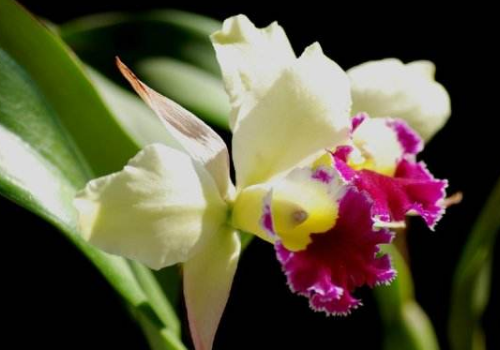
The horticultural hybrids of the genus Cattleya are among the most famous orchids in the world. The pseudobulbs are club-shaped or cylindrical, with 1 to 3 leaves at the top; the leaves are thick and hard, with the midrib sunken; the flowers are single or several, borne at the top of the pseudobulbs, large and beautiful, with bright and rich colors.
Native to tropical America, it is the national flower of Brazil, Argentina, Colombia and other countries. There are more than several thousand varieties. Colors include white, yellow, green, red-purple and so on. Propagation is by division, tissue culture or sterile sowing. It likes warmth, humidity and ample light.
It is usually potted with fern roots, moss, bark chunks and so on. During the growing period it needs relatively high air humidity, appropriate fertilization and ventilation.
What are the reasons Cattleyas do not bloom:
Generally, it takes 4∼6 years for a Cattleya to go from a test-tube seedling to mature flowering. If during the growing process the orchid plant is frequently divided before it has grown mature, in order to reach production numbers, because the plant has not had enough time to grow and mature, it is impossible or very rare for it to bloom.
Therefore, during cultivation, unless the plant has filled the entire pot surface, or substrates such as sphagnum moss have rotted and the pot must be changed and the plant divided, only then should this work be done. As mentioned above, frequent division can affect flowering.
Light is the most important influencing factor for both the sturdiness and blooming of Cattleya plants; insufficient sunlight will delay flowering or result in a low flowering rate. How to care for Cattleyas after flowering, the key lies in the fact that Cattleyas need relatively more light; except at noon, sunlight can be allowed to fall directly on the plant, and it can be placed on an east-facing or shaded south-facing windowsill, or a west-facing windowsill is also fine.
If cultivated in a greenhouse, shade to 50% to 70% of full light. If light is sufficient, the leaves should be medium green and the pseudobulbs upright, but some varieties do not need too much sunlight, such as the deep vermilion flower types and mini small-flowered types that bloom in winter.
Cattleya flowers are truly very beautiful, fully living up to their reputation.
What is the flower meaning of Cattleya?
Its colors are brilliant and colorful, delicate and varied, and it often appears on occasions when men express love to women; sometimes it is passionate yellow, sometimes unrestrained red, and can even change into mysterious black, and in their enchantment they carry sincere blessings for affection. They are Cattleyas, so do you want to know the flower meaning of Cattleya? Then follow the editor and take a look!
Cattleya flower meaning: respect and love, admiration, feminine charm.
The horticultural hybrids of the genus Cattleya are among the most famous orchids in the world. The pseudobulbs are club-shaped or cylindrical, with 1 to 3 leaves at the top; the leaves are thick and hard, with the midrib sunken; the flowers are single or several, borne at the top of the pseudobulbs, large and beautiful, with bright and rich colors. Native to tropical America, it is the national flower of Brazil, Colombia and other countries. There are more than several thousand varieties. Colors include white, yellow, green, red-purple and so on. Propagation is by division, tissue culture or sterile sowing. It likes warmth, humidity and ample light. It is usually potted with fern roots, moss, bark chunks and so on. Cattleya is also known as Akaï wood, Cattleya labiata, Cattleya, and Cattleya; it is native to tropical America, and there are more than several thousand varieties. Colors include white, yellow, green, red-purple and so on. Propagation is by division, tissue culture or sterile sowing.
It likes warmth, humidity and ample light. It is usually potted with fern roots, moss, bark chunks and so on. During the growing period it needs relatively high air humidity, appropriate fertilization and ventilation. The flowers are large, elegant and magnificent, the flower colors are delicate and varied, and the flowers are richly fragrant; the 3 sepals with pointed tips extending vertically are the greatest characteristic of this flower. Internationally it has the fine names of “King of Orchids” and “Queen of Orchids”. It is the national flower of Brazil, Argentina, Colombia and other countries.
Most are hybridized from 2 to 3 species among Laelia, Cattleya and Brassavola in the subtribe Laeliinae, and there are also native Cattleyas, such as Cattleya walkeriana. Perennial herb. The pseudobulb is club-shaped, 10 to 15 cm long, with leaves at the top, leathery, light green, and the flowers are large and purple-red. Cultivated varieties are rich in color, including white, yellow, orange-red, deep red, purple-red and bicolor. Common varieties include the yellow “Xiangshan” and “Luori”, the green “Yulin”, the white “Youmei”, the pink “Zhenmei”, the red “Huoqiu”, the purple-red “Changhe”, and the bicolor “Christmas Candy”, etc.
Cattleya flower shapes and colors are endlessly varied, brilliant and dazzling, and they often appear at celebrations and banquets, used for flower arrangements for viewing. For example, using Cattleya and Phalaenopsis as the main materials, paired with Oncidium, Solomon's seal and asparagus fern in a vase, they are bright and elegant, with a strong sense of rhythm. If Cattleya is used as the main flower, paired with anthurium, dianthus, Monstera adansonii and bear grass, it appears light and lively. Moreover, the flowering period is long, and a single flower can stay open for about 1 month; as a cut flower in water it can be enjoyed for 10 to 14 days. Cattleya, together with Dendrobium, Phalaenopsis and Vanda, are ranked as the four major ornamental orchid groups with the highest ornamental value, and its graceful figure is indispensable in bridal bouquets.
Flower-Giving Etiquette
Use 1 to 2 cut flowers to make a corsage; the beautiful mini bouquet is lovely. If it is a potted plant, you can wrap the pot with thin decorative paper and tie on an ornament.
According to relevant records, the stems of this plant were used by the British as binding material in 1818 and brought from Brazil to Britain. The British horticulturist William Cattley cultivated these stems and branches, and they bloomed in 1824. At this time, the botanist Dr. Lindley saw the beautiful flowers of the Cattleya and considered them a new species of Orchidaceae, so he used Cattley's name to name the genus Cattleya, to which the Cattleya belongs. The genus Cattleya has more than 60 species. After nearly 200 years of cultivation and breeding by people, there are very many horticultural varieties, and it has become an important type of ornamental orchid plant. Plants of the genus Cattleya are perennial herbaceous plants, belonging to epiphytic orchids, evergreen year-round. The plant has 1 to 3 thick leathery leaves, which are tissues for storing water and nutrients.
What to Do When Cattleya Leaves Turn Yellow and How to Prune
Because most in this genus have brilliant colors, the Cattleya is called the “Queen of Orchids”. What to do when Cattleya leaves turn yellow and how to prune:
What to do when Cattleya leaves turn yellow:
1. Water-yellow: because of excessive watering, the soil becomes waterlogged and wet for a long time, aeration is relatively poor, and even some fibrous roots become badly rotted. At this time, watering should be reduced, and watering should be done reasonably according to needs.
2. Fertilizer-yellow: usually refers to excessive fertilization, shown as the tips of old leaves turning yellow and falling off; although new leaves are relatively thick and look glossy, they generally appear uneven and not spread out. If it is a valuable flower, you can scatter a layer of bok choy or radish seeds, and after the seedlings come up for a few days, pull them out, so as to consume nutrients.
3. Drought-yellow: because there has been no thorough watering for a long time or because of dehydration, although the leaf color of new leaves is relatively normal, the lower leaves gradually dry yellow and fall off from below upward and become aged.
4. Alkaline-yellow: this mainly occurs in some acidic soils in the south, while in the north the water quality tends to be alkaline, causing leaves to gradually fade, turn yellow, and even fall off. The simplest method is to water with fermented rice-washing water or rainwater.
How to prune Cattleya:
1. Every time you prune, disinfect the scissors used for pruning, let them dry in a cool place, and then prune.
2. Cattleyas generally have relatively many flowers, but they do not all bloom at the same time; when some flowers are blooming, some have already withered or turned brown, so these withered flowers should be cut off in time to avoid affecting flowering.
3. If you want it to bloom well again the next year, it is best to cut the inflorescence axis off from the base; when the substrate ages, it should be replaced in time, and it is suitable to repot in May or June when new leaves grow, preferably wrapping another layer of sphagnum moss at the original moss area and then placing it in a slightly larger flowerpot.
Even the most beautiful flower still needs careful care.