Is Pilea peperomioides toxic, and why does it drop leaves so easily?
Although Pilea peperomioides and pennywort look extremely similar in both color and shape, they are still quite easy to tell apart if you look carefully. Is Pilea peperomioides toxic? Why does it drop leaves so easily:
Is Pilea peperomioides toxic:
Pilea peperomioides is a perennial succulent herb in the family Urticaceae, genus Pilea. It is native to western Yunnan and the Hengduan Mountains of Sichuan, prefers shade, and has anti-inflammatory and detoxifying properties. After artificial cultivation, it was found to grow well in plenty of sunlight too, making it suitable as a foliage plant for balconies or indoors, and it is a species with extremely high ornamental value.
Although all plants respire and release some gases, the gases released by Pilea peperomioides are non-toxic. Not only that, Pilea peperomioides can also absorb some waste gases, making indoor air cleaner and fresher, so it is non-toxic.
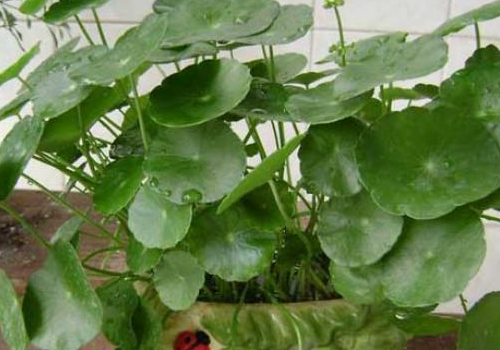
Why does Pilea peperomioides drop leaves so easily:
1. Lack of sunlight. Pilea peperomioides is a shade-loving, cold-tolerant plant that can grow well even in fully shaded conditions. However, in home care, it seems not to adapt to the full shade of household light; if light is insufficient, it will grow poorly and drop leaves. So when caring for it, pay attention to how you handle the lighting.
2. Lack of water. Pilea peperomioides is a fussy plant that likes water but fears waterlogging. In a dry environment, the plant lacks water, the leaves tend to wilt and droop, or even drop, causing the plant to die.
3. Fertilizer concentration too high. Flowers and succulents alike dislike strong fertilizer; they prefer light, diluted fertilizer water. If the fertilizer concentration is too high, it directly weakens the root system's ability to absorb oxygen, causing the plant to collapse, leaves to drop, and even the plant to die.
Pilea peperomioides is non-toxic and can also be grown hydroponically.
Is Pilea peperomioides toxic, and can it be kept at home?
Is Pilea peperomioides toxic?
Let me tell you loudly first: Pilea peperomioides is non-toxic! Repeat that to yourself three times!
Pilea peperomioides is a perennial succulent herb in the family Urticaceae, genus Pilea. It is native to western Yunnan and the Hengduan Mountains of Sichuan, and prefers shade. According to the "Dian Yao Lu" (Record of Yunnan Medicines), Pilea peperomioides can treat swelling and pain, can be used for bone setting, and can relieve erysipelas. It has anti-inflammatory and detoxifying properties.
After artificial cultivation, it was found to grow well in plenty of sunlight too, making it suitable as a foliage plant for balconies or indoors, and it is a species with extremely high ornamental value.
All plants respire and release some gases. However, the gases released by Pilea peperomioides are non-toxic. Not only that, Pilea peperomioides can also absorb some waste gases, making indoor air cleaner and fresher.
Is Pilea peperomioides suitable for keeping at home?
Pilea peperomioides is fairly cold-tolerant and shade-loving, but it can also grow well in a greenhouse with plenty of sunlight. In home cultivation, pay attention to shading in summer, and it can also maintain a good growth state.
Pilea peperomioides is suited to growing in relatively moist, well-drained peat soil. With proper water and fertilizer management, its leaves can grow green and glossy, and the thick, fleshy leaves are like bright mirrors, very beautiful and very charming.
Chinese people care a great deal about charm and ambiance, and keeping a plant that is full of interest and rich in classical feeling makes one feel especially refined. Just imagine an ancient room with a screen at home - doesn't it have a lot of charm and atmosphere?
The color of Pilea peperomioides is emerald green, like a round screen. In Yunnan, everyone calls it "Cui Ping Cao" (emerald screen plant). Grown at home, it is like countless small screens; placed in the living room, it creates a very artistic mood.
A well-grown Pilea peperomioides has deep green, glossy leaves, and above the center of the leaf, where the petiole attaches, there is a golden-yellow round dot, so people also call it "Yi Dian Jin" (one dot of gold).
Such a fun-filled pot of Pilea peperomioides, enjoyable for both its flowers and its leaves, is of course suitable for keeping at home. Get one right away, and then on a spring afternoon, watch each little mirror give off its luster!
The main values of Pilea peperomioides
Ornamental
The thick, nearly round, fleshy leaves of Pilea peperomioides, with their peltate petioles, look very much like the mirrors used by ancient immortals to look at their faces. The leaves are deep green and glossy, and above the center of the leaf, where the petiole attaches, there is a golden-yellow round dot. From the center outward there are radiating leaf veins with clear lines, like golden threads, showing a touch of high-end, elegant refinement.
Since Pilea peperomioides was introduced to Europe in the early 20th century, it has been introduced and cultivated by botanical gardens and gardening enthusiasts in countries such as the United Kingdom, Sweden, and Norway, and is regarded as a treasure among indoor foliage plants, deeply loved by people.
Its leaf shape is peculiar and its posture beautiful. It grows quickly. It is easy to propagate and suitable for greenhouse, courtyard, and indoor cultivation. It is a relatively ideal foliage plant worth promoting, and it is also a good material for making and decorating bonsai.
Air purification
The respiration of Pilea peperomioides can absorb waste gases from the air and then convert them into ordinary gases that are harmless to humans.
Pilea peperomioides can also absorb a certain amount of radiation, preventing radiation from harming the human body.
Placing a pot of Pilea peperomioides at home is not only pleasing to the eye, but even the air becomes fresher! Leaf after leaf sways in the wind and also takes in dust from the air along the way - truly a good thing that is both nice to look at and useful! No wonder Europeans treat Pilea peperomioides as a treasure!
Medicinal
Pilea peperomioides is a very important medicinal material in western Yunnan. In the hands of the Dai people, it can be a good medicine for reducing swelling and relieving pain, a detoxifying wonder, and can also set tendons and bones - simply the dearest plant one could see when surviving in the wild.
For red, swollen, inflamed skin, Pilea peperomioides can effectively reduce inflammation and detoxify. This is recorded in the "Dian Yao Lu" (Record of Yunnan Medicines).
The above is an introduction to whether Pilea peperomioides is toxic and its main values. To learn more, please follow the Four Seasons Plants Network!