How do you grow Lotus Bamboo so it thrives and can it bloom?
The lotus leaf carries a very beautiful meaning, and it is also commonly grown in water at home. So do you know how to grow Lotus Bamboo so it thrives? Can it bloom?
How to grow Lotus Bamboo so it thrives:
1. Soil propagation
How do you propagate Lotus Bamboo? There are mainly two ways to propagate Lotus Bamboo; one is soil propagation, and soil propagation means cutting propagation. The other is water-root cultivation. Soil propagation means planting the knotted stems of Lotus Bamboo (about three nodes) in soil; generally sandy soil is more suitable.
2. Water-root cultivation
How do you propagate Lotus Bamboo? The most common method is water-root cultivation. First cut off the leaves of the Lotus Bamboo, place the sprouted Lotus Bamboo stems in water for cultivation, and note that the water needs to be changed after a period of time.
3. Soil propagation requires watering
How do you propagate Lotus Bamboo? If the Lotus Bamboo is propagated in soil, then you need to water it. How should you water it? There is also a knack to it, and two issues should be noted: Lotus Bamboo needs to stay moist, and Lotus Bamboo cannot sit in standing water because it fears root rot.
4. Sunlight
How do you propagate Lotus Bamboo? If the Lotus Bamboo is propagated indoors, it needs sunlight for photosynthesis, so every few days you can put the Lotus Bamboo outdoors for photosynthesis.
5. Ventilation
How do you propagate Lotus Bamboo? If the Lotus Bamboo is propagated indoors, it also needs to stay ventilated. You can place the Lotus Bamboo in a spot with good ventilation so it grows better.
6. Fertilizing
How do you propagate Lotus Bamboo? If Lotus Bamboo lacks nutrients, its leaves will turn yellow, so you should fertilize Lotus Bamboo regularly; only then will it grow thicker and bushier.
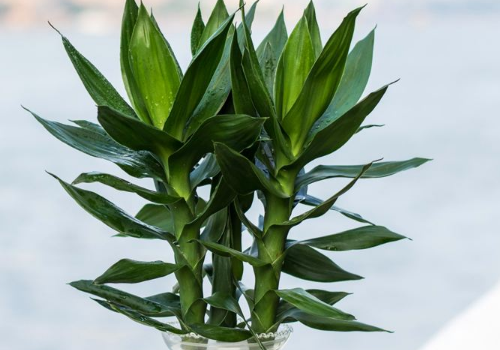
Can Lotus Bamboo bloom:
Lotus Bamboo cannot bloom.
Lotus Bamboo, also known as Lotus Bamboo and Guanyin Bamboo, is an evergreen small tree. It is evergreen in all four seasons, round like bamboo, with upright and elegant stems and a free and easy posture, full of bamboo charm. It does not need special care; as long as there is enough water, it can grow vigorously. It is a foliage plant that can be placed indoors for a long time and has extremely high ornamental value.
It is similar to ordinary Lucky Bamboo, but its stems are thicker, its internodes are shorter, and its leaves are wider. The shape of the opened leaves at the top is quite similar to a lotus, hence the name Lotus Bamboo.
It is suitable for ordinary pot cultivation, or directly growing in water; it can be placed on windowsills and in bright spots near windows in the living room, study, bedroom, and other places for display and viewing.
Now you know how to grow Lotus Bamboo so it thrives.
How do you grow Epiphyllum? Pot cultivation methods and precautions for Epiphyllum
Epiphyllum is a perennial evergreen epiphytic plant in the Cactaceae family. It has many flower color varieties, and is deeply loved by people for its delicate and graceful posture, gorgeous colors, and deep fragrance. It is mainly grown in pots for viewing, and in greenhouses multiple varieties are often combined to improve the ornamental effect. Below, the editor will introduce the cultivation methods of Epiphyllum for everyone.
Growth habits of Epiphyllum
Epiphyllum likes a warm and humid environment, avoids direct sunlight, tolerates drought, tolerates partial shade, fears rain, and requires fertile, loose, well-drained neutral or slightly acidic sandy loam. The most suitable temperature during the growing period is 20-25°C, the most suitable temperature for flower bud differentiation is between 10-15°C, the winter temperature cannot be lower than 5°C, and the flowering period is April.
Epiphyllum should be cultivated in loose, fertile, and well-drained soil, and it likes fertilizer. During the growing period, it should be fertilized more so that it can bloom on time and produce beautiful flowers. It is suitable for surviving in a warm and humid environment; do not let the balcony shine directly on it. It tolerates drought and fears rain. Although it likes humidity, the soil for growing Epiphyllum should still be on the drier side, otherwise it will cause root mildew and rot.
Propagation methods of Epiphyllum
1. Cutting propagation: It is best to carry it out between March and April each year. First cut a 10 cm long healthy flat stem as a cutting; after cutting, let it dry for 2-3 days, then insert it into moist sandy soil or vermiculite, with a depth of 1/3 of the cutting. Keep the temperature at 10-15°C and spray water on it frequently. Generally it can take root in one month and then be potted.
2. Grafting propagation: It is suitable to carry it out at 25°C. The rootstock can be cactus. Use a knife to cut a wedge-shaped opening in the rootstock, then take a 6-8 cm long healthy Epiphyllum stem segment as the scion, cut one slice on each side of the scion to expose the stem pith and make it wedge-shaped, then insert it into the split in the rootstock, bind it well with hemp rope, and place it in a shady place for care. After about 10 days, the grafted part can grow together; remove the hemp rope and carry out normal care.
3. Division propagation: Old perennial plants often produce clusters of shoots at the lower part, which can also be propagated by division.
Cultivation methods of Epiphyllum
In summer, when the weather is hot and the sunlight is strong, it should be placed under a shade shed to avoid direct sunlight, and water should often be sprayed around the pot to increase air humidity. Before Frost's Descent in winter, it should be moved indoors; when the temperature is above 5°C it can overwinter safely. In March, move the plant to a place with sufficient sunlight and keep the temperature at 10-15°C to promote flower bud differentiation. When the flower buds form, if they are too dense, thin them appropriately. The potting soil can be made by mixing garden soil + sand + organic fertilizer. As the plant grows, repot and change the soil every spring and autumn to promote rapid growth of the plant, and set up supports to prevent the branch tips from breaking, while also helping ventilation and light penetration and keeping the plant shape attractive.
Epiphyllum tolerates drought, so the potting soil should not be too wet. From March to April, during the flower bud formation period, it should be watered and fertilized more, and one application of phosphorus fertilizer can be given to help it accumulate nutrients, produce more buds, and bloom more. However, the potting soil should not be too wet. From May to July is exactly the flowering season; at this time it should be watered less and not fertilized. Generally, watering thoroughly once a week is enough. After the flowers fade, the potting soil is better kept slightly dry. After being brought indoors in winter, watering should follow the principle of "water thoroughly only when completely dry," otherwise it is prone to rot.
Epiphyllum likes fertile, loose, well-drained, slightly acidic leaf-mold soil (pH 5-6 is most suitable). Heavy clay soil conditions make it prone to root rot; in winter it requires relatively dry soil. But generally speaking, Epiphyllum is mostly potted, and cutting propagation can be used. In early spring, in March or April, cut off a section of Epiphyllum stem as a cutting, then insert the bottom one third into prepared thin mud and sand, spray a little water appropriately every day, and after about one month it can basically take root. Grafting can also be used. The grafting method for Epiphyllum is generally cleft grafting. You can first choose a cactus with good growth as the rootstock, then make a cut, insert the Epiphyllum stem into the cut, preferably tightly, then tie the joint with a wet cloth strip, and after the joint slowly grows together, you can untie the wet cloth strip.
The good growth of Epiphyllum cannot be separated from regular care. Epiphyllum is a plant that likes light but is not cold-tolerant, so it should normally receive plenty of sunlight. However, it should be noted that although it likes light, it fears being scorched, so shade work in summer is still necessary. If the Epiphyllum you grow only grows leaves and does not bloom, then it is very likely caused by insufficient sunlight.
During the growing period of Epiphyllum, fertilizer and water care must be in place. On average, apply liquid fertilizer or dilute fertilizer once every half month. If you find that the plant has already formed buds, take the opportunity to apply phosphorus fertilizer once to encourage Epiphyllum to bloom larger and more vividly. When fertilizing, note that if the fertilizer and water are too abundant, many small side shoots will grow on the stems. At this time, do not be reluctant; the earlier these side shoots are removed, the better, otherwise they can easily rob nutrients from the main flowering stems, and after the side shoots grow larger they also affect the overall appearance. After fertilizing, remember to water; fertilizer diluted by water is more conducive to absorption by the roots and stems. Usually, watering so the soil is half dry and half wet is enough, to avoid water accumulation and root rot. When the weather is dry, you can separately spray some water on the stems of Epiphyllum. In winter, water and fertilizer can be omitted.
In addition, the best cultivation temperature for Epiphyllum is 15°C. If it is a little lower or a little higher, it is not a big problem. If it is too high or too low, it will affect its growth; either many abnormal stems grow, or the buds freeze to death. So the temperature should also be controlled as well as possible. Finally, if Epiphyllum is grown indoors, indoor air circulation must also be ensured.
Four-season care of Epiphyllum
1. Spring: During the growing season of Epiphyllum, pay attention to sufficient light and timely fertilization. Apply a fertilizer combining nitrogen and phosphorus once every 10-15 days to promote healthy growth of flowers and leaves. Avoid water accumulation in the pot to prevent root rot. Starting in April, flower buds grow at the edges of the upper half of the fleshy leaves and gradually swell, then bloom fully after half a month. If the plant lacks nutrients at this time and its growth is weak, it will not bloom or will bloom less. To prevent this phenomenon, 1-2 additional applications of quick-acting phosphorus fertilizer can be given in advance. At the same time, remove excessive side buds and branch buds at the base.
2. Summer: During the vigorous growth period, topdressing mainly with nitrogen should be applied in time 1-2 times. This not only promotes new branches and leaves, but also helps produce more buds and more flowers next spring. To increase the number of stem segments, take advantage of this favorable period to keep buds. In the high heat of midsummer, Epiphyllum enters a semi-dormant period. It should be placed in a ventilated, cool, semi-shaded place, fertilization should be stopped, watering should not be excessive, and the potting soil should be kept slightly dry, preventing excessive shading to avoid leggy growth that affects flowering.
3. Autumn: This is the second vigorous growth period of the year. New leaves gradually age and mature. Management and care methods are basically the same as in spring and early summer from May to June. Topdressing can be applied 2-3 times, mainly with phosphorus and potassium fertilizer. Also increase the light duration.
4. Winter: After Frost's Descent, the weather turns cold, so it needs to be moved indoors for warmth. It can be placed in a sunny spot indoors and the room temperature kept at 8°C. Stop fertilization, restrict watering, and keep the potting soil on the dry side; too wet will cause leaf wilting, lodging, and root rot. From mid-March to early April after spring, as temperatures rise, gradually extend the time for opening windows for ventilation and hardening, laying the foundation for later moving outdoors for care.
Care and management of Epiphyllum
1. Tying and care
Because the abnormal stems of Epiphyllum are soft, thin bamboo poles should be used as supports in time. It is best to make an oval support and distribute the abnormal stems evenly on the support and tie them. This can prevent breakage and also help ventilation and light penetration. Remove branches in time and wipe off unnecessary side buds. Note to use scissors to trim level with the top; do not let new buds grow at the top. Make the plant shape well-proportioned and attractive.
2. Management during the bud period
① During the bud formation period, the plant needs a little more water than usual. At this time, it is best to alternate watering and spraying to keep the potting soil in a slightly moist state. It should neither be watered too much nor let the potting soil become too dry, otherwise both can cause bud withering.
② During the growing period, ensure normal sunlight for the plant, generally about 5-6 hours per day. The ambient temperature for plant growth is also related to air circulation. A temperature of 15-20°C helps the plant form buds and bloom.
③ If the temperature is too high, flower buds that are differentiating tend to revert into young shoots. During the bud formation period, if the plant grows too many branches, they will also compete with the flower buds for nutrients, making the nutrients available to the flower buds insufficient and causing bud withering, so at this time remove branches in time.
④ Air circulation can remove retained gases such as ethylene that promote early aging of flower buds, playing a role in protecting the buds.
⑤ Before the plant forms buds, topdress in time; after buds appear, it is not suitable to apply much topdressing.
⑥ Sometimes the plant grows very luxuriantly but does not bloom. This is mainly caused by the placement location being too shaded or by excessive fertilizer and water, causing leggy growth. Fertilizer and water must be controlled, care should be taken to avoid applying excessive nitrogen fertilizer, and it should be exposed to more sunlight appropriately. During the bud period, apply more phosphorus and potassium fertilizer, which is beneficial for budding and flowering. In winter, move it to a moderately warm greenhouse to overwinter.
3. Management after flowering
After Epiphyllum flowers fade in early summer from May to June, it enters a vigorous growth period. Topdressing mainly with nitrogen should be applied in time 1-2 times. This not only promotes new branches and leaves, but also helps produce more buds and flowers next spring. To increase the number of stem segments, take advantage of this favorable period to keep buds so that the kept buds can grow to the required height in one go. If, because budding is too late or growth is poor, the stem segments cannot reach the required height in one go, then do not be reluctant; simply cut them off to prevent gourd-shaped stem segments from appearing and affecting the beauty of the plant shape.
In the high heat of midsummer, Epiphyllum enters a semi-dormant period. It should be placed in a ventilated, cool, semi-shaded place, fertilization should be stopped, watering should not be excessive, and the potting soil should be kept slightly dry, while preventing excessive shading to avoid leggy growth that affects flowering. It can also be placed in a ventilated spot by a window, with 3-4 hours of sunlight per day, but avoid direct sunlight at noon, otherwise the leaves will turn yellow. In autumn it continues to grow branches and leaves, which is also the second vigorous growth period of the year, and new leaves gradually age and mature. Management and care methods are basically the same as in spring and early summer. Topdressing can be applied 2-3 times, mainly with phosphorus and potassium fertilizer, and the light duration should be increased.
Pests and diseases of Epiphyllum
Epiphyllum often suffers from stem rot, brown spot disease, and root-knot nematode damage. It can be sprayed with 50% carbendazim wettable powder at 1000 times dilution. For root-knot nematode, irrigate with 80% dibromochloropropane emulsifiable concentrate at 1000 times dilution for control.
If ventilation is poor during cultivation, it is easily harmed by aphids, scale insects, and red spider mites. It can be sprayed with 50% fenitrothion emulsifiable concentrate at 1000 times dilution for control.
Common problems with Epiphyllum
1. What causes Epiphyllum not to bloom?
The abnormal stems grow very luxuriantly, but it just does not bloom. This is mainly caused by the flowerpot being placed in a shady place for a long time without sunlight, while also watering too much and applying excessive nitrogen, and so on. Because insufficient sunlight and excessive nitrogen fertilizer both easily cause leaf leggy growth, which is unfavorable for flower bud differentiation; too much watering is unfavorable for the full use of carbohydrates. In addition, if the potting soil has not been changed for many years, and the soil pH is too high, it is also unfavorable for flower bud formation. Corresponding measures should be taken for the above causes, such as ensuring light penetration (place it in a spot with sufficient scattered light), ventilation, moderate fertilization and watering, and timely repotting and soil changing, and then it can form buds and bloom.
2. What causes the abnormal stems of Epiphyllum to turn yellow?
The abnormal stems turn yellow, and in severe cases become sallow, or even the skin is scorched. This is often caused by improper placement of the flowerpot and exposure to direct sunlight. Therefore, in spring and autumn it can be placed outdoors in a sunny spot for care, while in summer it must be placed in a well-ventilated, semi-shaded place. For home flower growing, in summer it can also be placed indoors in a spot with scattered light for care, but be sure to open the windows often to keep the air circulating. In addition, damage by red spider mites and scale insects can also cause the abnormal stems to turn yellow, and timely prevention should be noted.
Lotus bamboo Lotus bamboo Lotus bamboo illustrated guide: how to grow Lotus bamboo / how to propagate Lotus bamboo
Lotus bamboo profileLotus bamboo Lotus bamboo
Aliases: Lotus Bamboo, Lotus Leaf Bamboo
Classification: shrub flowers
Family and genus: Plantae, Angiosperms, Monocots, Liliales, Liliaceae, Dracaena
Full bloom period: does not bloom
Lotus bamboo is a species under the genus Dracaena in the Liliaceae family. Lotus Bamboo is suitable for water cultivation, potting, and hydroponics. Its ornamental value is extremely high, and it is one of the few greenery and decorative items that can be placed indoors for a long time. The most suitable growth temperature for Lotus bamboo is 25-30°C, and the winter nighttime temperature is best not lower than 8°C. Lotus Bamboo combines "blooming flowers bring wealth and honor" and "bamboo brings peace," and is the best gift for beautiful women and friends. Lotus Bamboo has extremely strong adaptability and can grow well in full light, partial light, and shady places. It likes high temperature, high humidity, and a sunny environment. It likes sandy soil, avoids water accumulation, and tolerates drought.
Cultivation methods and precautions for Lotus bamboo; introduction to Lotus bamboo
Lotus bamboo is a species under the genus Dracaena in the Liliaceae family. Lotus Bamboo is suitable for water cultivation, potting, and hydroponics. Its ornamental value is extremely high, and it is one of the few greenery and decorative items that can be placed indoors for a long time.
The most suitable growth temperature for Lotus bamboo is 25-30°C, and the winter nighttime temperature is best not lower than 8°C. Lotus Bamboo combines "blooming flowers bring wealth and honor" and "bamboo brings peace," and is the best gift for beautiful women and friends.
Lotus Bamboo has extremely strong adaptability and can grow well in full light, partial light, and shady places. It likes high temperature, high humidity, and a sunny environment. It likes sandy soil, avoids water accumulation, and tolerates drought.
Morphological characteristics of Lotus bamboo
Lotus Bamboo has emerald green leaves and straight stems, round like bamboo. The leaves are ovate with pointed tips, and the leaf stalk base clasps the stem. It is an extremely shade-tolerant plant and still grows well and stands tall and strong under low-light conditions. It can be placed indoors for a long time for foliage viewing and does not need special care; as long as there is enough water, it can grow vigorously.
When Lotus Bamboo is hydroponically grown, cut the bamboo stems into small sections of more than 20 cm as cuttings and insert them in water. As long as 1/3 of the cutting can be immersed in water, it can take root and survive.
Ecological habits of Lotus bamboo
The growth temperature of Lotus Bamboo is 25-30°C, and the winter nighttime temperature is not lower than 8°C.
Lotus Bamboo is a plant that likes warmth, humidity, and scattered light. It likes shady and humid conditions, and well-drained sandy loam is most suitable. It fears water accumulation, and the most suitable growth temperature is 22-30°C. If the leaves turn yellow and gradually fall off, it may be caused by too strong light or insufficient watering.
Lotus Bamboo grows coarsely and vigorously, and is mostly cultivated in gardens and nurseries. There are also wild forms. It likes shady and humid conditions, with thick stems and leaves and dark green leaves. It is mainly used as an ornamental plant. Its stems are upright, its leaf color is deep green, and it remains evergreen in winter and summer.
Cultivation techniques of Lotus bamboo: soil cultivation
Lotus Bamboo likes shady, humid, and high-temperature conditions, tolerates waterlogging, has strong fertilizer tolerance, and has strong cold resistance; it likes a semi-shaded environment. It is suitable for growing in well-drained sandy soil or semi-muddy sand and alluvial clay, and the suitable growth temperature is 20-28°C. It can tolerate a low temperature of 2-3°C, but in winter it must be protected from frost. In the high-temperature and humid seasons of summer and autumn, conditions are very favorable for the growth of Lotus Bamboo, and this is its best growth period. It is not strict about light and is suitable for growing under bright scattered light. Too strong light or exposure to the sun will cause leaves to turn yellow, lose greenness, and grow slowly.
Therefore, when planting in the field, a shade net shed 1.7-1.8 m high should be built, with 75% shading rate being appropriate, creating a semi-shaded, scattered-light environment. Especially from April to September, avoid direct strong light, exposure, or excessive drought, otherwise the leaf surface is likely to become rough, scorched, and weak in growth, and the leaves will lack luster, reducing ornamental value. During the growing season, the soil should be kept moist regularly, and water should often be sprayed or sprinkled on the leaf surface to increase air humidity; after heavy rain, clear the accumulated water in the field in time to prevent lodging. In winter, pay attention to cold protection and frost protection; when the temperature is below 10°C, the leaves will turn yellow and wilt. At this time, the soil should be kept alternately dry and wet, but it should not be drought-stricken or too wet; reduce watering and stop fertilization.
Lotus Bamboo has strong growth and strong root and bud sprouting ability, and cutting propagation is often used. As long as the temperature is suitable, it can be done throughout the year. Generally, cut stem segments without leaves as cuttings, 5-10 cm long, preferably with 3 internodes, and insert them into a sand bed or semi-muddy sandy soil. In the south, in spring and autumn, it generally takes 25-30 days to sprout roots and buds, and after 35 days it can be put on trays or transplanted to the field for growing.
Hydroponics
Water cuttings can also take root, and soilless cultivation can also be carried out. In recent years, various places in Guangdong have used top ear branches (that is, tender stems) cut into sandy loam or semi-muddy sand and alluvial clay fields; after careful care and cultivation, they can be harvested and cut for bottle use by the Spring Festival of the same year. In areas south of Guangzhou, such as farmers in Haiyan Town, Taishan City, they are directly inserted into the field in spring and autumn. It is also possible in October-December to use top ear branches or internode top seedlings and side-bud top ears cut into 15-20 cm cuttings and insert them into coarse sand or semi-muddy sand fields, burying 2 nodes in the soil, watering once a day, and keeping the soil moist. Generally, they can take root in 35-45 days.
Spring cutting is most suitable from late January (after Great Cold) to mid-to-late February (around Rain Water), and can be directly cut in the open field, generally taking 30-35 days to take root. It can also be cut from mid-March to early April (Spring Equinox to Pure Brightness). It is best to plant in late March, because during this period the temperature gradually rises and the humidity is suitable. After cutting, it can take root in about 7-15 days, with a survival rate of 100%, and with good management it can be marketed in the same year.
Bottle insertion
Cut off the long branches of Lotus Bamboo and insert them directly into an elegant vase (with soil placed in the vase for fixation and as fertilizer). After growing, they can also be bent into shapes.
Shading
Building a shade shed means covering with a shade net. Erect a frame around the rice field with wooden posts or cement piles. The wooden posts should be 2.4 m high and buried 0.4 m deep. If calculated at 20 sq m using four wooden posts (or cement posts), about 30-35 wooden posts are needed per mu. Tie the top of the shed tightly with iron wire or nylon rope. Then, according to 10 bundles of plastic shade net per mu (width 1.5 m/100 m, 55 yuan/bundle), cover it for shading, and tie it all around with nylon rope.
Reasonable close planting
When preparing the land, the bed surface height is 15-20 cm, the bed surface width is 120-150 cm, and the bed ditch is 25 cm. Apply 30 loads of decomposed farmyard manure per mu and level it fully, then insert the seedlings. The planting spacing is 8 x 5 cun or 6 x 5 cun, and more than 15,000-20,000 plants can be planted per mu. Generally, planting should not be too dense. The planting depth is preferably 2.5-3.5 cm (that is, seedlings with 4 nodes, inserting 2 nodes is enough), maintaining appropriate space for ventilation and light penetration.
Scientific fertilization
Lotus Bamboo can grow on sloping land and semi-dry paddy fields. To accelerate its growth, shorten the production cycle, and improve economic benefits.
1. Apply sufficient base fertilizer: when inserting and planting, apply Jinzhi Yuye (rich in nitrogen, phosphorus, potassium, calcium, magnesium, iron, zinc, copper, etc.) as base fertilizer, then insert and plant.
2. Apply seedling fertilizer appropriately: 20 days after planting, the plant begins to send out new roots. One application of manure water at 30-40 loads/mu can be poured. After 30-40 days, depending on the growth of the seedlings, apply one seedling-promoting fertilizer, generally mainly compound fertilizer, with 15-20 kg of compound fertilizer per mu. After application, cultivate the soil. When the plant grows to 35-45 cm high, its nutrient requirements also increase, and this is the beginning of the plant's vigorous growth stage. Therefore, topdressing at this stage should be heavy, with 25-30 kg of compound fertilizer per mu and 10-15 kg of urea being appropriate. At the same time, foliar fertilizer can be sprayed in combination, using plant growth regulators such as Xinzhi Su or Penshibao, to promote balanced growth, lush leaves and thick stems, and improve stress resistance.
Key points for bottle insertion
1. Remove leaves from the base and cut a slanted opening: before putting into the vase, remove the leaves from the base of the cutting, and use a sharp knife to cut the base into a slanted opening. The cut should be smooth to increase the area for absorbing water and nutrients. Change the clean water once every 3 to 4 days. A few small pieces of charcoal can be put in for preservation. Do not move the position or change the direction within 10 days. After about 15 days, silvery white fibrous roots can grow.
2. Change water to adding water: after rooting, it is not suitable to change the water. After the water evaporates, only add water in time. Frequent water changes easily cause yellow leaves and withered branches. The added water is best well water. If using tap water, first store it in a container for one day. The water should be kept clean and fresh. Do not use dirty water, hard water, or water mixed with oil, otherwise it will easily cause root rot.
3. Fertilize in time: to prevent leggy growth of hydroponic Lotus Bamboo, do not apply chemical fertilizer. It is best to inject a few drops of brandy into the bottle about every 3 weeks and add a small amount of nutrient solution; alternatively, dissolve half an aspirin tablet or one VC tablet crushed into powder in 500 g of water, and drop a few drops in when adding water, which can keep the leaves emerald green (no need after roots grow).
4. Avoid wind: do not place Lotus Bamboo next to a TV or in places where an air conditioner or electric fan often blows, to avoid dry leaf tips and leaf edges.
Cultivation methods
In northern China, the growing season for Lotus Bamboo is from April to October. The potting soil should be kept moist, and humic acid liquid fertilizer should be applied once every half month. In summer, if cared for outdoors, it should be shaded; too strong light will make the leaves turn yellow, so it is better to place it on a north-facing balcony or under thin shade. When the climate is dry, pour water on the ground and leaves 1-2 times a day. From November to March of the following year, it should be cared for indoors, placed in a sunny spot in front of a south window, and kept above 10°C for slow growth. From March to April in spring, repot and change the soil. The culture soil can be made by mixing peat soil with 50% garden soil. First place 2-3 cm thick ceramsite or coarse gravel at the bottom of the pot as a drainage layer, then add the culture soil. After planting, keep the potting soil slightly moist, and after new buds emerge, normal water and fertilizer management can be carried out. After about two years of cultivation, the stems should be cut back and replanted. The plant can be cut back leaving 5-6 nodes, and the cut parts can be used for cuttings or water cultivation.
The tied and shaped "Fortune Bamboo" is mostly grown in water. Usually place it in a bright indoor spot. When the temperature is low, change the water once every 7-10 days; in the vigorous growth seasons of spring and autumn, change the water once every 3-5 days, and a complete-element compound fertilizer can be added to the water. In the high-temperature period of summer, it is best to use cool boiled water for water cultivation to avoid root rot or algae growth. Stop fertilizer in winter. In severe cold seasons in the north, indoor water cultivation without heating facilities is prone to freezing damage. In early October, it can be planted in river sand. When it is cold, cover the pot with a plastic bag and place it indoors where cold wind cannot reach it; it can overwinter safely at around 5°C.
In spring, it can be potted in culture soil or washed free of river sand and grown in water. During care, if there are rotten stems or roots, remove them in time, soak the roots and stems in 75% chlorothalonil 1000-times aqueous solution for 30 minutes, rinse with clean water, and continue water cultivation. If the plant is already very weak, it should be planted in soil to restore vigor.
Hydroponic Lotus Bamboo likes humic water. After rooting, it is not suitable to change the water. After the water evaporates and decreases, only add water in time. Frequent water changes easily cause yellow leaves and withered branches. To prevent leggy growth, do not apply chemical fertilizer. It is best to inject a few drops of brandy into the bottle about every 3 weeks and add a small amount of nutrient solution, which can keep the leaves emerald green.
After soil cultivation and rooting, apply a small amount of compound chemical fertilizer in time, and the branches will grow thick and strong and the leaves will be glossy green. In spring and autumn, apply compound fertilizer once a month.
Propagation tips
In spring, cut the cut stems into 5-10 cm leafless stem nodes, or cut the base tips which dry easily. For branchlets with stem tips grown in long-term indoor shade, insert them into clean coarse river sand, water thoroughly, cover with a plastic bag, keep the substrate moist, and place in a bright indoor spot. They can take root in about 25 days. Or insert the cut branches into water; at 25°C they can take root in about half a month.
Steps for water cutting and water cultivation
1. At the beginning of growing, cut off the leaves at the bottom to prevent inhibiting the bamboo's own growth. The specific situation depends on the size and length of the bottle. Note to cut off the leaves below the bottle mouth. Also, cut off a small section from the bottom of the root at a slant, and note that the cut should be smooth, so that the elegant bamboo can absorb water better.
2. Control the water volume and choose water selectively. The water volume only needs to account for about one third to two thirds of the bottle. Also, before roots grow, change the water frequently, about once every 3-4 days. After rooting, it is almost unnecessary to change the water; just add an appropriate amount of water to the bottle. In summer and other dry weather, spray more water on the leaf surface.
3. Grasp the indoor water cultivation temperature for Lotus Bamboo well, because Lotus Bamboo prefers warmth, with 16°C to 25°C being moderate. It is not suitable to place it in a cold place for cultivation, and cold protection measures should be taken.
4. Give Lotus Bamboo enough lighting time. Even if grown indoors, let Lotus Bamboo receive sunlight moderately; just place it in a ventilated and well-lit place.
5. Depending on the actual situation, fertilizer can be applied about once every 30 days on average. Moderate fertilization can keep its leaves glossy green and spread out for a long time, or an appropriate amount of culture solution can also be added.
Cultivation methods of Lotus bamboo: key points of hydroponics
It is very suitable for indoor water-cultured flowers. The leaves of the lotus bamboo are emerald green, and its stems are straight and round like bamboo. The leaves are ovate with pointed tips, and the base of the leaf stalk clasps the stem. It is an extremely shade-tolerant plant and still grows well, upright and strong, under low-light conditions.
It can be kept indoors for a long time to enjoy its foliage and does not need special care; as long as there is enough water, it will grow vigorously. When growing it in water, cut the stems of the lotus bamboo into small sections of more than 20 cm as cuttings and insert them into water. As long as 1/3 of the cutting can be submerged in water, it will take root and survive.
Watering
During the peak growth period from May to September, water more to keep the soil moist. It is better to keep it wet than dry, but do not let water accumulate, otherwise the roots are prone to rot. During high-temperature periods, also spray the leaves and ground frequently with water to increase air humidity. In autumn and winter, appropriately reduce the amount of watering.
Fertilizing
During the growth period, apply liquid fertilizer 1-2 times a month to the lotus bamboo, which can promote deep green and lush leaf color. Stop fertilizing in winter.
The lotus bamboo has extremely strong adaptability and can grow well in full sun, partial sun and shaded places. It likes a high-temperature, high-humidity environment with plenty of sunlight. It likes sandy soil, dislikes water accumulation, and is drought-tolerant.
Causes of yellow leaves
There are many reasons for yellow leaves on the lotus bamboo, which can basically be divided into the following types:
1. Sunburn yellowing
Strong direct sunlight shining on the lotus bamboo can easily cause the leaf tips and leaf margins to dry up, and yellow spots appear on the sunny parts of the leaves. Moving it to a shaded place is enough.
2. Light-deficiency yellowing
If placed in a shaded environment for a long time, the leaves cannot get enough sunlight and cannot form chlorophyll. The whole plant's leaves turn yellow and then fall off. Supplementing light can prevent this problem.
3. Fertilizer yellowing
Yellowing of the lotus bamboo caused by excessive fertilization or too high a concentration shows as dry brown tips on new leaves; generally the leaf surface is thick and lacks luster, and is uneven and not smooth, while old leaves turn scorched yellow and fall off. Stop fertilizing immediately, and in severe cases use a large amount of clean water to rinse out part of the fertilizer.
4. Nutrient-deficiency yellowing
This shows as the color of young leaves becoming lighter, appearing yellow or pale green, while old leaves remain relatively normal or gradually turn from green to yellow. Usually apply light fertilizer frequently and add some alum water at the appropriate time. (The lotus bamboo is a foliage plant, so fertilizer mainly based on nitrogen should be applied.)
Disease control of the lotus bamboo
The lotus bamboo commonly suffers from leaf spot disease, stem rot and root rot. It can be sprayed multiple times with 100-times Bordeaux mixture. Common pests of the lotus bamboo include thrips and scale insects, and it can be sprayed with 50% omethoate emulsifiable concentrate at 1000-times dilution.
Anthracnose
This is a common disease and occurs fairly widely. It is a serious disease harming lotus bamboo in southern China. Because of the high temperatures last winter and this spring and the long period of drought, early-planted lotus bamboo in Zhanjiang, Guangzhou, Taishan and other areas of Guangdong had already grown luxuriantly. According to many flower growers, many lotus bamboo plants had leaf tips to leaf blades turning dry and withered, and the damage kept spreading and extending to the upper leaves; because of the long period of drought and high temperature, the arrival of rainfall led to an outbreak of the disease. It was diagnosed as an epidemic of lotus bamboo anthracnose causing damage, and it became prevalent early in mid-March.
[Symptoms] The disease initially mostly occurs on leaf tips, leaf margins and leaf blades. In the early stage, the diseased part shows irregular dark green water-soaked lesions, and gradually spreads and enlarges to the upper leaves; in the middle stage, they are semicircular to irregular, with dark brown edges and obvious boundaries; in the later stage, the outer edge of the leaf lesions has a yellow halo, and the center of the spot is grayish brown or grayish white to yellowish brown. The concentric rings on the spot surface are obvious or not obvious, and small black dots appear on the lesions. The leaves begin to gradually turn yellow and die. Once the lesions spread and expand to the leaf blades, young leaf buds, main stem and base of the leaf stems, when the disease is severe, the stems and leaves will quickly wilt and die. Under weather conditions of continuous rain and abundant fog and dew, the diseased leaves spread, the plants grow poorly, and the ornamental foliage effect is seriously affected.
[Control methods] Strengthen the care and management of lotus bamboo, and do not plant too densely; pay attention to avoiding cold damage and frost damage; use moist irrigation, fertilize reasonably, and apply more phosphorus and potassium fertilizer to promote growth and improve disease resistance. In winter and spring, cut off diseased leaves and clean up dead leaves, and burn them in a centralized manner to reduce disease occurrence, and spread quicklime once to sterilize and disinfect the soil; or spray 50% compound carbendazim at 500-times dilution once to prevent disease, with fairly good preventive effect. Improve the permeability of the field or garden, and in open-field cultivation pay attention to ditching after rain to drain accumulated water, reduce field humidity, and do not apply too much nitrogen fertilizer. During the growth period, set up shade netting to reduce exposure to high temperature and strong light. Promptly kill spiders, longhorn beetles, spider mites, scale insects, etc., to reduce transmission vectors.
When diseased plants are found, spray pesticide promptly to control the disease. In the early stage of the disease, alternately spray 75% chlorothalonil + 70% thiophanate-methyl wettable powder (1:1) at 600-800-times dilution, or 50% compound thiophanate at 800-times dilution or 50% kasugamycin wettable powder at 600-800-times dilution, or 12.5% emulsifiable concentrate Jiaobantu at 1000-1500-times dilution, 25% Tanteling wettable powder at 500-times dilution, or 50% anthracnose fumate wettable powder at 500-times dilution, 50% Shibaogong wettable powder at 1000-times dilution, or 75% chlorothalonil + 70% Daigaole (1:1) at 1000-1200-times dilution, with good control effect. The above agents should be used alternately, once every 7 days, for 3-4 consecutive sprays. Generally, spray quickly before or after heavy rain to control the production of spores and conidia by the pathogen, their spread and infection, and the control effect is relatively good.
Leaf spot disease
[Symptoms] It occurs on leaf blades. In the early stage, the lesions are brown spots with yellow edges; after expansion, the lesions are nearly round, gray inside, with dark brown edges and yellow surroundings. Under humid conditions, black granular matter appears on the lesions.
[Cause] It is a fungal disease. The pathogen survives on diseased plant residues and spreads by airflow, insects, etc., and can directly infect and cause damage through leaf stomata. It is prone to occur year-round in greenhouse environments; under humid conditions, the disease is severe.
[Control methods] During the maintenance period, control the planting density and maintain ventilation and light transmission. In the early stage of the disease, spray fungicides such as Ribangkejun and phosethyl-Al manganese zinc.
Stem rot
This disease causes the death of lotus bamboo and reduces its ornamental value. It occurs more often under high temperature and high humidity from May to September, and mainly harms leaves and stems.
Symptoms: the leaves at the base of the seedling stem turn yellow; the stem base rots, turns yellow and softens; the inside of the stem turns red; the pathogen gradually harms upward from the lower cut.
[Control methods]
(1) Cultivate healthy and well-filled plant seedlings; remove diseased plants and burn them in a centralized manner; open deep drainage ditches and plant on raised beds 25 cm high.
(2) Soak the lower cut of the seedlings for 24 hours in 42% Kejunjing powder at 3000-times dilution, or 88% hydrateomycin at 1000-times dilution.
Variety classification of the lotus bamboo
The lotus bamboo mainly includes four types: green-leaf lotus bamboo, golden-edge lotus bamboo, silver-edge lotus bamboo and the emerging lotus bamboo. Because people favor green-leaf lotus bamboo, the lotus bamboo commonly mentioned in daily life specifically refers to green-leaf lotus bamboo.
The lotus bamboo was originally named Dracaena sanderiana. It is a tropical evergreen foliage plant native to the islands of the western Indian Ocean and the tropical regions of Asia and Africa. It was introduced to the Chinese mainland in the early 1980s and began to be planted in large quantities in the early 1990s. It has now become a major cash crop in the coastal areas of southern China.
Distribution range of the lotus bamboo
The lotus bamboo is widely distributed in China and is commonly used as an indoor ornamental plant for homes.
The lotus bamboo is native to western Africa. It is also distributed in Guangdong, Guangxi, Fujian, Taiwan, China, Anhui, Hubei, Hunan, Shaanxi, Sichuan, Yunnan, Guizhou and Xizang in China, as well as in Thailand and India.
Uses and purposes of the lotus bamboo: home decoration
The lotus bamboo is suitable for water culture, potted planting and hydroponics. Its ornamental value is extremely high, and it is one of the few greenery and decorative items that can be kept indoors for a long time. The lotus bamboo has a short plant shape and is suitable for home greenery decoration. It can be placed on windowsills, balconies and desks, and can also be used in rows as embellishment in halls, as well as used as a cut-flower accessory.
Placement locations: homes, restaurants, hotels, offices.
Air purification
The lotus bamboo can absorb harmful gases such as ammonia, acetone, benzene, trichloroethylene and formaldehyde. Its distinctive plant shape placed on an office desk has the effect of relieving eye fatigue.
Flower language of the lotus bamboo
Flower language of the lotus bamboo: wealth and good fortune, rising step by step, and lasting youth.
The lotus bamboo has extremely high ornamental value and is one of the few greenery and decorative items that can be kept indoors for a long time. The lotus bamboo combines "blooming flowers bring wealth" and "bamboo reports peace", and is the best gift for a beauty and friends. The lotus bamboo is suitable for water culture, potted planting and hydroponics.
Lotus bamboo pictures