What to Do When Hydroponic Lotus Bamboo Leaves Turn Yellow? A Full Guide to Care Methods
Lotus bamboo is much the same as lucky bamboo; it can be grown in soil or in water, and its symbolic meaning is also very good. So do you know what to do when lotus bamboo leaves turn yellow? How do you grow it hydroponically?
What to do when lotus bamboo leaves turn yellow:
1. Sunburn yellowing - strong direct sunlight hitting the lotus bamboo easily causes the leaf tips and leaf margins to wither and dry, and yellow spots appear on the sun-facing parts of the leaves. Simply move the plant to a shaded spot.
2. Yellowing from lack of light - if the plant is kept in a shaded environment for a long time, the leaves cannot get enough sunlight and cannot form chlorophyll, so the whole plant's leaves turn yellow and then fall off. Adding light can prevent this problem.
3. Yellowing from over-fertilizing - yellowing of lotus bamboo caused by too much fertilizer or too high a concentration shows as dry brown tips on the new leaves; generally the leaf surface is thick and lacks gloss, and is uneven and not spread out, while the old leaves turn scorched yellow and fall off. Fertilizing should be stopped immediately, and in serious cases a large amount of water should be used to flush out some of the fertilizer.
4. Yellowing from lack of fertilizing - this shows as the young leaves becoming lighter in color, turning yellow or pale green, while the old leaves remain relatively normal or gradually turn from green to yellow. Usually apply light fertilizer frequently and add some alum water at the right time. Because lotus bamboo is a foliage plant, fertilizer should be mainly nitrogen-based.
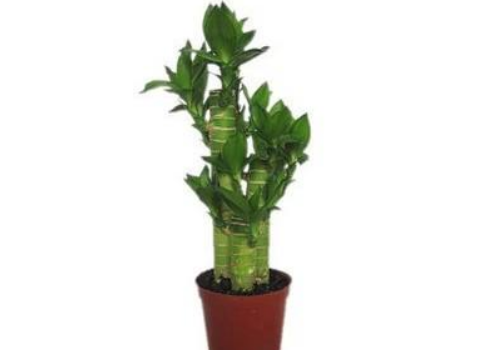
How to grow hydroponic lotus bamboo:
1. If the air is too dry, mist with water morning and evening.
2. Grow it in indirect light; too strong light easily causes sunburn, while insufficient light makes the branches and leaves grow leggy.
3. For changing the water, use sun-aged tap water, changing it morning and evening. Change it about once every 15 days, then add foliage plant nutrient solution.
4. The temperature should not be lower than 10°C.
Now you know why lotus bamboo turns yellow.
Can lotus bamboo be grown hydroponically, and how do you grow lotus bamboo hydroponically? One stem, one bottle, one insertion - three steps and you're done
Lotus bamboo, just like its name, has leaves like a lotus and stems like bamboo, and its overall plant shape is graceful, making it very ornamental to keep at home. However, when growing it indoors, many flower lovers prefer water culture to soil culture. So can lotus bamboo be grown hydroponically? If so, how do you grow lotus bamboo hydroponically? Next, let's take a look together at the water culture method for lotus bamboo.
1. Can lotus bamboo be grown hydroponically? Yes
Lotus bamboo is a plant with strong vitality. It likes a moist environment, and it can survive when inserted into water, so can lotus bamboo be grown hydroponically? Clearly it can. It is understood that lotus bamboo is a plant that stays crisp green all year round, and is suitable for both soil culture and water culture, and hydroponically grown lotus bamboo has even higher ornamental value!
2. How to grow lotus bamboo hydroponically - three steps and you're done
1. One stem
One stem means selecting a robustly growing branch from a soil-grown lotus bamboo and cutting it off to use as a hydroponic seedling. After that, to make rooting easier, you should also treat the chosen branch accordingly: cut off all the leaves at the base, then use a small knife to cut the base into a slanted shape.
2. One bottle
One bottle means the container for hydroponic lotus bamboo. For this, I recommend using a nice-looking transparent glass container, because this not only makes it easy to observe its rooting situation, but also looks very nice as you watch the white root tendrils of the lotus bamboo set off against the water.
3. One insertion
One insertion means inserting the hydroponic seedling into a container filled with 2/3 water, and before it roots, keep changing the water with clean water once every 3-4 days. After doing this, keep the glass bottle unmoved for 10 days; generally in 15 days the lotus bamboo will grow pure white small root tendrils, and after that comes hydroponic care.
3. The water culture method for lotus bamboo
1. Change from changing water to adding water: after the lotus bamboo has rooted, do not change the water so frequently; when you notice the water level dropping, you can add a little water. The reason for this is that if you change the water frequently, it will cause the lotus bamboo leaves to turn yellow.
2. Fertilize in moderation: decide according to the actual situation; on average, fertilize about once every 30 days. The fertilizer is of course a dedicated hydroponic nutrient solution; just add a few drops when you add water. Moderate fertilization can keep its leaves glossy green and spread out for a long time.
3. Avoid cold wind: regarding the water culture method for lotus bamboo, there is one more thing you must not forget, and that is the placement location. You should keep the glass bottle away from air conditioners, or a bit away from the fan's wind, to avoid the edges or tips of the lotus bamboo leaves turning yellow and withering because of being blown by cold wind.
What to do when asparagus fern leaves turn yellow, what to do when asparagus fern leaves turn yellow, asparagus fern growing methods
Asparagus fern leaves are fine and beautiful, densely growing like feathers, with a graceful plant shape and a unique charm. It is deeply loved by people and is a relatively common indoor foliage flower. Friends who have grown asparagus fern will find that its leaves easily turn yellow during cultivation. What should you do when asparagus fern leaves turn yellow? Today, I will teach you some care methods for asparagus fern.
Causes of asparagus fern leaves turning yellow
1. Temperature too high. Although asparagus fern likes warmth, it should not be placed near a fire for a long time, otherwise the whole frond turns yellow and falls off, and the stems also dry up.
2. Direct strong sunlight. Asparagus fern cannot be exposed to strong direct sunlight, as that will cause the branches and leaves to wither and yellow; in addition, if asparagus fern is exposed to strong light for too long, the plant first stops growing, and then the leaves turn yellow and fall.
3. Improper watering. Asparagus fern likes moisture. If you neglect watering, or only water the surface layer of the pot soil, the root system does not absorb enough water, and the stems and leaves slowly turn yellow. But do not let water accumulate in the flower pot either; too much water easily causes root rot and yellow, withered leaves.
4. Insufficient light. Asparagus fern likes warmth; if it is placed in a shaded environment for a long time, the plant grows weak and then turns yellow. In winter, it is best to put it in a place with plenty of sun. If it is placed in a place with insufficient light, plus poor ventilation and cold, it easily causes the branches and leaves to wither and yellow. If such a phenomenon occurs, you should replace the asparagus fern's growing medium with new soil.
5. Improper fertilizing. Fertilize asparagus fern regularly so that it has enough nutrients; when nutrients are in short supply, the phenomenon of yellow branches and leaves appears. Too high a concentration or applying fertilizer that has not yet decomposed easily causes seedling burn, or even drying up; and if no fertilizer is applied for a long time, it will also become deficient and turn yellow.
6. Suffering freezing damage. Asparagus fern likes warmth. In winter, when the temperature is relatively low, if the indoor temperature is below 5°C, use a plastic cover to protect it from the cold, otherwise it easily freezes and withers.
7. Infection by pests and diseases. Once asparagus fern is infected by pests such as scale insects, it will also cause the branches and leaves to wither and yellow, and it should be controlled in time.
8. Improper placement. If asparagus fern is placed next to a television, the leaf tips will gradually dry up.
Methods for what to do when asparagus fern leaves turn yellow
1. Place it properly. Asparagus fern likes a semi-shaded, semi-sunny environment that is slightly moist. First, avoid exposure to strong sun, but it should be a place where it can see sunlight; second, it should be able to feel air circulation; third, keep it away from stoves and televisions; fourth, keep it warm, and the lowest room temperature should not be below 5°C. If the room temperature is 0-4°C, use a plastic cover to protect it from the cold.
2. Regulate fertilizer and water. During the growing period of asparagus fern, fertilizing does not need to be too frequent; generally it is only suitable to apply additional fertilizer in spring and autumn, applying once every 10-15 days a thin decomposed manure or urine, or a low-concentration compound fertilizer solution, or applying rice-washing water or soybean juice water. It is not suitable to fertilize during high summer temperatures or low winter temperatures. Fertilizing should be done without excess and without delay. Watering should be not watering until dry, and when dry, water thoroughly once, leaving no standing water on the pot surface. Dust on the leaf surface should be removed by regular spraying with water.
3. Shape it in time. Asparagus fern easily grows in clumps. First, when repotting and adding soil, prune old and damaged fibrous roots and thin out excess stems and leaves to avoid excessive consumption of nutrients, which helps nourish the roots and protect the leaves; second, cut off locally yellowed leaves; third, if stems and leaves are withered and yellow at the same time, cut them off together.
Care for what to do when asparagus fern leaves turn yellow
At different stages, the focus of care for asparagus fern also differs. In late November, you can fertilize the asparagus fern once. Starting in December, move it indoors, water once every half month (using the soaking method), supplement light with a fluorescent lamp on cloudy and rainy days, and mist once every two or three days.
In March of the following year, you can move the asparagus fern out of the room to fully receive light, but avoid direct strong light. Whether the pot soil needs watering can be determined by the daily weather conditions and the dryness and moisture of the pot soil, while misting once in the morning and once in the evening happens almost every day. Fertilize with fertilizer water (urea solution can be used) once a week.
From early May to late August, the plant needs to receive sunlight indirectly or be shaded, and must not be exposed to strong sun. Water once every 2-3 days, sprinkle more water around the environment, and raise the air humidity. In this way, the asparagus fern can maintain a vigorous growth momentum. Note that when the summer temperature is too high, you can put the plant under tree shade, but you must not put the plant under an air conditioner to blow in the wind, as this easily causes yellow leaves. From September to November, move the plant out from under the tree and place it directly on a platform, turning the pot once a week; the management of fertilizer and water is the same as spring care.
Conclusion:Although asparagus fern has the characteristic of being evergreen for many years, if cared for improperly, it often shows symptoms of yellow branches and leaves, affecting its ornamental effect. After understanding the measures for what to do when asparagus fern leaves turn yellow and the care methods, you should pay more attention during the process of growing asparagus fern! For more home improvement information, you can log on to Aiyouwo website.
[More information]
|The language of red roses|Formaldehyde-removing plants|The role of pothos flowers|The effects and functions of Hangzhou white chrysanthemum|When does the lotus bloom|
|The effects and functions of jasmine tea|The happiness tree in pictures|The role of lavender|The language of daisies|The effects of Kunlun snow chrysanthemum|
|How to grow bromeliads|How to grow clivia|How to grow ivy|Ginkgo tree planting|Orchid varieties|
|Are carnations easy to grow|How to grow bougainvillea|The effects and functions of yellow chrysanthemum|The language of Gesang flowers|Is calla lily toxic|
|What plants absorb formaldehyde|Potted flower pictures|The effects of jasmine tea|The effects and functions of costus|Hydroponic lucky bamboo|