Is downy jasmine poisonous? A detailed guide to growing methods and precautions
Many people want to know whether downy jasmine is poisonous and whether it is the same as jasmine. Is downy jasmine poisonous? Growing methods and precautions:
Is downy jasmine poisonous:
Downy jasmine is not poisonous and even has some edible value. The volatile oily substances contained in downy jasmine have the effect of promoting qi and relieving pain, and relieving depression and dissipating nodules. They can relieve symptoms such as chest and abdominal distension and pain, and tenesmus in dysentery, making it an excellent dietary remedy for pain relief. Downy jasmine has an inhibitory effect on many kinds of bacteria. Taken internally or applied externally, it can treat inflammatory conditions such as red eyes, sores and ulcers, and skin ulceration.
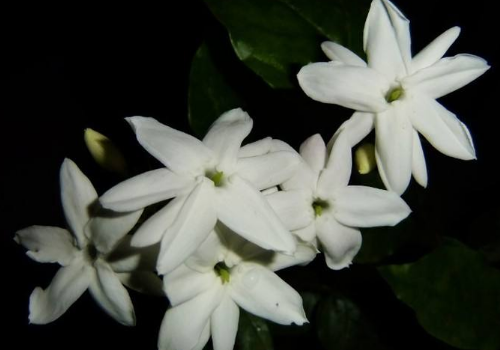
Growing methods and precautions for downy jasmine:
Growing methods:
1. Water and fertilizer management: For watering downy jasmine, it is generally best to keep the potting soil moist, and watering should be done in moderation. When the air is relatively dry, you can increase air humidity by spraying water. After the beginning of autumn, watering should be reduced, just enough to keep the soil from drying out.
Fertilizing is generally done once every 7 days——10 days with fertilizer water. In summer, apply phosphorus fertilizer twice, which can promote the growth of flower buds. Fertilizing should stop in autumn.
2. Light and temperature: Downy jasmine likes a warm growing environment with plenty of sunlight. During the growing season, it generally needs sufficient light, but in summer, attention should be paid to shading, especially at noon when the light is strong and the temperature is high, when shading from sunlight is even more necessary.
In winter, attention should be paid to keeping it warm. It is best to place it indoors in a warm place for care, and a spot with sunlight should be found.
3. Propagation methods: Downy jasmine is mainly propagated by cuttings, carried out in spring and summer, and propagates relatively quickly. In addition, it can also be propagated by layering.
Precautions:
1. Repotting: Potted downy jasmine needs to be repotted, generally once every 2 years——3 years, usually in early spring in March or after flowering.
2. Pruning: Pruning of downy jasmine is generally done together with repotting. It is necessary to prune the diseased, weak, and dead branches of downy jasmine, as well as cut off the old roots and branches that have already flowered, to promote the growth of new branches.
3. Pests and diseases: During the growing period, downy jasmine will suffer from insect pests, mainly leaf-rolling moths and red spiders, which need to be controlled promptly, generally by spraying with pesticides.
Downy jasmine is not poisonous.
Is downy jasmine poisonous
Although some rumors claim that downy jasmine is poisonous and not suitable for growing indoors, through various reliable sources the editor has learned that downy jasmine is not only not poisonous, but also has many medicinal and edible benefits!
Growing methods and precautions for Clerodendrum inerme
Chinese scientific name: Clerodendrum inermeAlso known as: false jasmineKingdom: PlantaeDivision: AngiospermsClass: DicotyledonsFamily: VerbenaceaeGenus: ClerodendrumDistribution area: Fujian, Taiwan, China, Guangdong, Guangxi and other provincesBark gray; young branches yellow-gray, with short soft hairs. Leaves opposite, nearly leathery, ovate, obovate, or elliptical. The flowers are fragrant like jasmine, hence the alternative name "false jasmine."1. Introduction
Clerodendrum inerme (also known as bitter liana tree) is a shrub, 1-2 m tall.In summer it blooms white flowers slightly tinged with pale red. The cymes are axillary, with 3-7 flowers, fragrant; the corolla tube is long; the stamens are purple, and together with the style they extend out very long. The drupe is obovate, blue-black when ripe, and the seeds are flat and long-ovate.
Clerodendrum inerme is one of the main tree species for sandbreak afforestation along the southern coast. In addition, its roots, stems, and leaves can all be used as medicine.
This species is a poisonous plant included in the Chinese plant atlas database, and its toxicity lies in the branches and leaves being poisonous.
? Place of origin:
India, Sri Lanka. In 1645 the Dutch introduced it to Taiwan, China.
? Distribution:
Low-altitude scrub and grasslands throughout the island of Taiwan, China; also present in Penghu.
? Stem:
The stem is much branched, with fine ridges, red at the nodes, smooth and hairless, 2~3 meters tall.
? Fruit:
The capsule is membranous, circumscissile, and oblong-elliptical. The fruiting period is from autumn to winter.