How to Grow and Care for the White Fringed Iris: Methods and Precautions
The white fringed iris is a type of fringed iris, and in many places it is used to decorate courtyards. How do you grow the white fringed iris? Precautions:
How to grow the white fringed iris:
1. Best growing soil: The fringed iris has strong adaptability and can be cultivated in sandy soil, clay, and general soil. Seedlings grown in sandy soil have well-developed root systems.
2. Growing humidity requirements: The suitable air humidity for growth is 50% to 80%. During the period of vigorous new root elongation, the fringed iris needs more watering, and during the dormant period after flowering it needs less watering. In spring and autumn, water once a day around five o'clock in the afternoon; in summer the plant grows vigorously.
3. Best growing temperature: The best growing temperature is 7-15°C. Temperatures that are too high or too low are both unsuitable for planting the fringed iris, and the plant's growth will tend to weaken day by day.
4. Best growing light: It is relatively sensitive to light. If there is sufficient light and a long photoperiod, the stems and leaves grow luxuriantly and flowering is earlier; if there is insufficient light and a short photoperiod, flowering is poor or delayed.
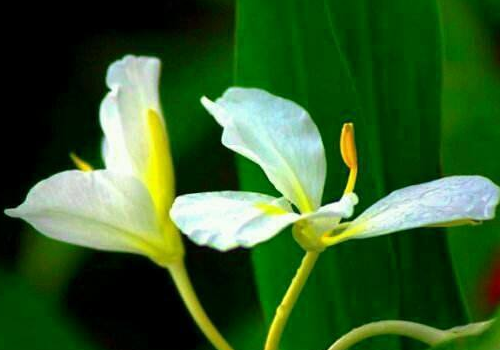
Precautions for the white fringed iris:
1. During growth, the white fringed iris is susceptible to many diseases. The main diseases harming the stems, leaves, flowers, and roots of the white fringed iris include anthracnose, rust, gray mold, and root rot. Once disease occurs, spray a 500-600 times dilution of 50% carbendazim or an 800 times dilution of 75% chlorothalonil. Be sure to take relevant preventive measures.
2. The white fringed iris is easy to transplant and survive. It should be done before budding in early spring, preferably in a semi-shaded environment, and after it survives, pay attention to fertilizer and water management. The main branches tend to produce leggy shoots that disrupt the tree shape; after flowering, appropriate pruning can be done. In summer, cut off the tips of leggy shoots to tidy the plant shape. After flowering, fertilize once to promote healthy growth of the white fringed iris.
Growing the white fringed iris still requires careful care.
How to Grow the Fringed Iris: Planting Methods and Precautions
The fringed iris - when you hear this name, do those of you who are unfamiliar with it think it is a butterfly? Actually, the fringed iris is a flowering plant. It gets its name because when it blooms, the flowers sway in the breeze and look very much like dancing butterflies. It not only has high ornamental value, but the entire plant can also be used as medicine, making it one of the more important Chinese medicinal herbs. Are you eager to learn how to grow it?
How to grow the fringed iris
1. Temperature requirements
The suitable cultivation temperature is 25-28°C during the day. The temperature also observed is 18-20°C, and for seedlings at night it should be raised to around 23°C. In such a temperature environment, the fringed iris is almost in a growing state all year round, especially seedlings grow rapidly; seedlings removed from test tubes can bloom in about 1-2 years.
2. Humidity requirements
The native habitat of the fringed iris has high humidity, so to cultivate the fringed iris you must create an environment with high air humidity. Generally speaking, humidity should be maintained at 60-80% throughout the year. In the vast northern regions, the climate is dry in spring, autumn, and winter, so you must find ways to increase the air humidity of the cultivation environment. This can be done by sprinkling water several times a day on the ground, benches, walls, and other places, or by applying a small amount of water to the plant leaves to increase the humidity of the local environment.
3. Light requirements
When cultivating the fringed iris, remember to avoid strong light exposure; there should be good shading conditions. Although the leaves of the fringed iris are broad and thick and store abundant water, the cuticle and drought-resistant structures on the leaf surface are relatively poor, so once exposed to direct sunlight, a great deal of water is lost, or if replenishment is not timely, the leaves are very prone to sunscald.
Planting Methods and Precautions for the Fringed Iris
I. Planting methods
1. Sowing
Sowing in autumn in September is best. Each gram contains 700 seeds. The suitable germination temperature is 13°C to 16°C. After sowing, they germinate in 12-15 days. From sowing to flowering takes about 100-110 days.
2. Cuttings
Carry out in May-June. Cut off shoots sprouting from the base of the plant and insert them into peat, keeping the air moist. After insertion, they root in 15-20 days, with a high survival rate.
3. Division
Often done after flowering. Cut off side branches with adventitious roots or new rooted shoots sprouting from the rhizome area; these can be directly potted and placed in a semi-shaded place to recover.
II. Precautions
1. Temperature
The suitable germination temperature for the fringed iris is 18-21°C. Under dark conditions, germination occurs in 7-10 days. The growing temperature is 10-13°C. After sowing, flowering occurs in 14-15 weeks. If the temperature is too high when sowing, it will affect seed germination and seedling growth, resulting in too low a seedling survival rate.
2. Light
After sowing the fringed iris, cover the seeds with vermiculite, keep the soil temperature at 18-24°C, and keep the medium moist. Before the radicle emerges, no light is needed. Generally, seedlings emerge in 7-14 days.
3. Watering
Before watering, let the soil dry out, but avoid permanent wilting of the plant, as this is beneficial to root growth. The soil pH should be maintained at 5.5-5.8, and apply some N fertilizer or potassium nitrate fertilizer alternately.
The Effects and Functions of the Fringed Iris
1. Chinese medicinal herb
The fringed iris is a natural Chinese medicinal herb that is bitter in taste and cold in nature. Its greatest effect is that it can detoxify and reduce swelling, and it also has a certain effect on pain relief. It is usually used to treat hepatitis, liver problems, and a variety of common stomach ailments. In addition, the fringed iris also has the effect of aiding digestion and treating food stagnation, toothache, and constipation.
2. Aiding digestion
The fringed iris can treat conditions such as food stagnation, qi stagnation, and blood stagnation. The specific method of use is to dry the roots of the fringed iris together with herbs such as the root of common rue and other Chinese medicinal herbs, grind them into powder, and then consume it with white liquor.
3. Promoting blood circulation and removing blood stasis
The fringed iris has a clear therapeutic effect on treating knee swelling. You can decoct 30 grams of fringed iris root in water and take it, or cut 3 grams of fresh fringed iris root into thin strips and eat it together with rice soup.
4. Reducing inflammation and relieving pain
The fringed iris also has the effect of treating toothache. When treating, you can prepare a green-shelled duck egg and cook it together with the fringed iris and water. After cooking, consume both the soup and the duck egg, and the toothache symptoms will disappear, while other symptoms of oral inflammation will also be noticeably reduced.
What to Do If the Fringed Iris Has Root Rot
1. Potting soil selection
When choosing potting soil, first select a loose, breathable, and permeable substrate. For example, peat mixed with perlite, peat mixed with pine needles, moss, and so on are all acceptable. Use organic fertilizer as a base fertilizer.
2. Proper watering
Keep the potting soil moist, but it must not become waterlogged; waterlogging is the main cause of root rot. Pay attention and observe: if after watering the water does not seep down for a long time, it means the potting soil has been used for a long time and its density has increased, so you should change the soil promptly to avoid root rot. Once root rot occurs, you can tip out the potting soil and break it apart, rinse the roots clean with clean water, cut off the rotten roots, and retain as much of the intact part as possible.
3. Pruning and disinfection, repotting and changing soil
When root rot is relatively severe, take the plant out of the pot, clean the soil off the roots, then remove the rotten parts of the roots. Soak the cut surfaces and remaining roots in a 2‰ potassium permanganate solution for 10 minutes, let them dry, then coat the cut surfaces with plant ash, and it can be repotted. The potting soil must be disinfected; you can pour boiling water thoroughly through the potting soil and use it after it cools.
When repotting, press the rhizome area firm, water thoroughly, place in a shaded place, cover with plastic film, and keep the temperature at around 20°C. In about 20 days, new roots will grow.
When Does the Fringed Iris Bloom
The flowering period of the fringed iris is relatively long. Generally, it blooms from late winter to spring, and the peak flowering period is from April to May each year.
The Flowering Form of the Fringed Iris
The fringed iris is a perennial herbaceous plant. The plant is not tall, but the flowers are very beautiful. The flower colors of the fringed iris are rich and varied - white, yellow, light purple, and so on - making it look like one beautiful butterfly after another.
The fringed iris likes a cool and ventilated environment. When planting, gardening friends should pay more attention to controlling the temperature and humidity environment suitable for its growth, as mentioned above. The fringed iris has high ornamental value and also has medicinal value for reducing inflammation, relieving pain, promoting blood circulation, and removing blood stasis. If you need it, get started right away.
Fringed Iris Iris japonica Thunb. Fringed Iris Illustrated Guide: How to Grow Fringed Iris / How to Propagate Fringed Iris
Fringed Iris ProfileFringed Iris Iris japonica Thunb.
Aliases: Japanese iris, Kai Hou Jian, flat bamboo, sword grass, Qiong flower, wood hydrangea, Ju Ba Xian flower, Fu Yi, iron shoulder pole, swallow flower, blue-flowered scissors, purple swallow, fermented soybean grass, mountain-crossing tiger, mountain-searching tiger, six-angle grass, Zhi Mu, Gao Jian Cao, golden shoulder pole, fermented soybean leaf, flat bamboo leaf, orchid grass, flat bamboo orchid
Classification: Perennial herbaceous flower
Family and genus: Plantae, Angiosperms, Monocotyledoneae, Liliales, Iridaceae, Iris
Peak flowering period: Spring
The fringed iris, with aliases orchid grass, Japanese iris, Kai Hou Jian, flat bamboo orchid, and sword grass, is also called Qiong flower. It is a perennial herb with creeping rhizomes and long branches, flowering from April to May. It is scattered in shaded and damp places under forests and beside streams. It is native to the vast areas south of the Yangtze River in China, and is also found in Japan. The fringed iris has widely spreading branches, and the crown is spherical. The leaves are opposite, ovate or elliptical, with fine teeth along the edges and sparse stellate hairs on the underside. Around the inflorescence are large white sterile flowers, and in the center are fertile flowers. The drupe is elliptical, first red and then later [another color]. The flowering period is April. The fringed iris is a common name for a herbaceous flowering plant. This flower consists of 6 petal-like parts...
How to Grow and Care for the Fringed Iris: An Introduction to the Fringed Iris
The fringed iris, with aliases orchid grass, Japanese iris, Kai Hou Jian, flat bamboo orchid, and sword grass, is also called Qiong flower. It is a perennial herb with creeping rhizomes and long branches, flowering from April to May. It is scattered in shaded and damp places under forests and beside streams. It is native to the vast areas south of the Yangtze River in China, and is also found in Japan.
The fringed iris has widely spreading branches, and the crown is spherical. The leaves are opposite, ovate or elliptical, with fine teeth along the edges and sparse stellate hairs on the underside. Around the inflorescence are large white sterile flowers, and in the center are fertile flowers. The drupe is elliptical, first red and then later [another color]. The flowering period is April.
The fringed iris is a common name for a herbaceous flowering plant. This flower consists of a perianth made up of 6 petal-like parts, 3-6 stamens, and an ovary enclosed at the base.
The fringed iris is named after the messenger of God and the rainbow connecting the earth and other worlds. According to legend, the fringed iris once saved the life of Clovis, King of the Franks in the sixth century - at that time he saw the fringed iris growing in the Rhine River, so he inferred that the river was shallow and could be crossed, thereby escaping pursuit by his enemies.
The fringed iris blooms between April and May, with flowers as large as a plate and as white as jade. The cyme grows at the branch tips, with eight surrounding flowers being sterile flowers developed from sepals, and the center consisting of small bisexual flowers.
The fringed iris grows in Japan, China, and most countries with mild climates. It is distributed in Sichuan, Gansu, Jiangsu, Henan, and areas south of Shandong, among other places.
Morphological Characteristics of the Fringed Iris
Perennial herb. The rhizome can be divided into relatively thick upright rhizomes and slender horizontal rhizomes. The upright rhizome is flat and round, with many relatively short internodes, brown; the horizontal rhizome has long internodes and is yellow-white; fibrous roots grow on the nodes of the rhizome and are much branched.
The leaves are basal, dark green, glossy, with a red-purple tinge near the ground, sword-shaped, 25-60 cm long and 1.5-3 cm wide, with acuminate tips and no obvious midvein.
The flowering stem is upright, taller than the leaves, with a sparse terminal raceme-like cyme, 5-12 branches, equal in length to or slightly exceeding the bracts; the bracts are leaf-like, 3-5 in number, broadly lanceolate or ovate, 0.8-1.5 cm long, with blunt tips, each containing 2-4 flowers; the flowers are light blue or blue-purple, 4.5-5 cm in diameter; the pedicel extends beyond the bracts, 1.5-2.5 cm long; the perianth tube is obvious, 1.1-1.5 cm long; the outer perianth segments are obovate or elliptical, 2.5-3 cm long and 1.4-2 cm wide, with slightly concave tips, wedge-shaped bases, wavy edges, and fine toothed cracks, with a raised yellow crested appendage on the midvein; the inner perianth segments are elliptical or narrowly obovate, 2.8-3 cm long and 1.5-2.1 cm wide, with wedge-shaped claws, slightly concave tips, and fine toothed edges, spreading outward when the flower is fully open; the stamens are 0.8-1.2 cm long, and the anthers are oblong, white; the style branches are slightly shorter than the inner perianth segments, light blue at the midrib, and the tip lobes are fimbriate and thread-split; the ovary is spindle-shaped, 0.7-1 cm long. The capsule is elliptical-cylindrical, 2.5-3 cm long and 1.2-1.5 cm in diameter, with a slightly pointed tip, a blunt base, no beak, and 6 obvious longitudinal ribs, splitting from the top to the middle when mature; the seeds are black-brown, irregular polyhedra, without appendages. The flowering period is March-April, and the fruiting period is May-June.
Ecological Habits of the Fringed Iris
The fringed iris is native to Jiangsu, Zhejiang, Hubei, and other places in China, and is a semi-shade-loving tree species of the warm temperate zone. It is relatively cold-tolerant, can adapt to general soil, and prefers to grow in moist and fertile places. It grows vigorously, and both its budding ability and sprouting ability are strong. The seeds have the habit of germinating in alternate years.
It is shade-tolerant and cold-tolerant. It is scattered in shaded and damp places under forests and beside streams.
Cultivation Techniques for the Fringed Iris
Seedlings of the fringed iris generally take 7 to 8 years to bloom, but if you graft using branches with flower buds from an adult Qiong flower, it can bloom in the first year after surviving. The grafting method is: in early March (before the buds sprout), take a branch from the mother tree that can bloom (usually a peripheral branch in the middle-upper part of the crown), cut off a section about 5 cm long as the scion, and it is ideal to keep the terminal bud; generally use the high grafting method. After grafting, place it in a shaded place. After the buds of the scion send out leaves, place it directly in the sunlight. There is a growth correlation between the main trunk and branches of the fringed iris. When side branches are high-grafted, the top of the main trunk should be cut off to speed up the survival and growth of the scion, so that it enters the peak flowering period sooner. Seeds after shelling generally emerge in about 1 month. When the seedlings have just produced their first pair of leaves, they should be properly shaded, especially at noon, so that direct sunlight does not hit the seedlings, to avoid excessive transpiration causing the young leaves to wilt. If the leaves are found to curl inward and then immediately recover in the evening, it indicates that leaf transpiration exceeds root absorption, which is a common phenomenon under hot or dry conditions.
Management points: As long as it is in a fertile and moist place, it will grow well under relatively weak light. Just keep the soil moist.
Propagation Methods of the Fringed Iris
Propagation: division or seed propagation.
Seed propagation is commonly used. Collect seeds in November, pile them for after-ripening, wash the seeds clean, stratify them at low temperature until the following spring and then sow. The covering soil needs to be slightly thick, and then cover with grass on top. In June of that year, some will germinate and emerge; at this time the grass can be removed for shading. Leave them in the bed for 2 years, then they can be divided and transplanted into another bed, and after 4-5 years they can be transplanted for garden landscaping.
Transplanting the Fringed Iris
The fringed iris is easy to transplant and survive. It should be done before budding in early spring, preferably in a semi-shaded environment, and after it survives, pay attention to fertilizer and water management. The main branches tend to produce leggy shoots that disrupt the tree shape; after flowering, appropriate pruning can be done. In summer, cut off the tips of leggy shoots to tidy the plant shape. After flowering, fertilize once to promote growth.
Sowing the Fringed Iris
The fruit of the fringed iris is a drupe among simple fruits. The endocarp is extremely hard and encloses the seed outside. The seed collection period is generally after October, and the maturity marker is when the outer fruit skin of the seed turns black. After collection, the seeds should be stored in sand. The following year at Qingming, take them out, wash off the fruit skin, peel off the seed shell (endocarp), or wear away part of the seed shell, or soak them in a 0.1% dilute acid solution for 24 hours to soften the seed shell before sowing. Untreated seeds are generally very difficult to emerge in the same year. After sowing, cover with about 1.5 cm of soil. If sowing in pots, water and loosen the soil frequently so that the seedlings emerge as soon as possible.
Disease Control of the Fringed Iris
The fringed iris has strong adaptability and can be cultivated in sandy soil, clay, and general soil. Seedlings grown in sandy soil have well-developed root systems. During the peak growing season, attention should be paid to applying thin fertilizer frequently. If the leaves are found to turn yellow, spray the leaves with a 1/1000 ferrous sulfate solution.
The leaves of the Qiong flower have relatively many hairs, so they are generally not easily affected by pests. However, the degree of cutinization of the lower epidermis is relatively low, and the secretions produced by some pathogenic fungal spores during germination can dissolve this part of the cuticle, so Bordeaux mixture usually needs to be sprayed for prevention during the plum rain season.
In addition, because the refractive property of the cuticle of the fringed iris is moderate, it should not be exposed to direct blazing sun in summer.
Distribution Area of the Fringed Iris
The fringed iris is native to Jiangsu, Zhejiang, Hubei, and other places in China, and is a semi-shade-loving tree species of the warm temperate zone.
It is produced in Jiangsu, Anhui, Zhejiang, Fujian, Hubei, Hunan, Guangdong, Guangxi, Shaanxi, Gansu, Sichuan, Guizhou, Yunnan, and Benxi. It grows in relatively shaded and moist grasslands on mountain slopes, under sparse forests, or in forest-edge grasslands. In the Yunnan-Guizhou Plateau area, it often grows at altitudes of 3000-3300 m. It is also produced in Japan.
Variety Classification of the Fringed Iris: Common Varieties
The white fringed iris is a perennial herb, with flowers that are light blue or purple. The flowering stem is upright. It generally grows in relatively shaded and moist grasslands on mountain slopes, under sparse forests, or in forest-edge grasslands.
The white fringed iris is a perennial herb. The rhizome can be divided into relatively thick upright rhizomes and slender horizontal rhizomes. The leaves are basal, dark green, glossy, with a red-purple tinge near the ground, sword-shaped, with acuminate tips and no obvious midvein. The flowering stem is upright, taller than the leaves, with a sparse terminal raceme-like cyme, 5-12 branches; the bracts are leaf-like, 3-5 in number, broadly lanceolate or ovate, with blunt tips, each containing 2-4 flowers; the flowers are light blue or blue-purple, 4.5-5.5 cm in diameter; the pedicel extends beyond the bracts; the perianth tube is obvious; the outer perianth segments are obovate or elliptical, with slightly concave tips, wedge-shaped bases, wavy edges, and fine toothed cracks, with a raised yellow crested appendage on the midvein; the inner perianth segments are elliptical or narrowly obovate, with wedge-shaped claws and slightly concave tips, with fine toothed edges, spreading outward when the flower is fully open; the stamens are about 0.8-3 cm long, and the anthers are oblong, white; the style branches are slightly shorter than the inner perianth, light blue at the midrib, and the ovary is spindle-shaped. The capsule is elliptical-cylindrical, with a slightly pointed tip, a blunt base, no beak, and 6 obvious longitudinal ribs, splitting from the top to the middle when mature; the seeds are black-brown, irregular polyhedra, without appendages. The flowering period is March-April, and the fruiting period is May-June.
White Fringed Iris - Growth Habits
It grows in relatively shaded and moist grasslands on mountain slopes, under sparse forests, or in forest-edge grasslands. In the Yunnan-Guizhou Plateau area, it often grows at altitudes of 3000-3300 m.
White Fringed Iris - Propagation
Division or seed propagation.
White Fringed Iris - Cultivation and Management
As long as it is in a fertile and moist place, it will grow well under relatively weak light. Just keep the soil moist.
White Fringed Iris - Garden Application
In gardens it is often planted in flower beds or in forests as ground cover.
White Fringed Iris - Medicinal Use
It is a folk herbal medicine, actively clearing heat and detoxifying, dispersing blood stasis and expelling water, and treating fever in children, hemoptysis from lung disease, sore throat, and traumatic blood stasis, among others.
White Fringed Iris - Domestic Distribution
Provinces such as Zhejiang and Hubei
White Fringed Iris - Environment
Damp land on mountain slopes at forest edges or under sparse forests
Medicinal or Dietary Value of the Fringed Iris
The medical information and health dietary information on Huahu Web are for reference only and cannot be used as a basis for diagnosis or medical treatment. For any health problems, consult professional medical personnel, and for the treatment of any disease, please follow a doctor's advice.
Ultimate flower-protecting mission: To love yourself, start from reality and strictly follow a doctor's advice. Toward illness, do not be careless, do not delay, do not give up hope, face it bravely, use love to warm the silent world, and use your heart to care for the flower field within.
Medicinal Value
The whole plant and roots of the fringed iris can be used as medicine.
The whole plant of the fringed iris is bitter in taste and cold in nature. It can detoxify, reduce swelling, and relieve pain. It treats hepatitis, liver enlargement, liver pain, sore throat, and stomach ailments.
The rhizome of the butterfly flower, known in medicine as Bianzhugen. Also called Tuzhimu, Ya'ershen and Tiebianshen, it contains a large amount of vitamin C, and is bitter in taste and cold in nature. Its functions are to aid digestion, kill parasites, clear heat and relieve constipation. It treats food stagnation and abdominal distension, abdominal pain from roundworms, toothache, throat moth and constipation.
Commonly used medicinal formulas:
1. To treat food stagnation, qi stagnation and blood stagnation: Bianzhugen, Choucaogen, Shuwanzigen, Jiang'ermuzi and Liujinu. Grind into powder and take with wine.
2. To treat knee swelling: 30 grams of Bianzhugen, simmer in water and take, or use 3 grams of fresh root, cut finely and swallow with rice soup.
3. To treat toothache (fire pain): 15 grams of Bianzhugen, boil together with one green-shelled duck egg, drink the soup and eat the duck egg.
4. To treat uterine prolapse: 60 grams of Bianzhugen. Pound into a paste, fry until hot and apply to the affected area.
5. To treat cough: 3 to 9 grams of butterfly flower, decoct in water and take with honey.
6. To treat lymphatic tuberculosis (ulcerated): pound fresh butterfly flower and apply the juice to the affected area.
Landscape uses of the butterfly orchid flower
In gardens, butterfly flowers are often planted in flowerbeds or in woods as ground cover, and have very high ornamental value.
The butterfly orchid flower as a national flower and city flower
The butterfly flower is the city flower of Yangzhou.
Since ancient times it has enjoyed the reputation of "a single flower of Yangzhou, with no peer in the four seas." The butterfly flower is a famous flower unique to China, and documents record that it was cultivated as early as the Tang Dynasty. With its elegant bearing and unique charm, as well as various legendary and romantic tales and anecdotes, it has won the deep affection of the world and the endless praise of men of letters, and has been called a rare and wondrous flower and "China's unique immortal flower."
The butterfly flower is unmatched under heaven.
As the city flower of Yangzhou, the butterfly flower is fully worthy of the title. The most famous thing in Yangzhou is of course the butterfly flower. The butterfly flower is famed throughout the world for its lush leaves and abundant blossoms and its pure, flawless white. Legend has it that Emperor Yang of Sui ordered the digging of the Grand Canal precisely to go to Yangzhou to admire the qiong flower. When Ouyang Xiu served here as governor, he once praised the butterfly flower as a flower without peer in the world, and inscribed the "Peerless Pavilion" within the butterfly flower temple. Emperor Renzong of the Northern Song once had the butterfly flower moved to the imperial garden in Bianjing, but who would have thought that it withered the following year, and it had to be sent back to Yangzhou. Emperor Xiaozong of the Southern Song moved it to Lin'an again, but it immediately became sallow and bore no flowers, and only when it was moved back to Yangzhou once more. When the Yuan troops broke through Yangzhou, the butterfly flower died completely. The people of Yangzhou have a special love for the butterfly flower. Although the original plant no longer exists, the people of Yangzhou regard a flower called Jubaixian as the butterfly flower, and carefully cultivate and protect it as the city flower. Today, the pure white clustered blossoms along the lakeshore are the Yangzhou qiong flower "without peer in the four seas" - the Jubaixian flower.
In 2007, the butterfly flower was also rated as the city flower of Kunshan.
Cultural background of the butterfly orchid flower
The butterfly flower is a famous flower through the ages in China. Zhang Wen of the Song Dynasty described it in "Rhapsody on the Qiong Flower" as: "It rivals the jasmine in fair appearance, and laughs at the rose as common dust; only the narcissus can match its quiet leisure, and the river plum seems to share its pure virtue." Indeed, with its elegant bearing and unique charm, and moreover with the various legendary and romantic tales and fascinating anecdotes about the butterfly flower, it has won the deep affection of the world and the endless praise of men of letters, and has been called a rare and wondrous flower and "China's unique immortal flower."
According to the "Preface to the Qiong Flower Poem of the Houtu Temple" written by Wang Yucheng, a famous official and man of letters of the early Northern Song, "In the Houtu Temple of Yangzhou there is a flower, pure white and lovely, and its tree is large and its flowers abundant; no one knows what tree it really is, and commonly it is called the qiong flower. Therefore I composed a poem to describe its strangeness." From this it can be seen that the name qiong flower was already circulating among the people before Wang Yucheng recorded it. After Wang Yucheng, more and more men of letters wrote poems in praise of it, and the writing became more and more wondrous. Han Qi wrote a poem praising it: "A single flower of Yangzhou, with no peer in the four seas." Liu Chang's poem says: "All the trees of the east vie in splendor, but under heaven there is none but this flower without peer." Ouyang Xiu also wrote a poem praising it: "The qiong flower and the peony have no equal in the world; if one does not inscribe a poem for them, they will resent one; I once got drunk beneath the Peerless Pavilion, and know well that I have not failed the spring of Guangling." He not only praised its beauty, but also emphasized that the qiong flower is unique to Yangzhou. From then on, the qiong flower not only became famous throughout the world, but was also closely tied to the rise and fall of the ancient city of Yangzhou.
In the course of its cultivation in China, the butterfly flower suffered repeated damage and went through all the sorrows and joys of parting and reunion, which other flowers and plants probably never experienced. According to records, in the Han Dynasty there was a qiong flower east of Yangzhou city, and at that time someone specially built the "Qiong Flower Temple" for it. When Ouyang Xiu served as governor of Yangzhou in the Song Dynasty, he built the "Peerless Pavilion" beside the flower to show that it was without peer in the world. According to "Qidong Yeyu" written by Zhou Mi of the Song Dynasty, during the Qingli period of Emperor Renzong of Song (1041-1048), the qiong flower was transplanted from the Qiong Flower Temple to Kaifeng, but later it was sent back to Yangzhou because it gradually withered. During the Chunxi period of Emperor Xiaozong of Song (1174-1189), it was transplanted again into the imperial forbidden garden in Hangzhou, but who would have thought that it withered after a year. Soon after, when it was carried back to Yangzhou, the withered wood revived again, and people all said that the qiong flower was a thing with feelings. Unfortunately, this famous flower of a generation finally withered and died in the early Yuan Dynasty. According to Du You in "Record of the Qiong Flower": during the Shaoxing period of Emperor Gaozong of Song (1131-1162), when the Jin troops invaded southward, the Yangzhou qiong flower also became their target for plunder; the large plants were pulled up roots and all, and those that could not be dug out were leveled to the ground. But after a year, beside the roots that had been cut, new shoots grew again, and with the careful cultivation of the Daoist priest Tang Daning, it finally slowly recovered its original state. What is astonishing is that in the thirteenth year of the Zhiyuan period of Emperor Shizu of Yuan (1276), that is, the year the Song Dynasty fell, the Yangzhou qiong flower suddenly died. Could it be that this flower also had feelings, and grieved for the fall of the Great Song Dynasty? On this point, it is beyond the author to answer. It is only that the Yangzhou qiong flower, originally "without peer under heaven," once its fragrance vanished and its jade-like beauty was gone, became a "peerless treasure." Twenty years later, a Daoist priest named Jin Bingrui replanted the "Jubaixian" in the Qiong Flower Temple, and what later generations called the qiong flower was in fact the "Jubaixian." As for the relationship between the "Jubaixian" and the qiong flower, we will introduce it below. But from this we can know that it has been seven or eight hundred years since the Jubaixian was recognized as the qiong flower. Afterwards, through repeated wars and chaos, the Jubaixian also became extinct. From then on, the flowers of the Qiong Flower Temple died and the temple fell into ruin, existing in name only. Even so, the qiong flower still occupied a place in people's minds. It is recorded that after the fragrance of the qiong flower vanished and its jade-like beauty was gone, some people still climbed up to the Qiong Flower Temple to seek the traces of the ancient qiong flower and to recall the past with emotion: "In what year was this Qiong Flower Terrace created? Without the qiong flower, this temple still opens. A famous flower of a thousand years must have an end; to seek the flower one still goes up to the old flower terrace."
However, the wishes of the world were not truly fulfilled until after the founding of the People's Republic. After the founding of the People's Republic of China, the garden workers of Yangzhou's Slender West Lake searched all the mountains, forests and countryside of the whole city for treasures, and finally rediscovered the "Jubaixian" at Shugang, and transplanted it to the lake garden and cultivated it carefully, and China's most unique "immortal flower" finally bloomed again. After the 1980s, the Standing Committee of the Yangzhou Municipal People's Congress, in order to further satisfy people's wishes, decided to make the qiong flower the city flower of Yangzhou. From then on, the famous flower through the ages that had gone through all calamities - the qiong flower - finally shone again in the ancient city of Yangzhou, and became an important tourism resource with distinctive features in Yangzhou city, and one of the symbols of the ancient city of Yangzhou. The qiong flower has a relatively long lifespan; a qiong flower planted during the Kangxi period of the Qing Dynasty in Yangzhou's Daming Temple already has a history of more than 300 years, and is still flourishing today, with its bearing as before and its charm no less than in former years.
The beauty of the butterfly flower is a beauty of unique charm. It does not charm with bright flower colors, nor intoxicate with heavy fragrance. At the turn of spring and summer, when the natural world is a blaze of purple and red, the butterfly flower instead blooms pure white as jade, graceful and fair, especially delicate and elegant; and whenever the autumn wind is bleak and the many flowers fall in profusion and wither and decline, what the butterfly flower displays is the charming autumn color of green leaves and red fruit. Its leaves and its fruit, red and green reflecting each other, are especially bright and do not wither for a long time, dyeing the bleak autumn scene with gorgeous colors and a cheerful atmosphere. The qiong flower's branches spread widely, its crown is spherical, its tree posture is graceful, and its tree form is free and distinctive. The beauty of the qiong flower lies even more in its extraordinary flower shape. Its flowers are as large as jade basins, with eight five-petaled large flowers forming a ring, surrounding the white pearl-like small flowers in the middle (the unopened bisexual small flowers), clustering around a mass of butterfly-like stamens, and under the breeze, gently swaying, as if butterflies are playing with pearls; and also like the Eight Immortals dancing, with immortal grace and charm, fascinating. "A thousand true pearls hold up the plain stamens, a ring of bright moon breaks the fragrant blossom." When there is no wind, it is again like eight fairies around a round table, sipping tea and chatting together. This unique flower shape is rare among plants, and therefore people especially love it, and beautifully name it "Jubaixian." And because its tree can reach several zhang in height, pure white jade-like flowers dot the branches, as if covered by auspicious snow in deep winter, flowing with color and luster, bright and crystalline, with a clear fragrance, making one yearn for it.
The beauty of the butterfly flower also lies in its fascinating legends full of legendary color. It is said that the butterfly flower is a precious flower and tree unique to Yangzhou and without peer elsewhere, and even Emperor Yang of Sui, not considering a thousand li too far, greatly conscripted laborers to dig the canal, bent on coming to Yangzhou to admire the butterfly flower. But when the canal was completed, before Emperor Yang of Sui arrived at Yangzhou by dragon boat, the butterfly flower was destroyed by a hailstorm. Then peasant uprisings broke out in various places; the Sui regime collapsed, and Emperor Yang of Sui died in Yangzhou. Hence there is the saying, "The flower died and the Sui officials perished; seeing the flower is truly meaningless." Whether Emperor Yang of Sui really went to Yangzhou to see the butterfly flower, although not found in the official histories, is recorded in the forty-seventh chapter of "Romance of Sui and Tang": "Watching the qiong flower, joy ends and Sui ends; dying for virtue, fragrance vanishes and valor appears." Here, the qiong flower is no longer merely a famous flower of the natural world, but has been personified as a thing with feelings. It shows boundless sympathy for the laboring people and boundless hatred for the foolish emperor Emperor Yang of Sui; it does not fear violence, does not fear power; it is clear in love and hate, has spirit and feeling, and has become a symbol of beautiful things. Perhaps because of this, the qiong flower won the praise of men of letters of past dynasties. It is precisely because of these legends and praises that the qiong flower became famous throughout the world. Therefore people regard the qiong flower as a rare and wondrous flower and herb, as something seldom seen in the human world, an immortal blossom fallen from heaven to earth, and consider it a pleasure in life to be able to go to Yangzhou to catch a glimpse of the qiong flower's fair appearance. The grand flower-viewing scene in Yangzhou's history of "in the three spring months of loving admiration, carriages and horses clamorous as a market" is precisely a reflection of this.
One last thing to mention is that the butterfly flower is actually not a special product of Yangzhou. Zhou Mi of the Song Dynasty once mentioned the "Qiong Flower Garden of the Chu Family Pond in Hangzhou" in "Qidong Yeyu," showing that Hangzhou also had butterfly flowers at that time. Li Gefei of the Song Dynasty (father of the famous female poet Li Qingzhao) also recorded in "Record of Famous Gardens of Luoyang" (written in the second year of Shaosheng, that is, 1095) that qiong flowers were planted in the "Li Family Renfeng Garden." Yuan Yishan, a famous man of letters at the time of the Jin and Yuan, recorded in his "Continued Yijian Zhi": "Ten li southwest of Hu County (present-day Hu County, Shaanxi) is called Tan Valley; entering the valley five li, there is a qiong flower tree. The tree is large enough for four people to join arms around. It flowers whenever there is an intercalary month; it opens at the first fu and finishes at the last fu, the flowers white as jade, opening in clusters like the Jubaixian, with one jade butterfly among them, rising above the flowers." It can be seen that the ancient qiong flower once bloomed in Shaanxi as well. And according to a report in the first issue of "Tourism" magazine in 1982: in Tinglin Park in Kunshan County, Jiangsu, there were eight trees whose names could not be told, which had grown for sixty or seventy years without ever blooming; strangely, in recent years, whenever late spring came, the eight trees vied with one another in putting forth flowers. Their flowers consisted of eight large flowers encircling small white flowers in the middle, and above the small flowers were tender yellow stamens, the flowers white as jade, with a refreshing fragrance. Upon expert identification, they turned out to be eight "Jubaixian," which is truly rare. This further shows that the qiong flower is not unique to Yangzhou, nor without peer under heaven. Although the qiong flower has a uniquely elegant charm, because it went through many twists and turns in history and several times disappeared without a trace, its fair traces hard to find, it was neglected by the world because people "did not know the true face of Mount Lu." Even after being introduced abroad in the 19th century, it only quietly bloomed in botanical gardens, seldom known and appreciated by outsiders.
Legend
The butterfly implies a kind of poignant beauty, among the melancholy fallen leaves, flying alone, forever keeping watch over those flowers that bloom and fade... The winter in Siberia is exceptionally cold, and the howling north wind swept over every tree, every flower, every inch of land, and also that butterfly - a frail little life. The faint warmth of life was soon ravaged away by ice, frost, wind and snow. The Siberian butterfly stopped flying and drifted down like a thin leaf. Has a life thus disappeared? Perhaps because it was the cause of a frail life drifting down, the cold frost wrapped the butterfly in its embrace; although it was so icy cold, it still spared that life from the assault of wind and snow. This can count as a bit of mercy from the frost!
But all this was already too late, far too late; the butterfly had already stopped the trembling of its wings. The Siberian butterfly lay quietly in the embrace of the frost, as if lying in a crystal coffin. She seemed quiet and serene, yet gave off an indelible desolation. Had she really died? The Siberian winter gradually passed, and the weather was still icy cold. The sunlight shone on the frost, gradually melting the "crystal coffin," and the melted ice water on the withered branches dripped down, falling on the butterfly's body. As if by a miracle, she began to tremble her wings. That ancient legend happened once again - the Siberian butterfly revived.
The cold Siberian winter always brings a kind of desolate and profound mystery. Like a dream, faint and ethereal. Here a legend has continued all along: this butterfly will never die; after undergoing the baptism of the cold winter, she will be frozen by the crystal coffin. Possessing the power of eternal life, when the crystal coffin shines in all directions under the sunlight, that is the day of her revival.
The light of seven colors pierced through everything frozen, and that butterfly gradually revived, revealing from the long, profound river of history a trace of tranquil and vivid beauty. She will not grow old, as long as she is still endowed with a meaning - eternal life. She always sings the song that can never be finished through the ages, performing that ancient legend - the eternally living butterfly of Siberia. She keeps flying, flying; those light wings always hold tears, for a kind of passing, and also for a kind of sorrow and melancholy about to come, of which it is unknown whether it will be happiness or not. Perhaps for her eternal life is not happiness. She possesses the power of life and brings people hope, but every revival foretells a loss.
Each time she can only watch her friends and kin be born, age, fall ill and die, while she is powerless to do anything. How far is forever, exactly? The Siberian butterfly will shed tears, and her tears will forever hang crystal-clear on her pure white wings. Only because of these tears can she revive again and again, ancient, mysterious and poignantly beautiful again and again...
The flower language of the butterfly orchid flower
The flower language of the butterfly flower is: to believe is happiness.
From ancient times to the present, different people still have their own different understandings of "happiness."
Some say "that is a kind of feeling of mutual dependence."
Some say "that is a kind of feeling that cannot be let go."
Some say "this is forever..."
Some say "that is the most important thing between lovers - belief"
To believe is a kind of happiness; to be loved is a kind of happiness.
To believe is happiness.
Butterfly orchid flower pictures