How do you grow a velvet calathea to extend its blooming period?
Yellowing leaves on a velvet calathea are usually caused by fertilizer, water, or light issues. How do you grow a velvet calathea? How do you extend its blooming period:
How to grow a velvet calathea:
1. The optimal growing temperature for a velvet calathea is 18-25°C. In winter the temperature should not drop below 13°C, and in summer it should not exceed 35°C, otherwise it is extremely detrimental to the growth of the velvet calathea, causing the stems and leaves to stop growing or to freeze and die.
2. The velvet calathea has relatively high water requirements. During the growing season, it must be watered thoroughly to keep the potting soil moist. However, overly wet soil can cause root rot and even death, so special care should be taken.
3. If the air humidity is low, the leaves immediately curl, reacting very sensitively. When grown indoors, the air humidity must be kept at 70%-80%. In winter, keep it slightly dry; if too wet, the leaves tend to turn yellow and wither.
4. The most suitable soil is fertile, loose, well-draining leaf mold. For potted plants, use a mix of potting soil, peat soil, and coarse sand.
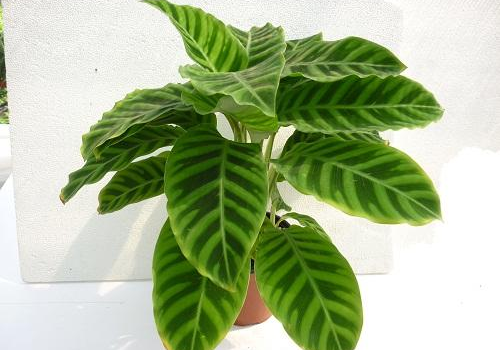
How to extend the blooming period of a velvet calathea:
1. The normal blooming period of a velvet calathea is about one month, and it can be extended with a little extra care during maintenance.
2. Stop fertilizing. During the blooming period, do not fertilize; move the plant to a warm, shaded spot indoors and reduce light, especially avoiding exposure to strong light.
3. Pay attention to timely ventilation. Do not open windows on windy days, so as to avoid flowers dropping off. On clear days, open windows promptly to let in fresh air, avoiding a stale indoor environment.
4. Control watering. During the blooming period, reduce the amount of watering, and try not to spray water on the leaves and flowers. At night, keep the potting soil and leaf surfaces dry to reduce flower drop.
Alright, have you all learned how to grow a velvet calathea?
How to grow a velvet calathea - cultivation methods for the velvet calathea
Friends who love flowers and plants have all heard of the velvet calathea, but many people do not understand how to grow a velvet calathea. Below, we will tell you the cultivation methods for the velvet calathea.
1. Temperature: The velvet calathea likes a warm, humid environment, is not cold-tolerant, and fears dryness. In winter, the cultivation temperature should not be below 10°C, and in summer the temperature should not exceed 35°C, otherwise it is extremely detrimental to the growth of the velvet calathea.
2. Watering: The velvet calathea is extremely sensitive to water. During the growing season, it must be watered thoroughly to keep the potting soil moist. But do not water too much; overly wet soil can cause root rot and even death. In addition, if the air humidity is low, the leaves of the velvet calathea will immediately curl, so during cultivation, be careful to maintain suitable humidity, especially during high temperatures, and mist the leaves more to increase air humidity.
3. Light: The velvet calathea likes a semi-shaded environment and avoids strong direct sunlight. Therefore, when growing a velvet calathea, the light should not be too strong, otherwise phenomena such as yellowing and curling leaves will occur. However, keeping the velvet calathea in a completely shaded environment for a long time is also not good, as it will affect the velvet calathea's photosynthesis, thereby affecting its normal growth.
4. Fertilizing: During the vigorous growth period of the velvet calathea, apply liquid fertilizer once every 1-2 weeks, and appropriately add 1-2 applications of phosphorus fertilizer to maintain the gloss of the leaves. In winter, when temperatures are low and the plant grows slowly or enters dormancy, stop fertilizing and control watering.
5. Pests and diseases: The velvet calathea is prone to leaf blight and leaf spot, and is harmed by whiteflies, red spider mites, and scale insects. During cultivation, pay attention to observation, and treat promptly once discovered.
6. Repotting: When growing a velvet calathea in a pot, repot it every year in May. Mainly, trim off some old roots, add new soil, and replant. If the plant is larger, you can move it to a pot one size bigger or divide it and replant. After planting, water thoroughly and place it in a semi-shaded spot to grow. For potting soil, it is best to use well-draining leaf mold mixed evenly with 1/3 river sand, and add a small amount of bone meal at the bottom of the pot as a base fertilizer. Avoid using heavy, sticky soil for potting, and the planting depth should be such that the roots are not exposed.
7. Propagation: The velvet calathea is mainly propagated by division, and the best time for division is in early spring (February to March) after the soil has thawed. The divisions should not be too small, so as not to affect the growth of the new plants. After potting the new plants, control watering and keep them in a semi-shaded spot for care; only water thoroughly once new roots have emerged.
More informationHow to grow a velvet calathea - cultivation methods and precautions for the velvet calathea
The velvet calathea is a plant introduced to China from abroad. Its plant size is medium, and its leaves are the main ornamental feature. It likes to grow in a warm environment. At present, many people like to buy it and take it home to grow. However, not everyone understands its cultivation techniques.
How to grow a velvet calathea
1. The optimal growing temperature for a velvet calathea is 18-25°C. In winter the temperature should not drop below 13°C, and in summer it should not exceed 35°C, otherwise it is extremely detrimental to the growth of the velvet calathea, causing the stems and leaves to stop growing or to freeze and die.
2. The velvet calathea has relatively high water requirements. During the growing season, it must be watered thoroughly to keep the potting soil moist. However, overly wet soil can cause root rot and even death, so special care should be taken.
3. If the air humidity is low, the leaves immediately curl, reacting very sensitively. When grown indoors, the air humidity must be kept at 70%-80%. In winter, keep it slightly dry; if too wet, the leaves tend to turn yellow and wither.
4. The most suitable soil is fertile, loose, well-draining leaf mold. For potted plants, use a mix of potting soil, peat soil, and coarse sand.
Cultivation methods for the velvet calathea
1. Temperature: The velvet calathea likes a warm, humid environment, is not cold-tolerant, and fears dryness. In winter, the cultivation temperature should not be below 10°C, and in summer the temperature should not exceed 35°C, otherwise it is extremely detrimental to the growth of the velvet calathea.
2. Watering: The velvet calathea is extremely sensitive to water. During the growing season, it must be watered thoroughly to keep the potting soil moist. But do not water too much; overly wet soil can cause root rot and even death. In addition, if the air humidity is low, the leaves of the velvet calathea will immediately curl, so during cultivation, be careful to maintain suitable humidity, especially during high temperatures, and mist the leaves more to increase air humidity.
3. Light: The velvet calathea likes a semi-shaded environment and avoids strong direct sunlight. Therefore, when growing a velvet calathea, the light should not be too strong, otherwise phenomena such as yellowing and curling leaves will occur. However, keeping the velvet calathea in a completely shaded environment for a long time is also not good, as it will affect the velvet calathea's photosynthesis, thereby affecting its normal growth.
4. Fertilizing: During the vigorous growth period of the velvet calathea, apply liquid fertilizer once every 1-2 weeks, and appropriately add 1-2 applications of phosphorus fertilizer to maintain the gloss of the leaves. In winter, when temperatures are low and the plant grows slowly or enters dormancy, stop fertilizing and control watering.
Precautions for the velvet calathea
When growing a velvet calathea in a pot, repot it every year in May. Mainly, trim off some old roots, add new soil, and replant. If the plant is larger, you can move it to a pot one size bigger or divide it and replant. After planting, water thoroughly and place it in a semi-shaded spot to grow. For potting soil, it is best to use well-draining leaf mold mixed evenly with 1/3 river sand, and add a small amount of bone meal at the bottom of the pot as a base fertilizer. Avoid using heavy, sticky soil for potting, and the planting depth should be such that the roots are not exposed.
Propagation methods for the velvet calathea
1. Division propagation: After taking the mother plant out of the pot, shake off the excess potting soil and separate the intertwined root system as much as possible. Use a sharp knife to cut it into two or more plants. Each divided plant must have a relatively large root system, and its leaves should be appropriately trimmed to reduce water transpiration and help it survive.
2. Tissue culture propagation: Young stems or unfolded leaf petioles are commonly used as explants. After routine disinfection, under sterile conditions, cut the petioles into 3 mm segments and the young stems into 3 mm segments with nodes, then inoculate them on the culture medium to induce the formation of callus and adventitious buds, and after culturing, new plants are formed.
The cultivation methods for the velvet calathea are actually quite simple once you are familiar with them. Generally, you can start with its growth habits, and in the later stages of cultivation, you need to strengthen water and fertilizer management. There are many propagation methods for the velvet calathea, mainly division and tissue culture propagation, and you can choose one of them to use.