What to Do When the Leaves of the Crispate Peperomia Wilt? Master the Care Tips
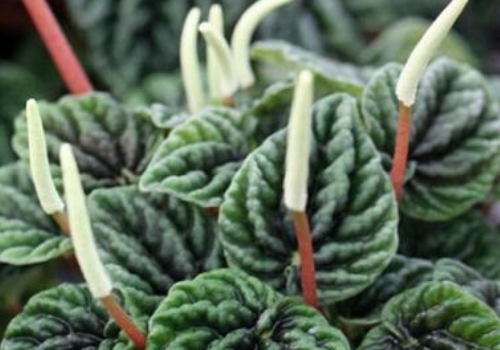
The name "crispate peperomia" immediately brings to mind its characteristic wrinkled appearance. What should you do when the leaves of the crispate peperomia wilt? Care tips:
What to do when the leaves of the crispate peperomia wilt:
It may be a water problem, and hydroponic flowers must pay close attention to water. Hydroponic flowers are different from soil-grown ones; they grow on the nutrients in the water, including oxygen and fertilizer.
It is recommended to let tap water sit for 1~2 days before use, and add a few drops of nutrient solution to the water. Also, when growing crispate peperomia hydroponically, do not put all the roots in the water. Peperomia is afraid of water; the water only needs to cover 1/2 or 1/3 of the roots. Too much water easily causes root rot.
Care Tips for Crispate Peperomia:
1. Light
The crispate peperomia is actually a semi-shade flower. It is best to place the potted crispate peperomia in a semi-shaded spot where it receives diffused light. If the light is too strong, the leaves turn yellow; if the light is too weak, the leaves easily lose their luster. In winter, it can be placed in a sunny spot.
2. Pruning
The growth of peperomia does not always follow our wishes; sometimes it grows in a very messy, disorderly way. At this point, we should prune the crispate peperomia. The purpose of pruning is to make the crispate peperomia plant fuller with dense branches and leaves.
Pinching can be done in early summer. Pinching means pruning the tender leaves growing from the top center of the plant; this can inhibit the plant's growth and let new leaves grow out from below.
3. Repotting
For potted crispate peperomia, it is best to repot once every 2 years, so for lazy gardeners, there is no need to repot every spring.
4. It is a mesophytic flower; watering should keep the potting soil moist, and there must be no waterlogging.
5. The pot should be placed in a semi-shaded spot. If the light is too strong, the leaves turn yellow; if the light is too weak, the leaves easily lose their luster. In winter, it can be placed in a sunny spot.
That is all for the knowledge about crispate peperomia.
Is Crispate Peperomia Toxic? What to Do When the Leaves of Crispate Peperomia Wilt
The name "crispate peperomia" immediately brings to mind its characteristic wrinkled appearance. Seeing the real plant, it is indeed so, but this does not affect its beauty; instead, it becomes its special feature. Such an elegant and distinctive plant - is it actually toxic, and what are its propagation methods? Let us take a look together below.
Is Crispate Peperomia Toxic?
Crispate peperomia is also called leaf-fleshed green, four-angled peperomia, and purple-leaf peperomia. It is a species under the genus Peperomia in the family Piperaceae. It has long sword-shaped leaves, up to 50~100CM long and 3~5CM wide, with wavy leaf blades. It likes half-day sunlight or bright diffused light. Crispate peperomia is an excellent foliage plant, not only beautiful but also non-toxic.
What to Do When the Leaves of Crispate Peperomia Wilt
It may be a water problem, and hydroponic flowers must pay close attention to water. Hydroponic flowers are different from soil-grown ones; they grow on the nutrients in the water, including oxygen and fertilizer. It is recommended to let tap water sit for 1~2 days before use, and add a few drops of nutrient solution to the water. Also, when growing crispate peperomia hydroponically, do not put all the roots in the water. Peperomia is afraid of water; the water only needs to cover 1/2 or 1/3 of the roots. Too much water easily causes root rot.
Hydroponic Method for Crispate Peperomia
1. Prepare containers such as glass bottles, wide-mouth bottles, and glass beakers, fill them with tap water (best used after settling for one day), then put some small stones such as ceramsite, pebbles, and perlite into the bottle, and add nutrient solution.
2. Gently take the crispate peperomia out of the soil, carefully wash the soil attached to the roots with clean water, and remove rotten roots, dead roots, blackened roots, and so on.
3. Then put the crispate peperomia back in, and use small stones such as ceramsite, pebbles, and perlite to secure the roots of the crispate peperomia.
Propagation Methods for Crispate Peperomia
I. Cutting Propagation
Cutting propagation is one of the commonly used propagation methods in the plant world, and crispate peperomia is naturally no exception. Crispate peperomia can also be propagated by cuttings.
1. Stem cuttings: select healthy branches free of pests and diseases. Spring is best, but actually stem cuttings can be done during the four months from April to August. Generally speaking, the survival rate of crispate peperomia cuttings is very high, but a moist environment must be maintained at all times.
2. Leaf cuttings: first select leaves that are already mature, growing healthily, and free from pest or disease damage. Then cut the leaves off together with the petiole, insert the leaves into prepared fertile soil, and quietly wait for the crispate peperomia to take root. Remember to keep the surrounding environment moist rather than waterlogged.
II. Division Propagation
Division propagation of crispate peperomia is best done in spring when repotting the crispate peperomia. First prepare a pot of crispate peperomia that has already filled the pot with plants. Do not water it for the next few days, so that the gap between the soil and the pot wall becomes loose. Tip the soil out together with the crispate peperomia, and remember to try not to damage the root system of the crispate peperomia. Then, before transplanting, carefully separate the crispate peperomia and transplant them into different flower pots, then water to settle the roots.
Crispate peperomia can be grown both in soil and hydroponically. You can choose the method you like. However, when growing hydroponically, be sure to let tap water sit for a day; it works better after settling. Still, when growing hydroponically, leaf wilting easily occurs. We must check the cause from the water side to see whether it is a water problem.
How to Grow Crispate Peperomia: Cultivation Methods and Precautions for Crispate Peperomia
Crispate peperomia is a highly ornamental plant. Its leaves are very beautiful and purple in color; the leaf surface looks non-smooth, like wrinkles, but this is also very distinctive. Such a highly ornamental foliage plant is also relatively simple to grow. If you do not believe it, follow the editor to see its specific cultivation method.
How to Grow Crispate Peperomia
When grown indoors in pots, it can grow well in a semi-shaded environment. In summer, avoid direct sunlight; in spring, autumn, and winter, it can receive a little more sunlight appropriately. If the light is too strong, it easily causes scorching at the leaf margins and leaf tips; if the light is too weak for a long time, it easily loses its luster. The optimum growth temperature is 19~26℃, and the minimum winter temperature should be kept above 9℃; below 6℃, the leaves easily fall off. During the growth period, watering should be sufficient, but do not water too much, otherwise it easily causes root rot. A culture soil commonly prepared from leaf mold, garden soil, river sand, etc. is used to facilitate drainage and aeration. Apply a dilute liquid fertilizer mainly based on nitrogen fertilizer once every half month or so. When winter temperatures are low, watering should be reduced and fertilizing stopped.
Cultivation Methods and Precautions for Crispate Peperomia
Cultivation Methods
1. Potting Soil
Crispate peperomia is not very picky about soil. Generally speaking, well-drained leaf mold is enough. Flower lovers can also prepare their own nutrient soil suitable for crispate peperomia, for example, a loose culture soil mixed from garden soil, leaf mold, river sand, etc., and a small amount of cake fertilizer can be added as base fertilizer.
2. Fertilizing
Another thing that cannot be ignored during the growth of crispate peperomia is fertilizing. Generally speaking, fertilizing once a month during the growing season is enough. In terms of fertilizer choice, flower lovers can choose fully decomposed cake fertilizer water, dilute liquid fertilizer mainly based on nitrogen fertilizer, and so on. When fertilizing, be sure to avoid contact with the leaf surface.
3. Watering
Crispate peperomia is a mesophytic flower, so it is best to keep the growing environment of peperomia moist at all times. Watering should keep the potting soil moist. Although it should be moist, also note that there must be no waterlogging; once water accumulates, root rot easily occurs.
In summer, when temperatures are high and crispate peperomia grows vigorously, it is best to water once every 2~3 days, but winter is dry and crispate peperomia grows slowly, so it is best to control the amount of water.
4. Light
The crispate peperomia is actually a semi-shade flower. It is best to place the potted crispate peperomia in a semi-shaded spot where it receives diffused light. If the light is too strong, the leaves turn yellow; if the light is too weak, the leaves easily lose their luster. In winter, it can be placed in a sunny spot.
5. Pruning
The growth of peperomia does not always follow our wishes; sometimes it grows in a very messy, disorderly way. At this point, we should prune the crispate peperomia. The purpose of pruning is to make the crispate peperomia plant fuller with dense branches and leaves.
Pinching can be done in early summer. Pinching means pruning the tender leaves growing from the top center of the plant; this can inhibit the plant's growth and let new leaves grow out from below.
6. Repotting
For potted crispate peperomia, it is best to repot once every 2 years, so for lazy gardeners, there is no need to repot every spring.
Precautions
1. It is a mesophytic flower; watering should keep the potting soil moist, and there must be no waterlogging.
2. The pot should be placed in a semi-shaded spot. If the light is too strong, the leaves turn yellow; if the light is too weak, the leaves easily lose their luster. In winter, it can be placed in a sunny spot.
What Is the Market Price of Crispate Peperomia?
Crispate peperomia likes half-day sunlight or bright diffused light. The optimum growth temperature is 25-28℃. It likes a warm, humid environment and well-drained sandy loam soil, is intolerant of waterlogging, but likes an environment with high air humidity. At present, different varieties have different prices, but its price fluctuates around 45 yuan.
The Benefits of Crispate Peperomia
1. Reducing inflammation and promoting diuresis: reducing inflammation and promoting diuresis is the main manifestation of the medicinal value of crispate peperomia. It has a clear therapeutic effect on human edema or difficult urination caused by nephritis. During treatment, crispate peperomia can be decocted together with Chinese medicinal materials such as jiupinghua root and shanpitiao and taken as a decoction.
2. Dispersing blood stasis and dredging collaterals: crispate peperomia can also disperse blood stasis and dredge collaterals. It can usually be used for the treatment of many common diseases such as human bruises, fractures, and rheumatoid arthritis. External use of crispate peperomia can also relieve itching, and it can also significantly relieve skin itching caused by human rubella.
3. Ornamental value: it is a beautiful foliage plant. The leaves of this plant are glossy and green, elegant and distinctive, with particularly high ornamental value.
4. Purifying air: greening the environment and purifying air are its main effects, and it can absorb carbon monoxide and carbon dioxide from the air, making indoor air fresher.
Crispate peperomia has multiple effects. In daily bruises, the medicines used contain components of crispate peperomia. Moreover, its main value is purifying air and making the indoor environment fresher. It is a purely natural purifier. Such a plant that is both beautiful and able to purify air is also not expensive, making it very suitable to place a pot at home.